Kew Gardens: a most magical time of year.

Kew Gardens: a fascinating and beautiful place throughout the year, but during the Christmas period the gardens open in the evening and become a brilliant luminescent wonderland. Forgive the pun, but you could say that the gardens can be seen in a different light; indeed many lights.

Our tickets were for the 5pm slot, timed for the young grandchildren, and excitedly, we entered through the Victoria Gate. It was a freezing cold frosty night but little feet, not yet feeling the cold, were eager to explore the illuminated trail that took us under the branches of the many mature and wintry trees, some planted as long ago as the 18th Century.

Trees become so graceful in the winter, their branches stretching and twisting, and as they take on a different guise you can appreciate not only their strength and age but also their elegance too; this one warm and welcoming.

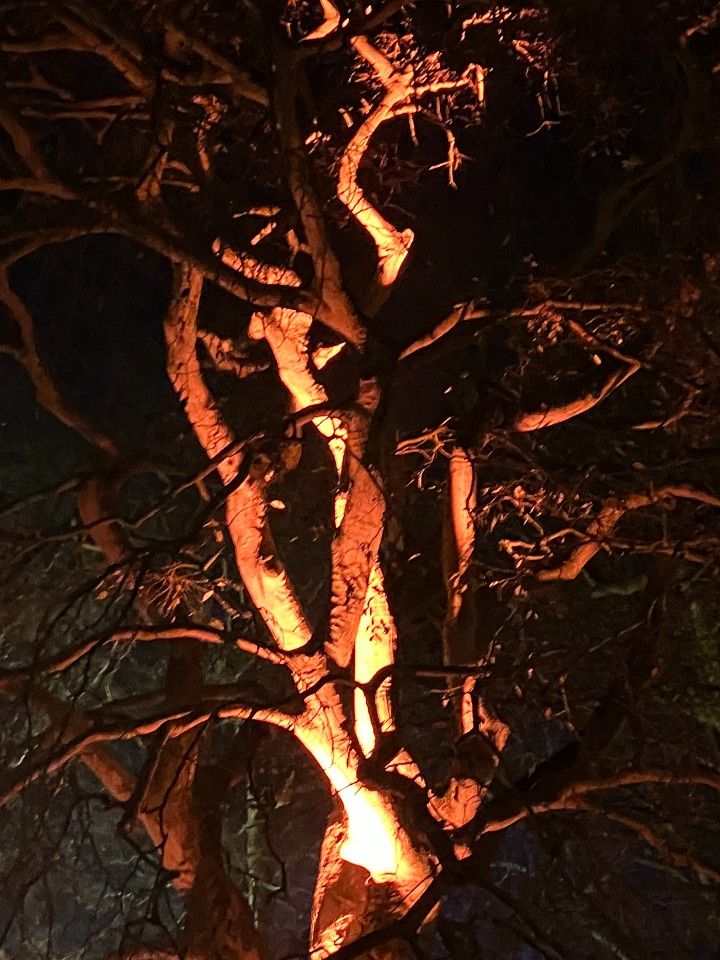
Others become artistic sculptures, lit up in a range of colours.

Whilst this tree might well have arrived from outer space,

this one is just so ancient and gloriously gnarled. I worry for a moment what the effect of all these lights might have on the fauna and flora and, as if reading my thoughts, an information board appeared advising us that:

‘We carry out a full ecology report to ensure our resident wildlife remains undisturbed throughout. We protect our bats, badgers and vulnerable trees through careful light and audio placements.’

We run on happily to the Palm House now glowing purple. This enormous glass house, the first to be built on this scale was designed by Decimus Burton and was constructed in 1844 by Richard Turner. In here the environment is kept hot and humid, housing numerous tropical plants.


Across the lake fountains play in vividly changing colours,

and moving round to the other side of the Palm House, we see a line of sparkling standards and behind them the 16,000 panes of toughened glass, some of which are curved, change colour and glow red. This evening the Palm House is firmly closed, keeping those precious tropical treasures from the freezing temperatures.

Moving lights project towards us and the music playing lifts our spirits,

and little eyes are entranced.

Deciduous or evergreen, each tree glows majestically,

the light reveals just how beautiful and tactile the bark can be.

It is not just about looking up, there is much happening down on the ground; summer flowers brightly paint the path, and autumn leaves flutter across.

We follow snowflakes glowing along the dark pathway,

and Christmas crackers pull us on towards what is known as the Cathedral.

An arch made up of a multitude of tiny lights rises majestically above us. We are below the busy flight path to Heathrow and I wonder what the gardens must look like from above, the light pollution must be huge. Another information board tells us that ‘This year, 75 per cent of the lights on the trail are LED. As soon as we can, we switch everything off to ensure the Gardens remain quiet and dark at night-time.’

Looking down on us from up on high, I am glad to see a familiar character beaming down on us. My grandson dismisses him swiftly assuring me that this is not the real Father Christmas, and on he hurries.

Long-stemmed flowers drip down from the branches. We stop for a quick ride on the fairground situated in front of The Temperate House. Little feet are getting cold now and hot chocolate is much needed. While I sip my mulled wine I discover that this great building is filled with an amazing 10,000 plants, a vast collection, grown so that in time they may help to find solutions to the world’s most pressing issues, from climate change to loss of biodiversity or food security.

We cross over a bridge spanning the water frozen hard for days, and beneath us a leaf is embedded artistically in the ice,

and further out a patterned pool gleams across the surface.

We are fortunate to have such a clear evening and the moonlight adds to the magic.

Feathers seemingly float

and birds perch in the tree.

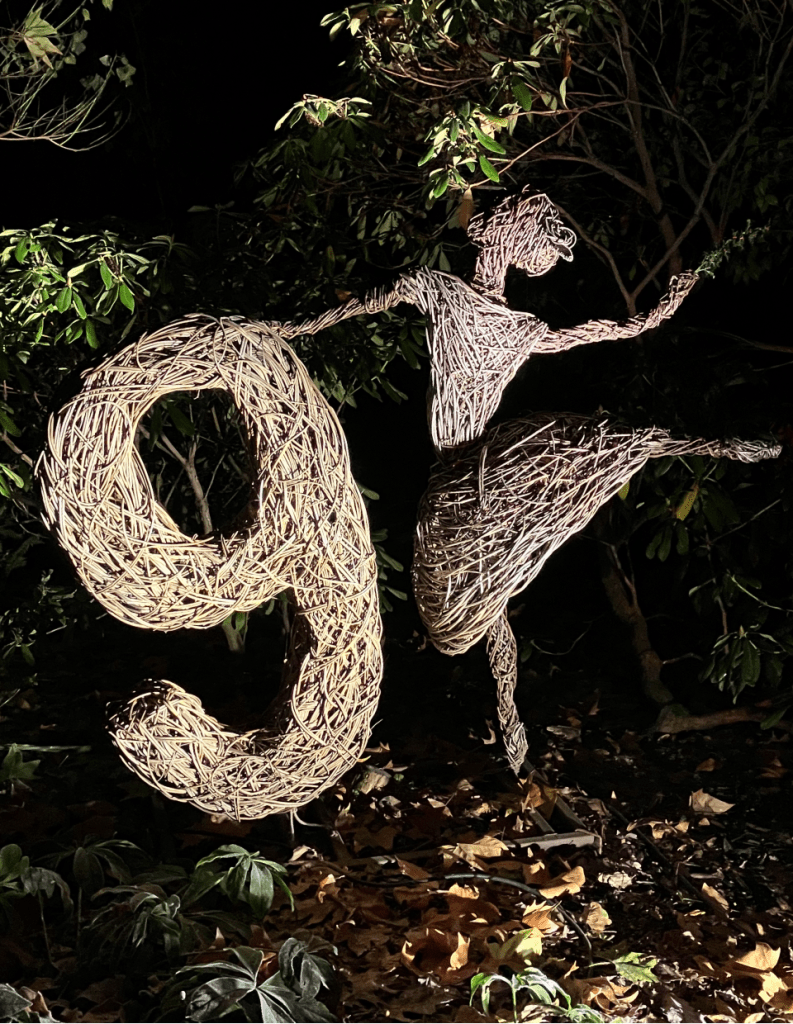
The twelve jolly days of Christmas are a delight, cleverly woven in willow by Woody Fox from Devon.

I cannot imagine how long it must have taken to hang the lights on this old Oak. We are informed that ‘Kew has its own ‘Tree Gang’ who carry out the intricate placement of the thousands of hanging lights. This ensures the trees are protected and looked after by those who know best.’

We are nearly at the end of the trail and we find ourselves looking back across the lake to the Palm House, its appearance eased into a shade of blue.

Lights beam dramatically across the lake and music plays.

and as the fountains rise in front of us, the dramatic statue of Hercules wrestles with a serpent.

We have all been entertained handsomely, children and adults together have been totally absorbed. Kew has been putting on a light show for the past 10 years with each one different. What a great way to encourage visitors to a garden during the cold winter months; perhaps in time more private gardens will follow suit.

Happy Christmas

*******2022*******

Caldrees Manor, colourful with a touch of humour.

The garden at Caldrees Manor is one of the last in the season to open for the National Garden Scheme. Situated not far from the A11 in Cambridgeshire it was the ideal place to meet up with friend Leslie.

Although parking was in a field away from the house, we could not help but admire this welcoming driveway with its elegant centrepiece situated in front of the house and surrounded by a delightful planting of shrubs.

We had come for a guided tour with Will who with the garden owner John, has been responsible for creating this large garden over the past twenty years. He takes us through the gate and around to the other side of the house.

A verdurous space appears before us framed by the rose arch; there is a lot going on, but instead of descending through and down the steps, we turn right towards the summer house.

This ornamental folly with its generous door surround, and windows seemingly wide-eyed, is surrounded by a rich planting of summer flowers now coming to an end but there is still a good display for the time of year and we particularly commend the combination of michaelmas daisy, hydrangea and pennisetum.

Brunnera is such a good plant, its blue flowers on show for weeks in the spring and the silvery leaves continue to be a beauty defying any attack from slug or snail.

Will and his wife Jacqueline https://www.jwlandscapes.co.uk/ have their own landscape business and this is their flagship garden. This brick bridge was one of the first features that Will built.

Pergolas bring variety and height, and act as partitions from one area of the garden to another. We leave the more formal area and enter the acer glade,

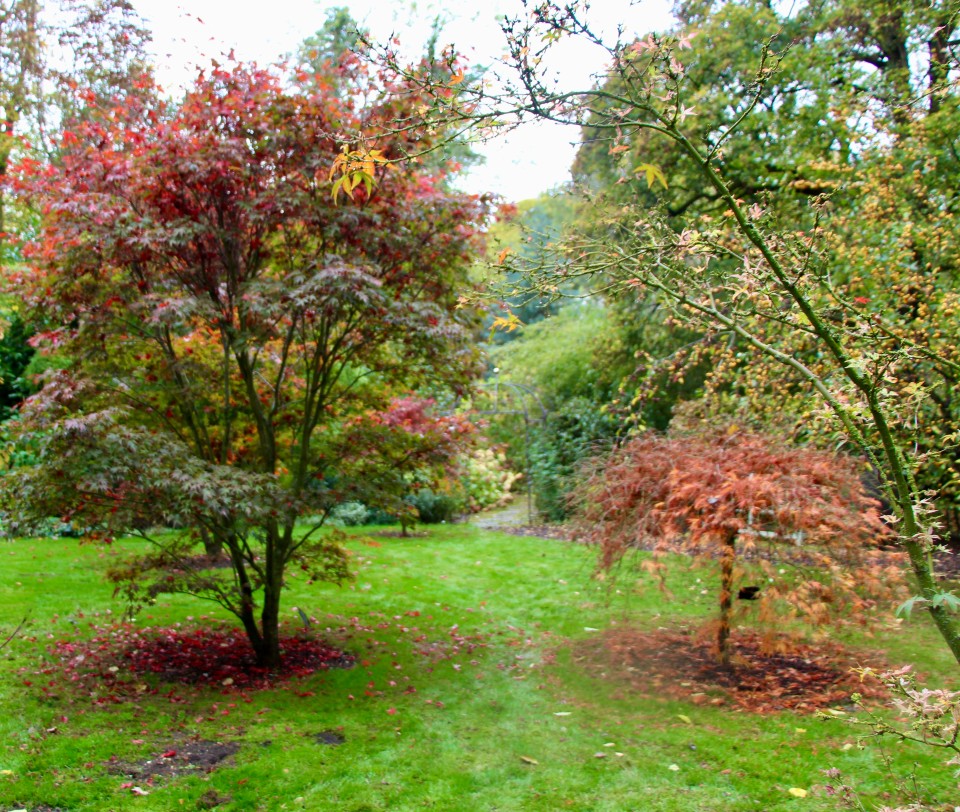
where a great variety of specimens are grown, some still green whilst others are on fire with colour.

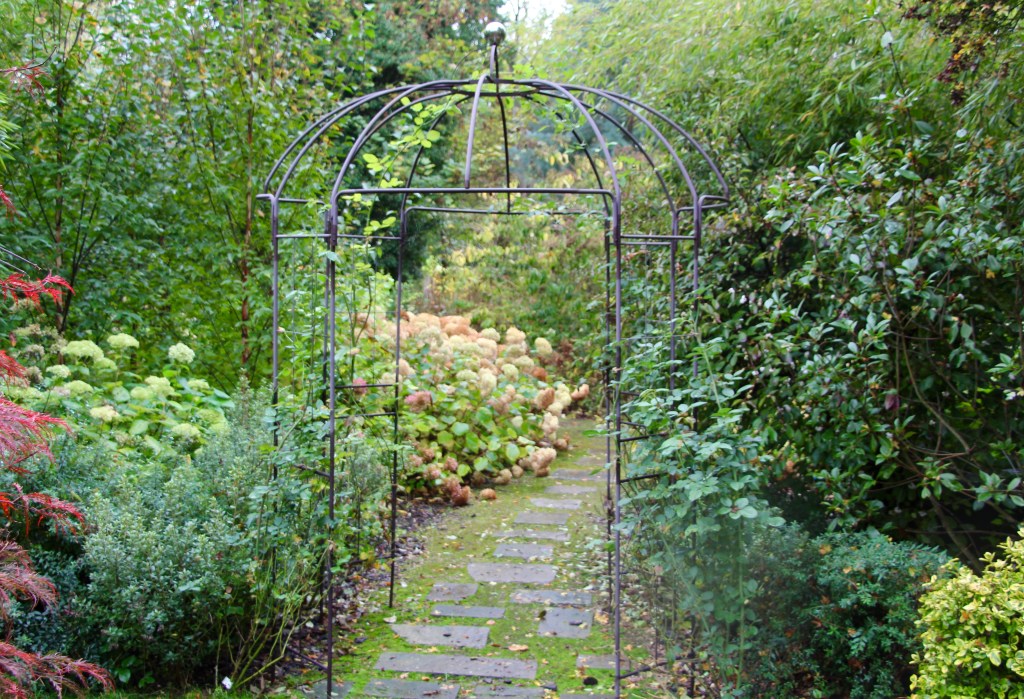
The leaves are as beautiful on the ground as they are on the tree. We follow the path through the metalwork arbor into the hydrangea area unperturbed by the summer’s drought.

The air is filled with the scent from a viburnum; it’s a wonder that this insignificant flower produces such a fragrance.

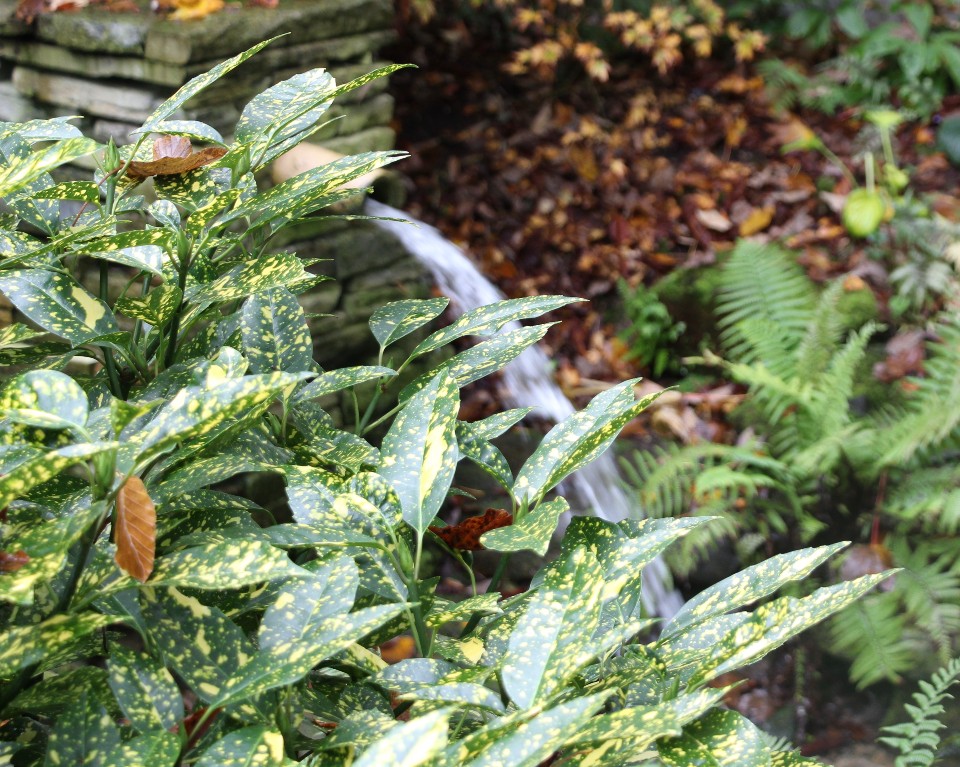
Here too is the sound of rushing water, its source not apparent at first, until we find it gushing from a pipe. There is no shortage of water here as we are apparently standing on a giant lake and the water is being pumped from a borehole.

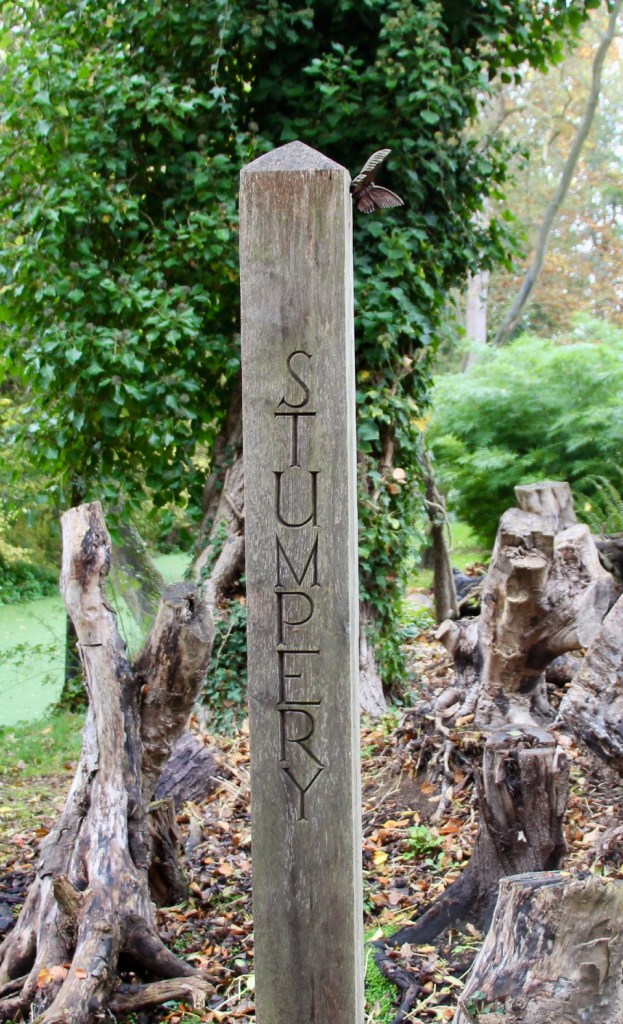
Wooden signposts guide the way, beautifully carved; we love the papilionem touch at the top.

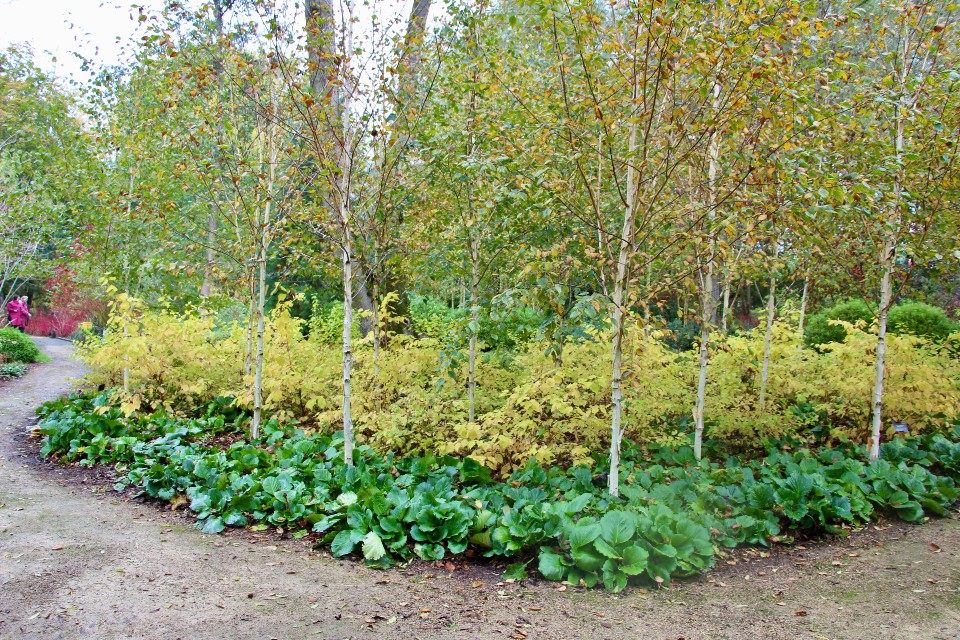
Silver birch planted in a group is an acknowledged theme and it works well here underplanted with cornus sanguinea ‘midwinter fire’ and bergenia.

As summer flowers fade, the sculptural blooms become more pronounced.

There is a touch of humour in this garden as the quite unexpected appears through the jungle of greenery,

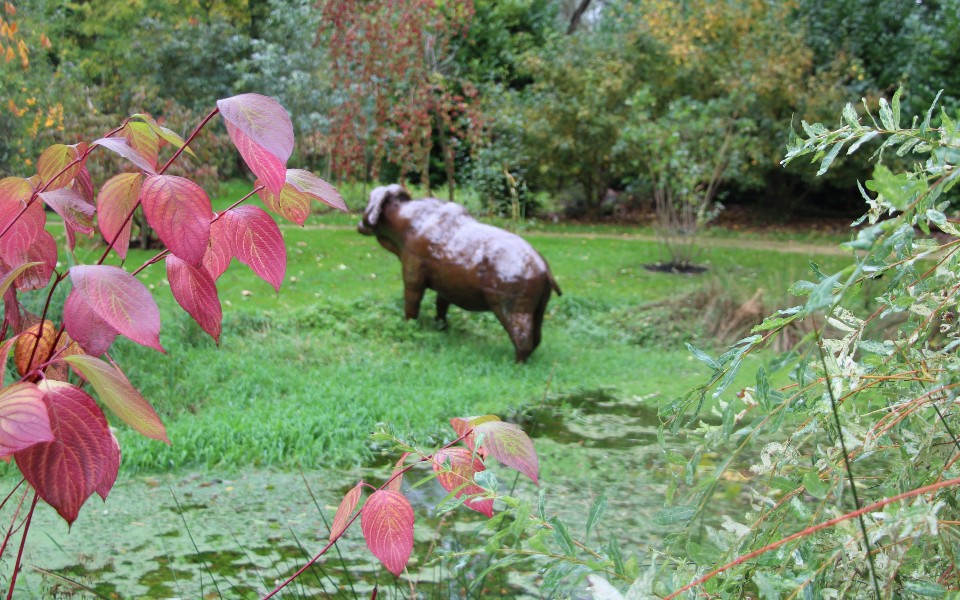
and is that really a water buffalo I see at the side of the pond?

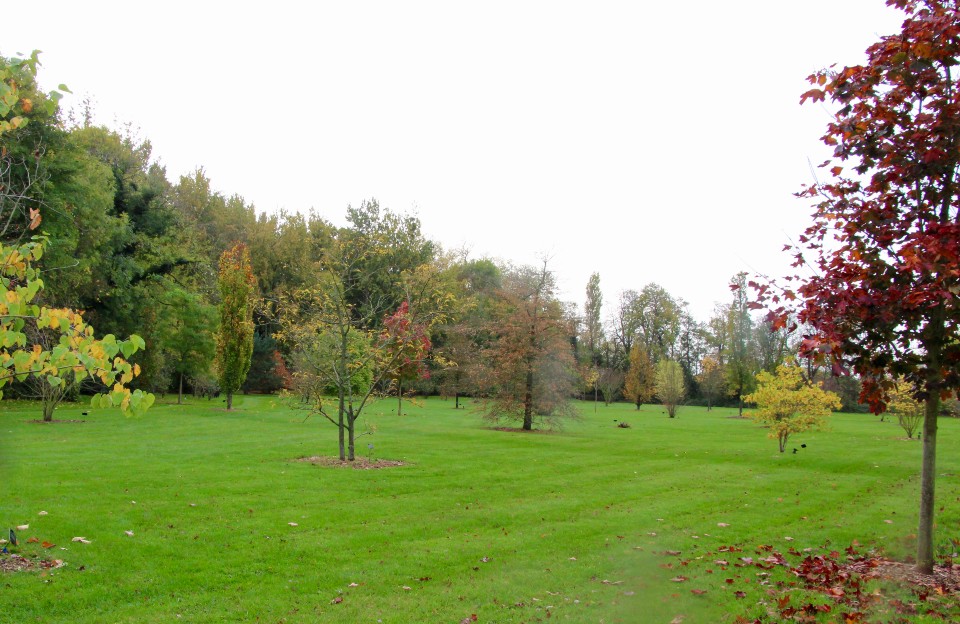
From the winding paths in the old wood we enter an open space where a new wood has been planted. It is pretty impressive seeing that it is just three years old. How will it look in another twenty?

This new wood has such a different feel and we love the splash of sculpture at the end.

Returning towards the house we walk through the fairly recently created Japanese garden; plants, rocks and gravel carefully considered in the design.

From here we can go towards the orchard, along the drive which is neatly edged on one side with silver lavender, and on the other, scattered seedlings are allowed to grow but carefully controlled,

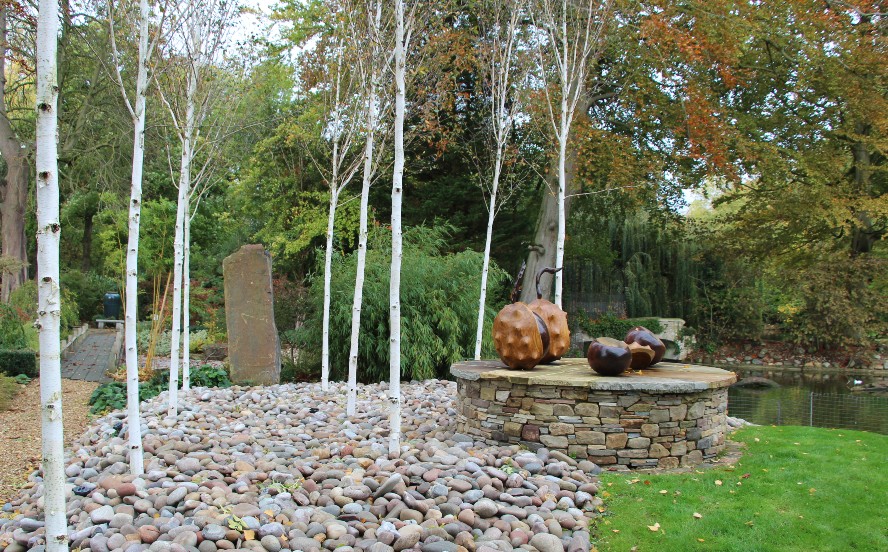
and return to end our tour between the Japanese garden and the pond at these beautiful carved wooden conkers; smooth shiny polished surfaces, there is an irresistible urge to run your hands over them.

Heading back for the much needed coffee and cake we pass the quirky topiary, and then there is a sudden sound of a distant crash. Will looks concerned.

Despite there being no wind, the noise is of a fallen tree that has crashed across the path. Not what you want on an open day but no harm has been done and there are plenty of other paths to take, and different areas to explore. Such a variety of species to admire, and sculptures to search out, we have enjoyed our time, and it has been a great place to meet; why don’t we do this more often ? We both agree and promise to meet up in another garden next year.

You can find lots of lovely gardens by ordering a copy of next year’s garden visitor’s handbook https://ngs.org.uk/shop/books/garden-visitors-handbook-2023/

Caldrees Manor opened for the first time in October 2020 and by opening its very private gates has raised a trug-load of funds for the National Garden Scheme. It is taking a year off but am sure it will open its gates again for many more visitors to enjoy in the future.

*******2022*******
Bolfracks; how to garden on a slope

A few weeks ago I was staying near Aberfeldy in Perthshire and having walked the delightfully rugged ‘Birks of Aberfeldy’, I decided to visit the tamer landscape of a garden open for Scotland’s Gardens Scheme https://scotlandsgardens.org/bolfracks

Bolfracks, how could I resist with a name like that, is open everyday from 1st April – 31st October. You enter through the summer house, look at the map and take the path which rises steeply behind.

A druidic specimen of an evergreen conifer Cryptomeria japonica, confronts us and with a twist of the trunk beckons us on up the slope,

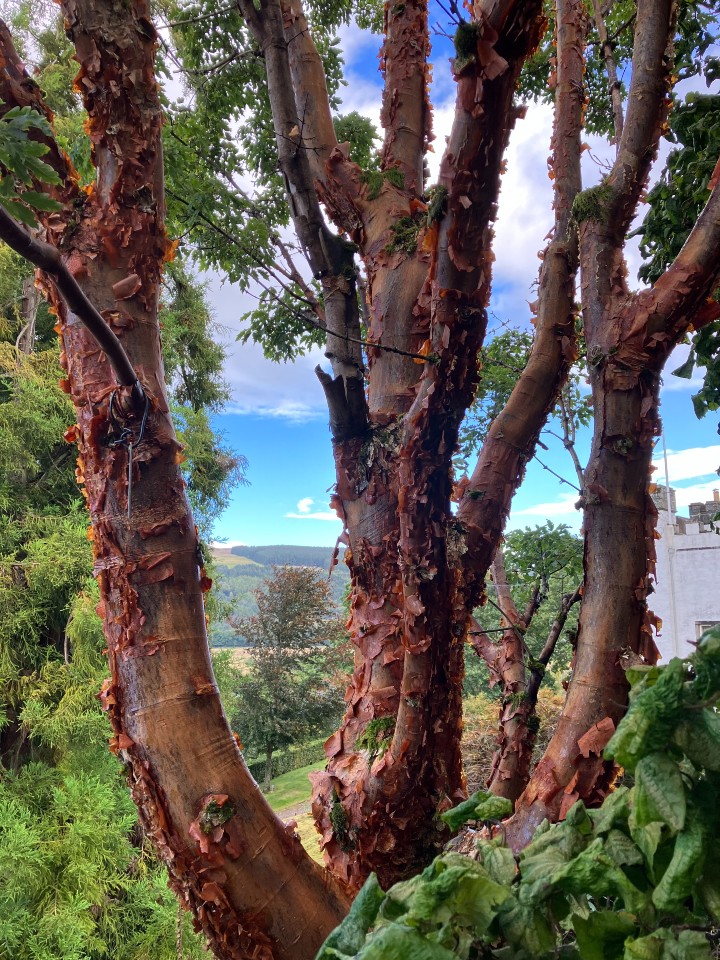
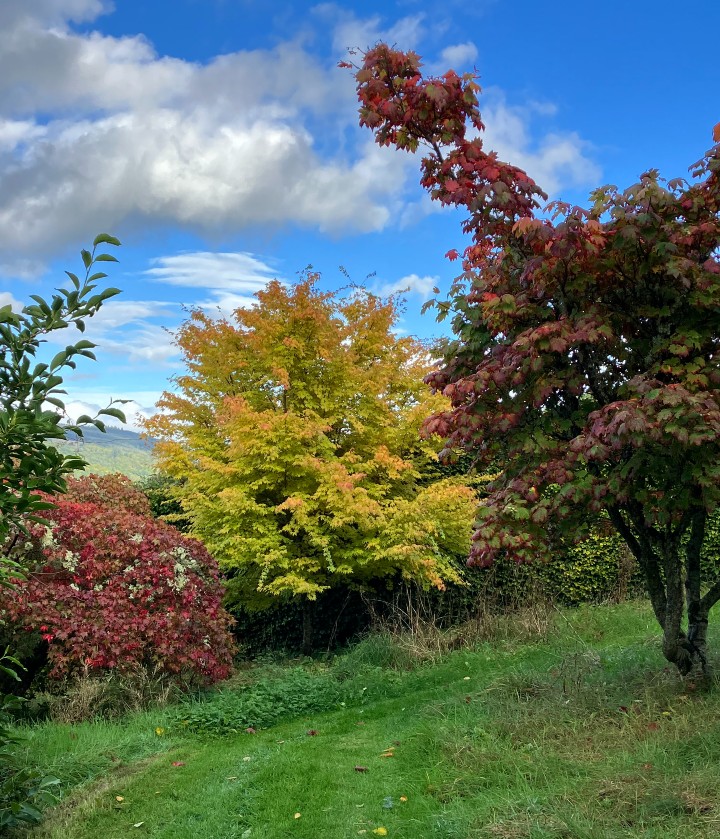
where we find the graceful Acer griseum; we pause for a moment, breathe in the scent of autumn and take in the distant landscape emerging through its ascending branches.

It is so much about trees at this time of year, and where better do the birches grow than in this part of the world. This is the Chinese red birch Betula albosinensis.

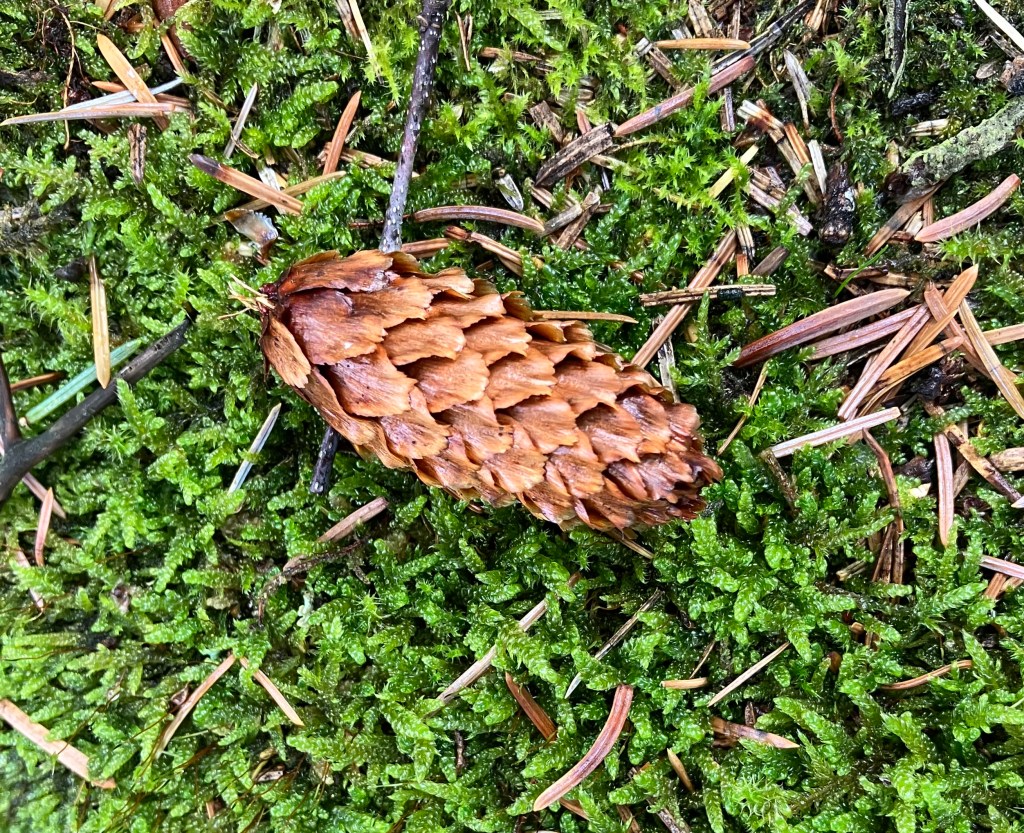
There is plenty to see on the autumnal ground; curious cones,

the bewitching but poisonous white goblets of Colchicum autumnale ‘Album’,

and another little toxic gem, that iconic toadstool, the fly agaric Amanita muscaria.

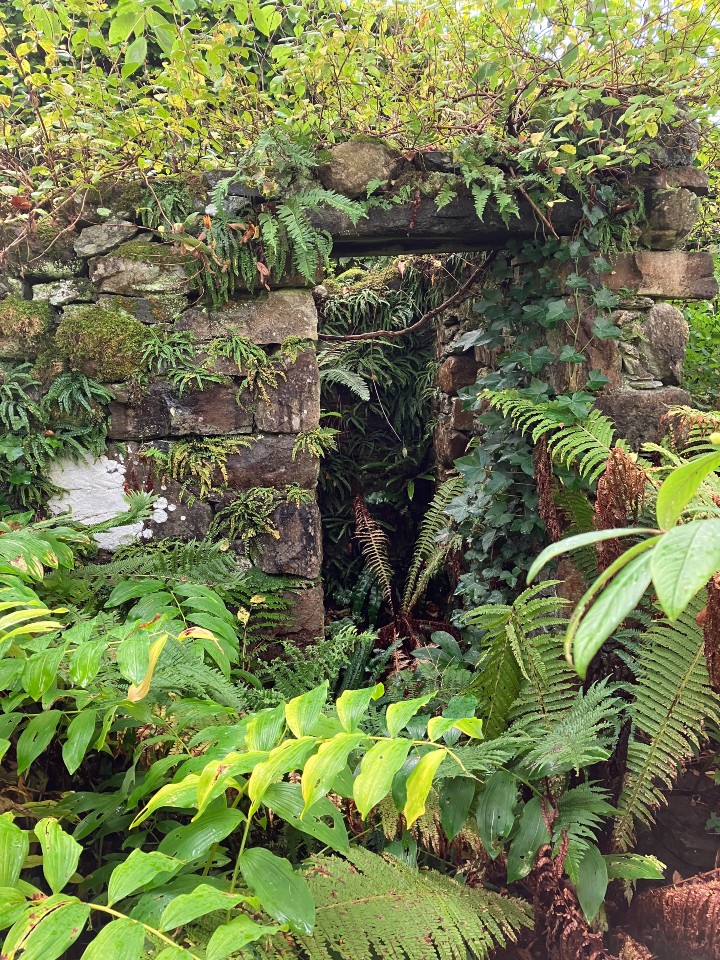
Identified on the map and to the right of the path is the Old privy, a ruin now it provides comfort only to a variety of ferns.

A little further up the path is the pond where giant leaves of the Gunnera almost hide the dark peaty water where water lilies bloom. It rained all morning and now the sky is a generous blue revealing the distant hillside.

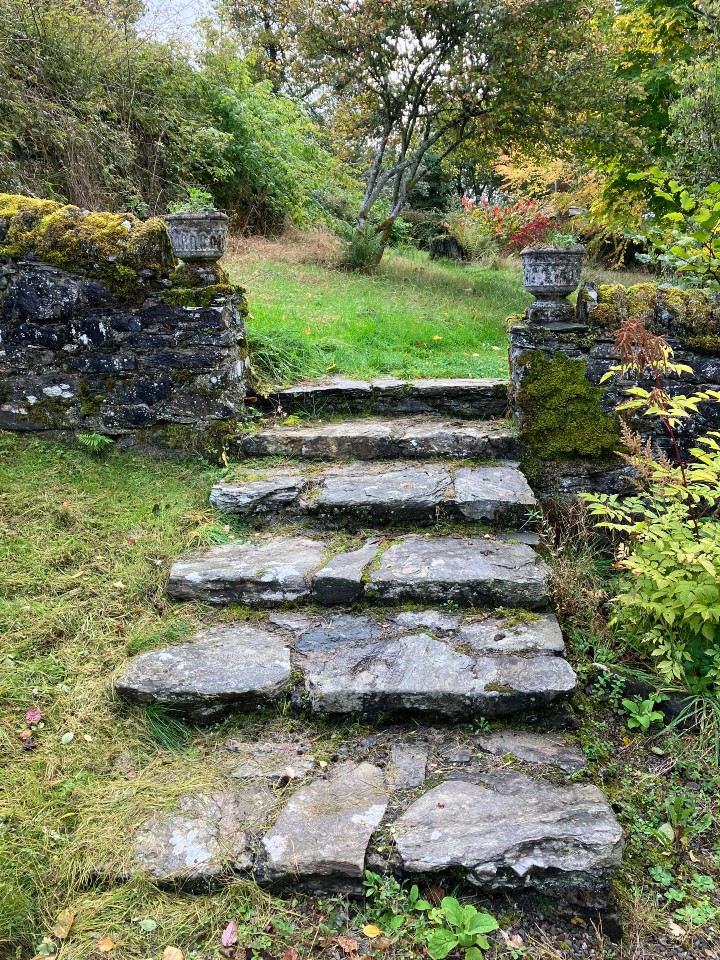
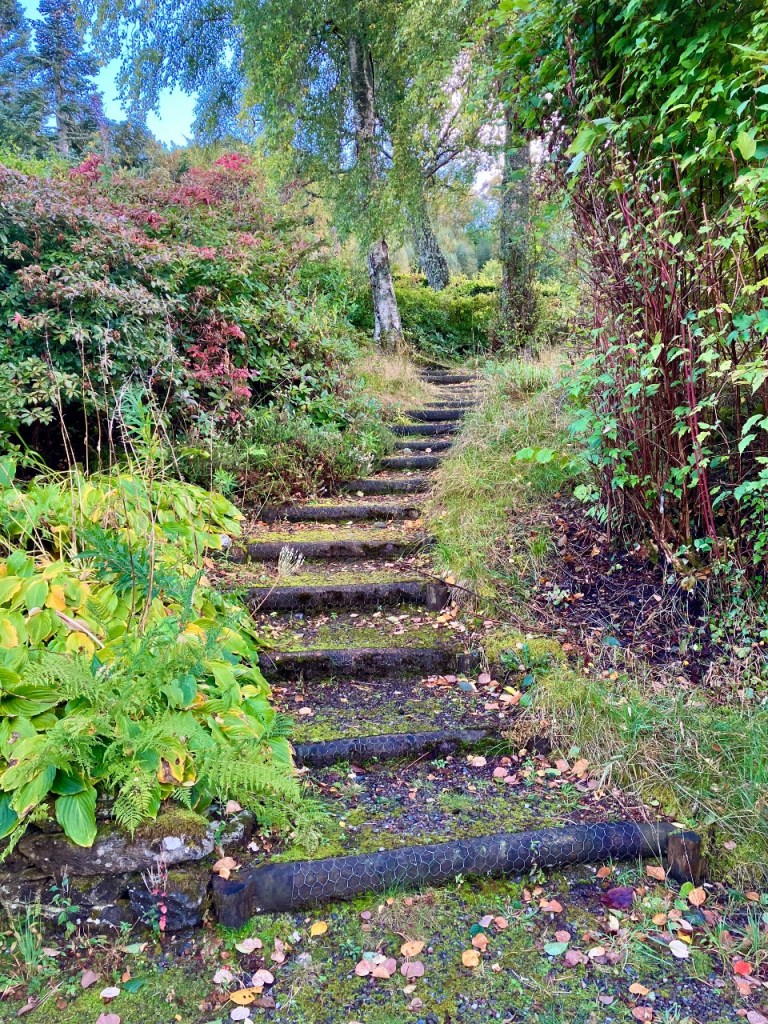
The well-made steps take us gently further up the garden. They are an art form in themselves.

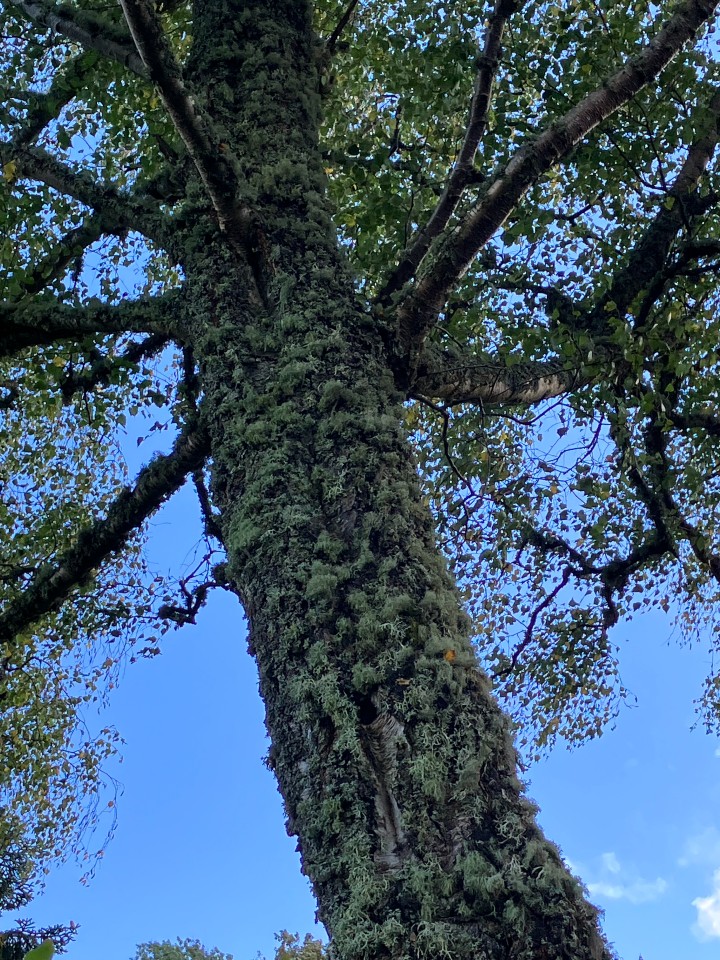
The lichen clambers eagerly up the trunks of the trees, a sign of the air being so good here,

it is an intriguing plant remaining this soft silvery shade of green all year round, it grows everywhere.

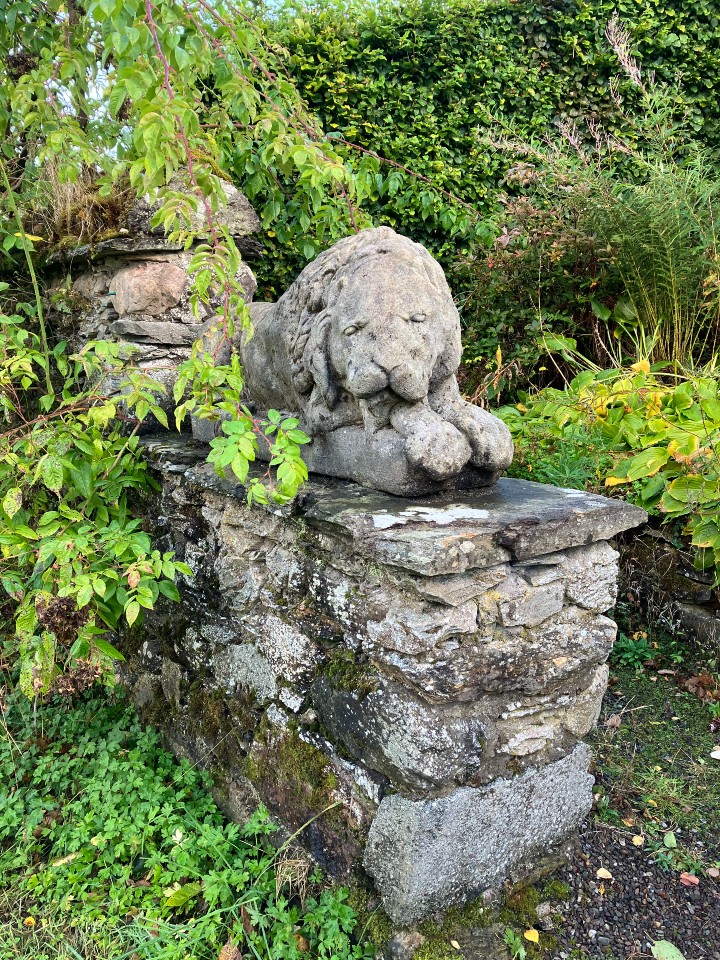
We weave in and out of the different areas, stepping through the gentle sleeping lions into the area known as the burial ground,

not for a moment a sombre place, but an area rich with colour of the maples that are beginning their autumnal display; how do they manage it ?

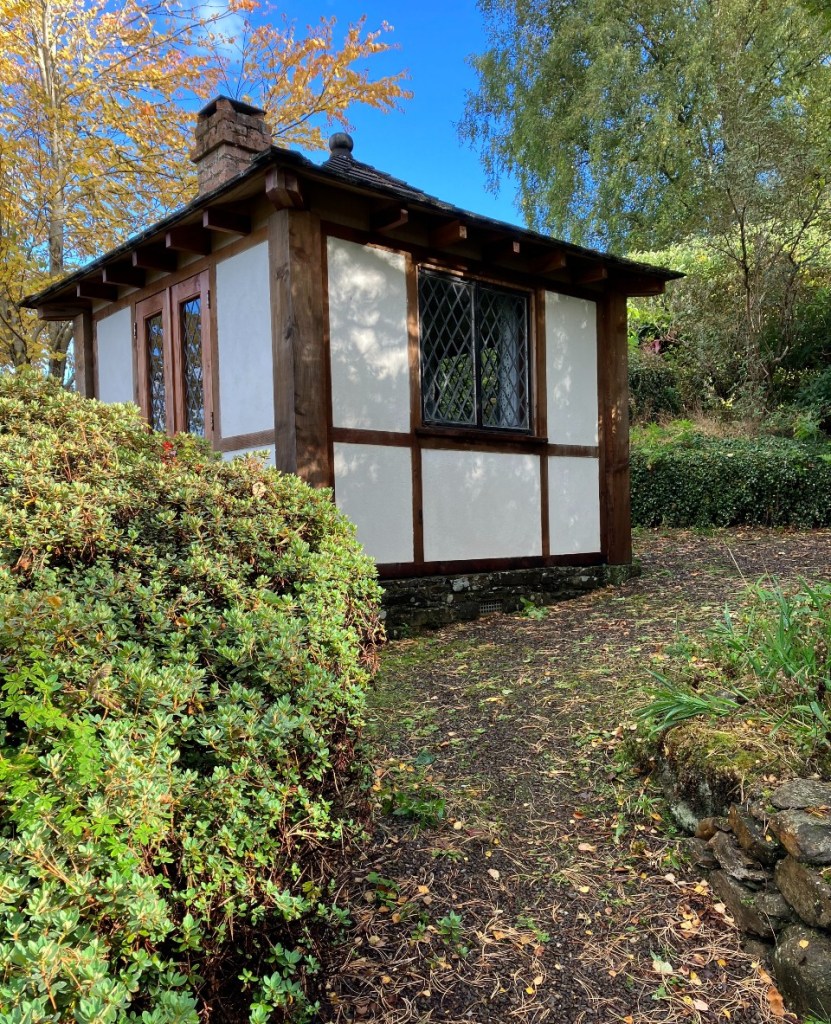
There is a touch of the alpine as we come to the Wendy house, but catching the sound of the distant stags beginning their rut we are reminded that we are in Scotland.

This is not a young garden, there are many mature shrubs; well planted, with much to see throughout the year. Plenty of engaging features like this wooden bridge,

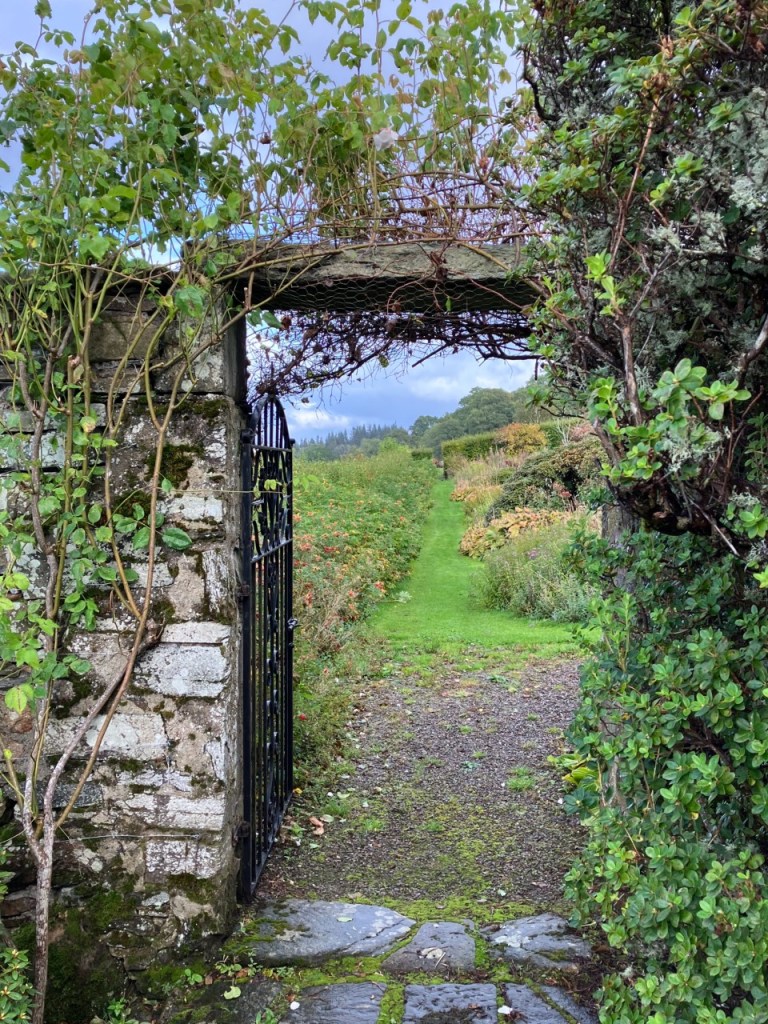
a variety of dry stone gateways,

and flights of sturdy stone steps, through the moss-covered walls,

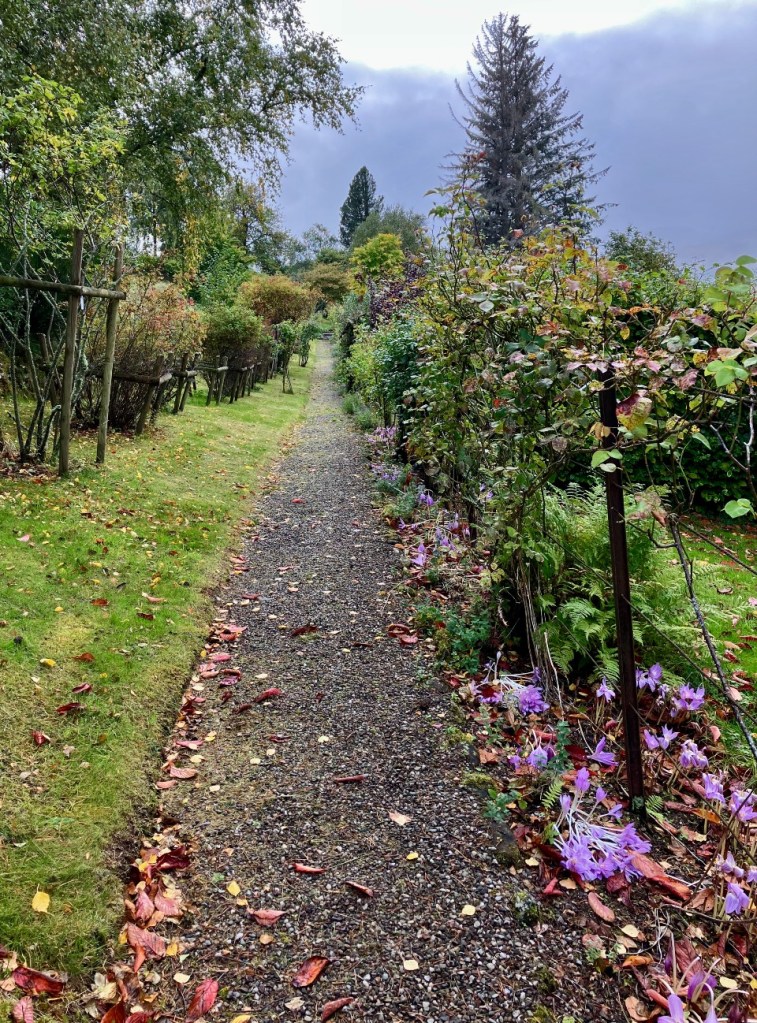
until we have reached the summit, where the path traverses along the top of the slope and with joyful colchicums growing under a multitude of roses that promise to bloom again next summer.

A path descends back down to the house, an herbaceous border running alongside showing that summer is not yet over, as there are still splashes of colour. The long descent emphasises the steepness and shows what a masterclass of gardening it is on a slope.

This garden was created during a time when teams of gardeners were in attendance, times have changed and it is easy to understand the need for modern maintenance, perhaps forgiving the slightly shaggy appearance of the lawn only to discover the mowing machine has crash-landed in a flowerbed;

maybe modern mowers are distracted by the appearance of a rainbow, even though it is somewhere over the River Tay.

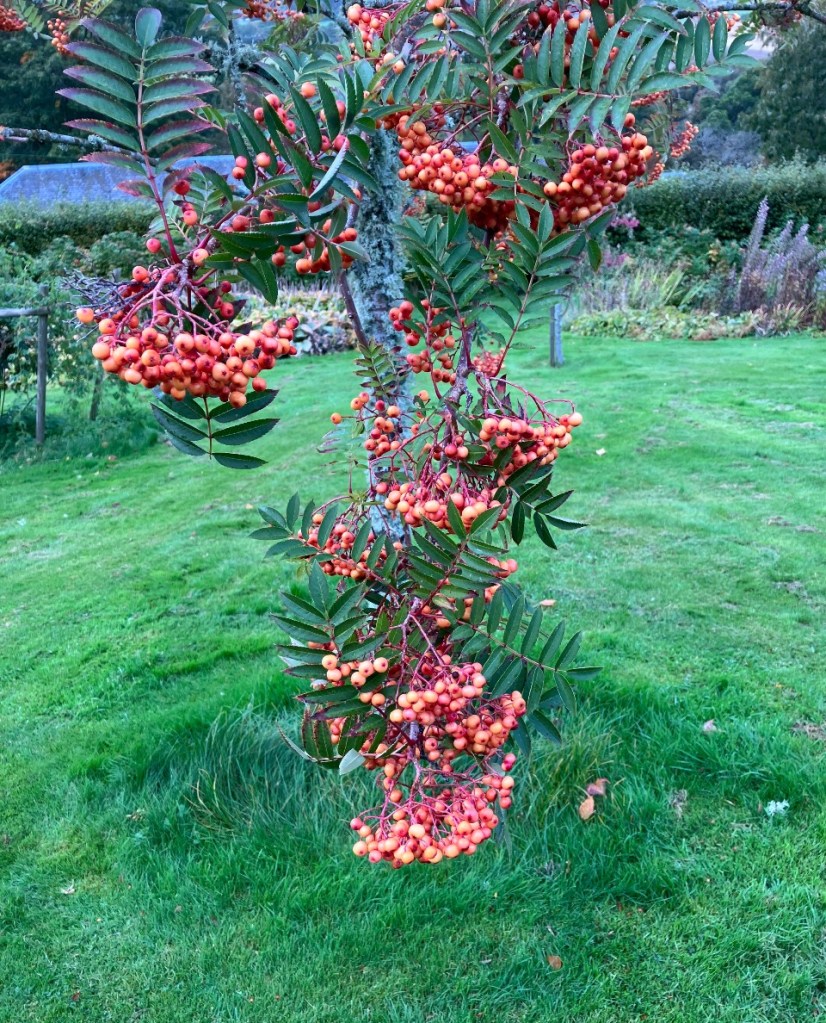
There is a wide variety of Rowan trees that I did not know existed, this beauty is Sorbus sargentiana.

We leave the long border of rugosa roses running along the bottom of the garden, their ripe and delicious shiny red hips glowing with late summer happiness.

The garden has opened for the Scotland’s Gardens Scheme for some 47 years, with a change of owners in recent years it is admirable that the present owners still allow us to visit, and it is a delight.

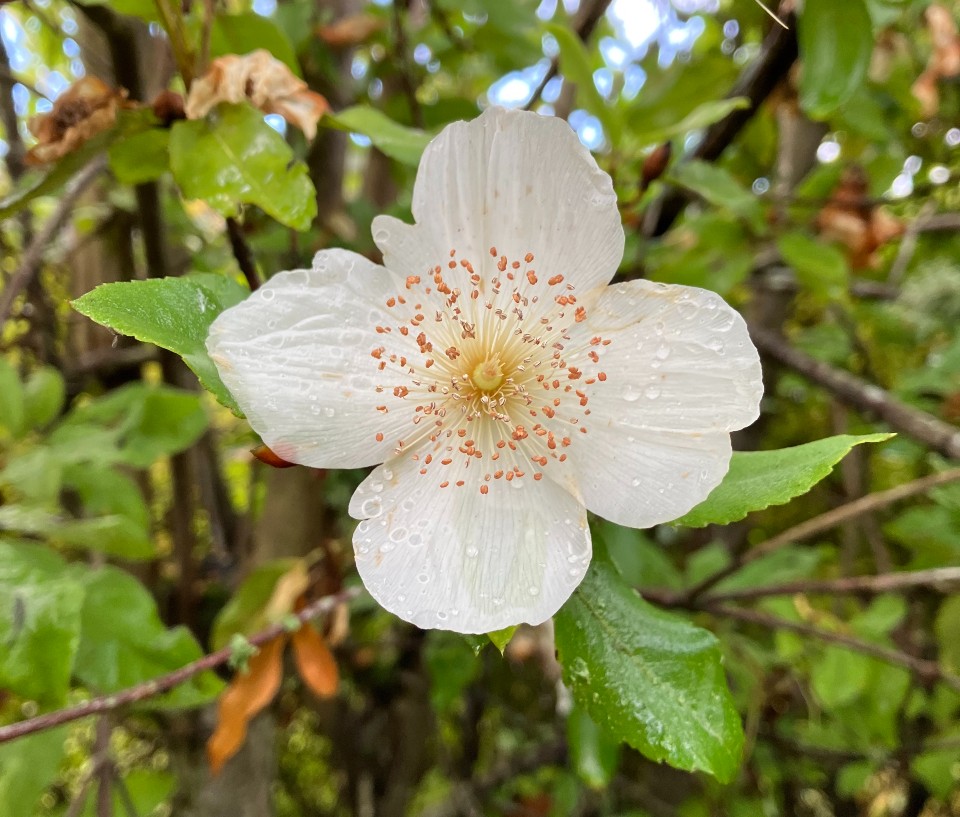
Eucryphia rosetrevor

********October*******

St. Paul’s Walden Bury, an 18th Century landscape of Allées, Statuary and Temples

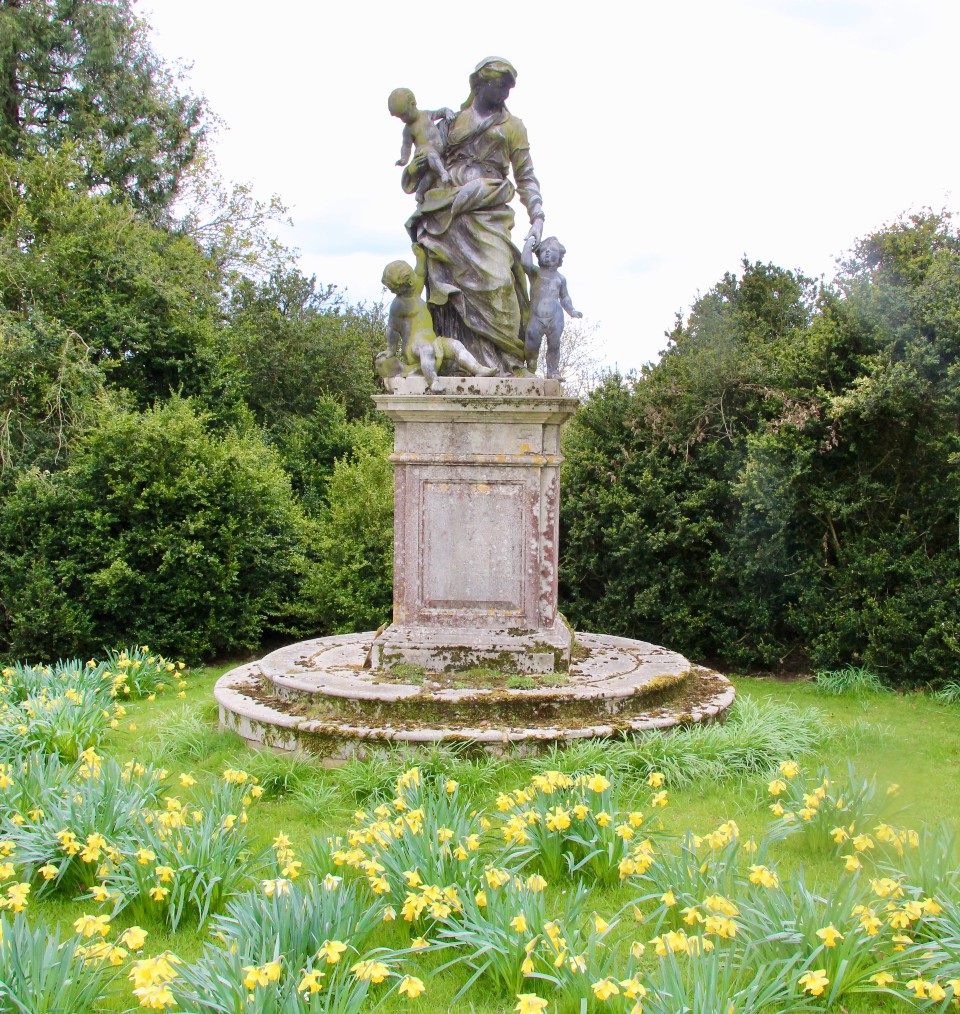
On my way to London last Sunday I took the opportunity to visit St. Paul’s Walden Bury, just off the A1M in Hertfordshire which was open for the National Garden Scheme https://ngs.org.uk/. Appropriately a fine statue of Charity was there to greet us at the entrance.

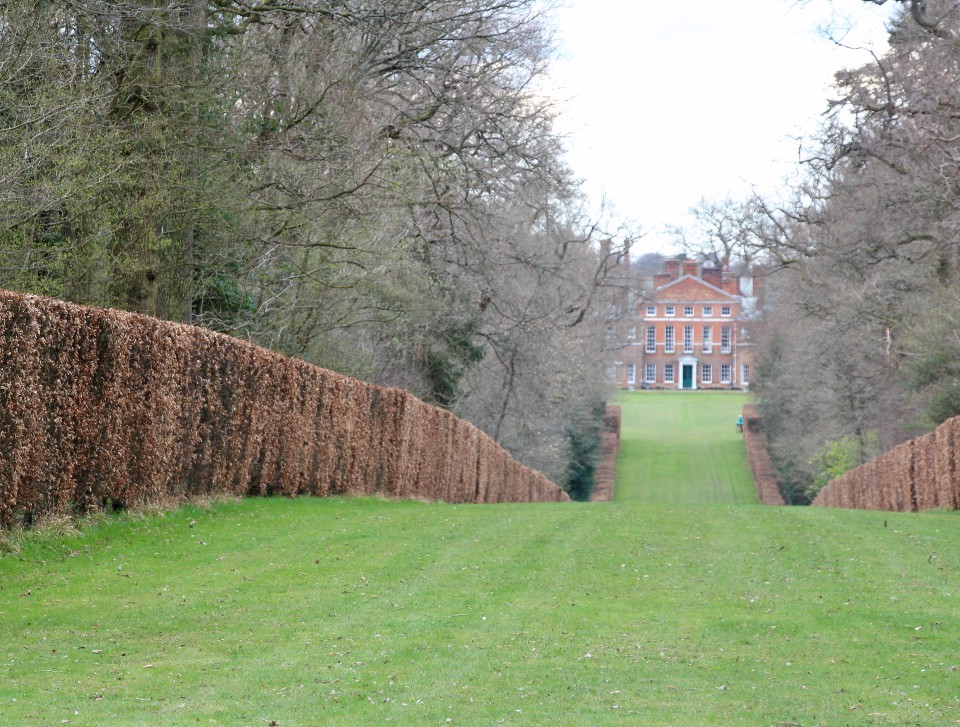
Standing with our backs to the house on the north side there are three allées lined with crisply cut beech, which radiate out from the lawn and away, down then up, to three ‘eye catchers’ in the distance. This is an 18th Century landscape, the design is known as patte d’oie (goose foot), and my rather flat photo does nothing to prepare you for the sense of scale.

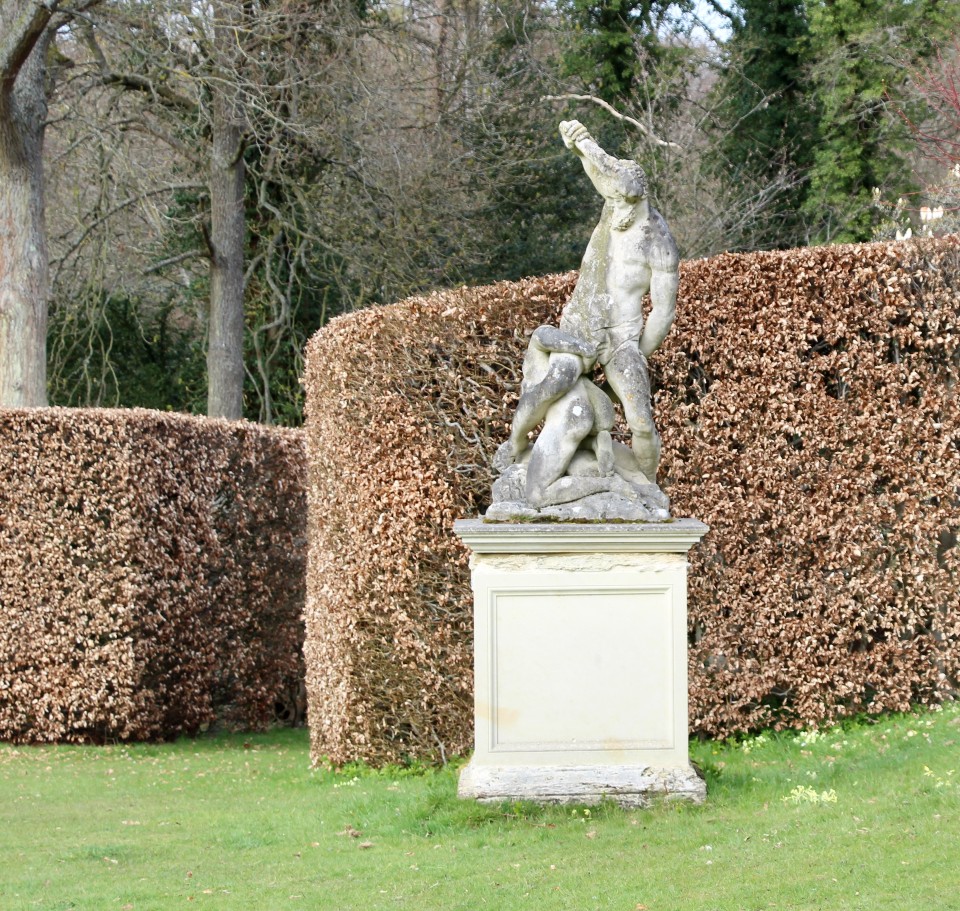
On the lawn just in front of the patte d’oie, a powerful show of masculine strength positively exudes from the two life sized statues; on the left Hercules and Antaeus are entwined with their struggle (a copy of Giambologna’s) whilst on the right Samson is meeting it out of the two Philistines (a copy of Michaelangelo’s).

The three allées lead up to their individual eye catchers on the horizon; the left hand allée draws the eye to a gentler statue; this is of Diana (identical to the one in the Louvre),

the middle allée, the wider of the three, although it is difficult to see, has a statue of Hercules, who we will meet later.

The third allée, the most easterly on the right is perfectly aligned to see the parish church of St. Paul’s Walden Bury.

Two gnarled pleached lime walks flank the lawn in front of the house, and it is from the right hand one that we begin our journey:

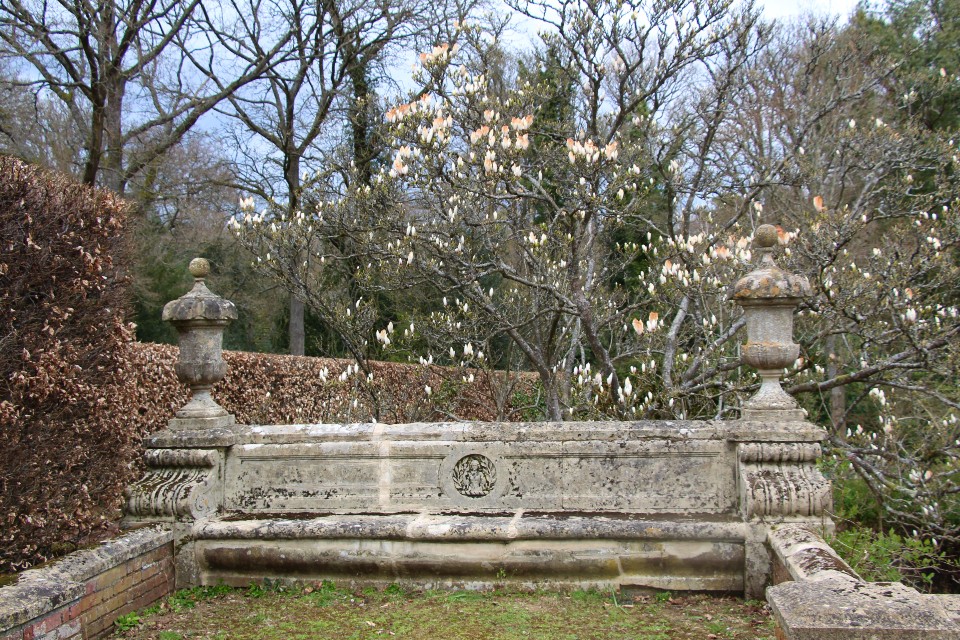
An ornate aged stone bench with its equally aged magnolia draws us through and under the pleached branches of the limes,

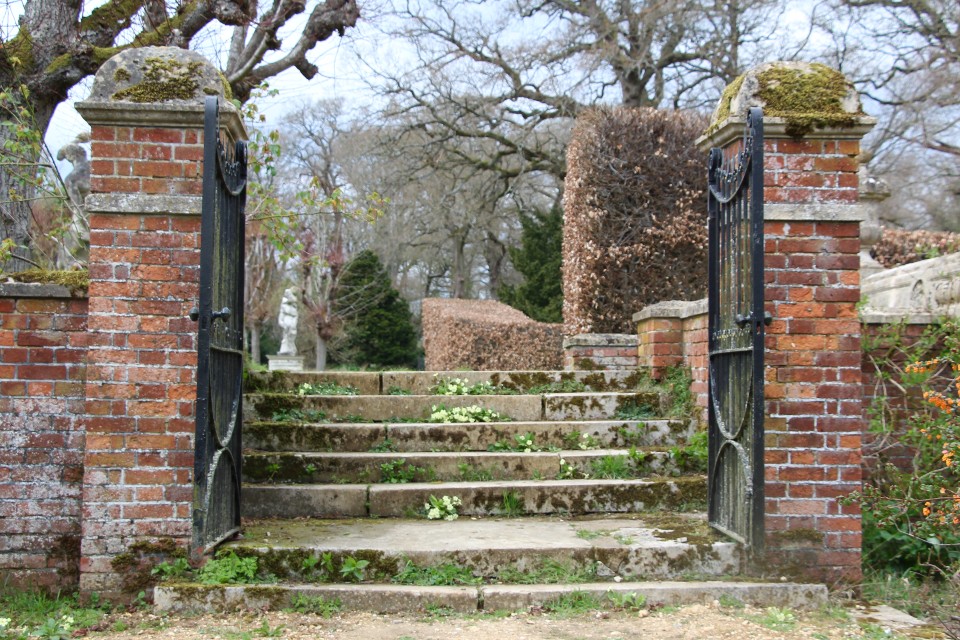
where we turn right down the stone steps which are sweetly softened by the chance growth of primroses.

We stride off towards the lake, where boughs of blossom and drifts of daffodils grow in harmony on the grassy bank.

The lakeside temple gleaming white looks as if it has been here since the creation of the landscape; however, it was designed by Sir William Chambers in the 18th century for Danson Park, near Bexley Heath and was removed in 1961 to this present site. Surely this is an example of recycling at its best.

Two parallel avenues cross the three main allées and the recycled temple lines up to another temple at the end of the lower avenue. This temple is also recycled, this one was designed by James Wyatt and was removed in 1950 from Copped Hall in Essex.

Rather than going straight across to, shall we call it, the salvaged temple, we turn right and head up the hill taking the very eastern allée. Stopping for a moment to admire the tender statue by Peter Scheemakers of Venus, the goddess of love with Adonis the young hunter; we can’t help thinking that he might have something in his eye?

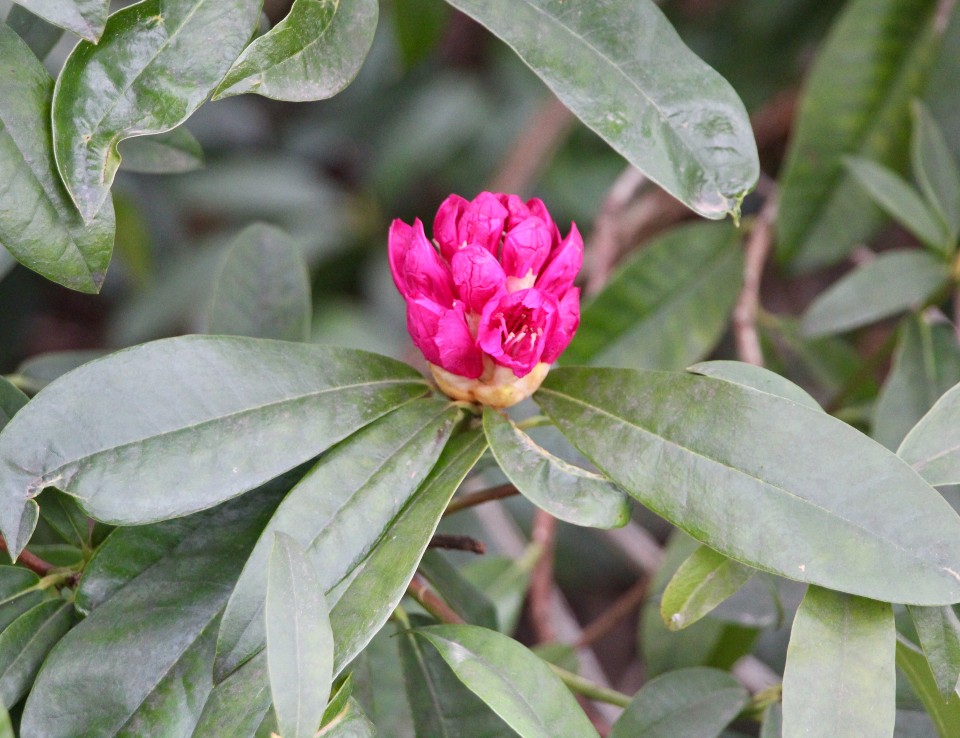
The areas between the allées are mainly wooded with an occasional splash of a rhododendron.

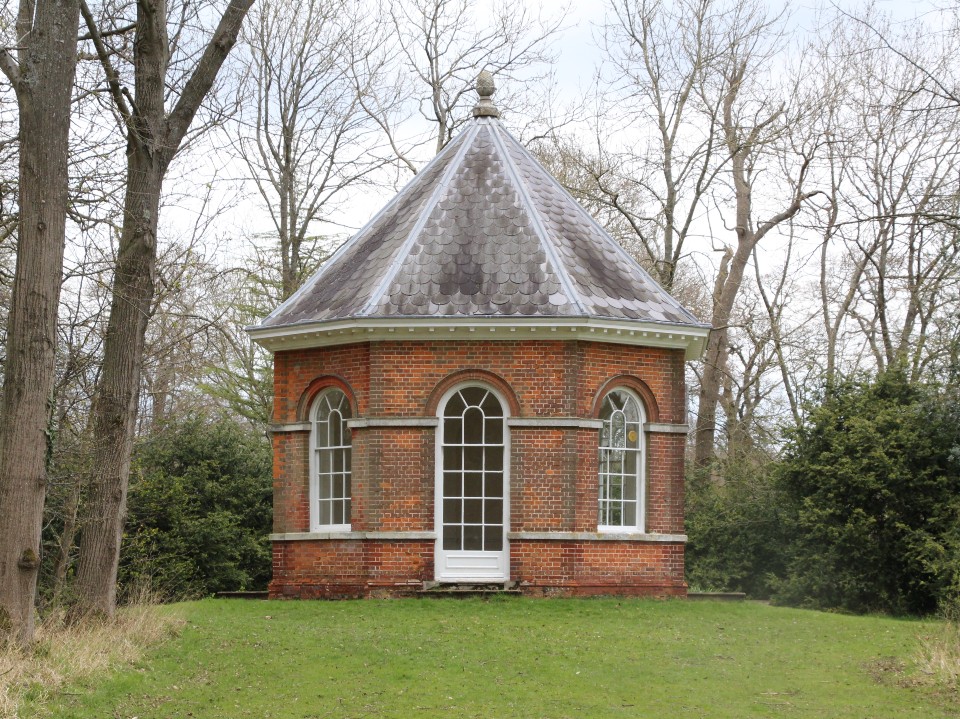
Continuing up the hill we reach the charming little octagonal brick pavilion dating from 1735, the reason for its name the ‘Organ House’ is not clear.

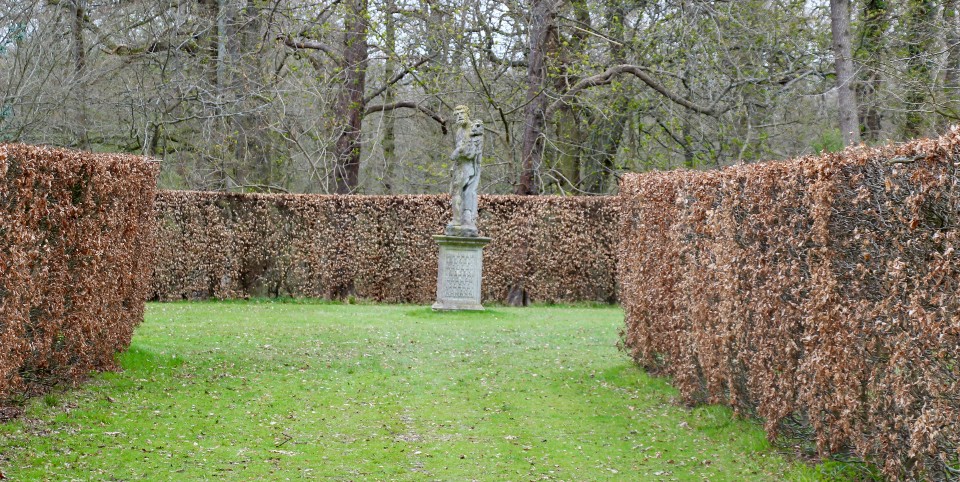
From here you look down the most northern avenue towards Hercules who also acts as the eye catcher of the central allée,

Hercules has a sweeping view of the house.
It is evident that we are close to Luton airport but it is not just the planes that fly over head.

The allee does not stop directly here but carries on behind Hercules into the countryside. I cannot help but admire the carved-out tree trunk step-over style, standing nearby.

It is like a mythological trail; from Hercules we cross to Diana who stands as the third most westerly eye-catcher. An 18th century statue she is identical to that of one in the Louvre but with a jaunty moss hair do.
Descending towards the house we come to a clearing; it is a turf theatre with classical formal pond and bronze statue of a warrior below,

and two sphinxes with a temple above. It is a quiet controlled space, a contrast to the surrounding wild mature woodland.

The sphinxes are most elegant, one has a bow around her neck the other in her hair, they too have come from Copped Hall and are believed to be portraits of the mistresses of Louis XV, who went by the name of Louis the Beloved.

We wonder, not only at the movement of the static statue but also how he earned the name ‘the Running Footman’. Descending the mossy staircase,

we arrive at the salvaged temple originally seen from across the lake, and feeling we may have completed the 40 acres, think it is surely time for a cup of tea, so we make our way back to the house.

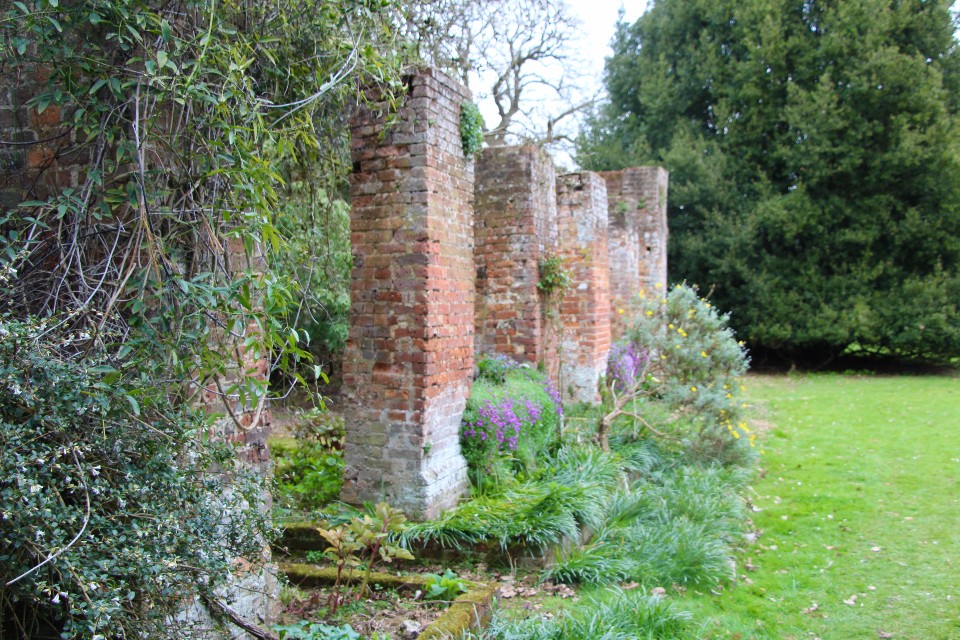
We pass the overgrown ruined orangery,

which must have been part of a more formal garden near to the house and where this photo was probably taken. St. Paul’s Walden Bury was the childhood home of Queen Elizabeth the Queen Mother, apparently a gardener, she is seen here wheeling her barrow along with her brother Sir David Bowes-Lyon.

This fabulous and mighty oak must have seen many a childhood game played below its branches.

Teas are served from the west side of the house in a secluded courtyard, deliciously homemade they revived us heartily and we took the opportunity to read the guide book where I find, not surprisingly, the photos are so much better than mine.

We realise that in our eagerness to sample the teas we have missed yet another ‘Wrestling’ statue,

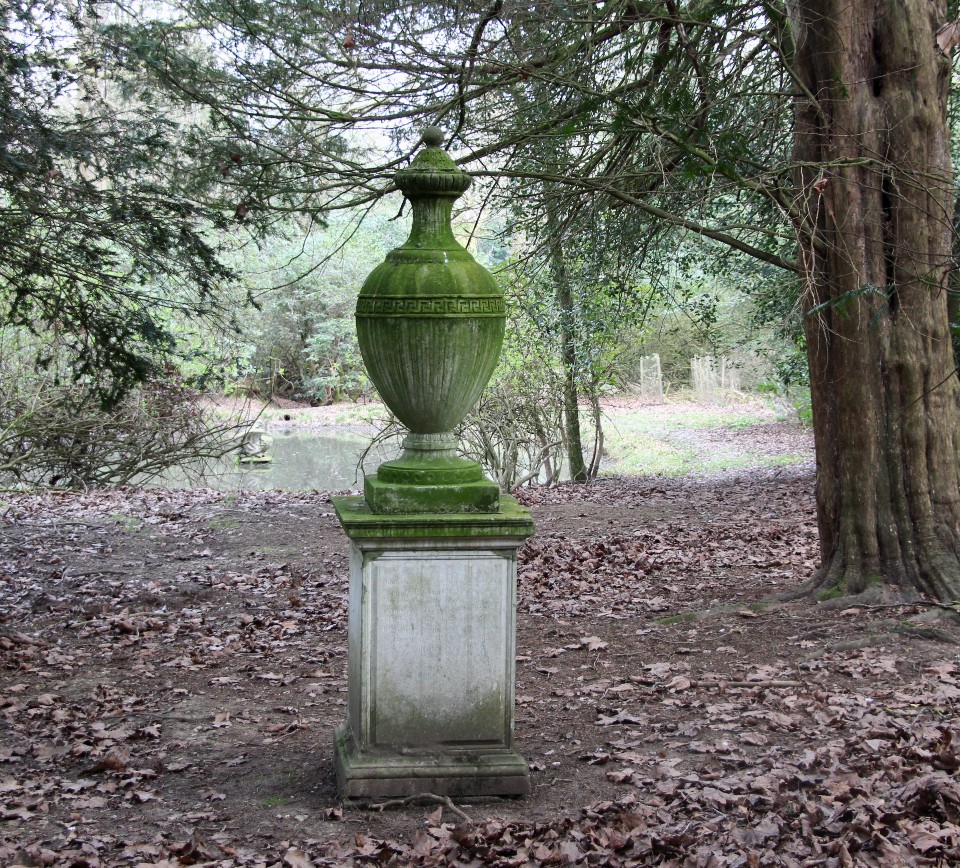
and have to hurry on to a wonderful urn containing the ashes of an adored pet, a dog who was ‘the most endearing of his species’,

and in a rustic pond we admire the ability of the cherub who has managed to ride the swan.

With a nod to Old Father Time, we thank the the good ladies who have worked so hard on the gate, and like the numerous visitors we have thoroughly enjoyed our afternoon ramble, and indeed as one lady said ‘Oh it is so good to get out’.

You too can ‘get out’ as the garden will be open again on Sunday 15th May and also on Sunday 12th June: for opening times visit https://findagarden.ngs.org.uk/garden/1677/st-pauls-walden-bury

From up high on a wall this little one sends us on our way, did she inspire the royal wave we once knew

*******APRIL*2021*******
A trip to a Venetian nursery

Yesterday I popped round to my local nursery, not so much to buy plants but out of intrigue; I am in Venice and until I watched Monty Don’s trip the other day I did not imagine that such a horticultural space existed in this unique city.

It is terribly easy to get lost in Venice but part of the joy was trying to find the nursery. So, with no TV crew to guide us, we relied on the map on my phone which confidently took us down delightful narrow alleyways, over little bridges and along watery canals in the Cannaregio district, and we arrived at Laguna Fiorita Onlus, where the gates, hanging between crumbling pillars, were wide open.

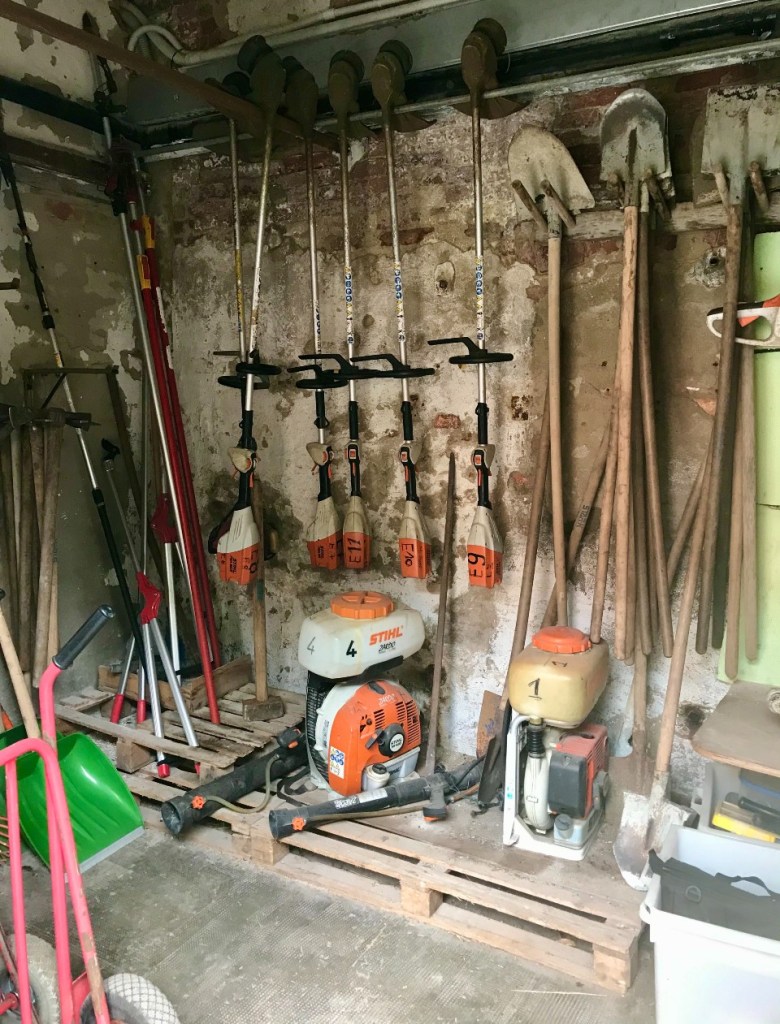
Through the gates we followed the paved path with troughs on one side planted with the beautiful but unattractively-sounding Trachelospermum, (the Italian name of Rincosperma is no better) and colourful tool sheds on the other. The doors are left wide open and I wonder that nothing gets stolen, but of course why should they, Venetians don’t garden.

Nonetheless the sheds are well stocked with all sorts of equipment for a decent days work, and the charming girl in the nursery explains that they are also employed to attend to some of the private gardens around the city. You never see these gardens for they are tucked away behind high walls.

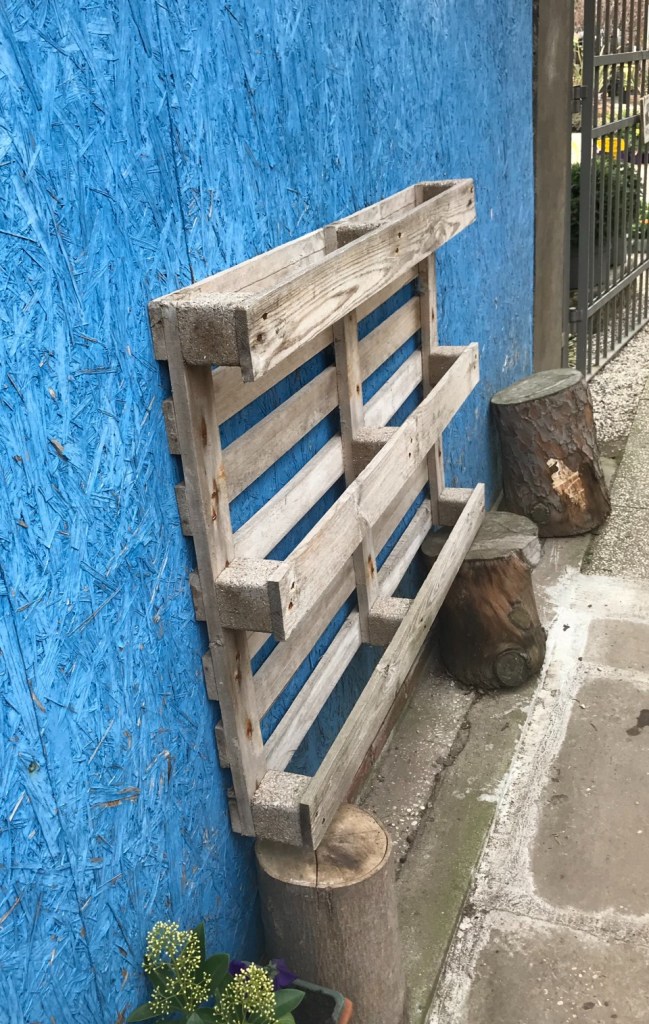
An ingenious outdoor rack is fixed to an ordinary chip-board, brightened by a brush of blue.

It is not the handsome tree Pittosporum that I am amazed at but the site of soil, it is so unusual to see the bare earth anywhere in this watery city.

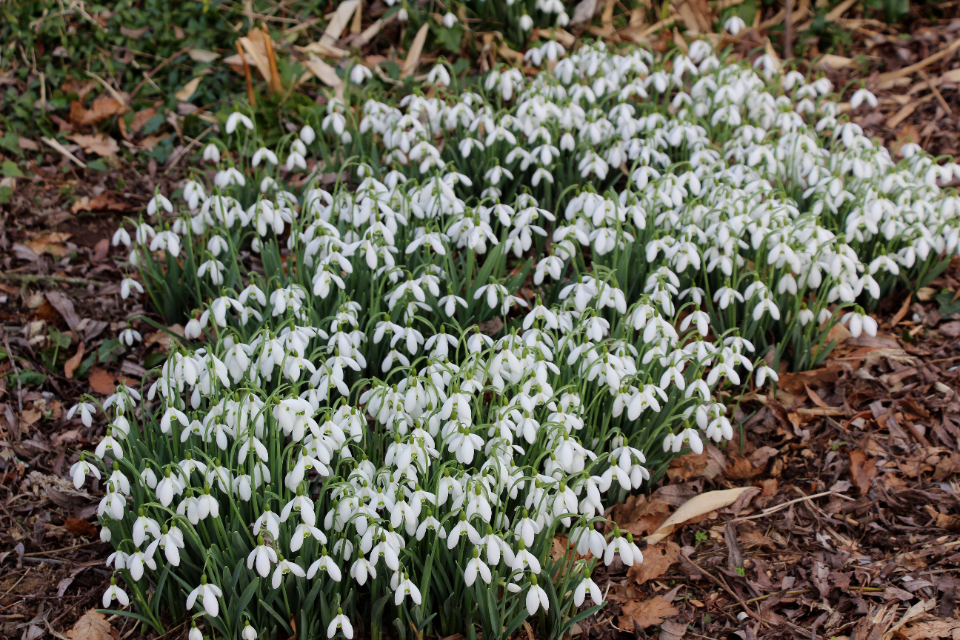
Walking on through another gate our Covid pass is checked and even though outside, the wearing of face masks is compulsory. We find the customary display of spring bulbs and I am surprised to find snowdrops still in flower.

‘Margherita’, along with its charming little cousin ‘Margherita piccole’ and yellow Euriops combine with evergreens to look so familiar and reminiscent of home.

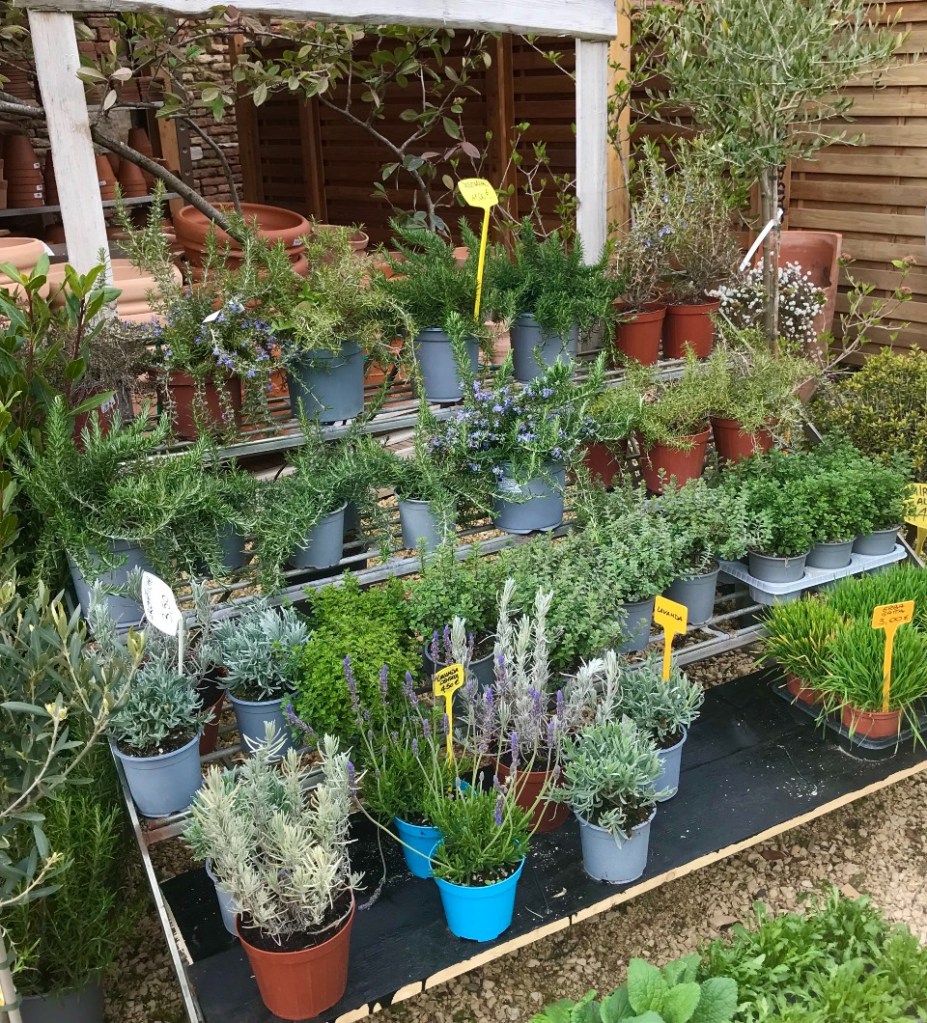
No doubt the usual collection of herbs will find their way to someone’s Venetian kitchen.

Yet, it is the decaying walls which surround the nursery that make it so unique. In her book on Venice Jan Morris refers to ‘the scent of crumbling antiquity’, and it is just that.

Barrows and ladders are propped against artful brick walls with secret doorways.

and from somewhere beyond, a saint rises up, if he could just glance this way for a moment, but up there he is perhaps a little too precarious,

and busy keeping an eye on his church door over on the other side.

I wonder at how many nurseries have their very own campanile.

From this neighbouring window you not only must look down on an array of plants but over to the lagoon beyond. Down on the small patch turf, I spy another rarity in this city; it is a clump of daisies.

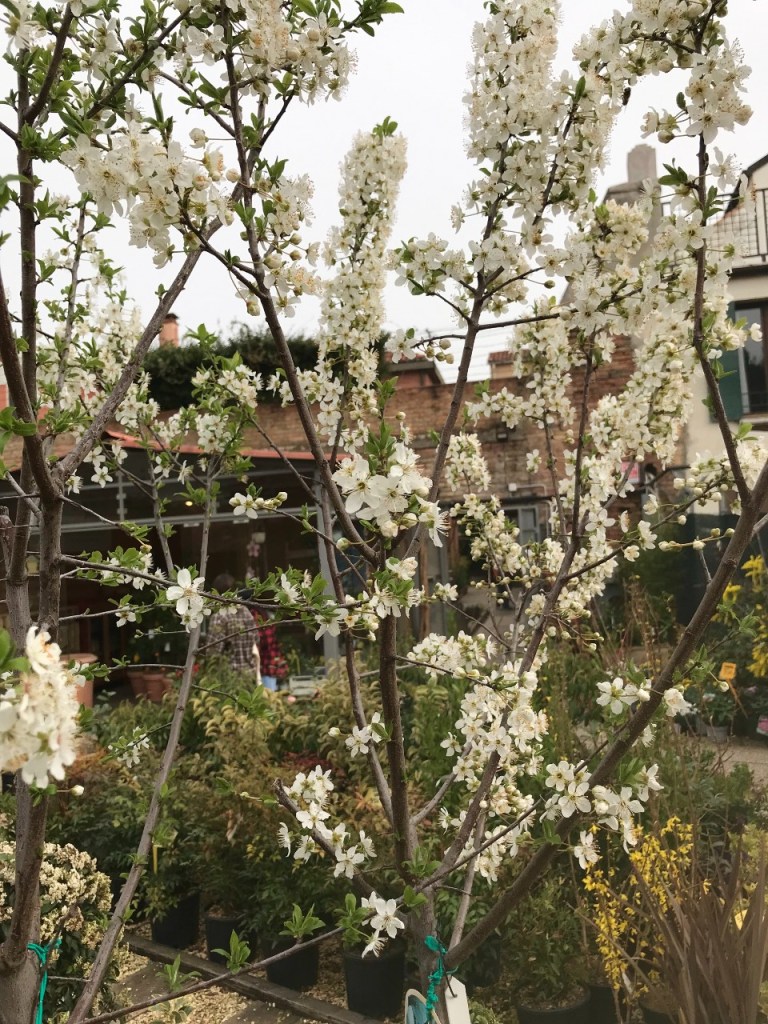
Who in this city will buy these spring blossoms of pink and white?

Nothing beats the bright sulphur yellow of the mimosa, standing by the assistant in blue it is surely a sobering nod to the Ukrainian national flag.

The two long poly-tunnels are a reminder that this is a working nursery.

In one, bedding plants stretch out in lines, with a solitary petunia just reminding us that summer will be here soon.

In the other a variety of pots, plants and paraphernalia is for sale.

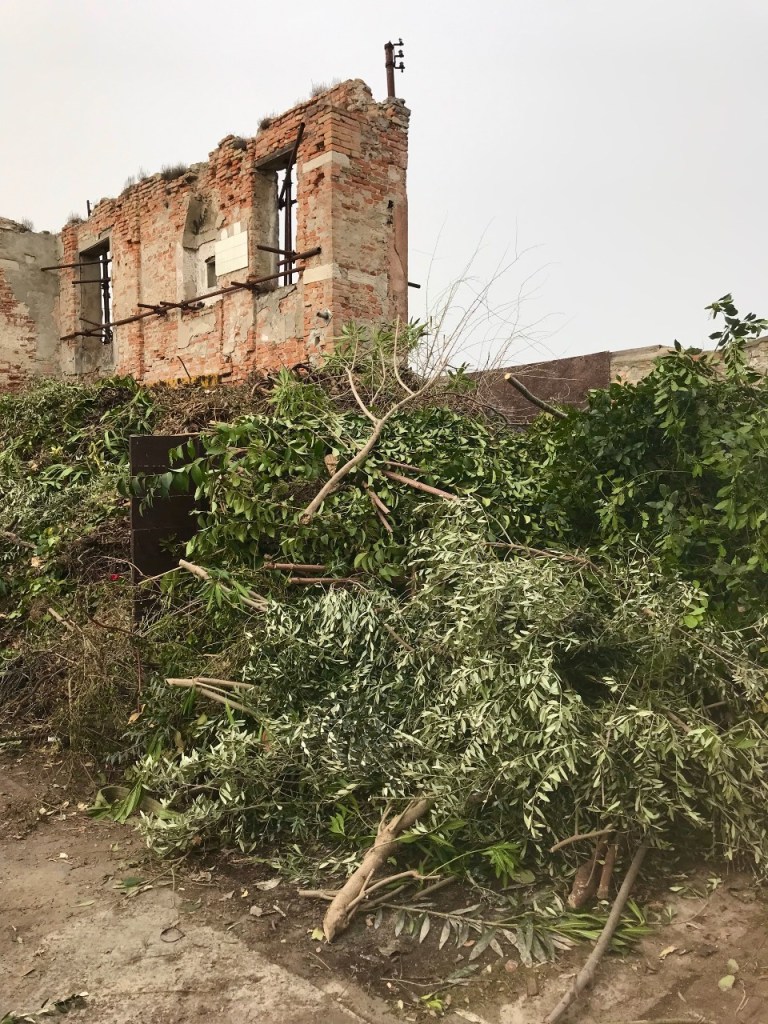
Over the years the nursery has broadened its services to specialise in forestry which probably accounts for the pile of tree cuttings gathered from the gardens which use their services.

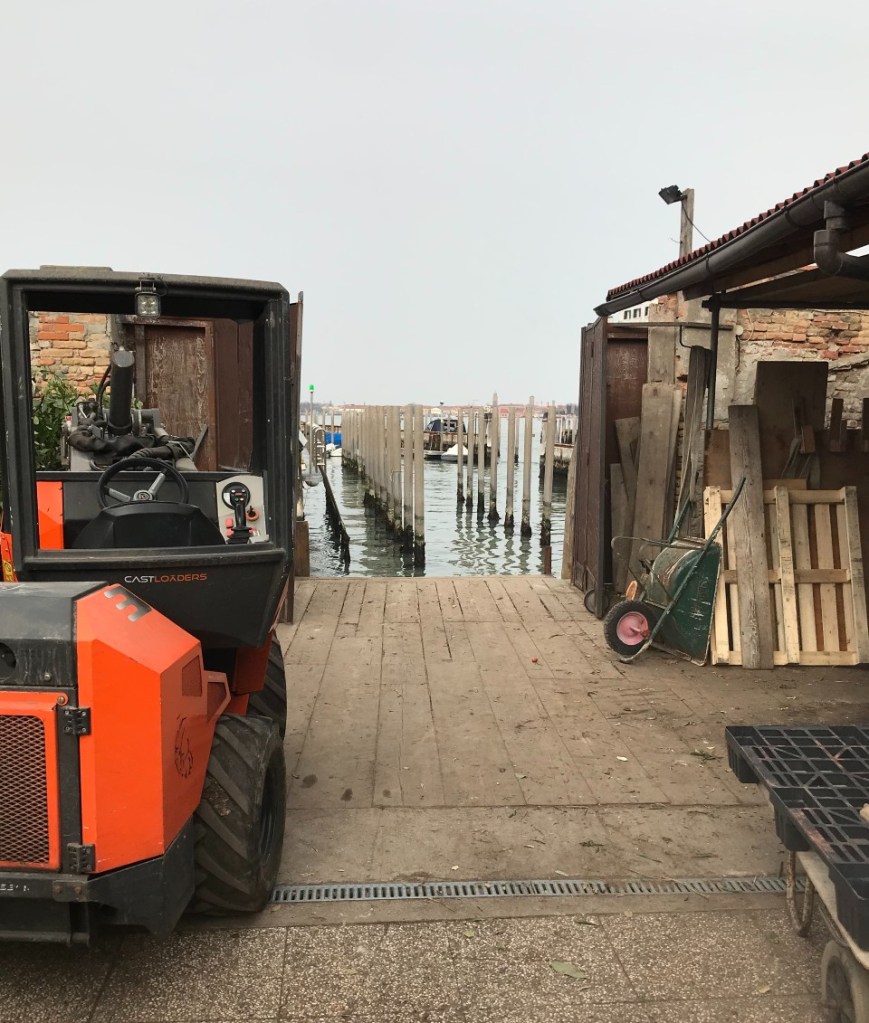
There is no room for composting here and no call for wood chippings either, so they will be loaded onto a boat and taken away.

This nursery is about 500 square metres and not only raises and sells plants, maintains private gardens, but it is also a co-operative which was established thirty years ago when some parents and professionals got together to bring people with disabilities closer to a real working environment within a protective space.

It has been an interesting diversion from the churches, museums and galleries of this glorious city. I purchase some seeds as a little reminder of my visit and wonder if i might regret not acquiring this little gem.

xxxxxVenicexxxxx

A touch of Spring at Ivy Croft

It was a joy to be out visiting gardens again and on my way driving to Hay-on-Wye for a jolly weekend, I found a garden open for the National Garden Scheme just the other side of Leominster, and very conveniently for me it was open on the Thursday.

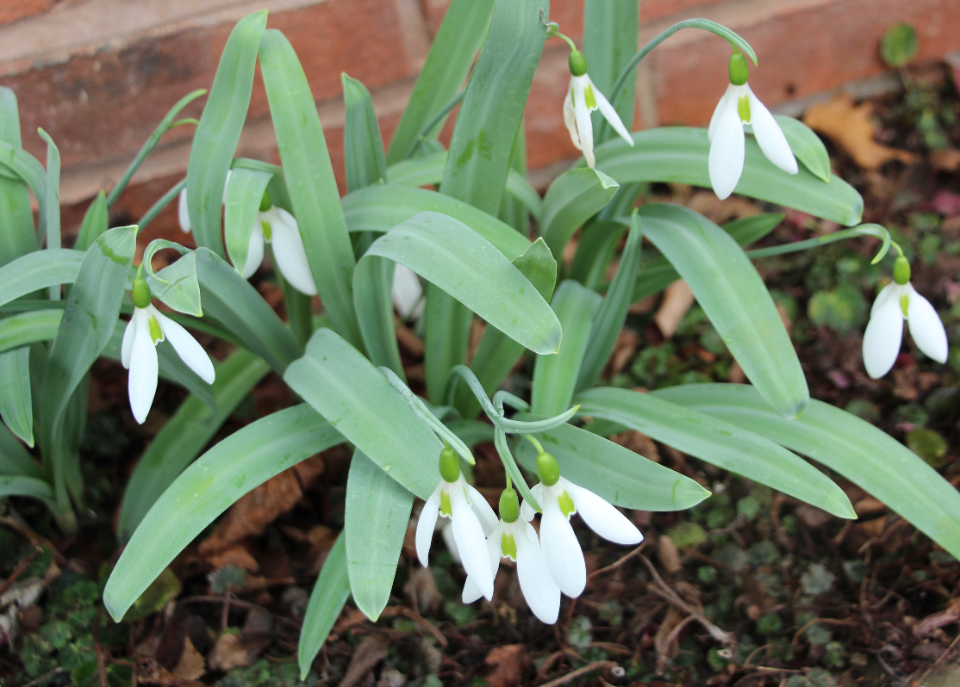
You do not need to be a gardener to know that gardens opening at this time of year are all about snowdrops, and you don’t have to be a gardener to enjoy them. At Ivy Croft splashes of welcoming snowdrops appear all around the garden, either in the borders where they seem to be nudging those perennials to hurry up and push through,

whether in clumps or drifts, growing in grass or under trees, snowdrops look so appealing and just give a little ray of hope.

These were keeping warm growing up against the house. Garden owner Roger could not remember the exact name of these ‘Galanthus elwesii, a comfort to me that even the experts can get the labels muddled.

We begin our exploration of this four acre garden with the area by the house. There are those familiar winter gems all around and growing near the front door is the divinely scented Chimonanthus praecox also known appropriately as Wintersweet. I regret taking the saw to mine and if you have not got one I urge you to go and buy one.

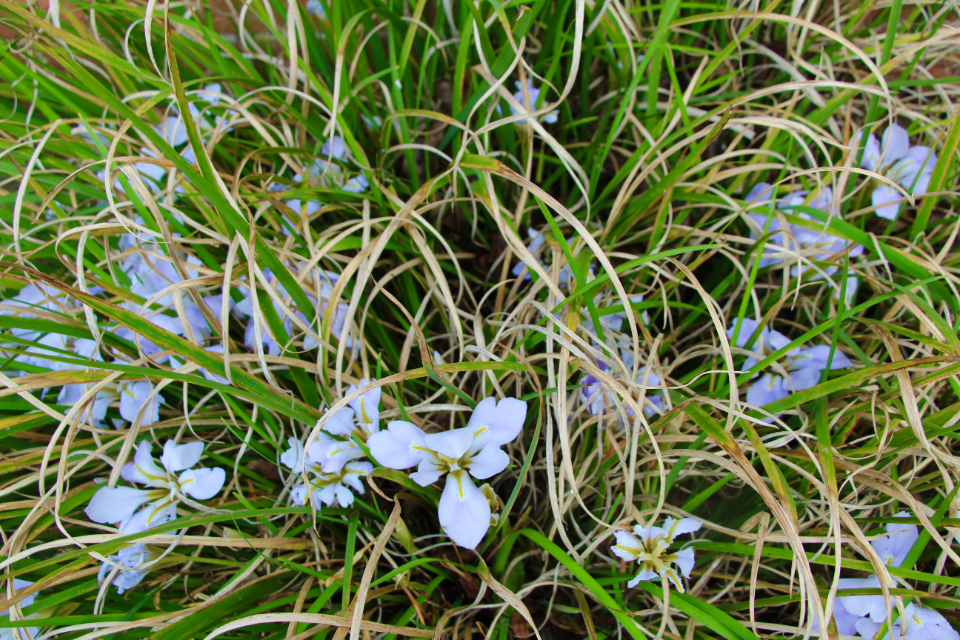
Below, the handsome clump of soft blue winter-flowering iris catches my eye. These Algerian iris Iris unguicularis flower from November through to February, the individual flowers look quite exotic in a vase.

All gardens look a little bare at this time of year but as we venture to the front of the house an elegant seat and stone troughs add another dimension,

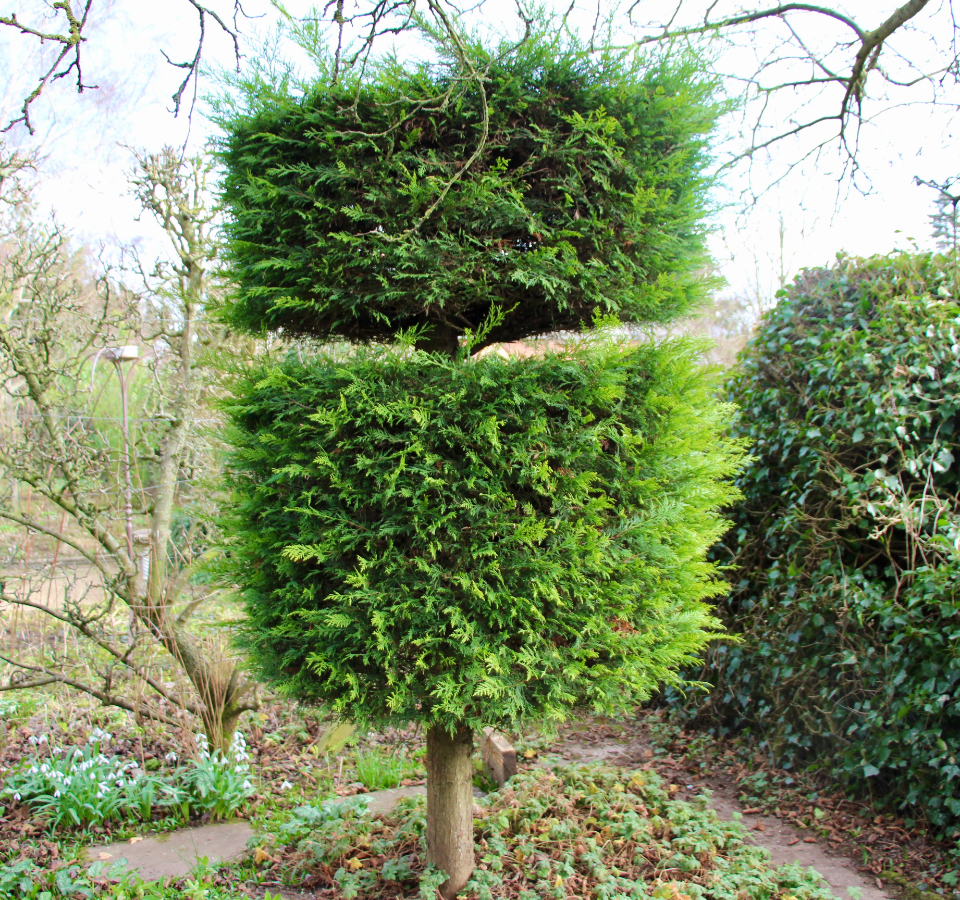
and to embellish the scene there is nothing like a touch of topiary …

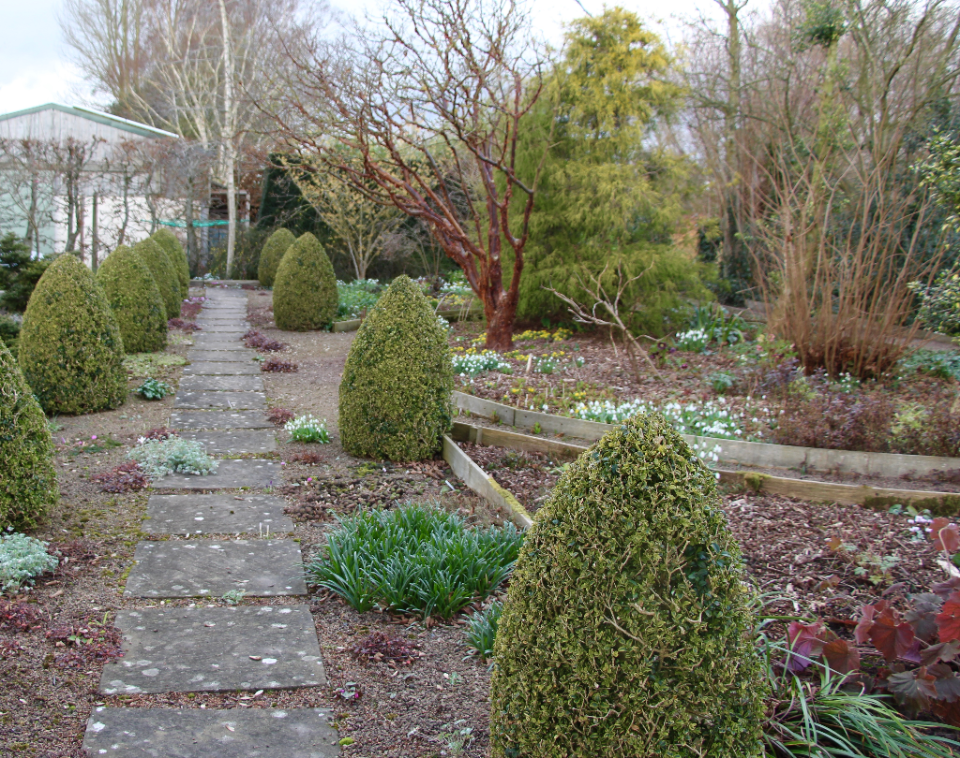
You can see how evergreens are a necessity in any garden particularly in winter; here they soften the hard landscape and guide you along the path past the reddish brown stems of the Acer griseum.

Every Spring I mourn the fact that I have not planted enough hellebores, and as Spring gathers apace, I simply forget. These just look so heavenly.

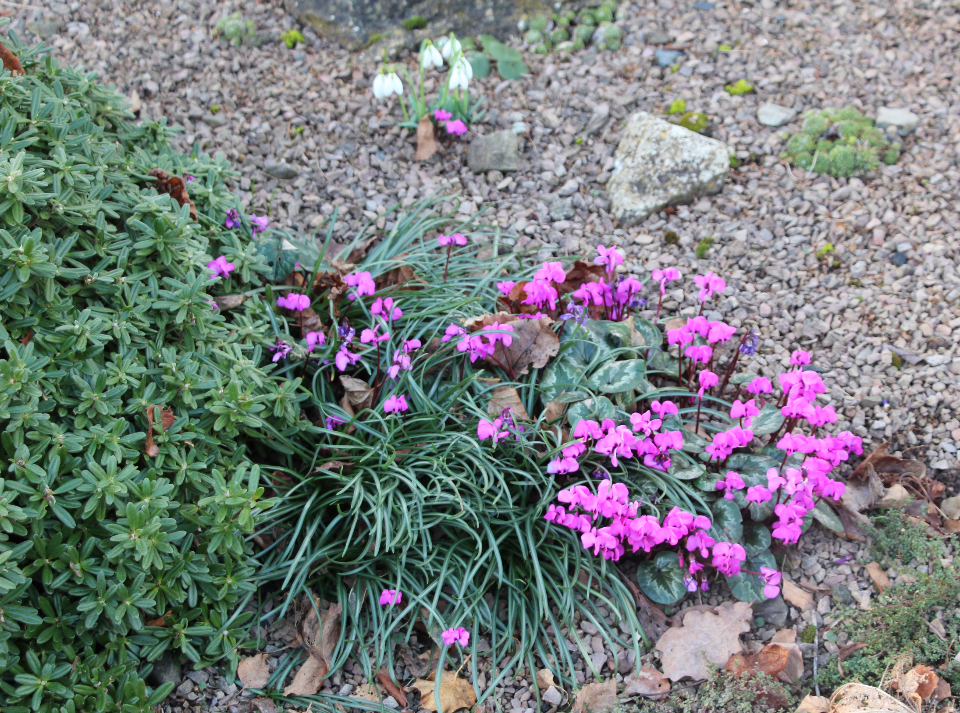
We need some colour at this time of year and what better plant than these cheeky cyclamen emerging out of the grey stone.

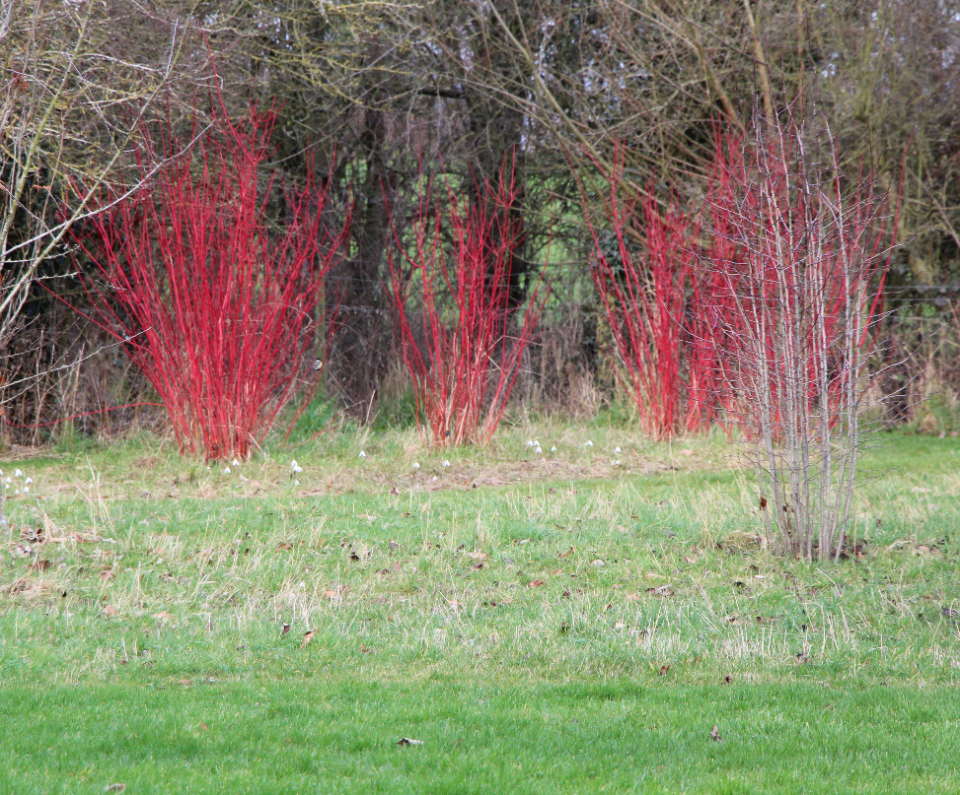
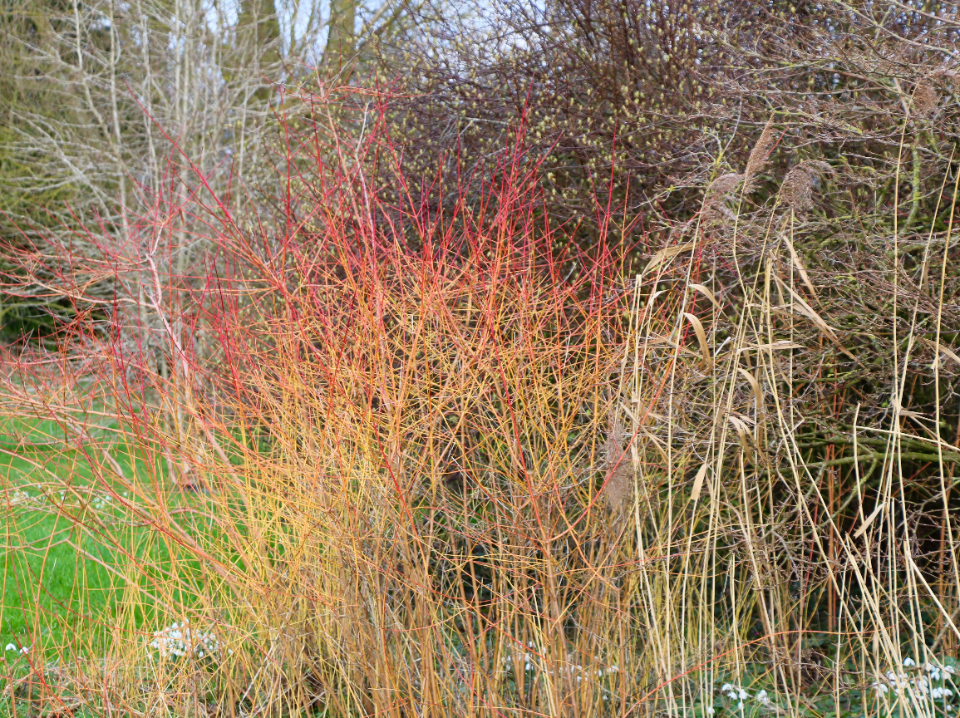
Walking away from the house, the vibrant stems of the Cornus draw us into the wilder area of the garden. Wild it may look but I know these parts of the garden can be a lot of work.

I can’t help but admire the green of the conifer, its branches elegantly flowing down to the ground and am surprised to find it is Chamaecyparis lawsoniana ‘Impricata Pendula’. If you check out The Woodland Trust website it cheerily informs you that the wood is rot-resistant which is popular in Japan for making coffins.

Gardens are not all about flowers; Roger uses woven willow in several places in the garden, either as a screen or as a quirky seat arbour.

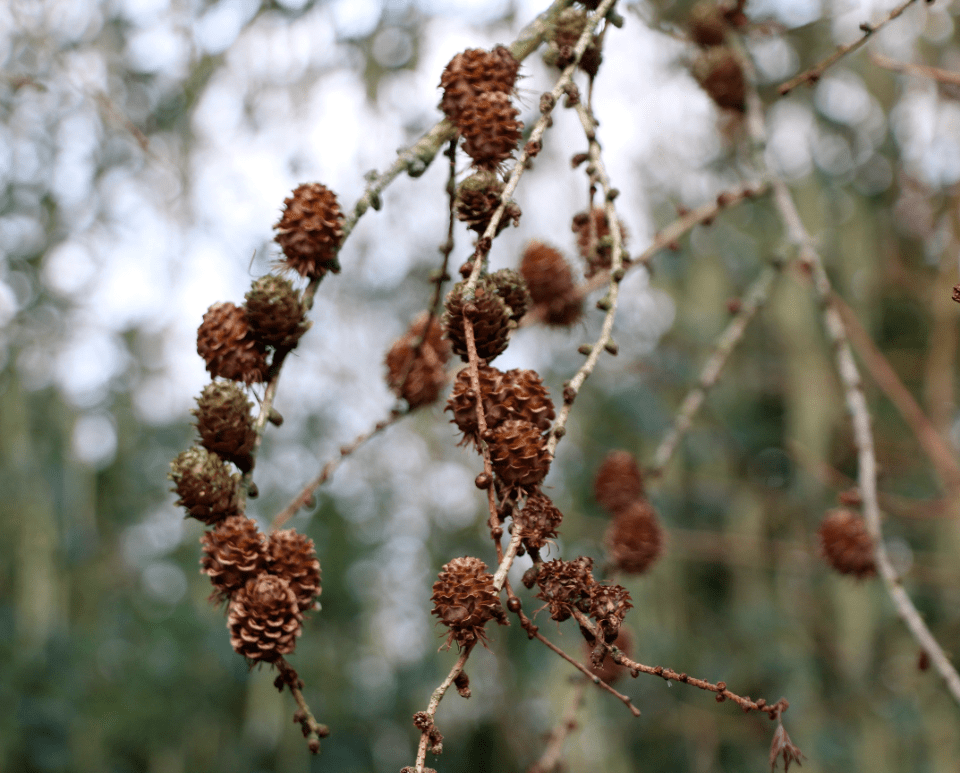
and it is easy to forget the beauty of the small cones of the deciduous common alder Alnus glutinosa,

whilst the evergreen Garrya elliptica, drips with silver tassels. This is a bush which I find suffers the cold but dislikes the wind.

The garden was created some 25 years ago and has an air of maturity about it. Neat paths wander through wintery shrubs and trees, glimpsing every now and again the promise of spring,

and out in the open while the lawn looks so verdant and trim, the ornamental grasses seem to be experiencing a bad hair day.

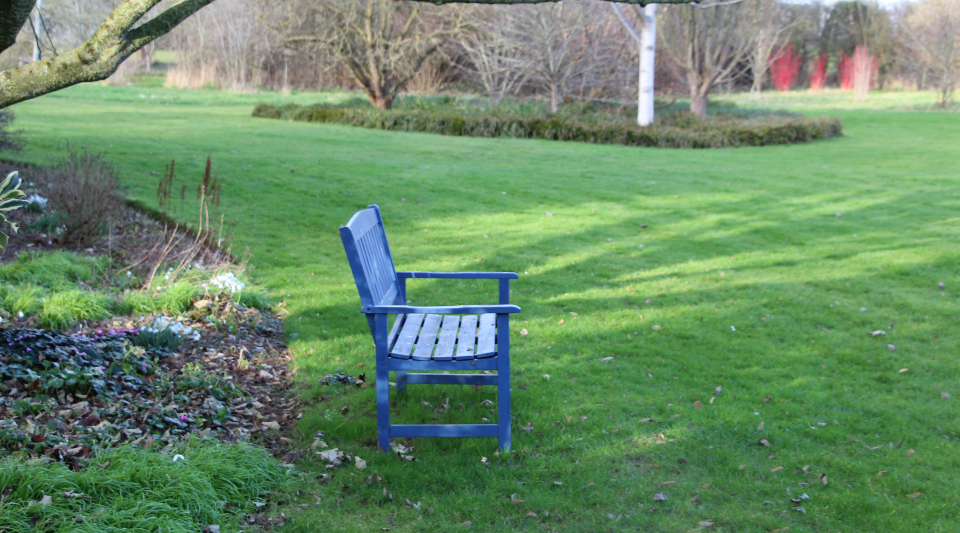
How a drop of paint gives a simple wooden bench a touch of vibrancy, a focal point in a spacious area; the blue seems to blend harmoniously with the bright green.

A Mulberry is the central feature of the working vegetable garden, where paths are sensibly wide and firm waiting for the laden barrow to pass through the organised beds.

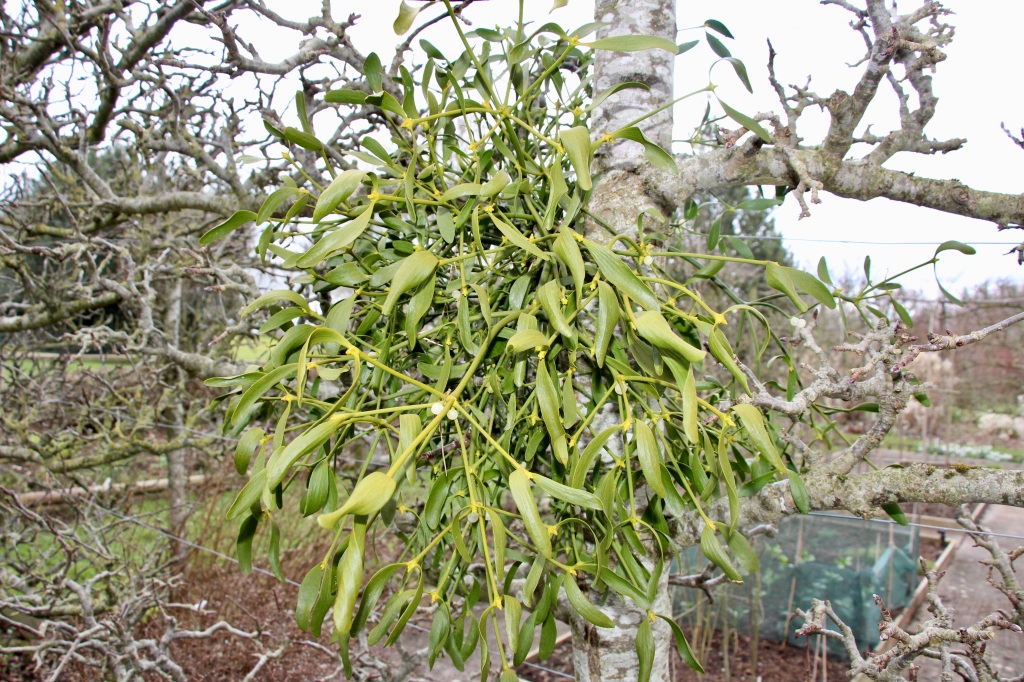
Surrounding the vegetable garden are trained fruit trees, one adorned with the mysterious mistletoe, which grows quite prolifically in the orchards around the county.

It is difficult not to admire this splash of Hamamelis mollis; several varieties grow in the garden, but this is near the car parking area and the scent is uplifting. To the right are the pleached limes underplanted with ‘oh so perfect’ box balls.

Behind the parking area is the whitest of birches contrasting with the evergreen fine yew buttresses, and what a perfect way to cheer up an unremarkable building. I am inspired to recreate the idea.

Roger is a true galanthophile and has collected and cultivated quite a selection: they are clearly labelled boasting endearing names. My friend Jill falls for a beautiful yellow ‘Treasure Island’ until we notice the price. To be fair it is not an unreasonable amount as some Snowdrops can reach staggering prices but we just aren’t in the market. So she goes for a different yellow, Galanthus ‘Spindlestone surprise’ while I settle for the ‘Godfrey Owen’ with its six outer petals, and also the virescent ‘Rosemary Burnham’, whose white petals look as though they have been brushed lightly with green.

Ivy Croft is open for the National Garden Scheme for Snowdrop Thursdays throughout February and March, and is open throughout the year. For details of this garden and other snowdrop gardens near you check out https://ngs.org.uk/view-garden/14669. To see Roger’s list of snowdrops and some lovely photographs of the garden in summer, go to http://www.ivycroftgarden.co.uk/. I hope to pass this way again.

*******2022*******