Garden visiting, looking at what is through the garden gate, especially those open for National Garden Scheme, with just an occasional foray here and there.
Christmas, for various reasons has not been at the forefront of our lives this year. In fact, if you came into the house you would wonder if it was ‘getting to look like Christmas’ at all. Instead of dusting down those old treasured decorations, unwinding twisted lengths of lights, bringing out the baubles, and welcoming those faithful fairies, we have gone for what one might call the natural and simple look, perhaps I should say, sustainable.
‘All is calm, all is bright’ as vases are filled with the tall bare twigs of Wintersweet, Chimonanthus praecox, and the little pale yellow flowers have filled the house with a wonderful fragrance. It is indeed, an absolute ‘comfort and joy’.
Outside it grows as a shrub, enjoying the warmth of a wall. Situated not far from the back door, you can catch the sweet smell of its divine scent, especially in ‘a bleak mid-winter’ when by chance the sun happens to shine (seemingly a rare occurrence in this neck of the woods).
Two years ago, it was becoming rather ungainly and so, long after it had flowered, I hacked it back. The following year it sulked and did not have its usual profusion of flowers and I was consumed with mighty dread that I may have ruined it for ever. Fear not; this year it has come back better than ever.
O come, O come, for those who are interested, this most highly fragrant lady was introduced from China in around 1766. A quick translation of Chimonanthus reveals it is all in the name; cheimon means winter, anthos is flower and praecox is the latin for ‘very early’ and so there we have it: a very early winter-flowering shrub. I have to agree with Vita Sackville-West who, writing her column in the1960’s and making it hyphenated said that ‘Winter-sweet should have a place of honour among plants that will flower out of doors during the winter months’. Yet nowadays despite the profusion of garden books, very few writers draw our attention to its magnificence and seldom do we see it growing in winter gardens.
Vita goes on to warn her readers that when purchasing a young plant you may have to wait five to six years until it flowers, but that it is well worth the wait. I wholeheartedly agree.
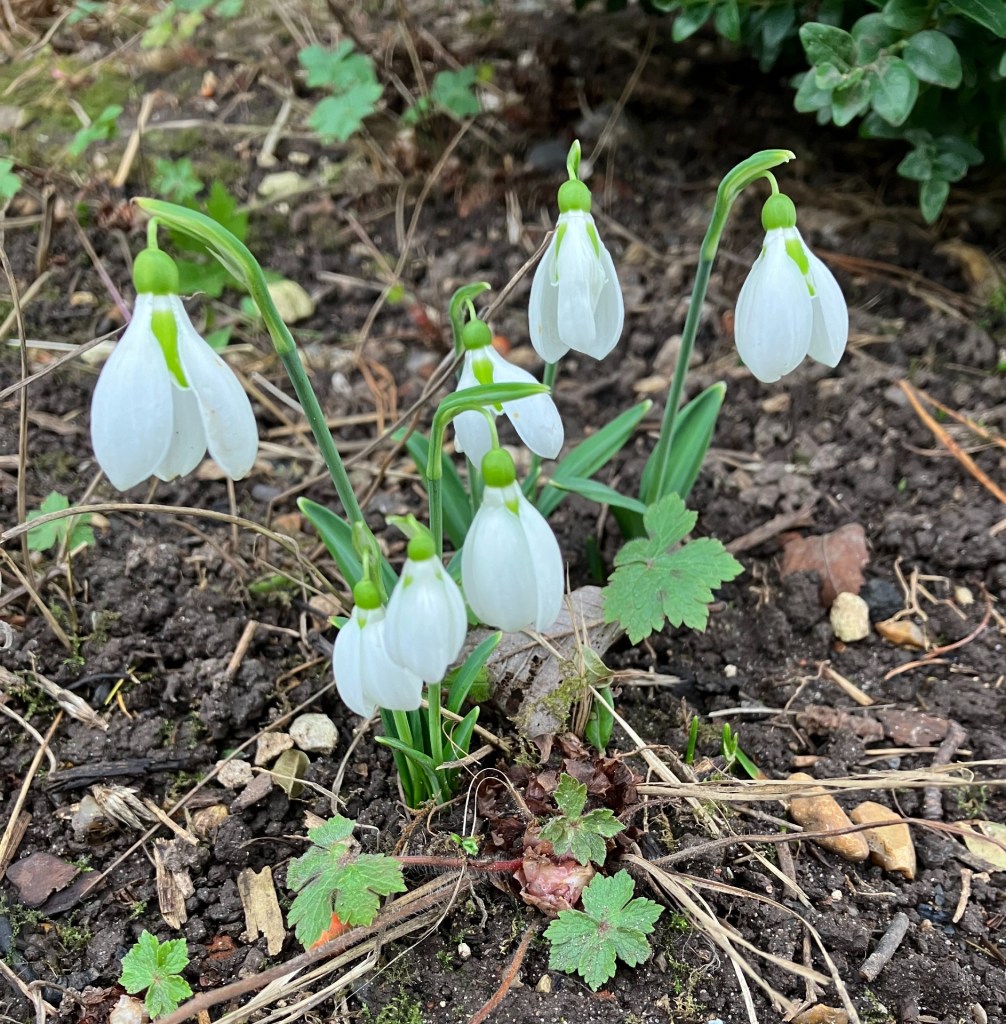
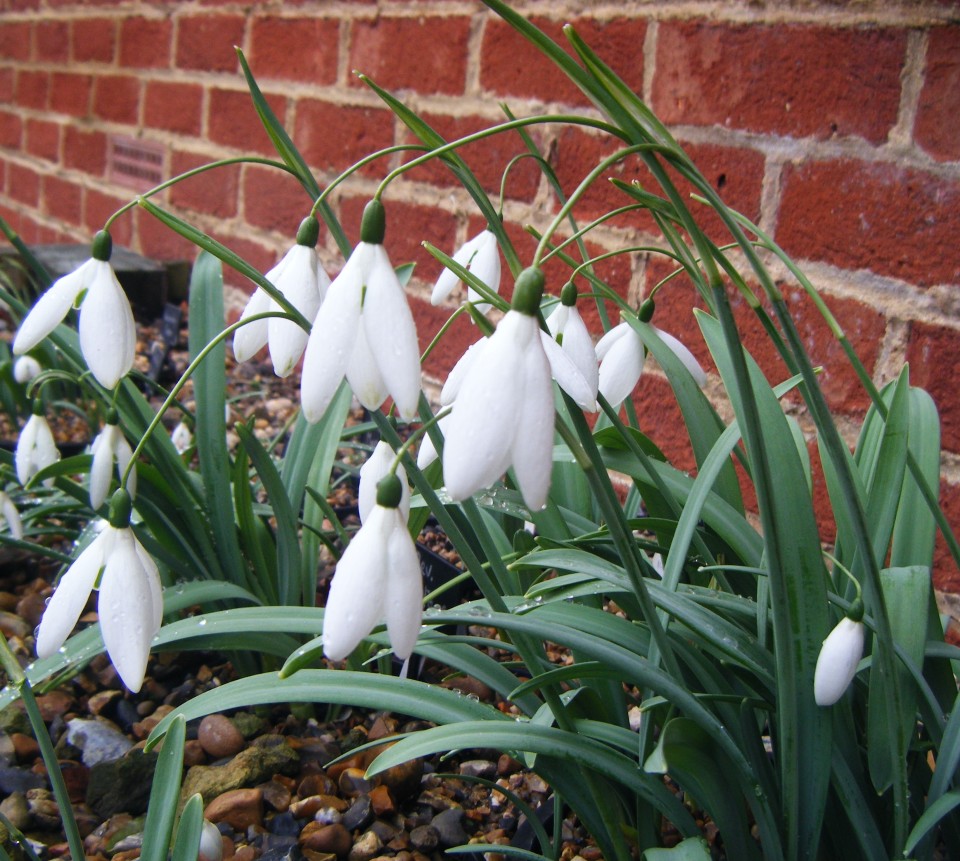
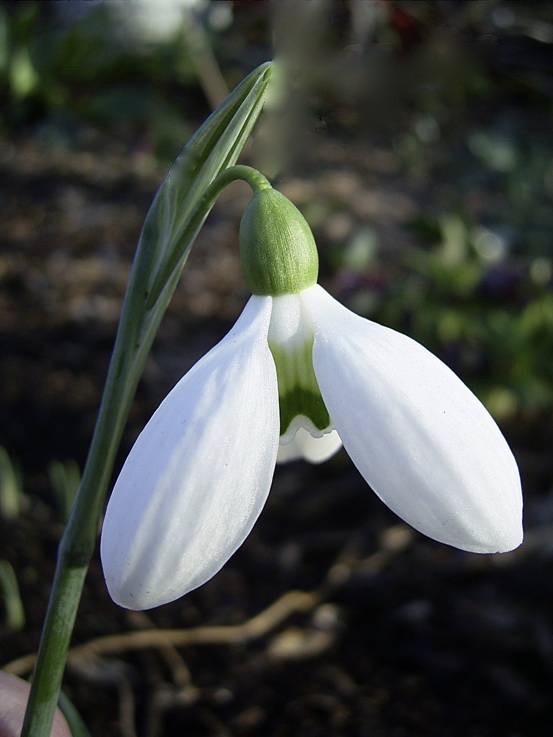
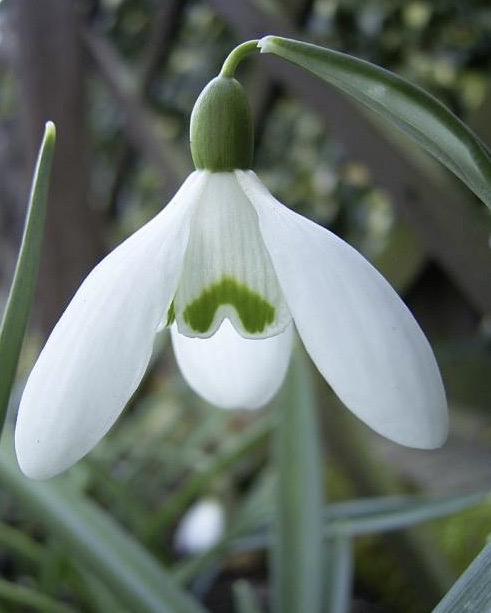
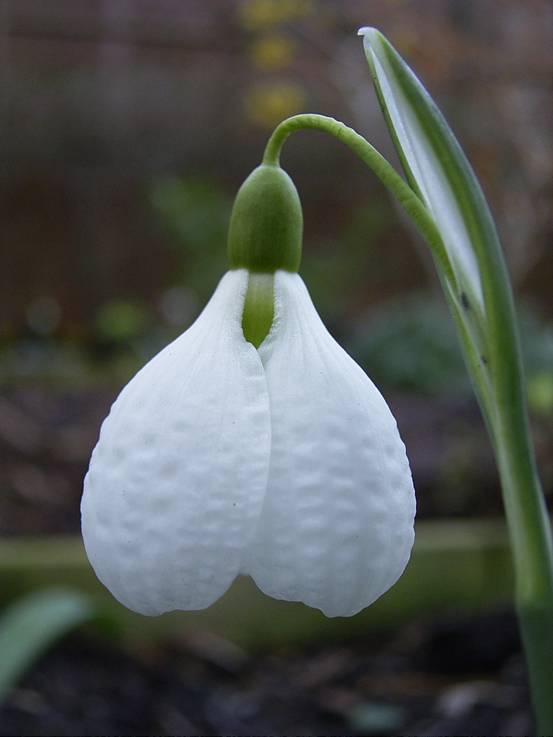
It so happens that nearby to my specimen and also in flower now, is another little star, the appropriately named snowdrop ‘Three Ships”. Plant both so you can enjoy one sailing in before the other begins to flower. Surely better than any Christmas bauble?
So here’s looking forward to visiting gardens next year
The garden at Caldrees Manor is one of the last in the season to open for the National Garden Scheme. Situated not far from the A11 in Cambridgeshire it was the ideal place to meet up with friend Leslie.
Although parking was in a field away from the house, we could not help but admire this welcoming driveway with its elegant centrepiece situated in front of the house and surrounded by a delightful planting of shrubs.
We had come for a guided tour with Will who with the garden owner John, has been responsible for creating this large garden over the past twenty years. He takes us through the gate and around to the other side of the house.
A verdurous space appears before us framed by the rose arch; there is a lot going on, but instead of descending through and down the steps, we turn right towards the summer house.
This ornamental folly with its generous door surround, and windows seemingly wide-eyed, is surrounded by a rich planting of summer flowers now coming to an end but there is still a good display for the time of year and we particularly commend the combination of michaelmas daisy, hydrangea and pennisetum.
Brunnera is such a good plant, its blue flowers on show for weeks in the spring and the silvery leaves continue to be a beauty defying any attack from slug or snail.
Will and his wife Jacqueline https://www.jwlandscapes.co.uk/ have their own landscape business and this is their flagship garden. This brick bridge was one of the first features that Will built.
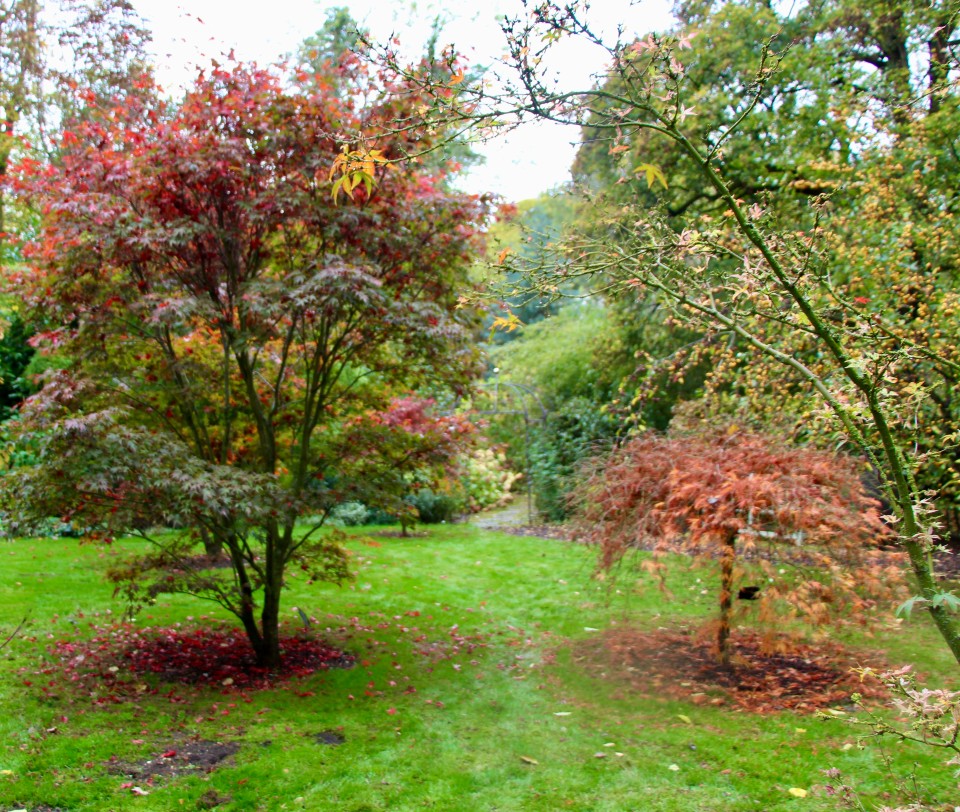
Pergolas bring variety and height, and act as partitions from one area of the garden to another. We leave the more formal area and enter the acer glade,
where a great variety of specimens are grown, some still green whilst others are on fire with colour.
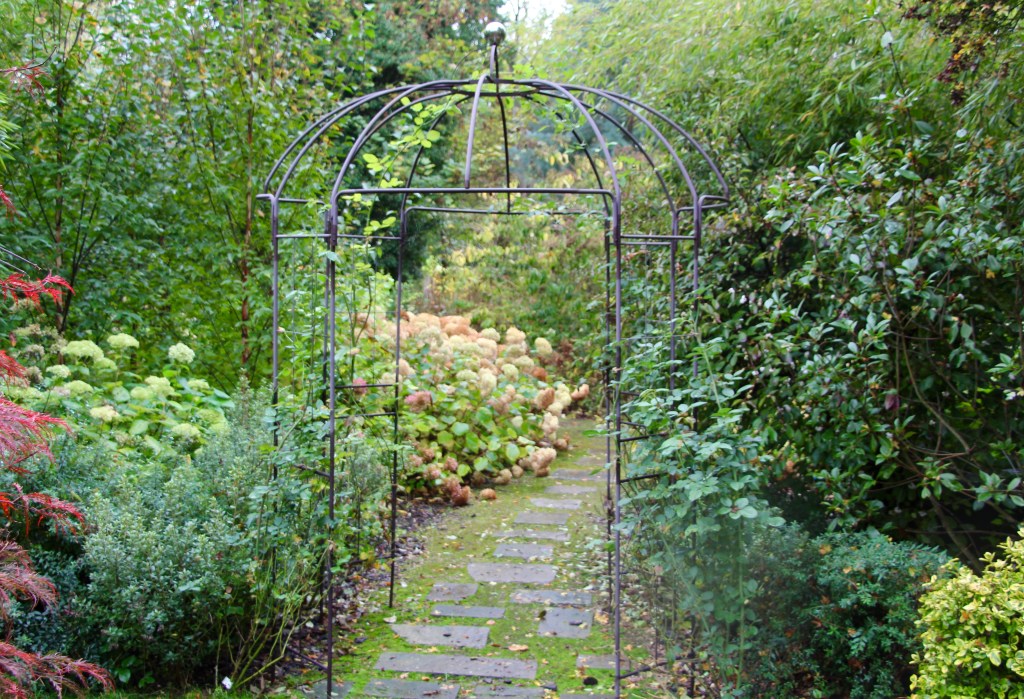
The leaves are as beautiful on the ground as they are on the tree. We follow the path through the metalwork arbor into the hydrangea area unperturbed by the summer’s drought.
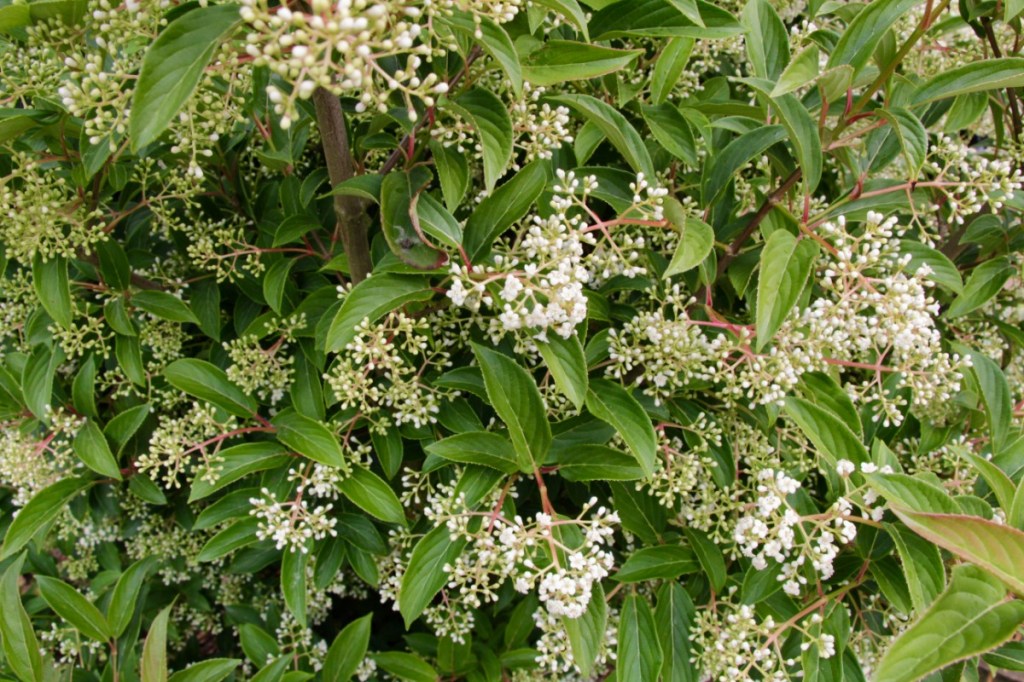
The air is filled with the scent from a viburnum; it’s a wonder that this insignificant flower produces such a fragrance.
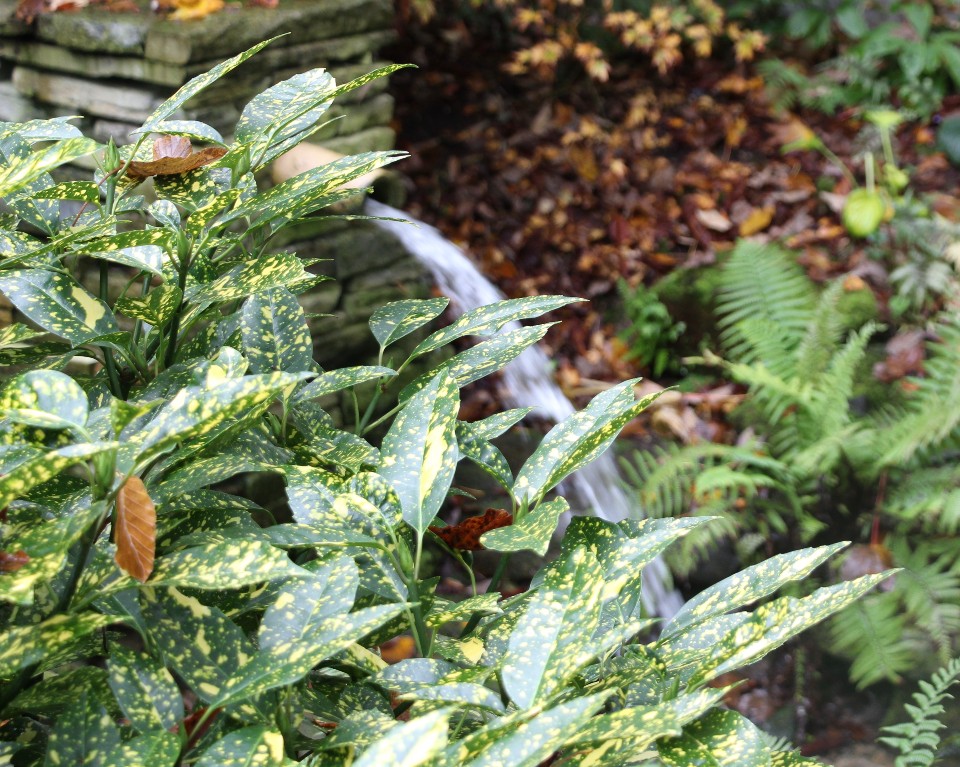
Here too is the sound of rushing water, its source not apparent at first, until we find it gushing from a pipe. There is no shortage of water here as we are apparently standing on a giant lake and the water is being pumped from a borehole.
Wooden signposts guide the way, beautifully carved; we love the papilionem touch at the top.
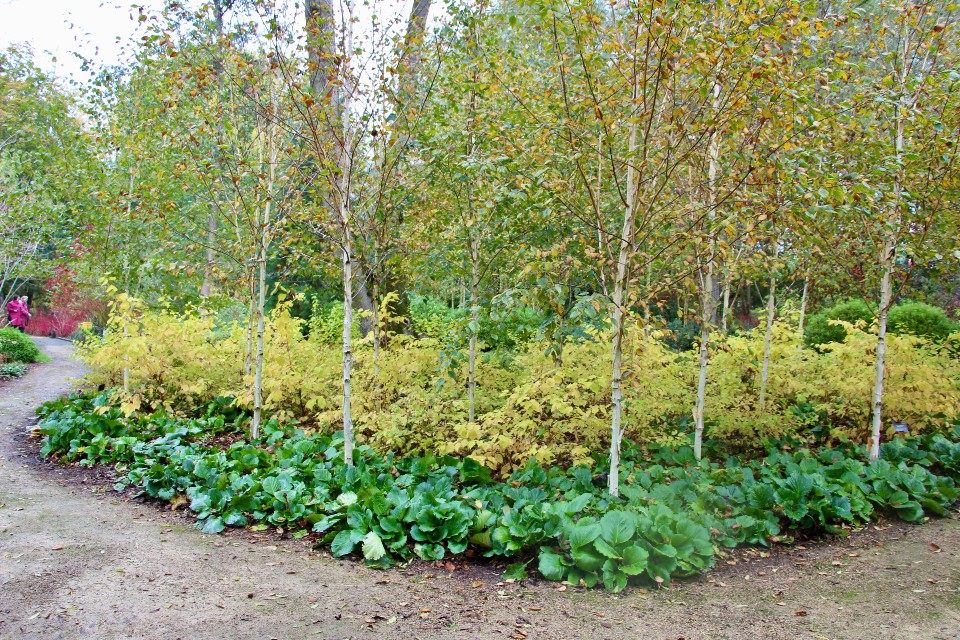
Silver birch planted in a group is an acknowledged theme and it works well here underplanted with cornus sanguinea ‘midwinter fire’ and bergenia.
As summer flowers fade, the sculptural blooms become more pronounced.
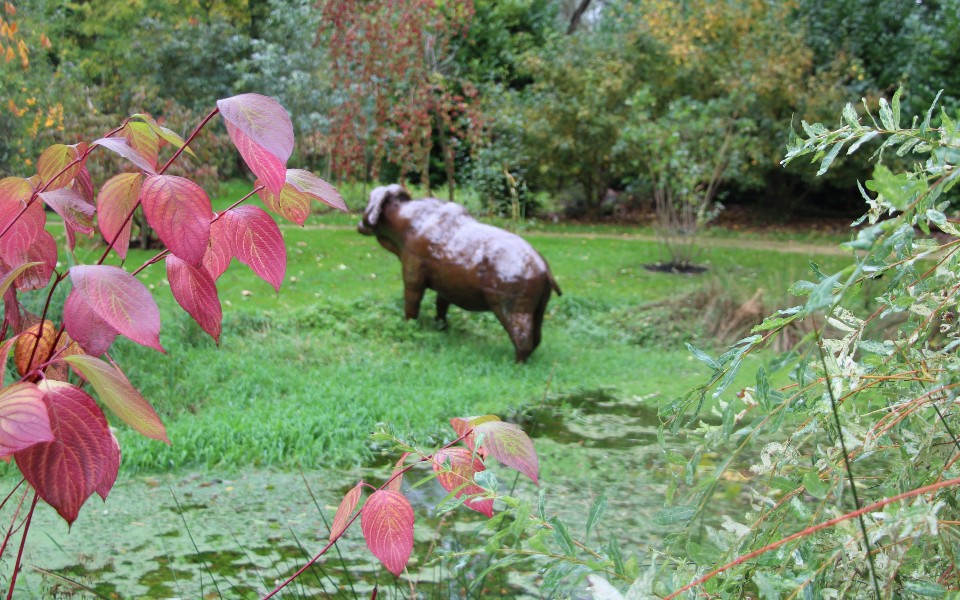
There is a touch of humour in this garden as the quite unexpected appears through the jungle of greenery,
and is that really a water buffalo I see at the side of the pond?
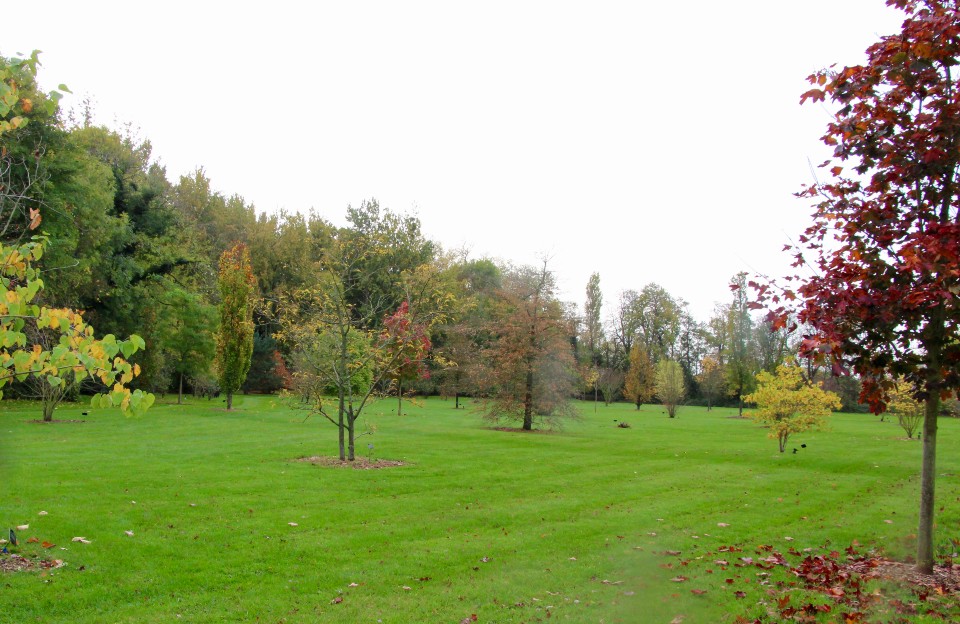
From the winding paths in the old wood we enter an open space where a new wood has been planted. It is pretty impressive seeing that it is just three years old. How will it look in another twenty?
This new wood has such a different feel and we love the splash of sculpture at the end.
Returning towards the house we walk through the fairly recently created Japanese garden; plants, rocks and gravel carefully considered in the design.
From here we can go towards the orchard, along the drive which is neatly edged on one side with silver lavender, and on the other, scattered seedlings are allowed to grow but carefully controlled,
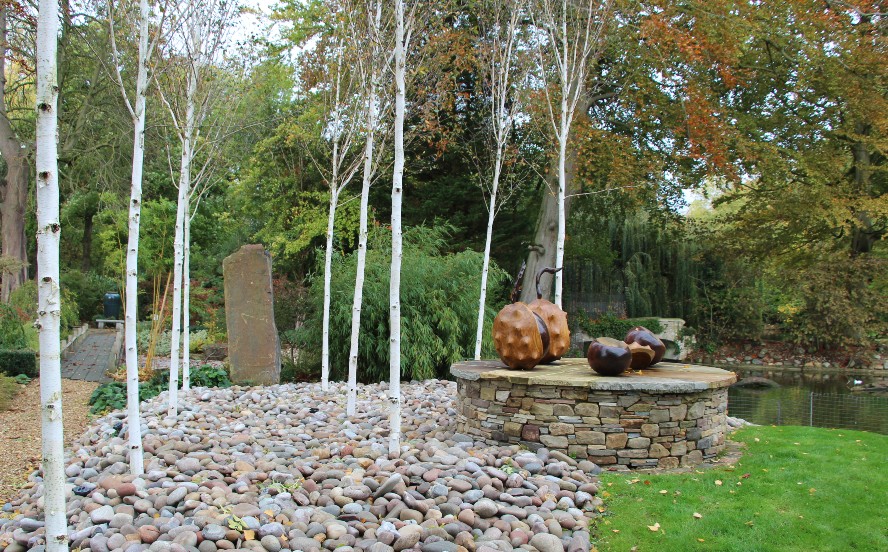
and return to end our tour between the Japanese garden and the pond at these beautiful carved wooden conkers; smooth shiny polished surfaces, there is an irresistible urge to run your hands over them.
Heading back for the much needed coffee and cake we pass the quirky topiary, and then there is a sudden sound of a distant crash. Will looks concerned.
Despite there being no wind, the noise is of a fallen tree that has crashed across the path. Not what you want on an open day but no harm has been done and there are plenty of other paths to take, and different areas to explore. Such a variety of species to admire, and sculptures to search out, we have enjoyed our time, and it has been a great place to meet; why don’t we do this more often ? We both agree and promise to meet up in another garden next year.
Caldrees Manor opened for the first time in October 2020 and by opening its very private gates has raised a trug-load of funds for the National Garden Scheme. It is taking a year off but am sure it will open its gates again for many more visitors to enjoy in the future.
Hospice gardens do not immediately spring to mind as ‘must go to visit attraction’. However while on child care duties in south London last weekend I took the opportunity to visit The Royal Trinity Hospice, Clapham Common which kindly opened its gates to the public in aid of the National Garden Scheme.
The Hospice, with its elegant facade situated on the north side of Clapham Common is the oldest hospice in the UK and was created in 1891 with thanks to the generosity of William Hoare who donated £1,000 of the £2,000 needed to set up what was known as The Hostel of God, the remainder of the funds being raised by public subscription. Originally situated around the corner in The Chase, the hospice by 1894 had 10 beds and patients were cared for by an order of nuns. In 1899 the hospice moved here to Clapham Common Northside, where it has expanded and evolved over the years with the late 1970s – 1980s seeing a significant rebuilding programme in order to improve the facilities and patient care environment.
It was during this time that the renowned landscape architect Lanning Roper visited the site and, waiving his fee, drew up plans for the 2 acre garden.
Photo borrowed from Lanning Roper and his Gardens by Jane Brown
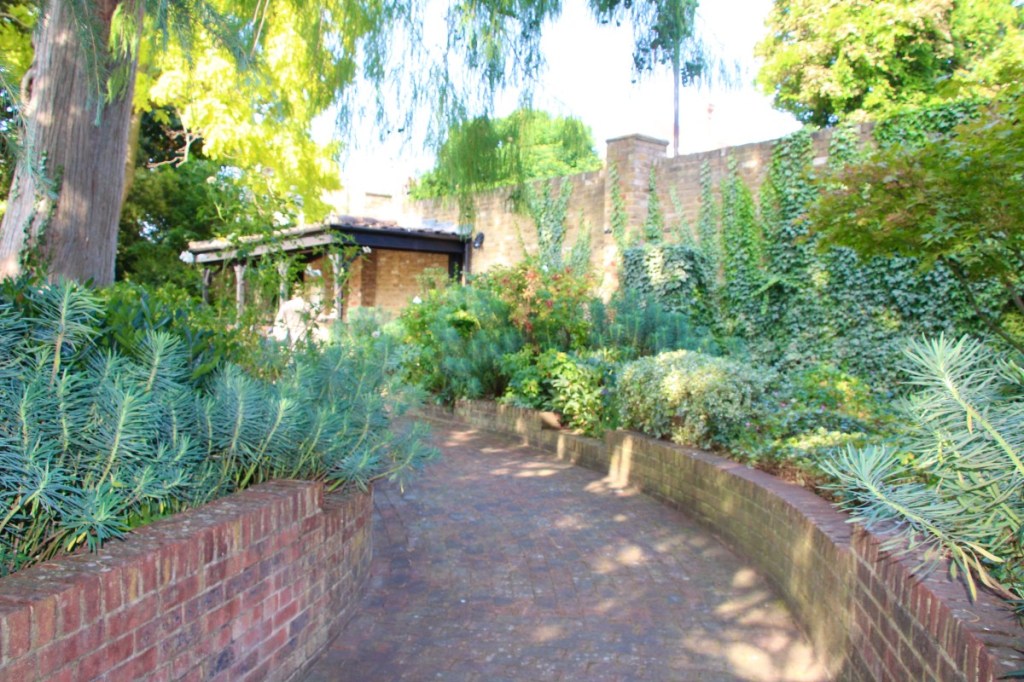
Roper did not live to see his plans carried out, dying in 1983. So landscape architect John Medhurst was commissioned to lay out the garden, and included in his design such details as Roper’s generous curving brick paths which not only gently lead you to a hidden area but help those in a wheelchair glide seamlessly through the garden so as to enjoy the planting.
The majority of hospices rely on an army of volunteers, several of whom last Sunday gave up their time to greet us at the gate, directing us in through a side door. An easy access, with neither gravel nor steps, a joy for wheelchair or buggy users and something many garden owners where possible, might seriously think about.
You might be forgiven for expecting an uninteresting hospitalised space, a touch morbid even; instead however, you would in that first moment immediately feel that this is indeed a very special green space.
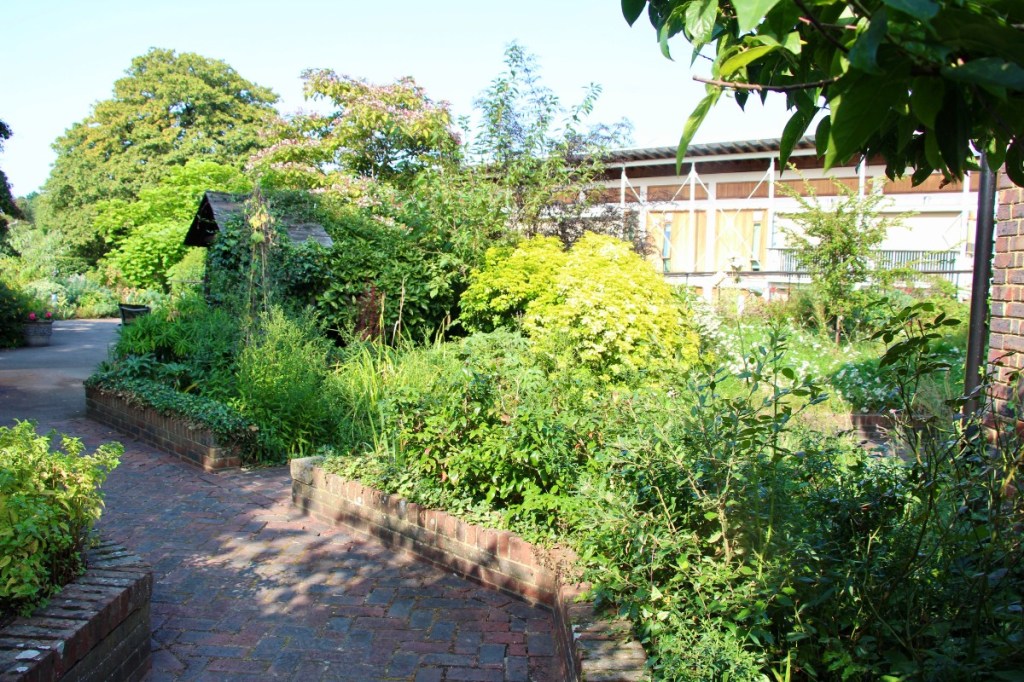
The raised beds on either side are well planted and display a rich variety: aromatic herbs mingle together along the left hand side,
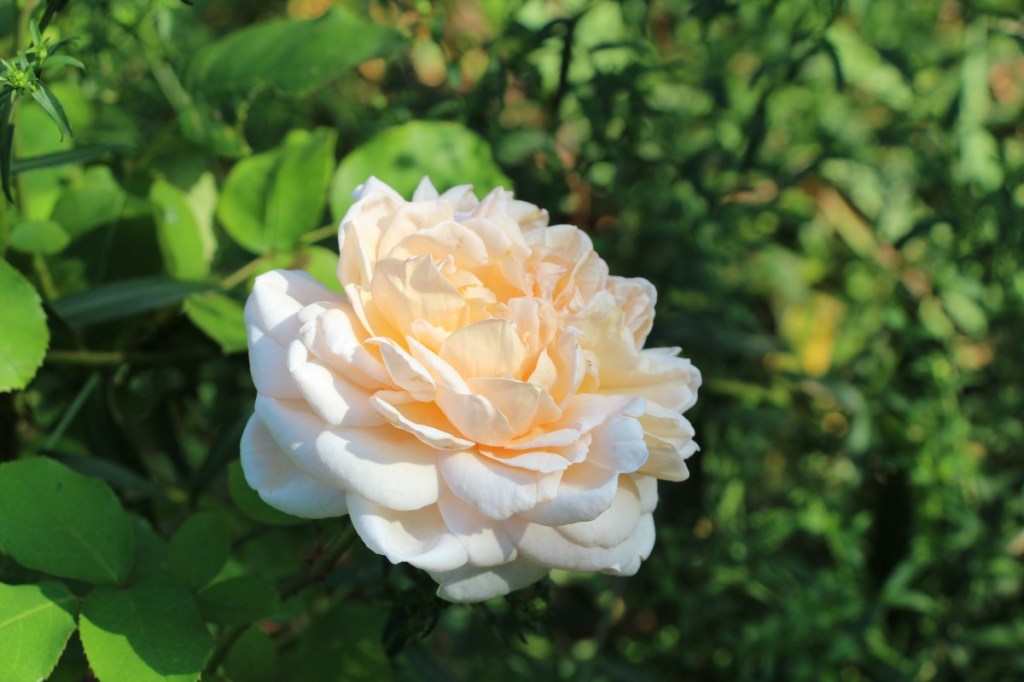
on the other, a rose defies the approach of autumn and flowers steadily as if it is June
whilst the rugosas are into their autumn hips.
There is even a touch of wilding to be enjoyed.
Paths bend and flow, and as in life, choices need to be made….
it is the benign sound of water trickling down into the ornamental pond that beckons us round to the right.
Climbing up the steps it is the generous colourful pots which bring a splash of joy to those hard landscaping areas,
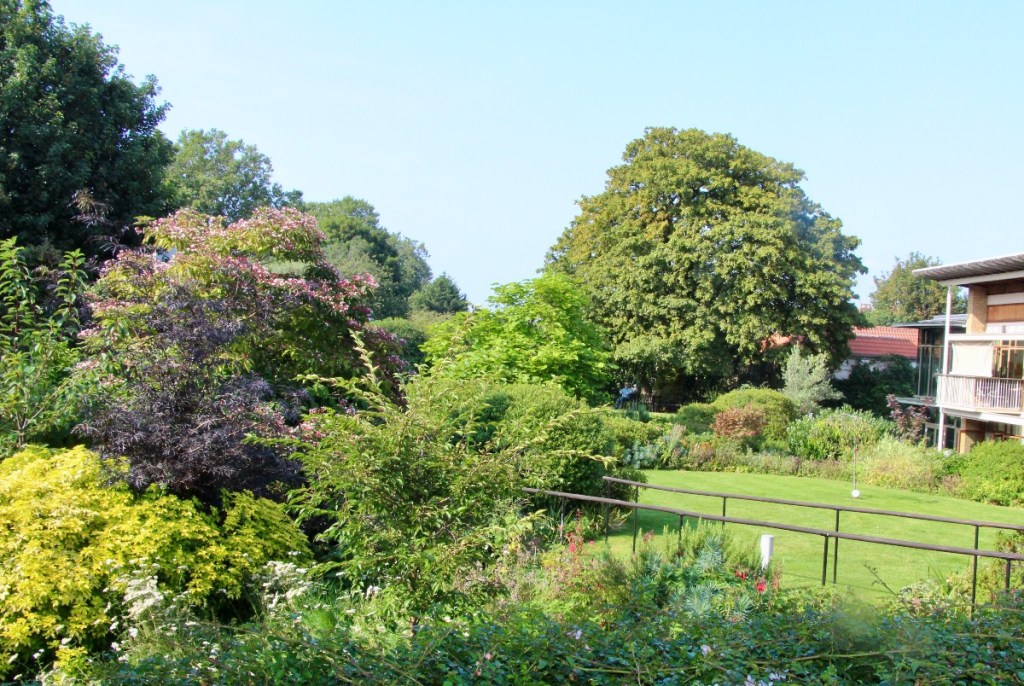
and from the balcony above the circular pond there is an opportunity to look out and take in the serenity and size of this mature two-acre London garden.
Descending the steps we begin to explore the many hidden areas. A substantial clerodendron grows beside an intimate area. This shrub is very happy here sending up suckers across the path; a native to China it is a quirky coincidence that the roof behind has a slightly oriental feel.
A grassy enclave is home to a fine Catalpa tree , its trunk needing support, it happily grows on.
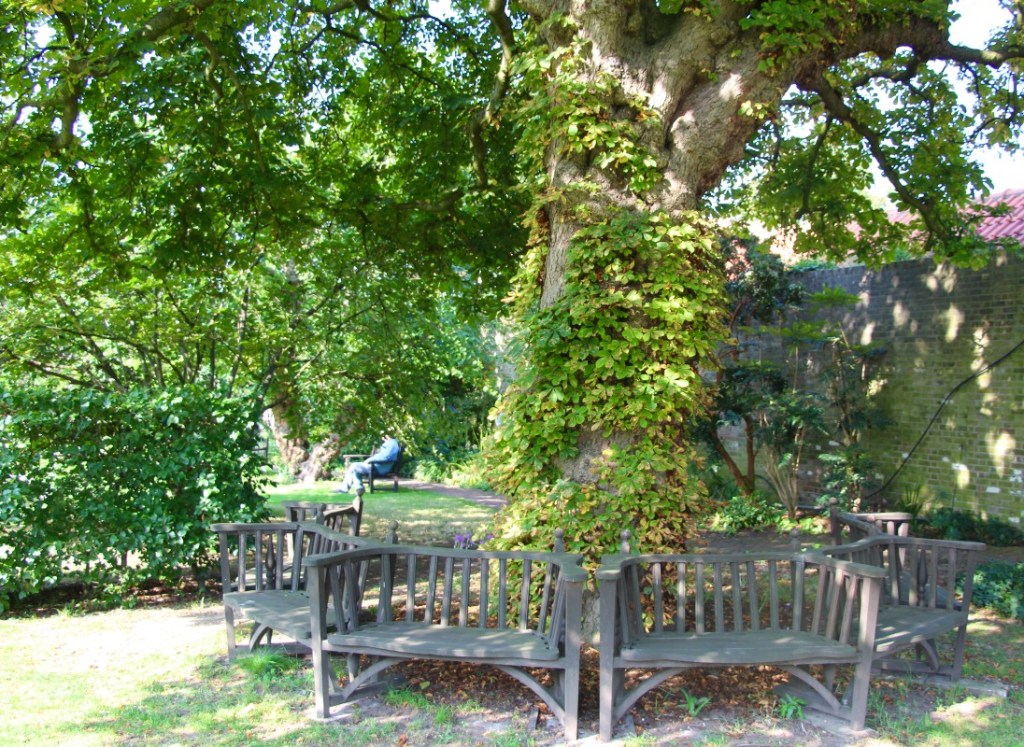
The gardens were very dilapidated before Roper was involved and his first priority were the trees. This old Horse Chestnut tree provides not only a point of interest but also a marker between two separate areas. Its branches must hold many a secret of those conversations shared beneath on the deep seated benches.
Beyond the tree there is quite a different feel as we enter the pond area. Hospices are not just about the patients who are dying but also for those who remain to live on. Here is a perfect place to absorb all the many emotions that go with that unknown future. This afternoon it is pure joy for the first time in weeks, to benefit from the sunshine and the dappled shade.
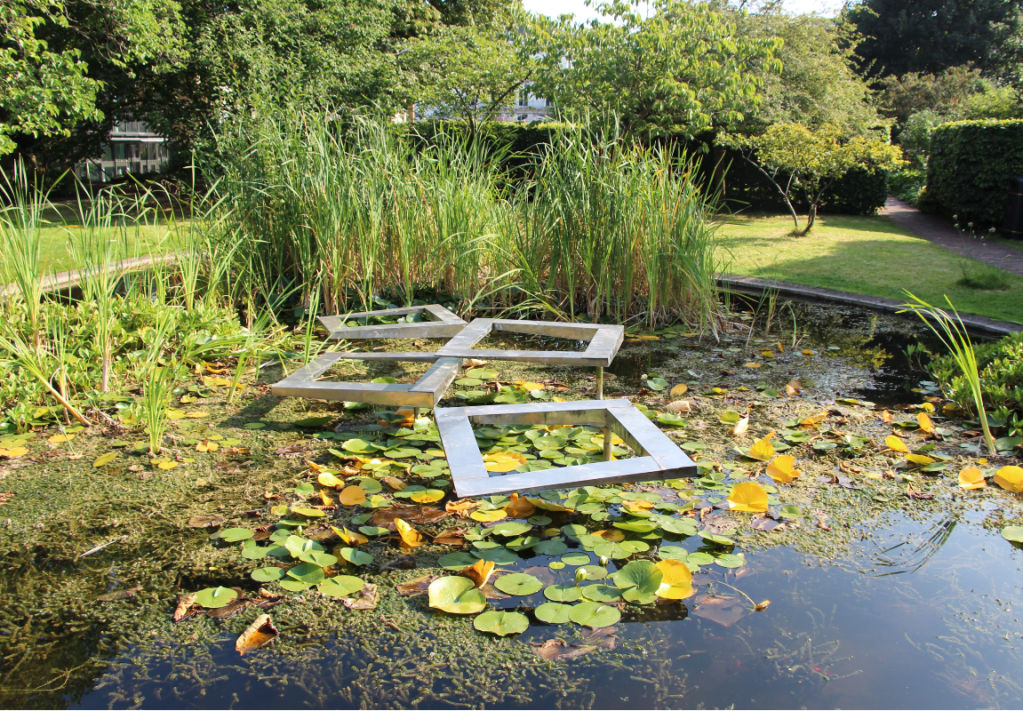
Situated on one side of the pond is the kinetic sculpture entitled ‘Four Open Squares Horizontal Tapered’ (1984) by George Rickey, its subtle movement by the breeze from time to time provides an absorbing distraction,
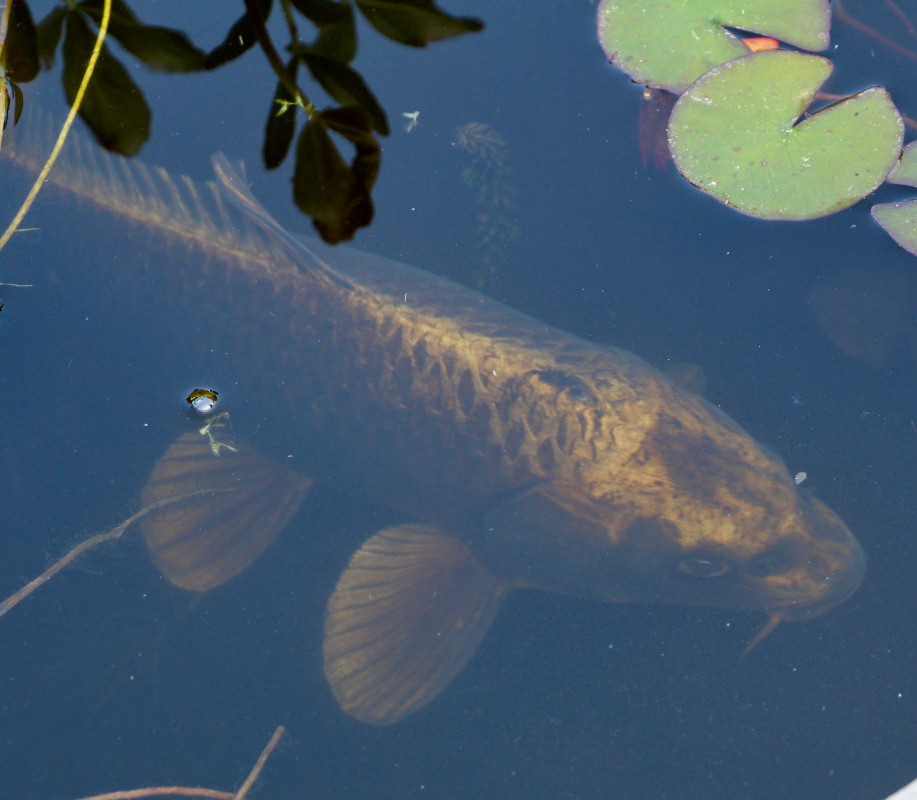
whilst a monster lurks in the deep below.
There is a high standard of horticulture here and the Head Gardener has 28 volunteers to keep in order; it looks a serious business.
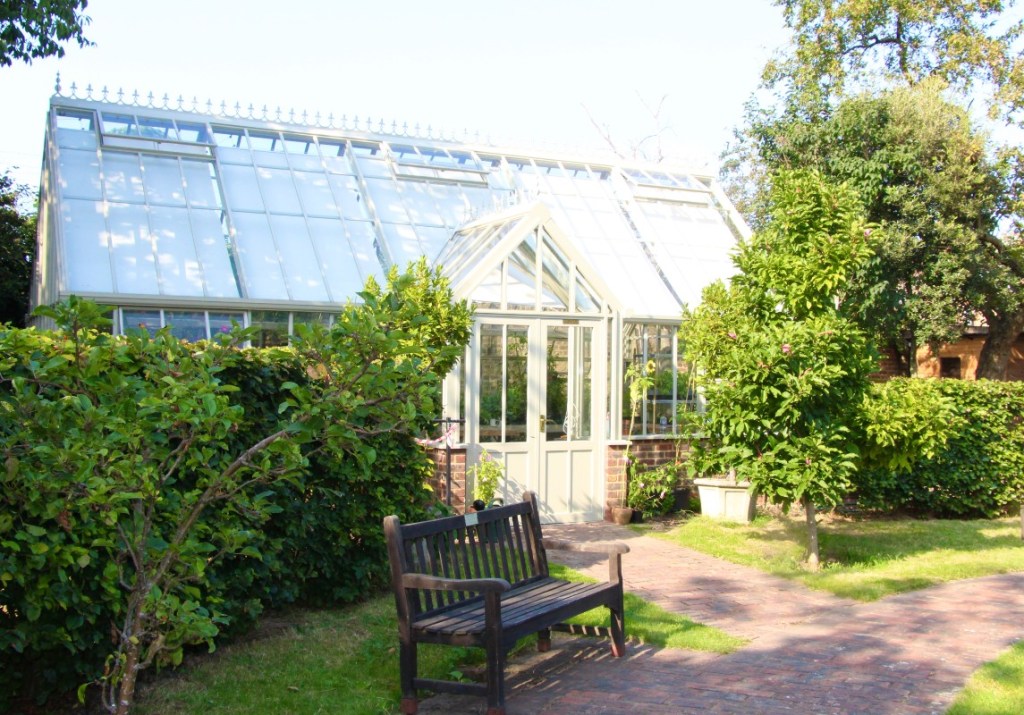
Behind the pond stands a substantial greenhouse,
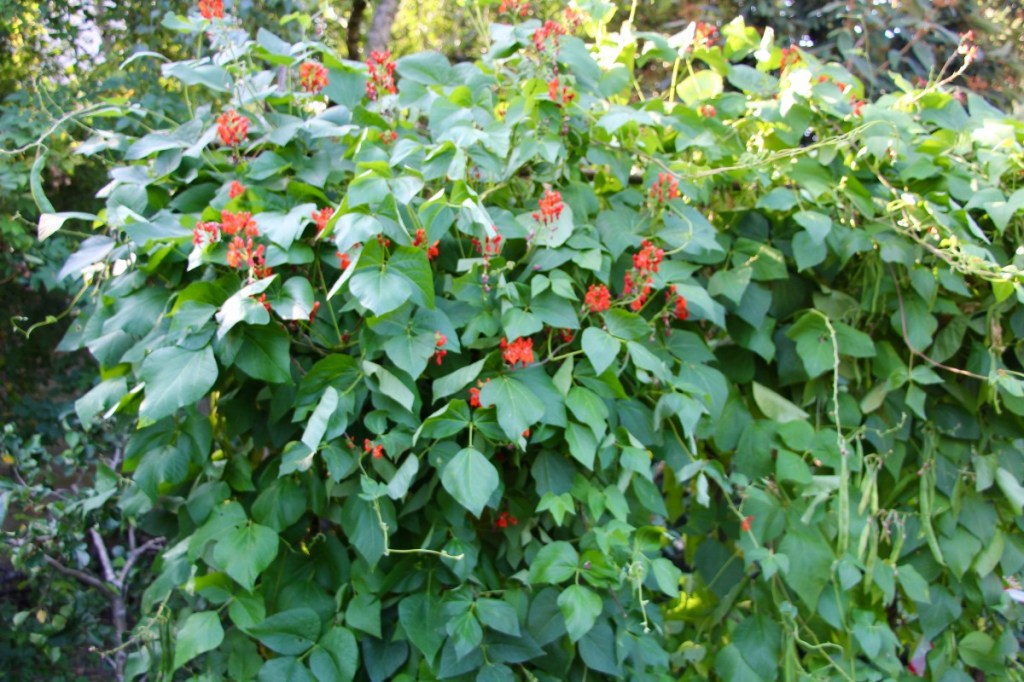
next to which is the productive area providing an air of home-grown; the runner beans are prolific,
and strawberries too, in their own patch.
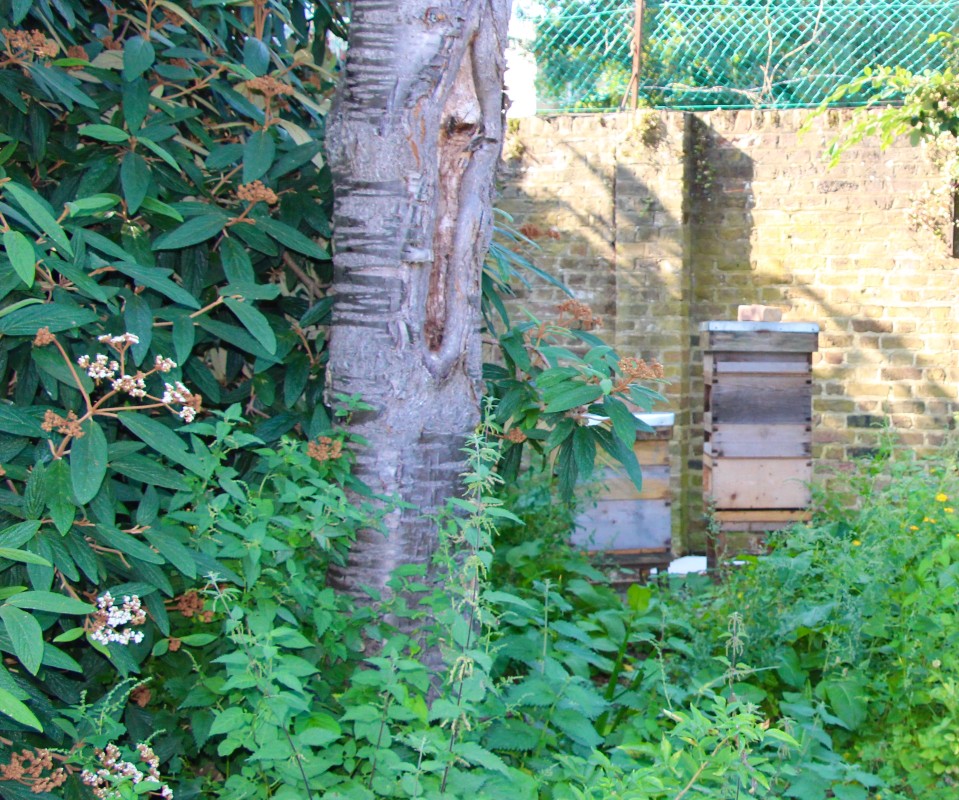
There is even an active and busy bee hive which produces Trinity House Honey.
Roper suggested the paths be kept clean with neatly trimmed hedges enticing you to journey into the next space.
He also suggested a palette of soft blue, silver, pink and white which continues to this day. Patients can enjoy the mix from their rooms.
The site is divided in two parts with the modern inpatient complex at the centre. We walk up the steps to where mature trees dominate a fine circular lawn. The Plane tree provides a good meeting place,
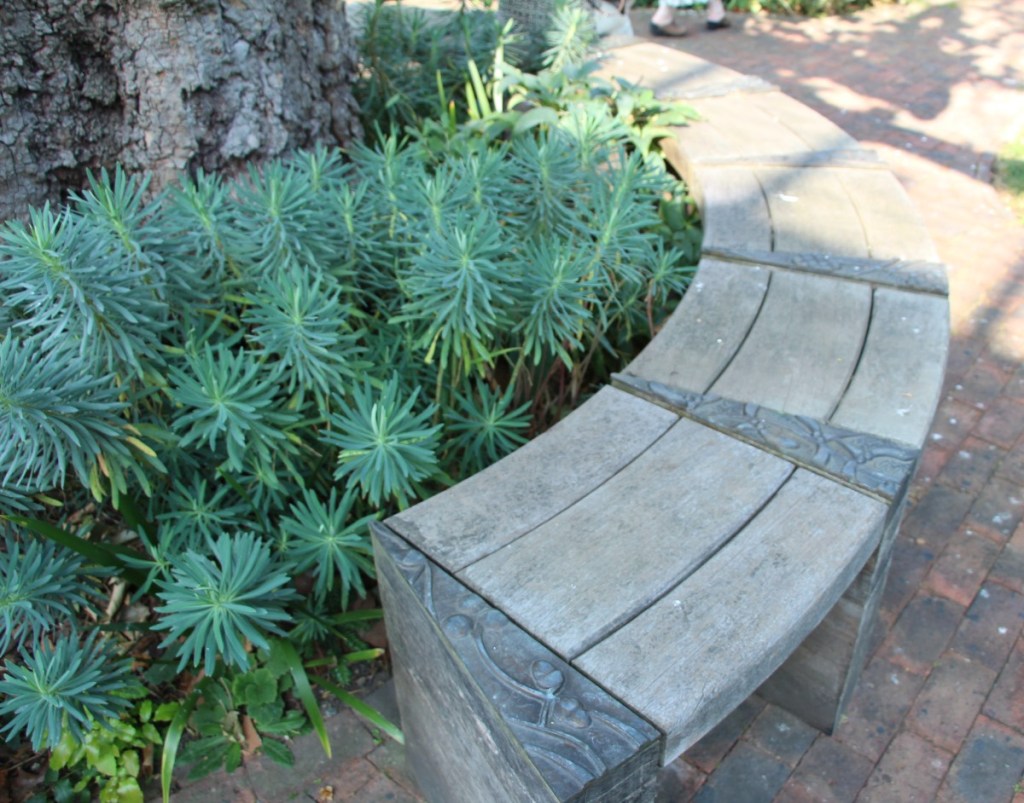
with elegant circular seating around its base.
The circular theme is echoed in the perimeter path from where
you can glimpse through the shrubs and trees the sun shining down onto the mown lawn where stands the round pleasing pebble sculpture.
Completed after his death the garden became a memorial for Lanning Roper and has been open every year since for the National Garden Scheme.
Our local hospice in West Norfolk has only recently been built and with it, a beautiful garden planted by volunteers. Let us hope they will sometime soon find a way to open their gates so that visitors can not only appreciate the valuable contribution that hospices make but also help raise funds for the National Garden Scheme.
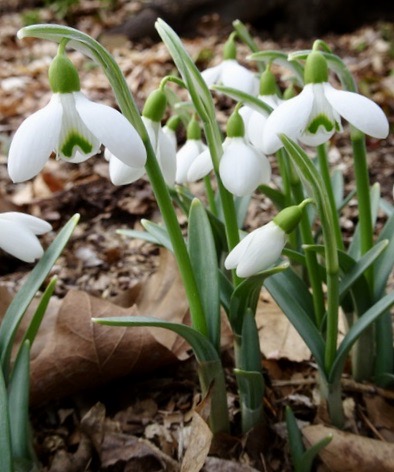
Through all these cheerless covid months and ghastly weather, the snowdrops have been silently pushing up through the cold, sodden ground. Their delicate flowers, surely could not be more welcome. Restrictions have forced the abandonment of the National Garden Scheme Snowdrop Festival however, some gates of a smattering of gardens will be open across the country this February, for those visitors lucky enough to be local to them. However in the eastern region, deep snow has forced many closures. More details can be found at https://ngs.org.uk/february-openings-2021/.
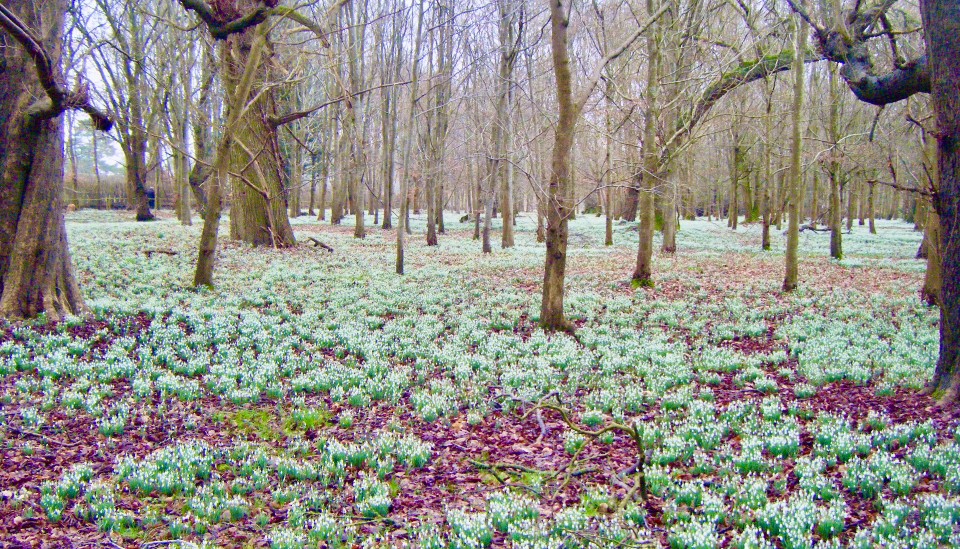
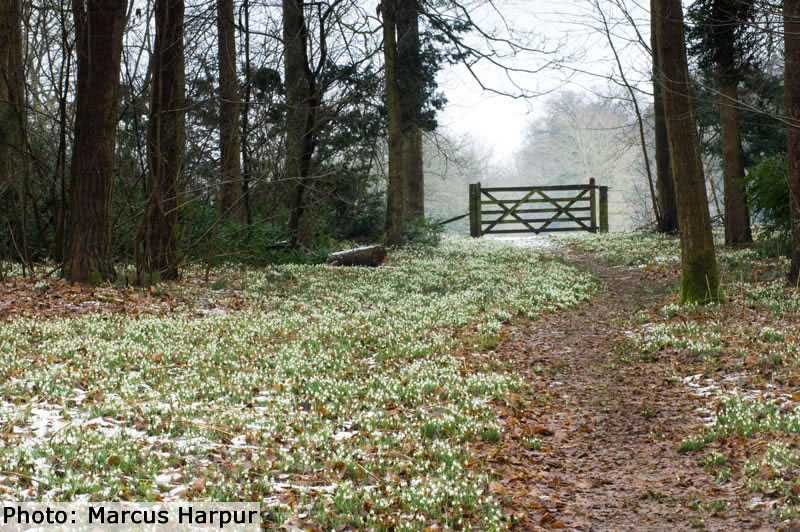
Back in 2017 when travelling was unrestricted and I was able to visit some 90 gardens throughout the year in celebration of the 90th anniversary of The National Garden Scheme, the snowdrop gardens were memorable; and I would identify three different types of snowdrop landscape: The snowdrop walk such as at Welford Park in Berkshire where the sight of millions of these tiny flowers carpeting the woodland floor was a sheer delight.
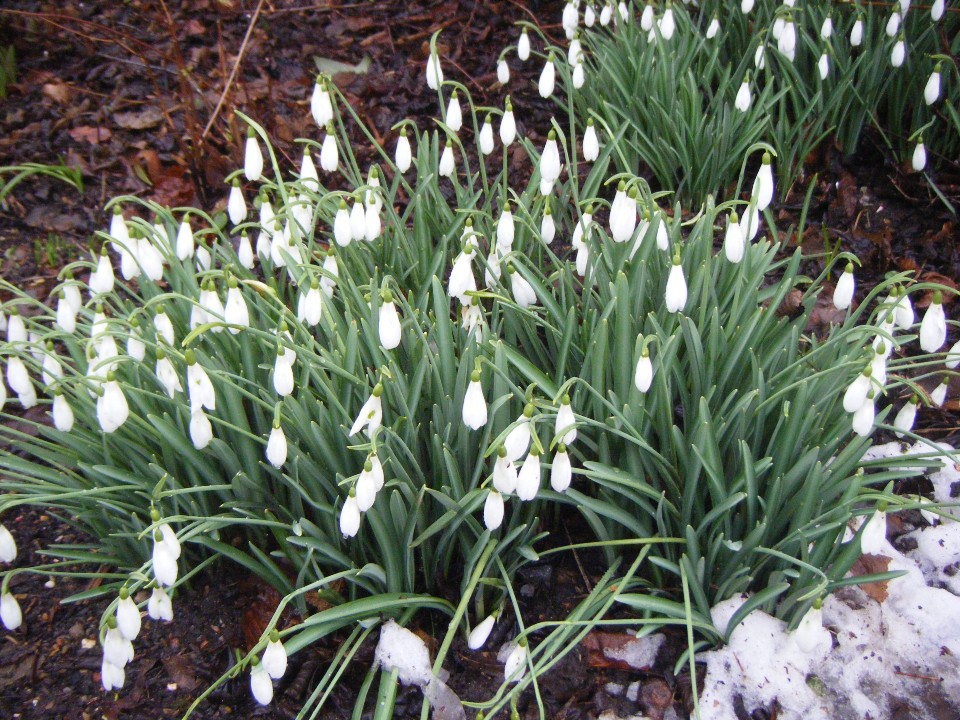
The second type of landscape is the simple but lovely Snowdrop garden where you find clumps of snowdrop scattered beneath winter shrubs, and bringing life to dormant borders, such as here at Gable House near Beccles, where Galanthus ‘Atkinsii’ is prolific.
Here amongst the plant sales I could not resist Galanthuselwesii ‘Brian Matthews’ who is now doing well in my own border.
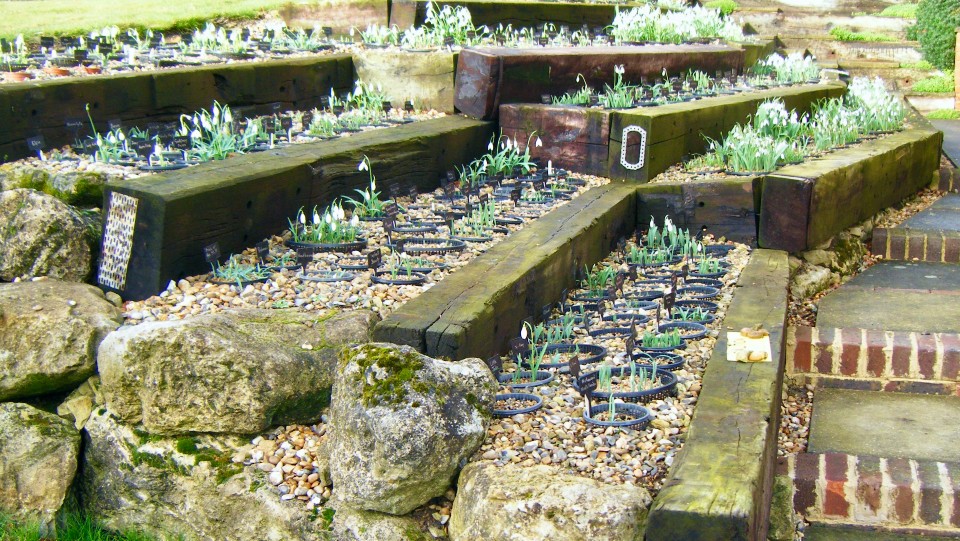
The third type of landscape is quite different and fascinating; that of the The snowdrop specialist, such as at Spring Platt in Kent https://kentsnowdrops.com/#home. A snowdrop spectacle, where they are arranged in a display, individually potted, seemingly different and labelled, each with a beguiling name. You could say, and although I am not fond of the word, it was here that I experienced the first stirrings of becoming a ‘galanthophile’.
It was ‘Fly Fishing’ that was my purchase here, a must for any fisherman and so it grows just outside my husband’s office, a bending rod gently moving in the breeze.
Then things began to get expensive; at £40.00 per tiny bulb (and that is nothing in this world I can assure you ), I could not resist ‘Tilly’. She is spreading nicely so I am not feeling quite so bad about that reckless expenditure.
Then my first granddaughter was born, so in celebration I planted Galanthus plicatus ‘Florence Baker’ (please could someone please breed an Alfie), and my small collection began to expand, and all around the garden I have the names of friends and family growing gracefully, all different and doing their own thing. Last year I painstakingly labelled each one, only to be stumped by my dogs who thought this was a great idea and spent the summer months finding and helpfully retrieving them.
The names always intrigue me and I like to know their origin, so I bought, begged and borrowed books on the subject, the snowdrop ‘bible’ being the most elusive Snowdrops A Monograph of Cultivated Galanthus by Matt Bishop, Aaron Davis and John Grimshaw, which I was fortunate to be lent and I notice that although currently unavailable on Amazon it is a mere £550 on ebay.
Snowdrops do come in other guises; I loved this giant wicker snowdrop standing at fifteen feet high at Trentham Gardens in Staffordshire,
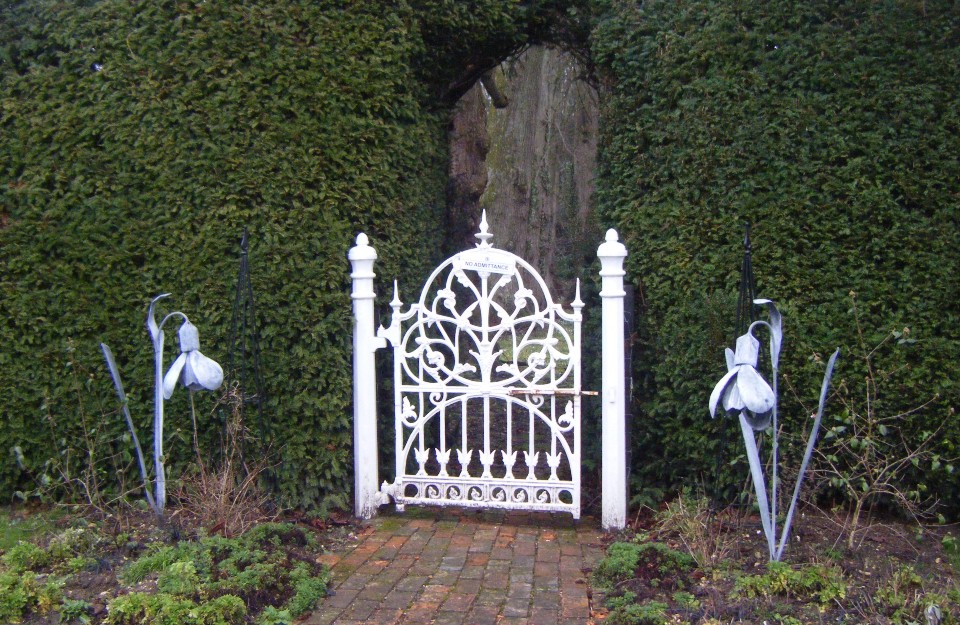
and these metal ones either side standing guard at a gate in Welford Park.
My garden is deep in snow with not a single snowdrop in sight, just a metal sculpture, a reminder of what will be there when the thaw comes.
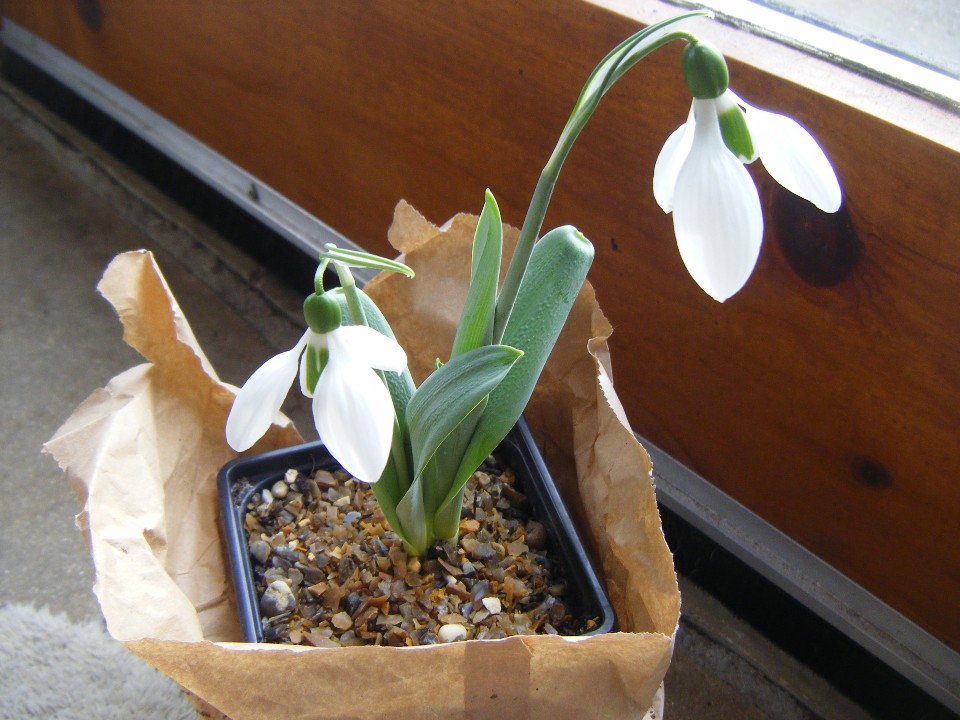
I have already made this year’s purchases, Galanthus plicatus ‘Three ships’ which should flower before next Christmas from friend, plantswoman and instagrammer Jane Anne Walton, and the other in aid of St John Ambulance Galanthus plicatus ‘Diggory’, a Norfolk boy, he is a beauty.
Luckily for me I have a Snowdrop Walk local to me and which will be open next Sunday 21st February in aid of the National Garden Scheme https://ngs.org.uk/view-garden/4388. If that path isn’t just the perfect place for a little exercise, then I don’t know what is.
There has never been a greater time than now for us to support the nursing and care sector and so if you are unable to take your exercise in a local snowdrop garden why not consider making a donation by visiting the just giving page https://www.justgiving.com/fundraising/norfolk-ngs
Last Saturday I combined calling in on my cousin with a visit to an intriguing garden open for the National Garden Scheme. Entrance was by slipping through the back gate into an informal area, and for a moment I wondered if I had come the right way.
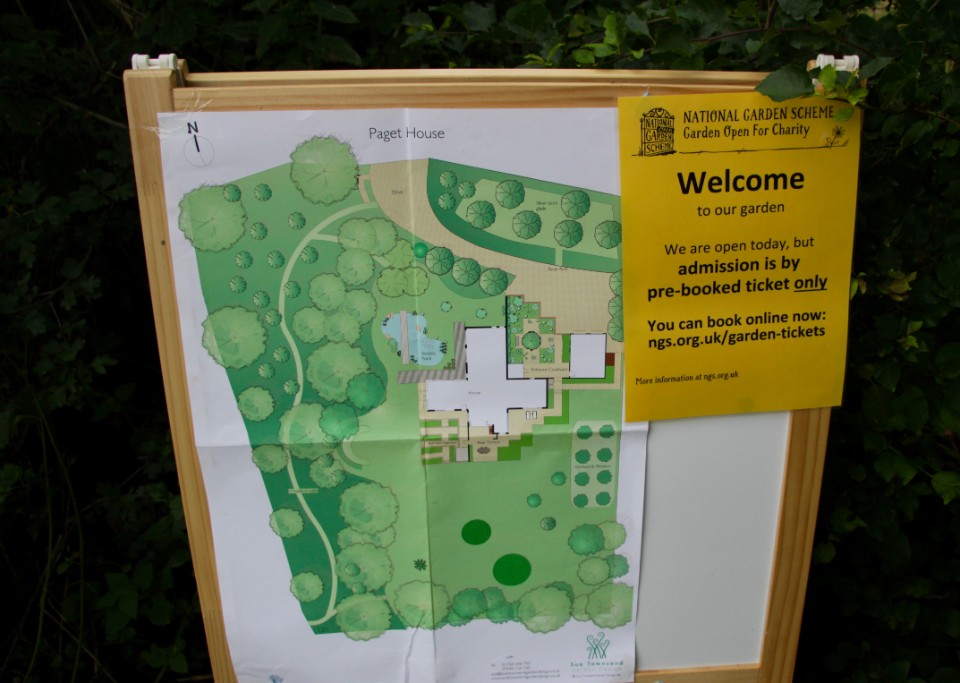
The plan eased my mind and was a promise of greater things ahead, and as with so many gardens open for the National Garden Scheme it did not disappoint. The modern house built by the owners some 9 years ago is in the shape of a cross and is very much at the centre of the garden.
This cross shape in effect dictates the layout of the garden marking out four separate but connecting gardens. Walking down across the roughly mown lawn, I come to west side of the house where raised beds are filled with vegetables and flowers.
It is a marvellous idea to place the productive side of the garden so close to the house rather than banishing it to the far reaches of the garden. It must be a real joy and so convenient to be able to just step outside and pick your vegetables,
and to enjoy the scent of those heavenly sweet peas.
I step through the wooden covered walkway which extends out like an arm from the house and cleverly acts as a division.
Here there is a quite different feel. An informal pond is the point of focus, making good use of this northern aspect. A striking sculpture by Paul Richards sits between pond and house. It must be a delight to watch the visiting wildlife from the comfort of an Adirondack chair.
Further away from the pond is a semi-circular border is bursting with colour;
familiar favourites in amongst the bright crocosmia such as this delightful salvia,
and rich hemoracallis.
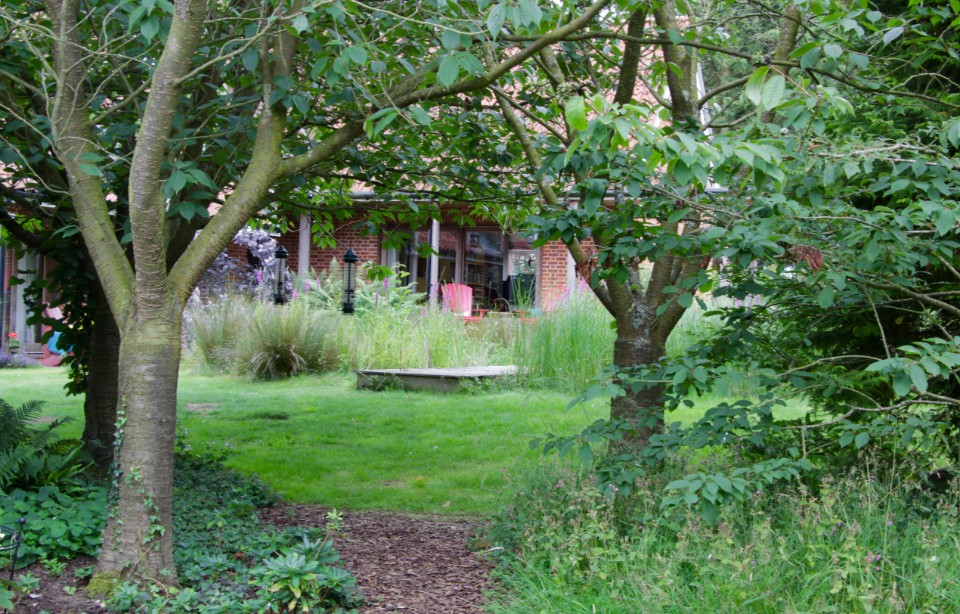
Away from the house paths lead between mature trees,
and meander through the long grass,
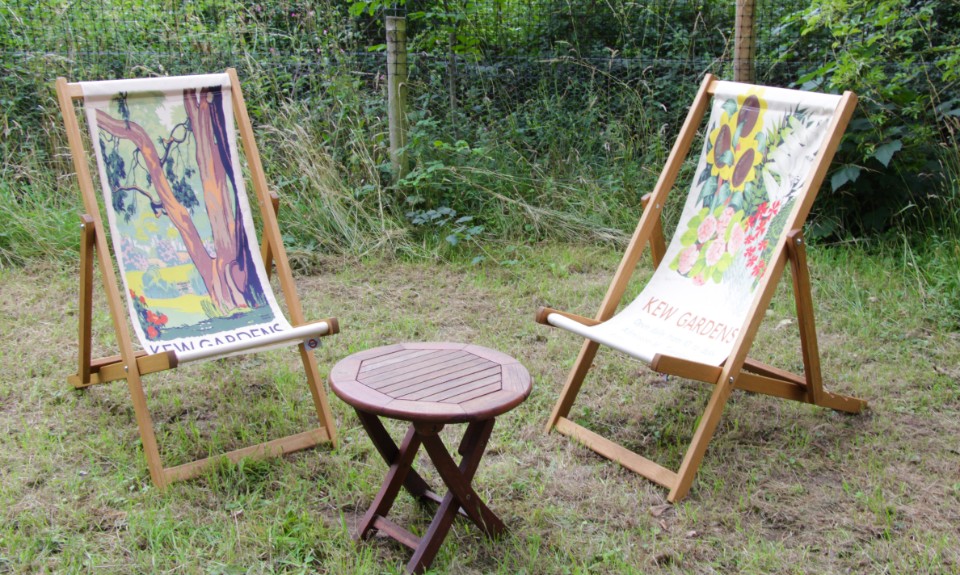
where there are delightful places to sit and chill. It is as though these two decorative deck chairs are having their own dialogue.
The front door of the house is on the east side where the drive sweeps in, and alongside the yew hedge is softened by sections of ornamental grass.
On the other side of the drive is an arbor which leads you into a secret garden,
where a Lutyens bench sits majestically behind a table. The hand sanitiser a small sign of the times.
The planting by the front door is soft and free flowing.
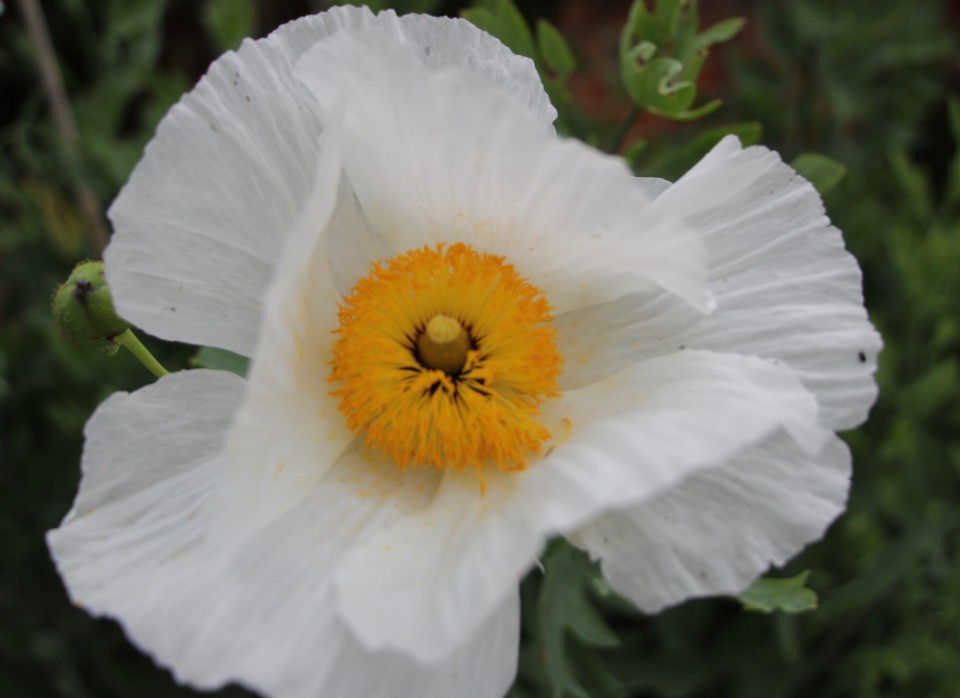
Romneya coulteri, the Californian tree poppy steals the show with petals like finely crumpled tissue paper,
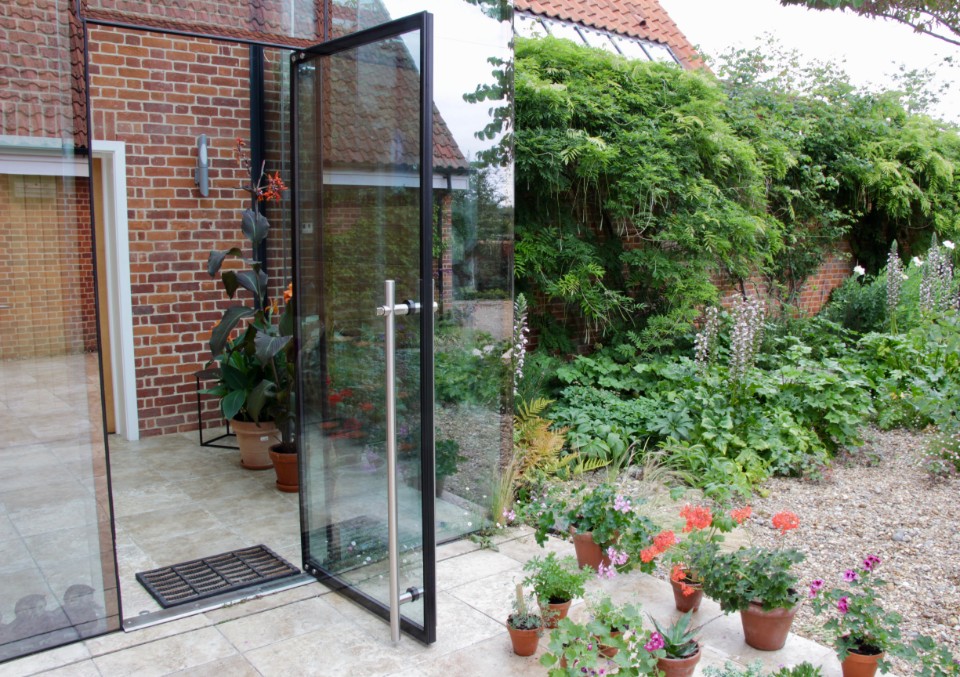
and the pot plants tumble through the front door.
You don’t really appreciate how much this house is on a slope, and now, on the other side of the house and through the door and up the steps, the mood changes again.
A mixed native hedge runs along the boundary on the left hand side and fruit trees grow in this wild meadow,
contrasting with the informal but careful colourful planting next to the house.
Paving and plants wrap comfortably around the house. Familiar favourites which include lavender, gaura, perovskia and verbena.
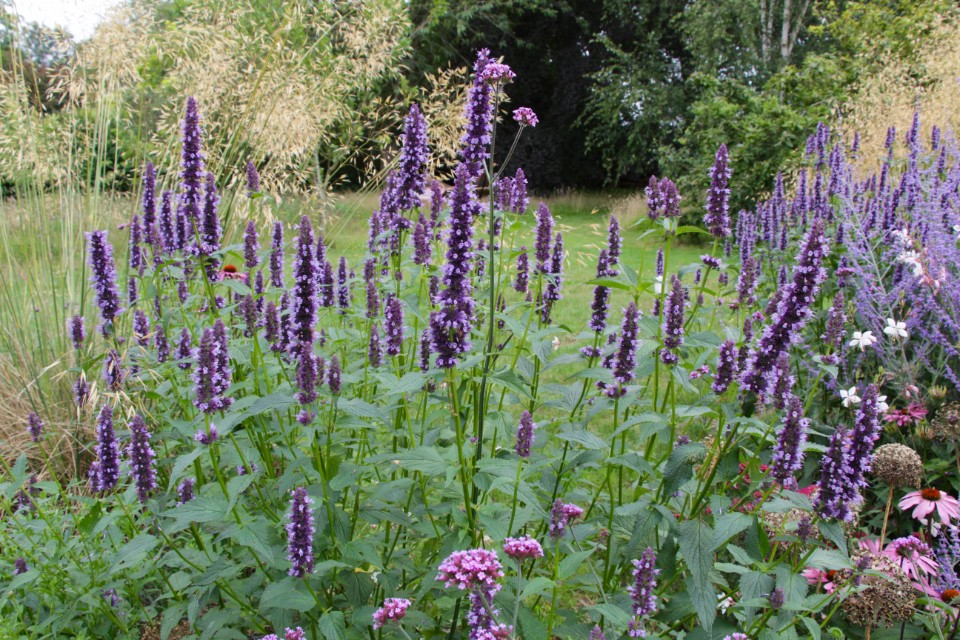
Agastache ‘Black Adder’, Mexican giant hyssop is particularly at home here.
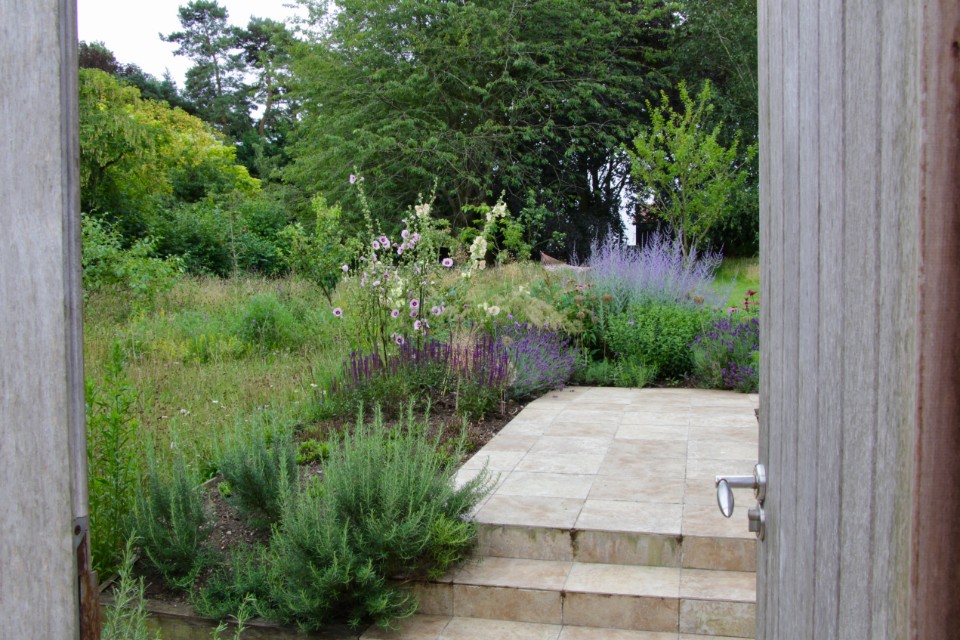
Each side of the house moves effortlessly out into the garden and each side is subtly divided. The wall is smothered in delightfully scented trachelospermum jasminoides and on through the open door,
I am back where I started in the vegetable area.
It has been a delight to see this garden so thoughtfully designed and such an integral part of the house. Wildlife-friendly, it is a pure pleasure and a moment of freedom for all of us in these strange restricted times.
Each Monday a variety of gardens to visit are uploaded onto the website www. ngs.org.uk So why don’t you find one near you, pre-book a ticket, and Help Support Our Nurses.
Hurrah, the National Garden Scheme has begun to open some of its gardens. The system has changed a little and I had to go the website to pre-book my ticket online beforehand, which was perfectly easy and I found a small garden in Ely. It is such a long time since I have been anywhere so I was quite excited and having made my online purchase I was not going to let the cold miserable rain put me off.
Ely was void of the usual tourists and after managing to remember how to manoeuvre my Mini into a convenient parking slot I walked up the street towards the Cathedral, the grey clouds were pretty threatening.
It was a windy day and by the time I reached the cathedral it was blue sky.
Number 38 is minutes from the historic centre and as I walked along the residential street I received a warm welcome from the roses. The original plan was to open with a group of other gardens but coronavirus prevented this from happening.
The gate was open with a plant stall in front, and garden owner Julia had been busy raising and selling plants during the lockdown making over £600 for the National Garden Scheme. Julia is a retired nurse and she believes this is her way of helping.
I hurry down the west side of the bungalow, as that sky does not look too good.
A garden on heavy clay and with Ely’s dry climate this is surely a welcome load,
despite the threatening clouds there is a sunny feel to this secluded back garden. Julia and Peter have lived here for three years working hard to restore the garden from a jungle of ivy.
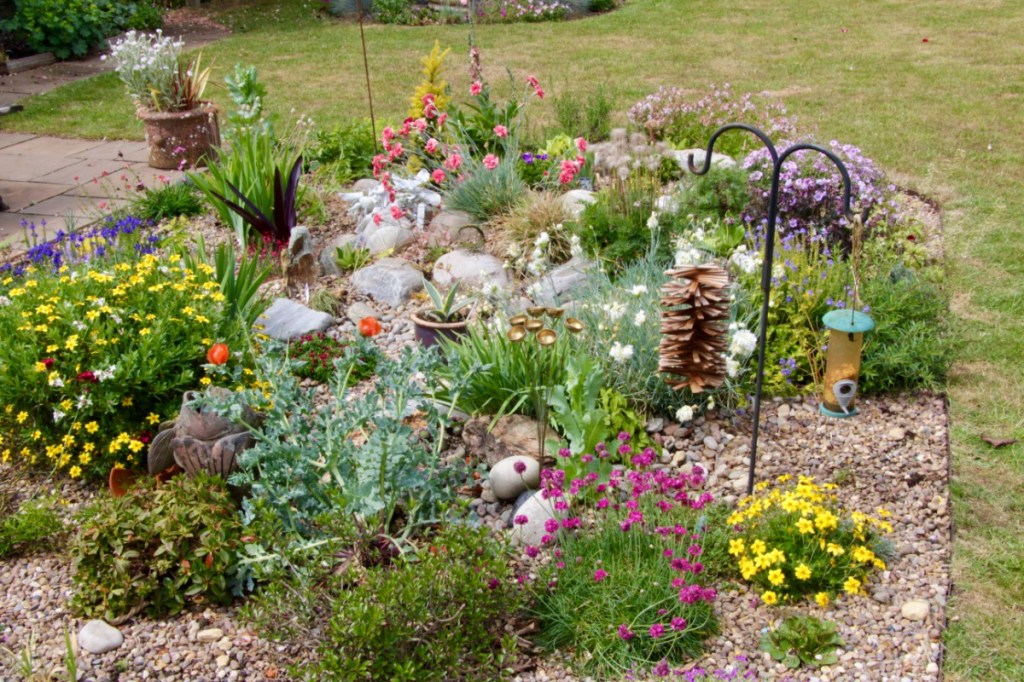
For her 80th birthday, family and friends gave Julia the materials and labour to create a rock garden on a dry piece close to the house.
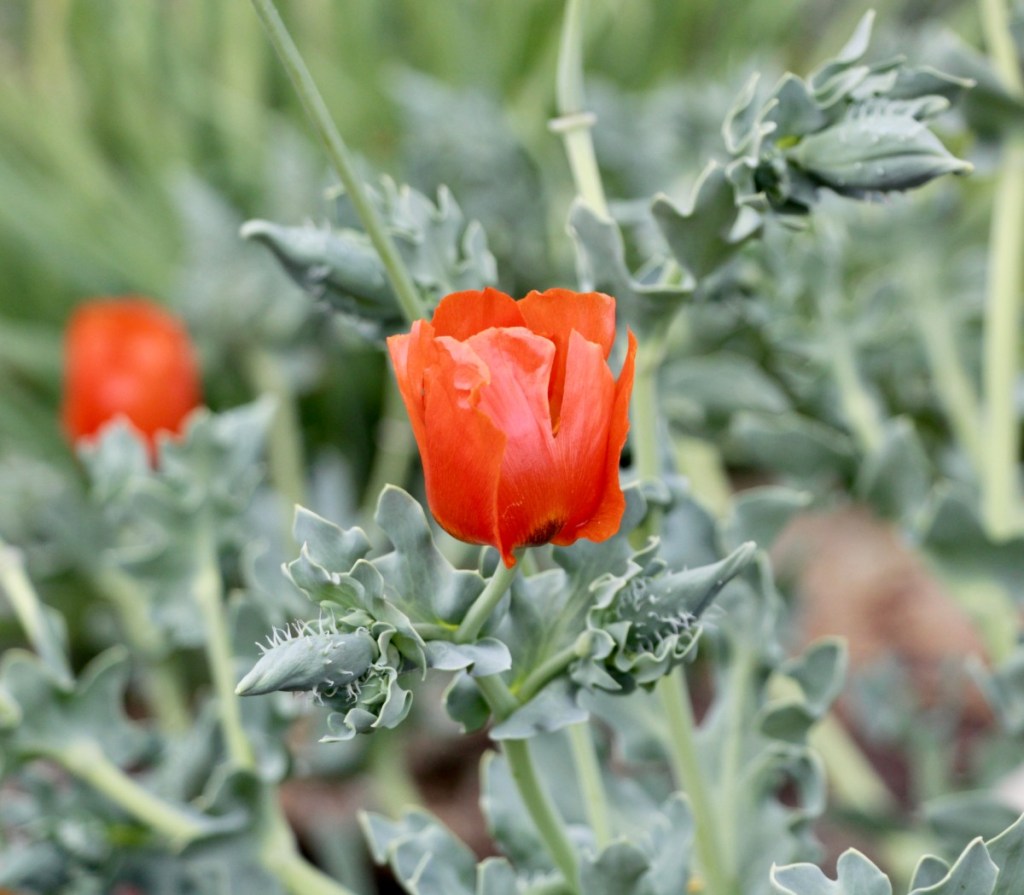
Here grow all sorts of treasures; a bright horned poppy with glaucous leaves,
the enchanting Dianthus cruentis
and a fishy friend.
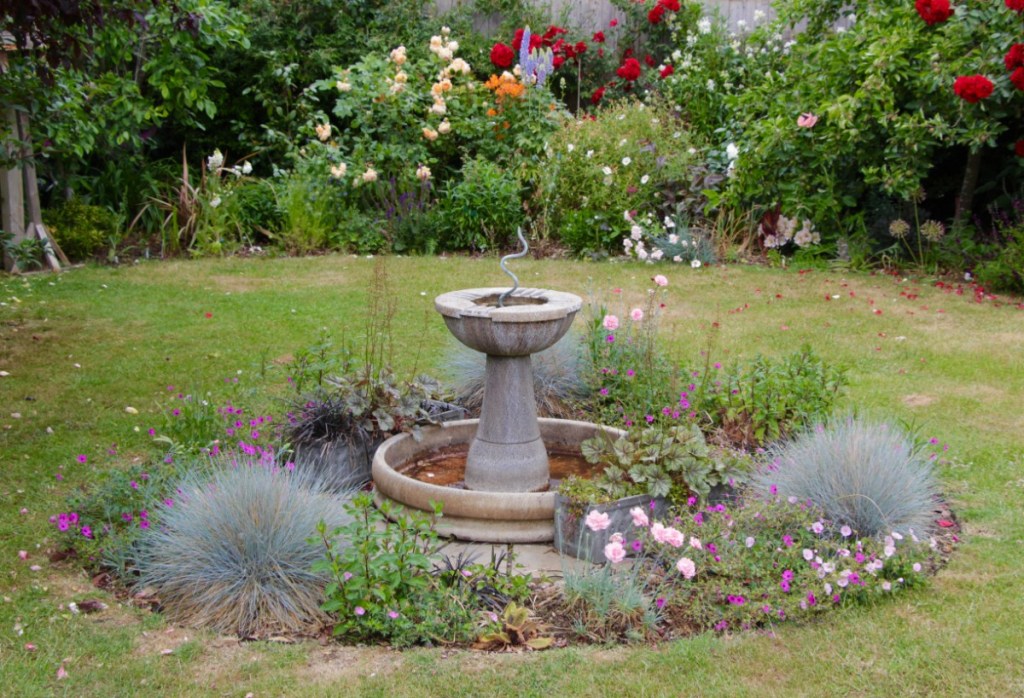
Beyond this area is the fountain and the glaucous theme is repeated around the base.
The roses have been truly floriferous this year and here is no exception. Through the arch, I walk into a little fruit area
and come face to face with some ripening greengages. The bungalow was originally built on the site of an old orchard and several fruit trees remain providing an abundance of apples, plums and quince.
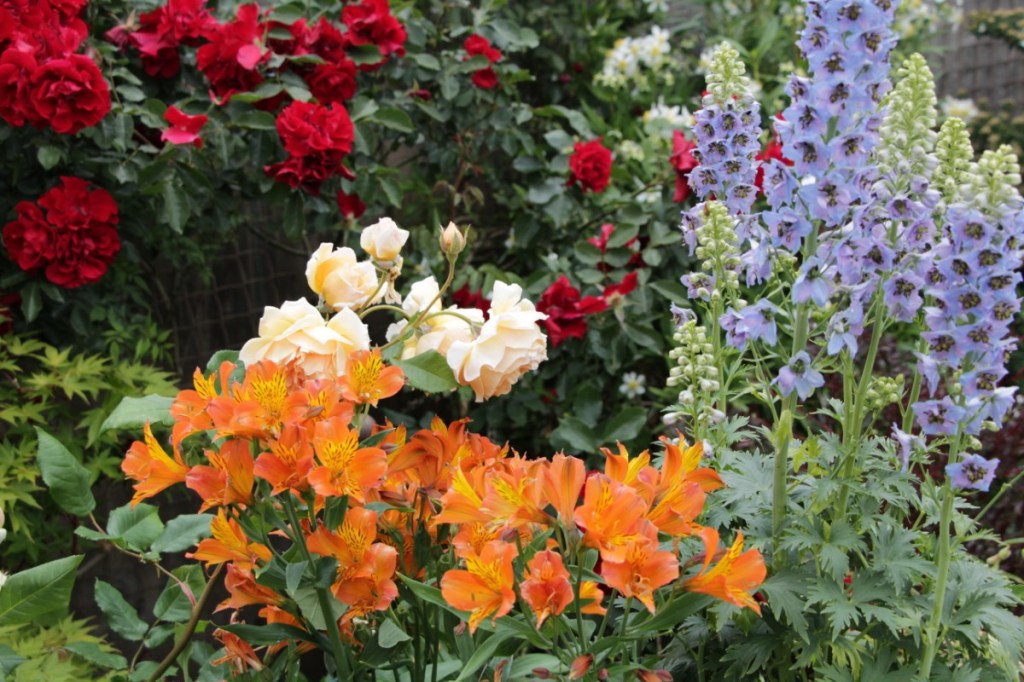
Returning through another arch I am back into the main garden where there is an explosion of colour reminiscent of the sixties, those classic summer plants roses, alstroemeria and delphiniums.
Roses planted by previous owners are blooming everywhere mingling with shrubs including the sweet-scented philadelphus.
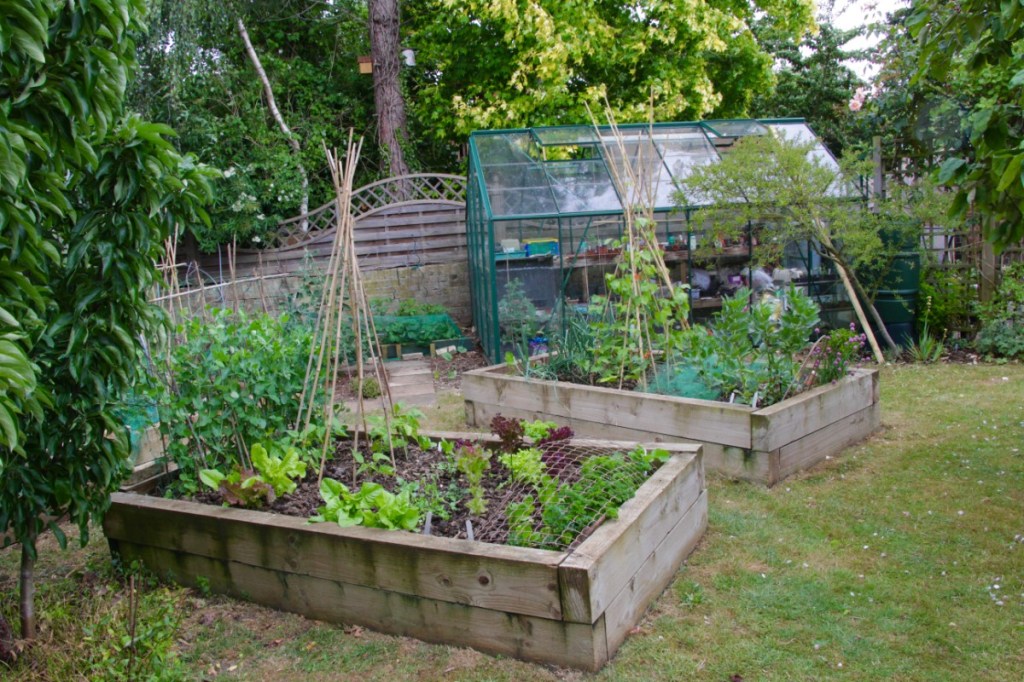
Over in the corner are the raised beds, the perfect size for vegetables, and close by is the all-essential greenhouse where Julia’s skills raise many a plant.
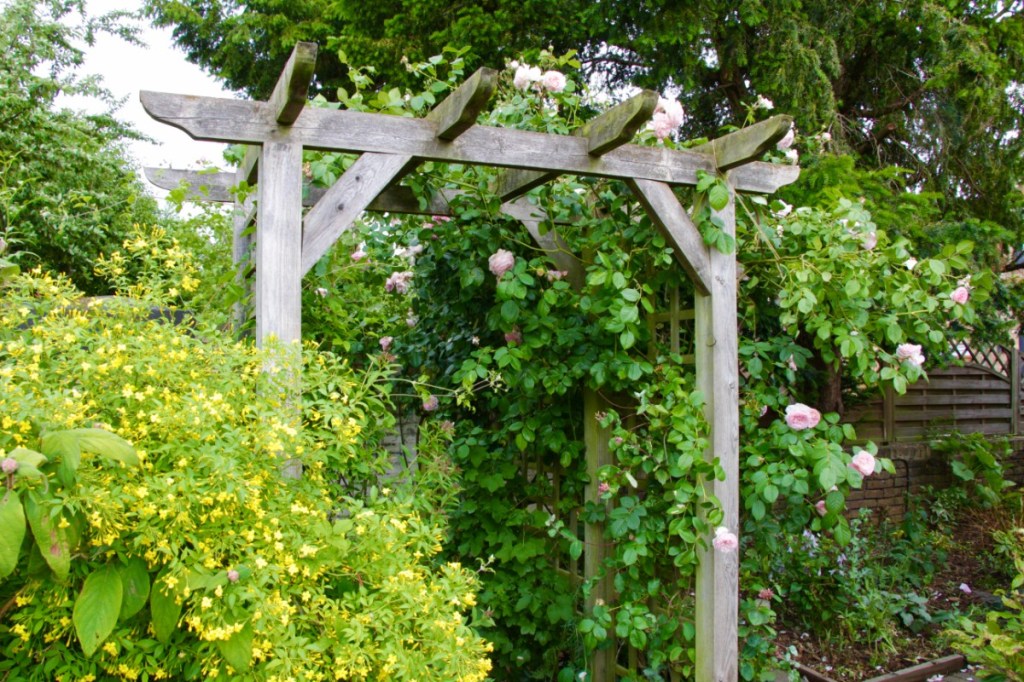
The garden is well screened being surrounded by mature trees, and several wooden arches provide height and interest. Here it is a perfect support for the pink climbing rose, and the yellow jasmine fruticans is pure joy.
Wafts of honey fragrance fill the air and I know it is not from the jasmine but am unsure where it is coming from until I discover this lovely unusual viburnum japonicum just by the house.
There is a convenient one way system, and along the east side of the house a border has been designed to give form and foliage colour,
with astrantia major popping up below to add to the colour.
Out in the front again where the Judas tree is in full leaf, salvias, geraniums alstroemerias are just a few of the plants in this dry open space.
This small daisy-like perennial Erigeron karvinskianus is so useful for softening those hard areas.
Garden owners are prohibited from providing teas, and it is a blessed relief to those of us who have added centimetres to our waist lines during the lockdown. So I head for home, the recommended distance for visiting is about 20 miles, and I must admit to have slightly exceeded this suggestion, but for those of us living in rural places the requirement might have to be more. However, you must remember that no facilities can be available and on the way home I was glad that my journey was not longer and next time I will remember not to have that second cup of coffee before I set out.
Gardens will be uploaded each week on http://www.ngs.org.uk where you can purchase your tickets. If you cannot get to a garden or do not wish to venture out, why not enjoy one of the NGS video virtual tours?
There has been no greater time when we need to support our nurses, and the all-round benefits of visiting a garden are huge.
A couple of weeks ago I enjoyed a day at Parham House in West Sussex https://www.parhaminsussex.co.uk/plan-your-visit/. Looking at the garden through the lens of a camera I attended a two day course, sadly shortened to one and run by the Artist in residence the celebrated photographer Elizabeth Zeschin https://www.zeschin.com/.
Photo taken from Parham House website
As is often the case on so many courses I have experienced, you find there are those who arrive brimming with confidence, armed with the best equipment and a knowledge they are keen to impart, and then there are those of us who have no idea what they are doing, come with inadequate tools and simply want to learn a little more about how to improve their photography and move on from using the automatic button.
We met in the Seed Room where Elizabeth is holding her present exhibition; beautiful salt prints, black-and-white painstakingly developed, and in the corner stood the dauntingly old-fashioned camera which she had used to photograph them.
Following our instruction on ISO, aperture and shutter speed, and trying not to trip over my trusty tripod (I had to borrow one as mine was incomplete), we headed out into the garden. Concentrating on all that had been said I took my first photograph; the result was unremarkable, utterly dull and very flat.
Parham House is a wonderful Elizabethan house and as you walk into the walled garden you are overwhelmed with the generous and vibrant planting and you can’t help but feel that many have walked this way before. Situated in a sheltered spot in the far distance you can see the South Downs.
We entered through the south gate; the garden was not open to the public so we had the glorious four acres to ourselves. We were spoilt for choice and pointed our lenses where we could. Fellow student and NGS garden owner chose her spot carefully and looked the part.
The garden is divided into many areas. The main pathway runs north to south along a central axis. Crossing it to the west is the blue border with pools of nepeta billowing out onto to the path, extending towards the painted door in the wall,
and to the east the gold border stretching towards the oak door with the roof of the dovecote rising above.
The summer house on the north wall provides the perfect focal point. Either side of these calming gentle strips of lawn are the memory walls; made of stone they were built in 1965 by Veronica Tritton (the great aunt of the present incumbent) in memory of her father the Hon. Clive Pearson who bought Parham House in the 1920s and restored the property.
I couldn’t help focusing on this divine little chap sitting at the end of the wall and I worry people might not necessarily notice him. As I adjust my lens I realise there is much to think about; how much should I zoom in? Should I include the meadow to the side? Shall I frame him in the evergreen oak?
And then Elizabeth kindly lent me her macro lens and a whole new world opened up before me. The white froth of flowers on the Crambe cordifolia takes on a new appearance and I am reminded of my flowerless plant at home which has never really recovered from being moved.
However the architectural Angelica archangelica flowers freely at home spreading its seeds happily, although I try to keep it contained within the drive.
It is a new intriguing world through this lens; surely there is no better common name for nigella damascena than Love-in-a-Mist.
We are absorbed with our cameras for several enjoyable hours and as we return for a late lunch I cannot but admire this collection of pots. Aren’t professional gardeners so clever at filling those shady corners.
After lunch we blinked ourselves out into the afternoon sun and returning to the walled garden I am drawn to the orchard area immediately on the left. Shadows have appeared over the mown paths through the long grass; it is of course a different light.
Standing boldly, the apple tree spreads its branches and if you look carefully, the mistletoe can just be identified in this tapestry of greens.
Across the way to the orchard the faded wisteria drips over the entrance to the plant sales. I must resist and concentrate on camera in my hand.
So I move swiftly up to the north-eastern corner where the uncut meadow contrasts with the clipped box surrounding the vegetable and cutting garden.
Gardens are so much about health and wellbeing and here is a place that you can escape, admire the flowers, the shapes and form, perhaps take inspiration or simply relish the peaceful surroundings.
As the afternoon draws into evening the light changes again and so too does the atmosphere. The north wall is now bathed in the gentle warm sunlight.
Standing at the far end of the memory walls I position myself for some time under the apple tree watching and waiting for the shadows and trying to get the best angle.
Of course I understand why gardens have to close at the end of the day, but wouldn’t it be good if they remained open for that early evening magical light?
It is time to finish. We have spent a full day in the garden and goodness Elizabeth has patiently worked hard and has been a perfect teacher.
So to the finale, the oak door in the wall is opened, with an imaginary drum roll, and remembering Elizabeth’s on-going mantra ‘ If you can’t imagine it on the page of a magazine or wall of a gallery, DON’T PRESS THE SHUTTER’
I take my very last shot of the day. I hope you will agree that it is a huge improvement on my first!
Last Sunday the sun came out, the sky was blue, and it was a perfect day for the Halstead Marathon in Essex. No, no don’t be silly I wasn’t the runner, that was my daughter. I would rather visit a garden any day so I waved her off at the start and nipped off to nearby Sandy Lodge, opening for its second year for the National Garden Scheme.
With a little time to kill before it was to be open, I walked around the delightfully well kept cemetery situated opposite the Marathon start. Calming soft summer greens and birdsong, a haven of peace after the giddying gathering of over 400 runners, lycra, gels and a plethora of multi-coloured trainers.
The garden was just a short distance away up the hill on the North side of Halstead. I had arranged to meet a friend and what better place to catch up before she moves to her new garden in Devon.
As always with people who so kindly want to share their much-loved garden there was a warm welcome at the entrance.
The house was built during the 1960s with large replacement windows added in recent years. You are drawn in through the open gates and the driveway is softened by the pretty combination of mainly tulips and irises interplanted with Stipa tenuissima,
and there is a touch of the Beth Chatto influence here as the planting seamlessly spills out from the raised border on the left.
Looking back from the house the low hedge of Pittisporum tenuifolium echoes the sweep of the drive, snaking round from the pale stone face, asleep in the morning sunlight.
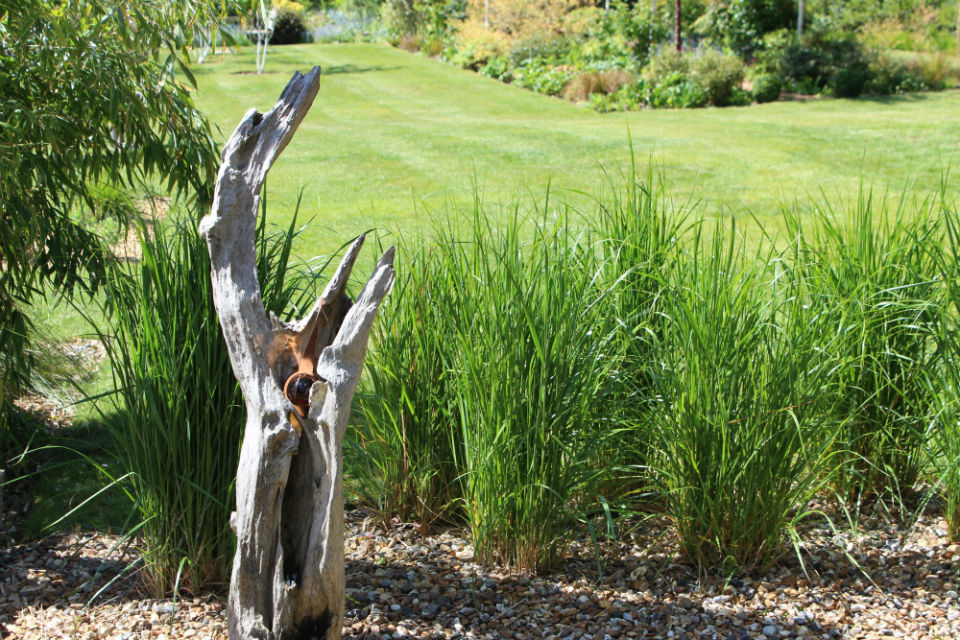
The gravel spreads underneath a cherry tree where the solid wooden benches have been arranged amongst the driftwood pieces,
which adds a sculptural element, with the Feather Reed grass providing a strong vertical accent and creating a division between the gravel and lawn. This ornamental grass, Calamagrostisx acutiflora ‘Karl Foerster’ is an early perennial, already grown to a good height, a lush green now but will turn golden in the summer, and bringing a suggestion of movement to an otherwise static area.
So who exactly was Karl Foerster? Born in 1874 in Germany his life was caught up in the turmoil of 20th Century Europe, and defying the Nazi regime he employed Jews to help in his nursery near Berlin which he had set up in 1903. After the war, the nursery was nationalised as it was located in East Germany, but Foerster remained there for a number of years. We have him to thank for this Calamagrostis which he found in the Hamburg Botanical garden listing it in his catalogue of 1939 and describing it a decade later in his garden book, The Use of Grasses and Ferns in the Garden.
There are several varieties of ornamental grass at Sandy Lodge. The house has substantial decking on two sides and from here you can survey the 3/4 acre garden created over the past 5 years. A high standard of horticulture is maintained, neatly mown lawns, razor sharp edges and not a weed in sight.
The double borders in front of the decking were created just last year. Inspired by the great Dutch nursery man and designer Piet Oudolf, they are planted in the prairie style and in addition have a generous covering of stone, more for aesthetics rather than as a mulch.
We head out across the lawn to the ‘Winter Wedding Border’ so called because when the garden owners Emma and Rick married in December of 2014 they asked for Garden Voucher wedding presents. A fun idea and now they have a living memory of their special day.
My friend and I haven’t seen each other for awhile; we usually meet in a cafe but what better way than in a garden in the presence of nature where the background music is bird song. We had to stop our flow of chat for a moment to admire the all-essential compost bins; sturdy and neat they endorse the gardening skill practised in this garden.
We wander along the woodland path which runs across the bottom of the garden, late spring flowering shrubs at their best; broom, lilac and varieties of pittisporum.
We emerge through a small group of silver birch, their leaves flitting in the sunlight. The grass around the trunks has been left to grow and with some blue camassia growing through it gives contrast to the expanse of newly cut lawn.
Those mown stripes with that runway feel draws us up to top of the garden passing the house on the sunny left hand side. Bushes of bright photinia hide the barbecue standing in place of a once derelict greenhouse.
When Emma and Rick came here over seven years ago this corner was overgrown with brambles and that delightful sense of shabby chic remains, a nod to how the garden once was.
But this is not the only reason we have walked up to this point, it is near the kitchen where refreshments are served. The cakes are sublime, home-made with generous portions,
and we find comfortable chairs on the decking, so inviting with freshly picked flowers,
and finding a spot of shade from the bamboo rustling in the breeze,
we admire the view over Halstead, the factory chimney and the the church tower,
and are drawn back to thinking of the marathon runners.
If you missed it there is another opening in September but if it is the marathon you are after you will have to wait another year. I know which I would choose…….
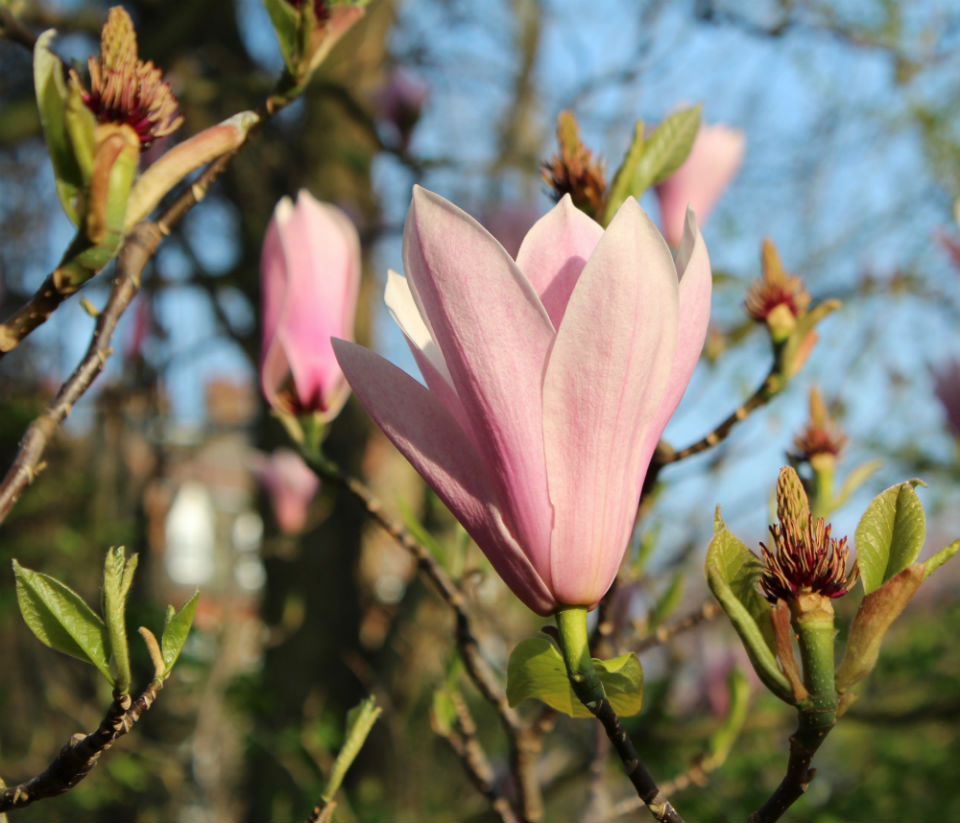
I was in London last Friday and being such a glorious day I could not resist a visit. Situated in such an attractive part of London the walk through the streets of Chelsea full of magnolia blossom was a delight in itself.
Approaching this haven of four acres surrounded by high walls, I slipped in through the unassuming entrance in Swan Street.
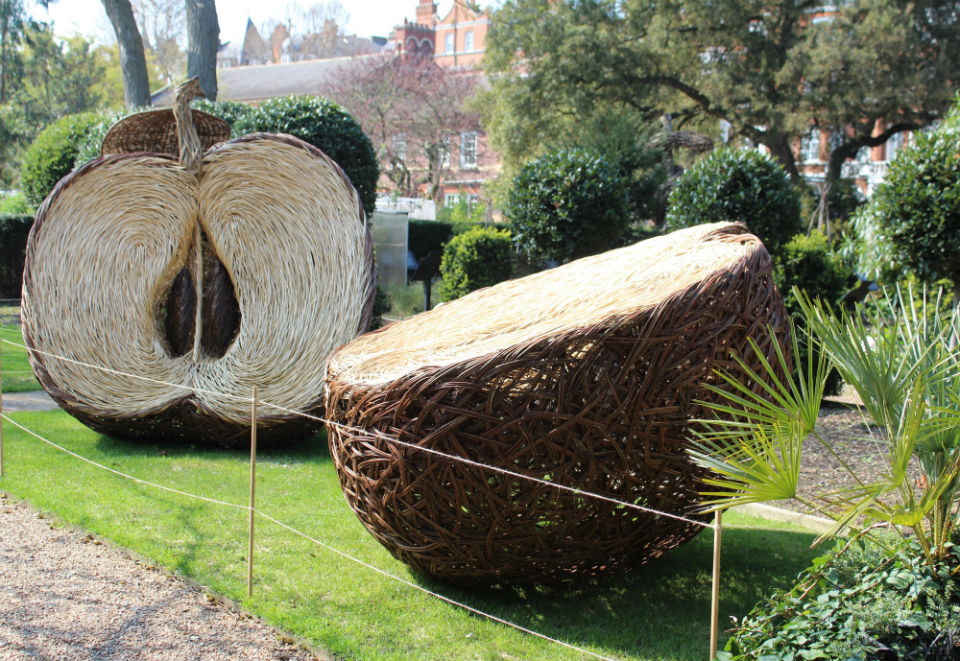
Joining the small friendly queue I was able to admire these beautiful woven masterpieces created by weaver Tom Hare http://www.tomhare.net/.
The real mission of my visit was to try and meet up with an old friend who I trained with and who helped me through my RHS Diploma. She has recently became Deputy Head of the Plant Collections and I was thrilled to find her in her natural pose, bent over and nearly hidden in the flower bed.
It is a remarkable garden originally created in 1673 by the Apothecaries in which to grow medicinal plants; it is a museum – a living museum that can be enjoyed at all levels. On this warm Spring day the place was very much alive; I followed some visitors walking these neat paths absorbed in the informative audio guide, and
others who were simply enjoying the sunshine with their little ones,
whilst others gently dozed having enjoyed a delicious lunch at the cafe.
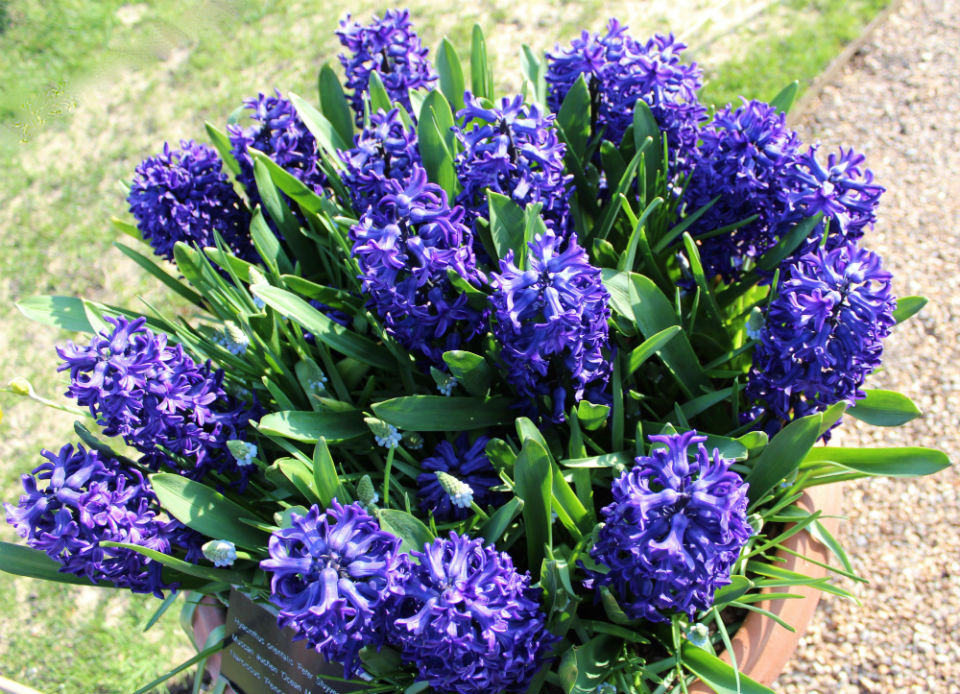
This pond was being much admired. Raised and surrounded by all sorts of little gems, it was the Tulipa heweri from N. Afghanistan that were winning the day.
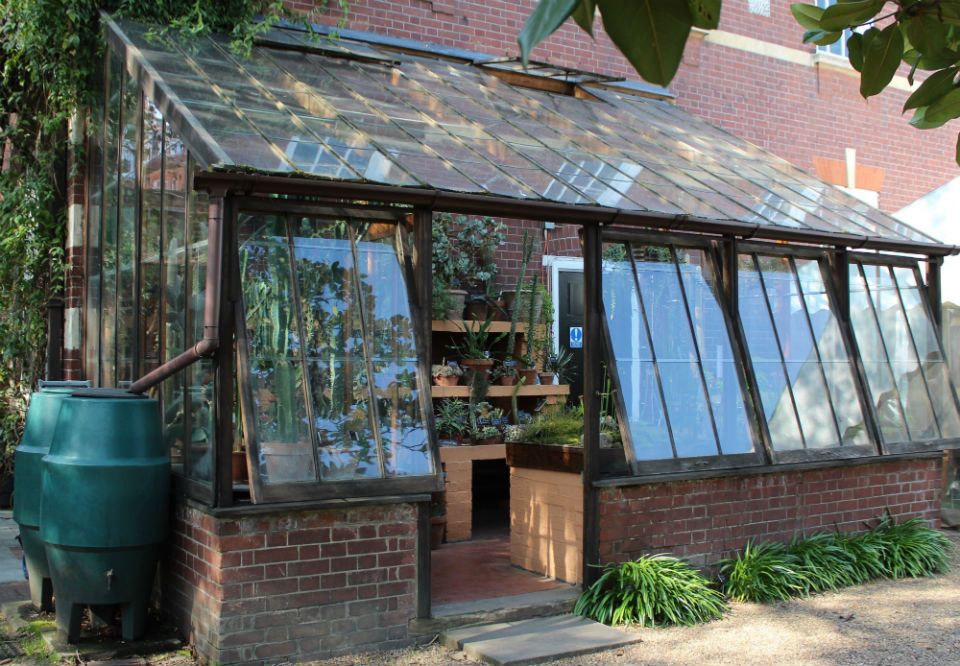
There is so much here to learn and admire and, unusually for me, I decided to focus on the conservatory.
Cacti are not usually my thing but here they are so artistically displayed.
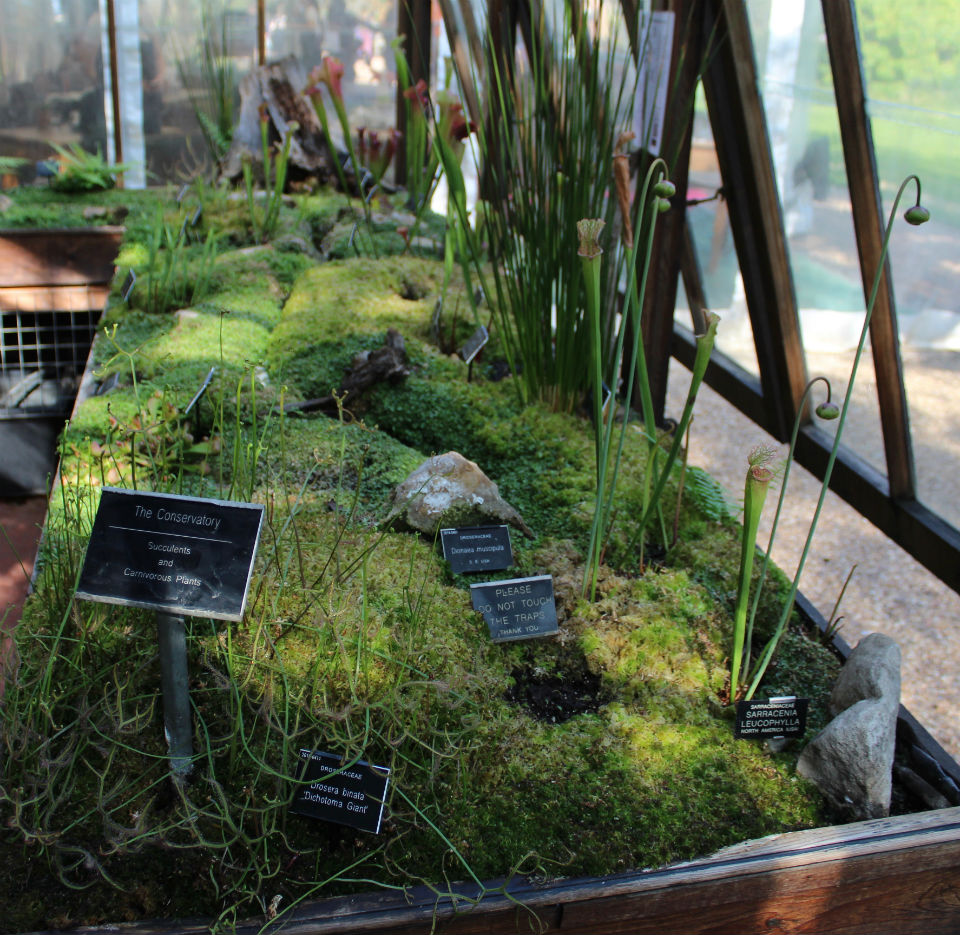
Here too, like a miniature garden with a stream running through, is the habitat of the Pitcher Plants Sarracenia,
a place where these extraordinary plants can thrive and dine out on their meal of flies.
Gardens are not just about plants. Here displayed in the borders, are the plants associated with various great men who have been connected with this garden. This bed commemorates Philip Miller who was gardener here for 48 years from 1722 to 1770, surely a lengthy period for any gardener.
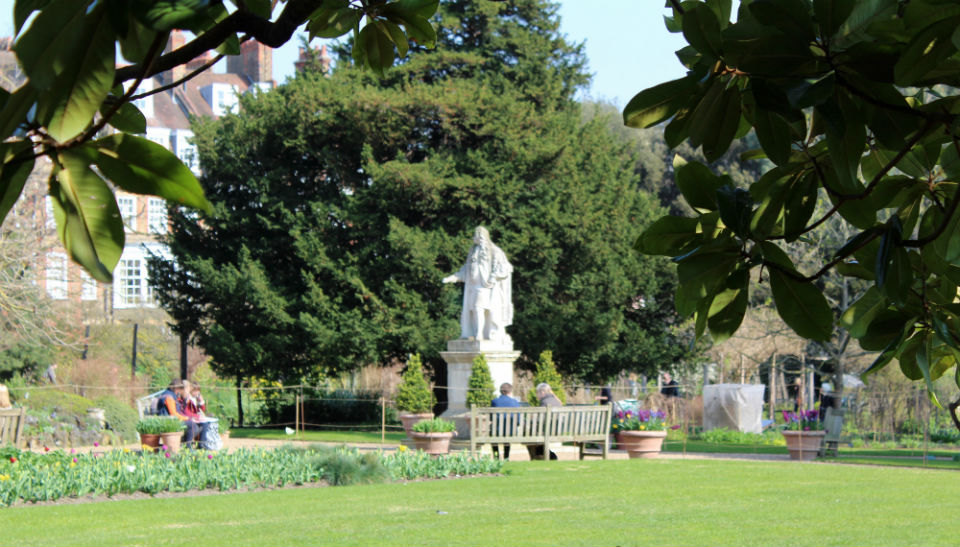
There are other great names celebrated within these walls, most notably Sir Hans Sloane the primary benefactor, whose statue stands in the centre of the garden. In 1712 Sloane bought the Manor of Chelsea from Charles Cheyne leasing the garden to the Worshipful Society of Apothecaries of London for just £5 a year in perpetuity. The Garden still pays this sum to Sloane’s descendants to this day.
Other great horticultural names include William Forsyth and Sir Joseph Banks and this walk is named after botanist and apothecary William Hudson FRS, who published Flora Anglica in 1762.
As I stroll along absorbing the fascinating history of this place, the buds of the tree of the Quince Cydonia oblonga seem to shout out that Spring is here,
and down on the ground this is echoed by the cocooned head of a salvia indica first described by the taxonomist Carl Linnaeus in 1753.
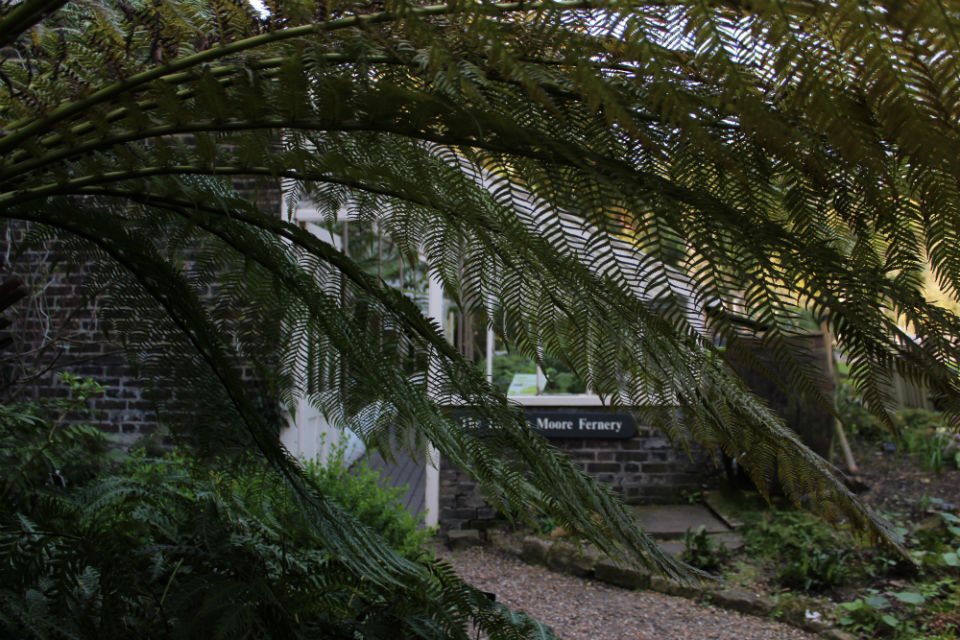
‘Plants are the most important living things on earth’ and their evolution on this planet is explained in The Thomas Moore Fernery. Moore was the Victorian curator who made the Garden the foremost collection of medicinal plants in Britain.
‘A plant for every Nook and Cranny’ can be identified in this interesting arrangement.
You can absorb all these interesting facts or simply just enjoy the plants so helpfully and clearly labelled; I love this magnolia laevifolia ‘Velvet & Cream’ not only for its perfect blossom but also its delicious name.
It is not so much a designed garden but an organised garden where paths lead you through different and delightful areas; the enchanting Stachyurus chinensis grows on the edge of the woodland area,
and the mighty trunks of the Gingko bilabo stretch to the sky. This tree has such significance and is considered to be the oldest tree on earth. The seeds originally relieved asthma and bronchitis and its modern use is to improve memory and circulation; I need to take note.
‘Useful plants’ are displayed in and around a theatre; it is remarkable to find out their uses both ancient and modern.
When I see Bamboo I am always reminded of its immense strength, remembering once seeing it used as tower block scaffolding in Hong Kong.
A helicopter is clattering above keeping an eye on the march that I can hear proceeding along the Chelsea Embankment. For a brief moment I am irritated that here, even in this haven there is no escaping Brexit. Looking up, the helicopter is not visible and all I can see are the blooms of Paulownia lilacina reminiscent of wallpaper.
My daughter used to groan as I invariably gravitated towards the composting area of a garden; she now knows its importance and here two little heads of Drimys Winteri at the gate seem to welcome me in.
Tucked away in the South East corner, I am so pleased it is open for all to see.
Clean and efficient, the engine room of the garden, the bins are brimming with goodness.
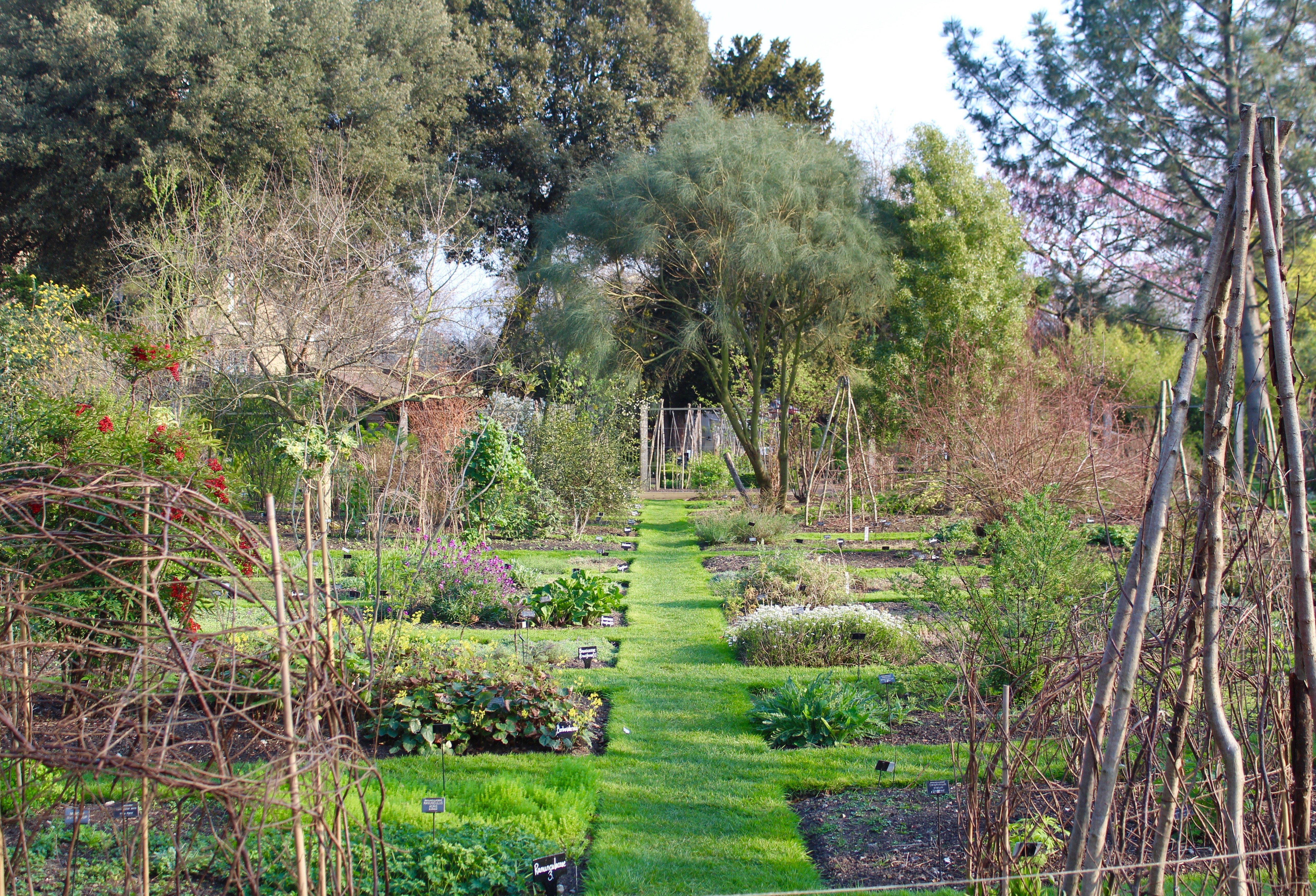
Looking across one area of the garden there is a similarity to allotments but without the sheds and general debris that goes with them. These are the beds laid out in order of plant families,
and there is much activity today; the gardeners are so busy. Who would think you need to water in March?
I am surprised to find a rose in flower, with a relaxed informal habit and with single cherry-red flowers, Rosa x odorata ‘Bengal Crimson’, it is said to flower here nearly every day of the year. I have just planted one at home and will have to see.
Glasshouse areas can often be so dull and unappealing but here the verdant plants and arranged pots draw you in,
with each house having a glorious display.
They sum up the high horticultural standards of this magical and fascinating garden.
The bell rings to announce closing time and it seems no one is in a hurry to leave.
Open yesterday for the National Garden Scheme, the Garden is open from 11am to 6pm. Not only a botanical beauty (with over 5,000 plants, edible, medicinal and useful), and an exploration of garden history, it is glorious place to spend an afternoon.
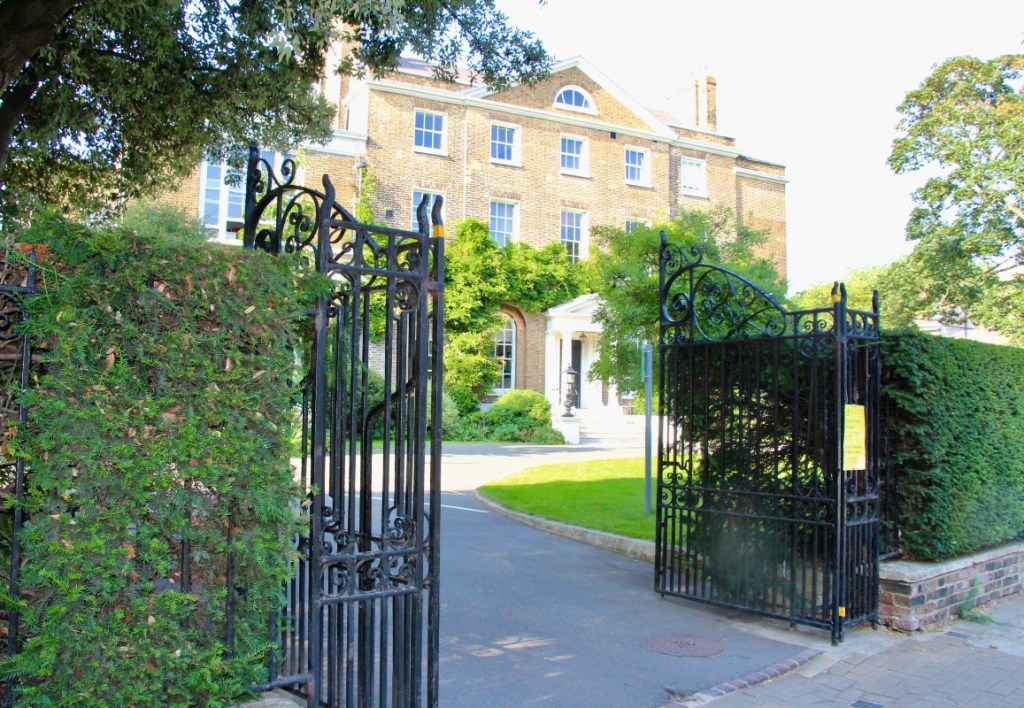
The Garden Gate was open wide for the new Horatio’s Garden at the spinal unit at Stoke Mandeville Hospital Horatio’s Garden
Horatio’s Garden is one of the beneficiary charities of The National Garden Scheme, and several of us were privileged to be able, at the official opening last Sunday, to mingle amongst the amazing patients and all the wonderful people involved in the garden’s creation.
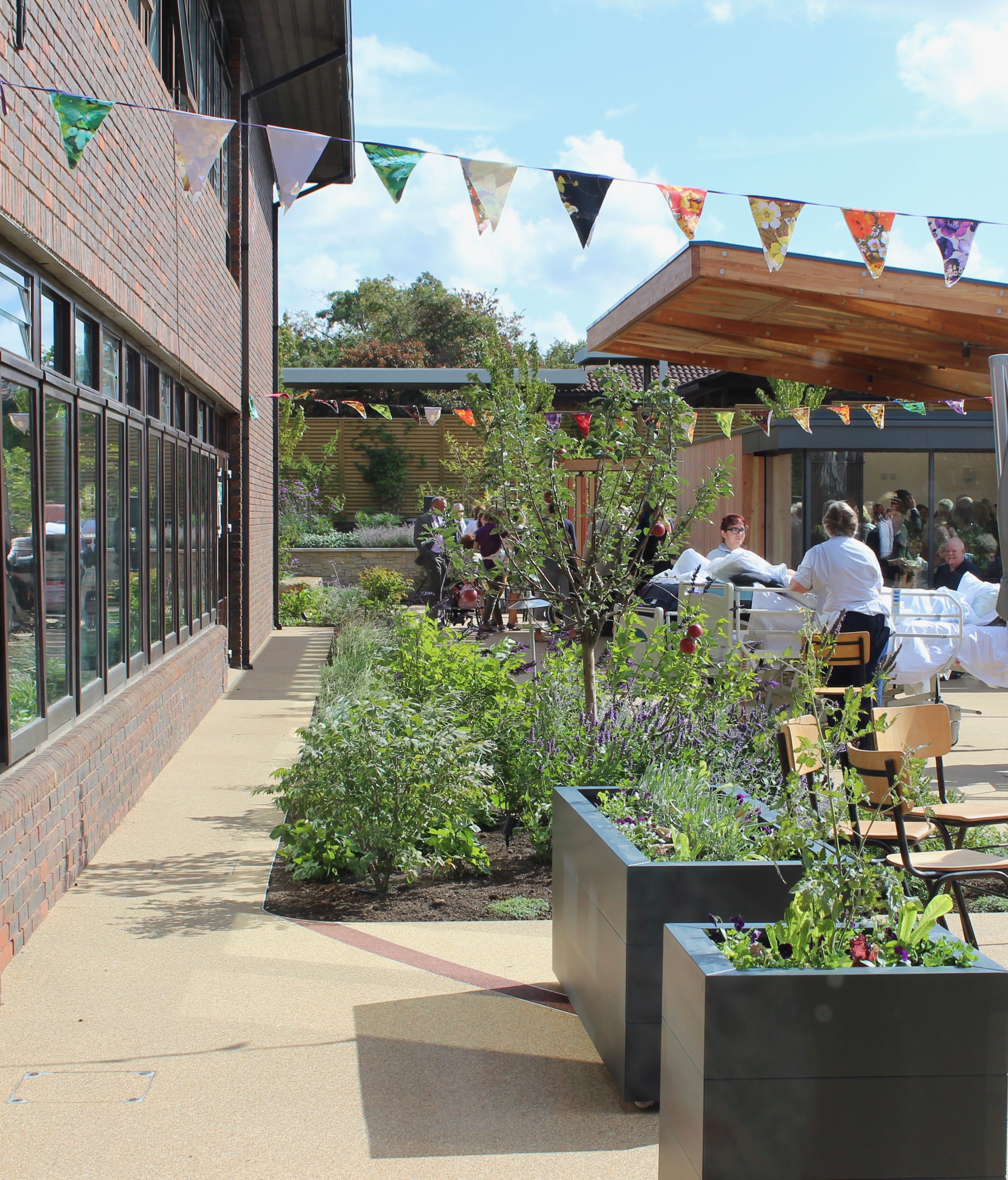
We followed the signs through the hospital corridors and out into the new garden bathed in the afternoon sunshine. Inpatients can be here in the spinal unit for a seriously long time often confined to beds and wheelchairs, so a beautiful outdoor space is of huge benefit. The gradients and surfaces have to be gentle and ultra smooth. A little bunting added to the gaiety of this great occasion.
On the spot where Joe Swift explained his designs to Olivia Chapple, the Founder and Chair of Trustees it was hard for me to imagine how this would look…
…now it has been transformed into a delightful space where two smiling volunteers welcomed us in.
What a cold miserable building site it was then, diggers removed 2,500 tons of earth…
…now it looks as if the garden has always been here.
Part of the garden stretches along a covered walkway which obtrusively dominated the site and where visitors and patients enter the main hospital from the car park…
now you are blissfully unaware of the busy flow of hospital life as a simple wooden fence gives privacy, and the border and stone wall give all year round interest.
Right now it is the asters that provide a splash of colour;
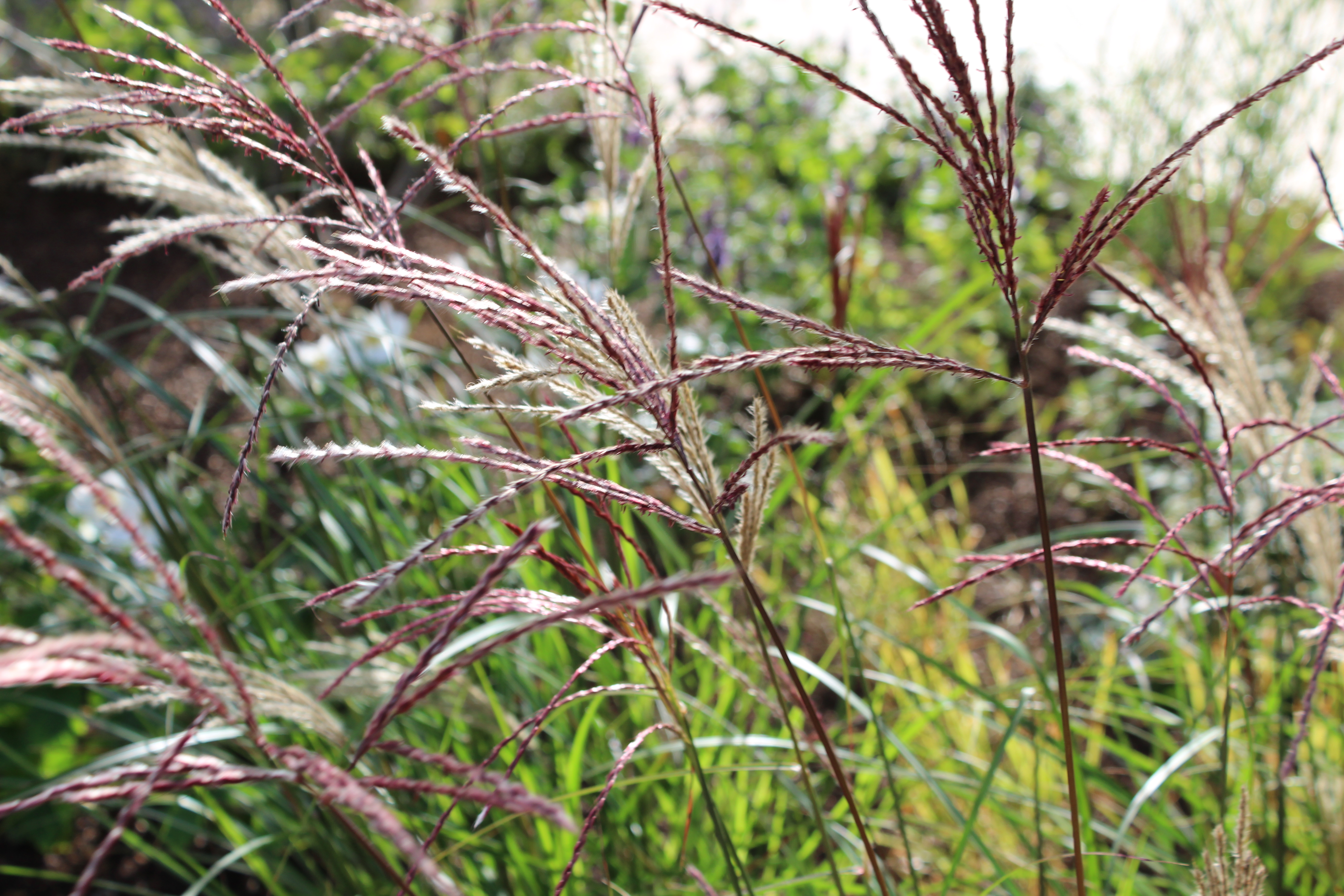
and the elegant seed heads of the miscanthus provide texture as they sway gently in the breeze.
The team of workers who constructed the garden ranged in number from 5 to 15 each day, and have now been replaced by some 48 volunteers who work under the guidance of head gardener Jacqui Martin-Lof. At no wish of offending the many head gardeners I have met, she surely is the most elegant.
I am reminded that back in December the only feature I could just make out under the blanket of snow was the shape of the pond…
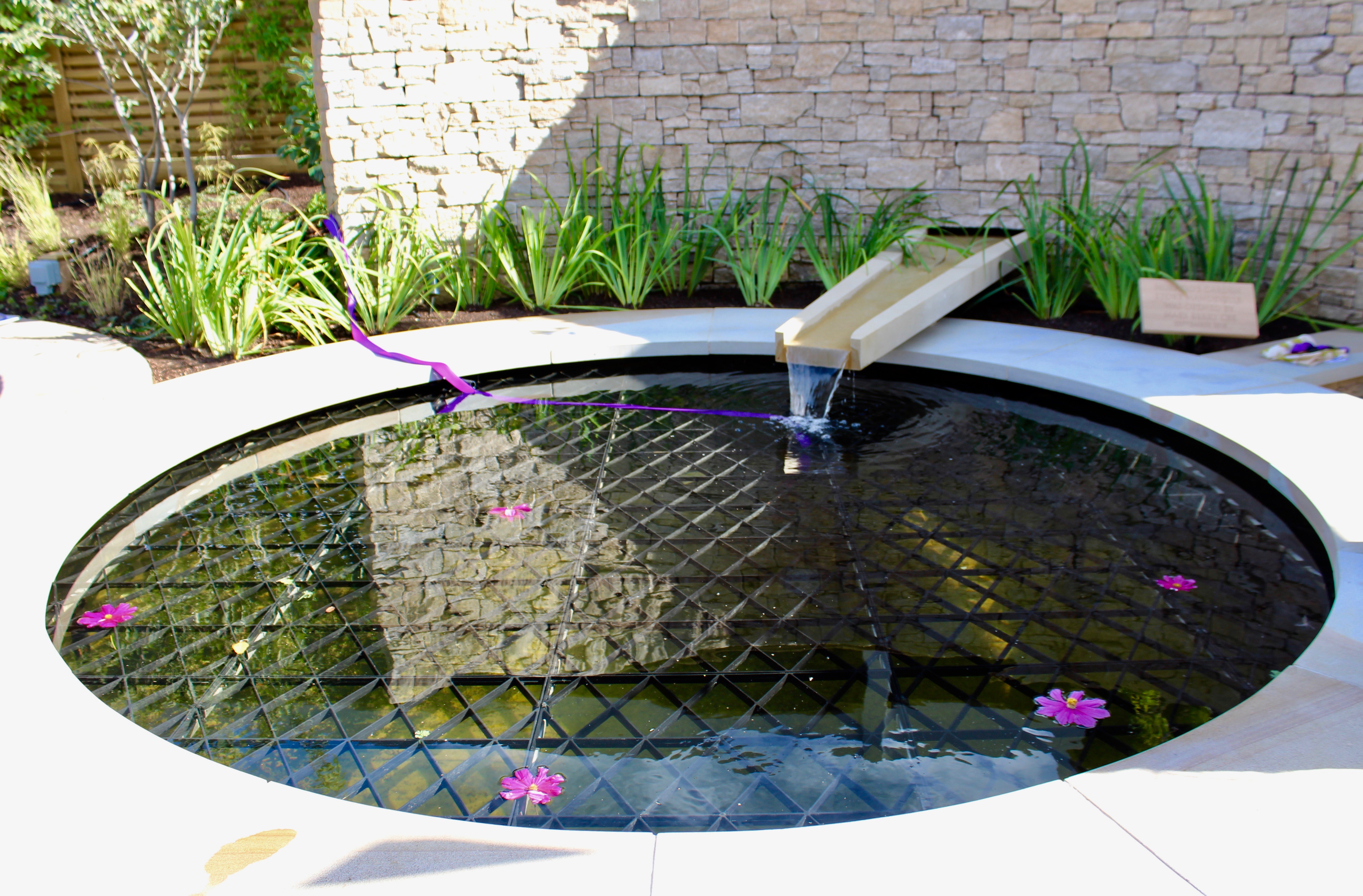
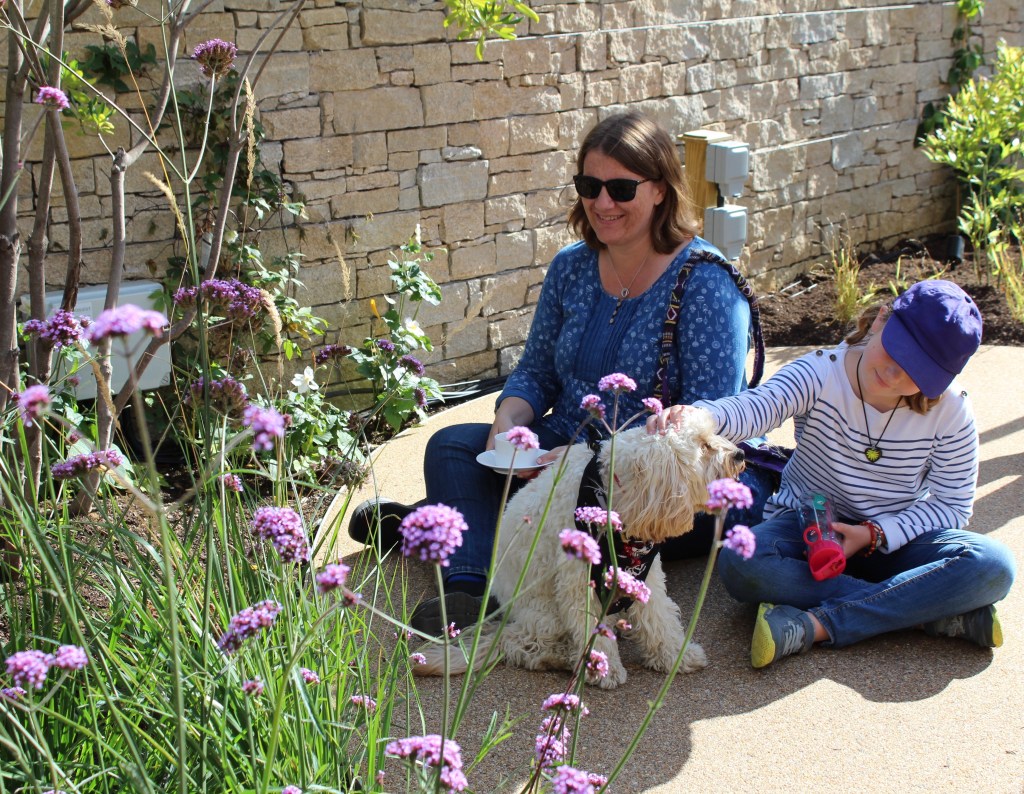
…today it is a delightful place to sit, reflect and listen to the soothing sound of flowing water.
On one side of the pond is a curved wall with an artful window opening.
Mary Berry, who has opened her garden in Buckinghamshire for over 20 years and is President of the NGS came today to open Horatio’s Garden.
Olivia Chapple, Mary Berry and George Plumptre
Speeches were made, and Olivia Chapple who spoke passionately and without a single note, engagingly gave thanks to the many, many people involved. We all felt such huge admiration for an amazing lady who is the driving force behind this dynamic charity.
Swifty told us that if it had not been for Olivia’s determination the unsightly hospital generator would have unfortunately remained as the centre piece of the garden.
We were then entertained by Magnus Chapple who sang a song he had composed. There were plenty of places to sit and even the smooth bonded resin was comfortable enough for some.
Mary Berry cut the ribbon and declared the garden officially open.
With a big green knife she also cut the cake which was then taken round by cheerful volunteers.
Tea flowed from the garden room, a delightful wooden and glass building where patients and families will be able to enjoy the space and light without feeling they are in hospital.
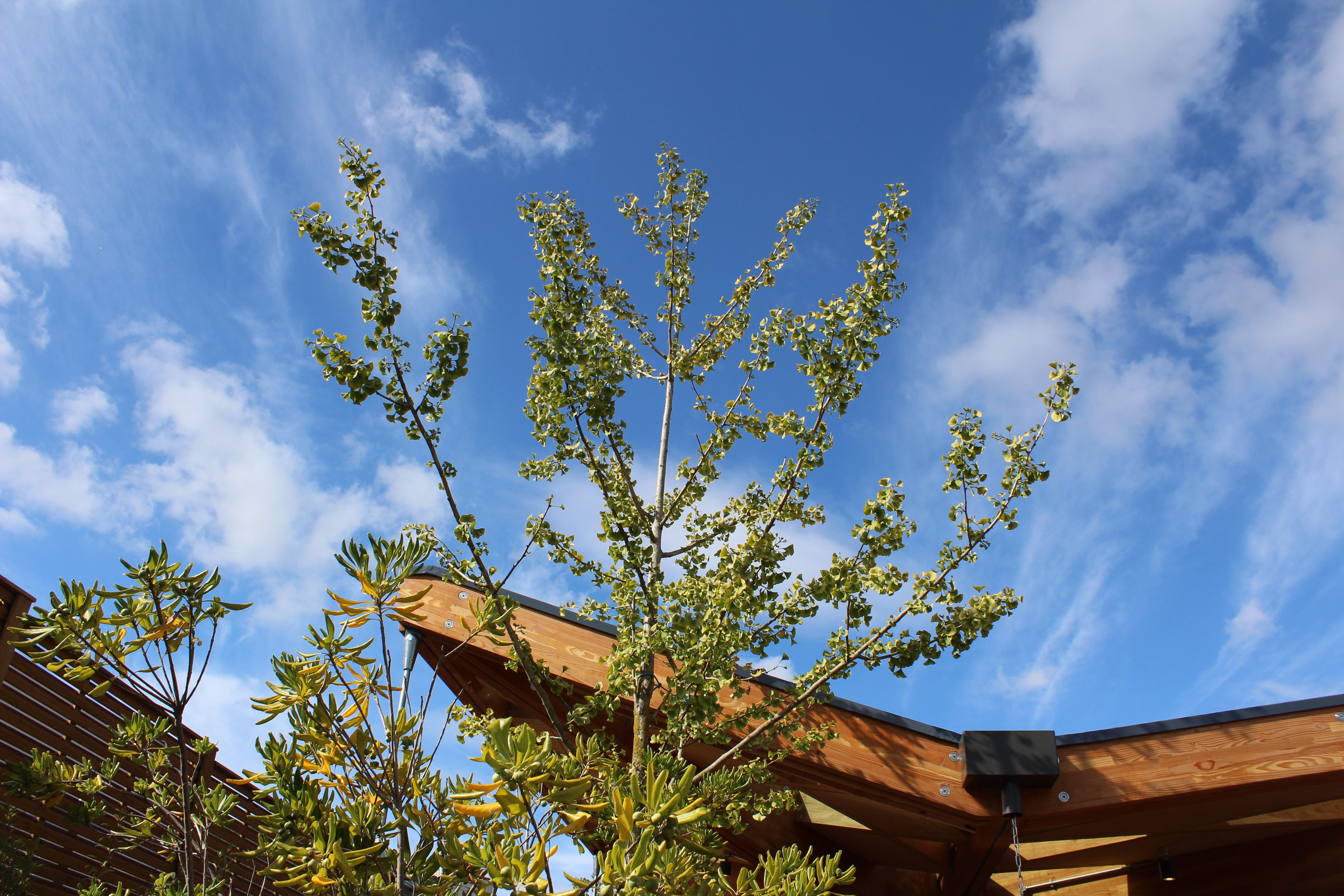
A young gingko biloba already past the height of the roof is determined to reach that blue sky.
Down on the ground in the flower beds there is a healthy selection of herbs and the waft of mint is prolific today.
This lovely guy picks a sprig of rosemary; he says it is so much better than the air freshner used on the ward.
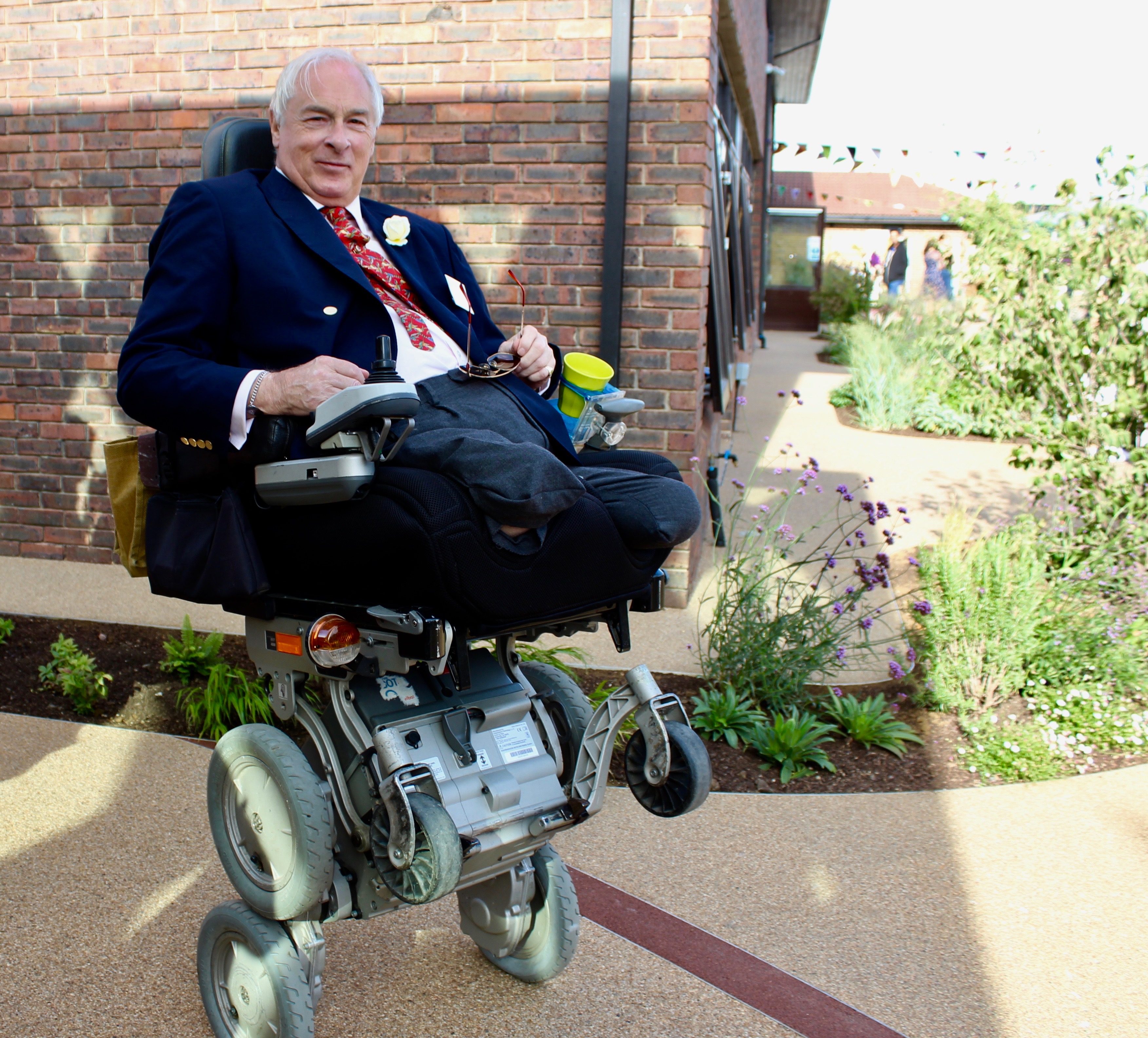
Access for wheelchairs is usually so limiting but here they are the norm and can be wheeled effortlessly straight out from ward to garden,
where there is plenty of room for a trio to meet.
Wheelchairs come in all shapes and sizes, upright, gyrating and well you could say, almost dancing.
Three great designers enjoy a moment together, Swifty sporting the dahlia ‘Horatio’ pinned to his lapel, is joined by Cleve West who designed the first Horatio’s Garden at Salisbury Hospital, and James Alexander-Sinclair who designed the subsequent Horatio’s Garden at the Scottish National Spinal Unit in Glasgow.
Earlier I had caught sight of Bunny Guinness, but she must have hurried away to complete her designs for the next Horatio’s Garden that she is creating at Oswestry.
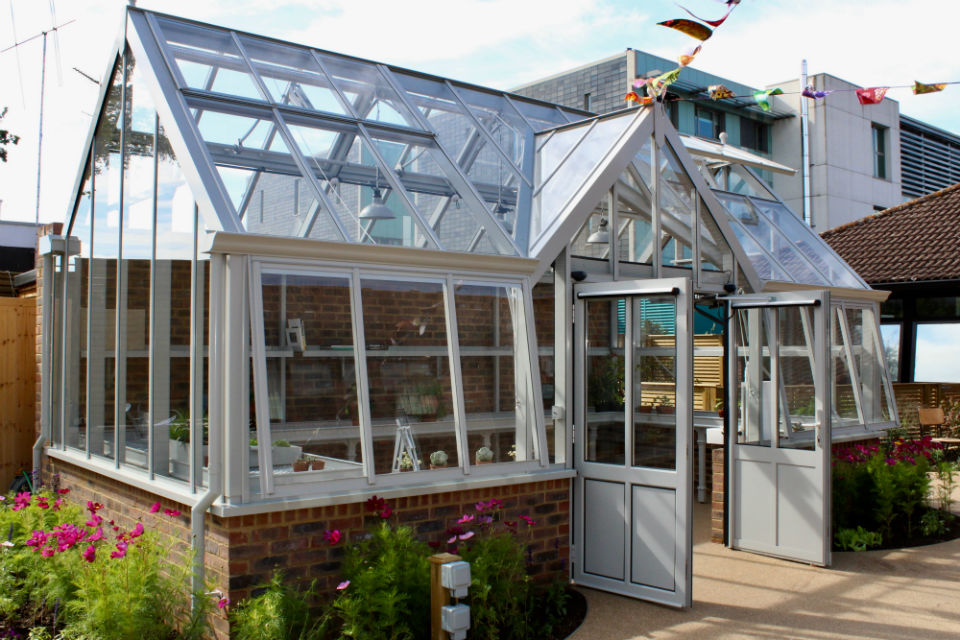
Every garden needs a good greenhouse and Horatio’s Garden in no exception.
Accessible and specially equipped, it will be used as part of the therapy programme,
where plants for the garden will be propagated as well as herbs, salads and fruits which the patients can enjoy themselves.
I am reminded again of how it looked before (incidentally the turquoise box behind the fencing in the centre is that generator)…
Ample space for a couple of large hospital beds. It was delightful to see these patients enjoying the fresh air and the warm sun on their faces.
We have enjoyed the gaiety of the afternoon and can see that much thought has gone into the design of this garden. Planned to encourage wildlife and provide colour and texture throughout the year, it must be a sanctuary for those patients facing hugely difficult and life-changing times.
And we must not forget the inspiration behind this extraordinary charity, Horatio Chapple whose short life has given so much and another reason why some of us open our own gardens.






















































































 The Garden Gate is Open