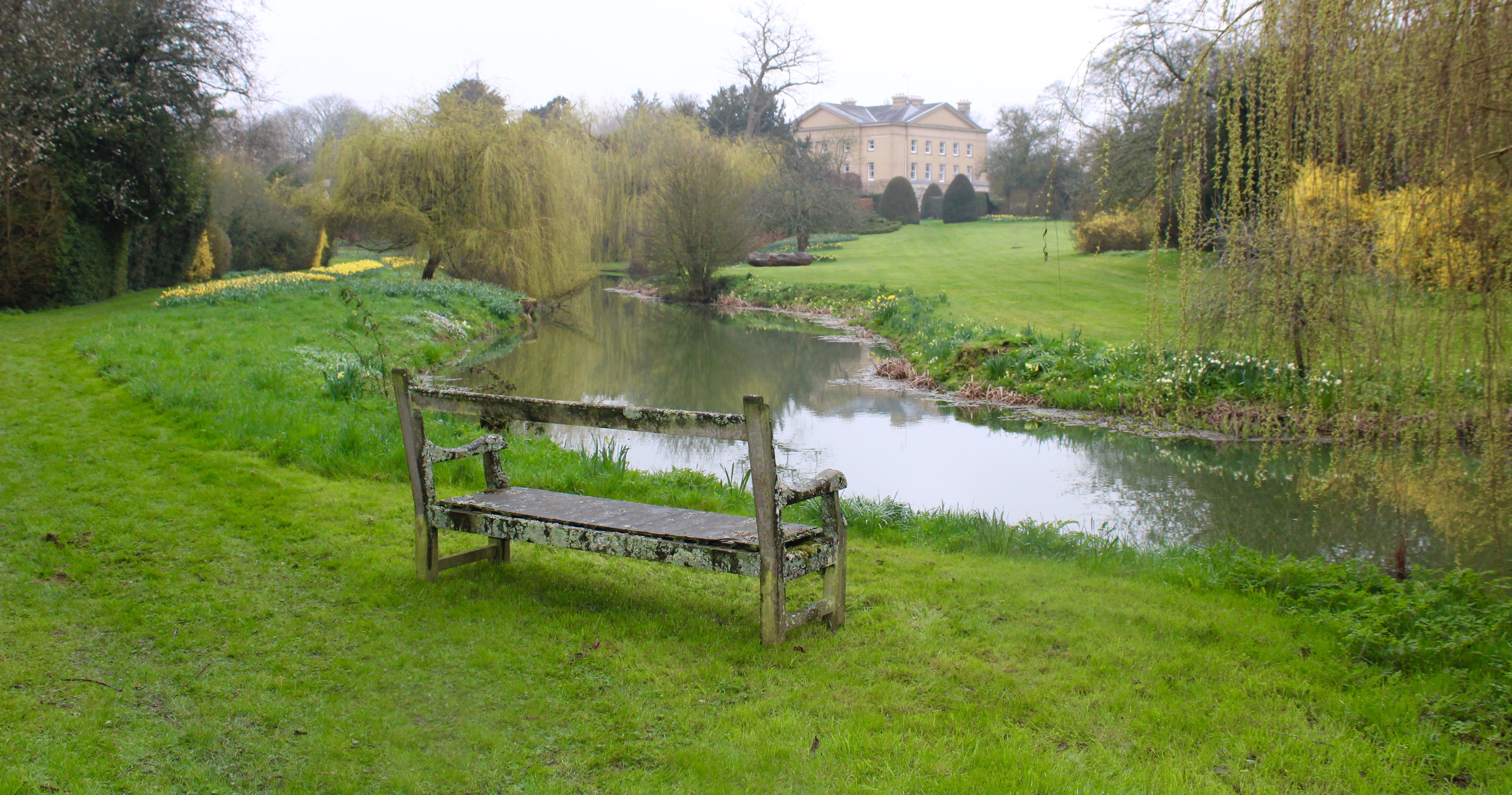
Frankham Farm

Last weekend we were staying in Lyme Regis and by way of using the National Garden Scheme App, I discovered that Frankham Farm some 18 miles away was open on the Sunday.

We drove through the delightful Dorset lanes, narrow with neatly trimmed bare brown hedges and banked with primroses.

Situated in the extraordinary sounding village of Ryme Intrinseca, south of Yeovil, Frankham Farm is a well established working farm and we were directed through the farm buildings situated north of the house to park in front of the cattle yard.

It had amused us that the garden description contained the encouraging wordsNew toilets in 2019′, so having had a lengthy drive through the little lanes of Dorset what a joy it was to find them. Heated too. I felt they deserve recording.

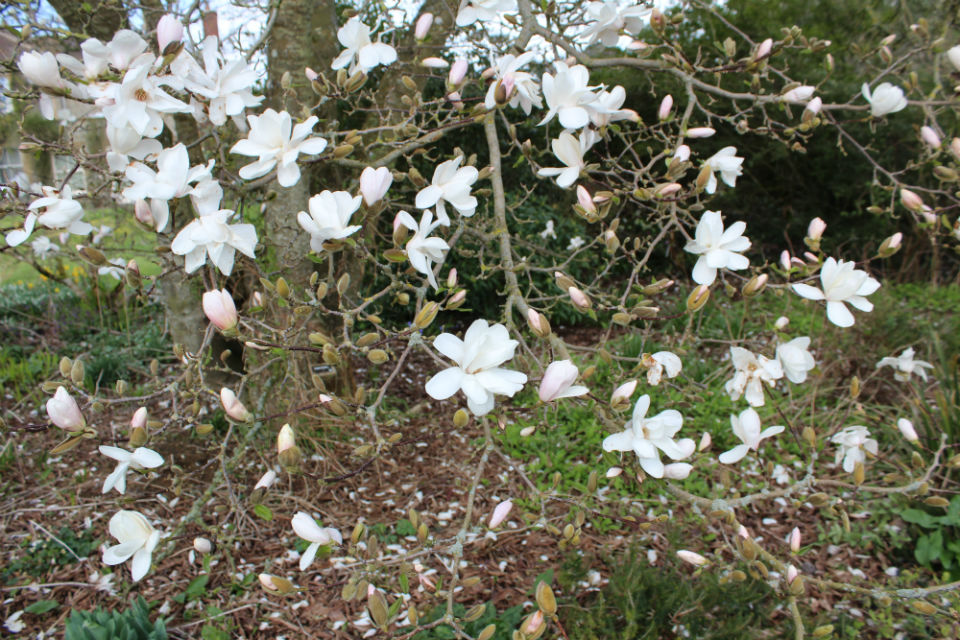
This three-and-a-half acre garden was created in 1959 by Mrs Jo Earle mother of the present occupant. I imagined this magnificent magnolia against the house might have been one of her first plantings.

She loved the Spring but March is that time of year when the weather is so unpredictable and whilst the wintry snowdrops were just going over,

the clumps of delicate daffodils were giving a nod to spring in the morning sunshine.

Defying the chilly wind of “Storm Gareth” and unusually in flower for this time of year, it was a surprise to find Cerinthe major a hardy annual blooming amongst the paving in front of the house.

The Earles planted shelter belts on the east and west sides of the garden, and a low wall surrounds the lawn and its borders to the south. It is obvious that the soil is improved by the occupants of the farmyard. I expect in those early days when the garden was first developed there was labour at hand. Now the mature garden waits for its spring tidy up, and areas like this will come into their own during the summer months.

Not far from this bench (and this photo does not do it justice), is a handsome camellia; the flower a deepest of red and the leaf the darkest of glossy green.

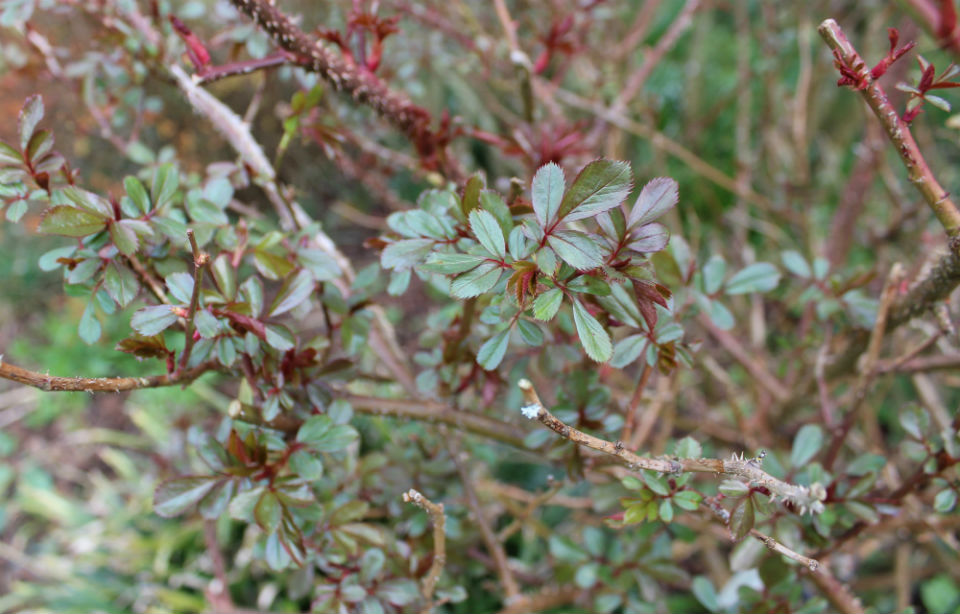
This rose is keen to get going, pushing out its red shoots and dainty leaves.
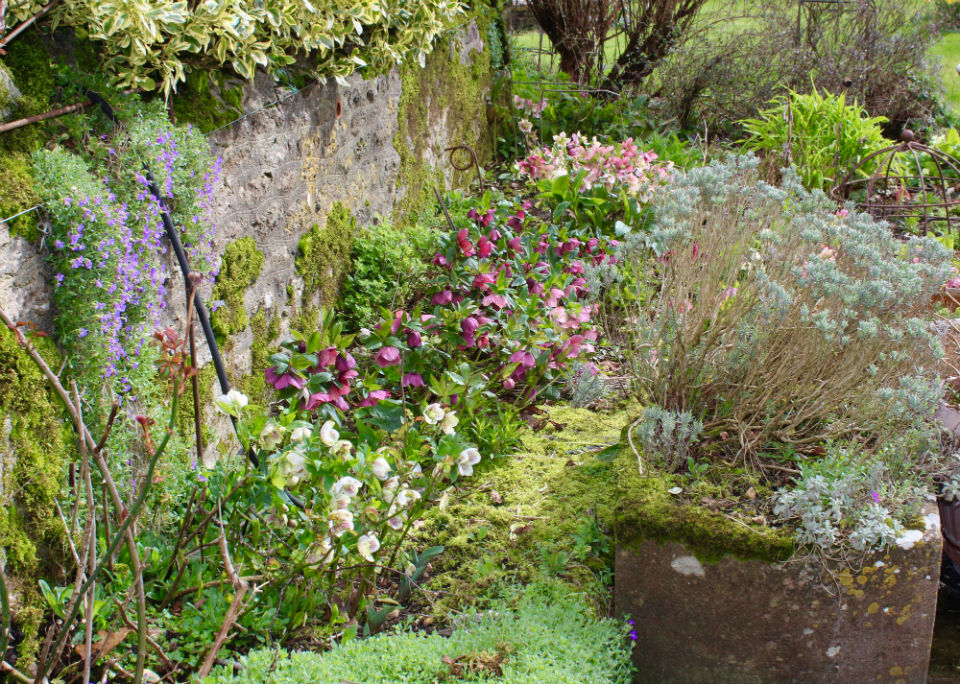
Aubretia tumbles down from the walls under which happy hellebores flower.
It is an intense blue from this Pulmonaria officinalis. In times past, doctors believed that plants that resembled any body part could be used to treat illnesses of that part. The leaves of Pulmonaria officinalis commonly known as lungwort held to be representative of diseased lungs so this plant was used to treat coughs and diseases of the chest.

A splash of white and a strong fragrance comes from the Magnolia x loebneri ‘Merrill’,
and round the corner the winter-flowering honeysuckle Lonicera fragrantissima clambering along the wall, smells delicious too.

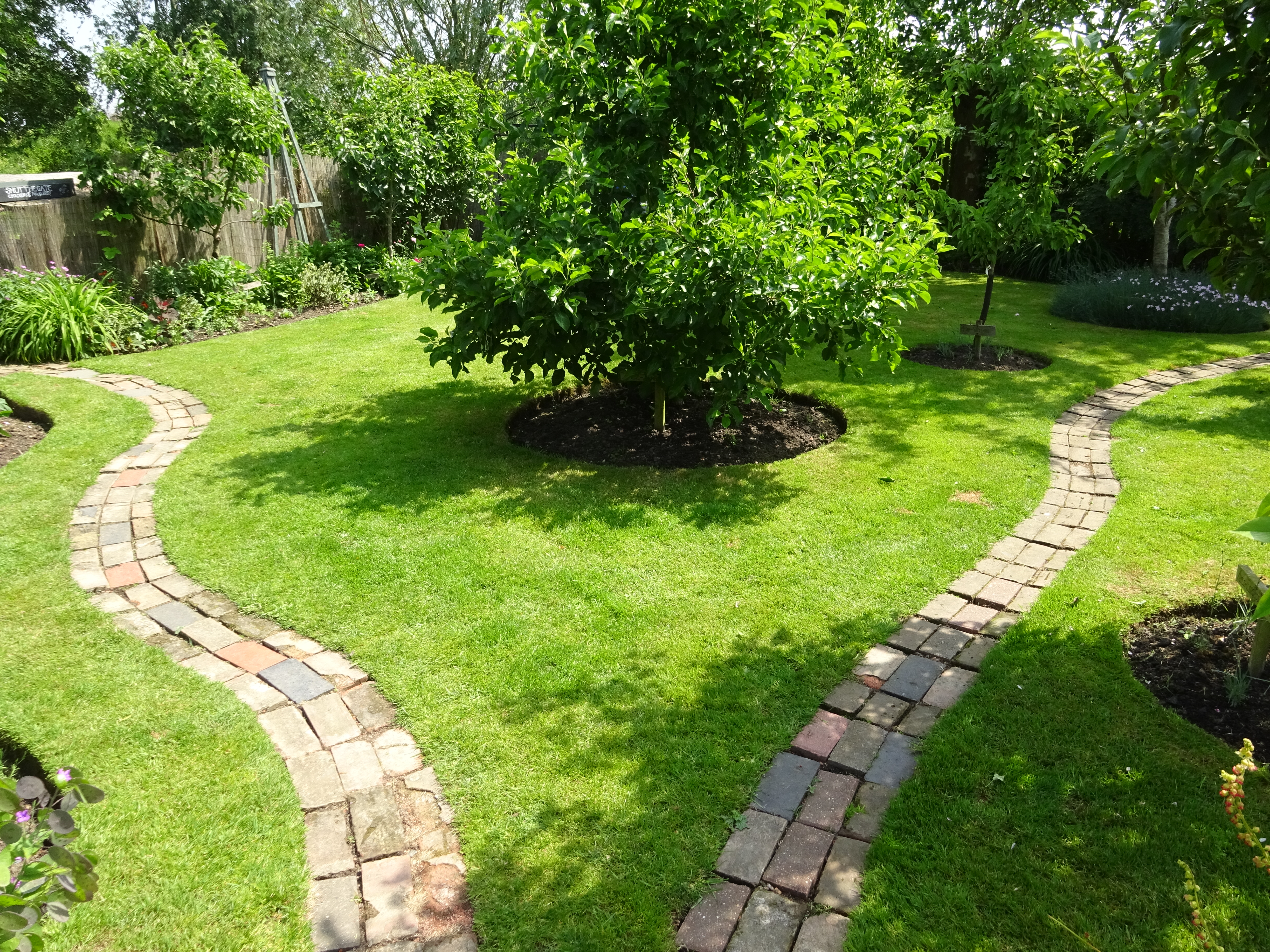
In the vegetable garden brick paths lead around a fine Bramley apple. The area is not only busy and productive
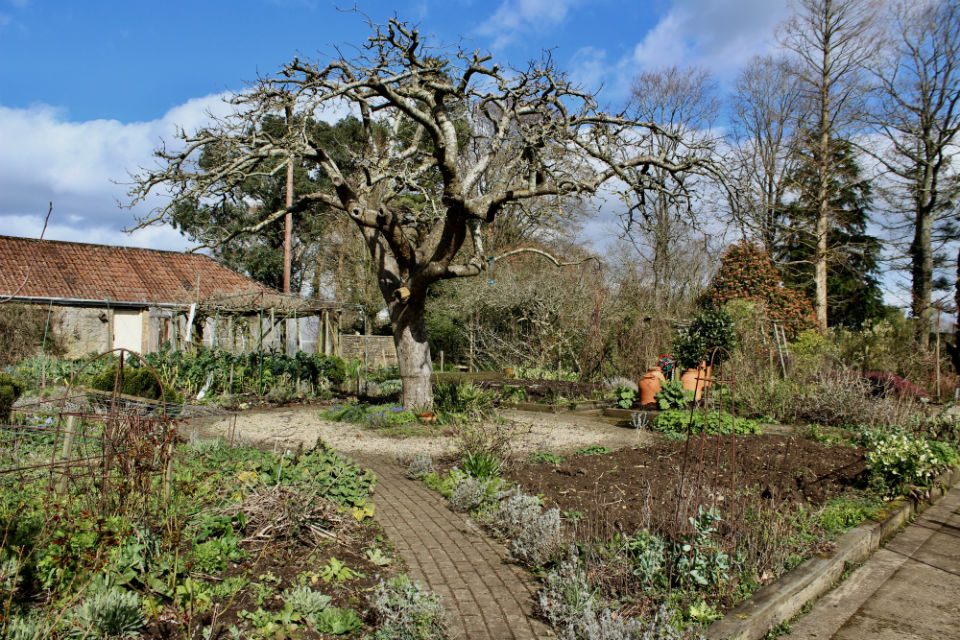
but also decorative too, with paths edged by a variety of low shrubs and arches adorned with a selection of old climbers.
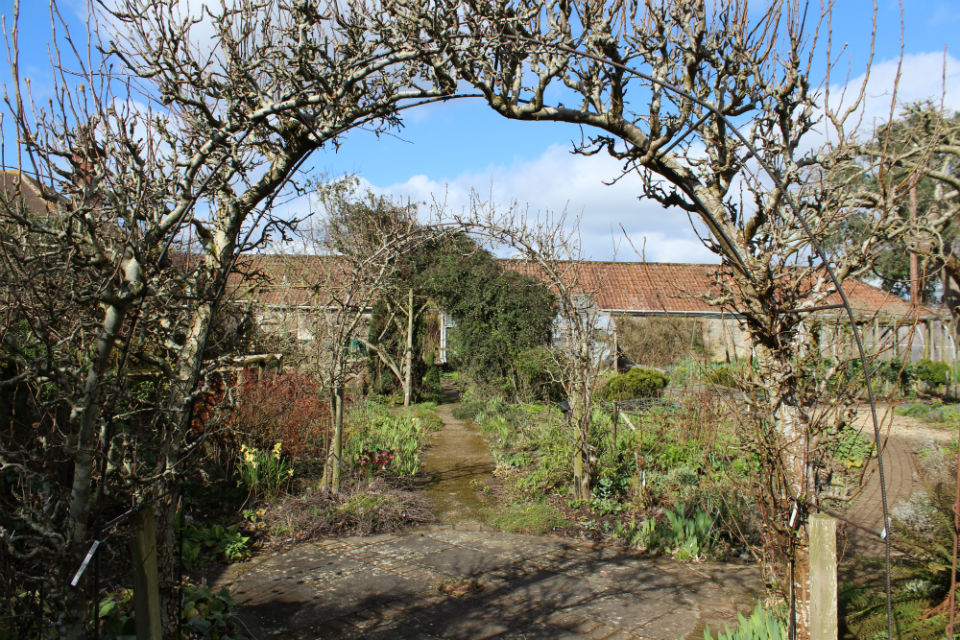
There is even a small rockery arranged like a back-bone of some creature – the perfect place for small alpines.

The terracotta rhubarb forcers at their jaunty angle seem to be enjoying their role.

Rising up behind the vegetable garden adjoining the shelter belts is a particularly spectacular specimen of Photinia x fraseri.

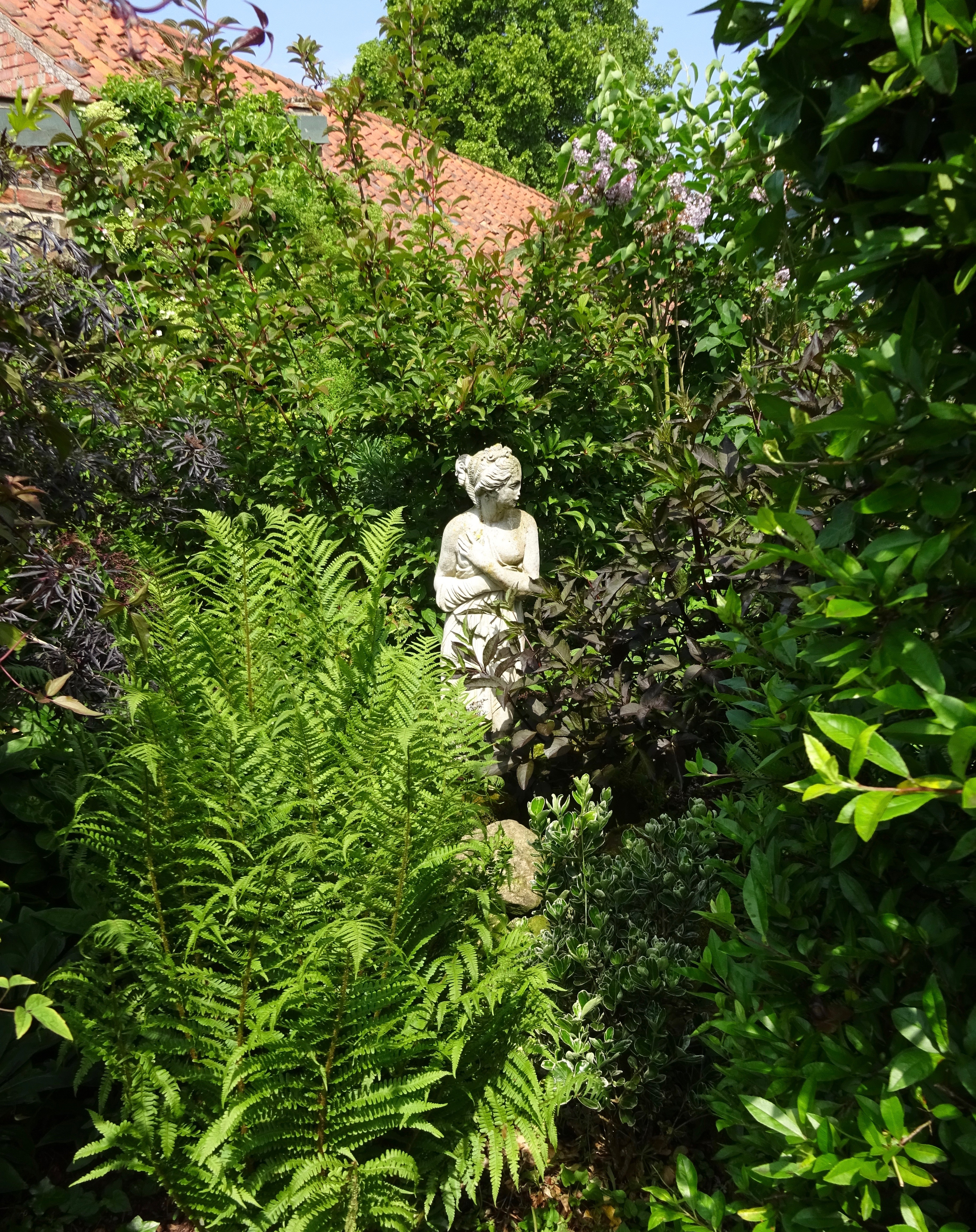
Plant combinations can be enlightening and this healthy skimmia looks so good with a fern. There is no doubt that plants benefit from the enriched soil.

It is a very informal area, wild may be a better description, I worry that the Ivy may take control however the path leads you through Camellias of every colour.

I can’t grow them on my alkaline soil so I take a little time to admire them.

It is an enviable list of trees planted within the shelter belt, their names helpfully identified on a map. Many of the trees were grown from seed and it is easy to forget that in the early sixties there existed few of the garden centres and nurseries open to us now.

On this windy day the canopy sways above us but the intriguing cork oak Quercus suber stands solid.

Mrs Earle’ s final project was a booklet about the garden; it would be interesting to know the story behind this gentleman, alone amongst the trees.

This morning plenty of fir cones lie on the ground but none are as large as this carved wooden sculpture sited at the end of the belt.

We decide to take a break for a bite. Served above the stables it is a relief to get out of the wind. The church ladies are charming, and serve us soup and pulled pork, a skill they have been exercising for many a year. A gentle touch that each table has an arrangement of flowers picked from the garden,
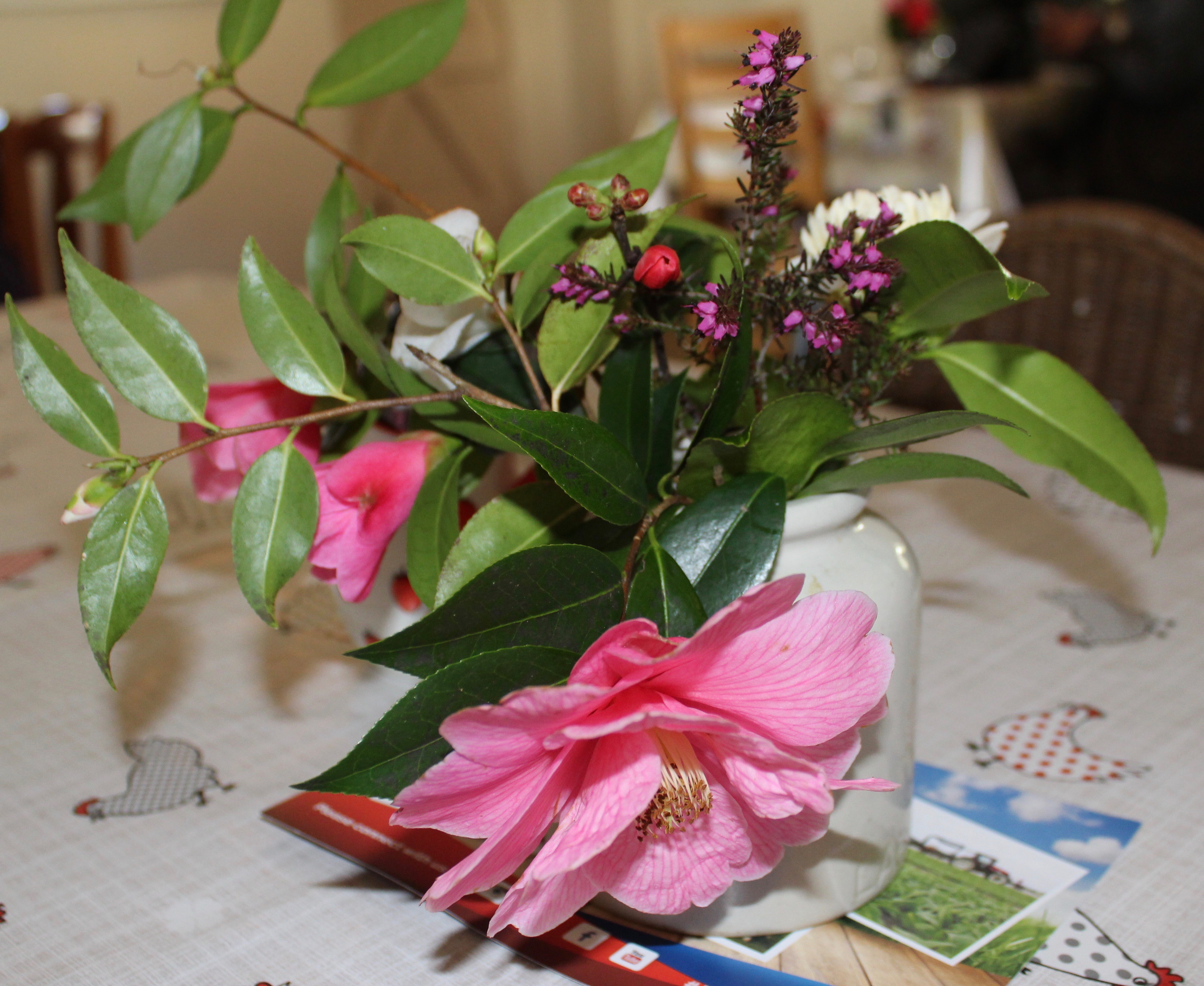
and proudly displayed on the wall is a faded photo of Mr and Mrs Earle and the trowel presented to them back in 2003 by the National Garden Scheme for long service.

We resume our tour through a rustic arch entering the old paddock,

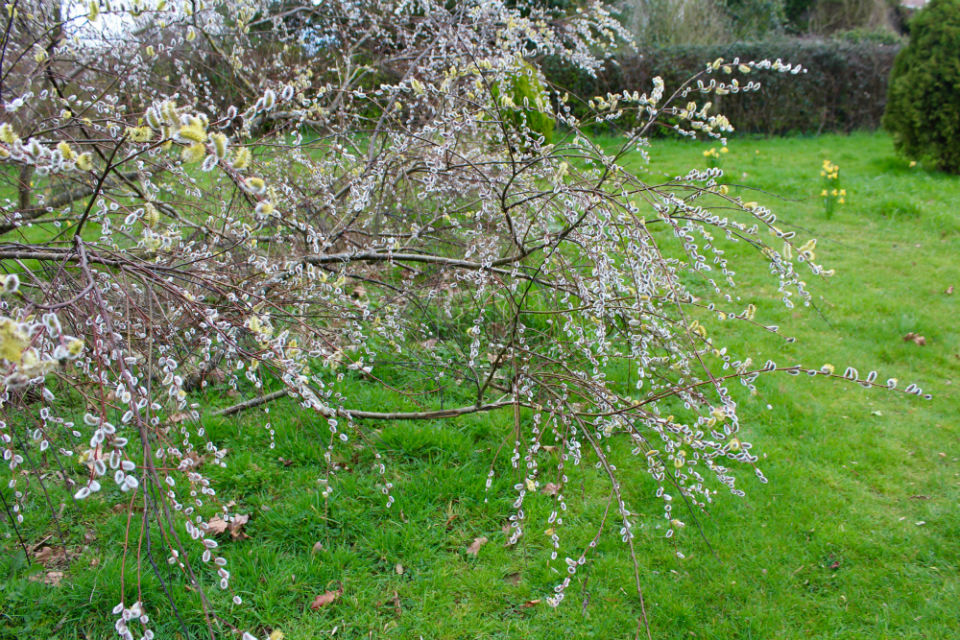
where more-recently planted trees have been sited, perhaps taken over from ponies that once grazed this grassland. The tangle of willow with its silvery catkins is surely the harbinger of spring and this garden opening signifies the visiting season is just beginning. Download that App, get out into a garden, and remember that while it is good for you, you are also raising funds for the health and nursing charities that the National Garden Scheme supports.
You always come away from a garden with something; an idea, a plant or even on this occasion the purchase of a very nice table and chairs, now relocated to my garden.

——-2019——-
Snowdrops at East Ruston Old Vicarage

Inspired by the eloquent voice of George Plumptre CEO of the National Garden Scheme announcing the start of the Snowdrop Festival I decided to visit East Ruston Old Vicarage Garden http://www.e-ruston-oldvicaragegardens.co.uk who were hosting their own Snowdrop Specialist Growers Day.

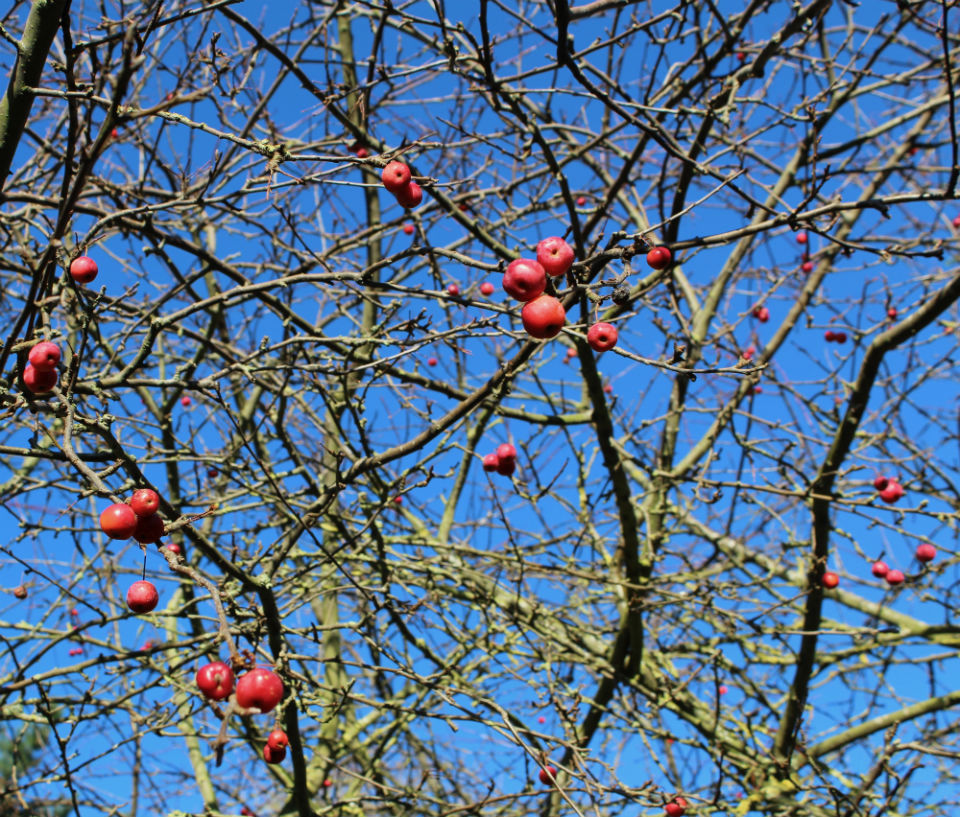
The owners Graham and Alan warmly welcomed us in the car park directing us to park under the crab apple trees which despite the cold, were still looking so good against today’s blue sky.

The entry fee was modest and it was good to see the knowledgeable Ian handing out the newly printed NGS Norfolk “Gardens open for charity” booklet. Nearby a Chusan palm trachycarpus fortunei, bathed in morning sunlight seemed to wave us on,

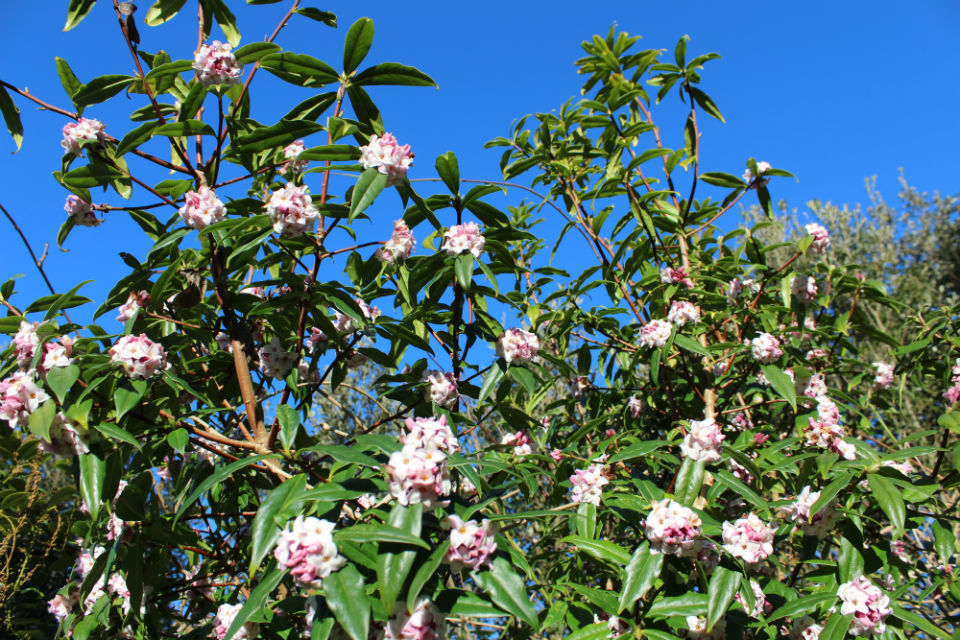
and around the corner the air was filled with the delicious scent of Daphne Bhoula ‘Jacqueline Postill’.

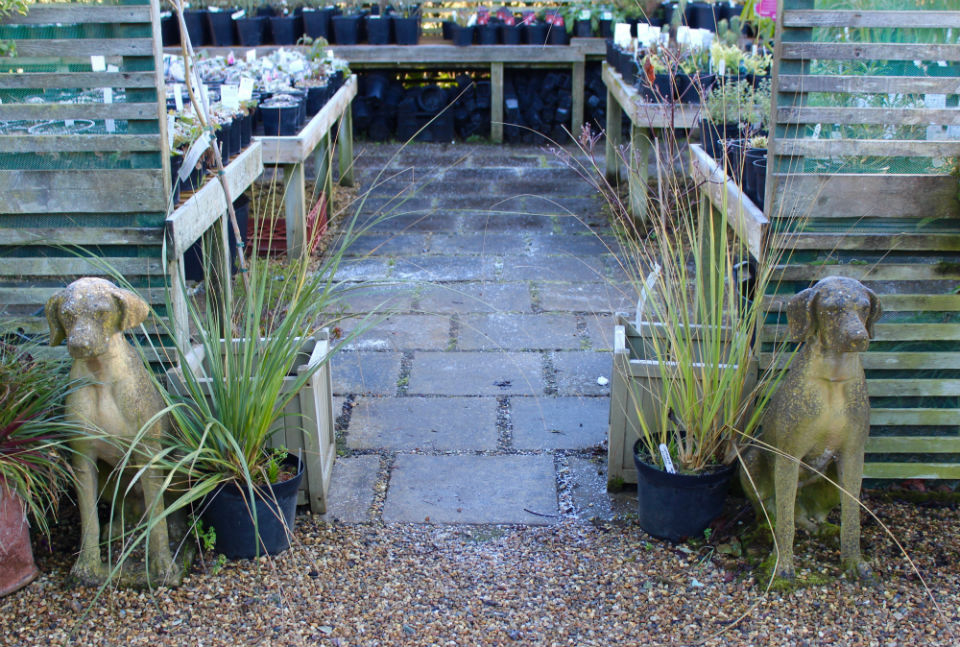
East Ruston has its own nursery, guarded by friendly dogs,

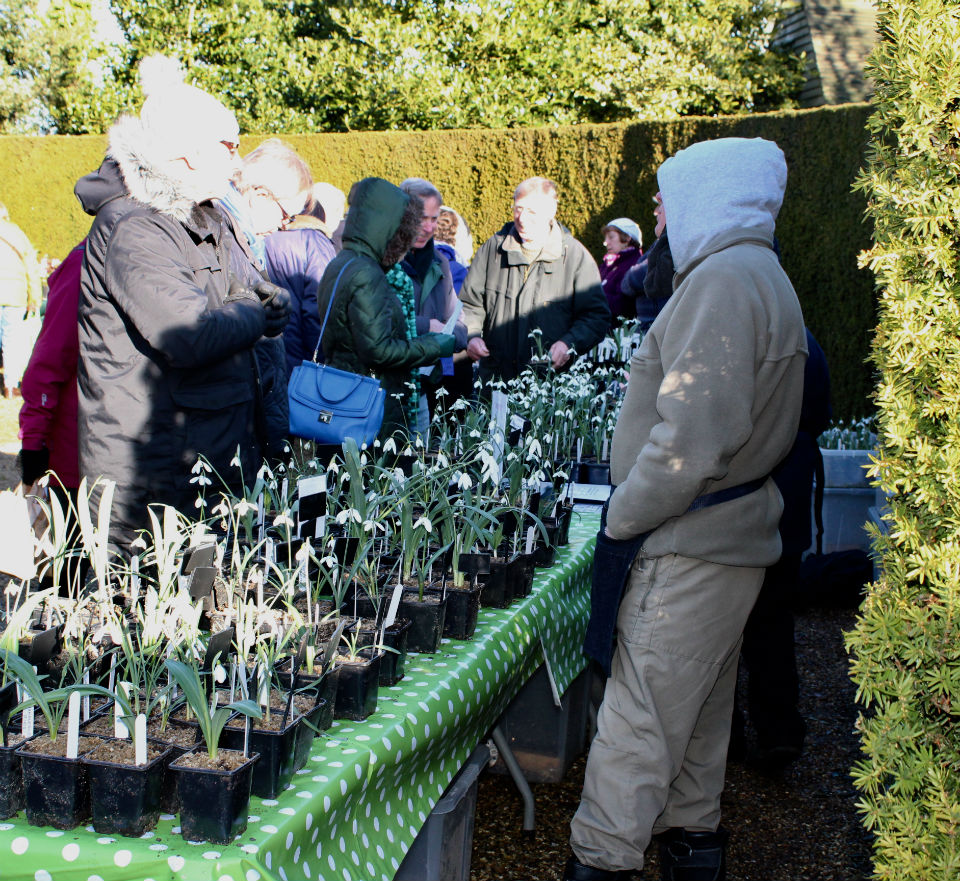
but it is for the snowdrops that we have really come, not carpeted on the ground but displayed in neat rows on tables by the keen and knowledgeable nursery people who breed them.

Known as ‘Galanthophiles’, it seems such a chunky word for these delightful collectors of such a tiny flowers. With so very many varieties how do you choose?

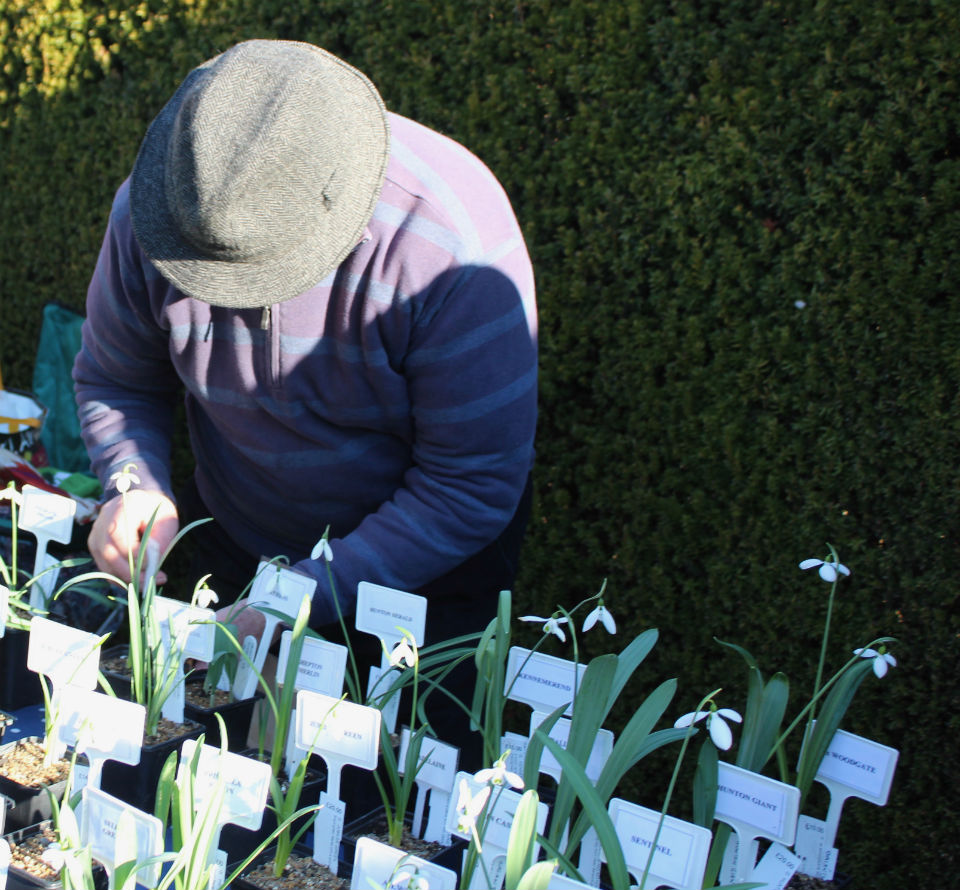
I am still very much in the learning stage, but with what might seem rather oversized labels it is easy to read their charming names. I am looking for Galanthus plicatus ‘Three ships’, an early flowering snowdrop often out before Christmas and discovered in a garden in Suffolk; I discover it is not on display so order if from Joe Sharman from Monksilver Nursery.

I spy a tray on the ground; characters in the waiting so to speak, and looking just how they do peeping through the snow.

Under this hat is John. It was in his garden a couple of years ago that I began to have my first stirrings of galanthomania and bought the beautiful ‘Tilly’. John and his wife Brenda will be opening their garden Gable House just south of Beccles for the National Garden Scheme on Sunday 17th February. Today I buy three more beauties to add to my modest collection, Trumps, Chequers and my first yellow Spindlestone Surprise.

With such fine purchases made, my friend and I celebrate with a sausage roll and a cheese scone in the tea room before walking round the garden. I have only ever been here in the summer so it is interesting to see the bare bones of the garden.

In the winter you notice the structures so much more, the archways, hedges and the elegant metal obelisks with their neatly trained roses.

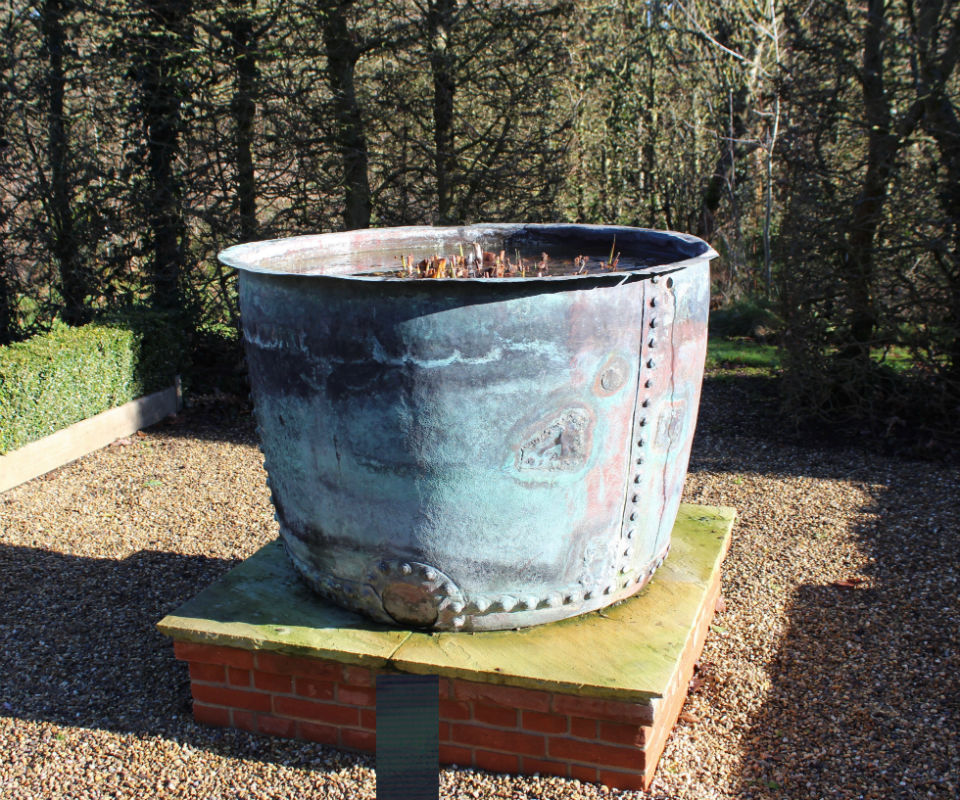
It will be awhile before the plants emerge from this (frozen) water-filled magnificent container, but along with its great size it is the weathering of the copper to an attractive verdigris which we can admire today.

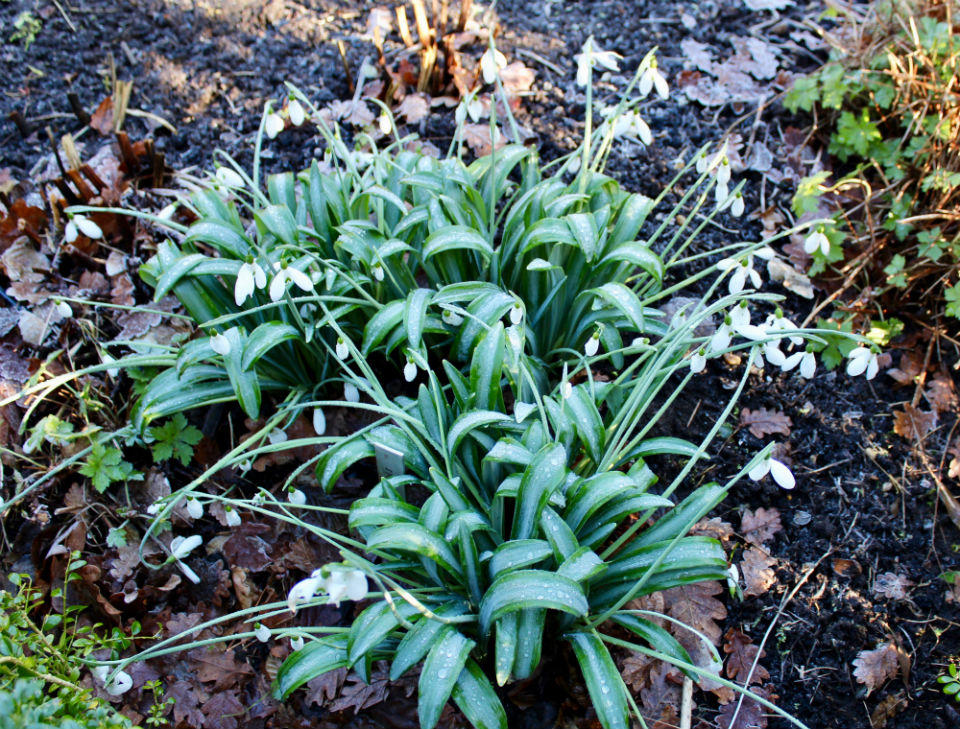
Planted in the beds are a variety of snowdrops; this good sized clump is ‘Colossus’ which sports rather handsome foliage.

With 30 acres of gardens to explore, it is easy to immerse oneself and forget that there is a world outside, just occasionally there is a little reminder; in the far distance Happisburgh lighthouse can be seen,

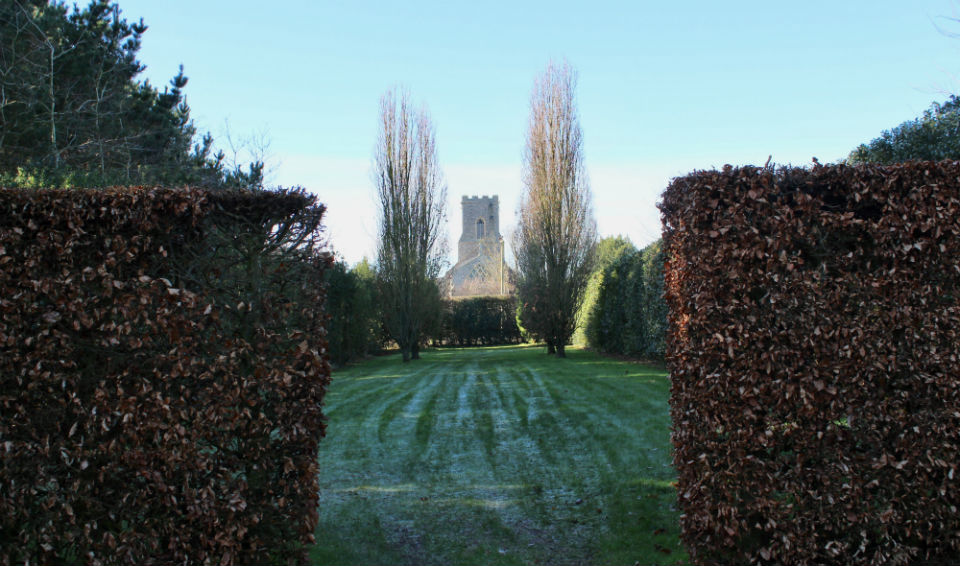
and on the other side of the garden the parish church is framed in the view.

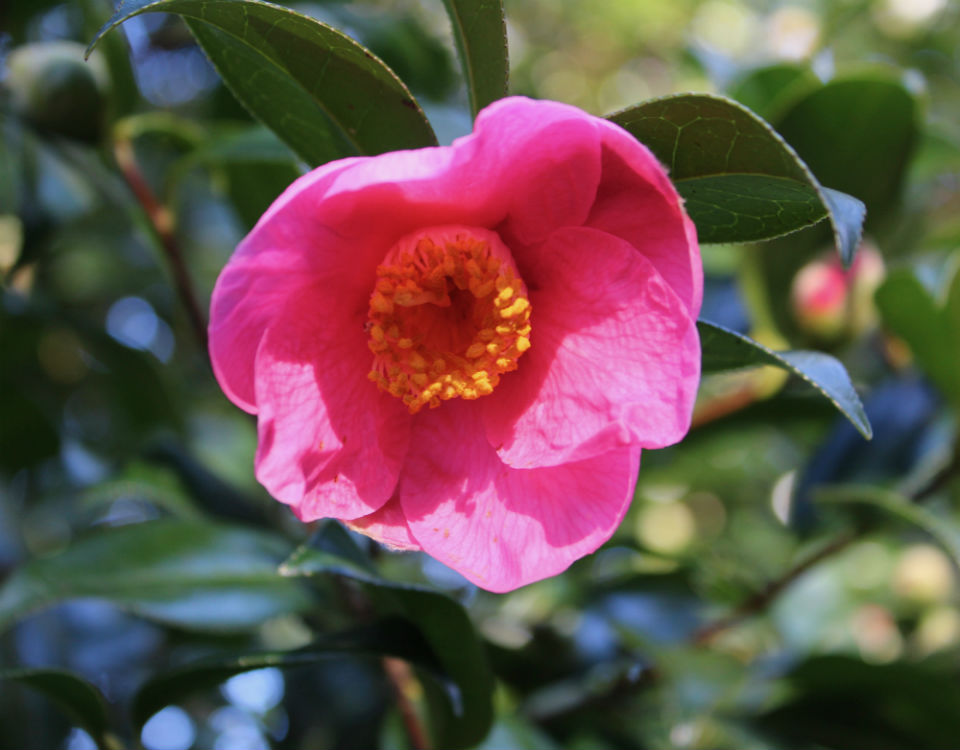
It amazes me how some flowers can survive undamaged following a severely frosty night and this joyful Camellia is seemingly untouched.

It is during these winter months that we can appreciate and enjoy the rich tapestry of greens from stems and leaves,

and you cannot help but enjoy this great combination of Silver Birch, Cornus and Skimmia.

At first I am not sure whether it is my eyesight but this Pussy Willow growing gracefully in a pot is definitely pink; originally from Japan it is Salix gracilistyla ‘Mount Aso’.

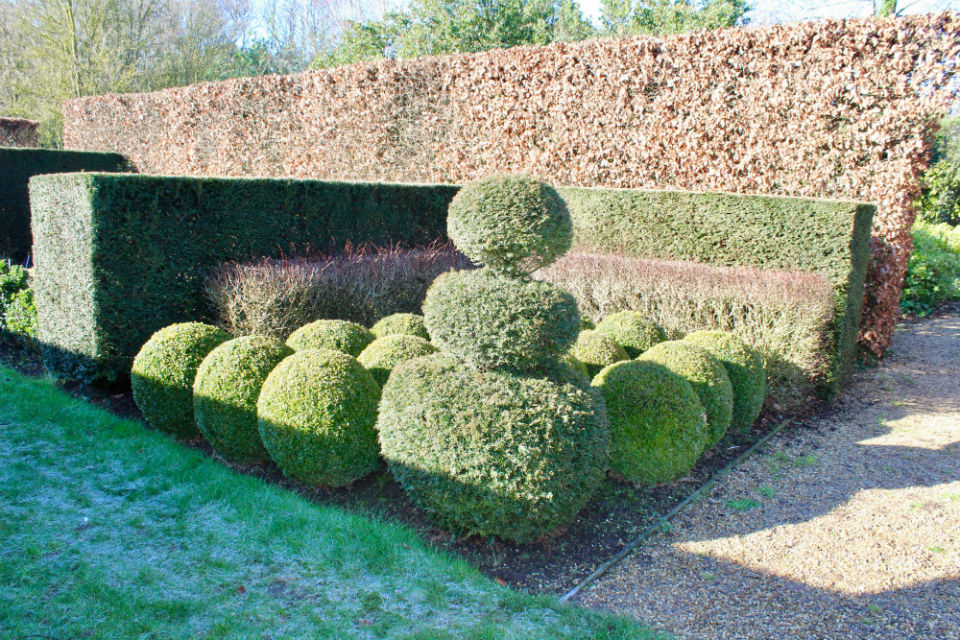
It is at this time of year that you appreciate those clipped shapes whether it is in Box, Beech or Yew.

This tree on a corner is firmly rooted into the swirl of low Box hedging that seamlessly runs into the wooden bench.

The garden is divided into so many different areas, many of which will come into play in those warm summer months ahead; you might be forgiven for thinking the Desert Garden might be one of those, however today you would never know it is winter.

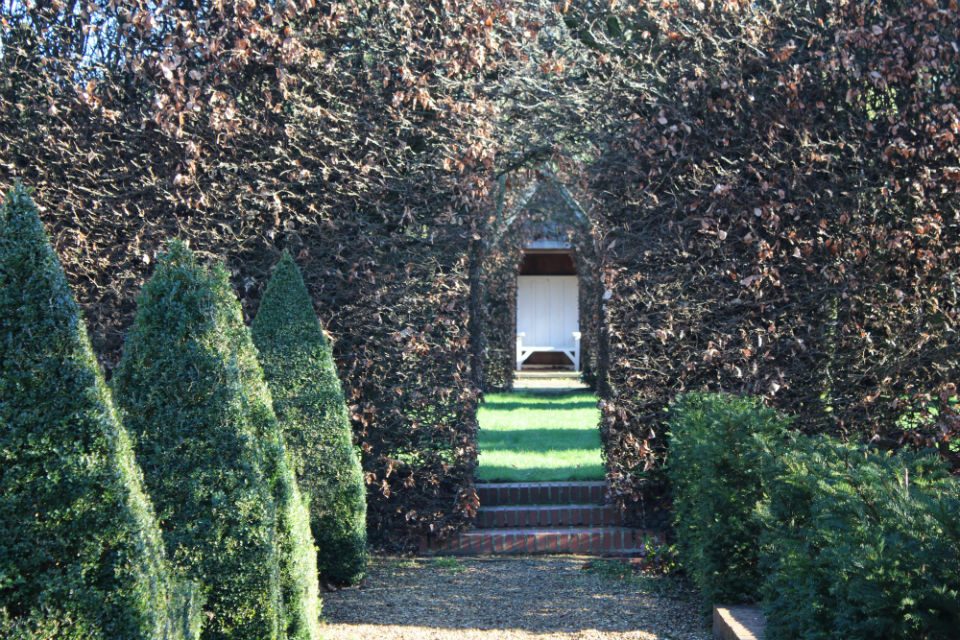
Walking back to the house we admire this striking seat framed by the hedge,

and the collection of neatly clipped topiary.

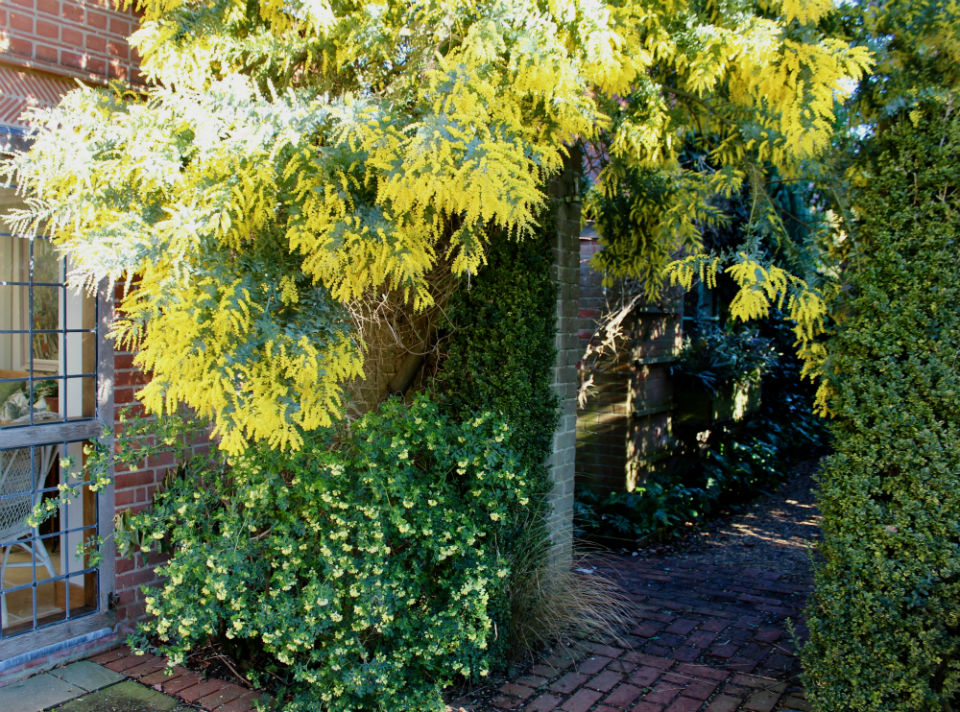
Then just by the house in the perfect place is an explosion of colour and scent, a Golden Mimosa Acacia baileyana is underplanted with Coronilla glauca ‘Citrina’.

Alan Gray can be heard most weeks on Radio Norfolk’s ‘Garden Party’ programme. He is an Ambassador for the National Garden Scheme and he will be opening his amazing gardens at East Ruston, Norfolk twice this year on Saturday 9th March and Saturday 12th October https://www.ngs.org.uk/find-a-garden/garden/12923

——-2019——-

A touch of wintery enthusiasm at St Timothee

On a very dreary, drippy-wet Wednesday last week I attended the first open garden event of the National Garden Scheme’s year held in the delightful private garden of St Timothee, just outside Maidenhead.

Garden owner Sarah welcomed us with coffee and cake, a particularly delicious slice of Orange and Almond. She then proceeded to give us an interesting illustrated talk about what she has growing in her garden at this time of year.

This is not especially a ‘winter garden’ but Sarah feels strongly that during these short and often grey days (and today was no exception) you need plants that catch your eye from the window and inspire you to get out into the garden.

January, Sarah reminded us, is named after the god Janus, the god of archways and doorways who is depicted with two faces looking backwards and forwards, which we can connect to this time of year as we cling on to the growth of the previous year whilst looking forward to what will shoot forth in the coming Spring.

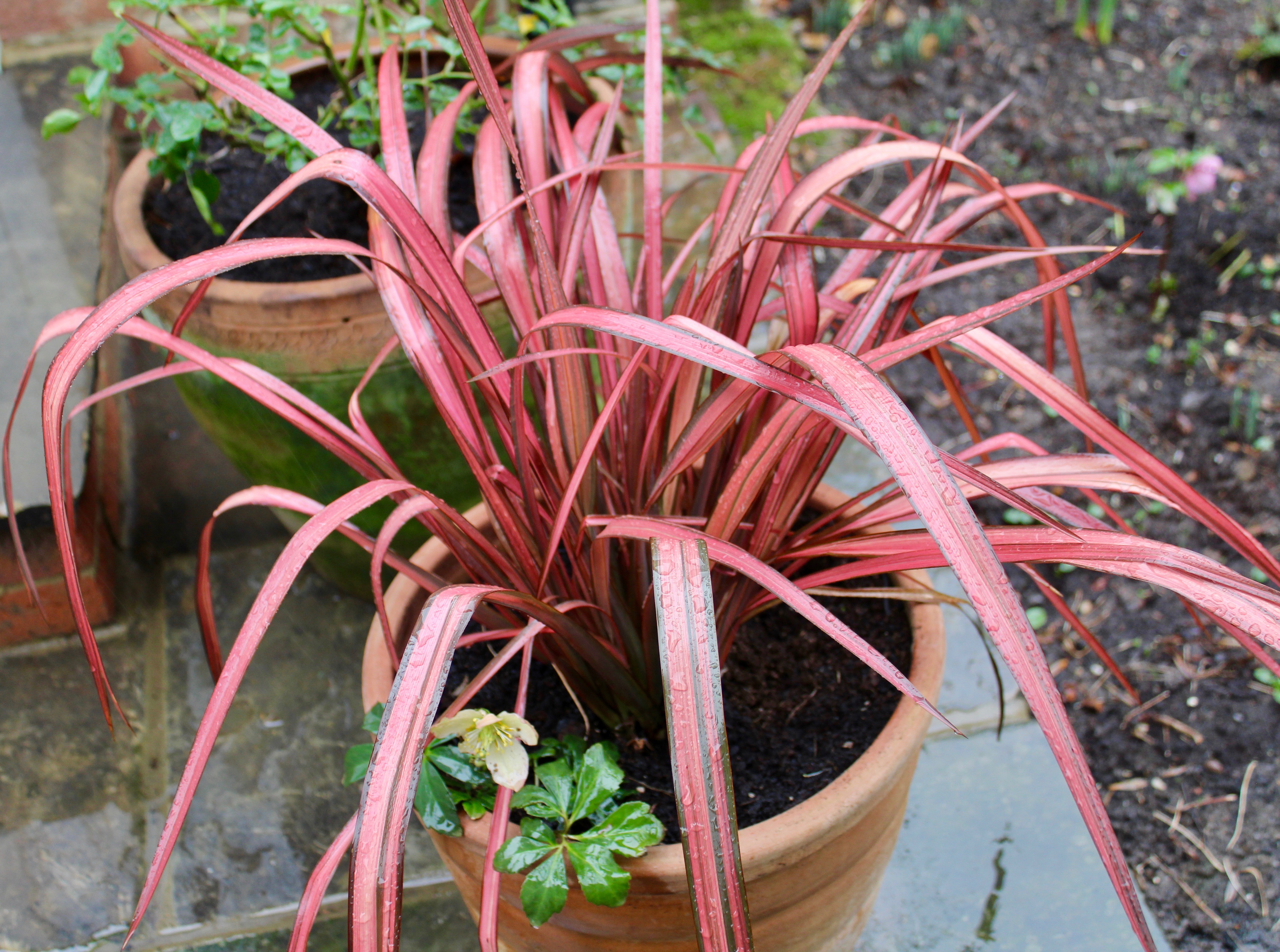
The winter palette you might think is somewhat limited but Sarah explained that the key points to planting are shape, colour and scent; careful consideration should also be given to ‘hotspots’, those places that you regularly walk past or are in your frequent field of vision. Armed with umbrellas we followed her into the garden walking past a colourful Phormium,one of those bright ‘hotspots’

Sarah explained that shape can be observed at several levels; on the ground where the direction of lawns and paths lead, and the configuration of a border itself can be a thing of beauty. At the next level perennials including the huge variety of grasses can provide a lengthy season of interest.

Keeping seed heads are important as they are not only decorative but also provide food for the birds. These dark seed heads are from Phlomis russeliana.

i

Sarah created this two acre garden a few years ago from a blank canvas but was fortunate to have inherited some mature trees. Inspired by the small book The Wood in Winter by John Lewis-Stemper she emphasised the importance of not only the solid shapes of evergreens like this robust yew,

but also deciduous trees either with graceful spreading branches,

or tall and straight as in this line of poplars at the edge of the garden.

Even the fiercely pruned fruit tree growing close to the house could be considered an art form.

Of course not all trees are naked at this time of year. A recently planted Prunus x subhirtella ‘Autumnalis’, the winter flowering cherry will continue to give much pleasure in future years. 

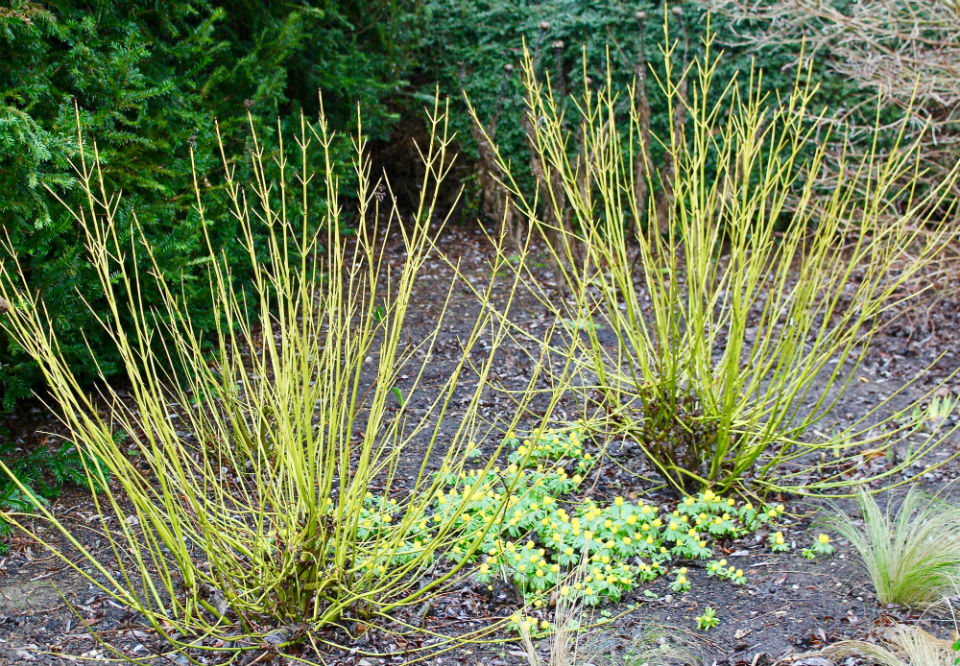
Coloured stems are a great feature of this garden and Sarah feels it is important to underplant; the green of Cornus stolonifera ‘Flaviramea’ and the yellow Eranthis hyemalis the winter aconites, are a striking combination,

and the red Cornus alba ‘Elegantissima’ looks good with the tiny flowers and attractive leaves of Cyclamen coum.

But the real show-stopper of coloured stems, even on a rainy day is Cornus sanguinea ‘Midwinter Fire’ which positively lights up the garden and glows. Sarah comments on how she enjoys the now unfashionable pampas grass Cortaderia selloana ‘Pumila’ and reminds us that plants go out of favour through unnecessary plant snobbery and, as it is here, the right plant in the right place can be very effective.

Hellebores are a joy at this time of year, either planted in woodland or in clumps in the border by the wall.

Also peeping through are the Crocus ‘Snow Bunting, Sarah was a little disappointed that they were not further ahead and today the flowers were remaining firmly closed and their fragrance dampened by the rain.

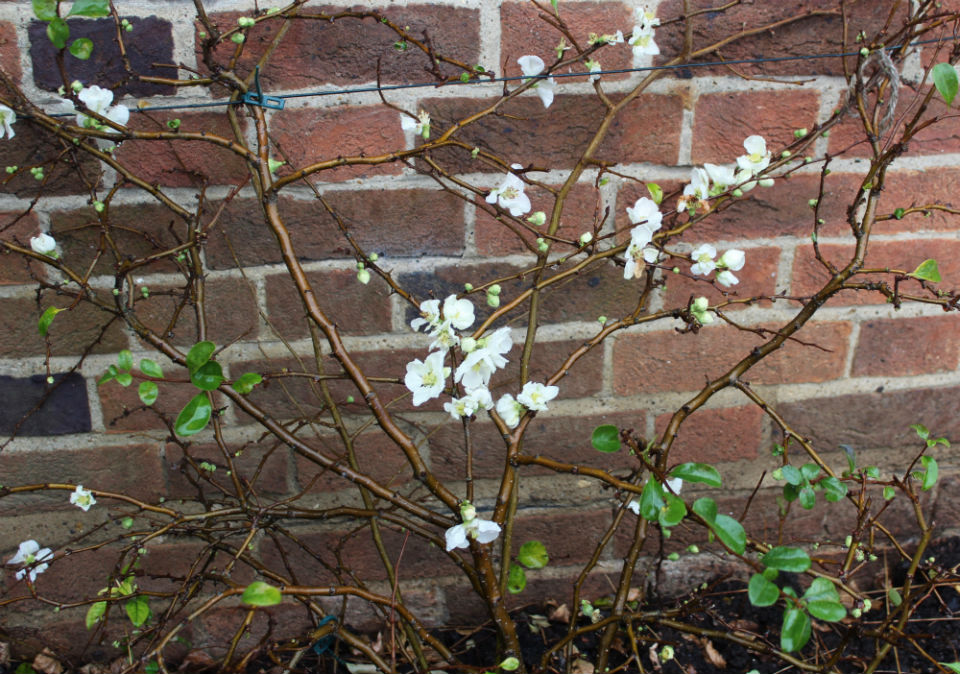
However the Chaenomeles speciosa  was undeterred by the rain and the pretty white flowers were a perfect colour against the brick.

A simple knot garden adds great charm to the garden; planted with evergreen box and the silvery stems of Perovskia ‘Blue Spire’ it looks good all year round.

Box balls of various sizes are dotted around the garden; a focus point they also outline an entrance to a path or highlight the corner of a bed.

I love compost and leaf bins, which of course are an essential part of any garden but these have to be the most ornate I have ever seen.

There are touches of softening the hard landscape, and this ornamental evergreen grass does the trick on the edge of the York stone path,

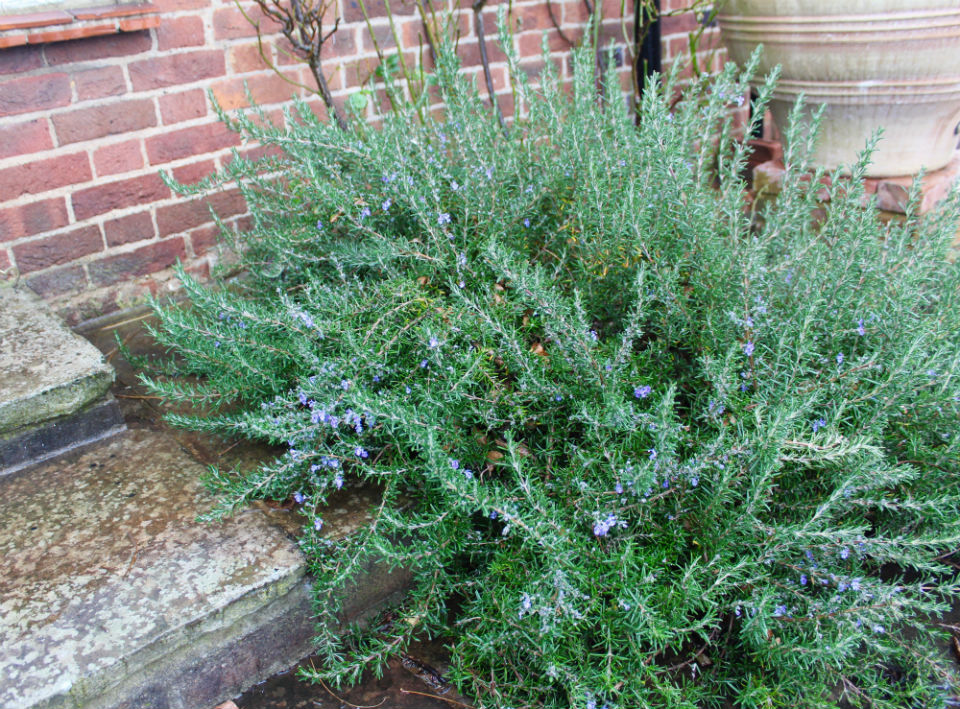
and while we somehow never seem to regard Rosemary as a shrub with winter interest here it is brightening an area by the steps.

Finally, Sarah touched on the importance of scent and even on a wet day the Lonicera fragrantissima winter-flowering honeysuckle lifted the spirits and was smelling delicious.

Despite the rain it was a real joy to get out and visit a garden in January. Sarah is passionate about gardening and while she wants to share what she enjoys in her garden, she is careful not to tell us what we ought to be planting in our gardens.

The Winter palette might seem limited but there was enough to see at St Timothee to come away inspired to look once again at those hotspots and to enjoy our gardens a little more in winter.

Perhaps this might be the start of a trend for other garden owners to share their garden in winter.

The garden at St Timothee is open by arrangement for the National Garden Scheme and will also be open for the NGS on 14th and 15th June 2019. Sarah will be giving another talk and walk (a ticketed event) ‘Successional Planting’ on 14th August https://www.ngs.org.uk/find-a-garden/garden/33095/

——-2019——-
Horatio’s Garden at Stoke Mandeville

The Garden Gate was open wide for the new Horatio’s Garden at the spinal unit at Stoke Mandeville Hospital Horatio’s Garden

IMG_1314 2

Horatio’s Garden is one of the beneficiary charities of The National Garden Scheme, and several of us were privileged to be able, at the official opening last Sunday, to mingle amongst the amazing patients and all the wonderful people involved in the garden’s creation.

IMG_1257

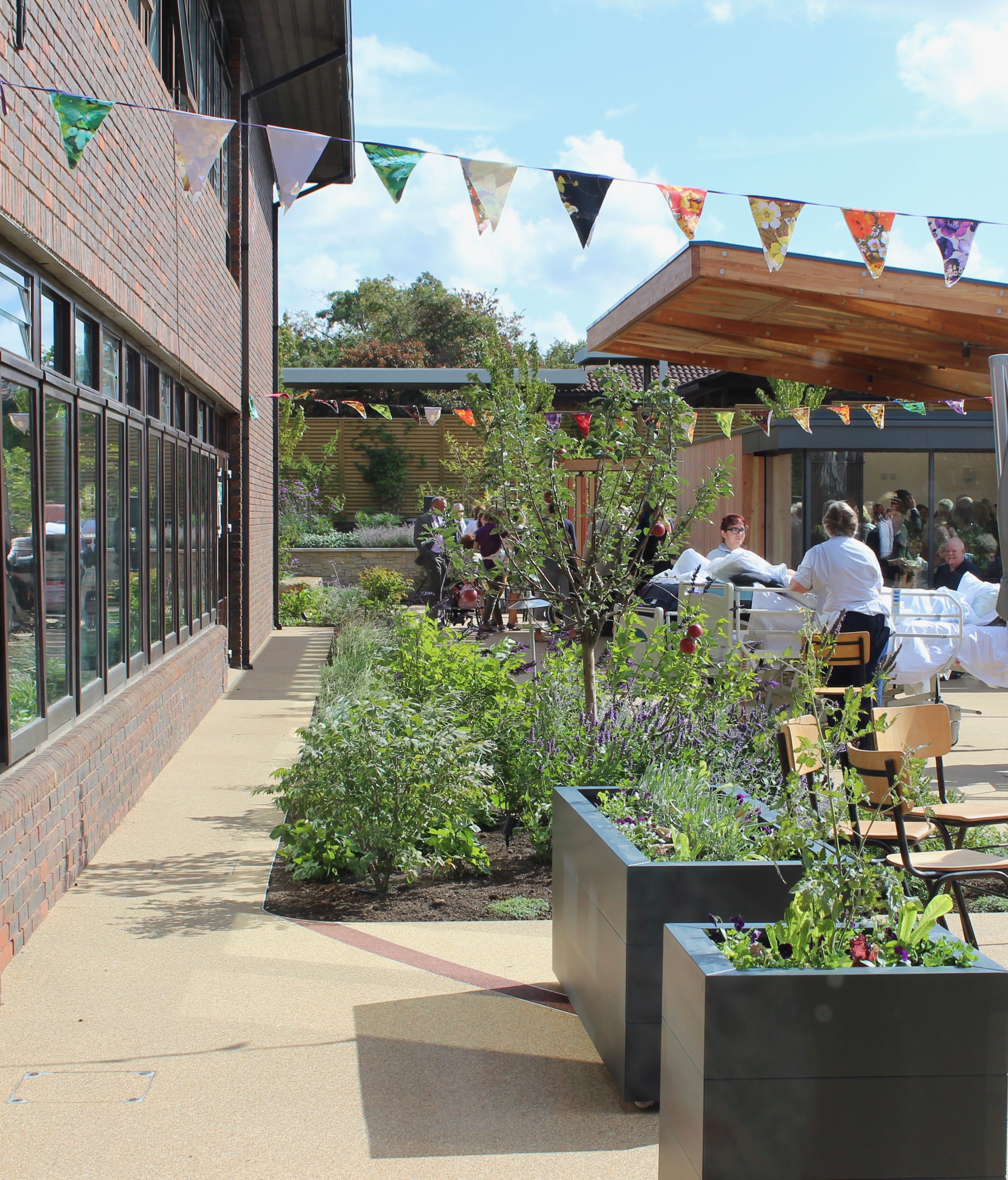
We followed the signs through the hospital corridors and out into the new garden bathed in the afternoon sunshine. Inpatients can be here in the spinal unit for a seriously long time often confined to beds and wheelchairs, so a beautiful outdoor space is of huge benefit. The gradients and surfaces have to be gentle and ultra smooth.   A little bunting added to the gaiety of this great occasion.

IMG_1258

Just as a reminder, I was here back on a snowy day in December, this being the final garden in my Ninety Garden Challenge Stoke Mandeville, Horatio’s Garden. (90).

On the spot where Joe Swift explained his designs to Olivia Chapple, the Founder and Chair of Trustees it was hard for me to imagine how this would look…

IMG_0315

…now it has been transformed into a delightful space where two smiling volunteers welcomed us in.

IMG_1263.jpg

What a cold miserable building site it was then, diggers removed 2,500 tons of earth…

IMG_0084

…now it looks as if the garden has always been here.

IMG_1259.jpg

Part of the garden stretches along a covered walkway which obtrusively dominated the site and where visitors and patients enter the main hospital from the car park…

DSCF7131

now you are blissfully unaware of the busy flow of hospital life as a simple wooden fence gives privacy, and the border and stone wall give all year round interest.

IMG_1277.jpg

Right now it is the asters that provide a splash of colour;

IMG_1268

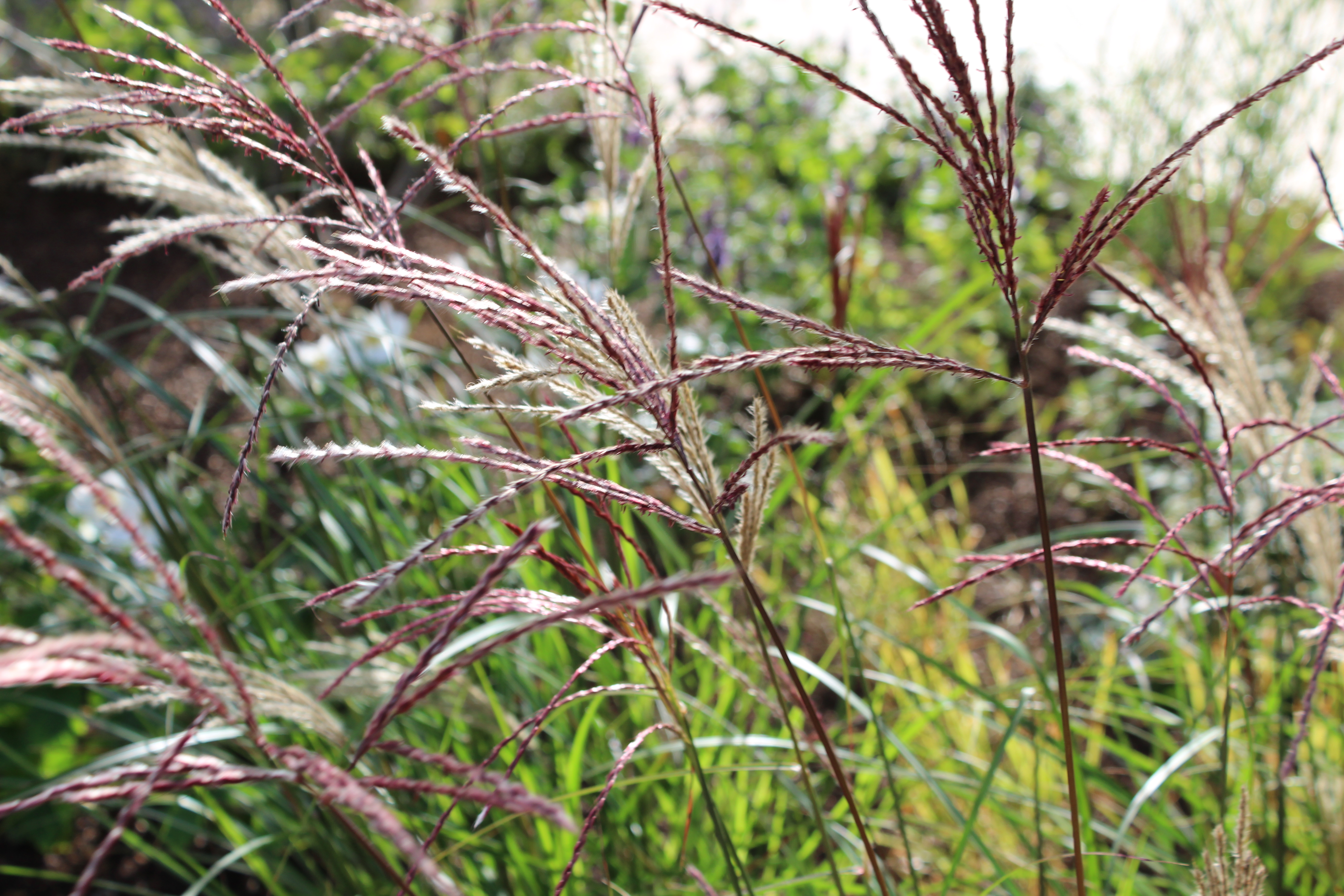
and the elegant seed heads of the miscanthus provide texture as they sway gently in the breeze.

IMG_1362.jpg

The team of workers who constructed the garden ranged in number from 5 to 15 each day, and have now been replaced by some 48 volunteers who work under the guidance of head gardener Jacqui Martin-Lof. At no wish of offending the many head gardeners I have met, she surely is the most elegant.

IMG_1347

I am reminded that back in December the only feature I could just make out under the blanket of snow was the shape of the pond…

IMG_0100

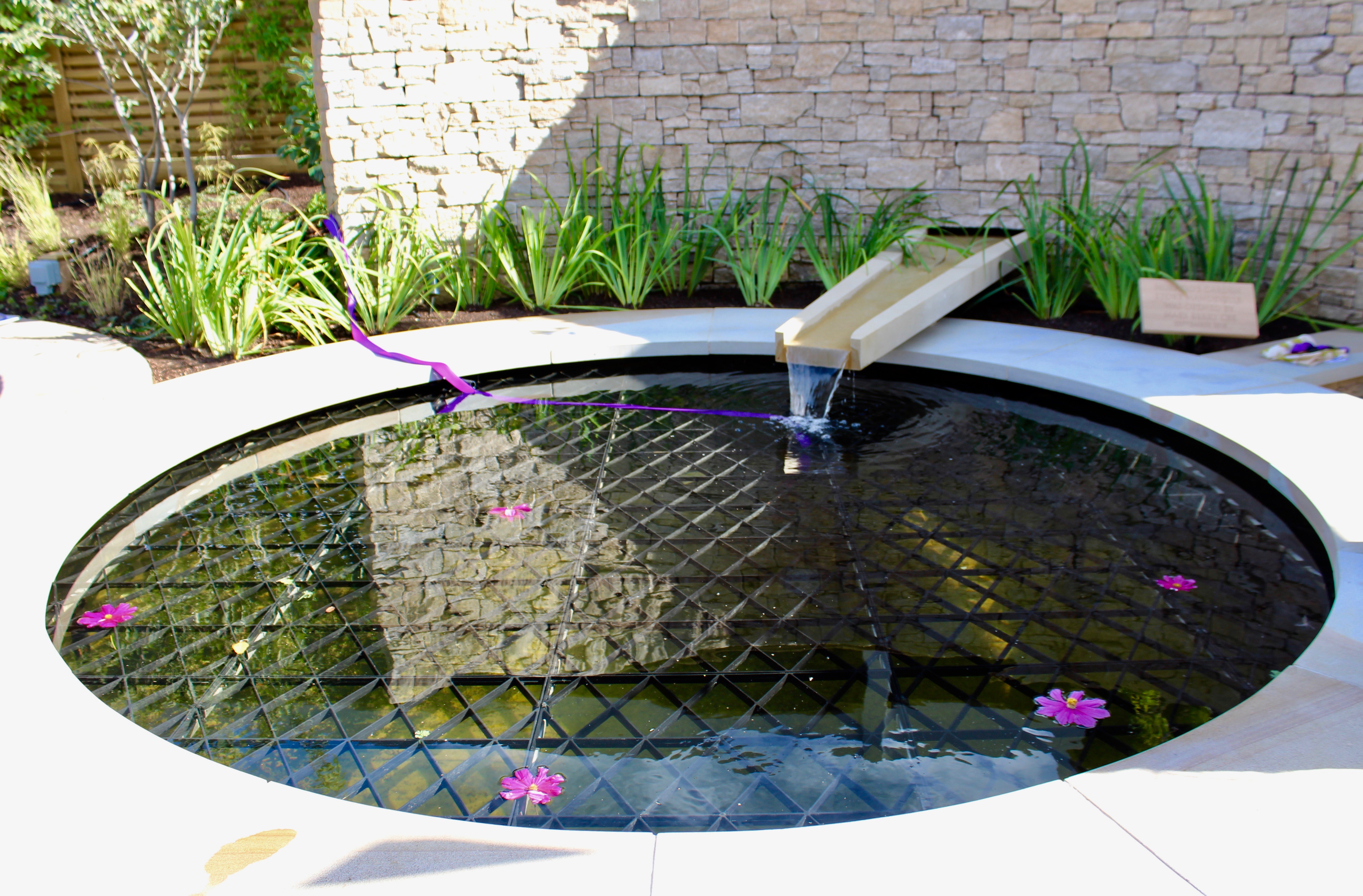
…today it is a delightful place to sit, reflect and listen to the soothing sound of flowing water.

IMG_1349.jpg

On one side of the pond is a curved wall with an artful window opening.

IMG_1370.jpg

Mary Berry, who has opened her garden in Buckinghamshire for over 20 years and is President of the NGS came today to open Horatio’s Garden.

IMG_1293

Olivia Chapple, Mary Berry and George Plumptre

Speeches were made, and Olivia Chapple who spoke passionately and without a single note, engagingly gave thanks to the many, many people involved. We all felt such huge admiration for an amazing lady who is the driving force behind this dynamic charity.

IMG_1468.jpg

Swifty told us that if it had not been for Olivia’s determination the unsightly hospital generator would have unfortunately remained as the centre piece of the garden.

We were then entertained by Magnus Chapple who sang a song he had composed. There were plenty of places to sit and even the smooth bonded resin was comfortable enough for some.

IMG_1342

Mary Berry cut the ribbon and declared the garden officially open.

IMG_1274

With a big green knife she also cut the cake which was then taken round by cheerful volunteers.

IMG_1298

Tea flowed from the garden room, a delightful wooden and glass building where patients and families will be able to enjoy the space and light without feeling they are in hospital.

IMG_1326 2.jpg

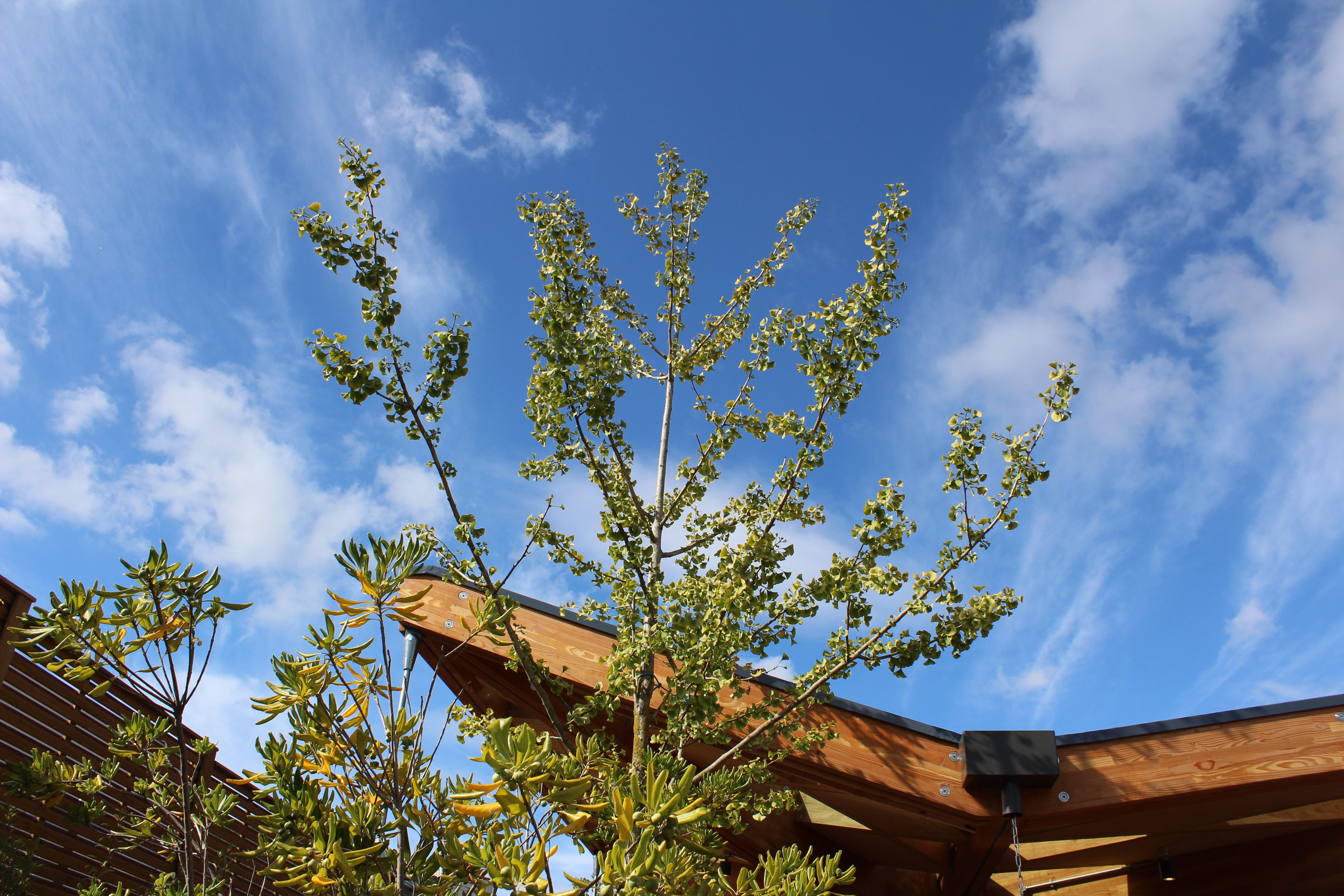
A young gingko biloba already past the height of the roof is determined to reach that blue sky.

IMG_1282.jpg

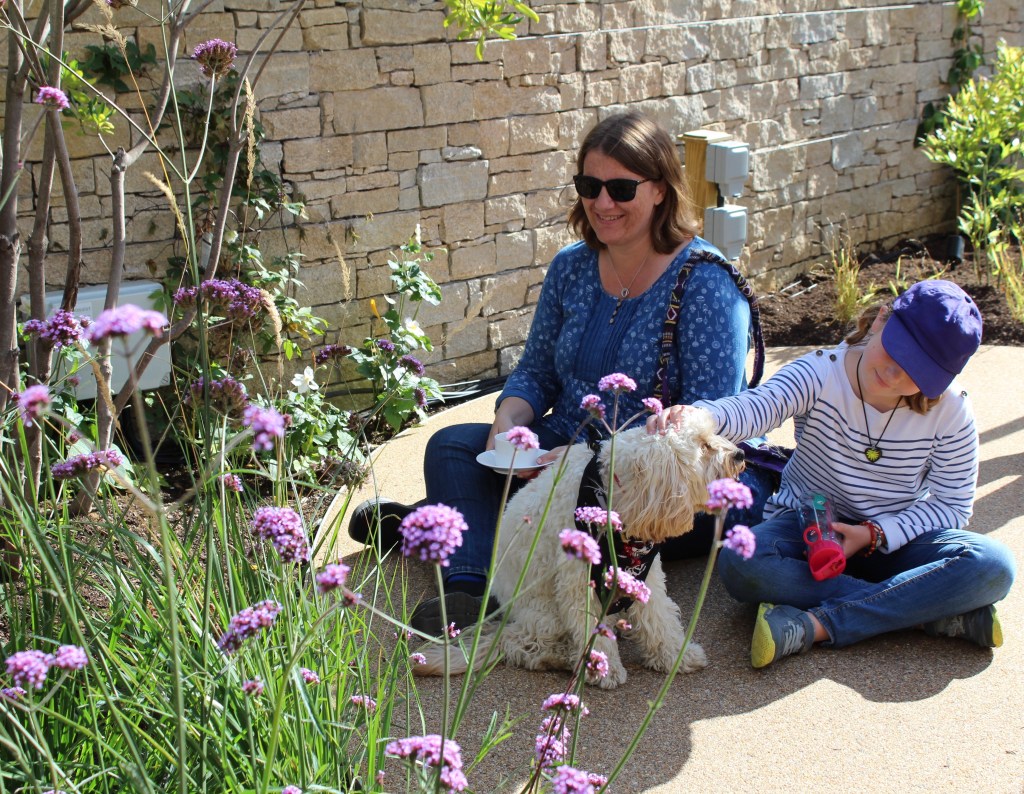
Down on the ground in the flower beds there is a healthy selection of herbs and the waft of mint is prolific today.

IMG_1361.jpg

This lovely guy picks a sprig of rosemary; he says it is so much better than the air freshner used on the ward.

IMG_1387

Access for wheelchairs is usually so limiting but here they are the norm and can be wheeled effortlessly straight out from ward to garden,

IMG_1374.jpg

where there is plenty of room for a trio to meet.

IMG_1363 2.jpg

Wheelchairs come in all shapes and sizes, upright, gyrating and well you could say, almost dancing.

IMG_1367.jpg

Three great designers enjoy a moment together, Swifty sporting the dahlia ‘Horatio’ pinned to his lapel, is joined by Cleve West who designed the first Horatio’s Garden at Salisbury Hospital, and James Alexander-Sinclair who designed the subsequent Horatio’s Garden at the Scottish National Spinal Unit in Glasgow.

Earlier I had caught sight of Bunny Guinness, but she must have hurried away to complete her designs for the next Horatio’s Garden that she is creating at Oswestry.

IMG_1372.jpg

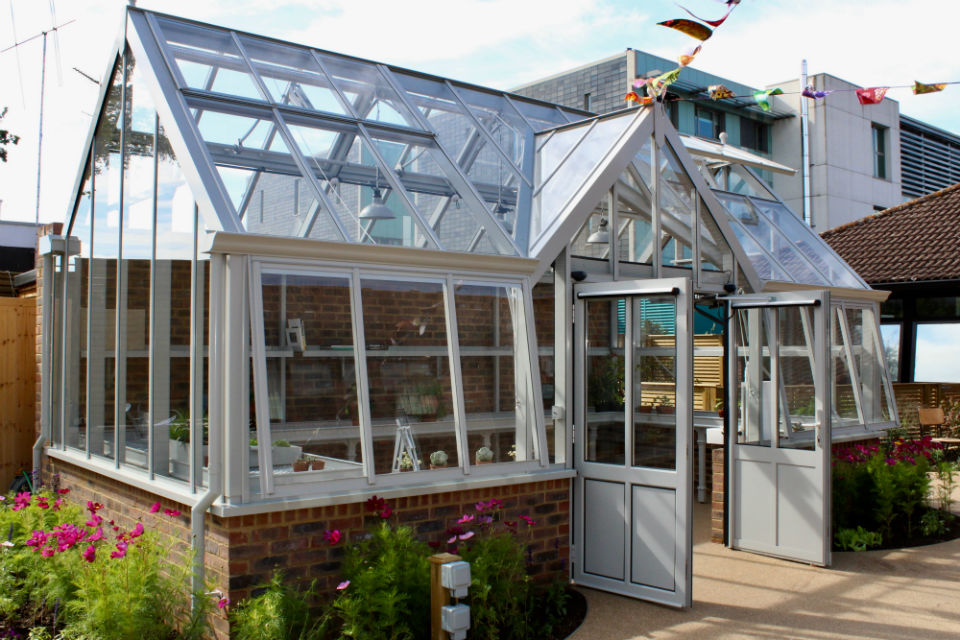
Every garden needs a good greenhouse and Horatio’s Garden in no exception.

IMG_1304.jpg

Accessible and specially equipped, it will be used as part of the therapy programme,

IMG_1305.jpg

where plants for the garden will be propagated as well as herbs, salads and fruits which the patients can enjoy themselves.

IMG_1306.jpg

I am reminded again of how it looked before (incidentally the turquoise box behind the fencing in the centre is that generator)…

DSCF7129.jpg

Ample space for a couple of large hospital beds.  It was delightful to see these patients enjoying the fresh air and the warm sun on their faces.

IMG_1336.jpg

We have enjoyed the gaiety of the afternoon and can see that much thought has gone into the design of this garden. Planned to encourage wildlife and provide colour and texture throughout the year, it must be a sanctuary for those patients facing hugely difficult and life-changing times.

IMG_1382.jpg

And we must not forget the inspiration behind this extraordinary charity, Horatio Chapple whose short life has given so much and another reason why some of us open our own gardens.

IMG_1266.jpg


——-9/18——-
 

Bank House, well planted in the Fens (7/18)

The area  between Downham Market and Wisbech on the edge of Norfolk is not particularly known for its gardens. Last Sunday driving through the lanes and over the dykes between the flat fertile fields of the Fens, I discovered Bank House. The familiar yellow NGS signs were helpfully posted at all the crossroads which relieved my doubts of getting lost for ever.

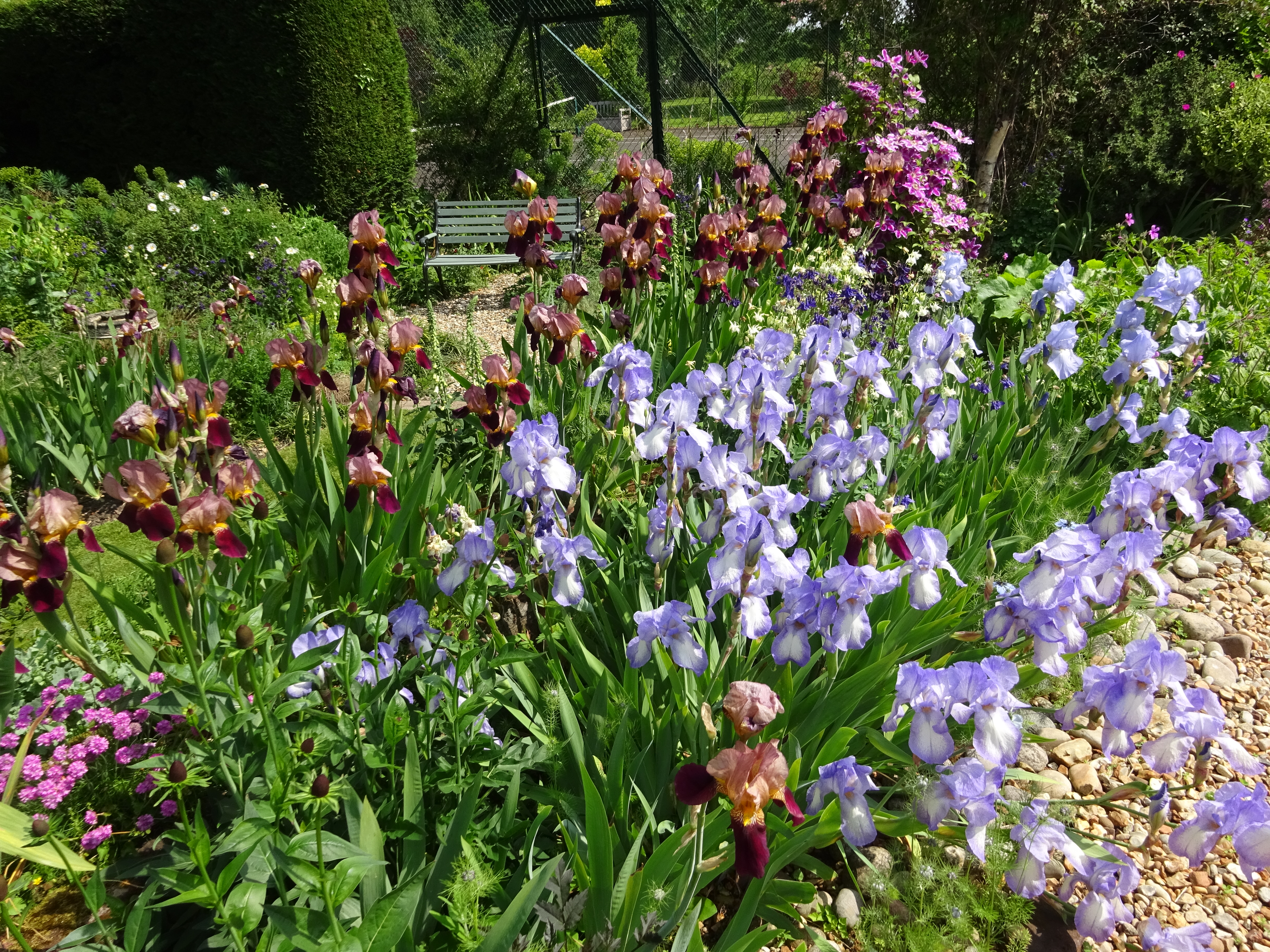
On entering the drive to left of the house, I was greeted  not only by a sumptuous smell of bacon rising from the kitchen but also an explosion of irises growing along a low wall.

DSC02538.jpg

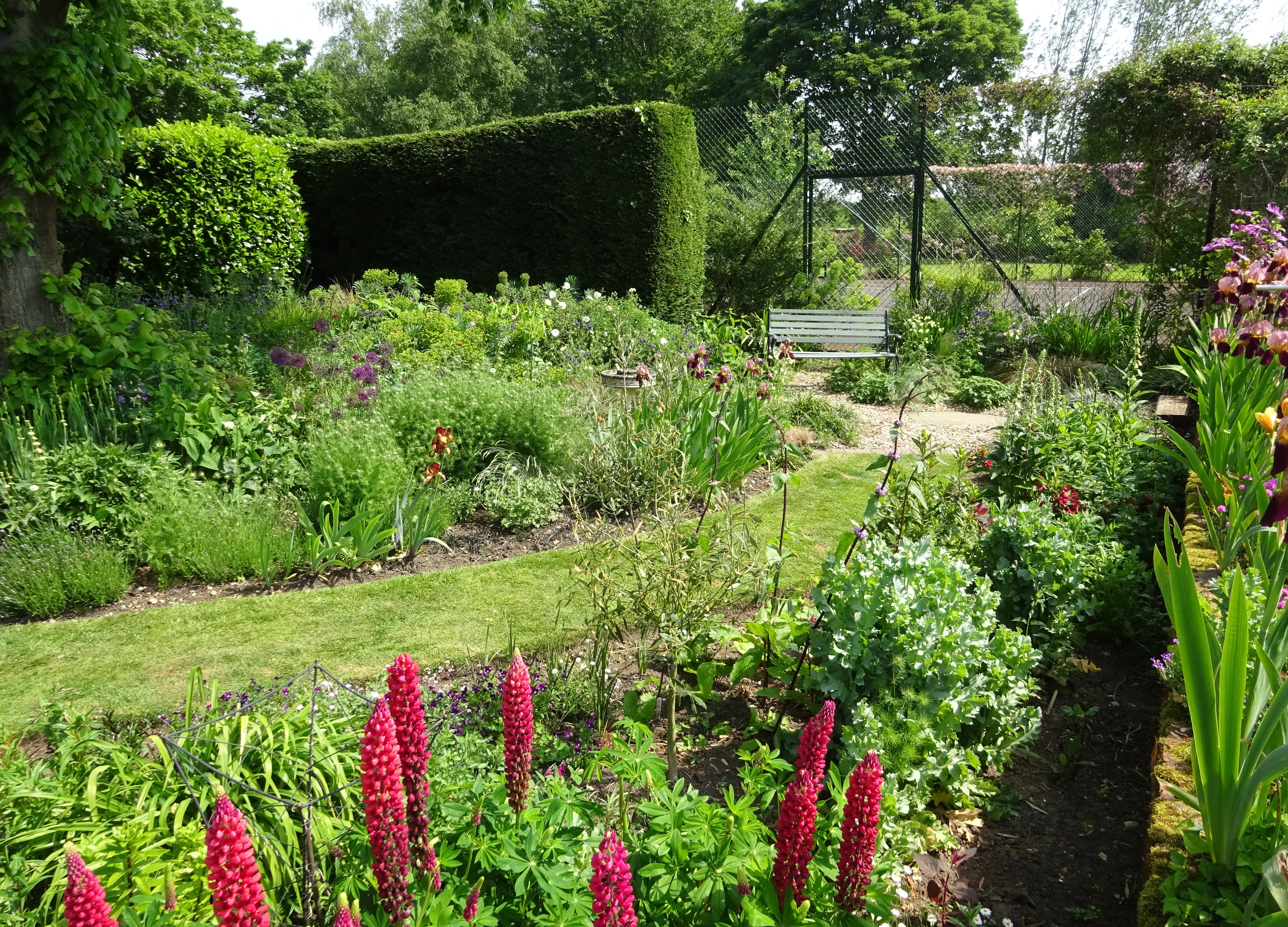
Stepping down past the joyful lupins onto the turf path you are immediately aware that the owners are keen gardeners, for this is a garden where no space is left unattended.

DSC02535.jpg

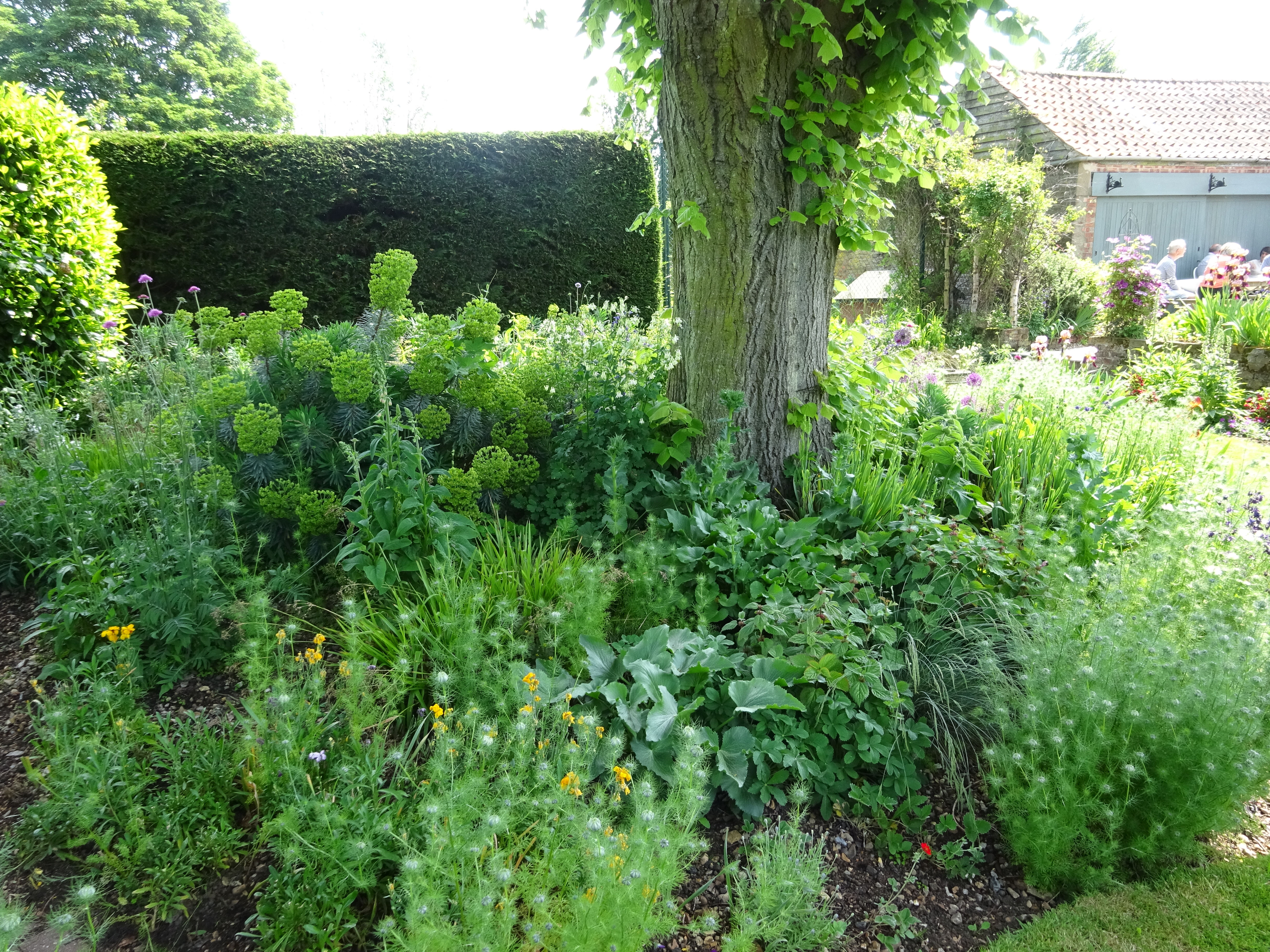
Packed with plants, they are even grown under the shaded canopy of the mature trees right up to the trunks.

DSC02534.jpg

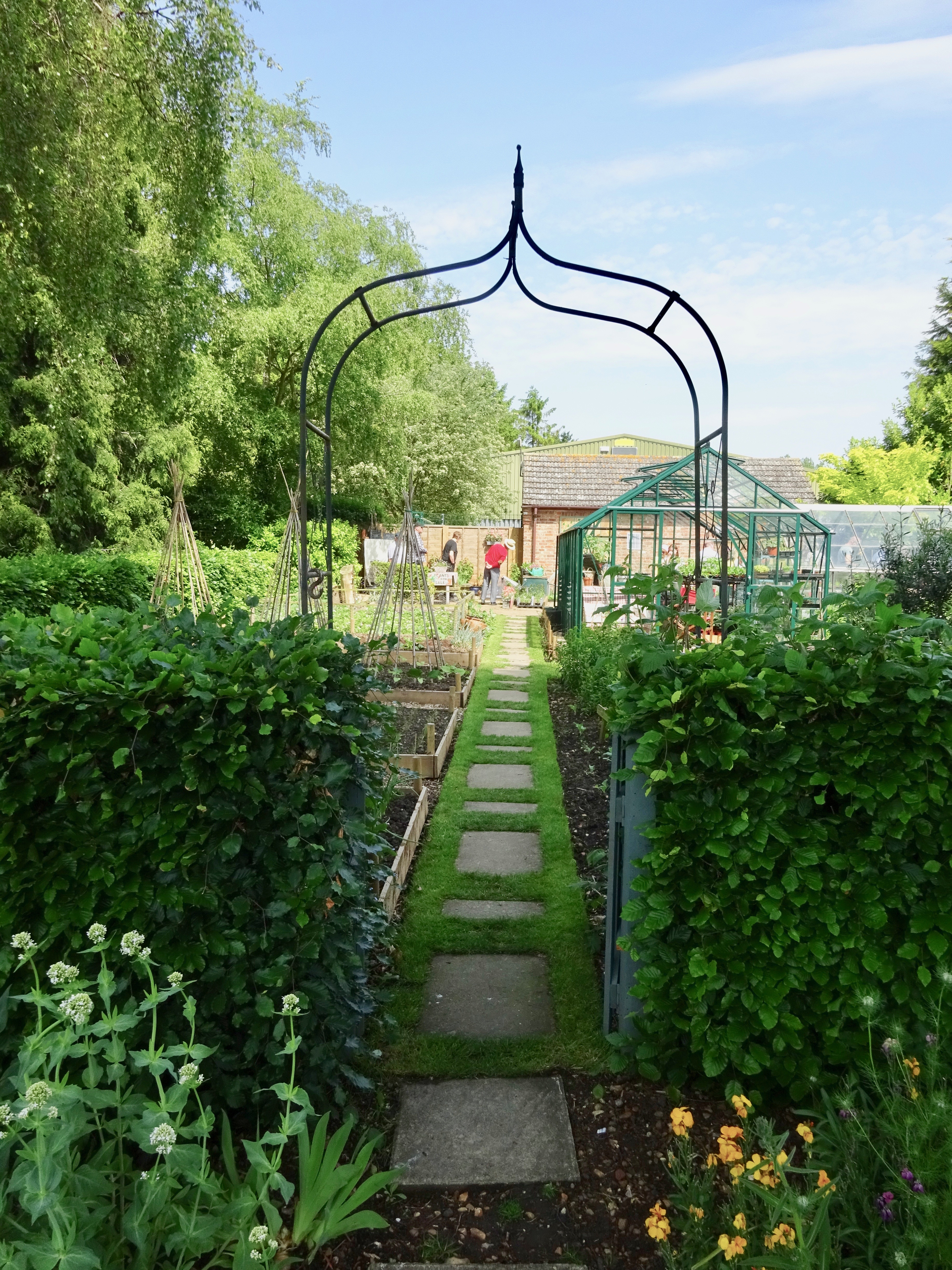
This part of the garden is also set aside for production. Young vegetables in neat rows and greenhouses for propagation.

DSC02533.jpg

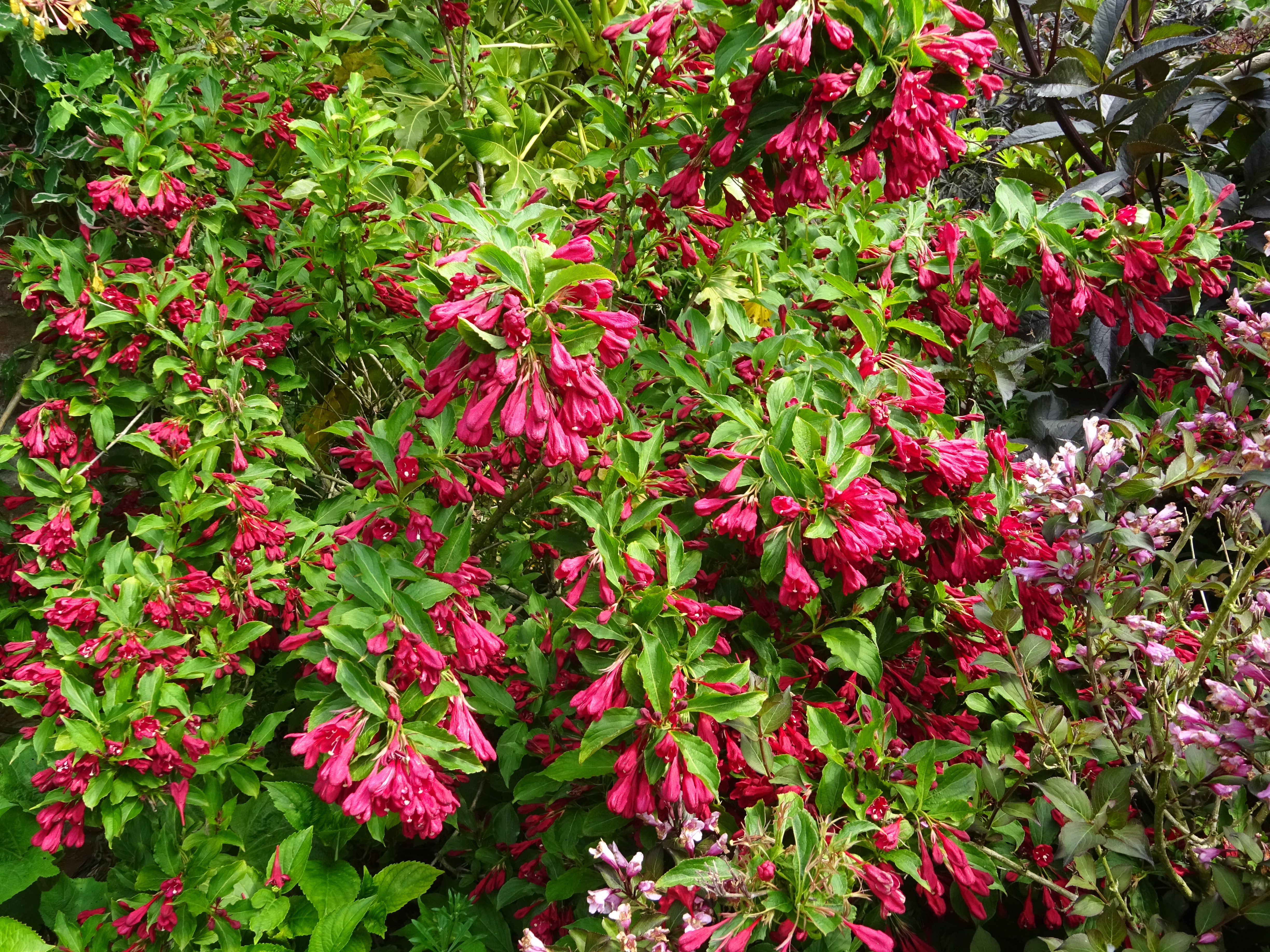
It is always such a pleasure to be able to buy plants grown in the garden but I was mortified to miss out on a purchase of this gorgeous red weigelia.

DSC02561.jpg

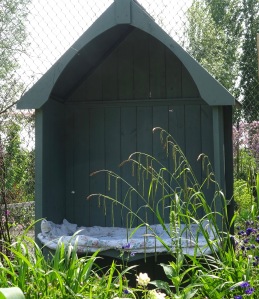
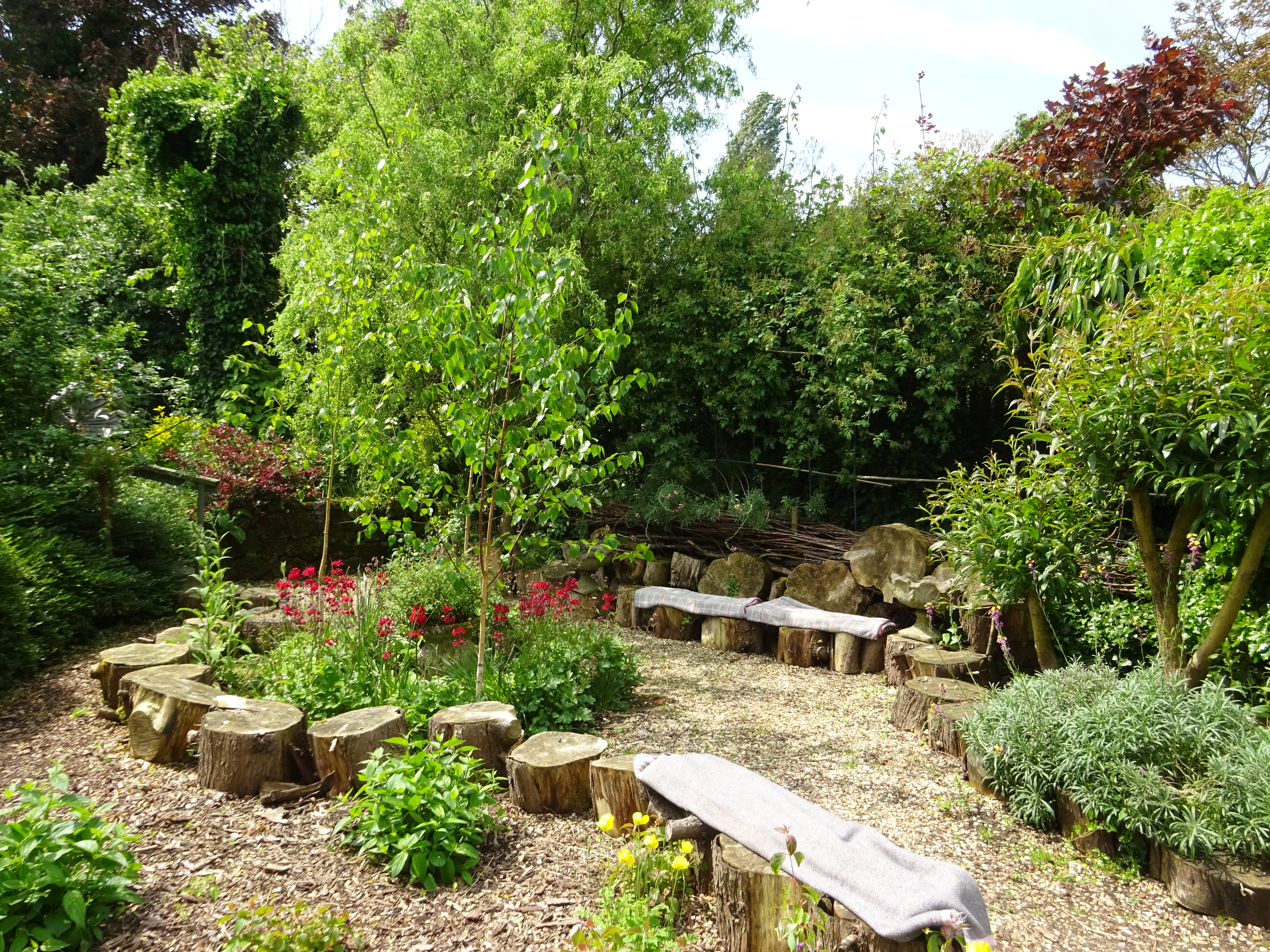
I don’t imagine the garden owners have much time to sit but all around the garden is a variety of seats delightfully placed.

DSC02528

Quiet areas to soak up the morning sunshine and listen to the bird song.

DSC02571.jpg

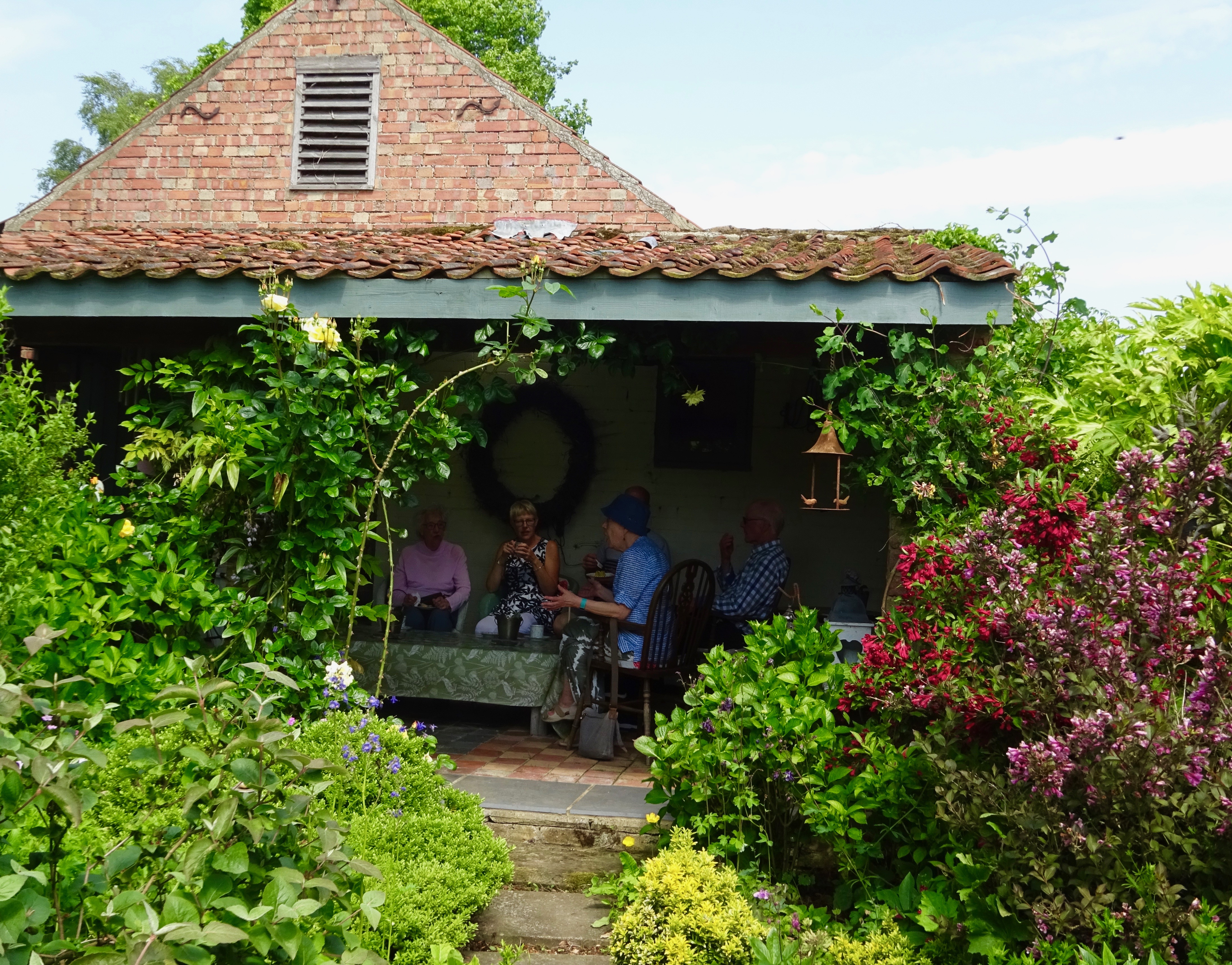
Or under the shade to enjoy that too tempting bacon butty.

DSC02560.jpg

The two acres are divided into many areas. Sometimes decisions have to be made:

DSC02541.jpg

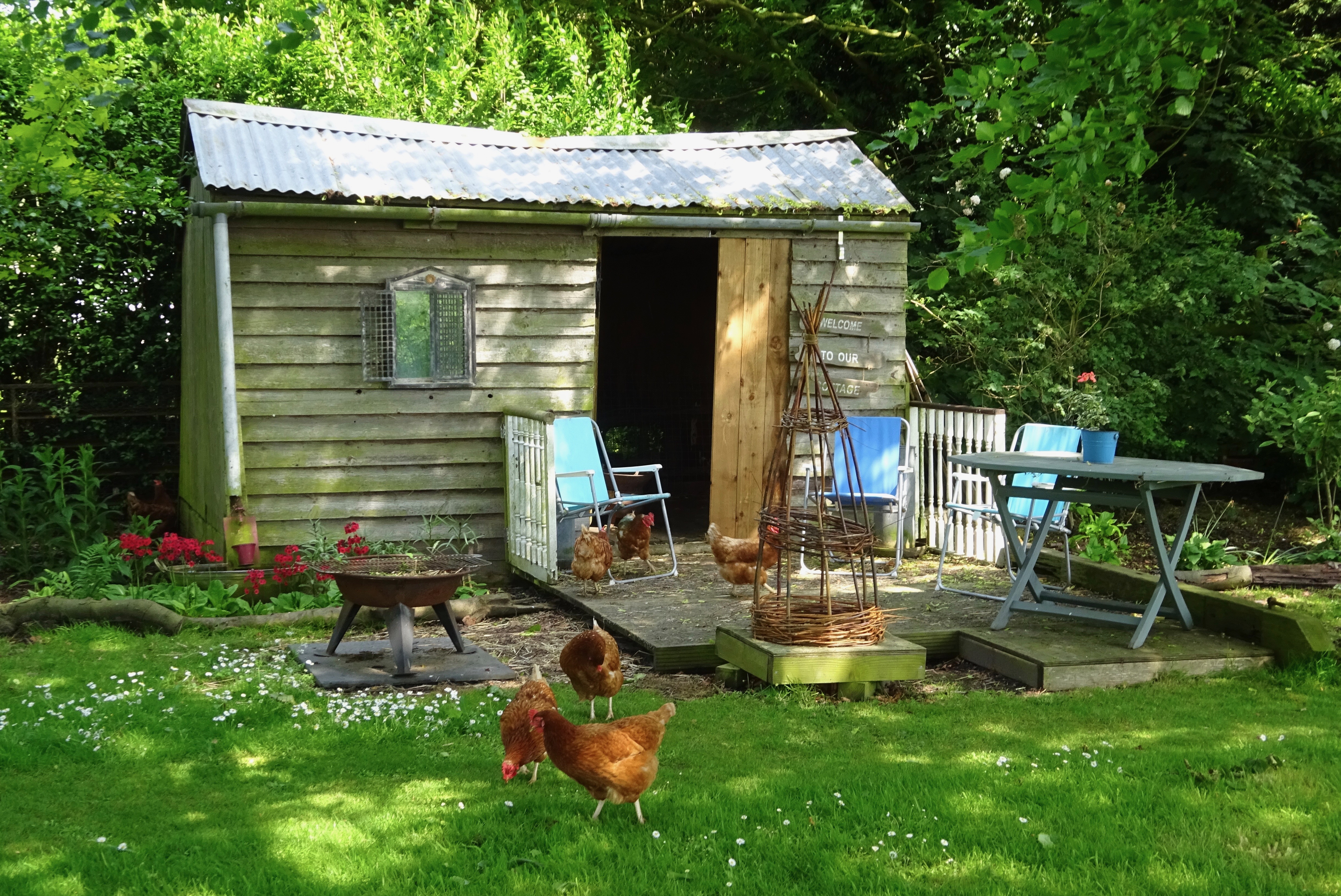
I took the brick path towards the orchard where I found some very happy hens,

DSC02544.jpg

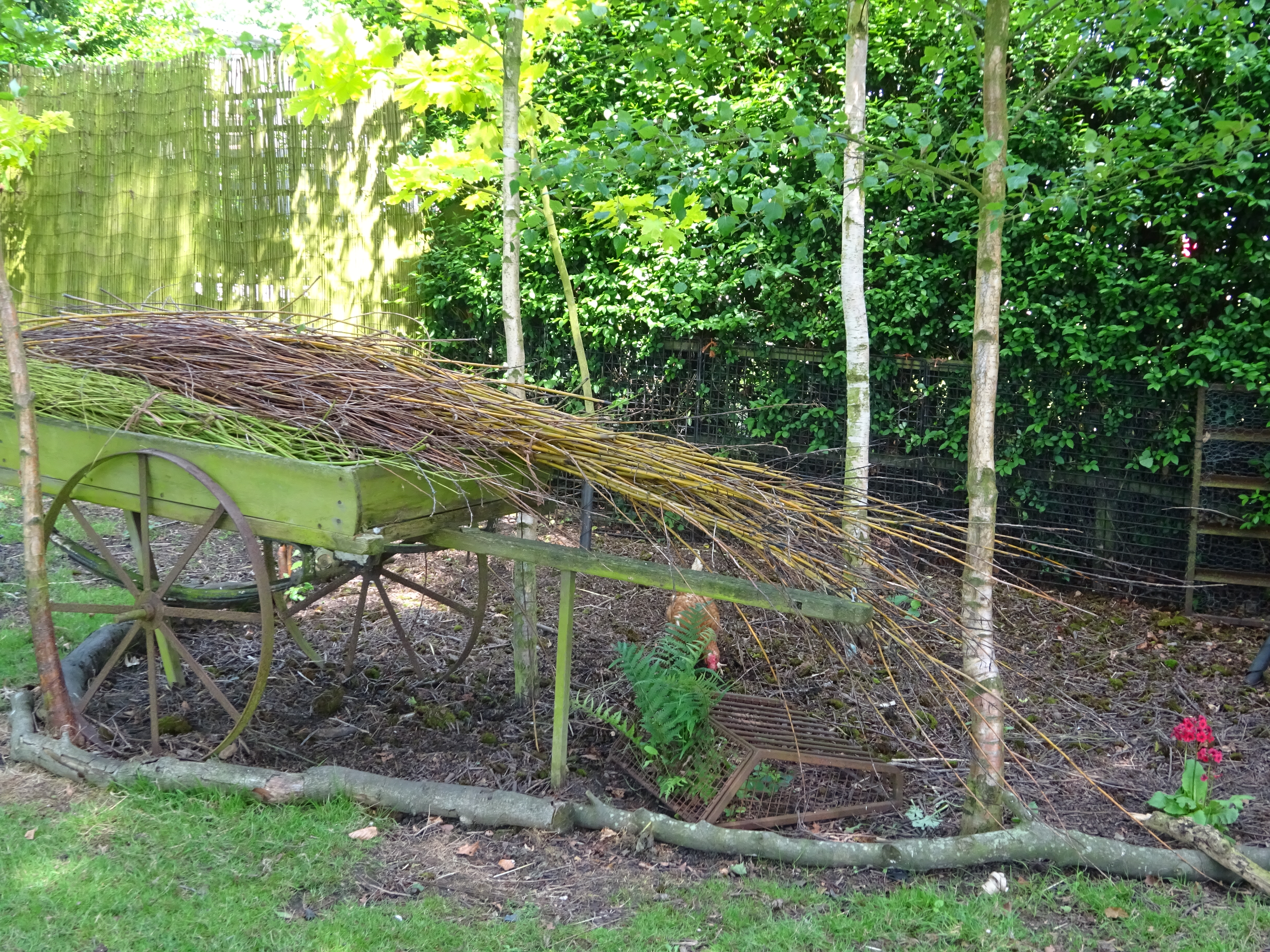
pecking around an old cart filled with the cut willow.

DSC02545.jpg

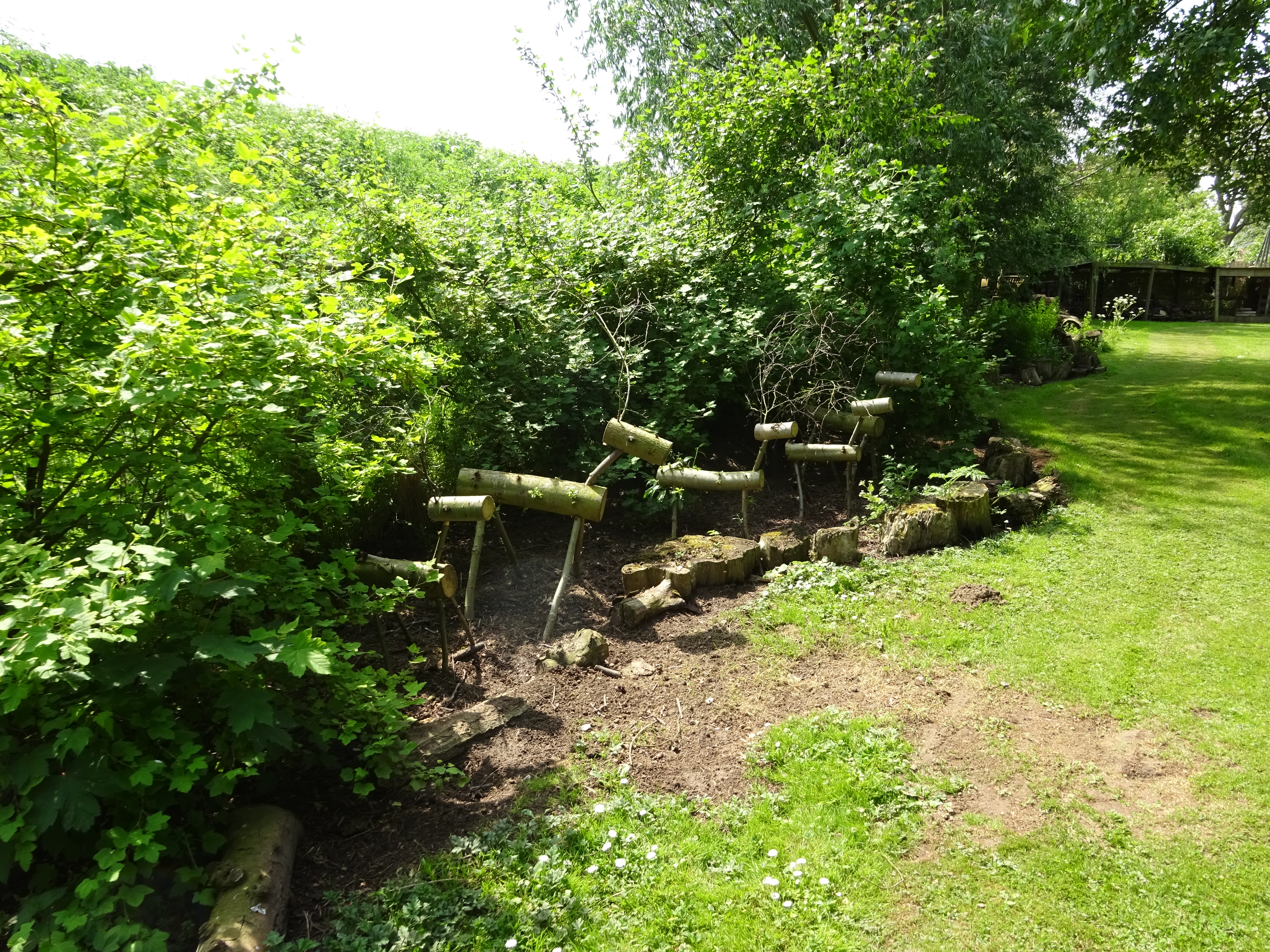
These wooden deer add a playful note to this wilder side of the garden.

DSC02549.jpg

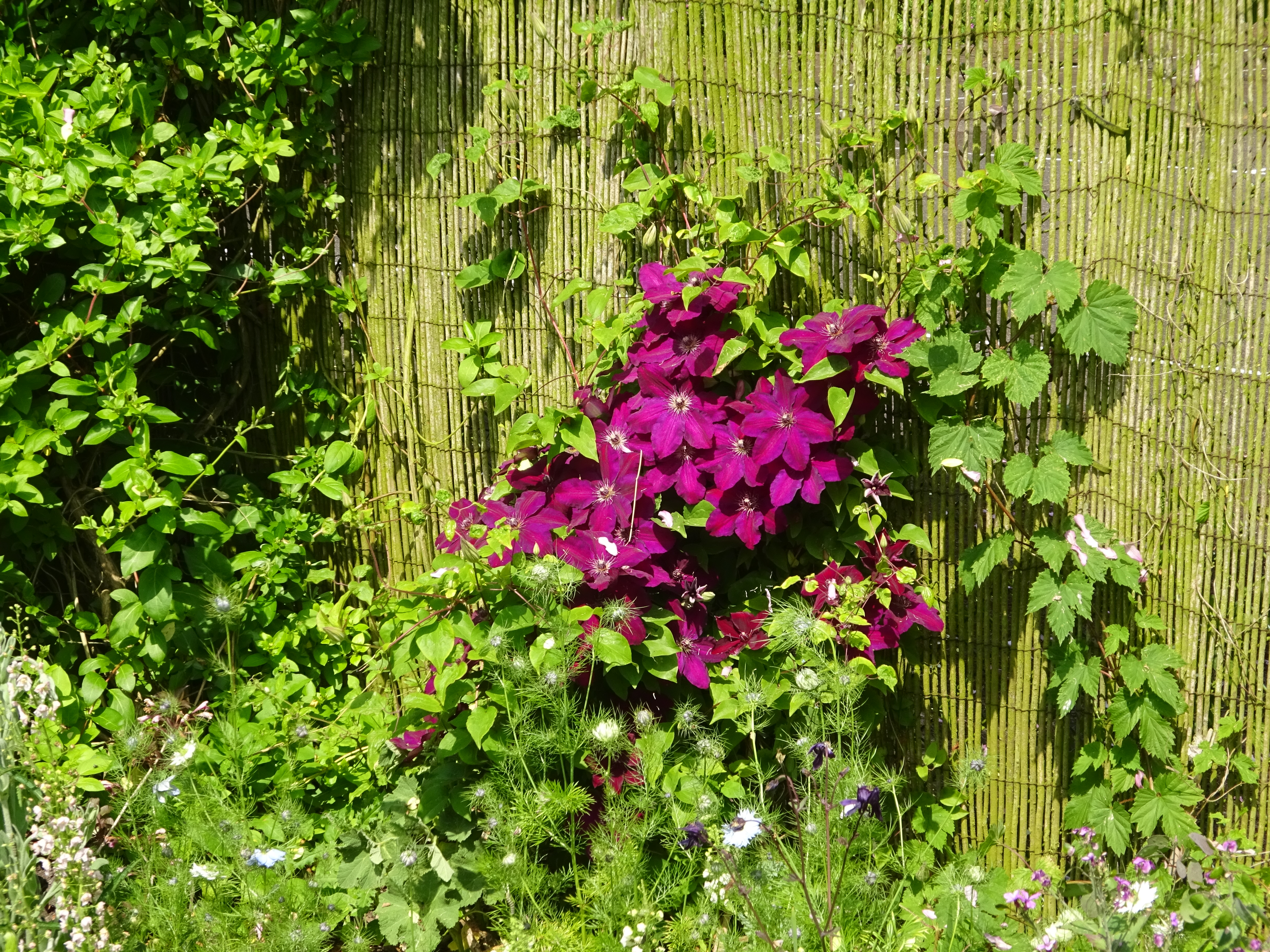
Slipping back into the main part of the garden this clematis seems to be clamouring for attention,

DSC02542.jpg

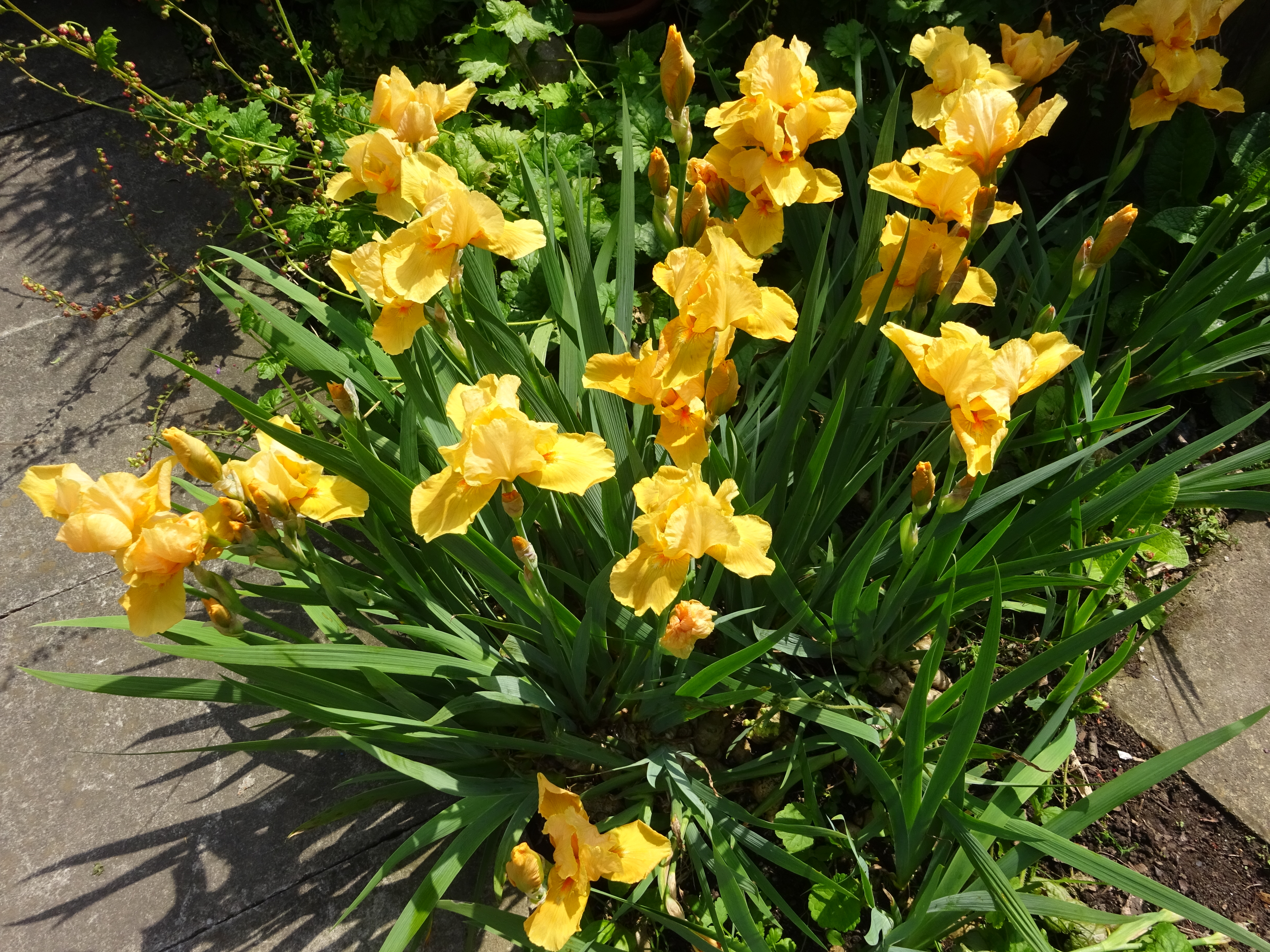
and I am not surprised because the irises are stunning.  Iris was the personification of the rainbow in Greek Mythology and here there is such a variety of colour; a splash of gold,

DSC02550.jpg

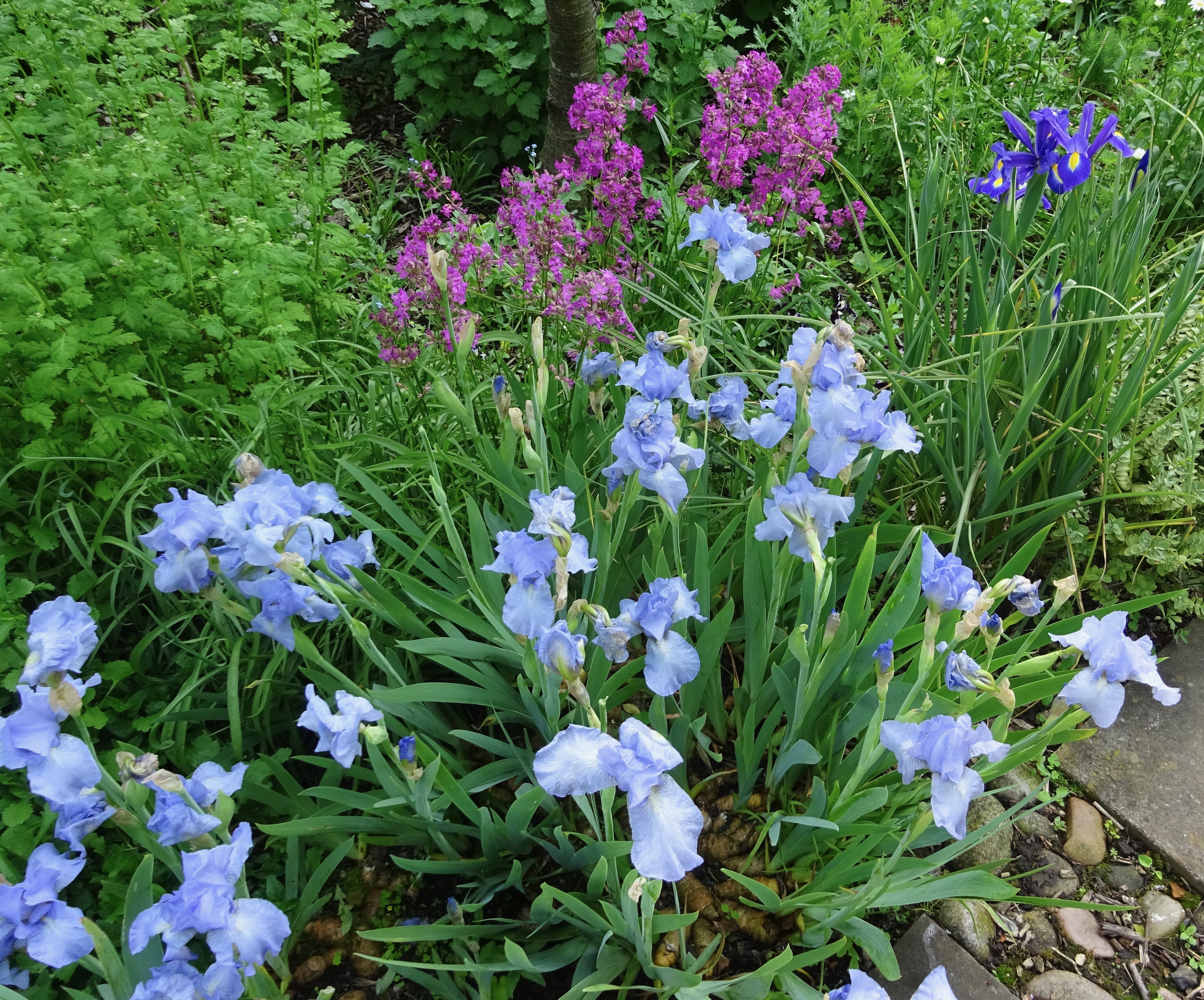
or blending in with the soft summer palette.

DSC02551.jpg

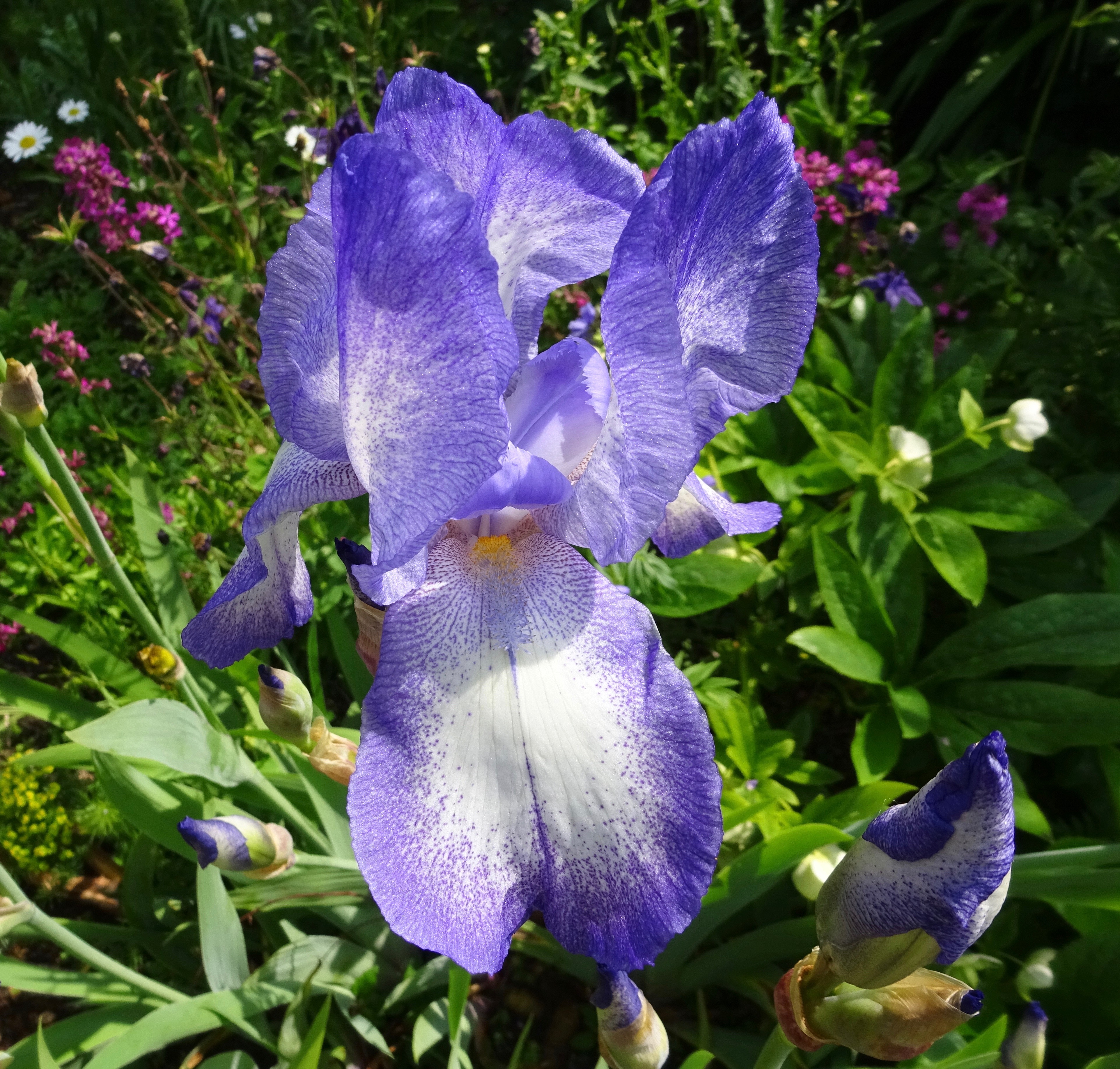
You cannot help but admire this flamboyant flower.

DSC02554.jpg

However it is not all about vibrant colour, and within this one garden there is such a diverse range of growing conditions.

This lady catches the sun hiding modestly amongst a collection of greenery.

DSC02555.jpg

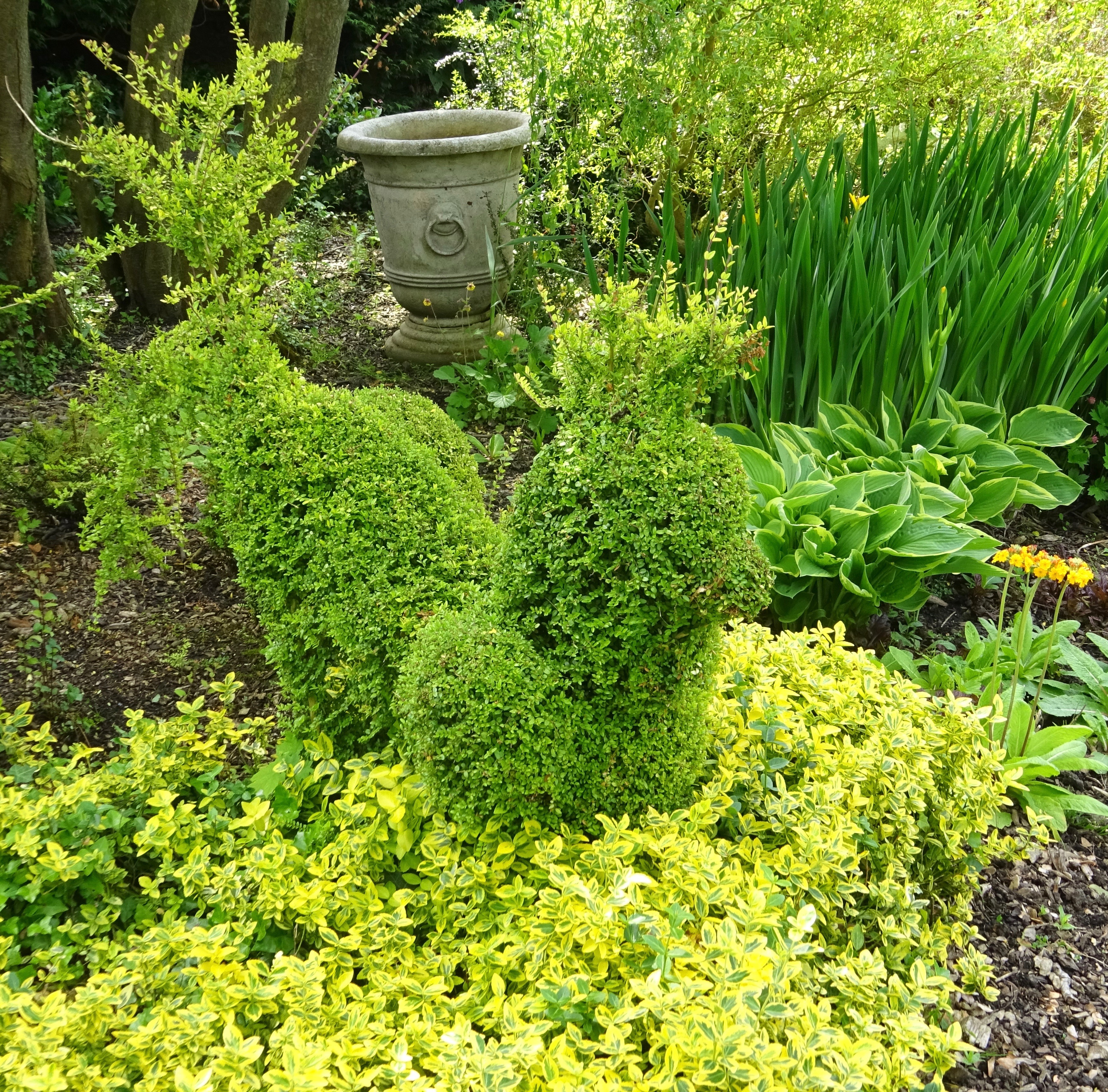
There is a selection of fun topiary in the making too,

DSC02565.jpg

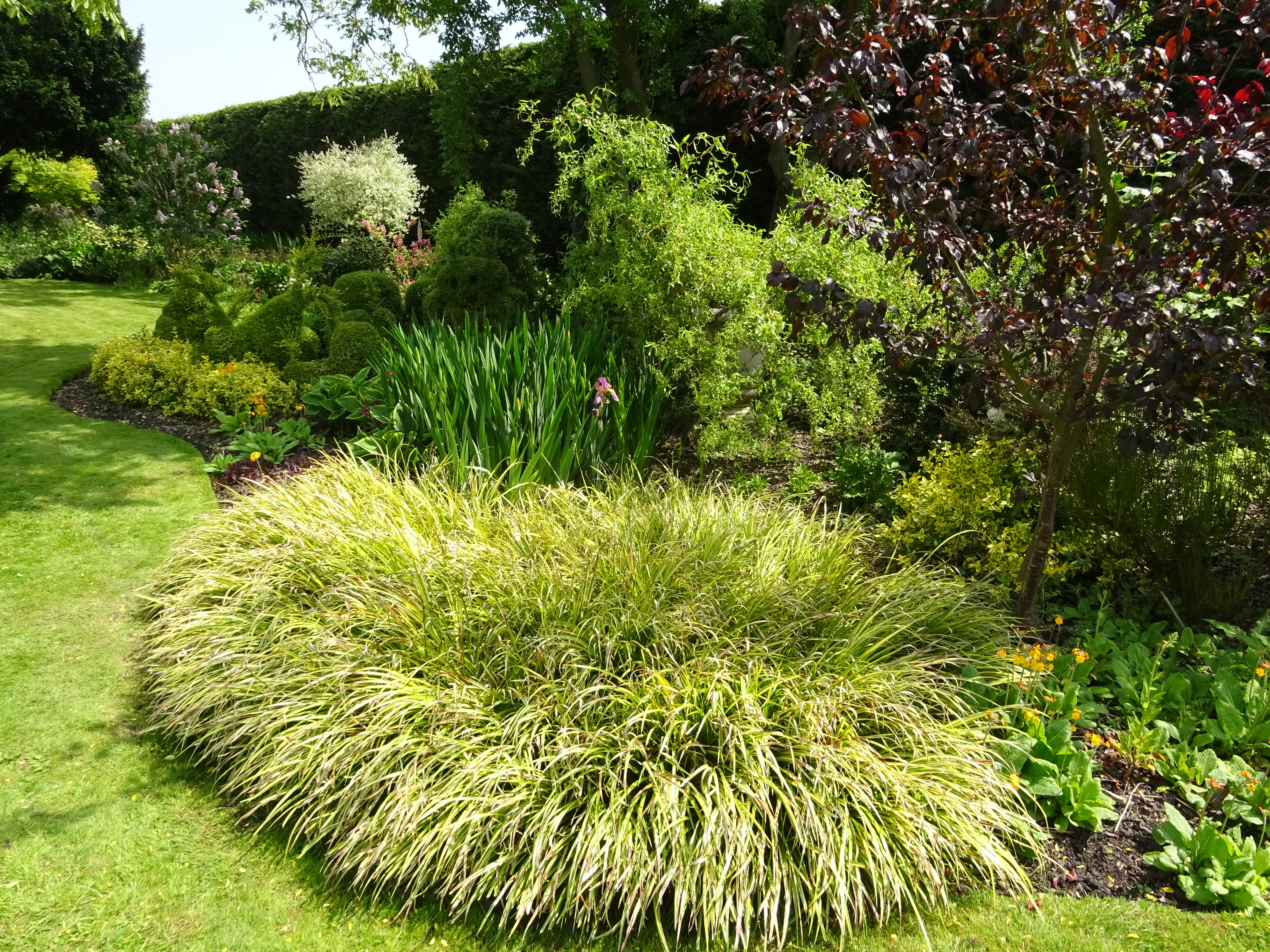
and nearby in the long border an impressive patch of ornamental grass gently spilling over the neat edge of the well-kept lawn.

DSC02577.jpg

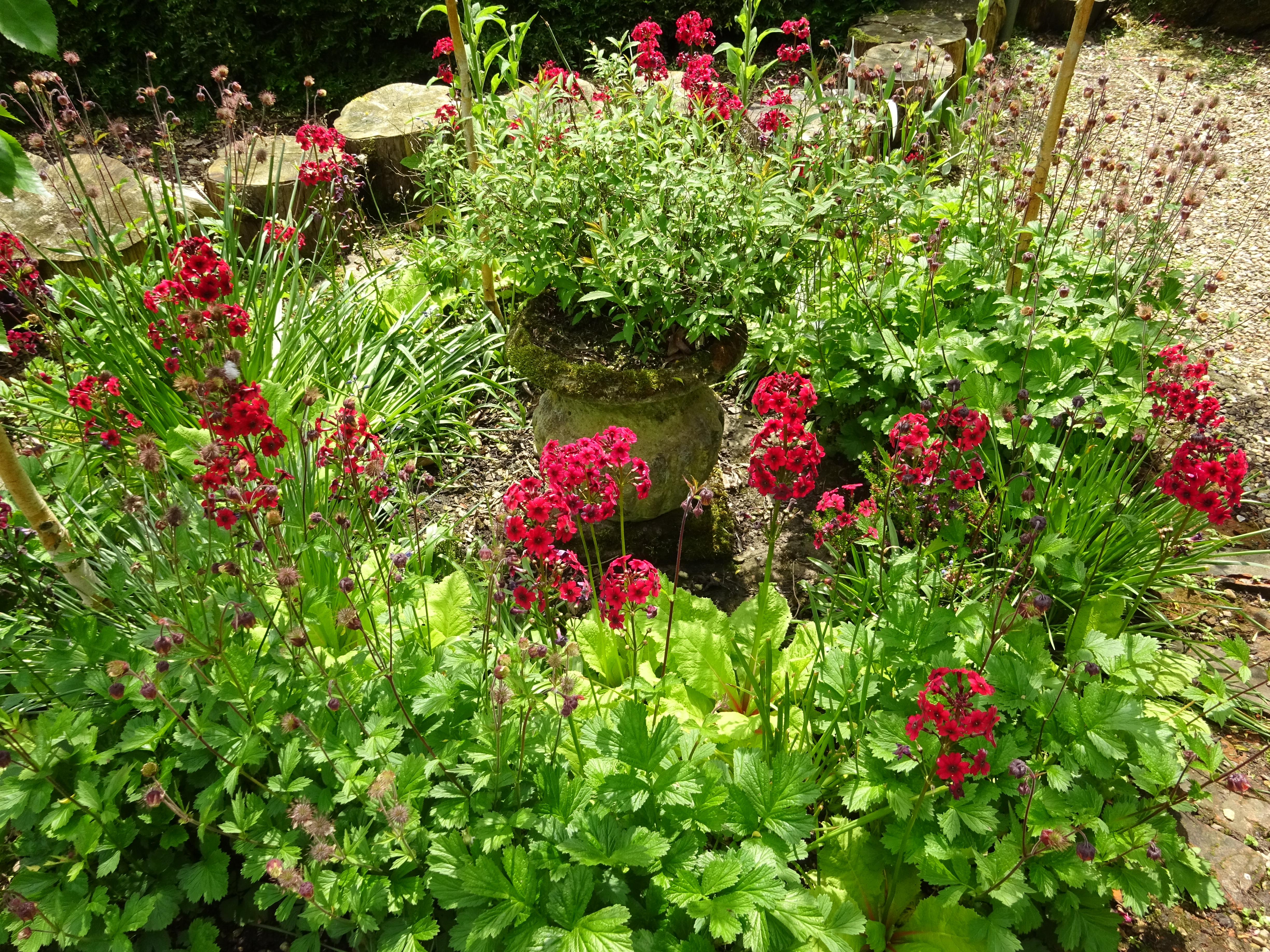
At the end the garden you are drawn towards some primulas growing in a secluded space. Here a visitor confides that he has so enjoyed his visit that he is now inspired to go home and get working on his own garden.

DSC02573.jpg

And that is what so often happens when visiting an NGS garden; not only are your spirits lifted and you gain that little bit of inspiration, but you have also contributed to raising much needed funds for all those marvellous caring charities that the Scheme supports.

DSC02578.jpg

Over two hundred people visited Bank House last Sunday, and combined with plant sales and refreshments an amazing £1,459 was raised. There is another opportunity to visit this charming garden this year as it will be open again on Sunday 26th August, or you can arrange a private group visit.

Your visit to an NGS garden really does help to change lives.

IMG_3750.jpg

——-xxx——-


Great Thurlow Hall, wet, wet, wet.(6/18).

Last Sunday was yet another wet, wet, wet day. Unable to work in my own garden and combined with Easter excess I decided that the only thing was to visit another garden. As I approached Great Thurlow Hall in Suffolk through a deluge of rain, signs of Spring were just visible on those manicured hedges around Newmarket

IMG_0731.jpg

Too wet for anyone to stand at the gate to the Hall,  the entrance to the garden was diverted through the church porch next door, left of the drive.

IMG_0728.jpg

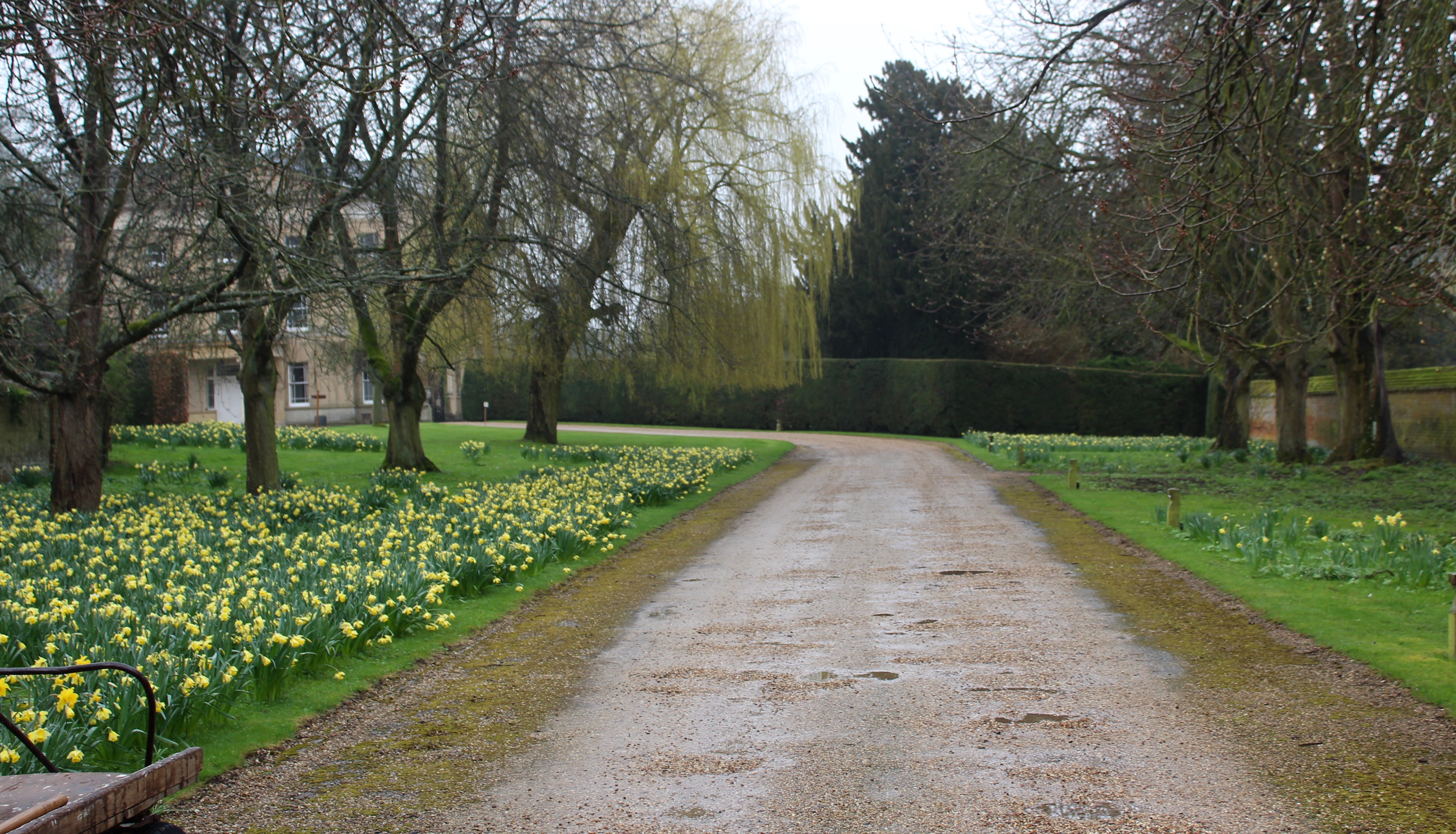
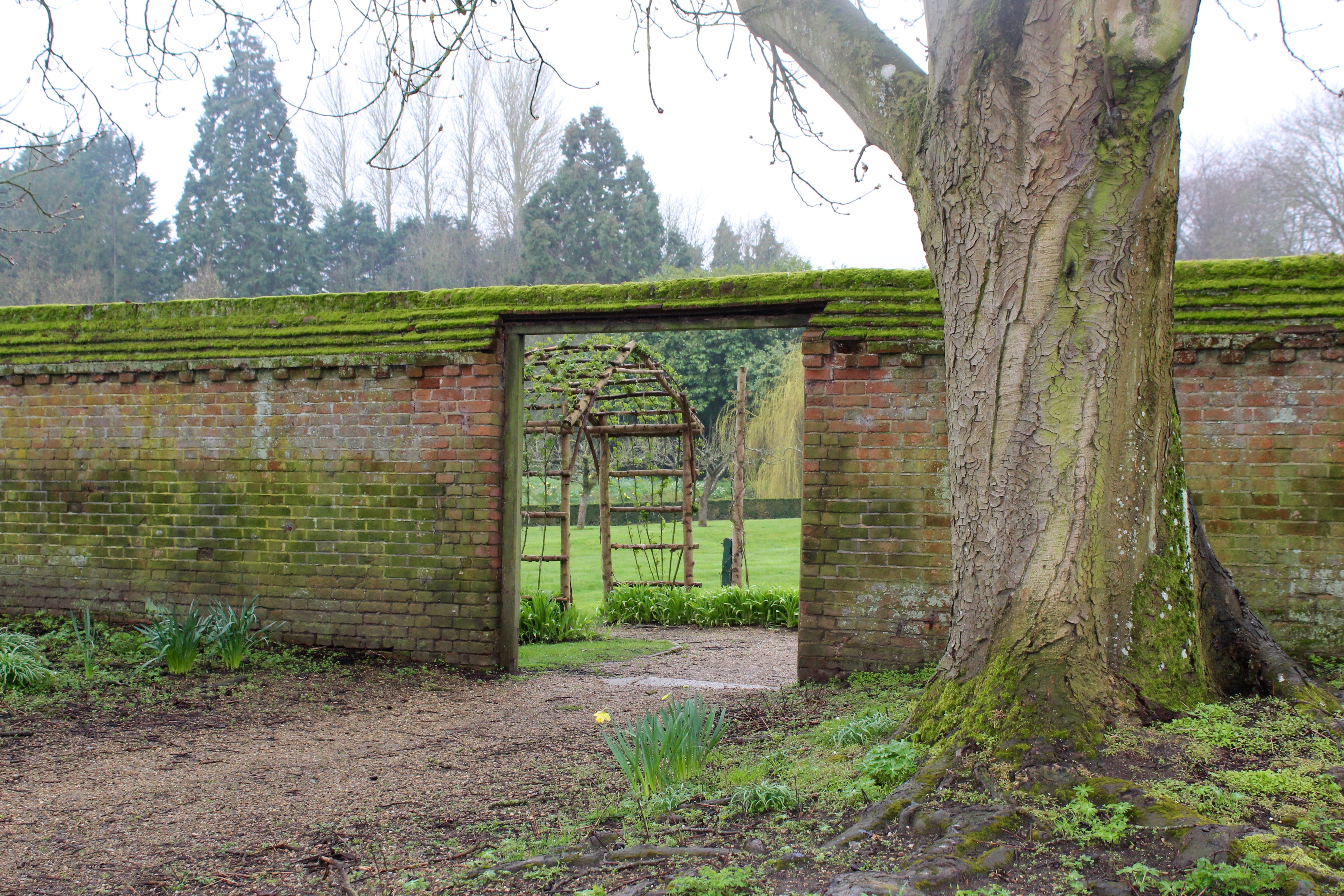
Crossing over the daffodil drive I headed through the thin green mossy-capped walls into the kitchen garden.

IMG_0732

There a wide open space now represents the skill and toil of many years. The straight path ahead waits to burst into spring perennials and roses. Over to the left, a verdant plot is home to fruit trees, and to the right is the glasshouse and much industry.


Perhaps the produce is blessed by the ecclesiastical presence.

IMG_0742.jpg

No loud signs here to tell you to keep out, just hazel sticks making an obvious statement.

IMG_0746.jpg

The wall does not stretch the entire way round; one side is rather attractively the river bank.

IMG_0750.jpg

The open iron gate leads onto the lawn below the house.

IMG_0757.jpg

Euphorbias brighten the corner where benches are positioned,

IMG_0760 (1).jpg

then up the pretty steps and across the rose garden

IMG_0880.jpg

to the terrace where you gain a view over the bridge to the gazebo beyond. Built in 1963 this was an anniversary gift from wife to husband of forty years; I smile at the thought that the best we could do was a watering can.

IMG_0763.jpg

I walk cautiously along the wet York paving where the solid hedges of yew bring structure and interest,

IMG_0773.jpg

and frame the view on such a murky day.

IMG_0774.jpg

The formation of the pond is a perfect shape for the vista beyond and the despite the weather the fountain plays on.

IMG_0781.jpg

Some chaps really don’t mind the weather.

IMG_0782 (1)

Against the house is a tangle of wisteria, determinedly dormant it is hard to imagine how beautiful this will be in a few months time.

IMG_0811.jpg

Not everything is dormant however; the red leaves of this cherry are trying their hardest.

IMG_0805 (1)

The garden was created by the present owner’s grandfather during the last century. The wooded area, carpeted with snowdrops now in the green, is to the left of the house and screens the farmyard; the sounds of the cattle remind us that this is working farm. There is a variety of trees, some of which were planted by members of the family to commemorate the Queen’s Coronation in 1953.

IMG_0796.jpg

Ha ha, we are at the end of the lawn,

IMG_0800 (1).jpg

where the slate ball seems to have gently rolled away from the house and come to rest.

IMG_0793.jpg

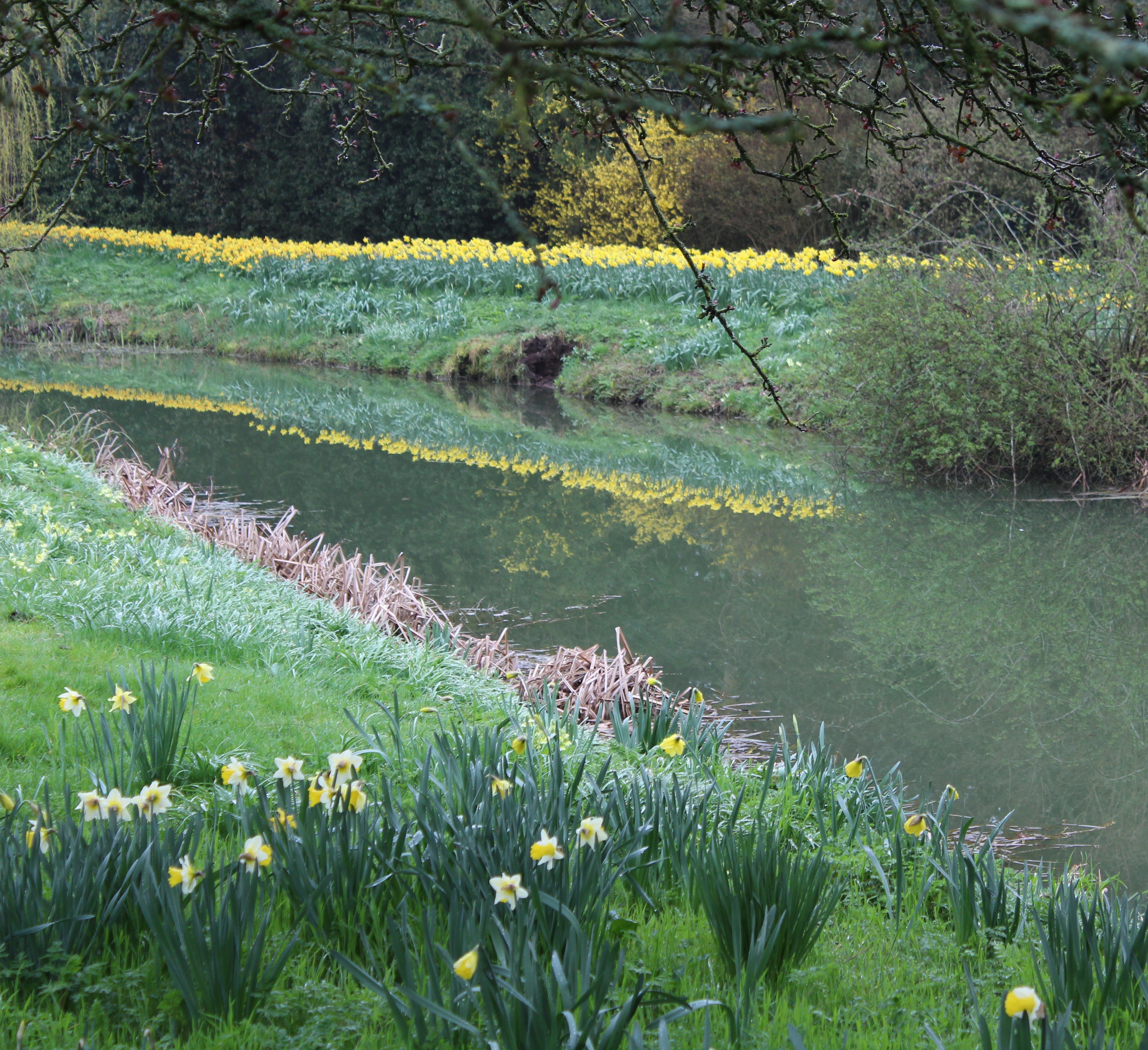
Unlike Wordsworth, I have to confess that I am not a great fan of daffodils but it is on a day like today that they certainly play their part and look so attractive reflected in the water.

IMG_0815.jpg

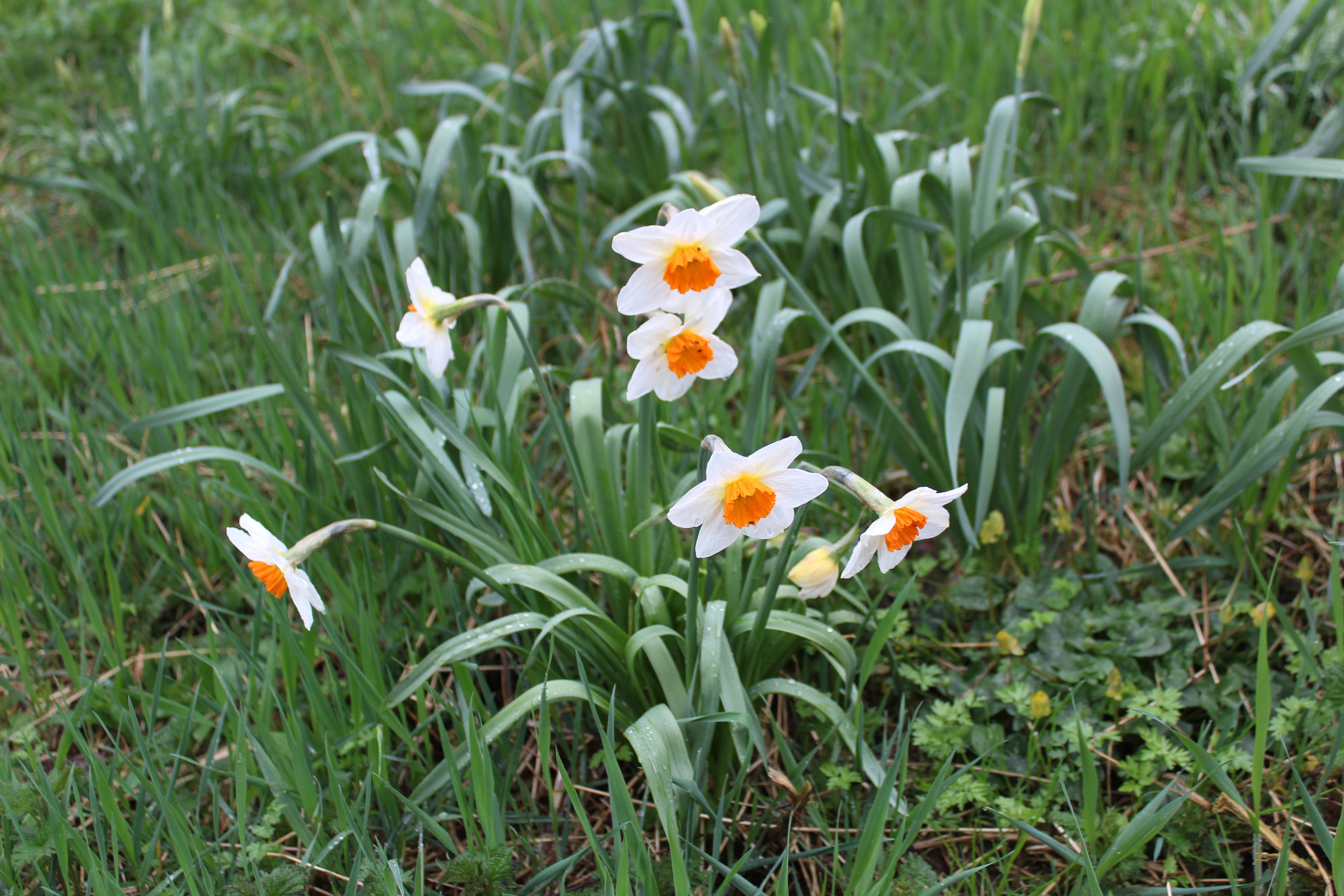
and of course there are so many varieties.

IMG_0829.jpg

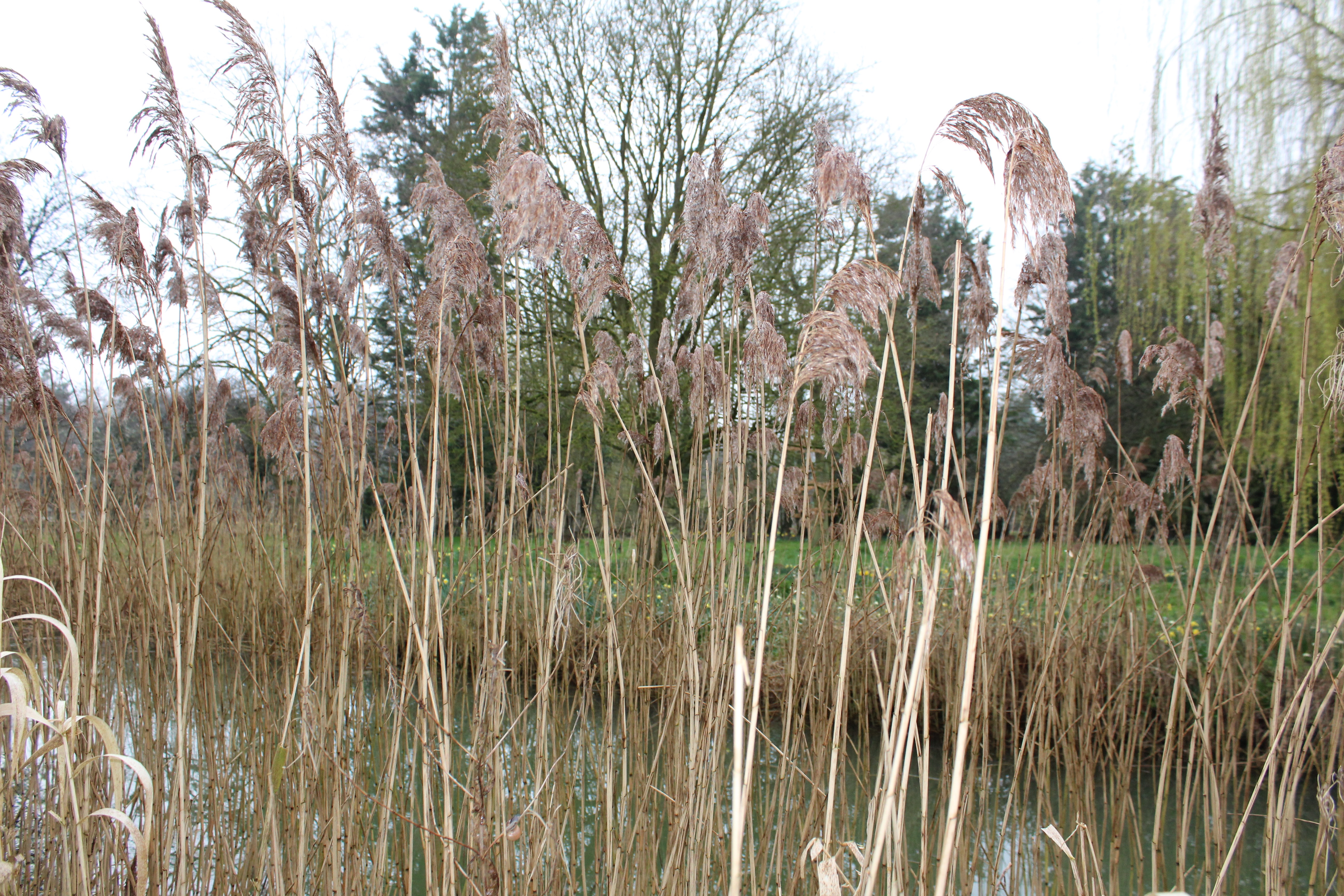
It is a watery landscape with the river Stour flowing through much of this garden.

IMG_0830.jpg

The mown path makes one follow the course of the river and along the banks willows weep and bridges tempt you over to the other side,IMG_0839.jpg

and clumps of delicate primroses grow.  Are they, in general particularly good this year?

IMG_0758.jpg

It is very peaceful, but occasionally there can be heard the sound of rushing water.

IMG_0835.jpg

The five bar gate is a reminder that we are in rural countryside surrounded by grazing pastures.

IMG_0833

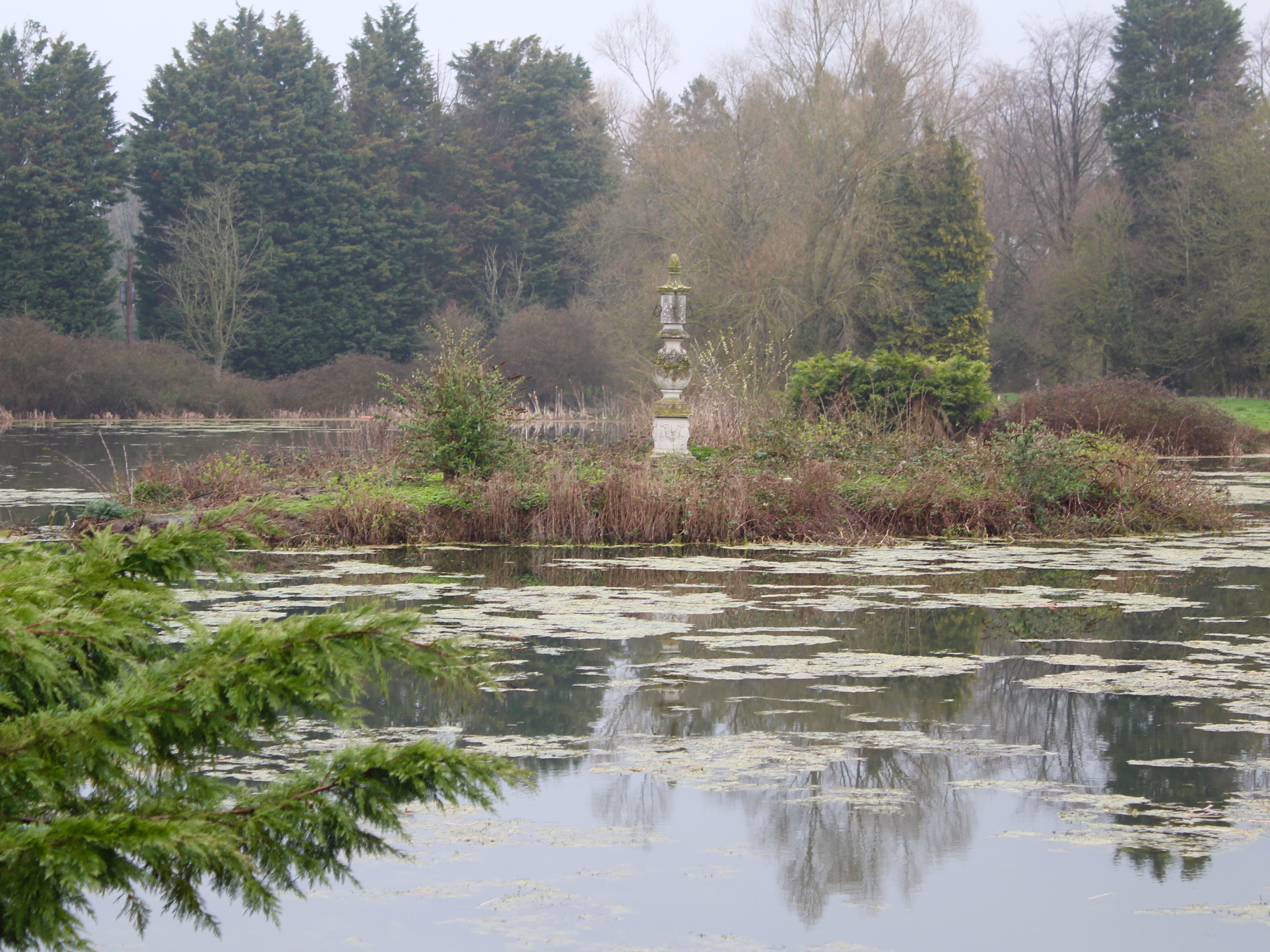
The path deviates off to take you around the lake.  It is a haven for wildlife. On the island is a monument placed in memory of the present owner’s grandmother.

IMG_0852.jpg

Walking back towards the house I find this bench in the most perfect position. This is a garden that has been opening for the NGS for 60 years. In time you will be able to sit and admire a Gingko biloba presented by George Plumptre in recognition of such longevity.

IMG_0863.jpg

The drifts of daffodils are planted along the bank to flower in succession, one band is in flower, the next ready to come and close to the water they are still tightly in bud.

IMG_0864.jpg

It is not just the plants that are reflected in the water.

IMG_0877

Over 130 people visited today, not bad for such a wet day but private gardens like Great Thurlow Hall are popular and with years of opening will have acquired a considerable and loyal following. Opening again on the first weekend of June, I do recommend you should plan a visit, the children will love this watery space.

IMG_0870 (1)


——-2018——-