A Garden Designer’s Garden (7)

Norfolk NGS last week launched their county booklet at the home of George Carter. Over 90 of us gathered which included many of the garden owners, sponsor and advertisers.

Intrigued by what a designer might do on his own patch, so to speak, George Plumptre, NGS Chief Executive, having written articles on several gardens with which Carter has been involved, also joined us.

The rain bucketed down and the peacock (there is only one) sensibly keeping dry watched our arrival, seemingly unperturbed.
dscf7674

A record £110,000 was raised in Norfolk last year for nursing charities. Nicola from Macmillan Cancer Support thanked us for our contribution and reminded us of the importance of the NGS as its single largest donor; she enlightened us with the shocking fact that every day in Norfolk 15 people are diagnosed with cancer. This has a huge effect on the extended families.

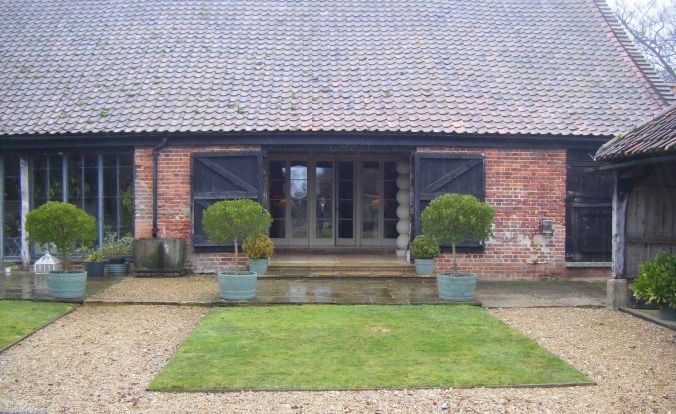
The magnificent Barn, magically restored, is set amongst farm buildings. Cart sheds house all sorts of ephemera, and the yards are cunningly designed giving a pleasing and  orderly  effect that does not distract from their original use.
DSCF7675.jpg

Elegant sturdy ornaments are found throughout the garden. Carefully placed they are not always as solid as you might think and are often lightweight, being made of modern materials.

DSCF7679.jpg

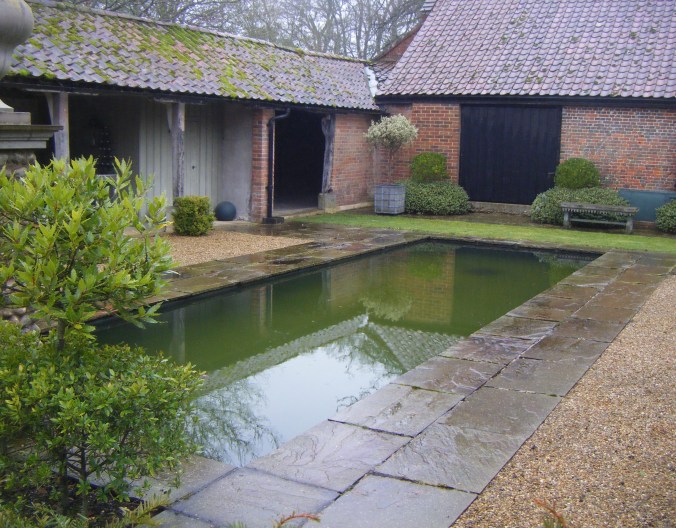
Proportions are perfect but the water not so inviting on a day like today.
DSCF7680.jpg

It is a working place with sheds storing carpentry, ironwork and anything that Carter considers might be reused in a future design.

DSCF7682.jpg

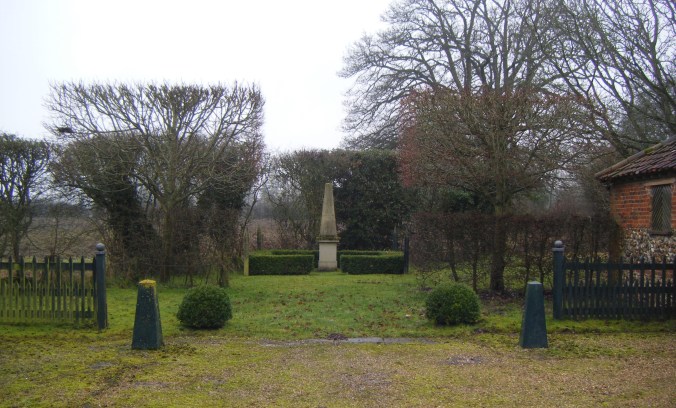
By the farm building is an obelisk which defines the boundary of the property.
DSCF7678.jpg

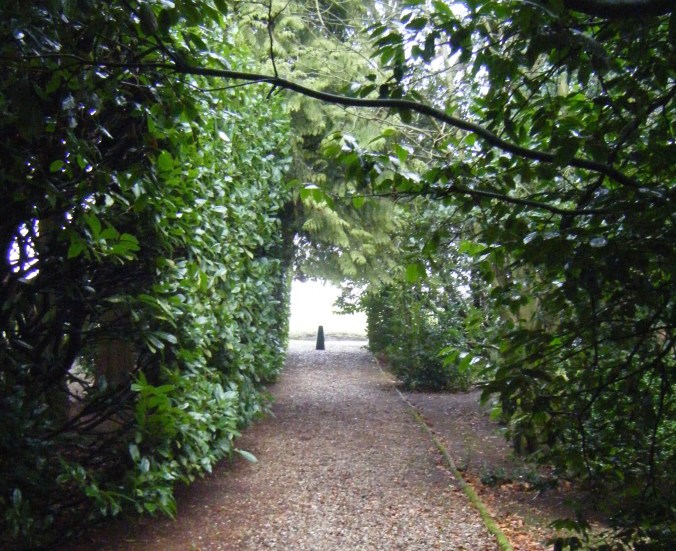
A full stop at the end of the leafy drive:
DSCF7698.jpg

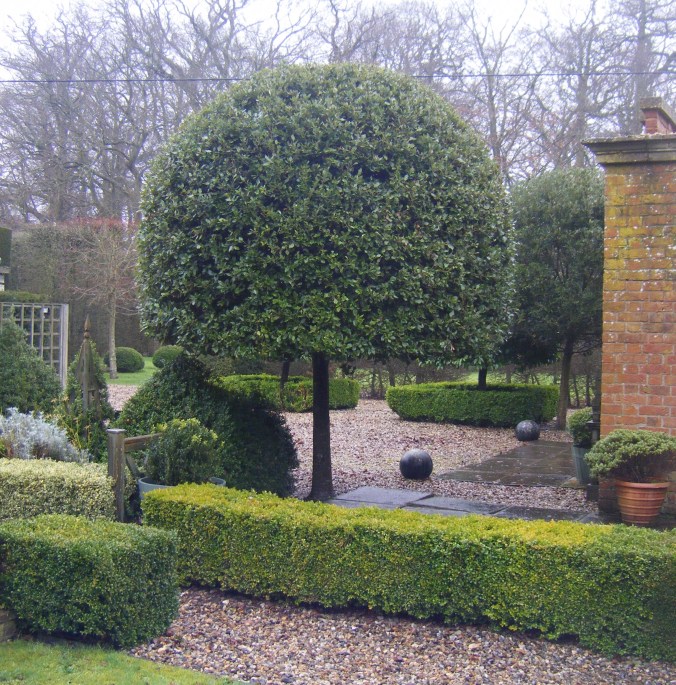
It is the attention to detail which is so immeasurable. Balls, cones and obelisks pop up everywhere including within the foliage. It is a lesson in geometry.
DSCF7687.jpg

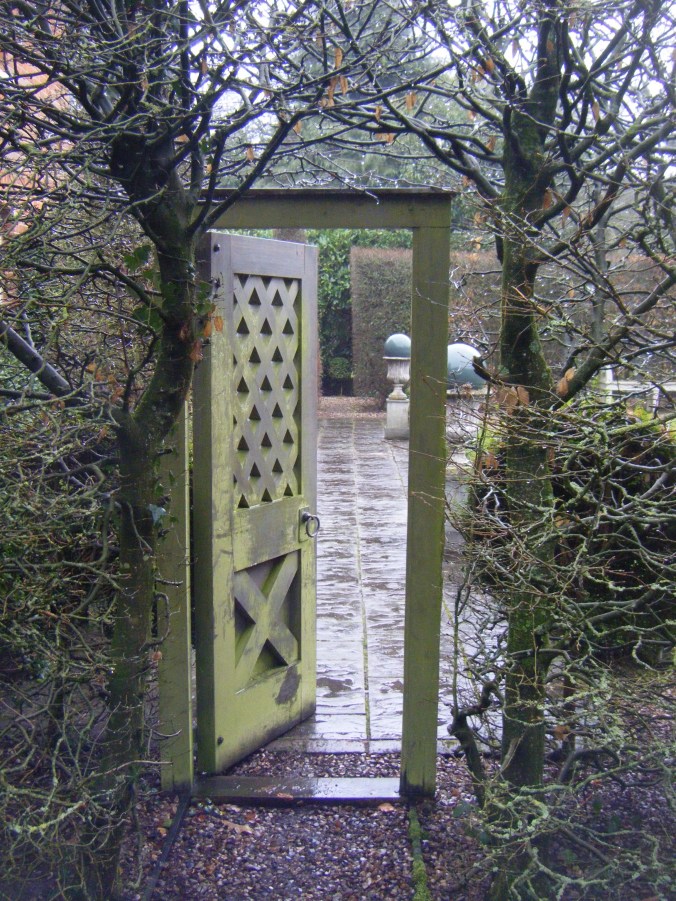
The elegant garden gate is open and invites in:
DSCF7689.jpg

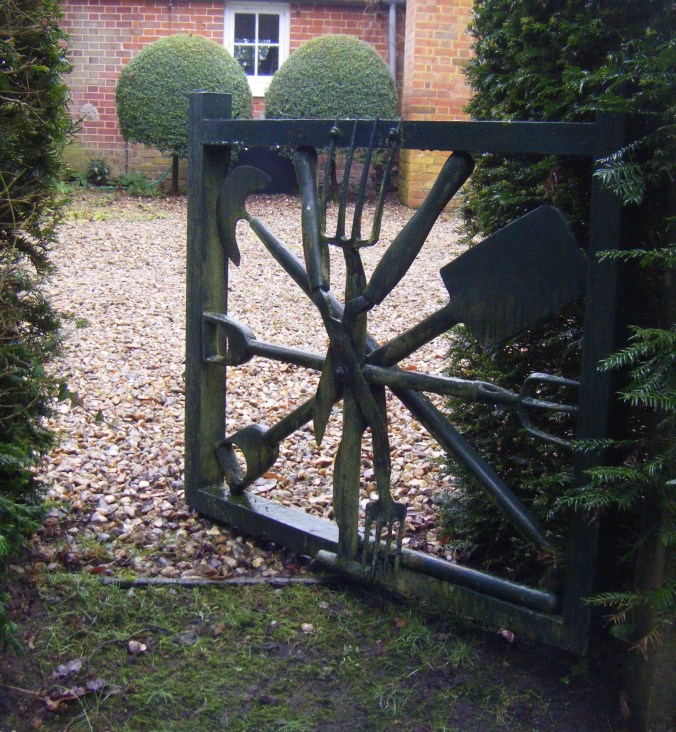
Whilst another is horticulturally amusingly:
DSCF7703.jpg

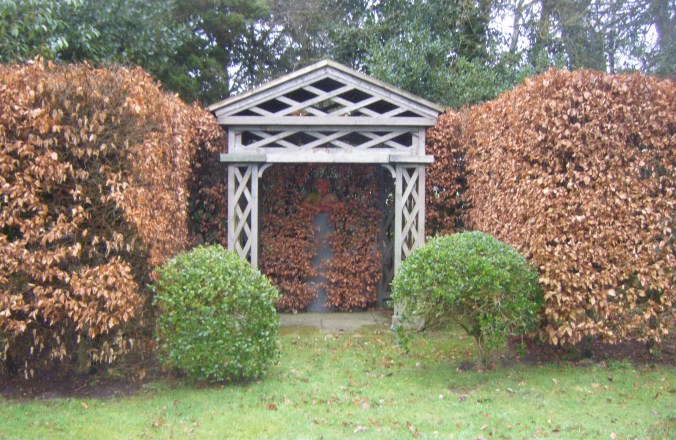
This is a garden without a flower in sight. No snowdrop here. As Karen, a garden owner herself describes, it is like a theatre set and we are  expecting someone to appear in 17th century costume. Not today though, it is far too wet.
DSCF7693.jpg

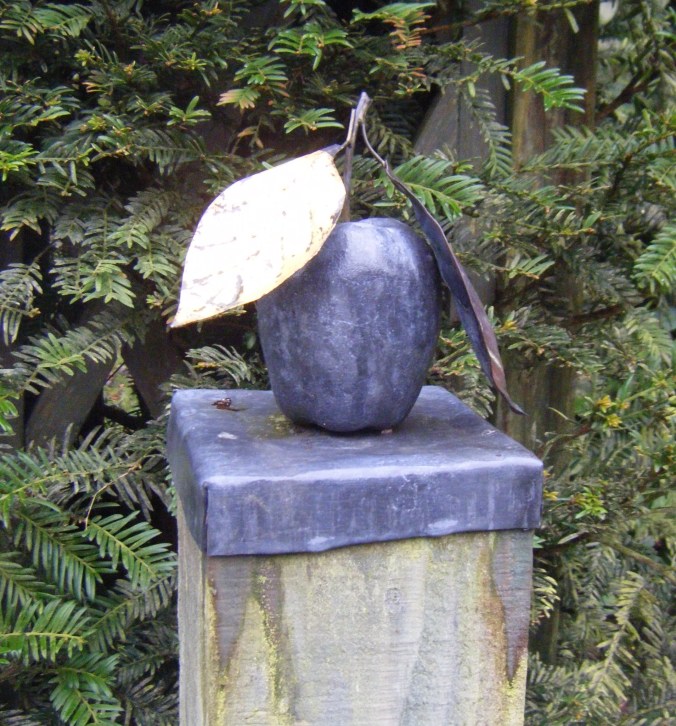
An apple made of lead and part gilded is a prototype for the design of a garden in America.
DSCF7700.jpg

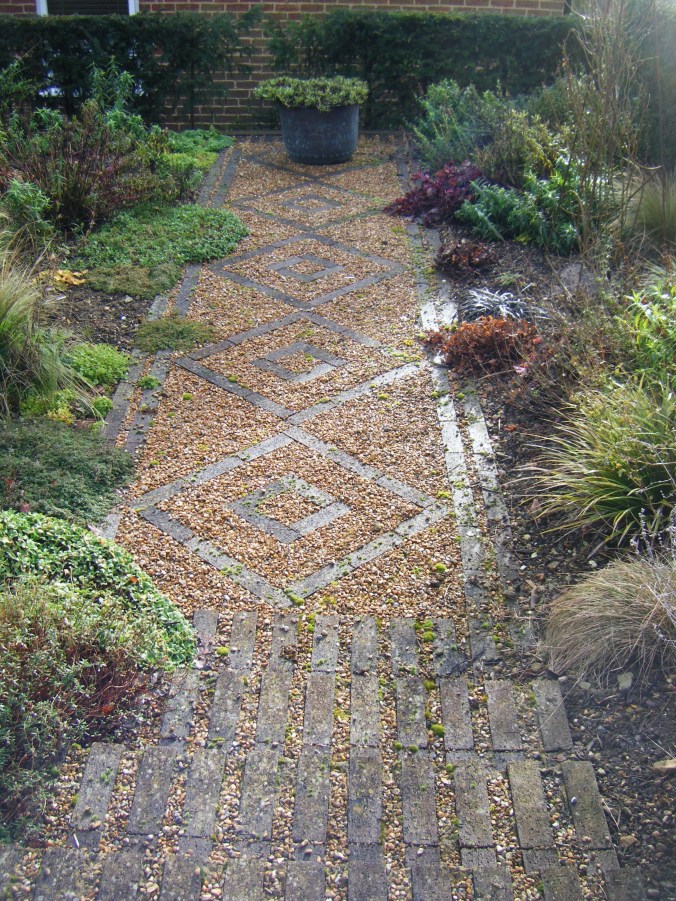
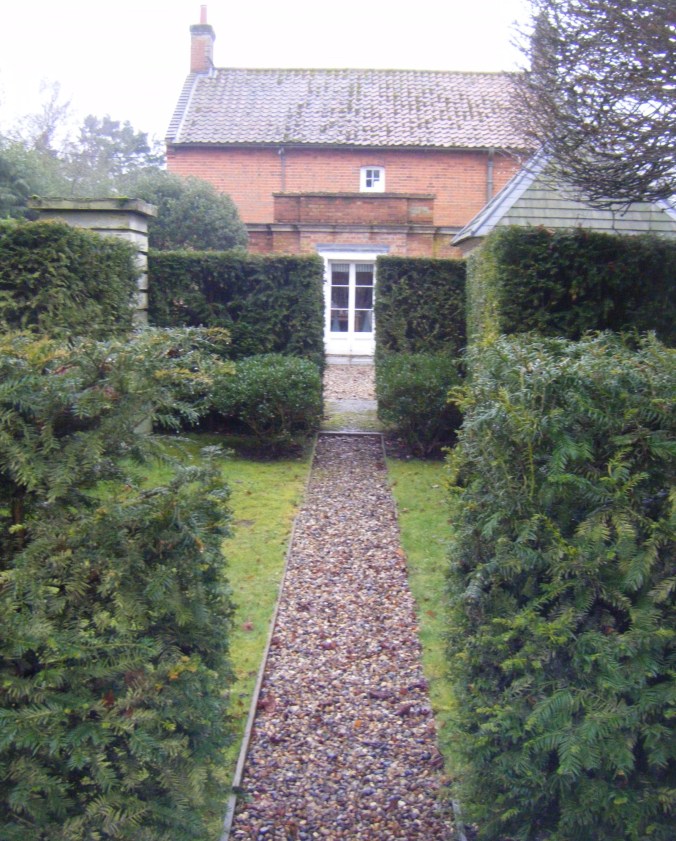
Carter makes his paths narrow and straight; they have a presence within the overall design.
DSCF7707.jpg

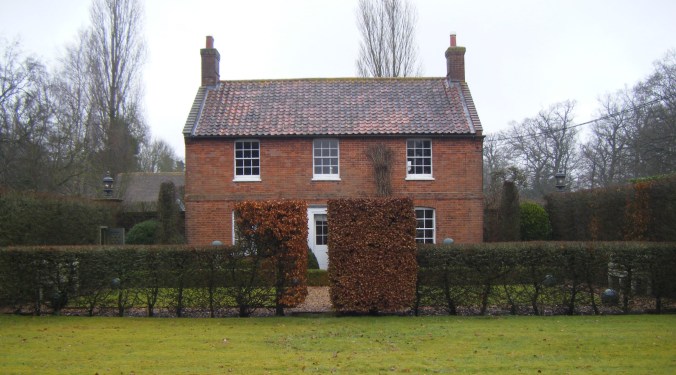
Not just at the back of the house, but in the front too.
DSCF7692.jpg

And to our delight he agrees to open his garden for the NGS next year. Sometime in October would be perfect. We are thrilled at the prospect. The last two cars are hauled out of the mud and Fiona skilfully changes her punctured tyre single-handed. That’s county organisers for you!

——-7——-


West Dean; A Perfection in Pruning (6)

Don’t tell me that people don’t visit gardens in Winter. They do. It was West Dean’s first day of the season, a bonus that they were opening in aid of the National Garden Scheme, and it was humming with visitors.

B and I consulted the map, not really sure why,  not from a fear of getting lost but I suppose because it was there.

We headed up to the walled garden along a path where the trees stripped of their lower branches and under planted with box, allow glimpses of the open lawn and beyond:

DSCF7604.jpg

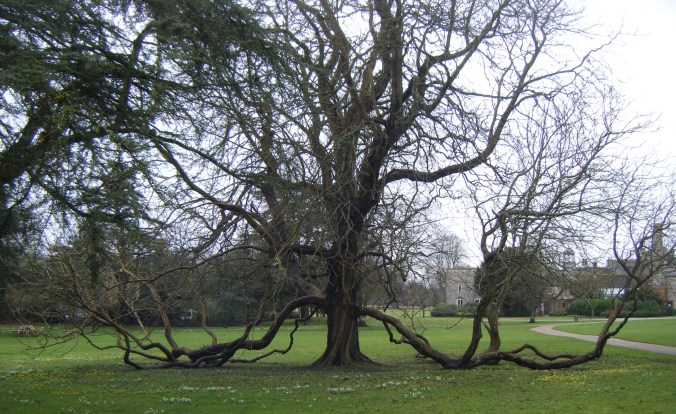
A stately deciduous tree stands, almost in defiance of man’s interference, it gracefully stretches out arms and bends hands towards the sky in supplication.

DSCF7605.jpg

In the Apple store, a deliciously smelling, cool, round thatched building, we found the jolly Sussex NGS team. B herself is one of their garden owners and so much chat ensued.

DSCF7613.jpg

The County Organiser, a volunteer here at West Dean showed us around and the work and devotion to horticulture is enviable. The Victorian Walled garden is filled with fruit trees. Apples and pear are espaliered and fanned against the walls and over arches:

DSCF7616.jpg

Also cunningly trained around carousels and pyramids:

DSCF7614.jpg

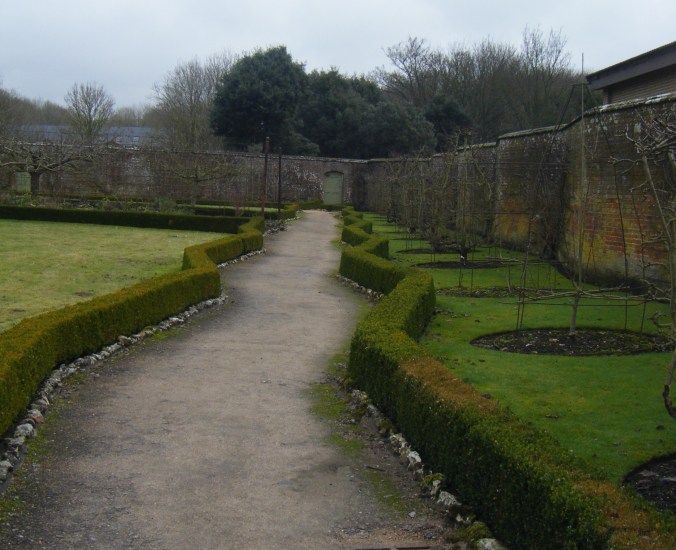
We wander along the neat box edged paths. This one echoes the crinkle-crankle wall:

DSCF7612.jpg

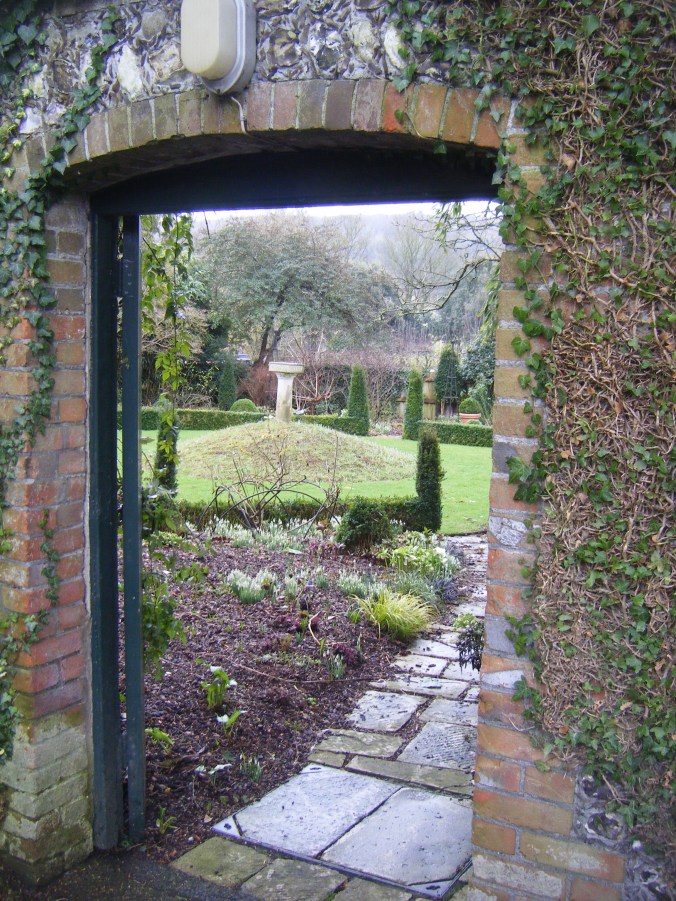
and hello, the garden gates is open……..

DSCF7615.jpg

….even the Head Gardener’s own gateway. So tempting to snoop but we have to resist as this garden is to be open another day.

DSCF7620.jpg

Grateful to our guide we leave her handing out her county booklets and return to the main part of the garden where we delight in the abstract forms of box and are surprised to find it so very recently clipped:

DSCF7629.jpg

There is no sun today but the Sarcococca, still fills the air with its heady scent. It too has received a trim:

DSCF7628.jpg

It is good to have a friend with me; B and I discuss the merits of hellebores. We agree that although the dark maroon looks lovely, almost exotic when displayed in a vase, it is rather lost against the dark soil, unlike the paler colours which look bright even on this dull day:

DSCF7632.jpg

I imagined there to be more ornament around the garden but of course Harold Peto’s huge pergola takes centre stage.  A sculpture itself, the reflection is also a work of art:

DSCF7639.jpg

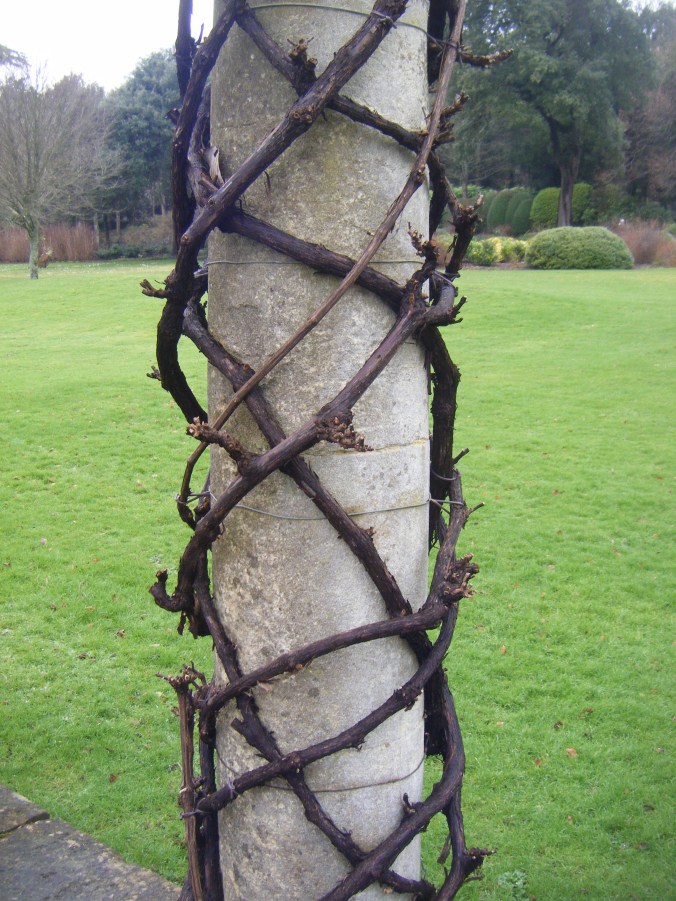
Vines are latticed around Petos’s sturdy pillars reminiscent of Tudor chimneys:

DSCF7636.jpg

His attention to detail is magnificent:

DSCF7641.jpg

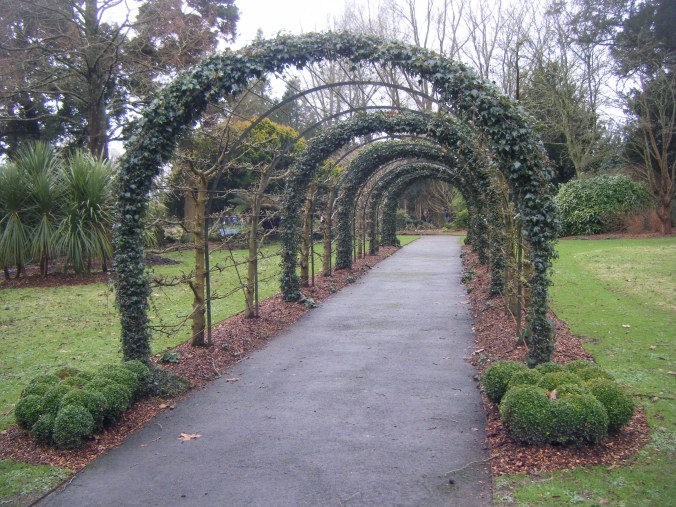
As we circulate around the garden I think this must be a disabled visitor’s dream. Easy access all the way round on smooth spacious paths. Nobody knows what it is like to push a wheelchair until you have had to. An inviting tunnel clothed simply in ivy and anchored by the box balls:

DSCF7655.jpg

We are not really sure about the fibreglass tree. At the very least it serves as an amusing conversation piece:

DSCF7656 (1).jpg

Undeniably false but a bit of fun. The real thing is so majestic:

DSCF7665.jpg

And the cornus provides vibrant colour.

DSCF7661.jpg

More clipped shapes help to blend the cold flint walls to the garden.Time has run out for us today and we have yet to visit the Parkland walk and Arboretum.

DSCF7666 (1).jpg

We will have to return to this garden in its glorious setting of the South Downs, and not just for those unexplored areas, but to try every one of the courses that the college can offer.

——-6——-
A Snow Drop of Knowledge (5)

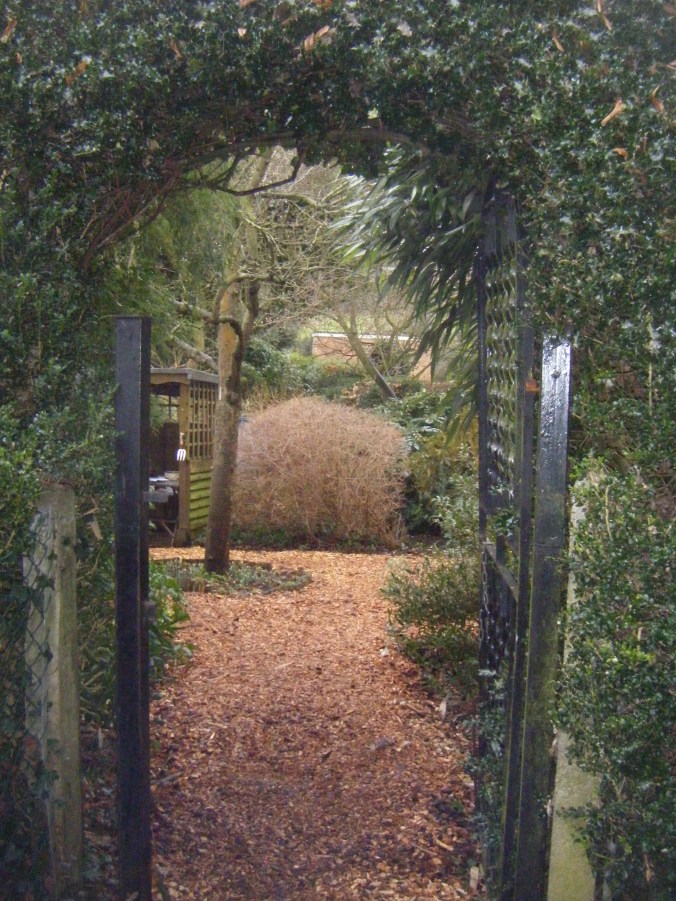
Driving down to West Sussex last Saturday I decided to make a detour and called in on a small garden open in Kent. Not having had time to read up about Spring Platt I guessed it would have snowdrops.

As I parked the car my heart began to sink as I spied, not a mass carpet as expected, but a small patch growing under some trees. Walking up the hillside towards the bungalow I wondered whether I should have stayed on the M25.

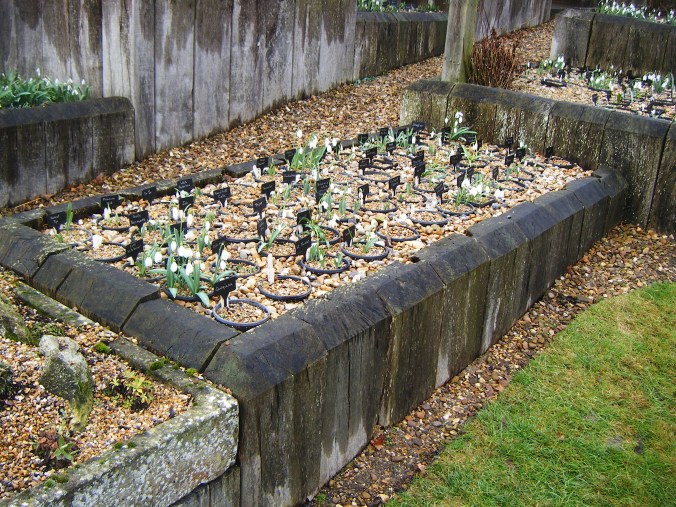
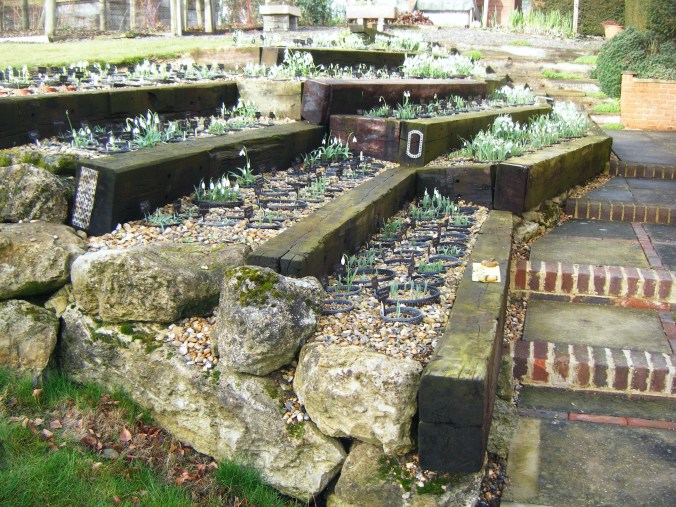
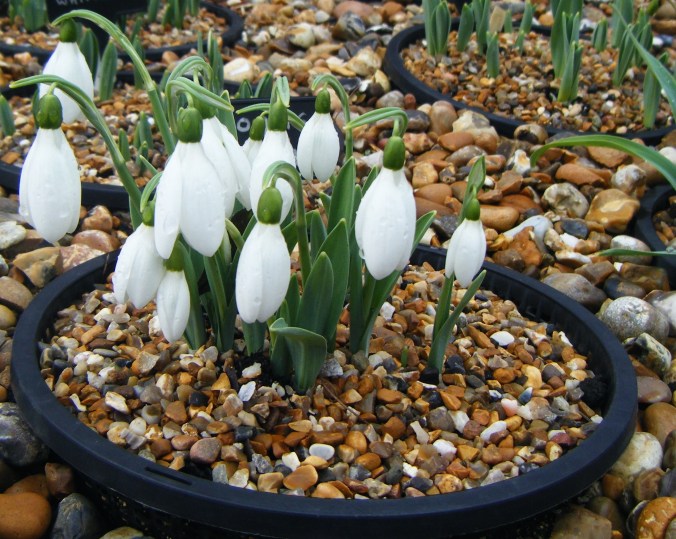
My fears were soon alleviated when the delightful daughter of the garden owner greeted me and began to show me her collection of snowdrops. Growing in specially built raised beds set by the side of the bungalow they were growing in pots plunged into gritty soil:

DSCF7542.jpg

All clearly labeled too, something Julie insists on because  it infuriates her when she goes to snowdrop collections and cannot find the label. The names are amusing and there are over 600.

The sun is beginning to shine. The knowledge is bursting forth and I am enthralled.

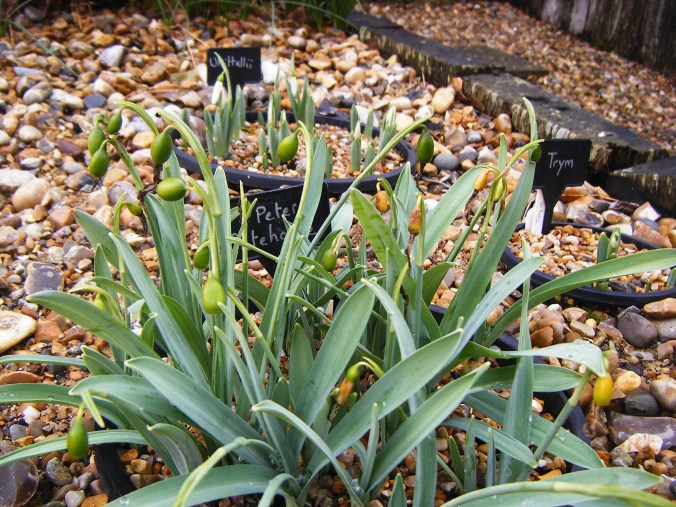
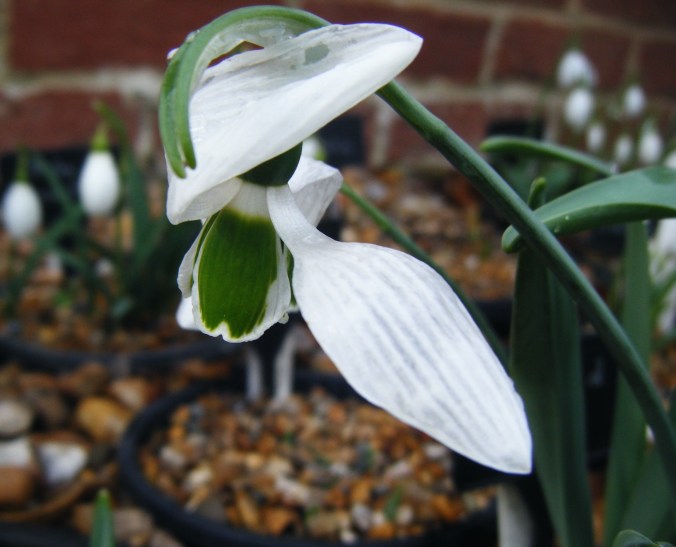
The season she explains begins at the end of October, with some varieties having already flowered. I am surprised but can see that ‘Peter Gatehouse’ is producing seed:

DSCF7545.jpg

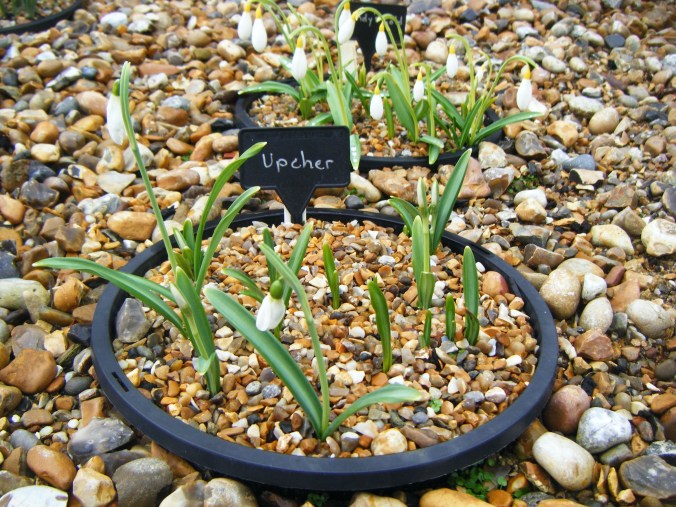
While others like ‘Upcher ‘are just appearing:

dscf7546

I admire ‘G F Handel’ who is playing nicely:

DSCF7556 (1).jpg

‘Big Bertha’ is looking great:

DSCF7553 (1).jpg

‘Hippolita’ is pretty special too.

DSCF7558.jpg

While ‘Fenstead’ seems confused:

DSCF7560.jpg

I could go on

and on ……….

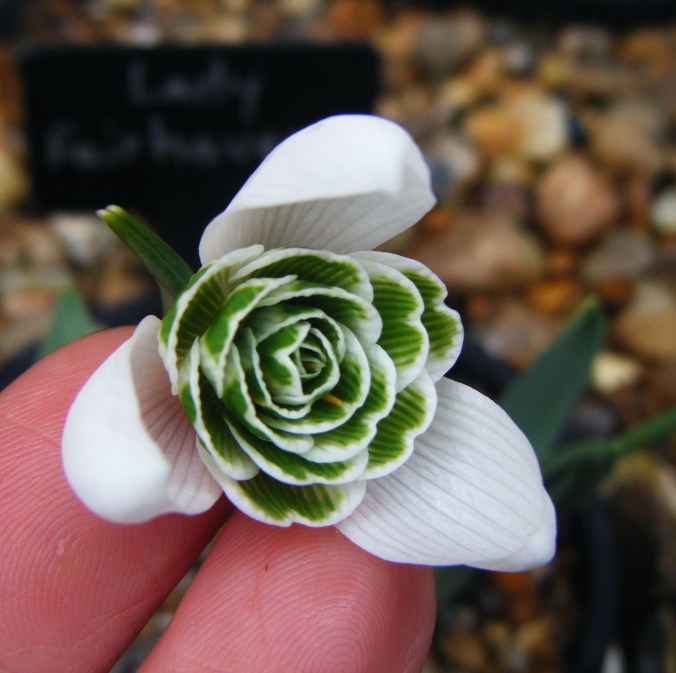
Perhaps there is just one more, and that is the enchanting Lady Fairhaven:

DSCF7569.jpg

And that is what it is like, hundreds of little gems.

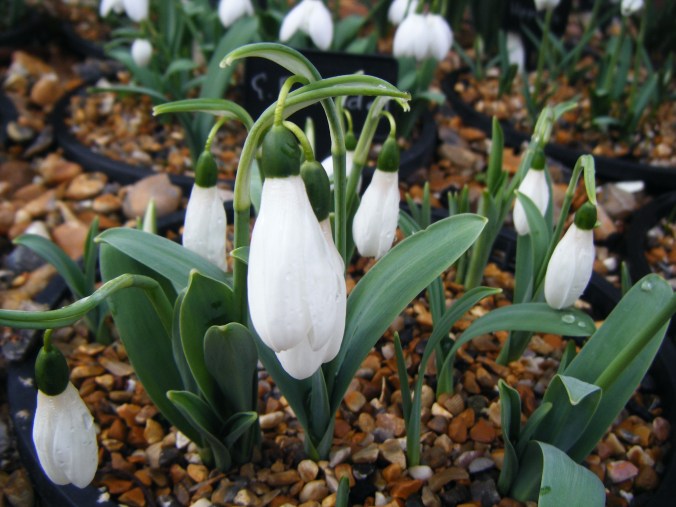
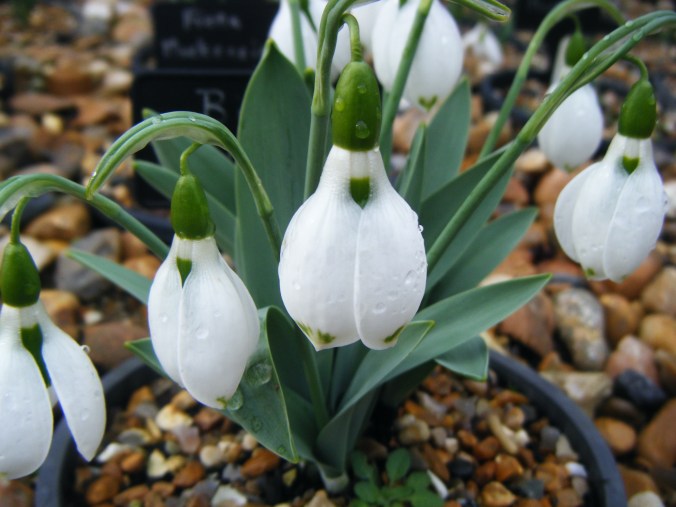
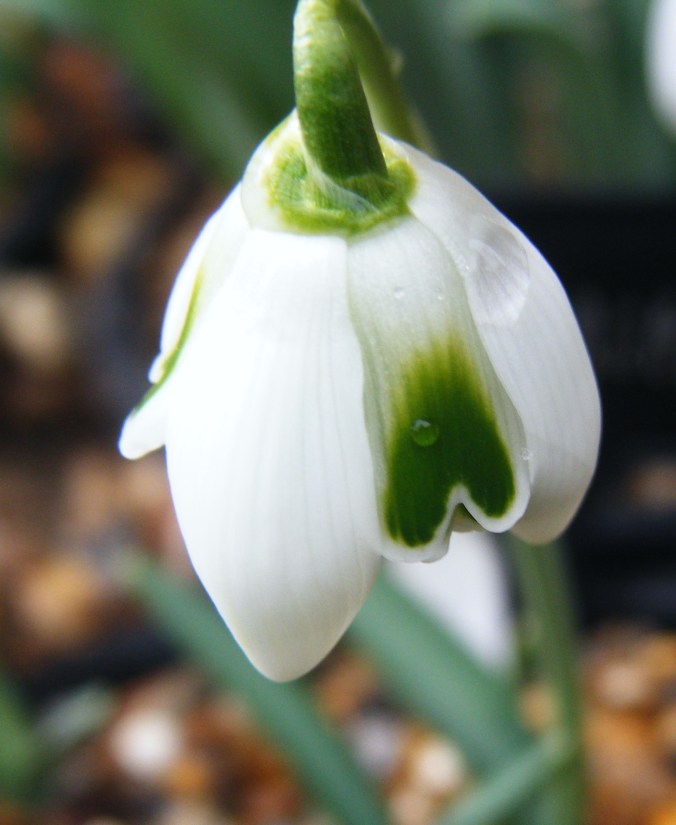
It is not only the different markings on the flower petals that differentiate the species, but also the variety of the leaf in colour, form and size.

We walk up to behind the bungalow through an enclosed garden which has been designed for summer flowering plants and where no snowdrops are allowed. Following a skilfully laid path we arrive at the greenhouse and potting area.

DSCF7593.jpg

Here we are joined by mum Carolyn. She gives a tour of the nursery area explaining the technique of chipping the bulbs, which she does from May onwards. The plants are lined out in various stages of growth, and checked regularly. It is a horticultural cottage industry and fascinating.

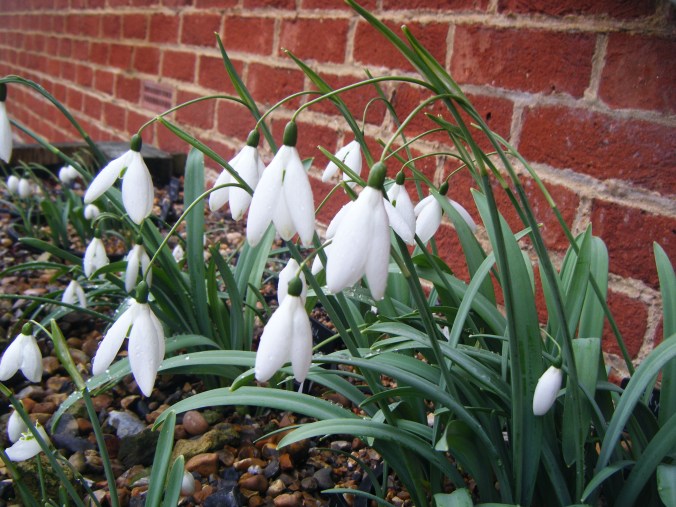
More raised beds are situated on the other side of the bungalow with yet more varieties:

DSCF7591.jpg

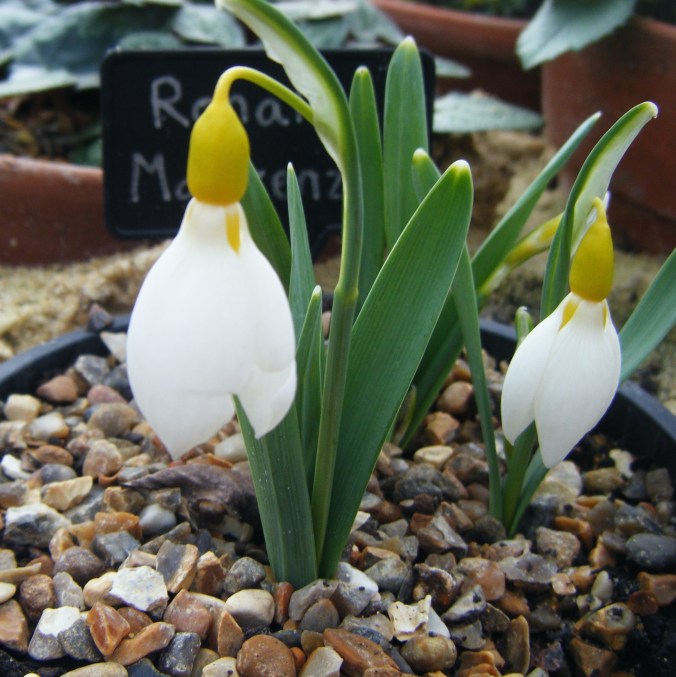
I am introduced to a splendid golden form of ‘Ronald Mackenzie’:

DSCF7577.jpg

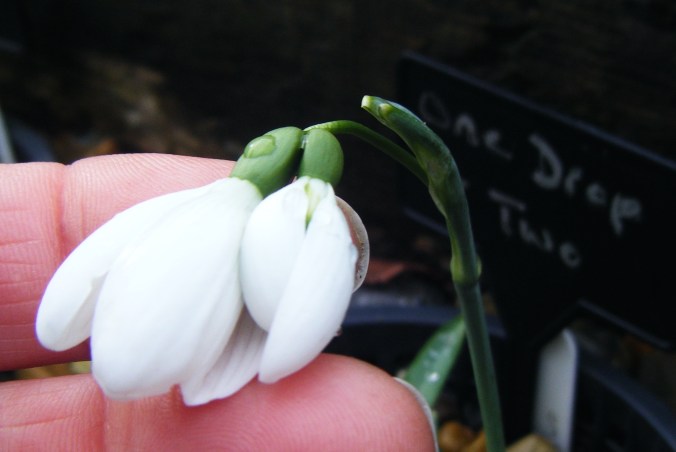
and the rather special two headed chap called ‘One drop or Two’:

DSCF7582.jpg

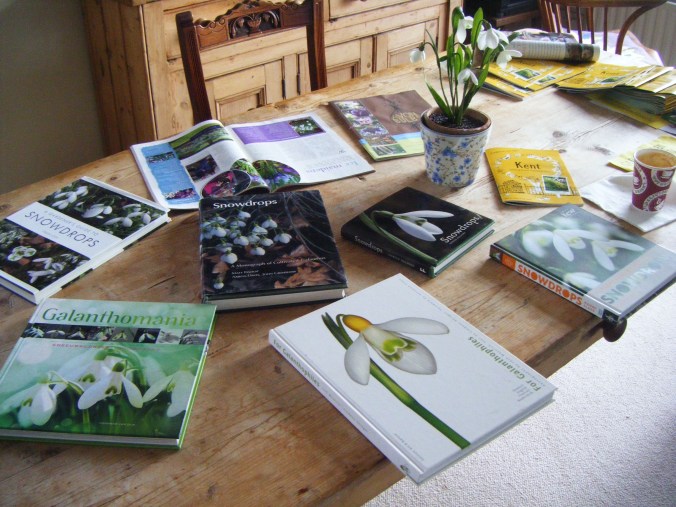
Naturally all this knowledge has made me hungry so I slip in doors where food is served from the kitchen. Just as a reminder that we are in the home of a galanthophile (such a hideous word) the table is festooned with books on the subject:

DSCF7597.jpg

Enjoying my home-made soup and checking over the books, I am reminded of a sentence that often I recite in my talk on the NGS:

 ‘While Gardens opening in support of the scheme have changed in size and style, so too has what visitors are looking for. Education about plants, or ideas for design, often enriched by a conversation with the garden owner and a purchase of a plant cultivated in the garden.’

 And this is exactly what it is. It has been quite an education.

Time to be on my way again. Relieved not to have taken up the offer from my husband of a little more cash for my journey, I am restricted to buying just a couple of snowdrops.These are special and they don’t come cheap. For him it is has to be ‘Fly Fishing’:

DSCF7571.jpg

And for me  ‘Roger’s Rough’, a locally bred snowdrop, a memento of a Kentish garden.

DSCF7549 (1).jpg

The sky has brightened and opened up the views over the Kent Weald which are stunning, even on a February day and my knowledge of snowdrops has grown immensely.


——- 5 ——-


The Well Nourished Garden (4)

There was nothing to commend the weather today. We were promised rain and it came. Cloudy and with poor light the roads in Bedfordshire were dirty grey. In the centre of Ampthill we found the NGS signs pinned to the lamp posts brightly pointing the way to the King’s Arms Garden and thank heavens, because the King’s Arms has long gone.

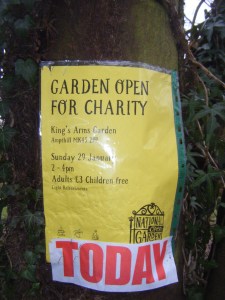
Through an alley way and down what we would call in Norfolk a loke, we were able to admire the new style posters which have been created for this NGS 90th year; the yellow has become buttery, the writing in a style which looks hand written. Oh, and a garden gate. Slightly Quirky?

dscf7491

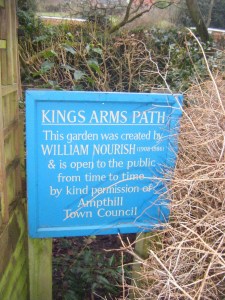
We found the entrance to this small garden originally created on poor ground in the 60s by a retired horticulturalist, a Mr. Nourish, it is owned by the Town Council.

dscf7494

Hey, and the gate is just like the one on the poster! The entrance is neat, and there is  an air of orderliness with a lovely smell of Winter Box.  

DSCF7493.jpg

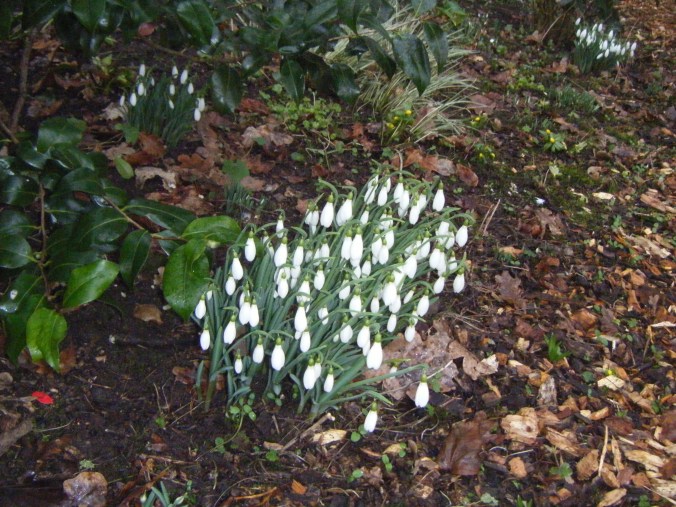
We are greeted by one of the helpful volunteer gardeners and it is solely volunteers  who maintain the garden. A useful sheet  identifies the plants and we are proudly told the history. On this wet day we are grateful to the council for providing their annual layer of woody bark along the paths. The paths meander through shrubs and trees, some deciduous, some evergreen and many labelled. There are flowering mahonias, viburnums and hellebores. Aconites are struggling through and our favourites, the  snowdrops grow  cheerfully through the rich brown earth. A volunteer comments disappointingly  on their late showing but they are far ahead of mine at home.

DSCF7498.jpg

We round the corner and look enviously at the organised leaf bins which look like something you might find on a large estate somewhere rather than in a small enclosed garden tucked away next to a bowls club:

DSCF7496.jpg

It is no wonder there is so much leaf fall as there are over 70 trees grown here. Who said trees are boring in winter? The naked branches are in themselves an art form:

DSCF7503.jpg

The tulip tree still bears its tiny tulips on the twiggy tips:

DSCF7509.jpg

While the birch quietly peels its own bark:

DSCF7495.jpg

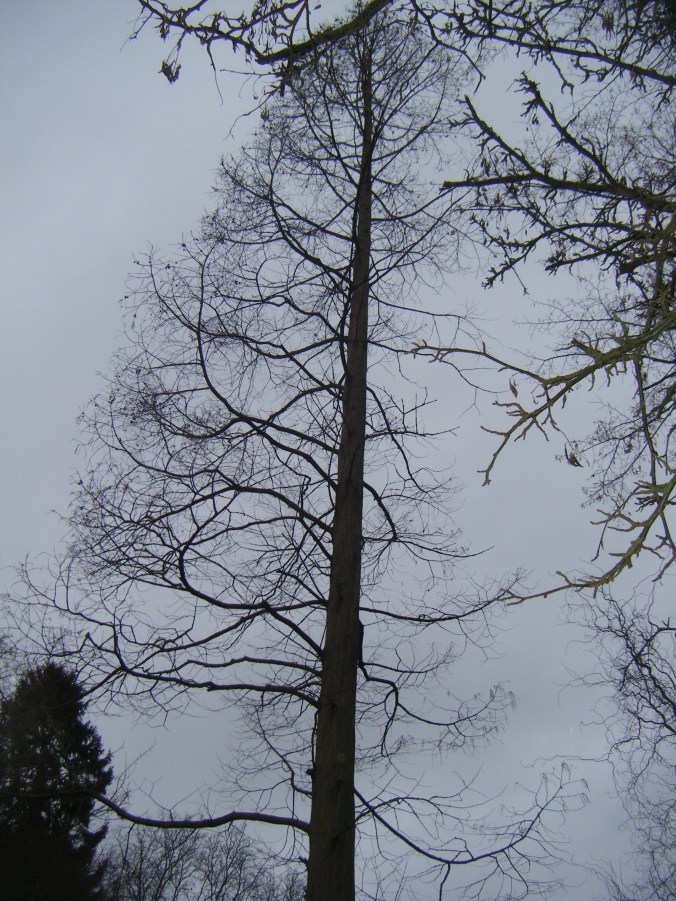
And the straight metasequoia reaches elegantly up to the sky:

DSCF7512.jpg

Natural springs are responsible for the little streams which gently flow through the garden accentuating the area of the plot and culminating in a sizeable pond.

DSCF7516 (1).jpg

I cannot resist buying a plant or two, sweet Box and snowdrop, a reminder of a remarkable garden nourished by hard work, community spirit and good cheer.  Mr Nourish would be well proud.

——-4——-

Trentham’s Capabilities (3)

Yesterday I was lucky to combine my visit to Staffordshire with a private garden tour at Trentham. An event organised to raise funds for the NGS; what better way to bring such a large public garden into the Scheme?

Every garden tells a story and head gardener Carol was brilliant in giving us Garden History, Horticulture and masses of Enthusiasm. Not knowing anything about Trentham, I was grateful for the brief history of the site, the rise of the family and the knowledge of their departure following the pollution of the River Trent.

We began by the lake, dazzling in the sun and being enjoyed by rowers and wildfowl. Charles Bridgeman’s plan shows it straight and formal; it was then enlarged in area by Capability Brown who insisted the lake be dug to a depth of only 4′  – enough for a man to stand in. An accident had occurred on one of his earlier sites  where the lake was much deeper and he did not want a repetition at Trentham. Across the water on a headland,  we could imagine the lone piper in the early morning standing under the Cedar of Lebanon, playing his bagpipes for the Duke of Sutherland.

We walked through the ‘rivers of grasses and perennials’ designed by Piet Oudolf, an area best in late summer and autumn but still providing texture and height. dscf7437

The right plant in the right place makes economic sense in a garden of this size. Carol points out tiny cyclamen coum peeping out from under the yew tree busy defying the drought conditions. She no longer plants snowdrops as they are eaten constantly by battalions of mice. I do however catch sight of one large galanthus:

DSCF7460.jpg

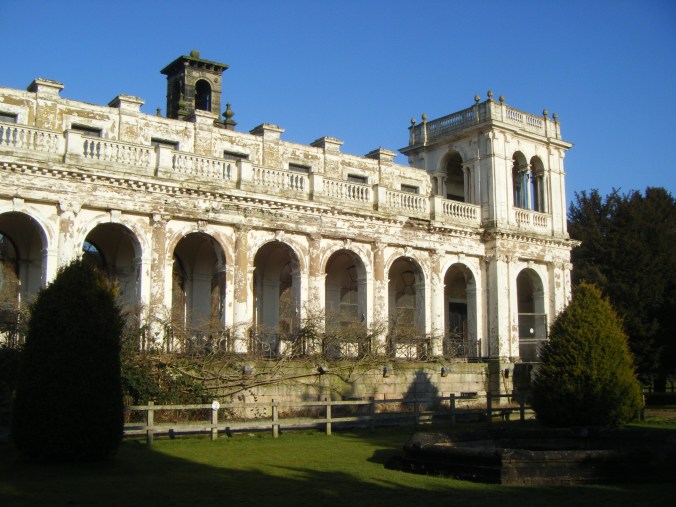
We pass by the sad remains of the decaying orangery with its overgrown wisteria. Fenced off and out of bounds, it is a reminder of an age of grandness now lost for ever. Carol hints of a restoration plan and we can but hope.

DSCF7439.jpg

We arrive at the platform built on the site of the long gone house.

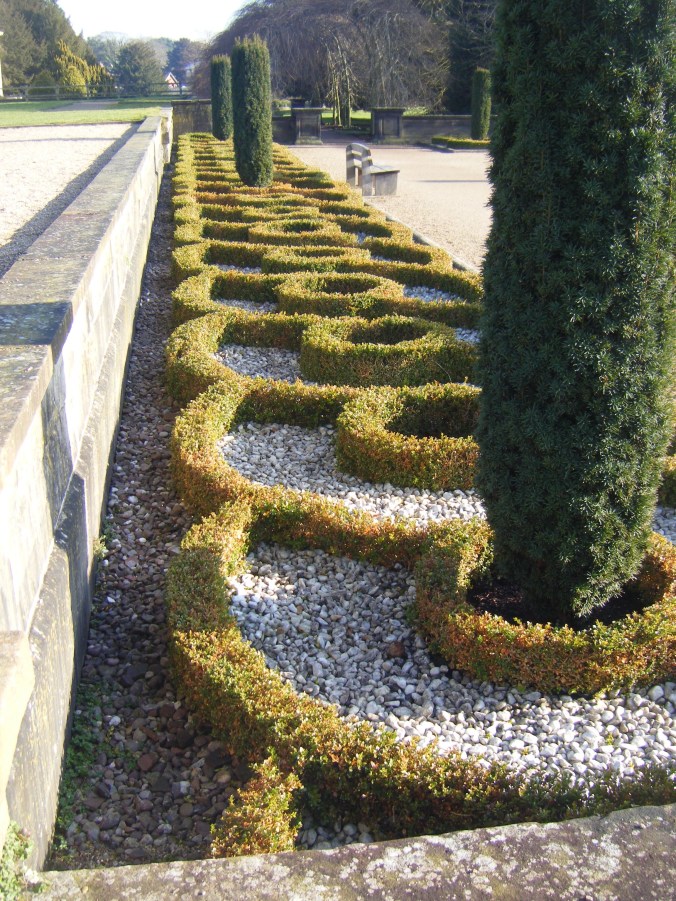
DSCF7466.jpgHere laid out on a vast wide terrace below and in front of the lake, is Charles Barry’s Italianate Garden. The blighted box is slowly being replanted with euonymous and the borders which were once filled by the Victorians with bright annuals, now have been given a contemporary lift with perennials, the hand of Tom Stuart-Smith.


DSCF7450.jpg

Brown spent twenty years at Trentham and it is quite proper that a bronze statue should celebrate his tercentenary, and standing in what was previously his landscape and now Barry’s formal garden, what would Mr. Brown think? Weighing in at 6 tons it would be quite a job to re-position him.

DSCF7452.jpg

Moving away into the wider landscape, I can’t help but notice the constant traffic noise from the M6 in the far distance. However we are kept amused by the huge metallic dandelion heads rising above us and Carol keeps us enthralled with tales of the Georgian boat house and also of the icehouse now in ruins.

DSCF7468.jpg

Much has been cleared of the wretched rhododendron ponticum and in place are great plans, drawn up by Nigel Dunnet and already begun, of a variety of understory planting in a sizeable area of woodland.

Trentham is indeed a landscape of great ‘capabilities’ and it has a history of taking only the best advice. There is an energy to it which engages diversity, regeneration and sustainability, all aimed at the garden tourist.

After 2 1/2 hours, we are a little chilled, to say the least,  but so much the wiser.  Dusk is falling and the swans are snucking up for the night. Rarely have I had so much pleasure out of £5.50.

DSCF7480.jpg

——-3——-

NGS – not quite. (2)


ngs-logo

It is always very pleasing when someone phones and invites you to visit their garden with a view to opening for the NGS and hopefully being included in the wonderful yellow book.

download.jpg

So the other day I grabbed fellow volunteer Graham (a serious horticulturist and garden owner) and we took up the invitation to visit my second garden of the year.

You may think January is not the best time to judge a garden; however this is when you can see the backbone and get a real sense of the structure. There is no distraction of how good someone else’s rose might be whilst yours is struggling, or whether you are overwhelmed by the dislike of a colour or a plant which might be filling the borders. This is the time when each area is stripped down to the minimum and the harmony and overall design is clearly revealed.

The garden owners were very keen to open. It was a neat garden. They planned to have chickens and a few animals; however it was small which should not necessarily prevent it being in the scheme but it was also rather short on interest.

dscf6007-1

We suggested visiting the next door neighbour’s garden and they were keen but even combined, the gardens did not really seem up to the mark to be open to the public. Then there was the huge problem of nowhere to park plus the difficult access onto a very busy main road. Teas it was suggested, could be served in the small summerhouse; however what if there is a cloudburst, and you have to remember that this for some visitors is the most important part of the garden.

It is a tricky moment when you have to say thank you, but no thank you. Many might perceive this as a rejection. I would like to call it a postponement. We departed amicably, a garden not quite ready for opening and reiterating the advice to keep on gardening and visiting other gardens.

download-3.jpg

——-2——-

Robinson College: Old with New and Mistletoe too. (1)

I was very surprised to find a garden open for the National Garden Scheme on Monday 2nd January.  So with Christmas and New Year safely over for another year we set off on a bright but very cold day to  visit Robinson College, Cambridge. The first of my 90 garden challenge.

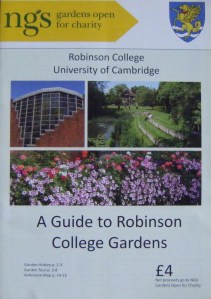
None of the familiar yellow signs were displayed because this is a garden open most of the year. Directed by the NGS Gardens to Visit book, we entered through the Porter’s Lodge.  It is the proceeds from the garden guide that you buy from the Porter which are donated to the NGS.  The guide is a complete joy and provides the history, a comprehensive list of the plants and maps:

DSCF7339

Entering the very modern courtyard we were disappointed to find the chapel with its John Piper windows was not open.

DSCF7426.jpg

The entrance to the garden was not terribly obvious and it took us a little while to figure out which steps to take.

Up and over a stairway we found ourselves in the college garden. It is icy cold and the bridge is a touch slippery. Leaving the main building behind us we crossed over the Bin Brook into what is an amalgamation of gardens from Edwardian to Modern.

DSCF7414.jpg

It is not specifically a winter garden as such but there was plenty of interest, either in the form of colourful bark,

DSCF7388 (1).jpg

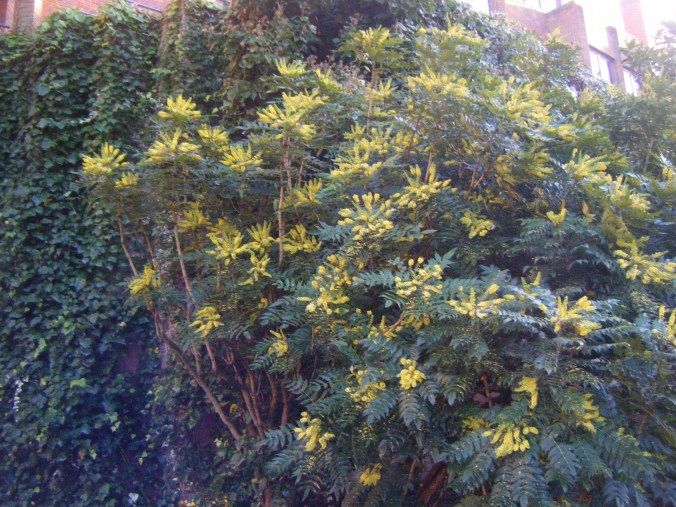
or winter flowering shrubs such as  Mahonia with yellow flowers exploding like fireworks.

DSCF7421.jpg

The Sarcococca or winter box generously lining the path was smelling a dream.

DSCF7387.jpg

Throughout the gardens there are plenty of places for scholars to sit, to think and to dream. Was the sail-like stainless steel sculpture meant to imitate the shape of the Wellingtonia (sequoiadendron giganteum ‘Pendula’) growing across the flat lawn. Or is it the other way round?

DSCF7390.jpg

“Sailing into the future’ by Philip de Koning

Also called the Weeping Redwood, this mighty tree is almost human in form and looks as if at any moment it might pick up its branches and lumber right across the lawn.

DSCF7394 (1).jpg

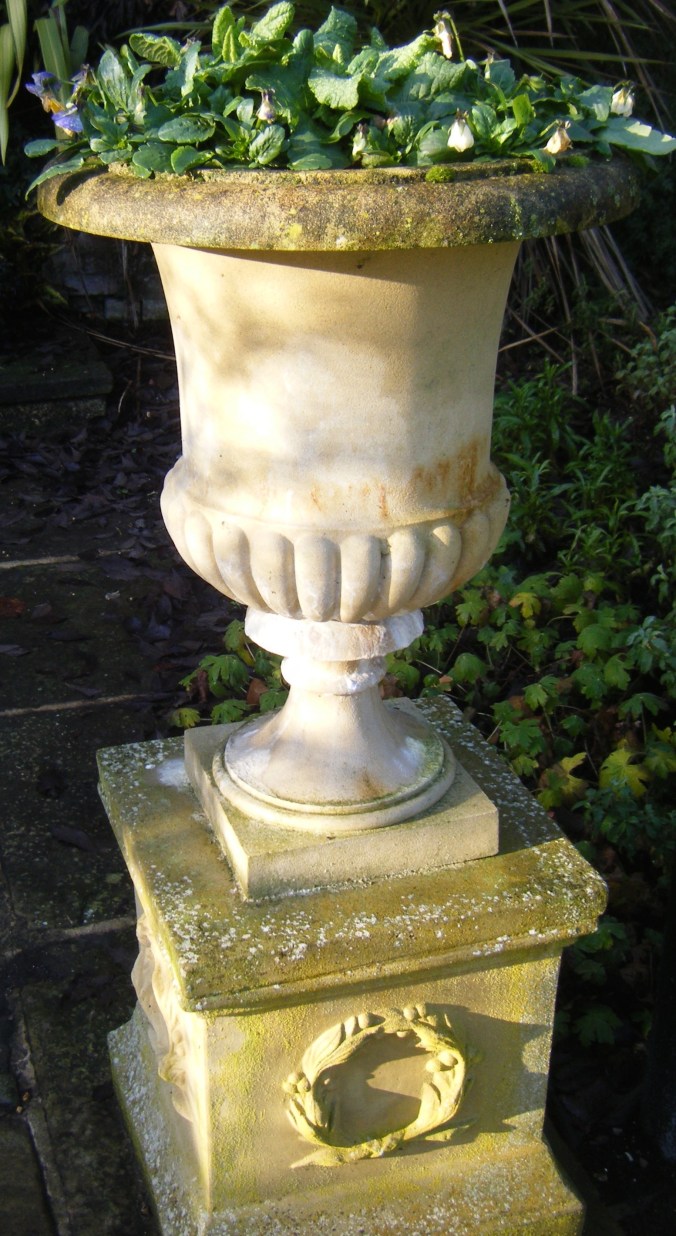
A beautiful vase stands in front of an older college building,

DSCF7391.jpg

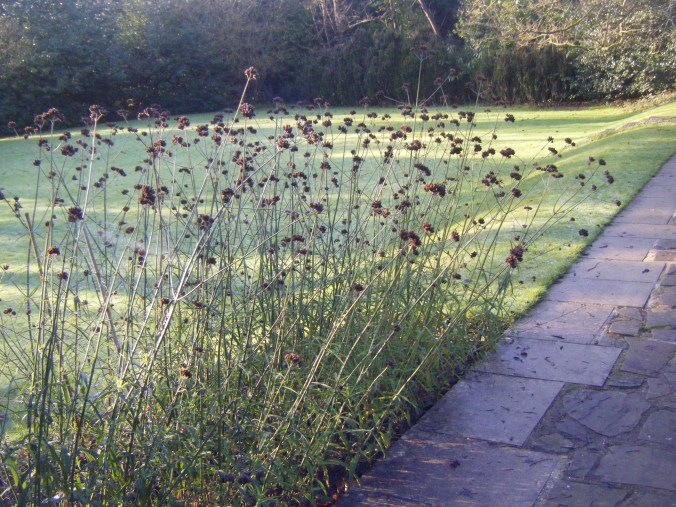
and to the side is a cluster of seed heads of Verbena bonariensis which add a little interest and highlight the smoothness of the green beyond.

DSCF7392.jpg

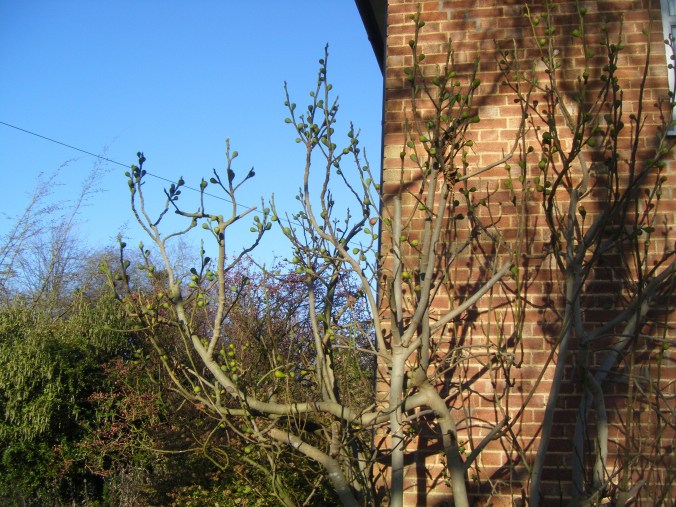
Even the unripened figs are a delight in the morning sun.

DSCF7396.jpg

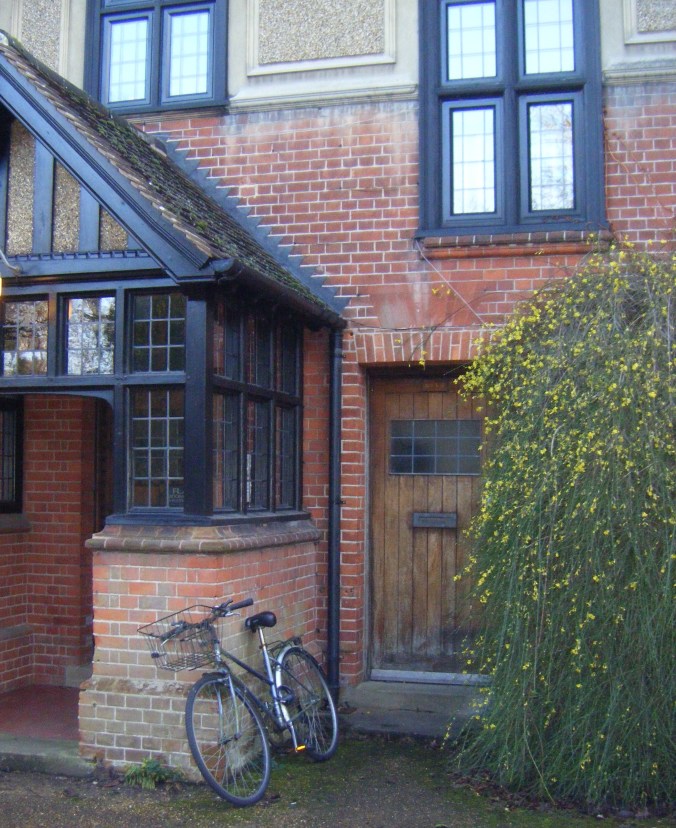
Not all the buildings are modern and at the entrance to this house is the inevitable bike with a Jasmine nudiflorum growing magnificently.

DSCF7395.jpg

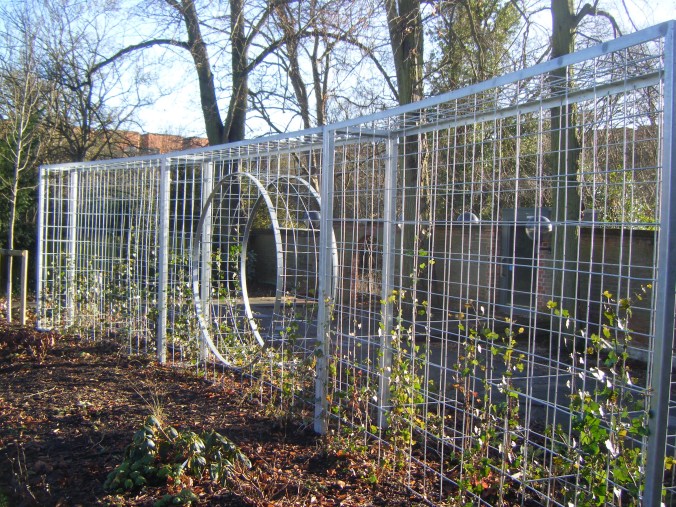
A metal fence with a central moongate not only provides a frame for the newly planted ivy Hedera hibernica to climb but also divides an eating area:

DSCF7399.jpg

The Bar table seems refreshingly modern but somehow keeps a natural feel. The giant golden oat Stipa gigantea brighten the border behind.

DSCF7402.jpg

Lutyenesque steps are an striking feature and also cleverly link a serious drop in ground levels.

DSCF7404 (1).jpg

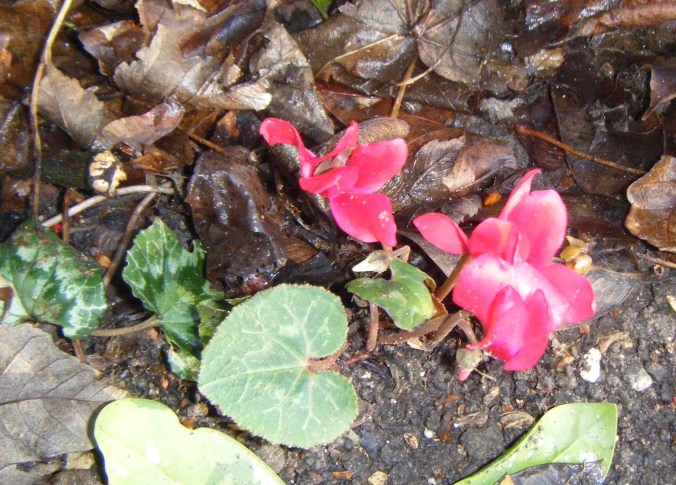
Round the corner a splash of colour catches my eye, cyclamen so small yet so bright:

DSCF7405.jpg

Old, old espaliered apple trees stretch their boughs along the straight path.

DSCF7408.jpg

The outdoor theatre was created in memory of Maria Bjornson a celebrated stage designer. The empty stage now waits for its next summer performance:

DSCF7409.jpg

Mistletoe Viscum album inhabits the surrounding trees growing on the outside of the college grounds; always so high up in the branches and out of reach,

DSCF7411.jpg

within the garden it grows on the apple trees at eye level. You just don’t appreciate how very pretty it looks; the opaque berries are enchanting.

DSCF7412.jpg

We were the only visitors in the garden that morning except for one Japanese student,  the odd squirrel, a noisy cock pheasant and much to his surprise, and ours, a muntjac deer. Sited on the other side of the pond and viewed from many angles are two ghostly objects apparently in silent communication:

DSCF7406.jpg

“Conversing Figures” by Christophe Gordon-Brown

We return to the main college building. It is the juxtaposition of the old and the new which is so striking; an aged tree lies propped up in front of the modern red brick building.

DSCF7423.jpg

The sound of rushing water can be heard as it travels under the many levels of brick  passageways,

DSCF7418.jpg

and it is the many layers of gardens that have been so absorbing. We have enjoyed the sculptures and the spaces throughout the garden; the enclosed and the open, the wild and the tamed, the formal and the relaxed with a huge variety of plants and trees. It is  a perfect garden for the scholar not just to sit, study and contemplate but also to eat, watch and even to act. We look forward to returning in the summer.

——-1——-