Paget House, an inspired modern design, near Saxmundham, Suffolk

Last Saturday I combined calling in on my cousin with a visit to an intriguing garden open for the National Garden Scheme. Entrance was by slipping through the back gate into an informal area, and for a moment I wondered if I had come the right way.

The plan eased my mind and was a promise of greater things ahead, and as with so many gardens open for the National Garden Scheme it did not disappoint. The modern house built by the owners some 9 years ago is in the shape of a cross and is very much at the centre of the garden.
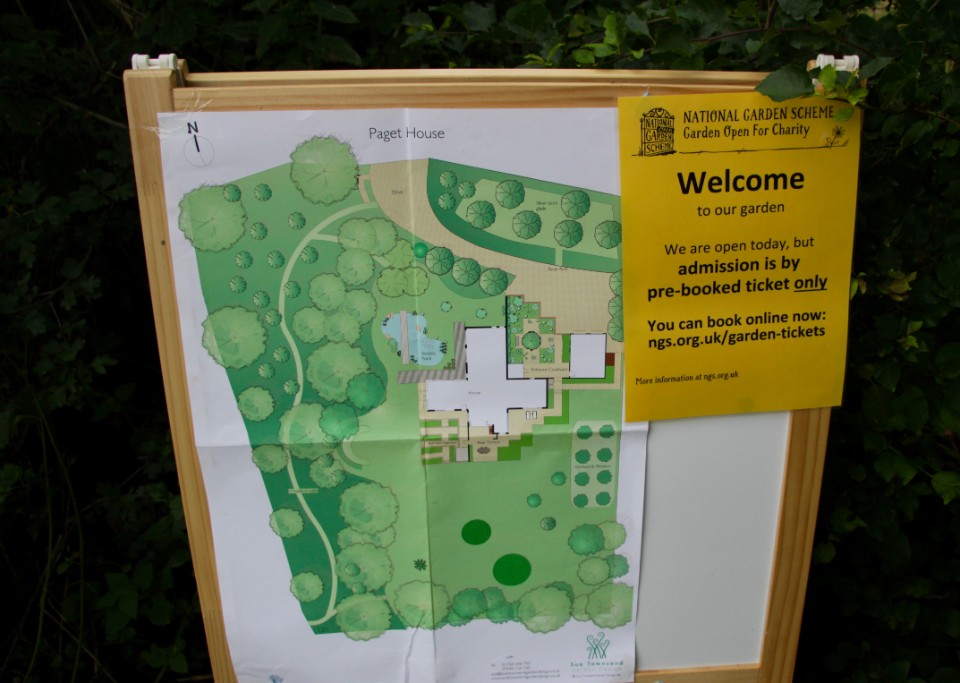
This cross shape in effect dictates the layout of the garden marking out four separate but connecting gardens. Walking down across the roughly mown lawn, I come to west side of the house where raised beds are filled with vegetables and flowers.

It is a marvellous idea to place the productive side of the garden so close to the house rather than banishing it to the far reaches of the garden. It must be a real joy and so convenient to be able to just step outside and pick your vegetables,

and to enjoy the scent of those heavenly sweet peas.

I step through the wooden covered walkway which extends out like an arm from the house and cleverly acts as a division.

Here there is a quite different feel. An informal pond is the point of focus, making good use of this northern aspect. A striking sculpture by Paul Richards sits between pond and house. It must be a delight to watch the visiting wildlife from the comfort of an Adirondack chair.

Further away from the pond is a semi-circular border is bursting with colour;

familiar favourites in amongst the bright crocosmia such as this delightful salvia,

and rich hemoracallis.

Away from the house paths lead between mature trees,
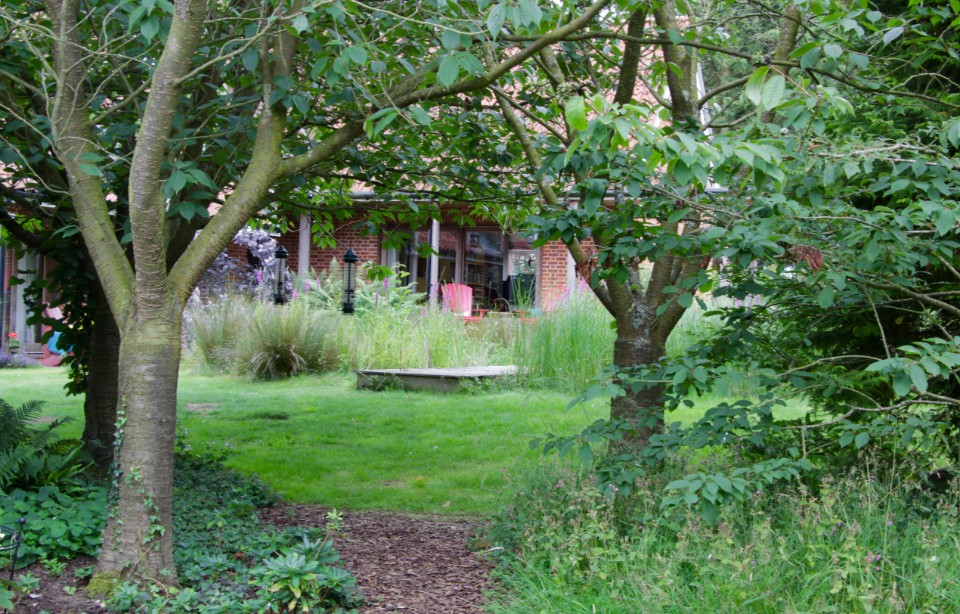
and meander through the long grass,

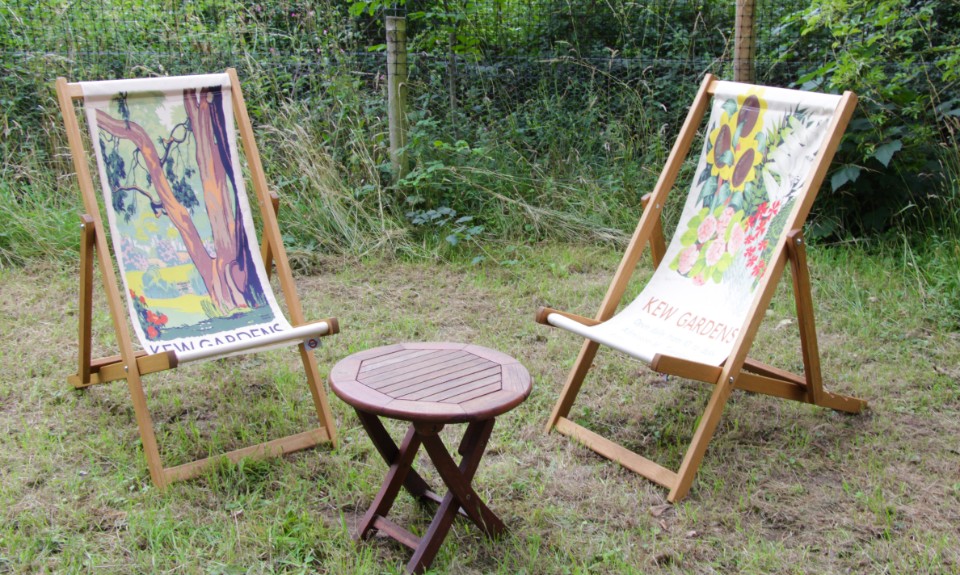
where there are delightful places to sit and chill. It is as though these two decorative deck chairs are having their own dialogue.
The front door of the house is on the east side where the drive sweeps in, and alongside the yew hedge is softened by sections of ornamental grass.

On the other side of the drive is an arbor which leads you into a secret garden,

where a Lutyens bench sits majestically behind a table. The hand sanitiser a small sign of the times.

The planting by the front door is soft and free flowing.

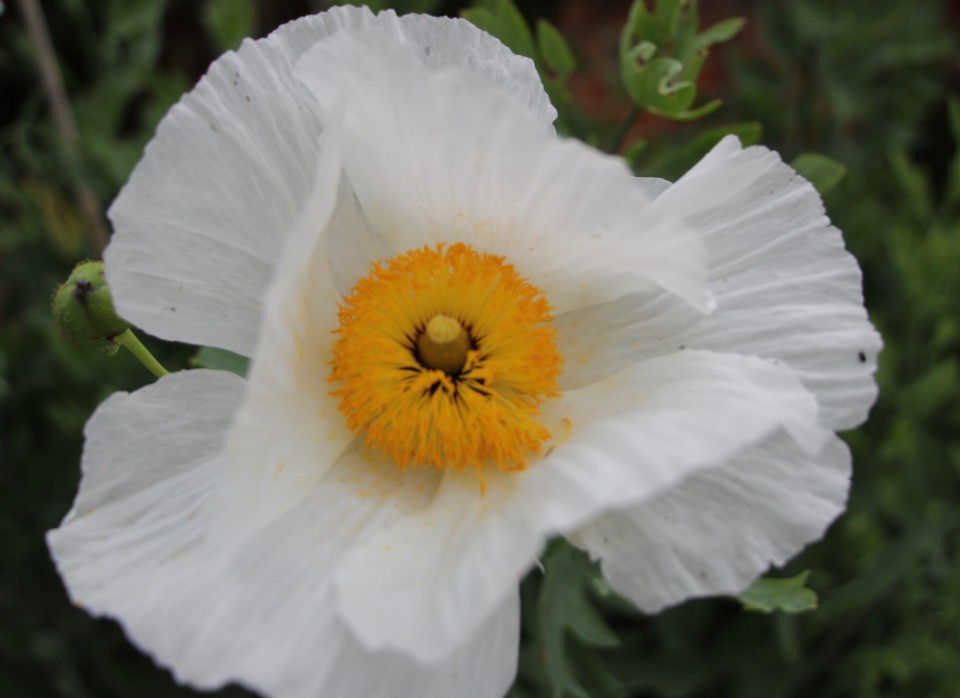
Romneya coulteri, the Californian tree poppy steals the show with petals like finely crumpled tissue paper,
and the pot plants tumble through the front door.
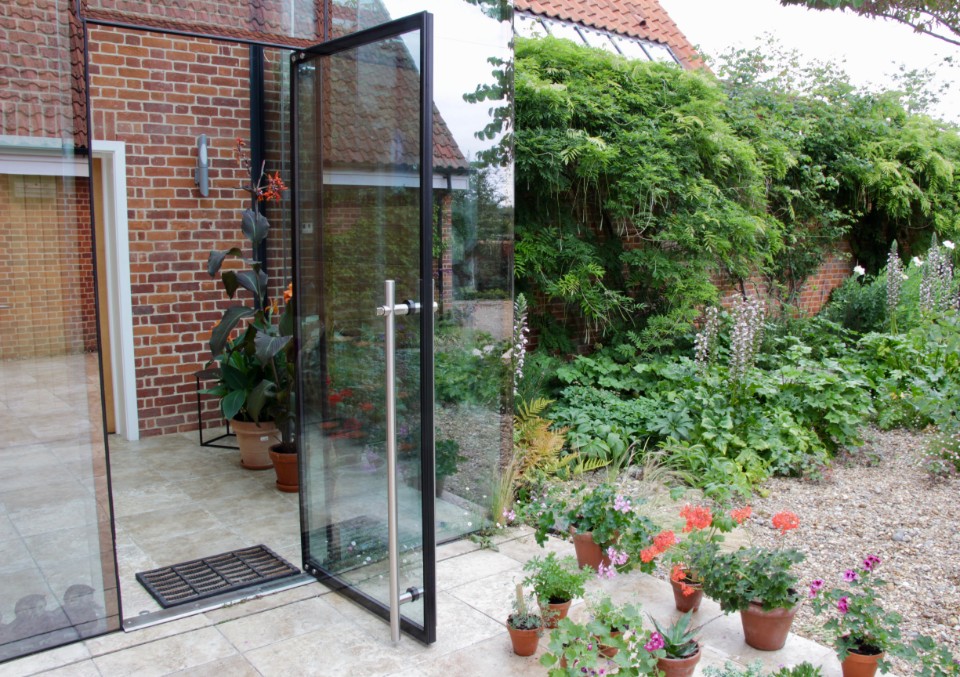
You don’t really appreciate how much this house is on a slope, and now, on the other side of the house and through the door and up the steps, the mood changes again.
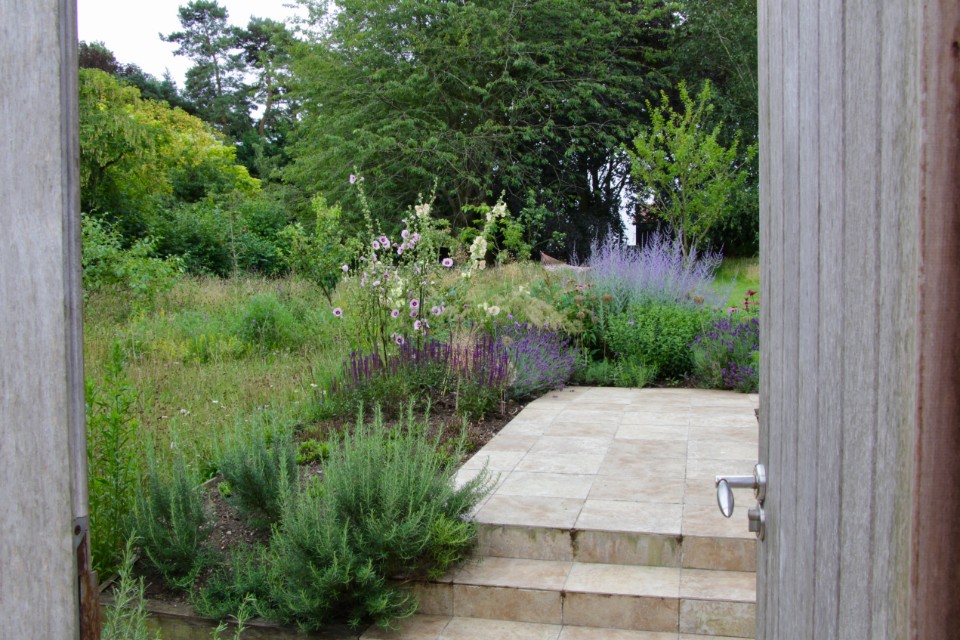
A mixed native hedge runs along the boundary on the left hand side and fruit trees grow in this wild meadow,

contrasting with the informal but careful colourful planting next to the house.

Paving and plants wrap comfortably around the house. Familiar favourites which include lavender, gaura, perovskia and verbena.

Agastache ‘Black Adder’, Mexican giant hyssop is particularly at home here.
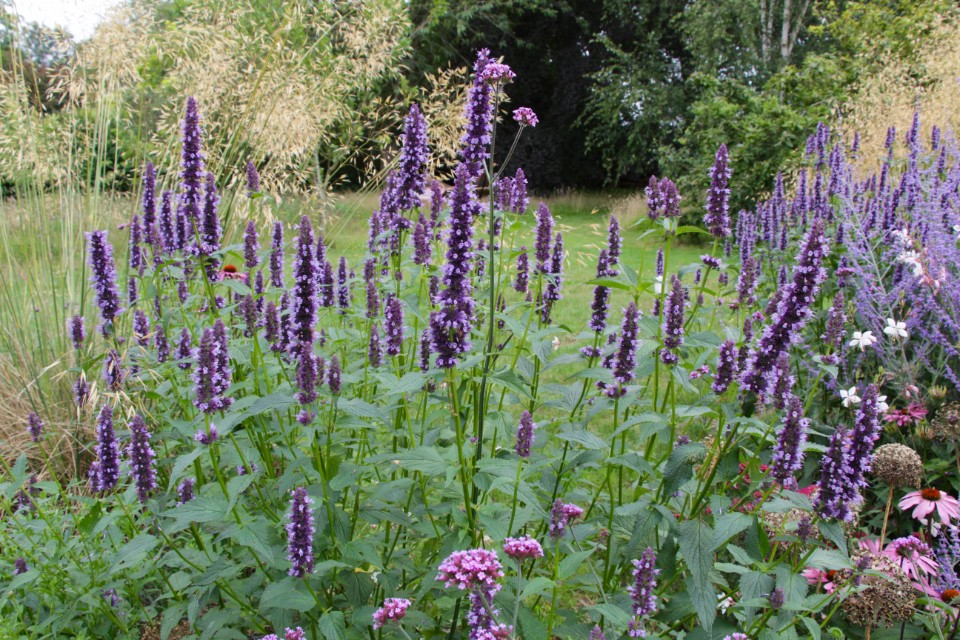
Each side of the house moves effortlessly out into the garden and each side is subtly divided. The wall is smothered in delightfully scented trachelospermum jasminoides and on through the open door,

I am back where I started in the vegetable area.

It has been a delight to see this garden so thoughtfully designed and such an integral part of the house. Wildlife-friendly, it is a pure pleasure and a moment of freedom for all of us in these strange restricted times.

Each Monday a variety of gardens to visit are uploaded onto the website www. ngs.org.uk So why don’t you find one near you, pre-book a ticket, and Help Support Our Nurses.

——-2020——
Chelsea Physic Garden

I was in London last Friday and being such a glorious day I could not resist a visit. Situated in such an attractive part of London the walk through the streets of Chelsea full of magnolia blossom was a delight in itself.

Approaching this haven of four acres surrounded by high walls, I slipped in through the unassuming entrance in Swan Street.

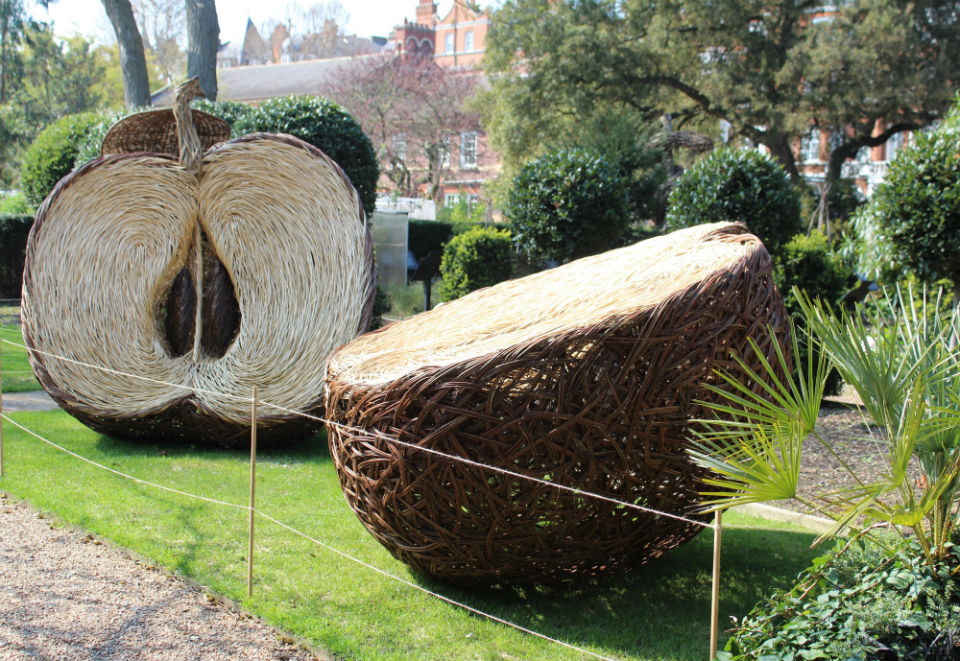
Joining the small friendly queue I was able to admire these beautiful woven masterpieces created by weaver Tom Hare http://www.tomhare.net/.

The real mission of my visit was to try and meet up with an old friend who I trained with and who helped me through my RHS Diploma. She has recently became Deputy Head of the Plant Collections and I was thrilled to find her in her natural pose, bent over and nearly hidden in the flower bed.

It is a remarkable garden originally created in 1673 by the Apothecaries in which to grow medicinal plants; it is a museum – a living museum that can be enjoyed at all levels. On this warm Spring day the place was very much alive; I followed some visitors walking these neat paths absorbed in the informative audio guide, and

others who were simply enjoying the sunshine with their little ones,

whilst others gently dozed having enjoyed a delicious lunch at the cafe.

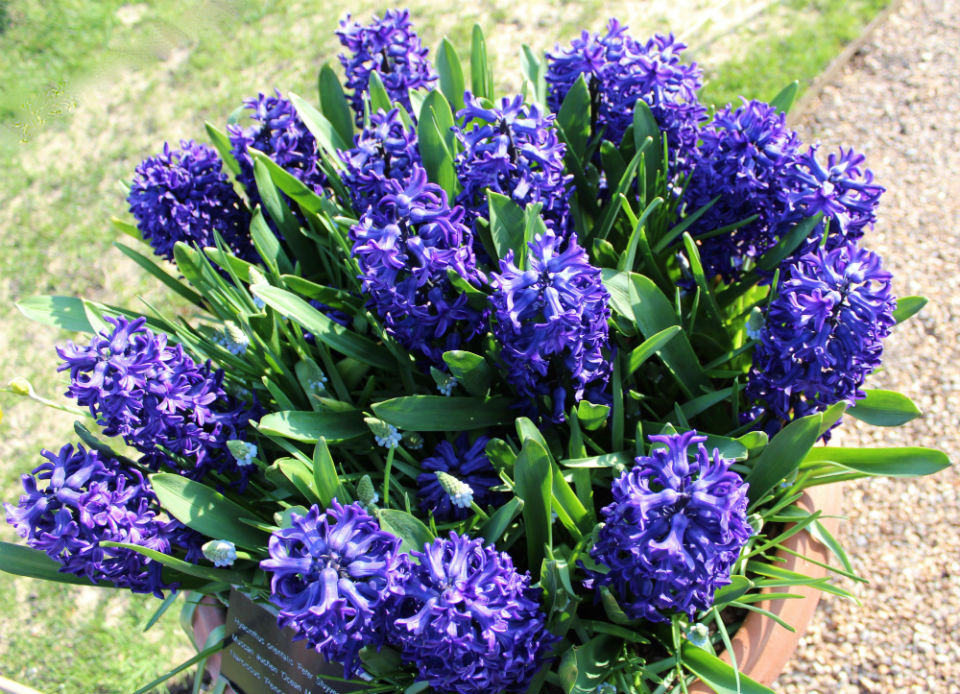
This pond was being much admired. Raised and surrounded by all sorts of little gems, it was the Tulipa heweri from N. Afghanistan that were winning the day.

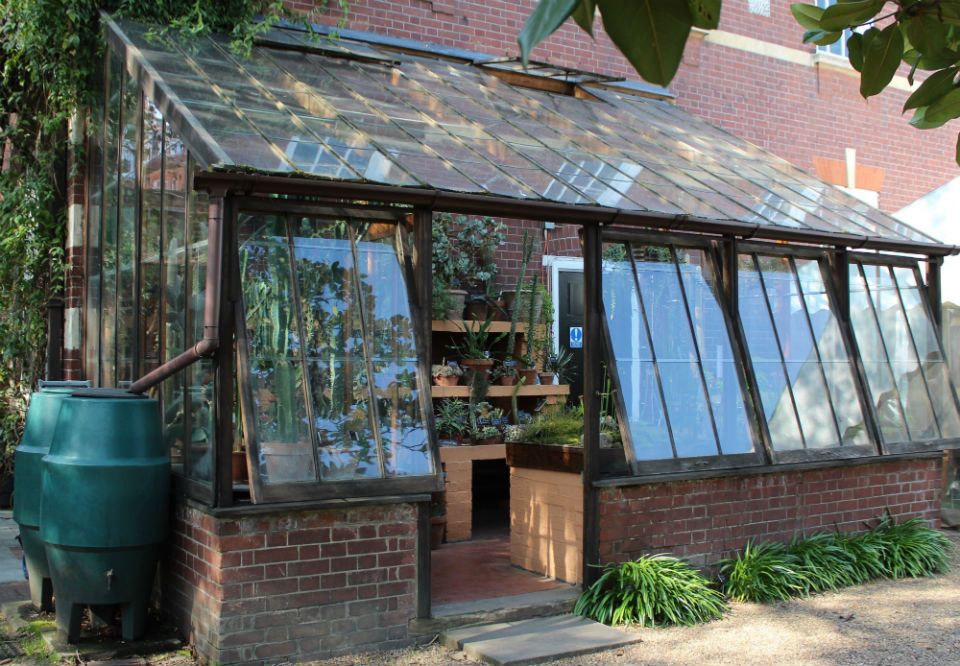
There is so much here to learn and admire and, unusually for me, I decided to focus on the conservatory.

Cacti are not usually my thing but here they are so artistically displayed.

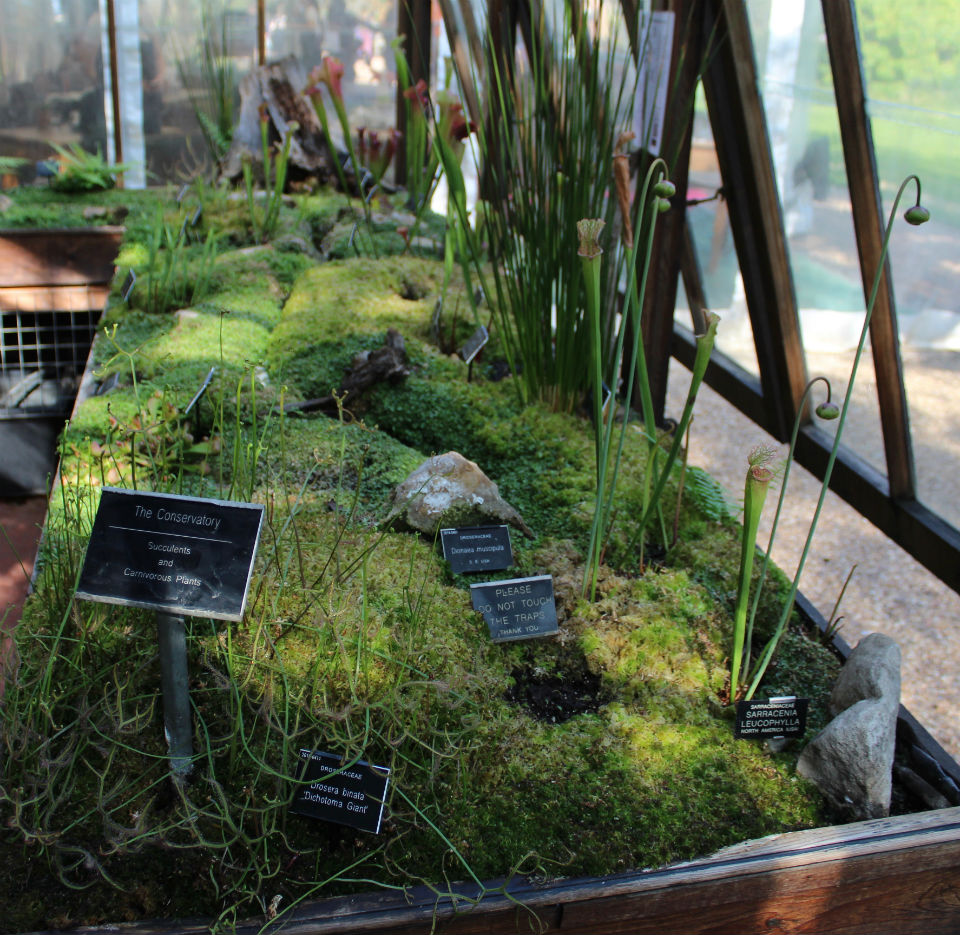
Here too, like a miniature garden with a stream running through, is the habitat of the Pitcher Plants Sarracenia,

a place where these extraordinary plants can thrive and dine out on their meal of flies.

Gardens are not just about plants. Here displayed in the borders, are the plants associated with various great men who have been connected with this garden. This bed commemorates Philip Miller who was gardener here for 48 years from 1722 to 1770, surely a lengthy period for any gardener.

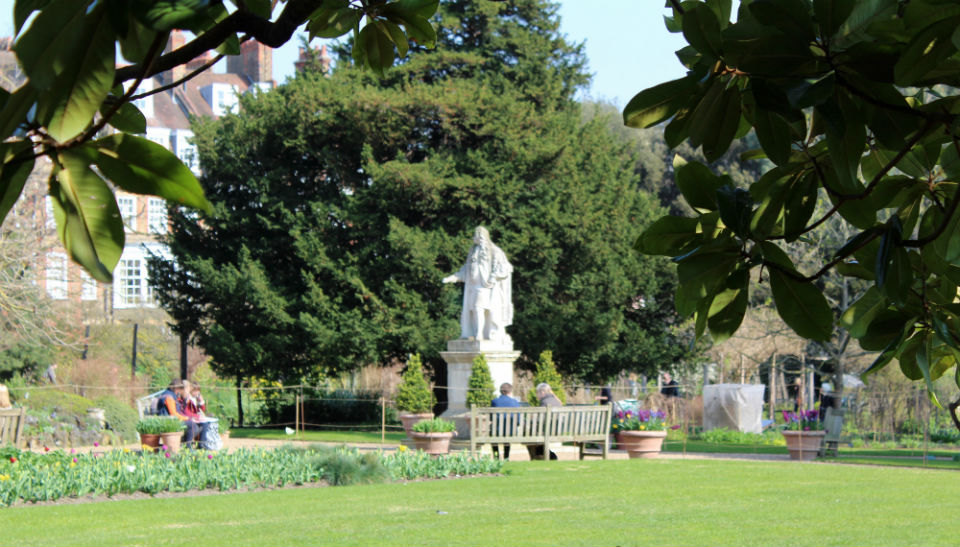
There are other great names celebrated within these walls, most notably Sir Hans Sloane the primary benefactor, whose statue stands in the centre of the garden. In 1712 Sloane bought the Manor of Chelsea from Charles Cheyne leasing the garden to the Worshipful Society of Apothecaries of London for just £5 a year in perpetuity. The Garden still pays this sum to Sloane’s descendants to this day.

Other great horticultural names include William Forsyth and Sir Joseph Banks and this walk is named after botanist and apothecary William Hudson FRS, who published Flora Anglica in 1762.

As I stroll along absorbing the fascinating history of this place, the buds of the tree of the Quince Cydonia oblonga seem to shout out that Spring is here,

and down on the ground this is echoed by the cocooned head of a salvia indica first described by the taxonomist Carl Linnaeus in 1753.

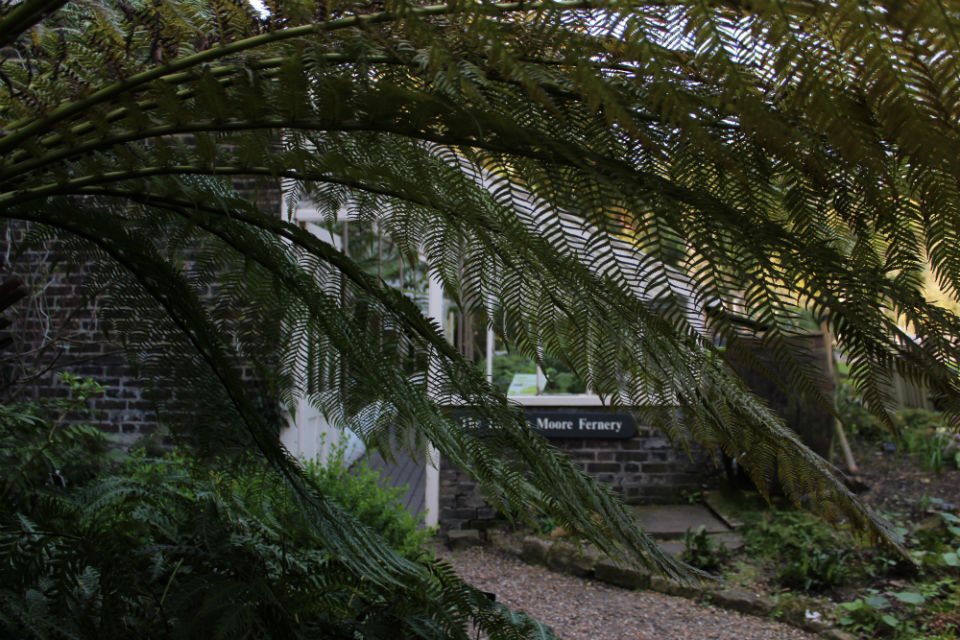
‘Plants are the most important living things on earth’ and their evolution on this planet is explained in The Thomas Moore Fernery. Moore was the Victorian curator who made the Garden the foremost collection of medicinal plants in Britain.

‘A plant for every Nook and Cranny’ can be identified in this interesting arrangement.

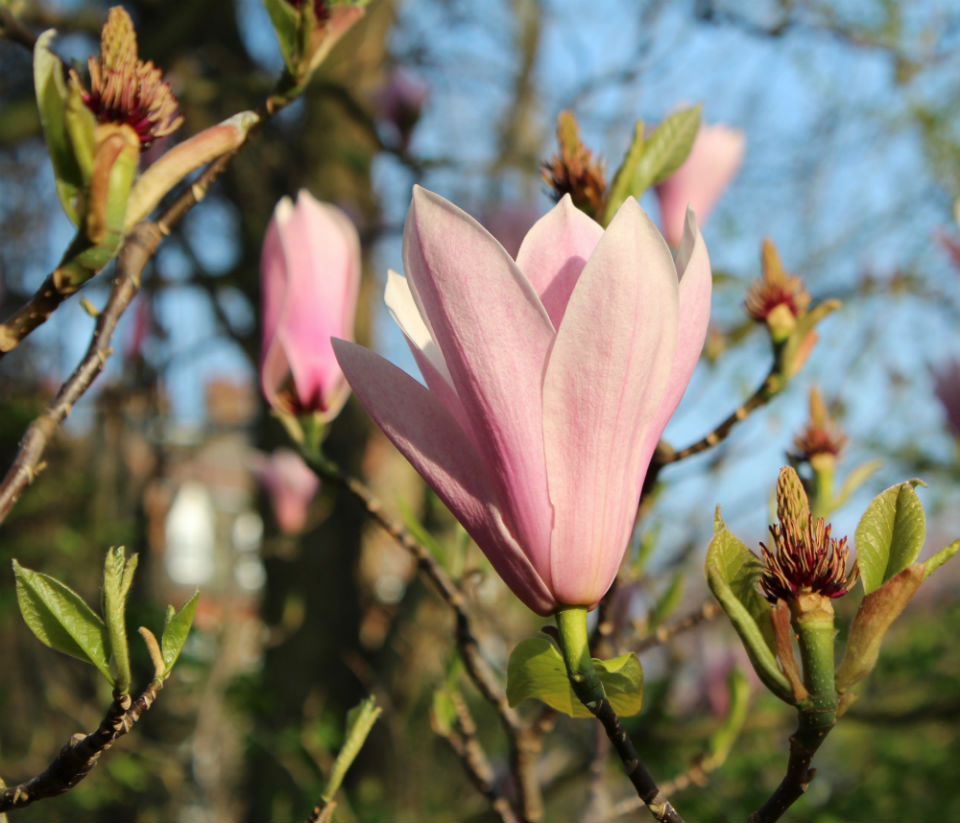
You can absorb all these interesting facts or simply just enjoy the plants so helpfully and clearly labelled; I love this magnolia laevifolia ‘Velvet & Cream’ not only for its perfect blossom but also its delicious name.

It is not so much a designed garden but an organised garden where paths lead you through different and delightful areas; the enchanting Stachyurus chinensis grows on the edge of the woodland area,

and the mighty trunks of the Gingko bilabo stretch to the sky. This tree has such significance and is considered to be the oldest tree on earth. The seeds originally relieved asthma and bronchitis and its modern use is to improve memory and circulation; I need to take note.

‘Useful plants’ are displayed in and around a theatre; it is remarkable to find out their uses both ancient and modern.

When I see Bamboo I am always reminded of its immense strength, remembering once seeing it used as tower block scaffolding in Hong Kong.

A helicopter is clattering above keeping an eye on the march that I can hear proceeding along the Chelsea Embankment. For a brief moment I am irritated that here, even in this haven there is no escaping Brexit. Looking up, the helicopter is not visible and all I can see are the blooms of Paulownia lilacina reminiscent of wallpaper.

My daughter used to groan as I invariably gravitated towards the composting area of a garden; she now knows its importance and here two little heads of Drimys Winteri at the gate seem to welcome me in.

Tucked away in the South East corner, I am so pleased it is open for all to see.

Clean and efficient, the engine room of the garden, the bins are brimming with goodness.

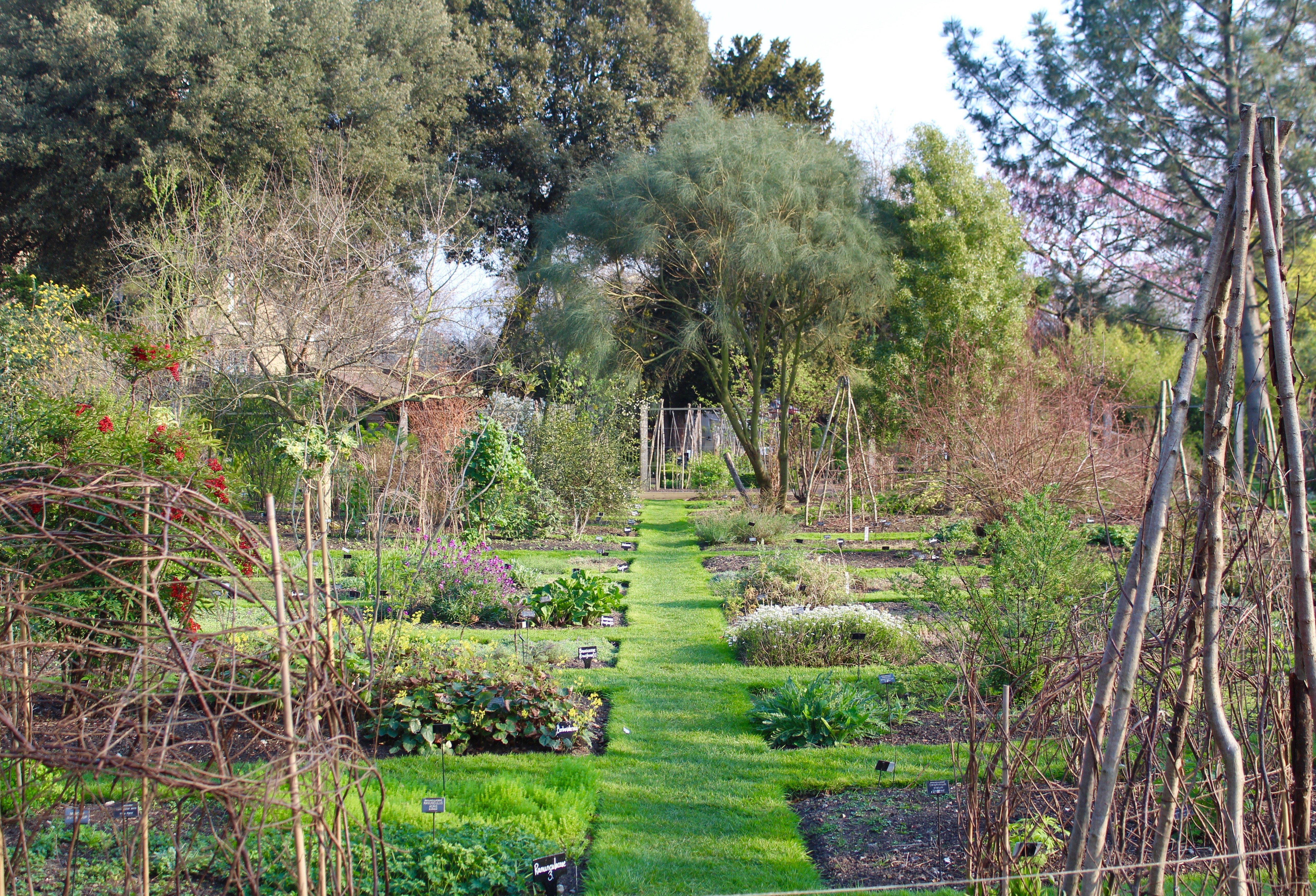
Looking across one area of the garden there is a similarity to allotments but without the sheds and general debris that goes with them. These are the beds laid out in order of plant families,

and there is much activity today; the gardeners are so busy. Who would think you need to water in March?

I am surprised to find a rose in flower, with a relaxed informal habit and with single cherry-red flowers, Rosa x odorata ‘Bengal Crimson’, it is said to flower here nearly every day of the year. I have just planted one at home and will have to see.

Glasshouse areas can often be so dull and unappealing but here the verdant plants and arranged pots draw you in,

with each house having a glorious display.

They sum up the high horticultural standards of this magical and fascinating garden.

The bell rings to announce closing time and it seems no one is in a hurry to leave.


Open yesterday for the National Garden Scheme, the Garden is open from 11am to 6pm. Not only a botanical beauty (with over 5,000 plants, edible, medicinal and useful), and an exploration of garden history, it is glorious place to spend an afternoon.

https://www.chelseaphysicgarden.co.uk/Pages/Category/history.