Great Comp Garden, follies fun and salvias. (84)

Great Comp is near Sevenoaks in Kent. The seven acre garden was developed by Eric and Joyce Cameron who purchased the house back in 1957 and first opened for the NGS in 1968.

Now it is managed by a Trust, with the Curator William Dyson and a team of gardeners and volunteers. Dyson has been growing salvias for over 20 years and has built up a large collection; as you walk into Great Comp you are greeted with a fine selection displayed for sale.

DSCF6717 (1).jpg

The nursery area is surrounded by borders of grasses and perennials allowing the visitor to slip seamlessly into the garden.

The apex of the Lion Summerhouse roof can just be seen above a delightful blend of shape and texture.

DSCF6813.jpg

This 17th century building was at one time the estate loo but now contains a more enchanting style of seat.

DSCF6719.jpg

The Camerons added a little architecture to the garden, not in the way of functionality but as a part of the design; ruins and follies are built from the stone and sand unearthed from digging the garden.

DSCF6721.jpg

There are plenty of sculptures too and this pensive chap may just be wondering where he has left his trowel.

DSCF6725.jpg

Despite being the end of October this border flows with colour; an assortment of salvias from pinks through red and purple to blue are complimented with tall ornamental grasses arranged at the back.

DSCF6729.jpg

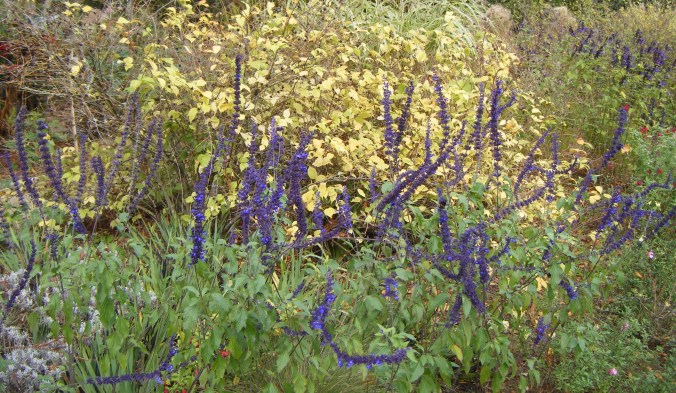
It was Pliny the Elder who was the first to write of a plant described by the Romans as Salvia, most likely the Salvia officinalis, commonly known as sage which we use in our cooking. It is the largest genus of plants in the mint family Lamiaceae and is distributed throughout the Americas, Central and Eastern Asia and the Mediterranean. Dyson concentrates on the Salvias from the New World and has cultivated over 200 hybrids.  Such an intense blue,

DSCF6814 (1).jpg

and it is not just the difference in colour but also in form and habit. These dark purple flower spikes look good with the autumn colours.
DSCF6749.jpg

The colours compliment and blend so effectively,

DSCF6782.jpg

or look good simply in a singular colour bursting out of a pot.

DSCF6806.jpg

Salvia Waverly is a tender variety so will be taken under cover before the first frosts.

DSCF6748.jpg

Another folly provides a seating area complete with bench and to the right a ‘tumbled down’ tower,

DSCF6732.jpg

from where we can view the crescent lawn and an explosion of grasses.

DSCF6734.jpg

Salvia is not the only plant providing flower colour today; a low growing geranium is almost as good as in early summer,

DSCF6738.jpg

and the evergreen Liriope muscari  so good in the shade and flowers from August to November.

DSCF6739.jpg

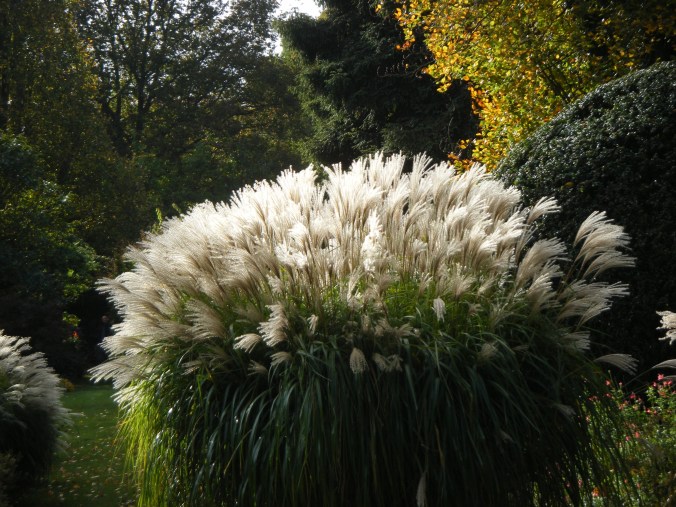
The low autumn sun highlights the whiteness of the miscanthus grass.
DSCF6796.jpg

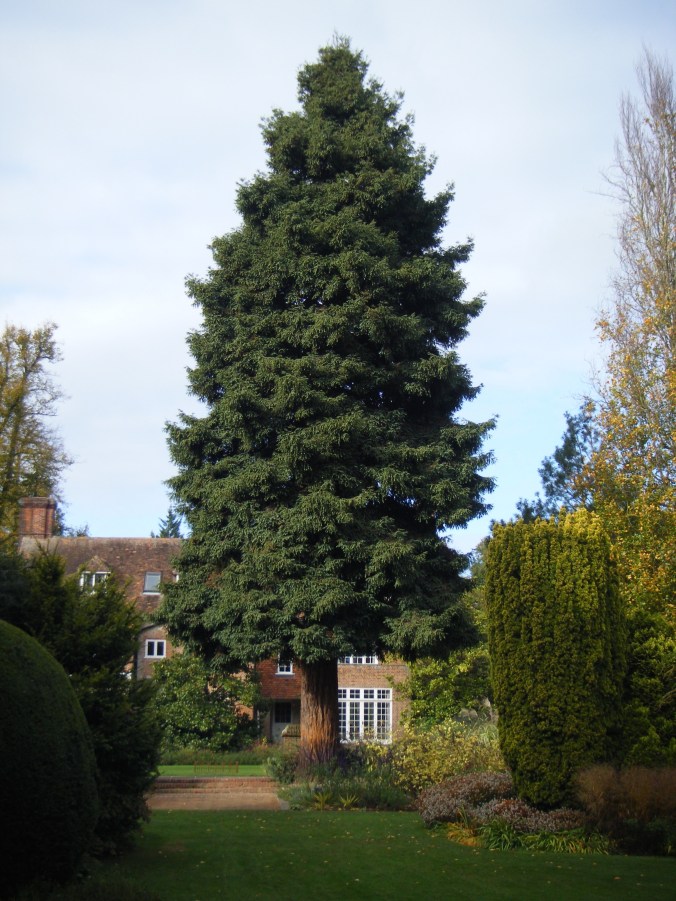
There are many fine mature trees here, the perfect shape of a  Sequoa sempervirens ‘Cantab’ stands erect on the edge of the square lawn in front of the house.
DSCF6788.jpg

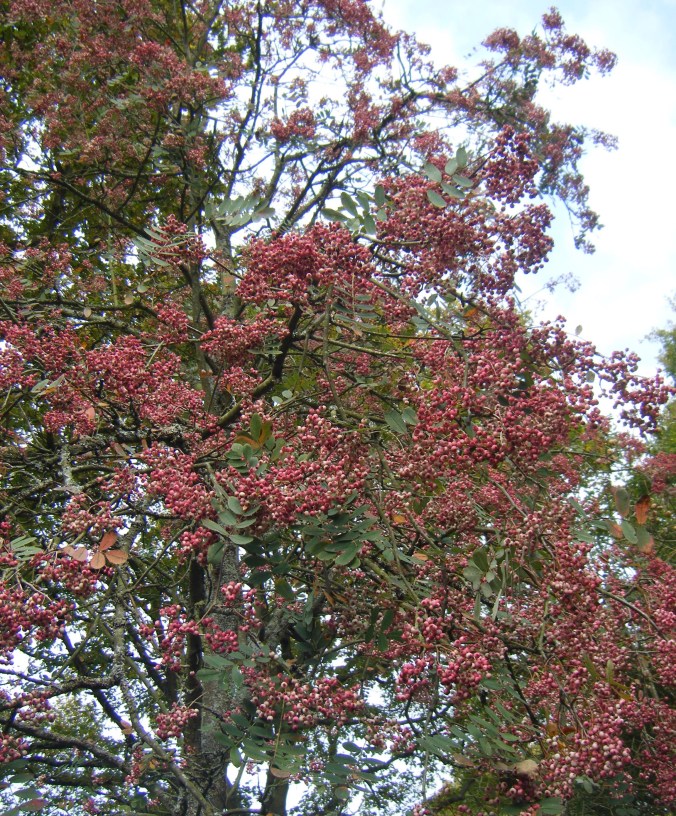
Further away is a fine specimen of a rowan, Sorbus hupenhsis laden with pink berries.
DSCF6741 (1).jpg

We walk away from the house down the avenue known as the Sweep, the curving line of the lawn and swirling shapes of the shrubs and trees suggesting a design reminiscent of the swinging sixties and early seventies.

DSCF6743.jpg

We are joined in the garden by our young cousin Charlotte; bouncing with energy and enthusiasm she lifts our spirits on this chilly grey day. Rubbing her hands over the smoothly clipped box she asks if it takes long to grow. I don’t want to dampen any signs of horticultural interest and feel a touch guilty when I suggest it doesn’t.

DSCF6740.jpg

Swiftly moving down the Sweep we admire the deep red leaves of the Liquidamber,

DSCF6744.jpg

and head into the woodland. At the southeast corner there is a hydrangea glade which we walk through and follow along the leafy perimeter path,

DSCF6795.jpg

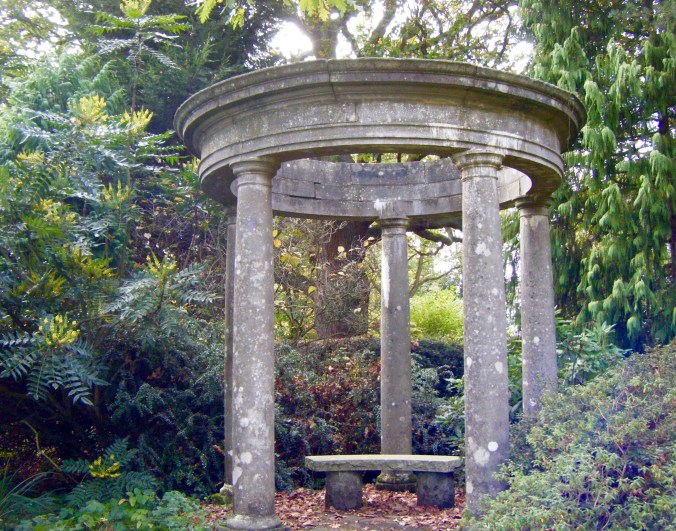
to the Chilstone temple that marks the furthest south western corner and where the yellow Mahonia is well into flower.
DSCF6791.jpg

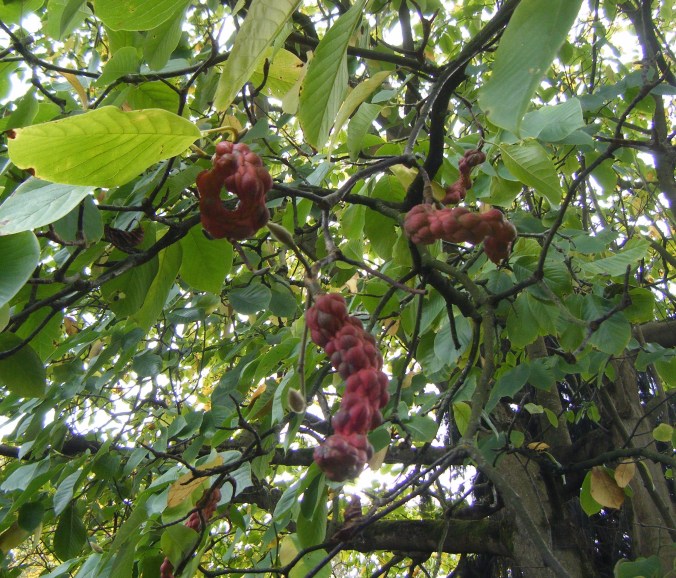
Back out of the woods we seek out the Italian garden, passing under the canopy of Magnolia x soulangeana where the extraordinarily unreal seed heads contort above us,
DSCF6765 (1).jpg

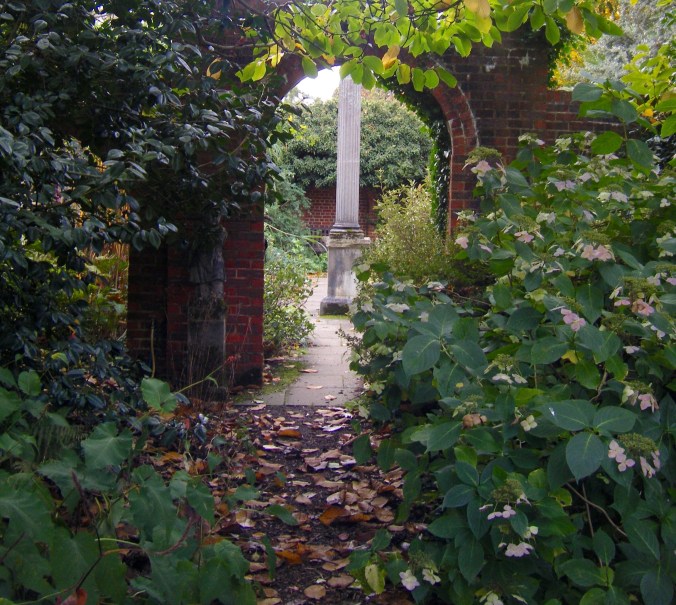
and through the archway there is a different mood.
DSCF6766.jpg

The Camerons combined their love of the classical with the theatre and in an eclectic mix of columns, fountain and ornament softened by dahlias, palm and tall rustling miscanthus they created a curious courtyard.

DSCF6754.jpg

Amongst the old stone are engineering bricks that serve to make walls and define the arches and although there is a very slight air of a forgotten institution there are plenty of little seating areas to enjoy the characterful ambience.

DSCF6767.jpg

It is time for Tea and we head off to the old dairy to sample the delicious cake just pausing for a moment to admire the lamp post with a turban top.

DSCF6783

Nearby, Brutus is stylishly swathed in moss and seems to look over towards the neighbouring

IMG_0194.jpg

goddess, a little less clothed she appears to be in heavenly bliss.

DSCF6773.jpg

Opposite, the flat leaves of the ancient gingko are gently turning to a soft yellow,

DSCF6777.jpg

Through the enchanting moon gate we can clearly see the herbaceous border across the neatly mown lawn.

DSCF6780.jpg

Growing by the house is a sizeable Magnolia grandiflora who holds its seed heads tightly.

DSCF6805 (1).jpg

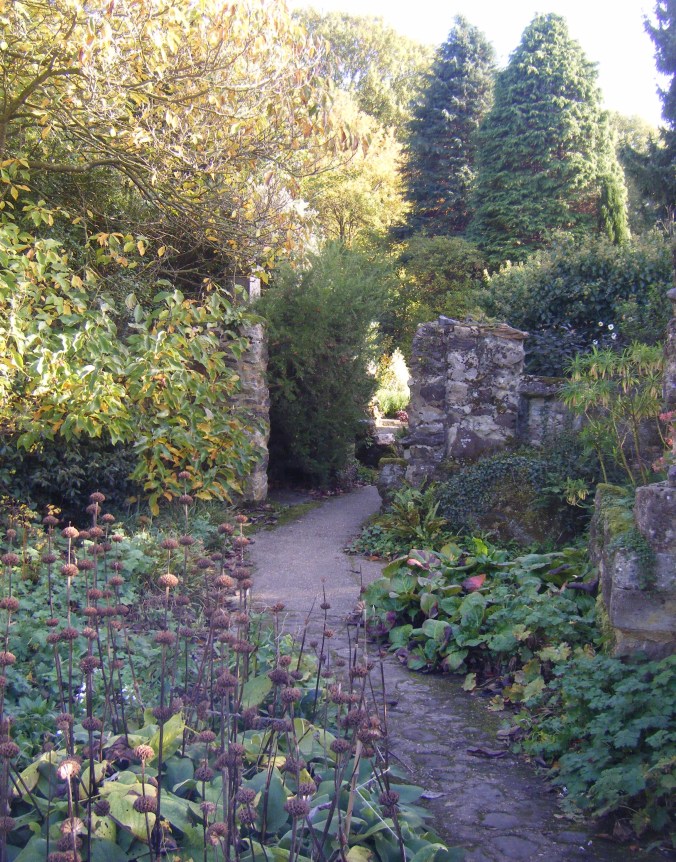
Passing by more seed heads,  these are Phlomis we pass through yet another folly.
DSCF6812.jpg

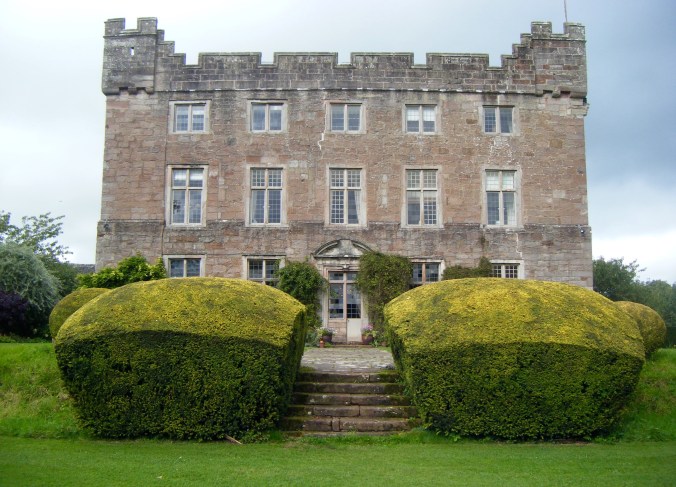
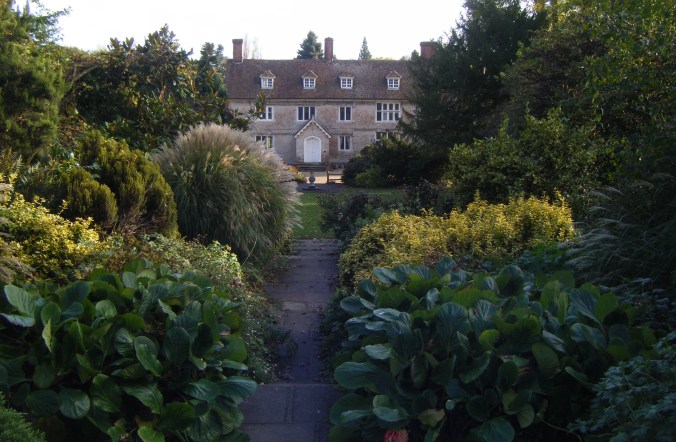
The garden, which is an RHS partner moves round to the northern side where the visitor before leaving can admire the front of the charming 17th Century house.
DSCF6816.jpg

Returning through the nursery it is difficult not to admire the longevity of this summer flowering fuchsia, curiously named “Lady in Black”,

DSCF6822.jpg

and wonder at a snowdrop in flower at the same time, the very early Galanthus ‘Peter Gatehouse’. I feel that I have nearly come full circle as it was not far from here at Spring Platt (A snowdrop of knowledge blog 5), that I became so acquainted with this enchanting flower. However, we still have a little way to go before the onset of the snowdrop season.

DSCF6821.jpg


——-83——-


Askham Hall, artful acres of abundance. (83)

Last month following a visit to Larch Cottage Nursery  in Cumbria (blog 79) we decided to visit the grade II listed gardens of nearby Askham Hall on the Lowther estate.

DSCF5614 (1).jpg

You enter the garden through the homely cafe situated in the converted Barn; it is always a good idea to begin a garden visit with a little sustenance.

DSCF5581.jpg

The garden actually opened for the NGS back in June but up-to-date news about daily happenings is displayed on the board.

DSCF5775.jpg

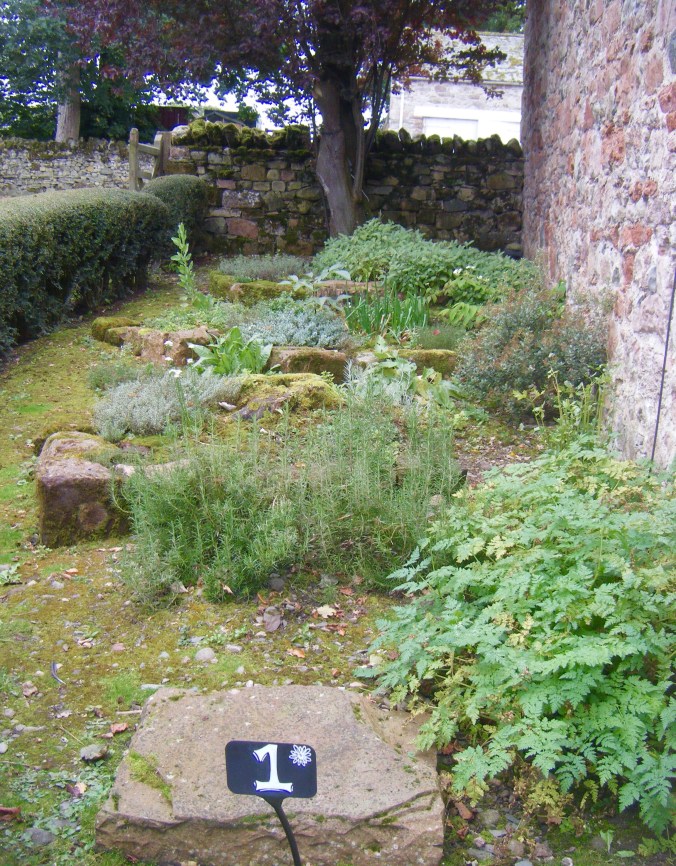
We are given a map, simply drawn and ideal for children, the guide on the back outlines over twenty features in the garden. Right outside the cafe is number one, the mediterranean herb garden with a selection of edible herbs.

DSCF5763 (1).jpg

The garden route begins between a gap in the beech hedge and a walk through walnut trees; our guide reminds us that they were introduced into this country 500 years ago.

DSCF5583.jpg

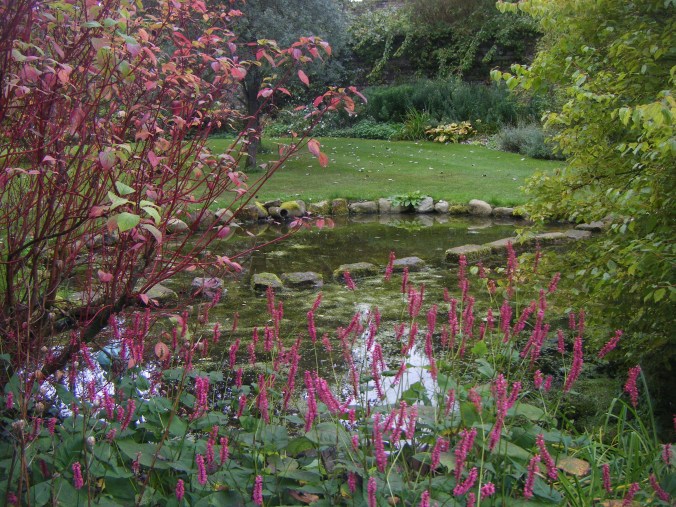
The ground slopes away from the cornus trees just taking on their autumn colours.

DSCF5588.jpg

Dried heads of allium long-since flowered rise above the fading leaves of hosta grown in the little bricked beds.

DSCF5591.jpg

Before taking the steps up to the terrace we enter the woodland walk and find ourselves at the yew tree, rather unique in the fact that it is multi-stemmed and rises from the root.

DSCF5615.jpg

Just at this moment I spy a red squirrel, busy in his nut gathering; he is just too quick  for me. There is plenty of natural wildlife here, with newts and frogs inhabiting the pond,

DSCF5619.jpg

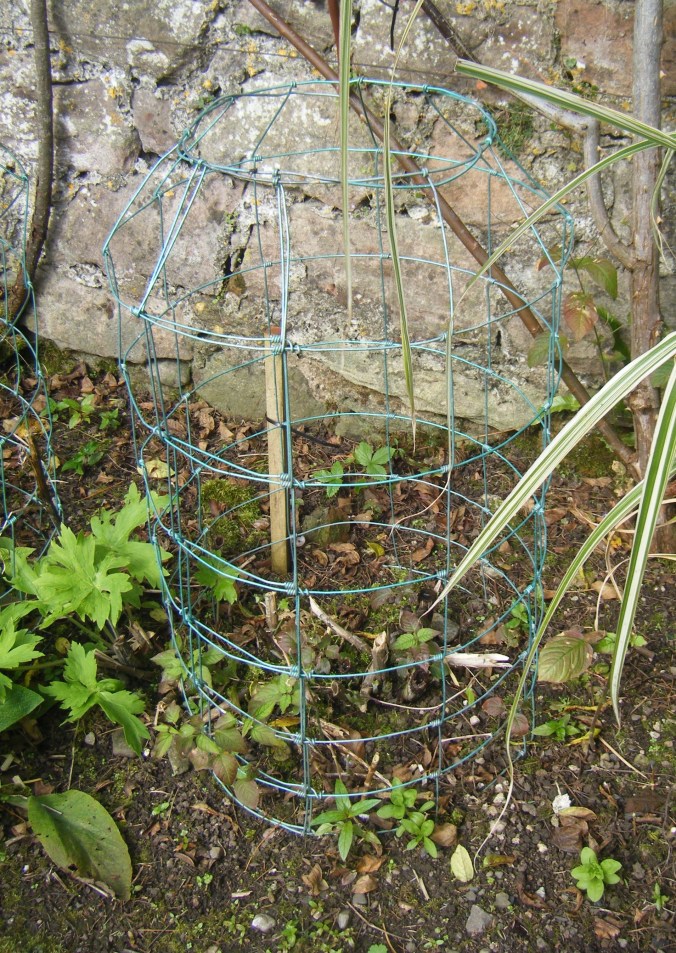
and there is evidence of deer with these simple but clever wire defences.

DSCF5679

The path leads on to the Land of Giants, an area planted with very tall herbaceous plants

DSCF5649.jpg

such as Eupatorium ‘Massive White’ which towers above us,

DSCF5634.jpg

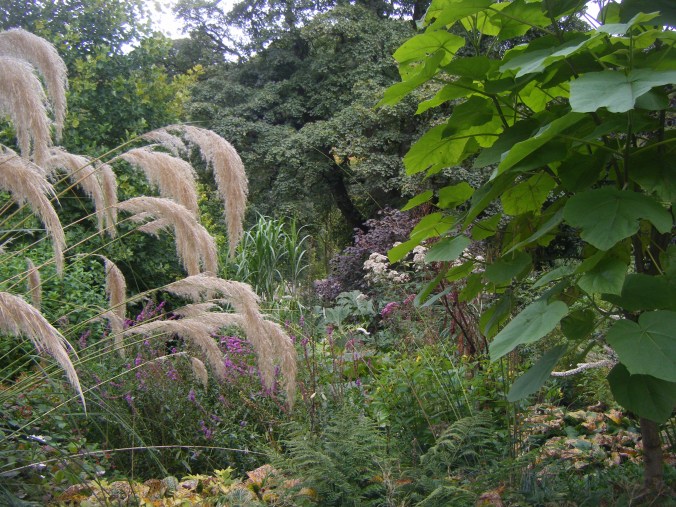
we feel like dwarves against the Miscanthus,

DSCF5641.jpg

and the young leaves of the Paulownia still looking so fresh and are the size of dinner plates.

DSCF5625.jpg

I watch a group of visitors struggle across the lawn with a wheelchair. An impossible task but until you have pushed one you have no idea how limiting it is. To the right of the green sward is the herbaceous border, at its peak in the summer months, it is an incredible 230ft long (70m).

DSCF5652.jpg

In the centre of the border we find the steep stone steps,

DSCF5653.jpg

which take us on to the terrace where there is still plenty going on from the grasses and late perennials,

DSCF5667.jpg

I particularly admire the appropriately named Sedum ‘Red Cauli’.

DSCF5661.jpg

Yet more steps to climb,

DSCF5666.jpg

but a little sign of encouragement drives us on.

DSCF5680

At the top lies a flat area of lawn; straight ahead is the symmetrical listed house. Previously a family home of the present owner it is now an award-winning 17 room hotel with a restaurant.

DSCF5681 (1).jpg

To the left the neatly mown straight lines draw our eyes to the Wellingtonia,

DSCF5685.jpg

a hundred years old it is the largest tree in the garden.

DSCF5702.jpg

To the right a Gypsy caravan has come to rest. Now a place for the newly-weds to sign the register,

DSCF5684.jpg

it was built in 1900 and was originally on wheels.

DSCF5765 (1)

Photo on display in the cafe


Askham Hall is perched above the River Eden. You can hear the soothing sound of the water as it flows by, and, glimpsed through the branches on its bank is the Mill Cottage.

DSCF5692.jpg

Lowther Church can be seen in the far distance.

DSCF5689.jpg

It is on this same side that steps lead down to the parterre,

DSCF5718.jpg

a private and secluded area reserved for the house guests, we do not linger long

DSCF5713.jpg

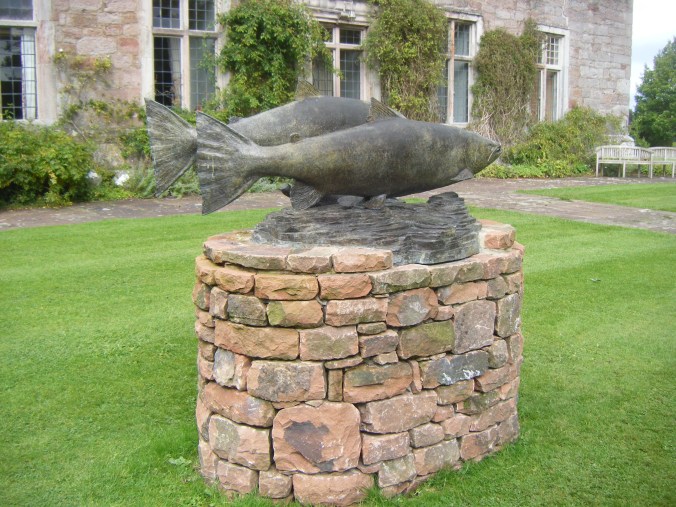
before walking back around to the front of the house where a fine pair of salmon swim through the air,

DSCF5706.jpg

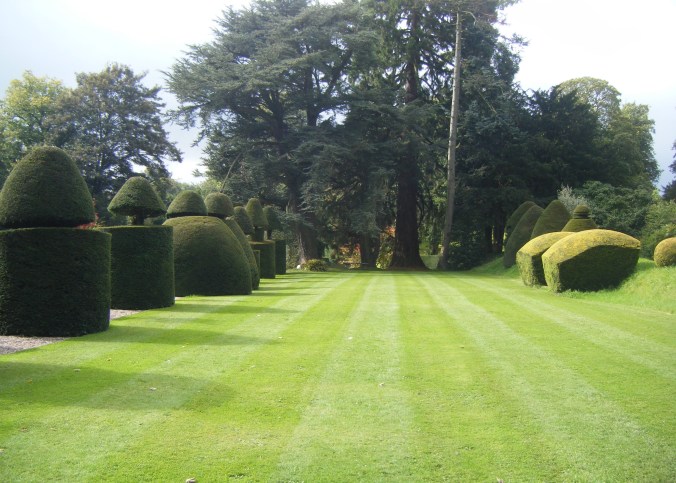
 and view the rolling farmland through the whimsical topiary which date back to the 1800s.

DSCF5708.jpg

Passing through the courtyard, we marvel at the rope knot arch,

DSCF5723.jpg

and the virginia creeper Parthonissus quinquefolia which provides dramatic colour to the grey stone walls.

DSCF5722.jpg

A bicycle directs us to the kitchen garden and through thick hedges of ‘Discovery’ apple,

DSCF5724.jpg

we find orderly raised beds bulging with fine produce.

DSCF5726.jpg

It is decorative too, colourful Malope trifida ‘ Vulcan’ mingles with a collection of herbs,

DSCF5743.jpg

and the striking heads of purple artichoke.

DSCF5735.jpg

The poly tunnels are also productive, ready to supply restaurant and cafe.

DSCF5745.jpg

For the ignorant like me a chilli is a chilli but here in pots are many varieties, all labelled some carry health warning signs as to the strength and I wonder that no one has thought of a Richter-type scale to measure the hottest.

DSCF5752.jpg

This is also a working farm; the sound of chickens clucking nearby is broken by the crow of a cockerel, and over the fence ducks swim on the pond, whilst in the distance are the pigs and sheep.

DSCF5761 (1).jpg

This beautiful garden has a certain vibrancy to it. Open to the public, it has not lost its touch of being a family home. Located in a glorious setting there is just about everything from the history to horticulture, stunning views, a rich variety of planting, fun topiary, vegetables and fruit, and even fine dining. Thought has also been taken to provide interest for children, carefully avoiding that overload of education that at times can take away from the enjoyment of visiting a garden.

IMG_0118 (1)

——-81——-

Walkern Hall; Tiny Flowers and Tall Trees. (11)

I have travelled a few miles in the car over the last couple of months and I enjoy looking at the countryside rolling past. But what really upsets me is the layers of rubbish littered along the roadside. What I think might be snowdrops turns out to be discarded wrappers or cans. A glimpse of ‘travellers joy’ growing in the hedges turns out to be shredded plastic draped in the branches. It is a sight for sore eyes.

So it was a relief to turn off from the major road and drive along the neat and narrow lanes in an agricultural area of Hertfordshire. The garden owners had done a splendid job in signposting the way. An old rustic Garden Gate was ready to open.

DSCF7866.jpg

Walkern Hall is surrounded by farmland.  We parked in the farmyard, with English Longhorn cattle content in the fields in front of the house.

The garden owner was born here and wife Kate, a second generation NGS volunteer is on the Hertfordshire team. She gave us a warm welcome. So too did the blue sky.

DSCF7918.jpg

We are directed to walk past the front door where an owl observes from above whilst a lion sits at the base.

dscf7917


dscf7906

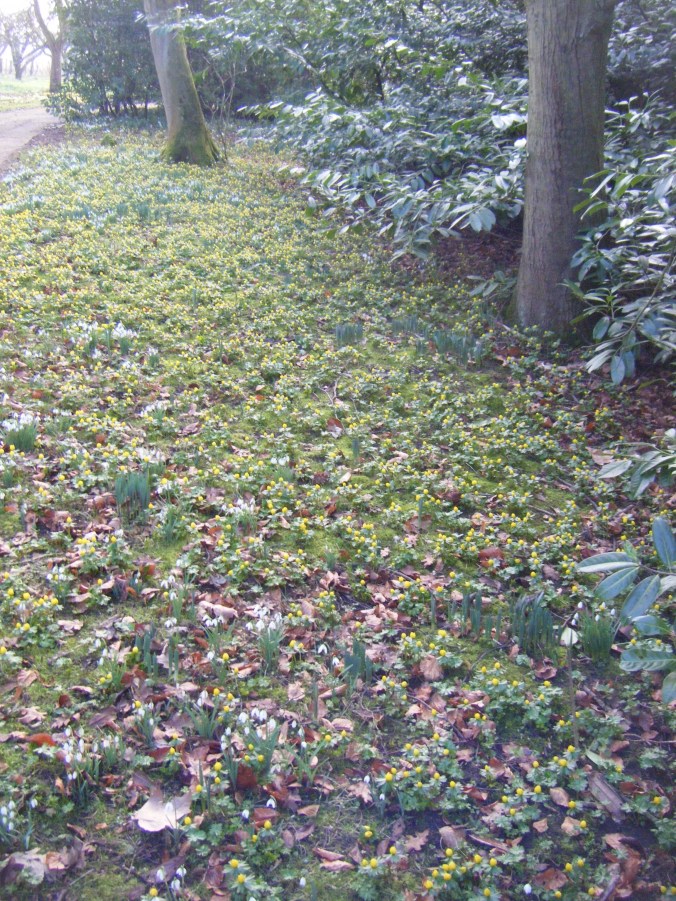
The ground is dotted with aconites and snowdrops.  This year they have been late in coming but are probably looking at their best right now.

DSCF7867.jpg

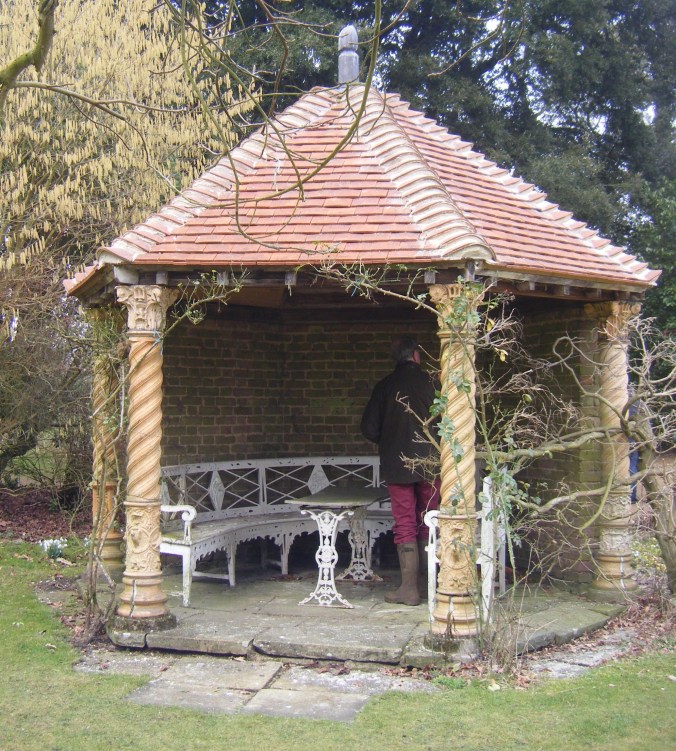
The hazel catkins have also been coming out and look particularly fine by the Summer House. The inside of this intimate outdoor room is enhanced by the most  beautiful wooden bench which curves gently  round.

DSCF7869.jpg

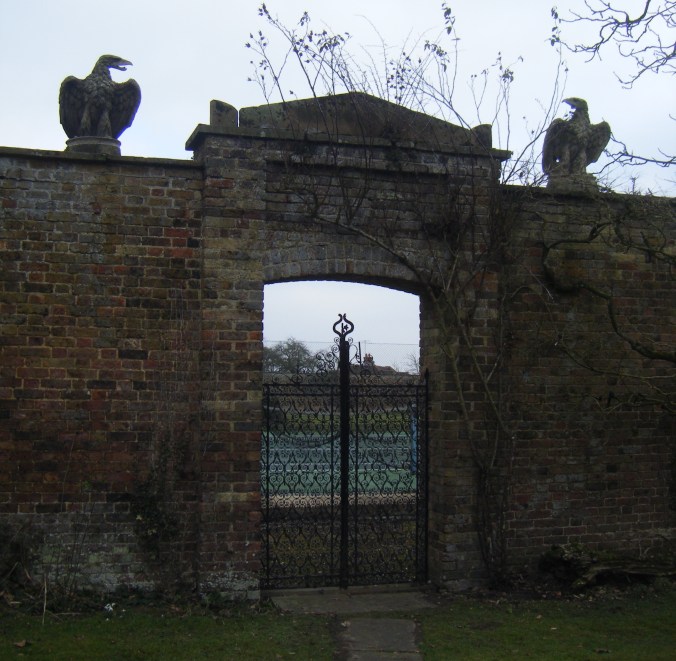
An impressive gate, but firmly closed, leads into the old walled garden sited some distance from the house. No longer teams of gardeners growing produce for the house, it is now enjoyed by teams of tennis players. I worry about stray balls flying into the magnificent glasshouses.

DSCF7877.jpg

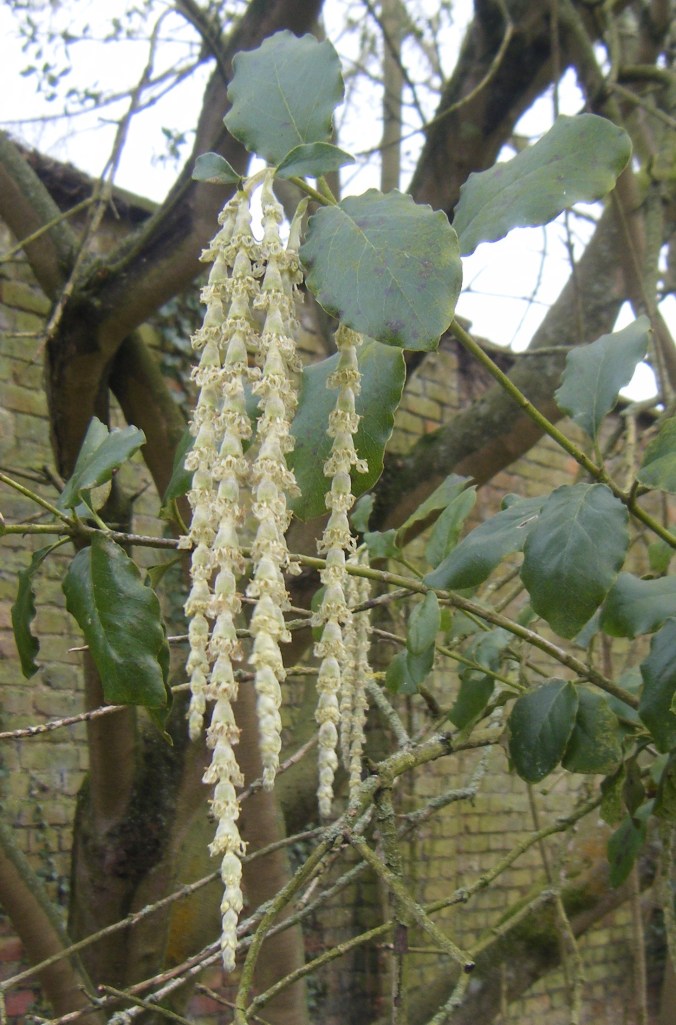
To the right of the gate is a Garrya elliptica enjoying the shelter of the wall. I make a note to move mine which has become totally browned off from the East wind.

DSCF7874.jpg

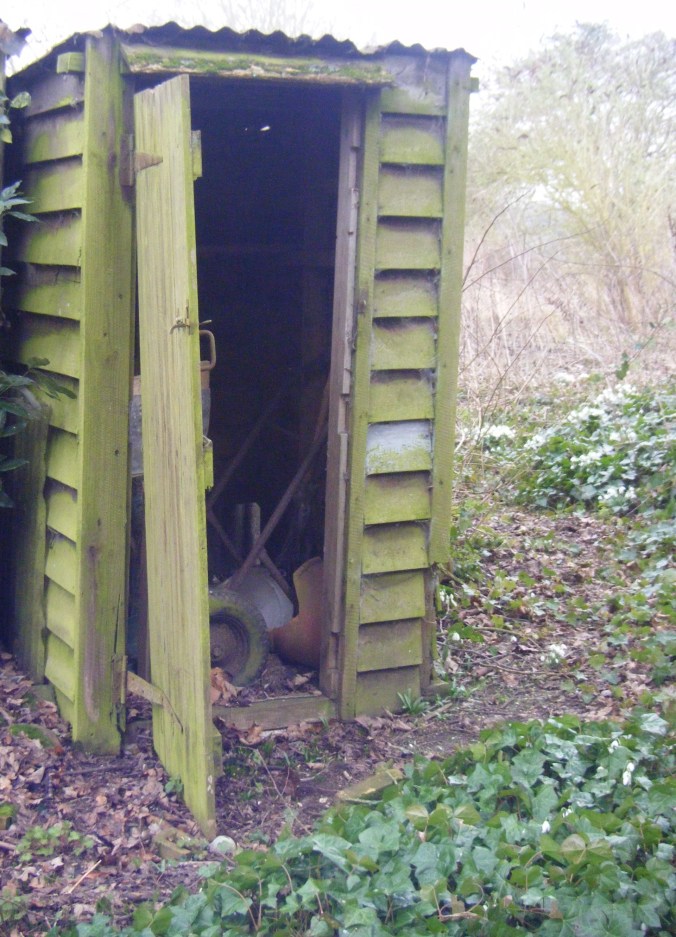
The shed, sited at the end of the wall, appears more suited to an allotment rather than a garden of this size, but possesses a simple charm.

DSCF7876.jpg

This garden is not about mixed borders and decorative flowers. It is more  a landscape of green space and big trees. Mature and majestic, the trees stand uncrowded, growing away from the house.

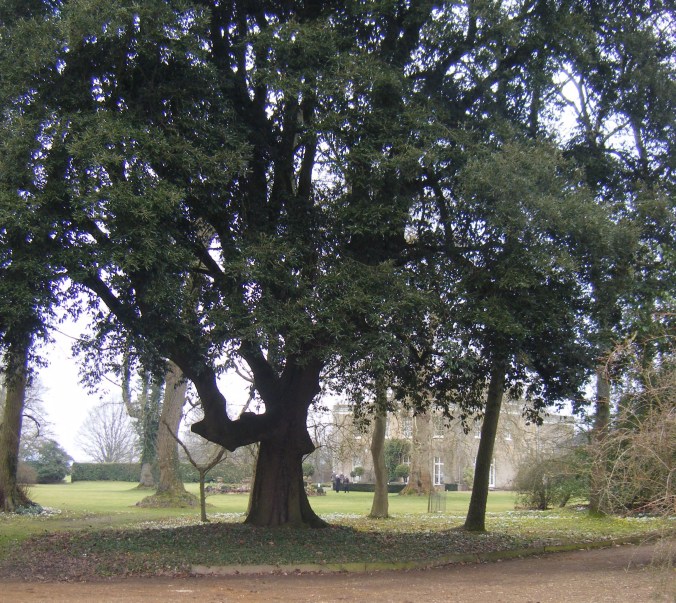
We stride back towards the house which can be glimpsed through the Holm Oak Quercus Ilex .

DSCF7878.jpg

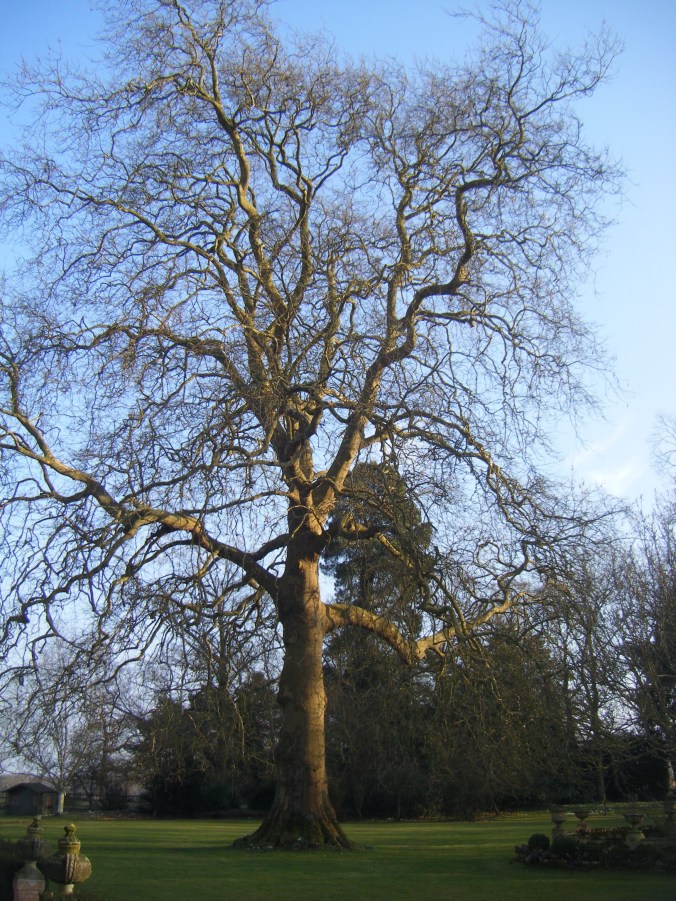
A hugely tall London plane stands proudly on the lawn in the afternoon sunlight.

DSCF7914.jpg

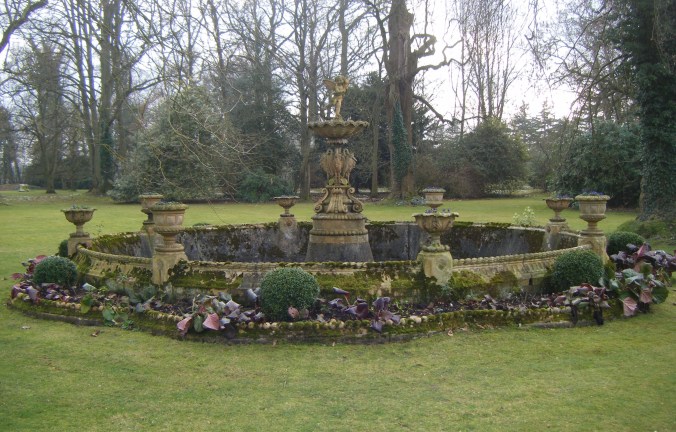
It is not hard to imagine this impressive fountain gently spouting water and entertaining a Victorian house party. I wonder at its history; who made it and why is it here? Curiously sited it does not seem to line up with the house, but is randomly placed on the lawn. It is perhaps that very fact, combined with an architectural splendour of a bygone era that is entertaining us today.

DSCF7886.jpg

A small magnolia with swelling buds is waiting for Spring. It grows at the back of the house with snowdrops spreading freely around its base.

DSCF7889.jpg

Out of sight is the back gate, a treasure in ironwork. It is well bedded-in and appears to have been open for years.

DSCF7891.jpg

Back on the lawn we have a debate about the trees. The one on the left is definitely an oak, but the one on the right? By a stroke of luck the tree man for Hertfordshire is amongst the  visitors.

DSCF7915.jpg

He tells us that it is a turkey oak Quercus cerris, explaining that it is taller than the English oak and its acorn cups are hairy.  He shows us the leaf and twig.

dscf7919

Enlightened we move back to the terrace on the south side of the house. It is a small area recently planted with good effect. The young evergreen lollipop shape contrasts well with the deciduous giants.

DSCF7888.jpg

There is Box providing formality and Winter Box filling the terrace with glorious scent.

DSCF7912.jpg

Visitors enjoy the teas  served in the courtyard and are able to keep warm by the fire.

DSCF7910.jpg

Molly is for ever hopeful.

dscf7905

Time to leave this spacious landscape with its impressive trees. One last look at the drifts of those tiny flowers before we drive on to London.

DSCF7909 (1).jpg

and although the owners are very friendly there is a reminder that this is a very private garden!

Version 2

——-11——-

Robinson College: Old with New and Mistletoe too. (1)

I was very surprised to find a garden open for the National Garden Scheme on Monday 2nd January.  So with Christmas and New Year safely over for another year we set off on a bright but very cold day to  visit Robinson College, Cambridge. The first of my 90 garden challenge.

None of the familiar yellow signs were displayed because this is a garden open most of the year. Directed by the NGS Gardens to Visit book, we entered through the Porter’s Lodge.  It is the proceeds from the garden guide that you buy from the Porter which are donated to the NGS.  The guide is a complete joy and provides the history, a comprehensive list of the plants and maps:

DSCF7339

Entering the very modern courtyard we were disappointed to find the chapel with its John Piper windows was not open.

DSCF7426.jpg

The entrance to the garden was not terribly obvious and it took us a little while to figure out which steps to take.

Up and over a stairway we found ourselves in the college garden. It is icy cold and the bridge is a touch slippery. Leaving the main building behind us we crossed over the Bin Brook into what is an amalgamation of gardens from Edwardian to Modern.

DSCF7414.jpg

It is not specifically a winter garden as such but there was plenty of interest, either in the form of colourful bark,

DSCF7388 (1).jpg

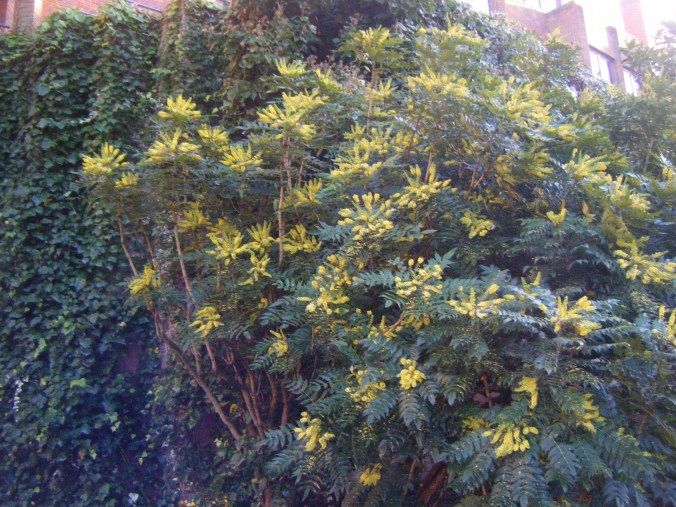
or winter flowering shrubs such as  Mahonia with yellow flowers exploding like fireworks.

DSCF7421.jpg

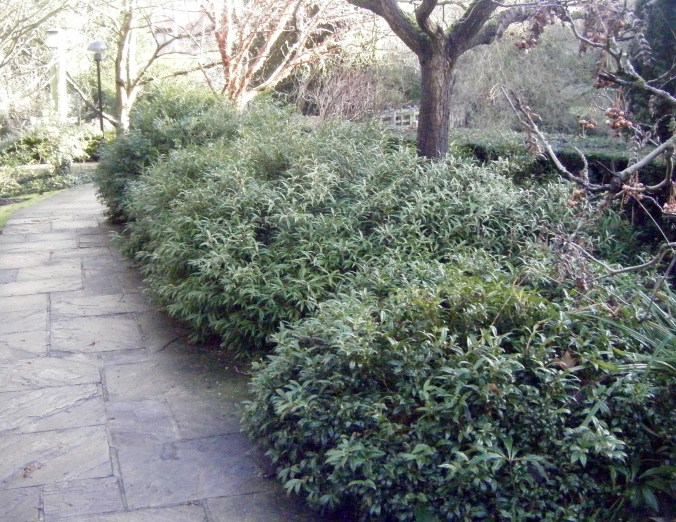
The Sarcococca or winter box generously lining the path was smelling a dream.

DSCF7387.jpg

Throughout the gardens there are plenty of places for scholars to sit, to think and to dream. Was the sail-like stainless steel sculpture meant to imitate the shape of the Wellingtonia (sequoiadendron giganteum ‘Pendula’) growing across the flat lawn. Or is it the other way round?

DSCF7390.jpg

“Sailing into the future’ by Philip de Koning

Also called the Weeping Redwood, this mighty tree is almost human in form and looks as if at any moment it might pick up its branches and lumber right across the lawn.

DSCF7394 (1).jpg

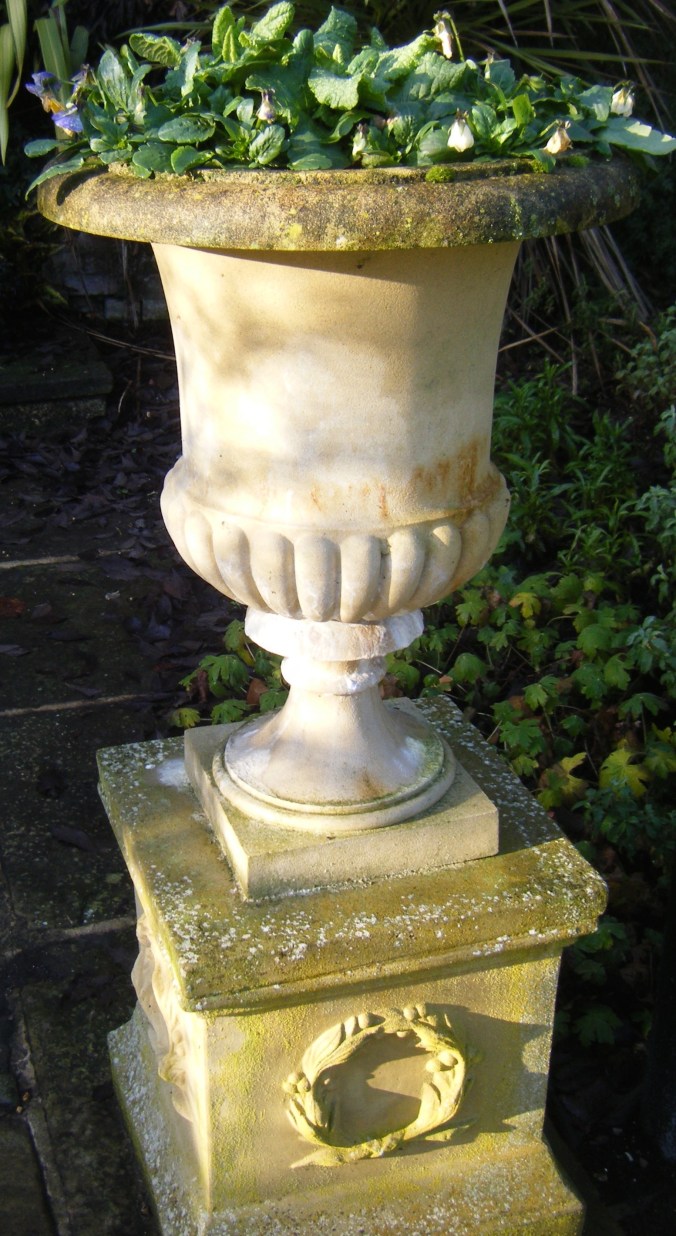
A beautiful vase stands in front of an older college building,

DSCF7391.jpg

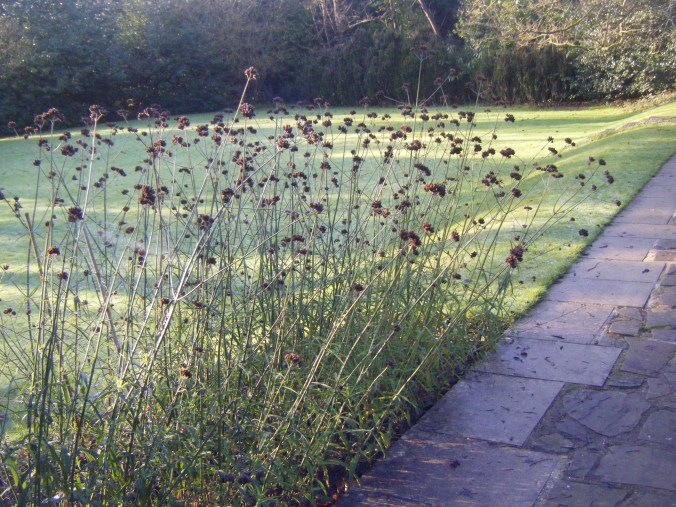
and to the side is a cluster of seed heads of Verbena bonariensis which add a little interest and highlight the smoothness of the green beyond.

DSCF7392.jpg

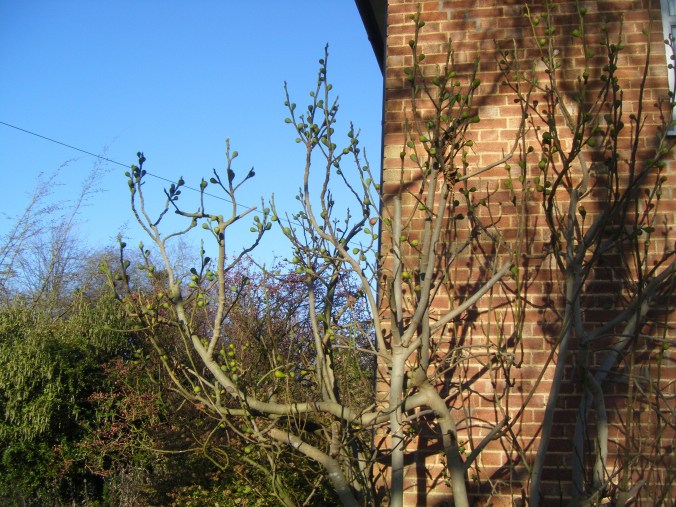
Even the unripened figs are a delight in the morning sun.

DSCF7396.jpg

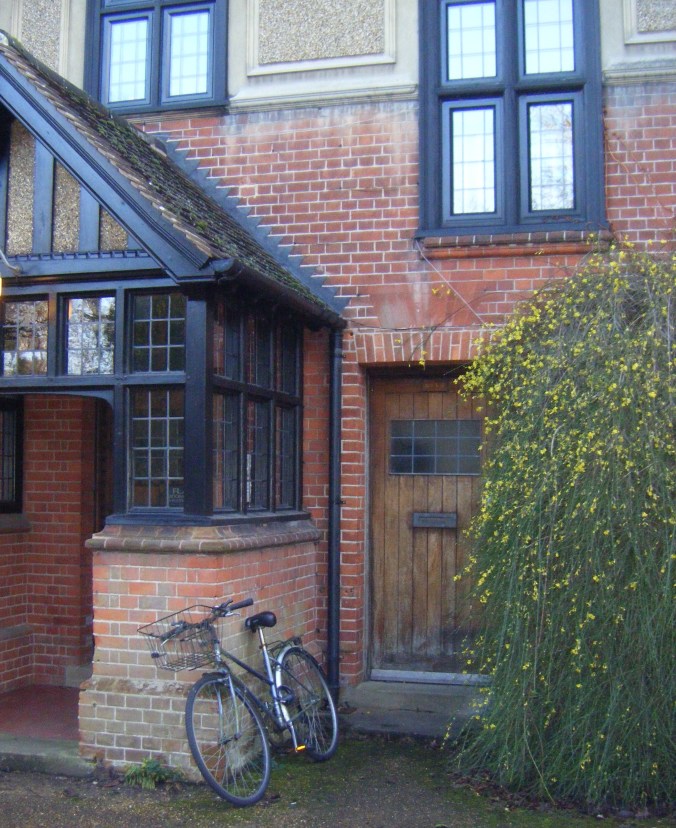
Not all the buildings are modern and at the entrance to this house is the inevitable bike with a Jasmine nudiflorum growing magnificently.

DSCF7395.jpg

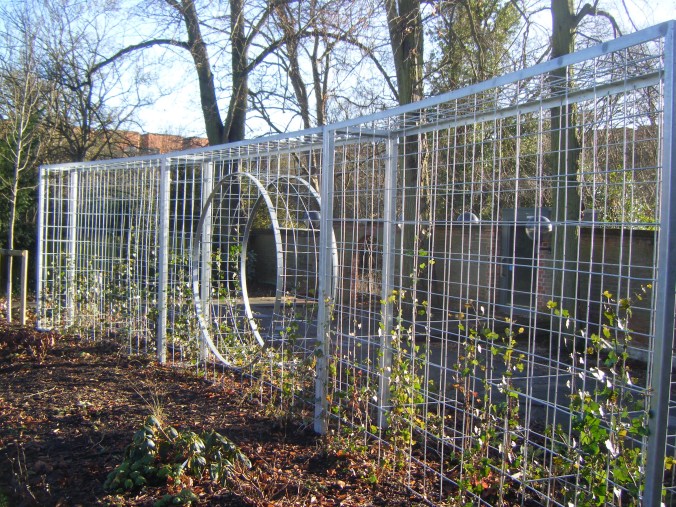
A metal fence with a central moongate not only provides a frame for the newly planted ivy Hedera hibernica to climb but also divides an eating area:

DSCF7399.jpg

The Bar table seems refreshingly modern but somehow keeps a natural feel. The giant golden oat Stipa gigantea brighten the border behind.

DSCF7402.jpg

Lutyenesque steps are an striking feature and also cleverly link a serious drop in ground levels.

DSCF7404 (1).jpg

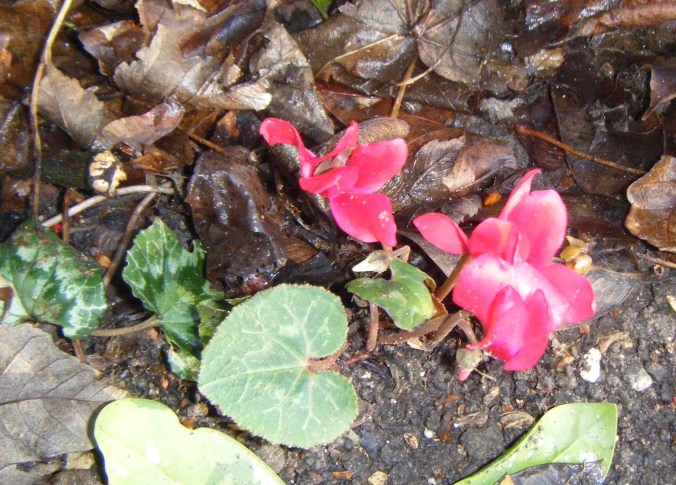
Round the corner a splash of colour catches my eye, cyclamen so small yet so bright:

DSCF7405.jpg

Old, old espaliered apple trees stretch their boughs along the straight path.

DSCF7408.jpg

The outdoor theatre was created in memory of Maria Bjornson a celebrated stage designer. The empty stage now waits for its next summer performance:

DSCF7409.jpg

Mistletoe Viscum album inhabits the surrounding trees growing on the outside of the college grounds; always so high up in the branches and out of reach,

DSCF7411.jpg

within the garden it grows on the apple trees at eye level. You just don’t appreciate how very pretty it looks; the opaque berries are enchanting.

DSCF7412.jpg

We were the only visitors in the garden that morning except for one Japanese student,  the odd squirrel, a noisy cock pheasant and much to his surprise, and ours, a muntjac deer. Sited on the other side of the pond and viewed from many angles are two ghostly objects apparently in silent communication:

DSCF7406.jpg

“Conversing Figures” by Christophe Gordon-Brown

We return to the main college building. It is the juxtaposition of the old and the new which is so striking; an aged tree lies propped up in front of the modern red brick building.

DSCF7423.jpg

The sound of rushing water can be heard as it travels under the many levels of brick  passageways,

DSCF7418.jpg

and it is the many layers of gardens that have been so absorbing. We have enjoyed the sculptures and the spaces throughout the garden; the enclosed and the open, the wild and the tamed, the formal and the relaxed with a huge variety of plants and trees. It is  a perfect garden for the scholar not just to sit, study and contemplate but also to eat, watch and even to act. We look forward to returning in the summer.

——-1——-