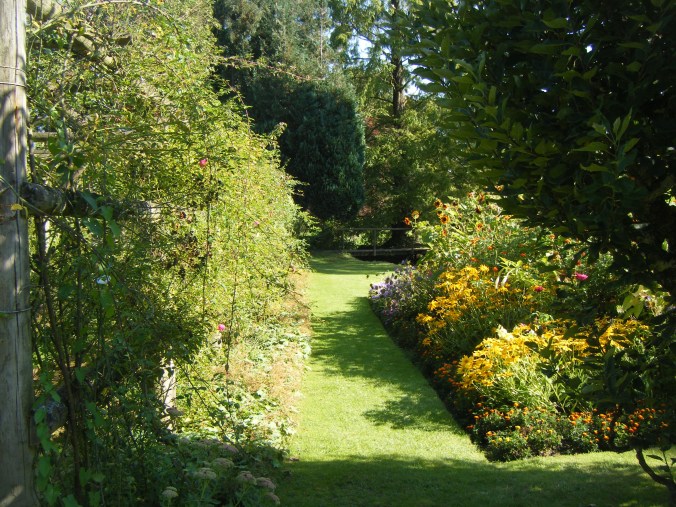
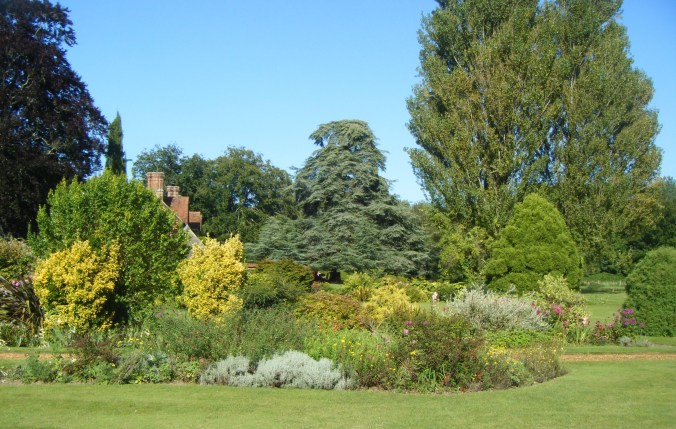
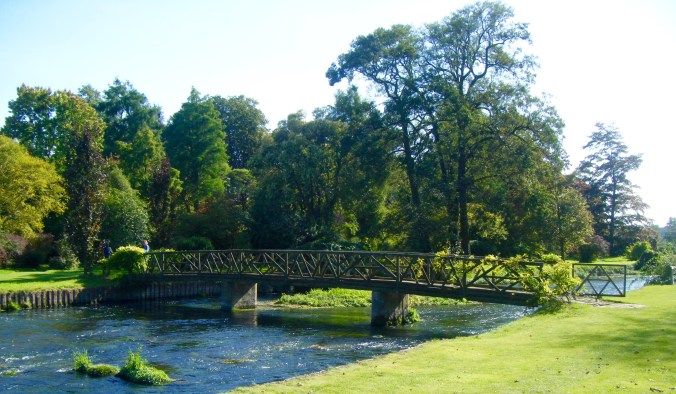
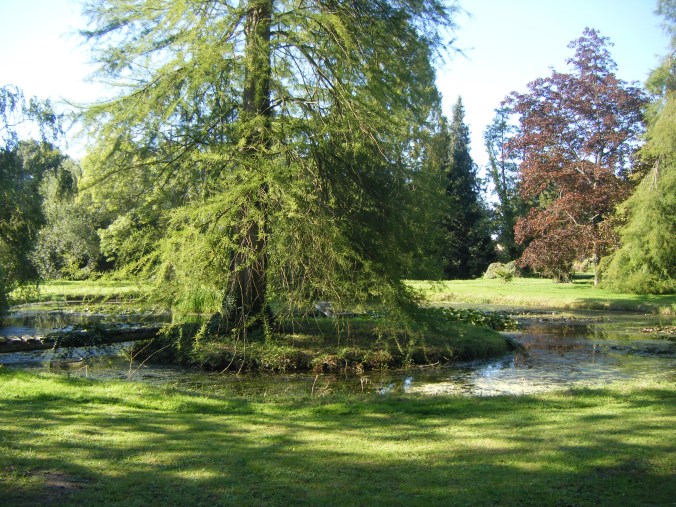
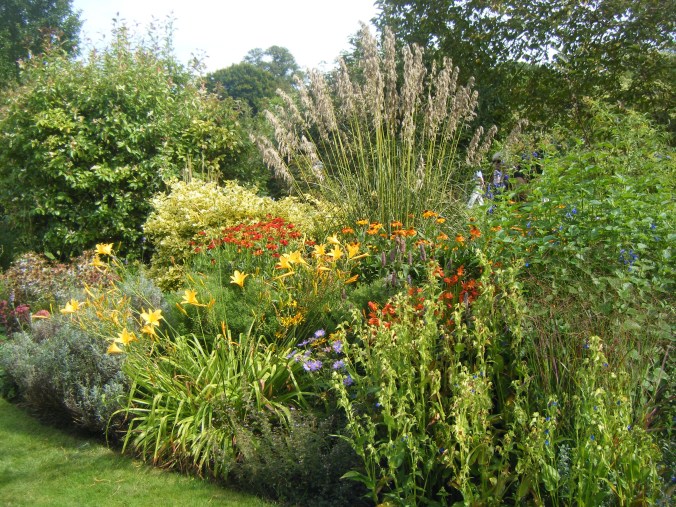
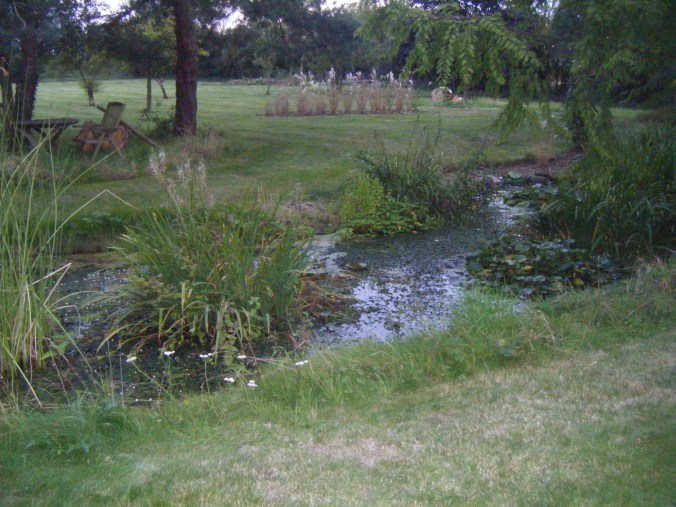
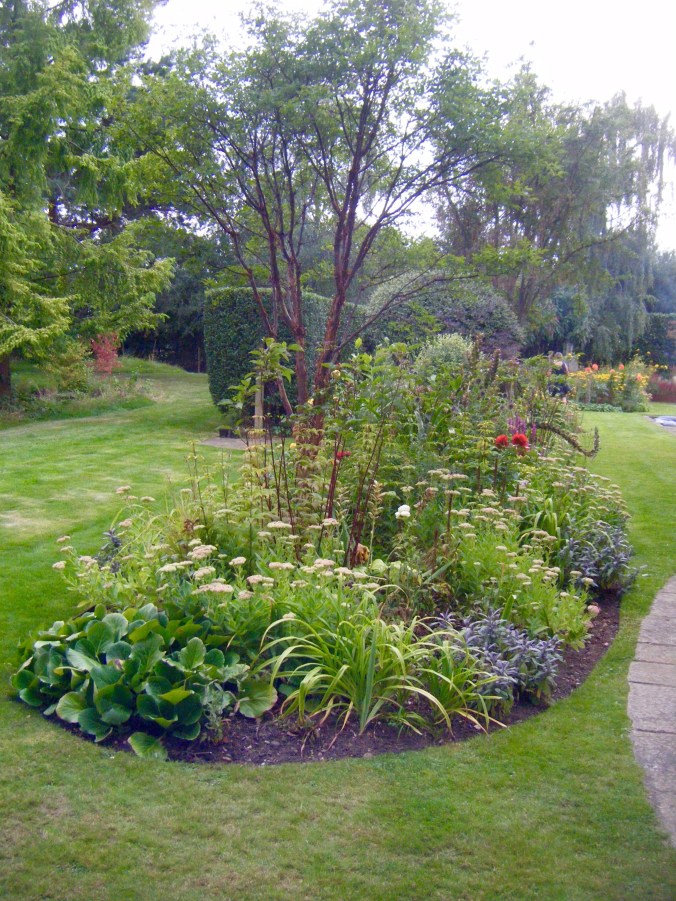
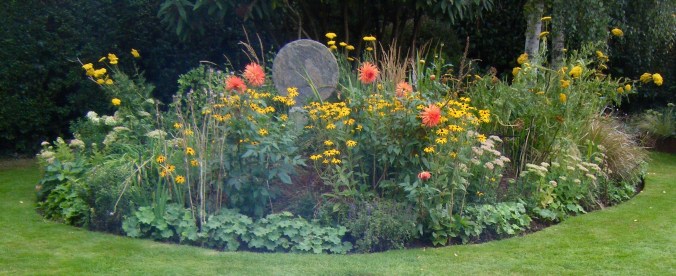
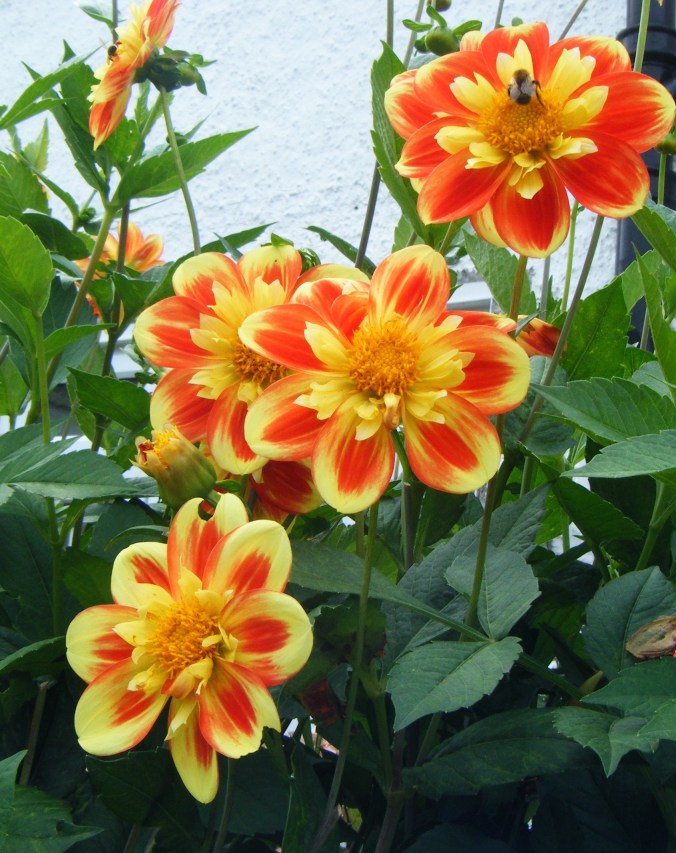
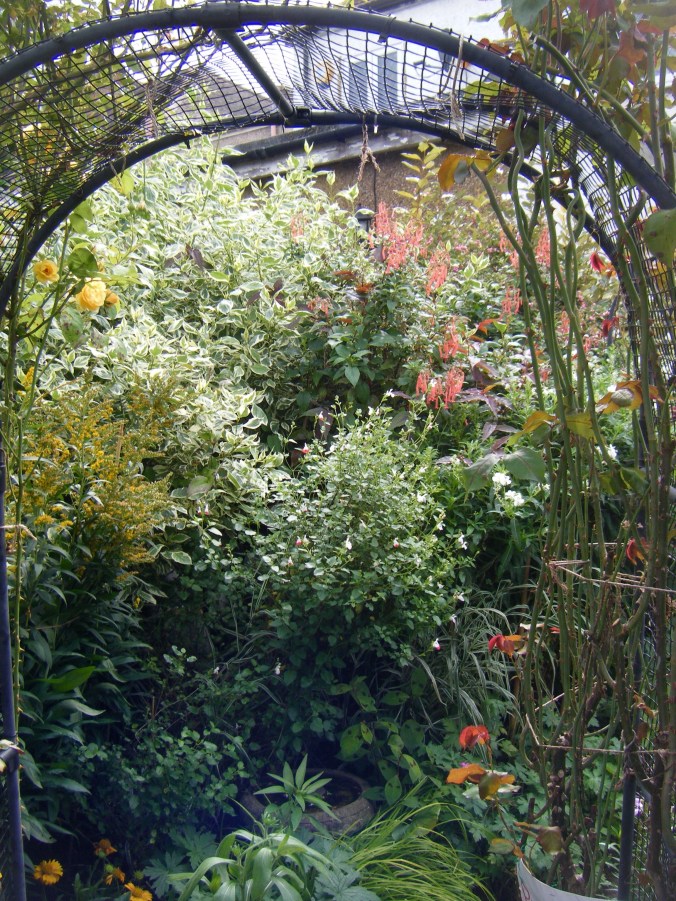
Coton Manor Garden, a kaleidoscope of continual colour.(75)

There are 10 acres to see at Coton Manor, 10 miles North of Northampton, a garden considered to be one of Britain’s finest and one that is at its most magnificent in September when it is open for a day for the NGS.
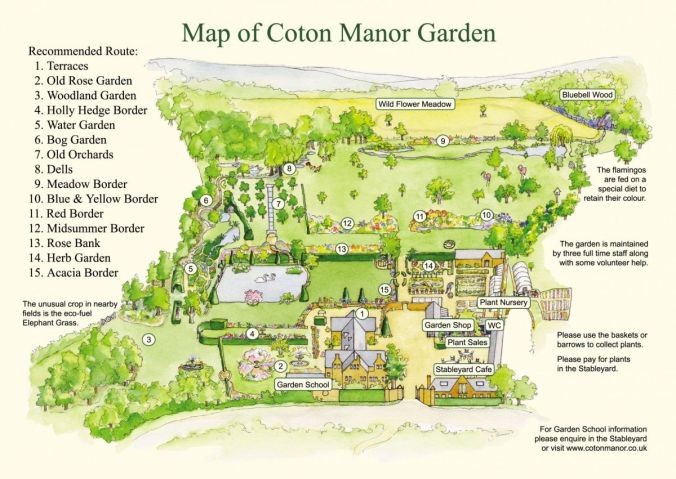
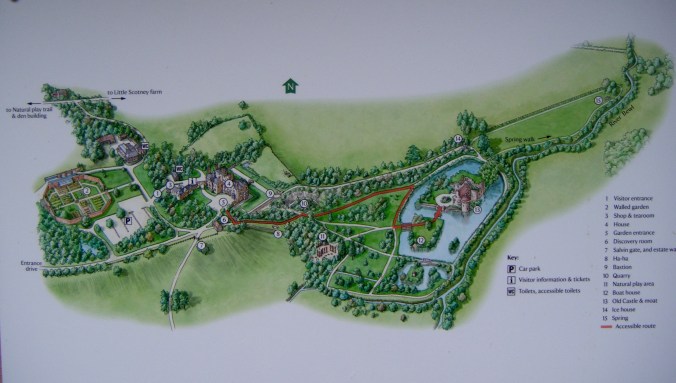
ss101_map_leaflet_a5_inner2014.jpg

Garden Map taken from http://www.cotonmanor.co.uk/garden_map.

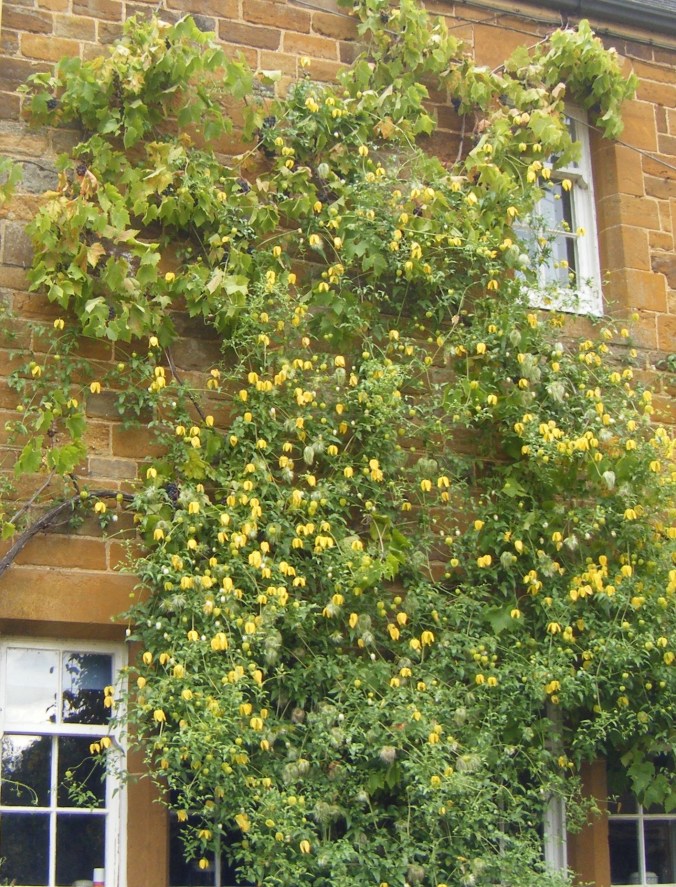
Before entering the garden I cannot help but admire the medley of greens and yellows  of the clematis and vine intertwined against the Northamptonshire brick.
DSCF5230

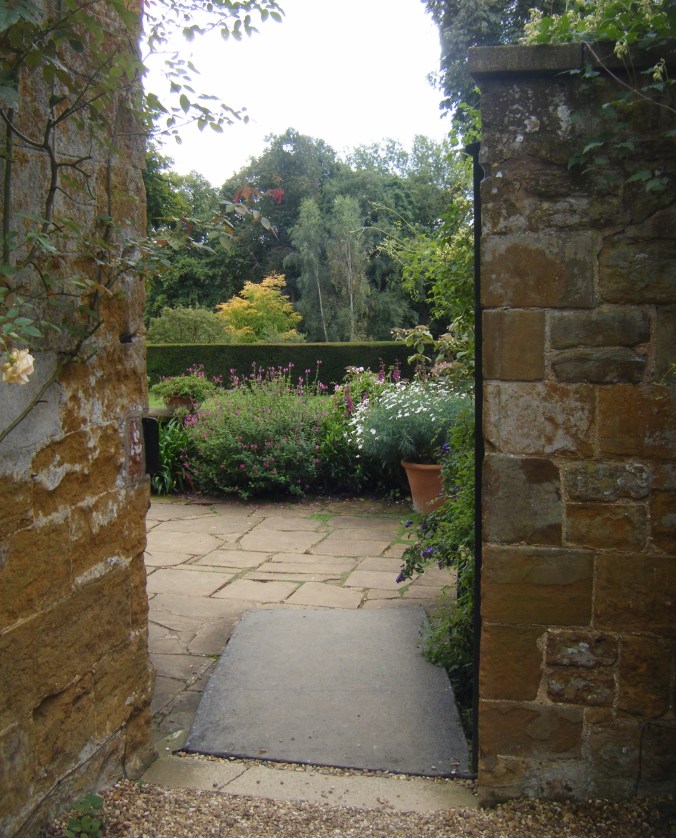
What a joy to find an accessible ramp through the open garden gate.
DSCF5232.jpg

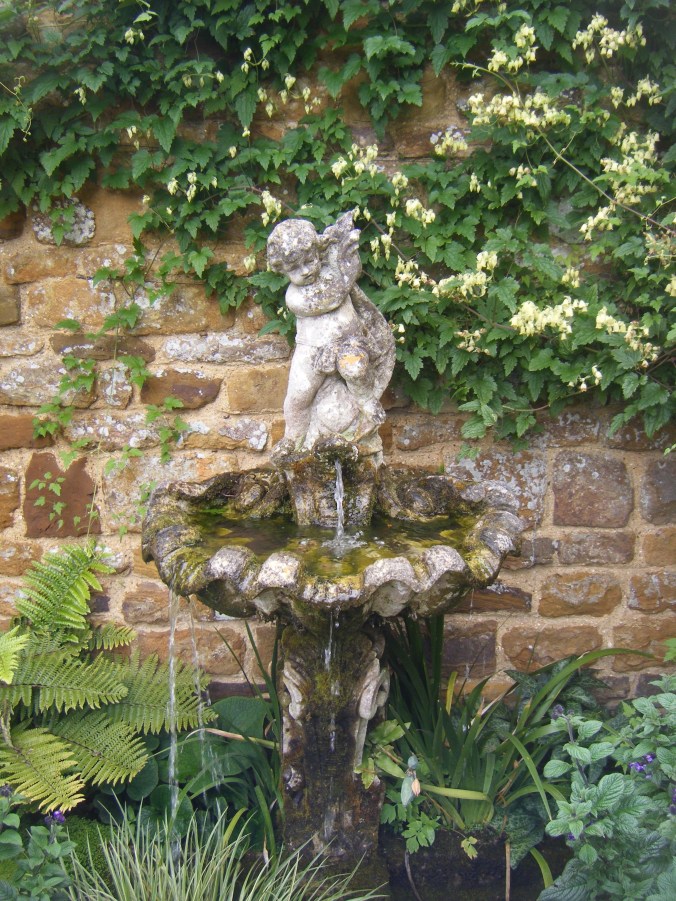
Just inside there is the soothing sound of water trickling from a charming little fountain.
DSCF5233.jpg

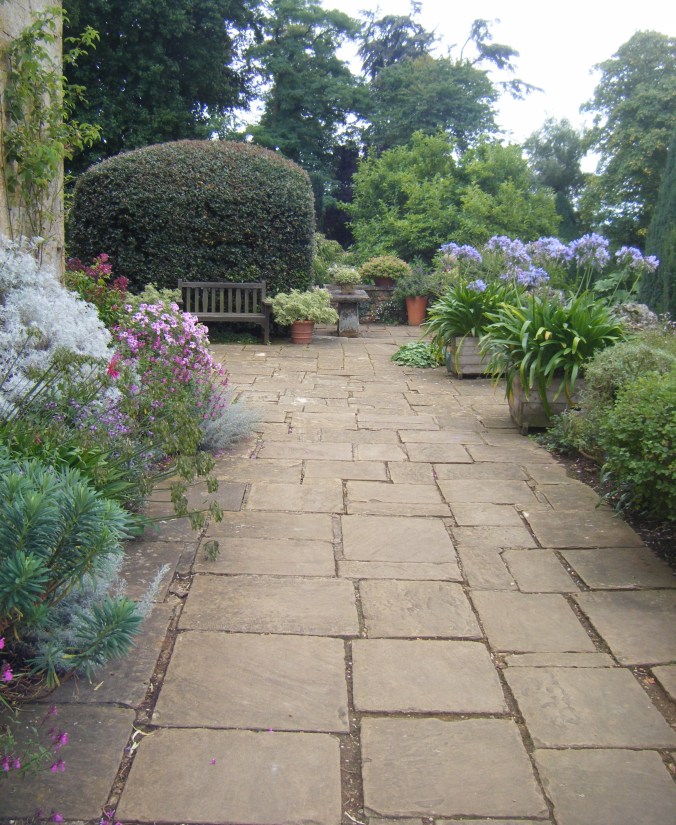
It is a welcoming terrace that stretches in front of the house; colours are gentle to the eye and there is plenty of space.
DSCF5234.jpg

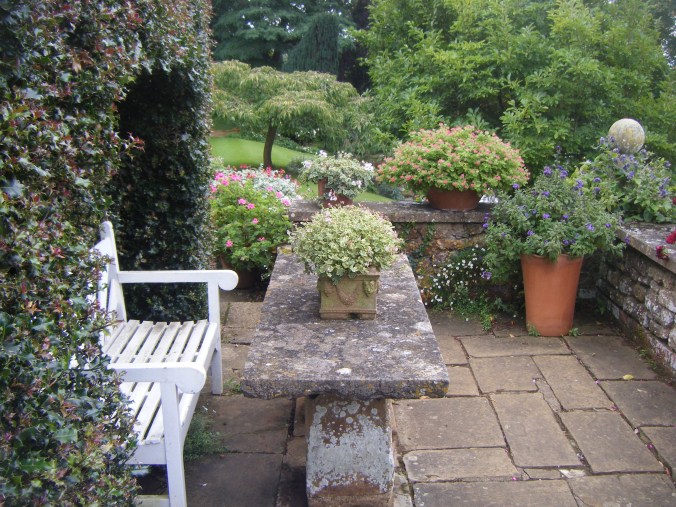
The low wall in the corner is a perfect height for pots overflowing with a variety of pelargonium.
DSCF5236.jpg

The terrace sweeps elegantly left-handed around the house where more pelargoniums look as if they are best in show.
DSCF5246 (1).jpg

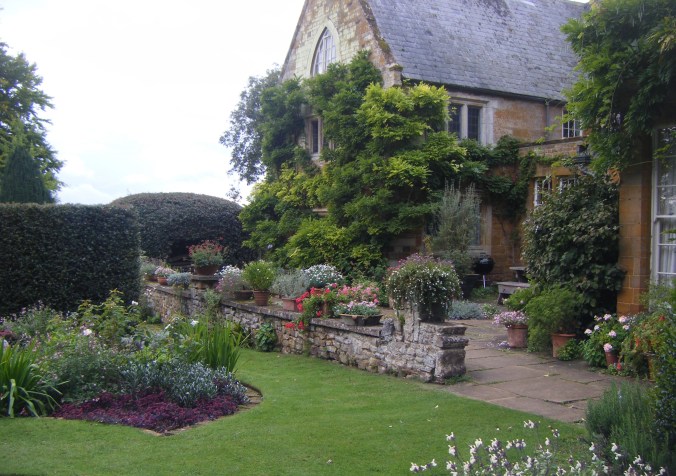
The popular garden school was started in 1994 and overlooks the old rose garden. Replanted in 2006 with selected plants that do not need feeding, watering or staking there seems to be plenty going on in this sheltered spot.
DSCF5243.jpg

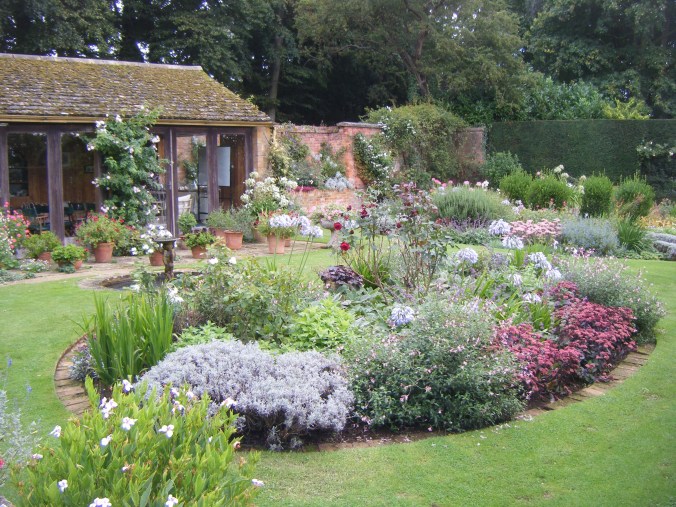
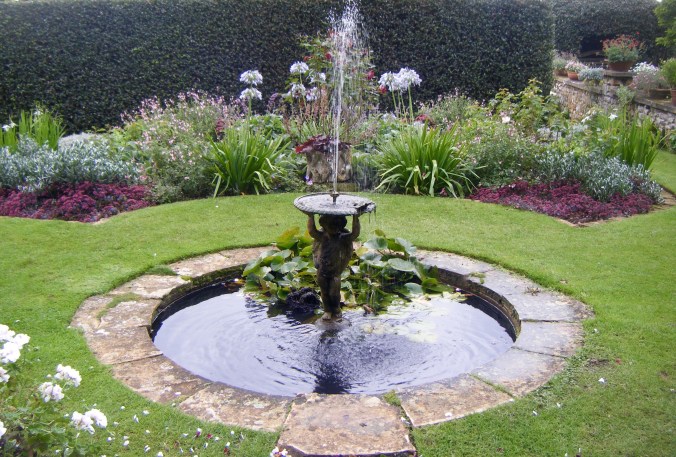
A fountain and pool  is backed by the semi-circle border perfectly balanced with sedum and agapanthus.
DSCF5245.jpg

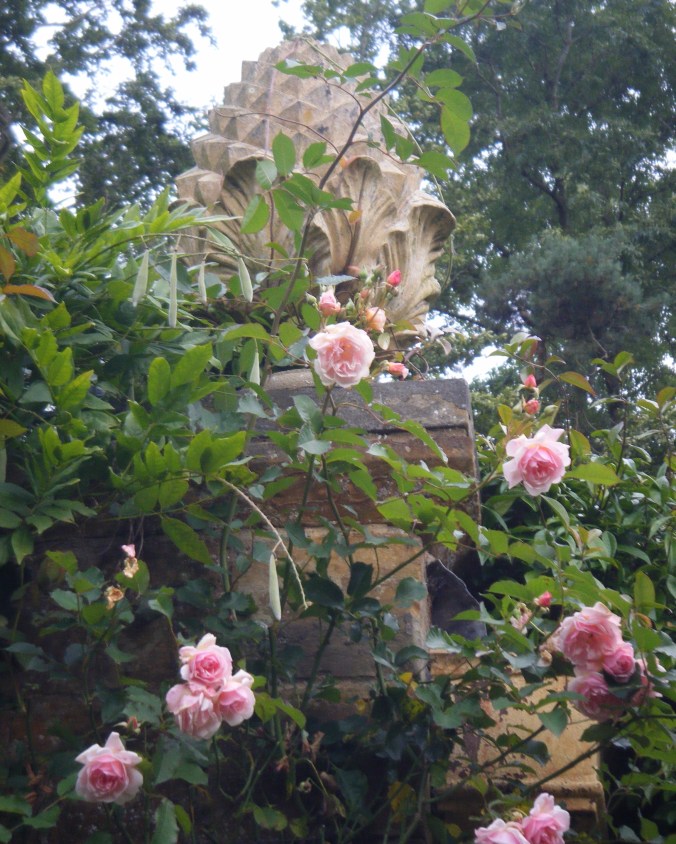
Late roses gracefully climb the walls and for a moment you think it could be June.
DSCF5244.jpg

We slip through the yew hedge into the woodland area where we find  Pan with his pipes,

DSCF5267

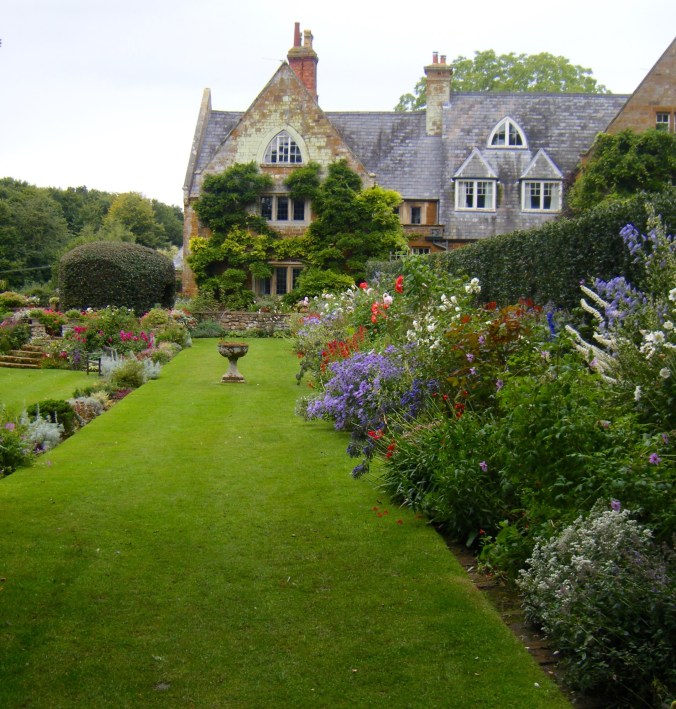
and return through the yew hedge to view the long border backed by the holly hedge. The guide book suggests it is at its best in July but now in September it is still a riot of colour.
DSCF5262 (1).jpg

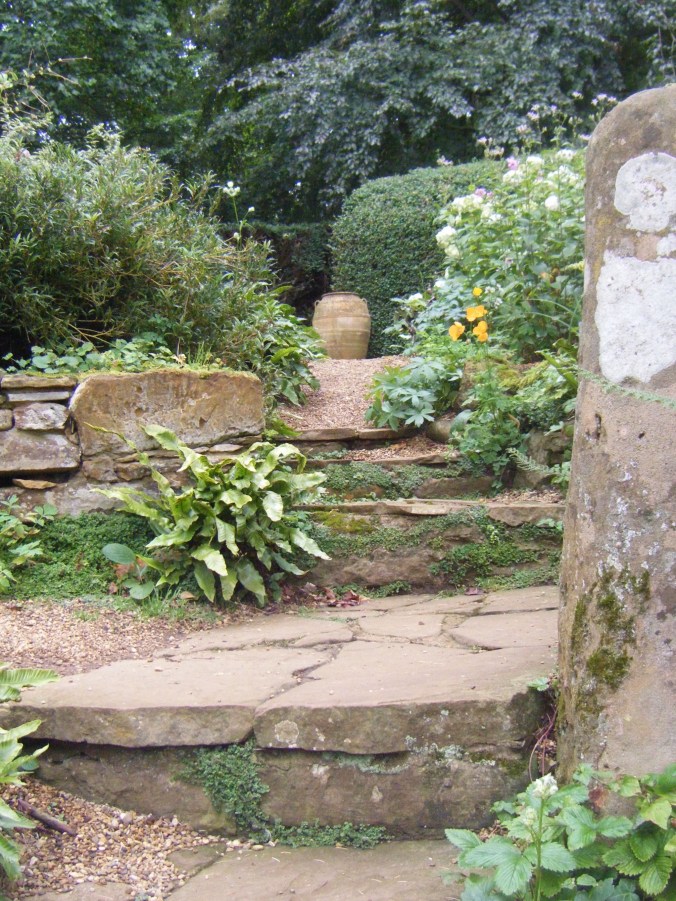
There are a number of habitats here and we move out of the shade of the woodland and take the sunny  steps down,
DSCF5273.jpg

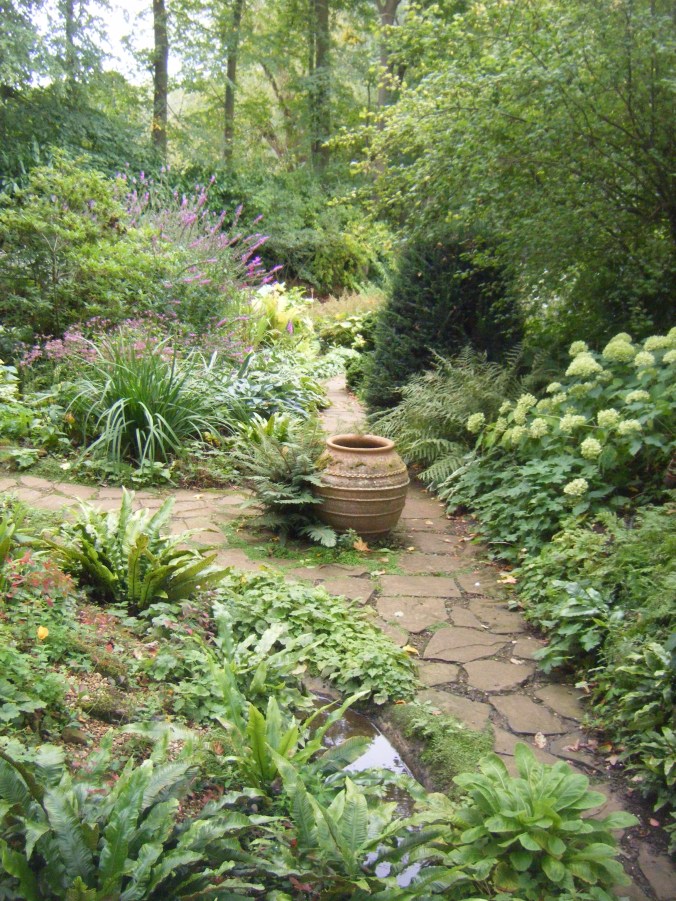
to follow the well-made paths through the water garden, where the verdant planting brings a feeling of peace and calm.
DSCF5268.jpg

We can look back towards the house over the pond where the swimming ducks are hidden by Gunnera growing boldly by the edge.

DSCF5272.jpg

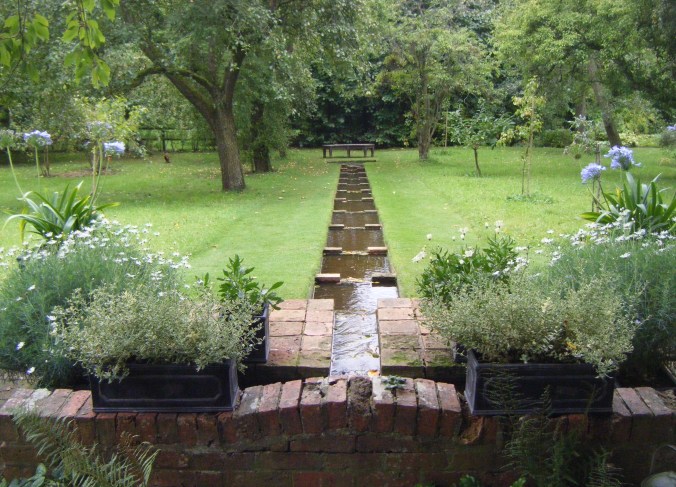
There is plenty of natural water here and having walked through the bog garden we find water flowing through a rill in the centre of the orchard.
DSCF5281.jpg

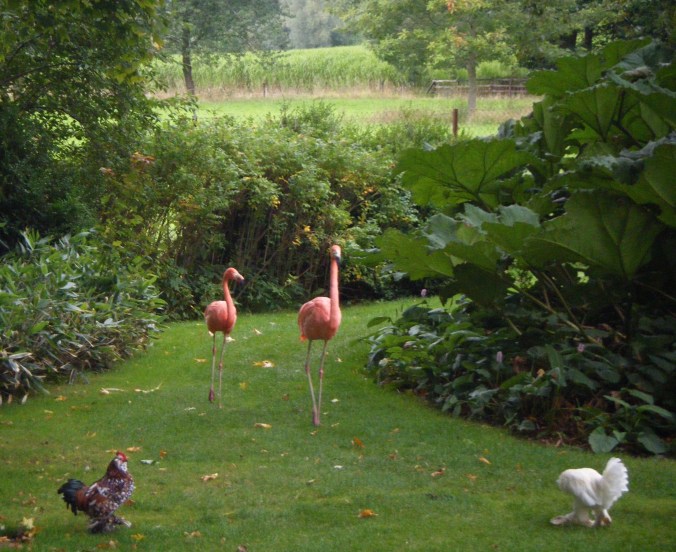
I was not ready for the spectacular sight of these two coming round the corner, accompanied by two small feathery outriders in stockinged feet,
DSCF5287.jpg

With elegant steps they seem to want to show us the way.

DSCF5290 (1).jpg

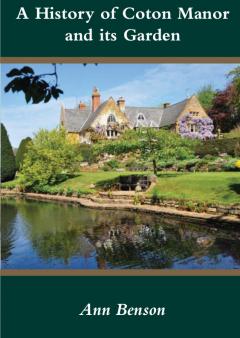
But it has begun to rain heavily so we rush to take cover in the tea room where I am delighted to find a book about Coton Manor written by a one time fellow student Ann Benson.
tp107_a-history-of-coton-manor.jpg

An interesting read about how the garden has evolved and the families who lived here. It is a reminder that gardens are all about the people who make them. The plant lists at the back are useful too.

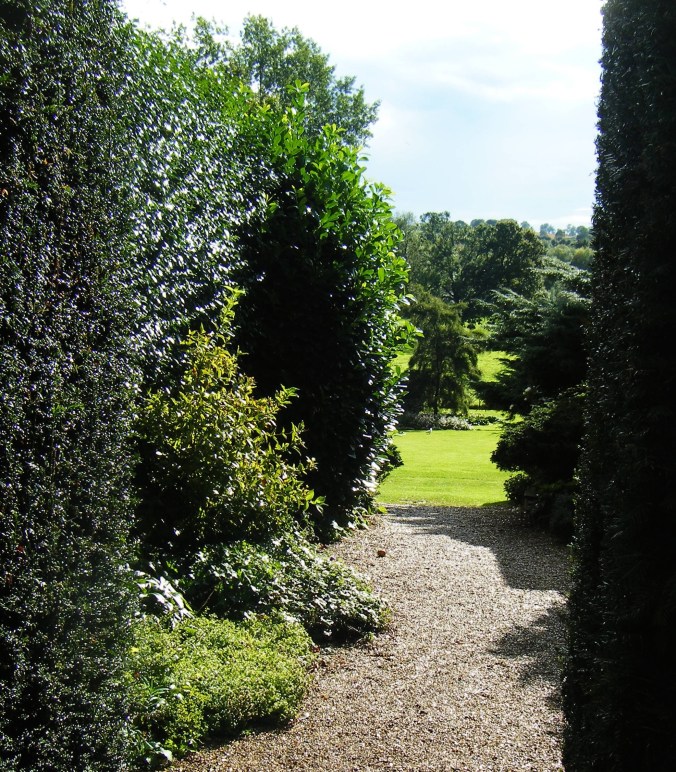
This is a garden that you just do not want to leave any part unseen, so when the rain has stopped we continue our exploration,
DSCF5320.jpg

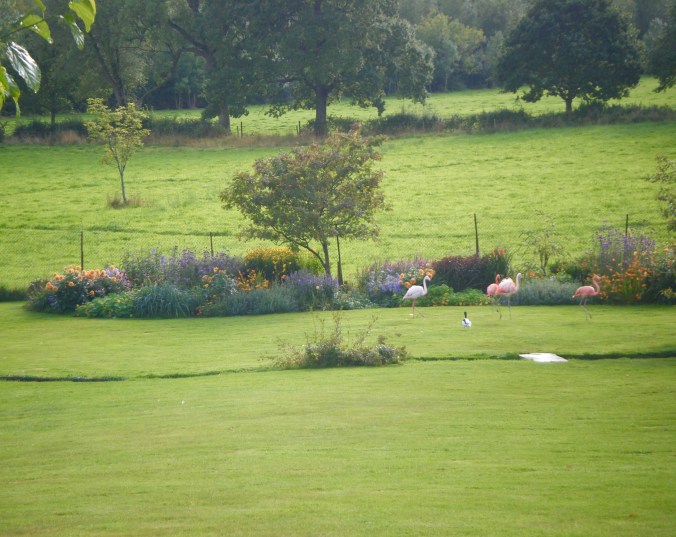
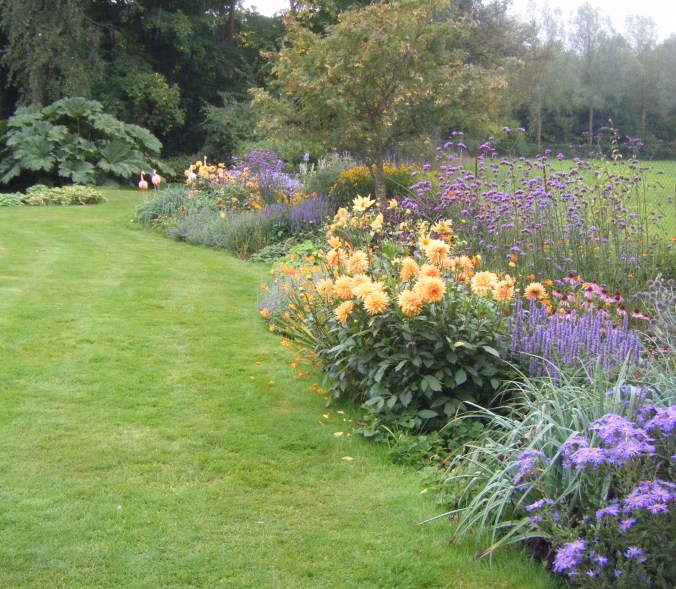
returning to the lawns and our pink-coloured friends. There is a lovely balance of open space, water and strong planting.
DSCF5330.jpg

I wonder if this border which runs along the edge of the meadow, rich in colour, has been planted with flamingos in mind.
DSCF5294.jpg

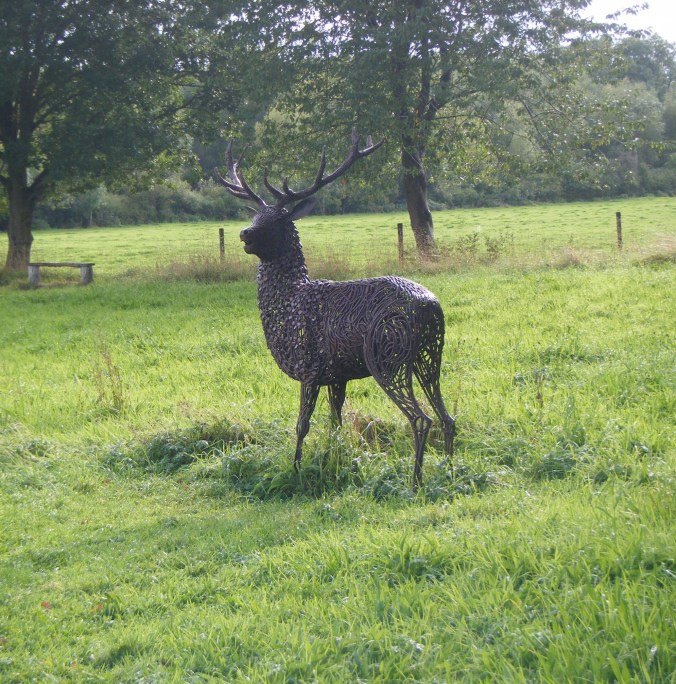
So amazed are we by the reality of the pink flamingoes we thought we’d better check out this chap as he stands so very still in the wild flower meadow.
DSCF5333.jpg

Pictures show this is a bluebell wood, and at this time of year we have to imagine the carpet of blue covering the floor around the trunks that stand so silently tall.

IMG_0075.jpg

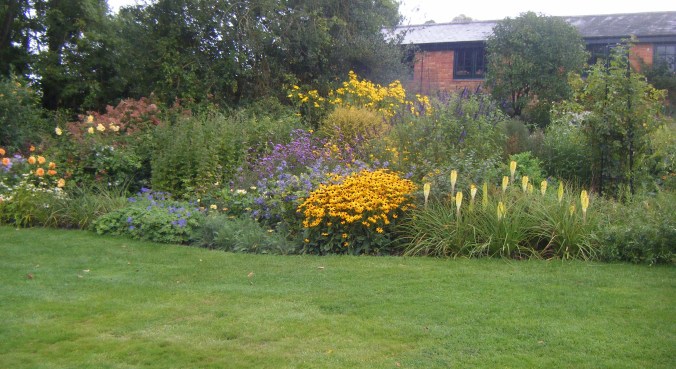
Walking back over the lawns we admire the blue and yellow border
DSCF5300.jpg

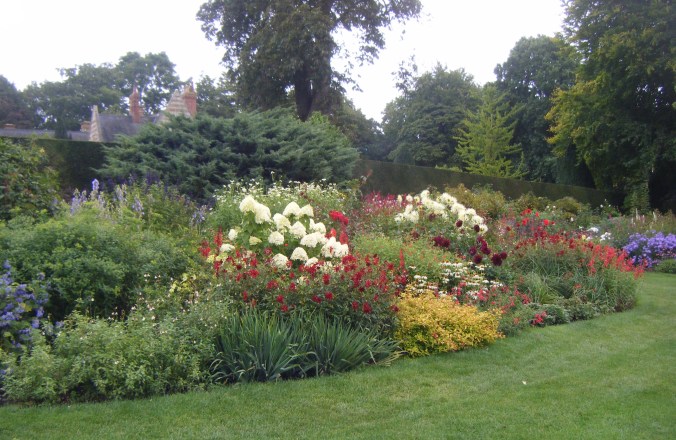
which merges into the red border. The planting is intense and I can’t help but admire the red clumps of dahlia ‘ragged robin’.
DSCF5301 (1).jpg

It is an inspiration to see what can be achieved in these borders in late summer.

DSCF5341.jpg

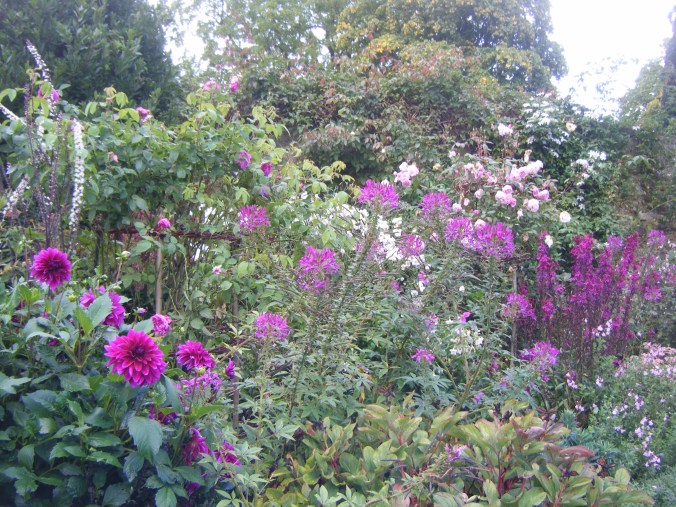
The final burst of colour is in the ‘acacia border’ near to the house; the last acacia was felled in 2013 and facing south east this bed is right now a splash of pinks and purple.
DSCF5350.jpg

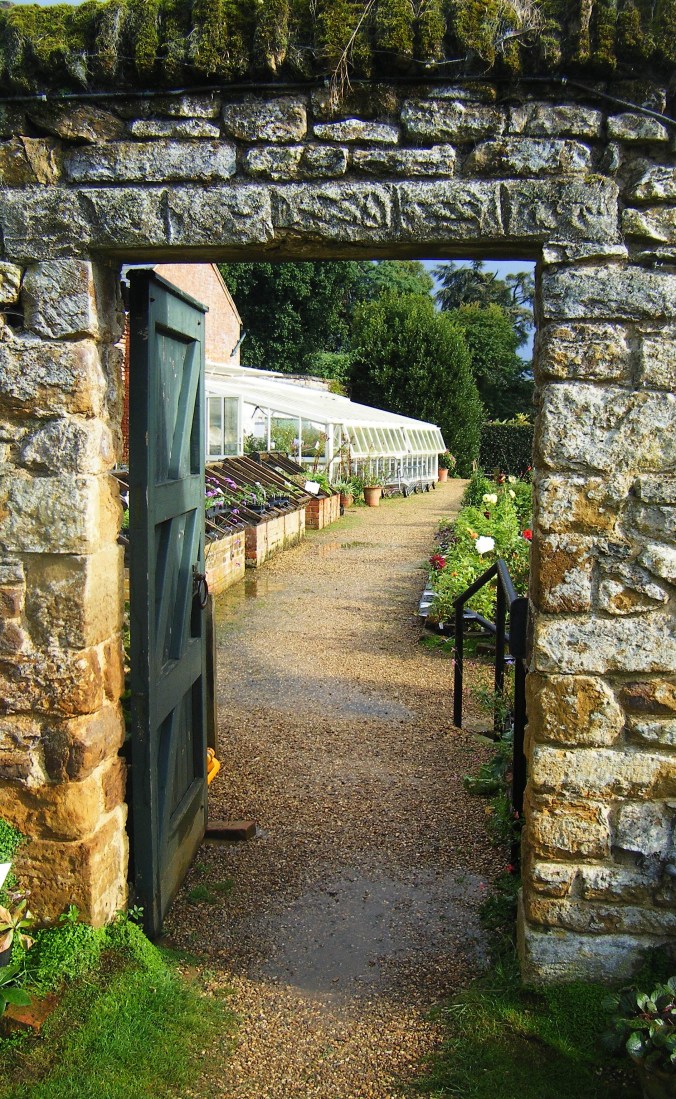
Coton has its own nursery and that in itself is a delight.
DSCF5315 (1).jpg

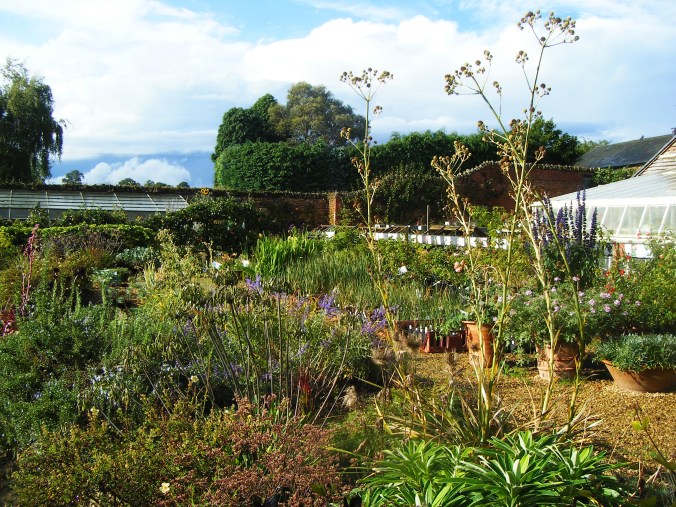
Rows of high quality plants fill the walled garden, the majority of which are propagated here and taken from specimens growing in the garden.
DSCF5319.jpg

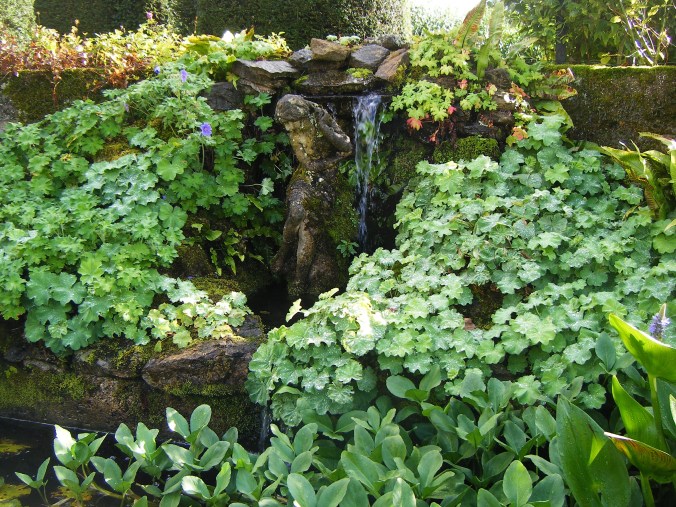
There is the sound of water here too, flowing into an attractive pond.
DSCF5317.jpg

I look for my dahlia ‘ragged robin’ and fancy this fuchsia paniculata,

DSCF5353.jpg

but the gardeners have downed tools today and have gone on a visit ironically, to East Ruston in Norfolk (http://www.e-ruston-oldvicaragegardens.co.uk).
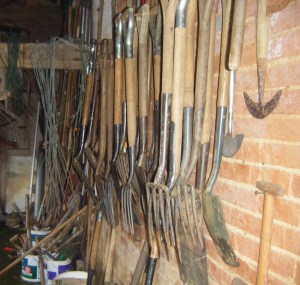
DSCF5352

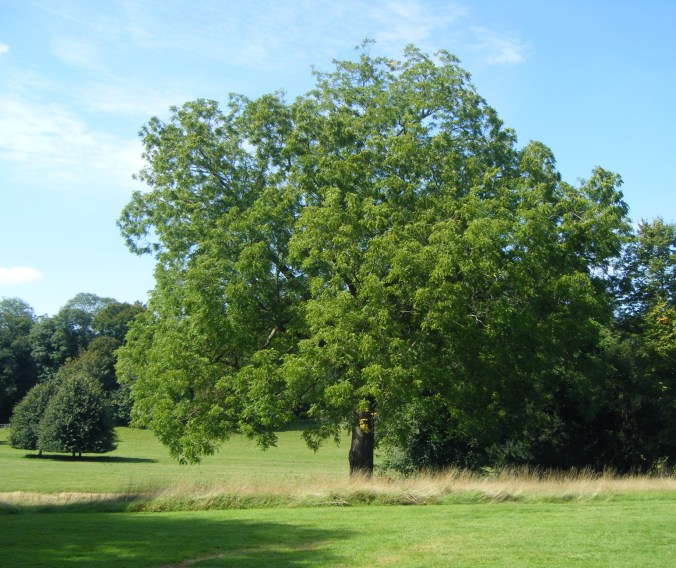
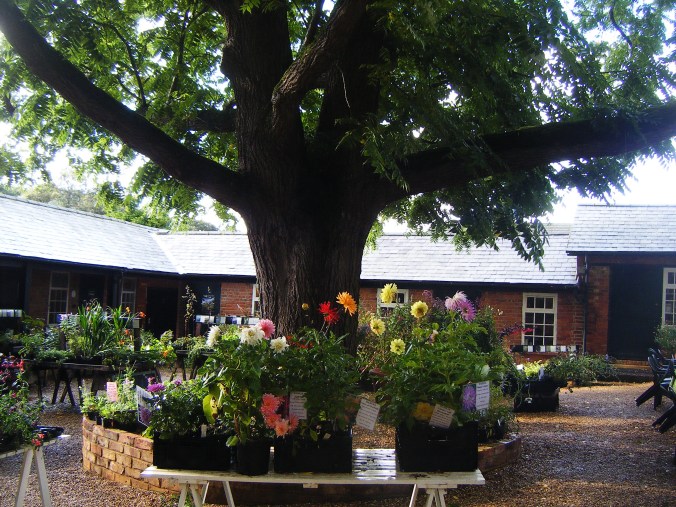
I will have to be content with some chicory I found amongst the dahlias being offered for sale under this huge Black Walnut tree.
DSCF5314.jpg

It is the very same tree as in this picture taken some 90 years ago of the present owner’s grandfather.

DSCF5307.jpg

Copyright Ann Benson, A History of Coton Manor and its Garden, p. 41.

Coton is a special place that I have wanted to visit for some time and no doubt I will return. It has evolved through three generations of family and with its high standard of horticulture it is evident that although open to the public, it is still a much loved private garden.

——-75——-

Sarah Raven’s Cutting Garden, floriferous fun. (74)

Many of us have been inspired by Sarah Raven https://www.sarahraven.com/ (for those of you who don’t know), so I could not resist a visit to her garden at Perch Hill near Brightling in Sussex when she opened for the NGS on a Thursday in late August.

It had been simply dreadfully wet the day before, and as we parked in the field below the house a lady in the next door car told me how glad she was that she had not come the previous day, “Much better to come on an NGS day” I suggested, “Oh, why is that?” she asked, “the people are so much nicer” I replied and swiftly moved up through the meadow past the willow beds to where the garden gate was open.

DSCF5093.jpg

Narrow paths divide this first part of the garden which is laid out in a sort of gloriously floriferous grid system, where beds of flowers are cut for Sarah’s flower arranging courses.

DSCF5097.jpg

As we walked up and down the gravel paths there was a burst of colour on either side. An area originally devoted to annuals, it is now full of perennials grown for picking such as the striking persicaria orientalis standing at a full five feet tall,

DSCF5094.jpg

and slightly shorter, swathes of plants notably zinnia, either lime coloured (zinnia Benary’s Giant Lime),

DSCF5122

or in pinky/red (zinnia Queen Red Lime); paired in a vase together they look stunning. It is for these colour combinations that Sarah is so famous.

DSCF5124

The plants are cultivated and trialled here before they are offered for sale and I wonder if  this rudbeckia ‘Russet Glow’ will be added to the collection.

DSCF5116.jpg

Structures have that unpretentious ‘home-made’ feel to them, constructed from the willows that I passed on my way in. Arches to support climbers up and over the path,

DSCF5137.jpg

or simply as a decorative focal point at the end of a parade of dahlias.

DSCF5103.jpg

Twenty three years ago this was a tumbledown ex-dairy farm which Sarah and her husband Adam renovated. As we walk through the hedge up to the house, the concrete farm track that we cross over is the only evidence of what it might have been.

DSCF5140.jpg

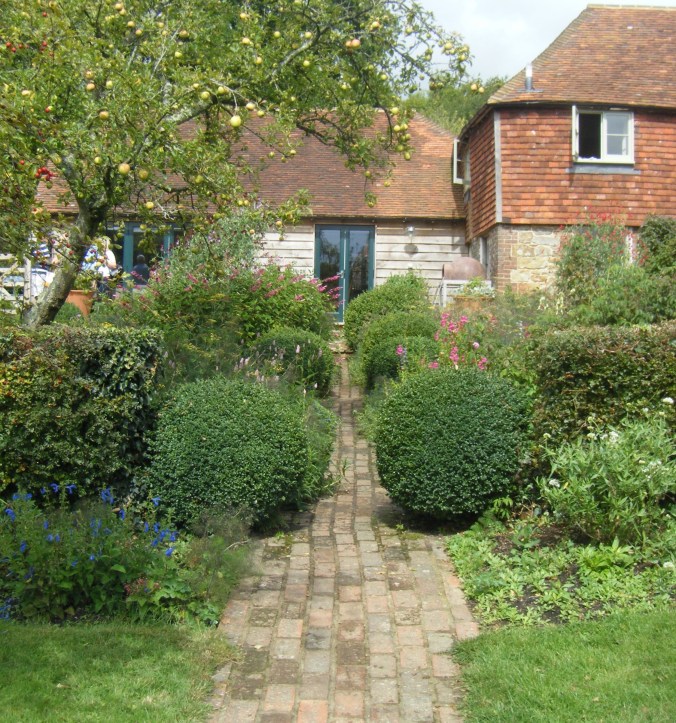
The neatly laid brick path brings us to the garden directly in front of the house with its old apple tree towering above the soft planting of flowers and structured box balls.

DSCF5228.jpg

A path runs horizontally right to the barn where there is the feel of a cottage garden,

DSCF5143.jpg

with perhaps a suggestion of Great Dixter, a garden not so far away. The plants in their enthusiasm almost hide the pathway;

DSCF5145.jpg

there is not an inch of ground left uncultivated.

DSCF5152.jpg

I thought I would encounter a far more commercial operation but this is very much a family home, and perched on a hill it must be heavenly to sit here, admire

DSCF5156.jpg

and watch everything that grows either in the trial garden below,

DSCF5150.jpg

or look out at the distant view beyond. It is here that Sarah’s husband Adam Nicolson asks if we have come far and is amazed to hear that we ventured out from Norfolk and, just for a moment we feel like martians from another planet. He has converted the farm to an organic 90 acres, replanting hedges and encouraging wild flowers, and begins to warm to us as we admire the wildflower meadow close by.

DSCF5147.jpg

Just round the corner is the shepherd’s hut familiar to anyone who has read Sarah’s garden cook book.

DSCF5167.jpg

No area is left unplanted even tucked away on the north side of the house,

DSCF5166.jpg

and further on still, the former cart sheds are incorporated into the design of the garden,

DSCF5169.jpg

and we look back through the rich tapestry of colour

DSCF5175.jpg

where to the right the detached oast house, an office for Adam, rises out of  bright tithonia mixed with soft miscanthus grass.

DSCF5174.jpg


A small marquee is set up on the lawn set ready for this afternoon’s  demonstration.  It is time for coffee and cake which is served in the beautifully restored barn.

DSCF5189.jpg

Gardens never stand still and in an area by the house, once shady and muddy is the most recent renovation in what is now called the Dutch yard and where water deliberately flows gently over a rustic tank.

DSCF5182.jpg

Sarah is famous not only for her skill in growing and arranging flowers but also her imaginative ideas for the planting of pots. Everywhere there is a variety of containers which are filled with delightful combinations of bulbs, annuals and perennials, or sometimes simply a single splash of colour such as pink diascia on the corner of the barn.

It is not just flowers either; edible crops are grown, naturally in an ornamental way, which supply the family and also the kitchens that are used either when a course is running or on open days.

DSCF5199.jpg

A grass path cuts diagonally across the slope garden up to the glasshouse,

DSCF5214.jpg

where at one end is table and chairs and a loud display of geraniums,

DSCF5224.jpg

and at the other it is a leafy jungle of crops of ripening aubergine, peppers and tomatoes.

DSCF5222.jpg

I always learn something new on a garden visit and today is no exception. I have discovered that aromatic salvias can help to keep roses relatively disease-free, preventing the dreaded black-spot and mildew.

DSCF5194 (1).jpg

In a letter to Beth Chatto, in the 1990s Christopher Lloyd described Sarah as “really energetic and creative”,  proof of which can be seen in not only her enthusiastic writing, presentations and her business but also in her charming garden. Lloyd went on to sum up her influence as “a more dynamic and showy style of gardening than has been fashionable for many years”,  testimony of which can be seen in the number of visitors on an Open Day who have come to admire it for what is essentially a private home.

I am off to order my tulips from her delightful catalogue, the illustrations of which will now have much more meaning.

Put it in your diary for a jaunt next year but do get there in good time.

——-74——-


Scotney Castle, romance and ruins in the rain. (73)

I have for some years now been meaning to visit Scotney Castle, a National Trust property near Lamberhurst in Kent. It qualifies as one of my ‘ninety’ because it opens once a year for the NGS. So on my way driving down to Sussex a few weeks ago with fellow garden owner Kate, we took the opportunity to call in.

DSCF4992.jpg

It was a thoroughly miserable day so we took shelter by looking inside the house first. Commissioned by Edward Hussey III the house was built by the architect Anthony Salvin between 1837- 44. The garden was created at the same time, and with the house positioned to overlook the Old Castle and estate, the style is conducive to the perfect picturesque country home.

There are essentially four gardens: the formal terraces by the house, a walk through the quarry, the ruined castle or romantic folly, and the walled garden.

DSCF5071.jpg

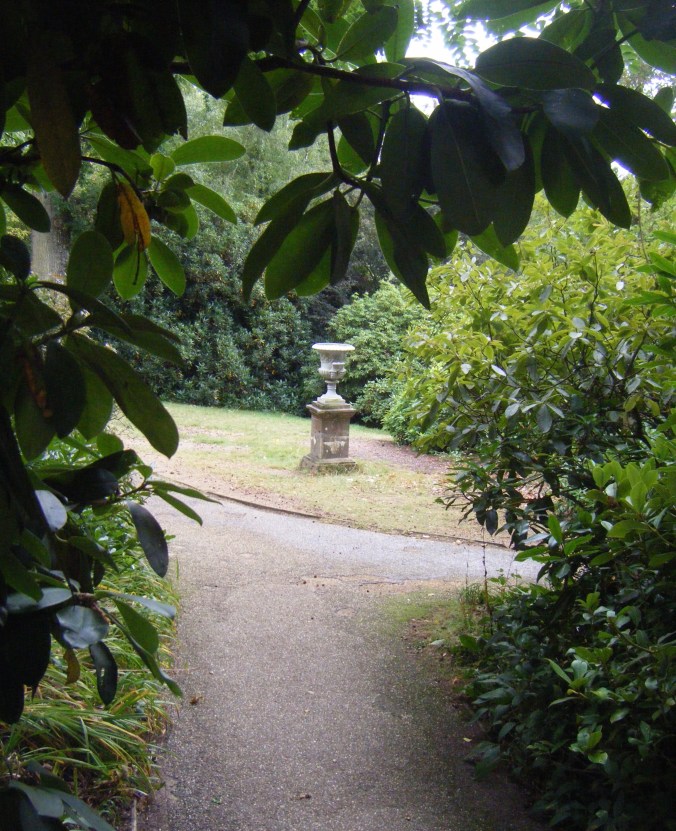
Near the front door is the hallmark of  many an English country house, the Magnolia grandiflora.

DSCF5075.jpg

The terrace by the house is very unfussy and a group of hydrangeas try to lift our spirits on this grey day.

DSCF4994.jpg

Gravel surrounds the house and the terraced lawns are left un-mown in order to conserve the green-winged orchids which flower in April and May.

DSCF4993.jpg

No sign of the orchids on this wet August day, just an occasional showing of an ox-eye daisy. My companion is dismayed and feels the wildflower look is not in keeping with a house of this era.

DSCF4996.jpg

On the north-easterly side, steps lead down to a fountain where the view stretches over the Weald.

DSCF5006.jpg

Lying in wait on the fountain a cat remains hopeful for a fish or two.

DSCF5005

Once the scene of Victorian splendour,

DSCF4997.jpg

there is now an air of decay on this side of the house.

DSCF4999

Could this really have once been a place for bathing beauties?

DSCF4998.jpg

From the Belvedere at the end of the terrace

DSCF5008.jpg

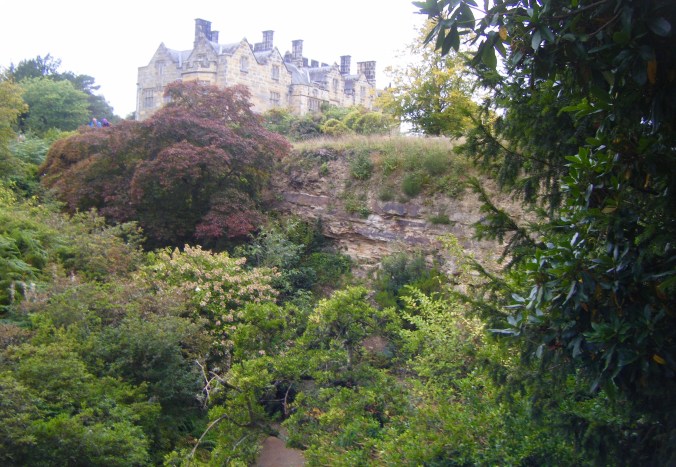
we look down through the mist to the ruined Castle below; the autumn tints are just beginning to come,

DSCF5010.jpg

and descend through paths of mature evergreen azaleas and rhododendrons.

DSCF5014.jpg

From the top of the quarry we look back up at the house,

DSCF5016.jpg

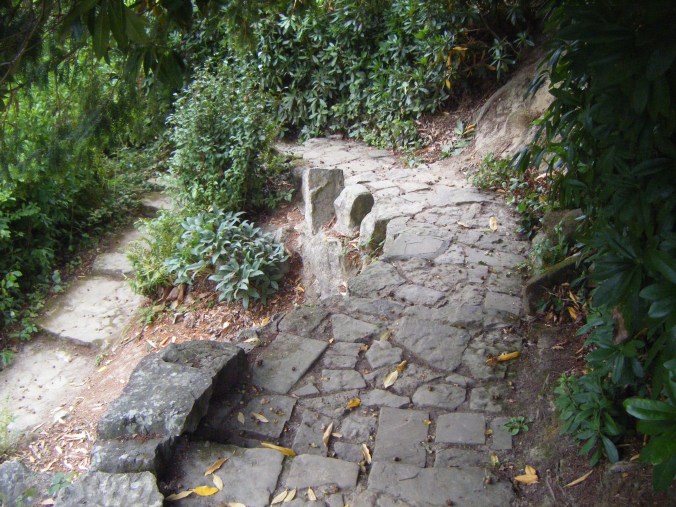
before disappearing further down the ancient-looking stone path.

DSCF5017.jpg

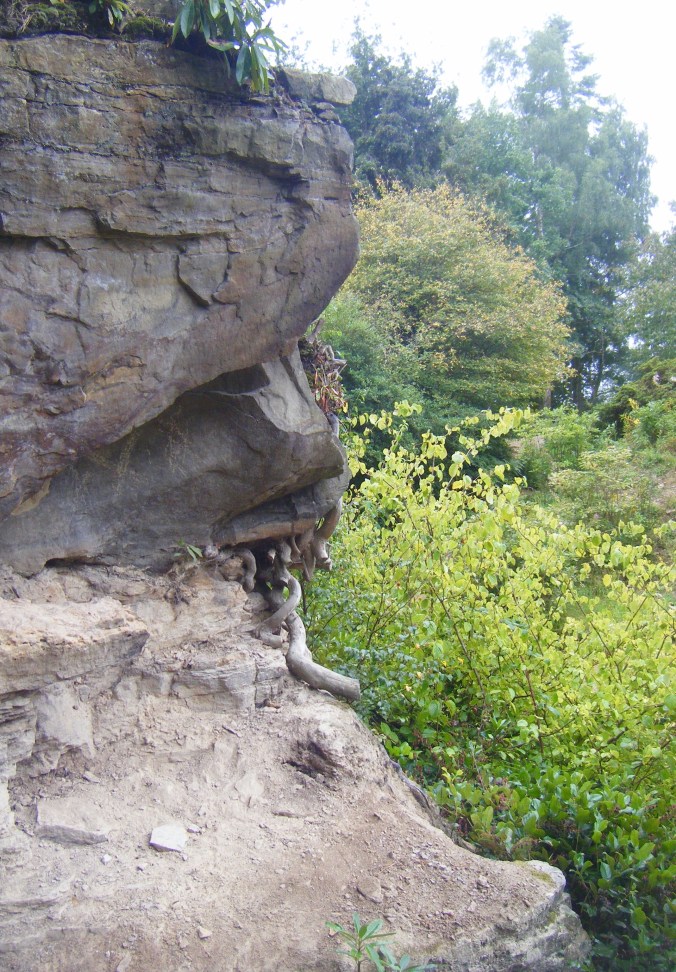
It is from here that the stone was quarried to build the house.

DSCF5018.jpg

It is a lovely walk through a dense collection of mixed shrubs and we particularly admire a fine specimen of the hydrangea family kirengeshoma palmata, just coming into flower.

DSCF5020.jpg

Emerging from the quarry there is a patch of perennials planted to provide a little colour for this time of year,

DSCF5026.jpg

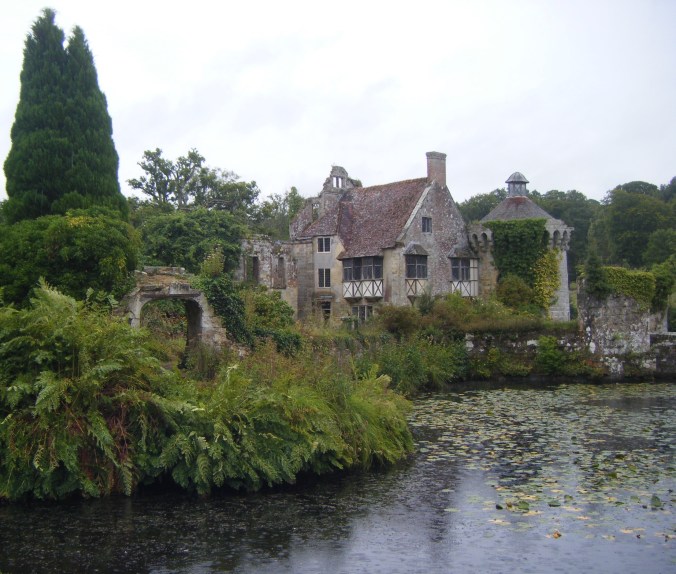
and arrive at the centrepiece of this picturesque landscape, the ruined Castle. It was partially demolished by Edward Hussey III to create a romantic folly.

DSCF5030.jpg

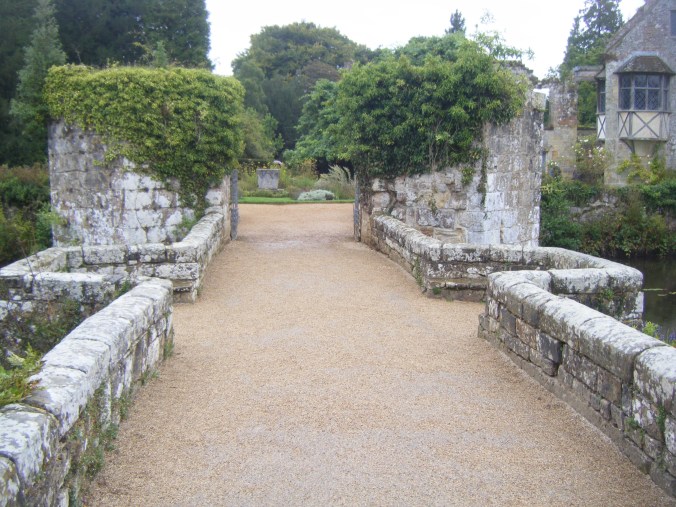
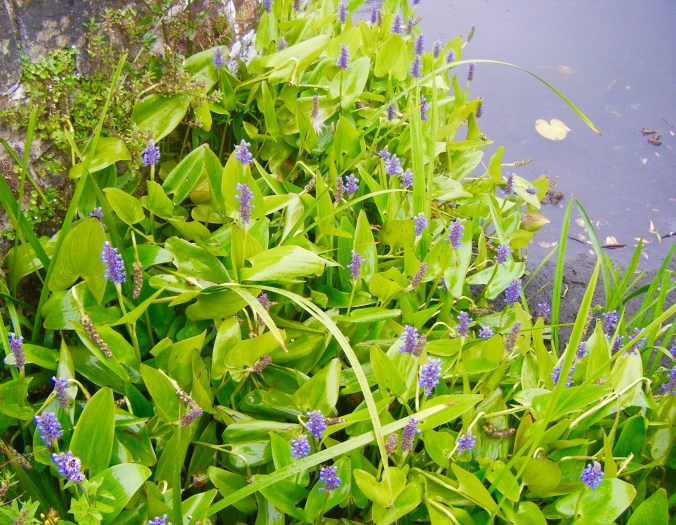
Some folly, it is much larger than I imagined and we cross over the bridge,

DSCF5036.jpgwhere below, a clump of Pontederia cordata hugs the edge.

DSCF5038.jpg

It is not all ruined, for we are able to climb the stairs and enjoy the view from the upstairs windows.

DSCF5041.jpg

Wisteria climbs over solid archways, inviting us through into the garden beyond,

DSCF5040.jpg

where there is still plenty of colour in the border running along the ruined walls.

DSCF5046.jpg

Itea illicifolia cascades down from up high.

DSCF5048.jpg

The rain is persistent but does not detract from the beauty of this watery setting.

DSCF5051.jpg

Returning to the house the leaves of the liquidamber styraciflua are just one of the many fine trees that are beginning to turn.

DSCF5064.jpg

On the west side of the house is the hexagon-sided Walled Garden and as we enter we are confronted by blaze of colour, dahlias one side

DSCF5077.jpg

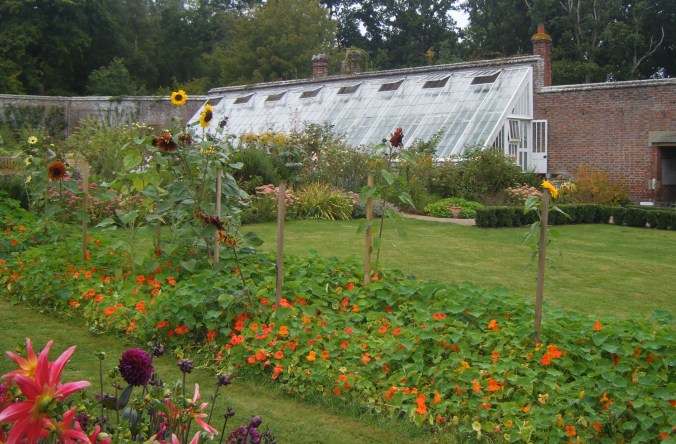
and sunflowers underplanted with nasturtiums on the other.

DSCF5089.jpg

A traditional water carrier is reduntant today.

DSCF5079

It is not just flowers that grow; there are plenty of vegetables and we are reminded that the pumpkin season will soon be upon us.

DSCF5085.jpg

We love the style of label embedded in the soil.

DSCF5086.jpg

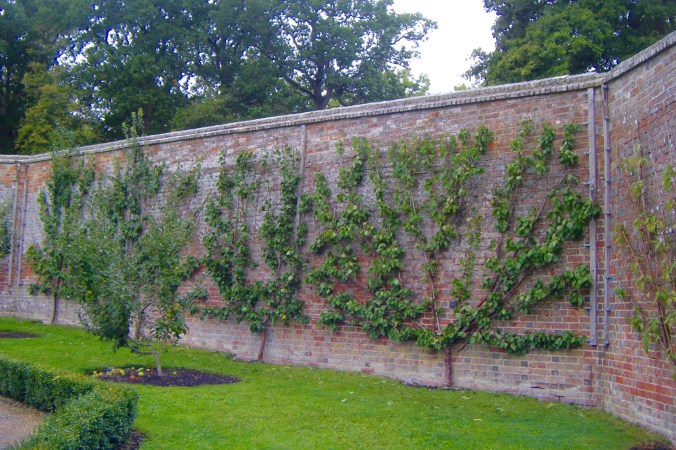
It is such a pleasure to see a huge variety of fruit trees skilfully  trained against the walls.

DSCF5081.jpg

The NGS and the NT have a long association. After the war the NGS offered to donate funding to the National Trust to help restore and preserve important gardens. In return, the National Trust opened many of its most prestigious gardens for the NGS, a partnership that lasted for many years.

Today each organisation has gone its separate way with the NGS focusing more on funding nursing charities than conservation. A few properties such as Scotney with the garden full of all year-round interest also open their garden gates for the scheme. Despite the rain we have found plenty to enjoy and it is well worth a visit when it is open for the NGS in May.

DSCF5087

——-73——-

Gilberts Nurseries and dreams of dahlias (72)

Not far from The Island (previous blog), just off the A27 near Romsey is a dahlia field open for the NGS.

DSCF4777.jpg

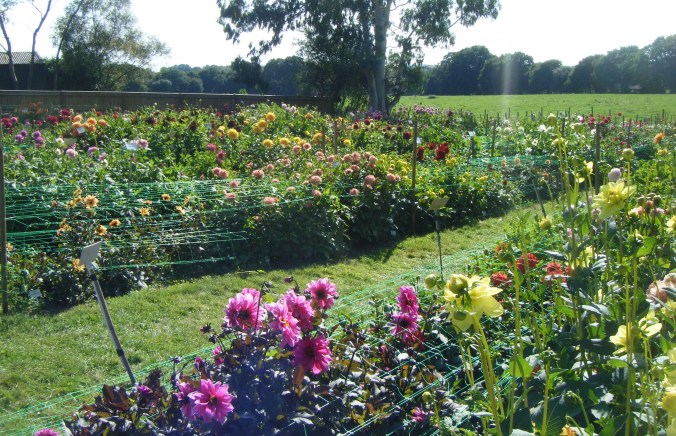
Gilberts Nursery pride themselves in being growers of unusual plants and also specialise in Dahlias. ‘This may not exactly be a garden’, the yellow book describes, ‘but come and be amazed by the sight of over 300 varieties of dahlias in our dedicated 1 1/2 acre field’. So that is what we did.

I have to admit that I have never really been a dahlia fan. Perhaps it is memories of silly childhood limericks and inappropriate colour combinations. However this year I seemed to have grown up a little and have begun to warm to this diverse flower. So many varieties with a long flowering season, here it was quite a sight.

DSCF4773.jpg

Row upon row of dahlias of all colours, supported by netting and clearly labelled.

DSCF4776 (1).jpg

Originally used by the Aztecs as a source of food and medicine, the dahlia hails from Mexico. Its introduction as a food crop into this country at the same time as the potato during the 15th Century was, not surprisingly, a great success.

DSCF4809.jpg

It was not until 1789 that the director of the Botanical Garden at Mexico City sent the dahlia to Antonio Jose Cavarilles, who was working at the Royal Gardens of Madrid in Spain.

DSCF4816.jpg

The original plant was a the tree dahlia, dahlia imperialis which can grow to about 20 feet and has hollow stems which the Aztecs used as a source of water and water carriers. It is from this one type that we get all these different varieties.

4f56cb377fa4c_59305n (1).jpg

Cavarilles in fact grew three new plant forms, dahlia pinnata, dahlia rosea, and dahlia coccinea and he named the genus in honour of Andreas Dahl, a Swedish botanist and student of Carl Linnaeus.

DSCF4777 (1).jpg

I have always been amused by the Americans who pronounce them ‘Darhlias’; well of course they are right, so how on earth did we start calling them ‘Dayhlias’?

Talking of Americans this is Thomas A Edison, a dahlia classified as a medium sized ‘decorative’.

DSCF4775.jpg

There are in fact 15 formation classifications, more of which can be seen on the very helpful website of the National Collection of Dahlia held at Varfell Farm, Penzance,  https://nationaldahliacollection.co.uk/selecting-your-dahlia/, who are also supporters of the NGS.

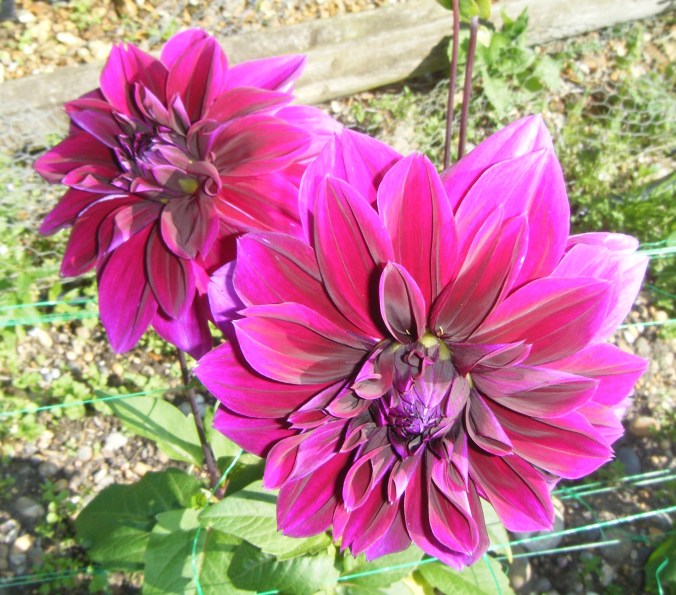
A popular type is the neat ‘ball’;  this one is named Barbary Monitor,

DSCF4782.jpg

another ‘ball’ but in miniature is the Auroras Kiss.

DSCF4787.jpg

There is the ‘miscellaneous’ type such as Albert Schweitzer,

DSCF4784.jpg

or the giant ‘decorative’ Alvas Supreme.

DSCF4788.jpg

At the end of the field is the seedling bed,

DSCF4794.jpg

where you can sit back and enjoy the splendour. Hasn’t the plastic chair come on a pace; now fashioned in adirondack-style they can be purchased in lime green.

DSCF4792.jpg

White Swallow is not yet listed but is probably of the waterlily type,

DSCF4798.jpg

similar to the bright Kens Flame.

DSCF4799.jpg

There is rather a magnificent type called the ‘collerette’, this is glorious Mary Evelyn,

DSCF4802.jpg

a contrast to the quieter Apple Blossom.

DSCF4820.jpg

Bees seem to enjoy the ‘miscellaneous’, busy in the centre of Daisy,

DSCF4811.jpg

and also pink Coccinea.

DSCF4813.jpg

It is  family-run nursery, with plenty for sale. I am anxious to purchase Pooh which I came across in another garden and while the young assistants set about searching amongst the pots I chat to Daisy who has found shade under the table.

DSCF4821.jpg

Alas Pooh has proved to be a popular choice, for others have beaten me to it and all that can be found is a dishevelled specimen. Attacked by the wasps it is offered to me at a knock-down price. Never one to miss a bargain and combined with the assurance that all will be well with a bit of TLC, I am glad to take it home.

I am happy to report that Pooh is now doing hummingly well back.

DSCF4345.jpg

——-72——-

The Island, standing the Test of time. (71)

The garden gate was open at The Island on the last weekend in August. Situated on the River Test near Romsey in Hampshire, it was the second of two consecutive days of opening and the sunny weather attracted plenty of visitors.

DSCF4889

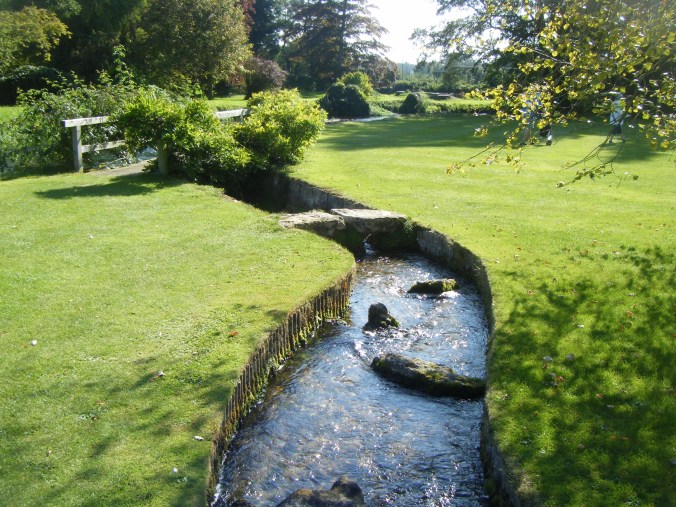
It really is an island and in order to gain access we crossed a footbridge over a good sized tributary,

DSCF4822

where plenty of trout swam in the sunlit water flowing beneath.

DSCF4824.jpg

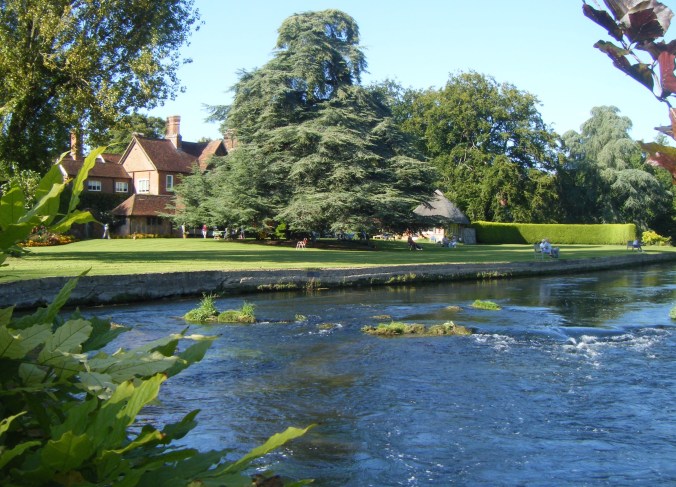
Through the branches of a large cedar cedrus atlantica Glauca, the neatly-mown lawn sweeps down to the River Test,

DSCF4884.jpg

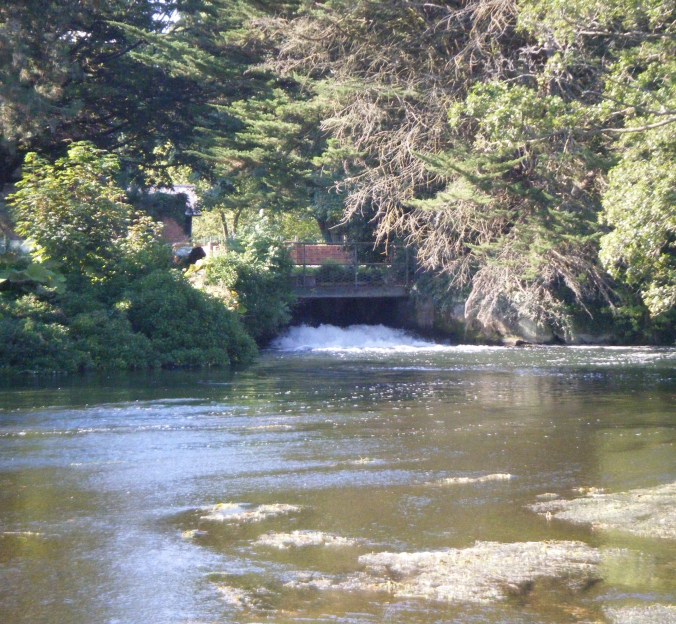
where the gin-clear water flows by. Just for a moment try to imagine that soothing sound.

DSCF4826.jpg

A small stream diverts into the garden where a visitor sets up an easel for an afternoon of painting.

DSCF4829.jpg

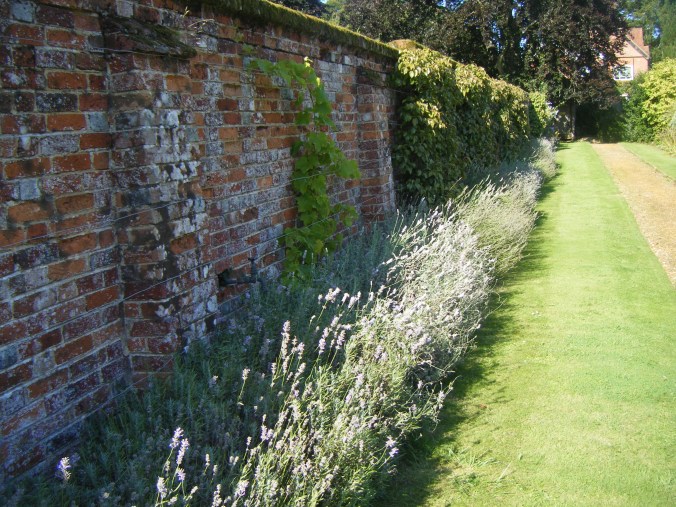
The garden is sheltered by a wall that runs along the back of the property parallel with the tributary. The lavender is over but the air is filled with the scent.

DSCF4855.jpg

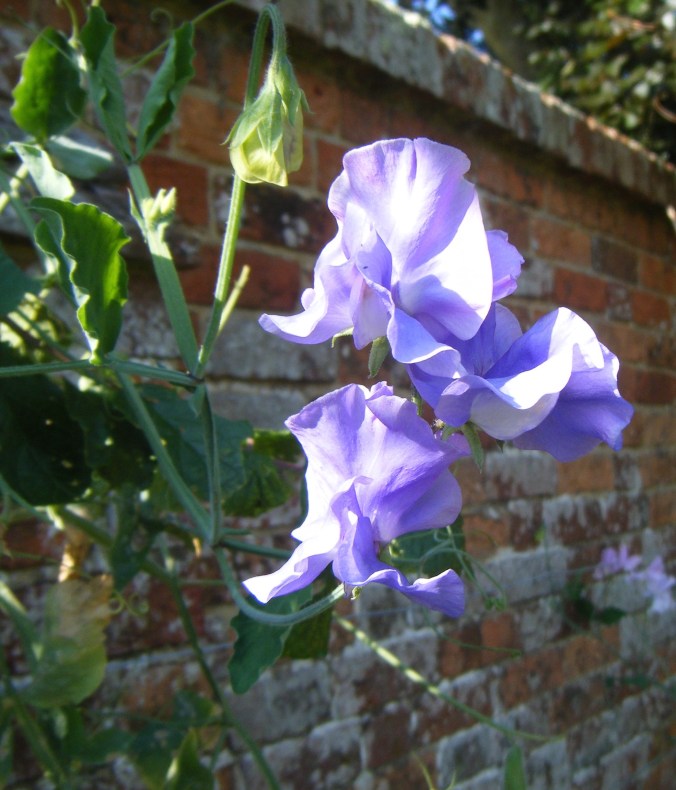
The wall is home to many a climber and this sweet pea is looking as fresh as it might in the month of June.

DSCF4857.jpg

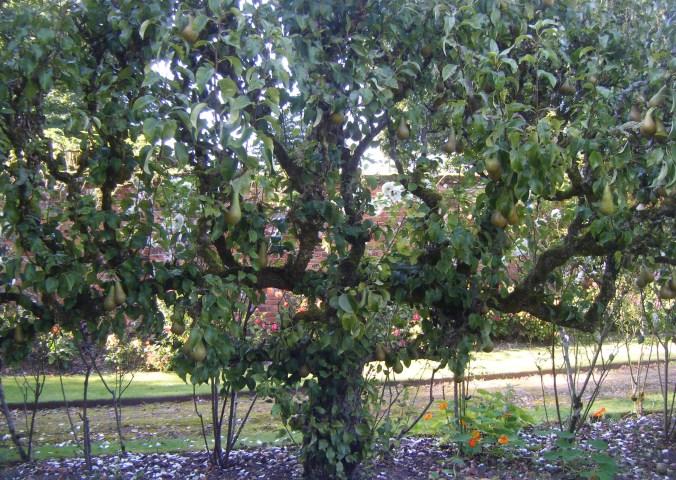
Old espaliered pears laden with fruit grow in the border along the path,

DSCF4836 (1).jpg

and a long rose tunnel runs in a southerly direction from wall to river.

DSCF4848.jpg

Herbaceous borders are set in the lawn,

DSCF4847.jpg

angled and shaped they are rich with autumn colour.

Angel’s trumpets, brugmansia dangle over rudbeckia and asters

DSCF4835.jpg

There are annuals too, and nasturtiums cover the ground.

DSCF4846.jpg

In the centre of a circular bed amongst the black grass ophiopogon planiscapus ‘Nigrescens’, I spy three ceramic poppies from the Tower of London’s Blood Swept Lands and Seas. That makes eleven poppies I have found on my travels so now where are  the remaining 888,235?

DSCF4852.jpg

The lawns are extensive and this is the professional mechanical team, cleaned and oiled, which provides that smooth sward.

DSCF4831.jpg

At the end of the garden the river takes a sweeping bend, this marks the westerly boundary where over to the right is a Trout Farm.

DSCF4839.jpg

Here too in this peaceful spot is the perfect place for a privy. Neatly bricked and tiled, it is not open today.

DSCF4841.jpg

This part of the garden with its well established shrubs and trees is about three acres, and before returning to the main lawn in front of the house we turn to the right,

DSCF4849.jpg

and step over the bridge which spans The Test.

DSCF4828.jpg

Across the river is an arboretum planted by Harold Hillier in the 1930s; many of the original species remain and have grown to a substantial size. Varieties of ornamental trees include prunus, pyrus and malus planted to provide colour in the spring and liquidambar, acer and fagus for autumn tints. An assortment of shrubs bring interest throughout the summer months.

The warning is not heeded today for it is the entrance to an avenue,

DSCF4861.jpg

a more recent planting of dawn redwood metasequoia glyptostroboides that lines up with the house on the opposite side of  the water and culminates in the noblest of trees the Wellingtonia, sequoidendron giganteum. The drifts of daffodils must be quite a sight in the Spring.

DSCF4863.jpg

There are also three ponds over here, one is in need of restoration, whilst water lilies happily grow in another,

DSCF4866.jpg

and in addition a swamp cypress taxodium distichum graces a small island.

DSCF4869.jpg

The sound of rushing water can be heard from the weir.

DSCF4872.jpg

We move along to the gentler water in front of the house where visitors all afternoon have enjoyed this serene and most calming of spaces.

DSCF4859.jpg

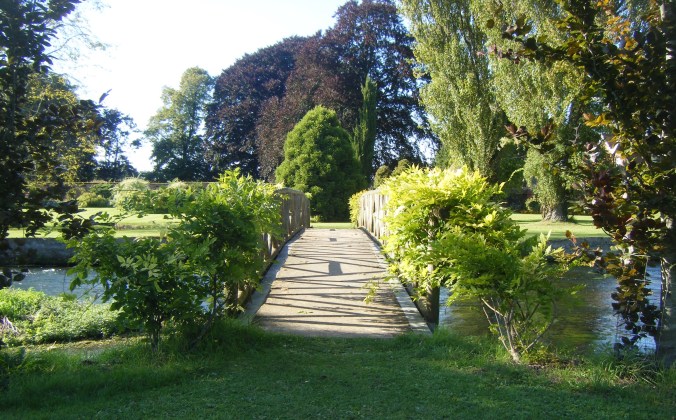
Returning over the wisteria clad bridge you can imagine the reward you might have with rod in hand and the flick of a fly.

DSCF4878.jpg

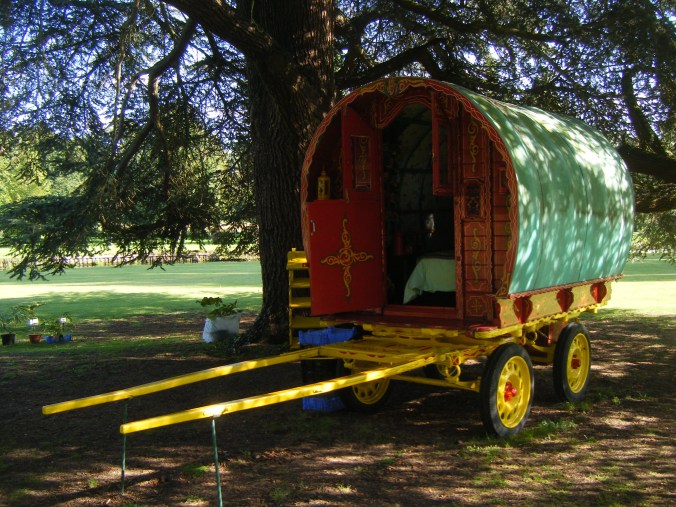
We have wandered too long and missed the teas so we admire the gypsy caravan sheltering in the shade of the cedar on the lawn by the house.

DSCF4885.jpg

The shadows are lenghtening in the evening sun but the colours remain bright and welcoming.

DSCF4881.jpg

In its sixth year of opening for the NGS this garden contains some lovely features and set in beautiful timeless setting, it is the fishermen’s dream garden. Open for the NGS twice a year, this very private and secluded garden definitely requires a return visit in the Spring.

DSCF4888

——-71——-


Chawton House Library; a delightful dawdle with the head gardener. (70)

‘I went up to the Great House between 3 and 4, and dawdled away an hour very comfortably’

Wrote Jane Austen in 1814.  She was referring to Chawton House built by the Knight family in 1580 and centuries later inherited by her brother Edward Austen .  So when it opened for the National Garden Scheme on the sunny Bank Holiday Sunday last month, I too went and dawdled away an hour very comfortably.

DSCF4702.jpg

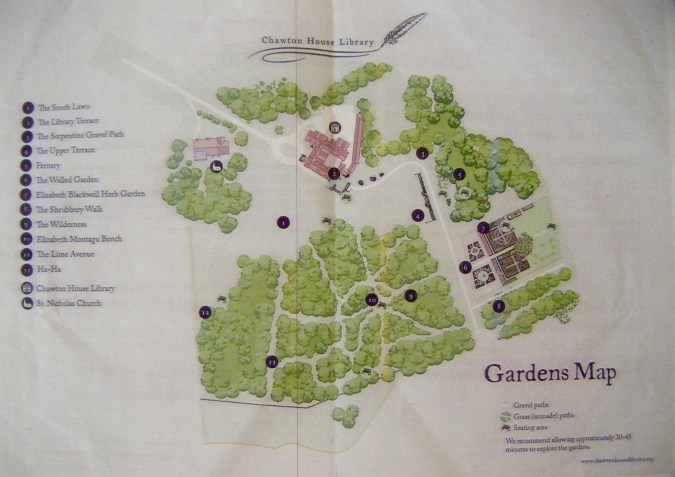
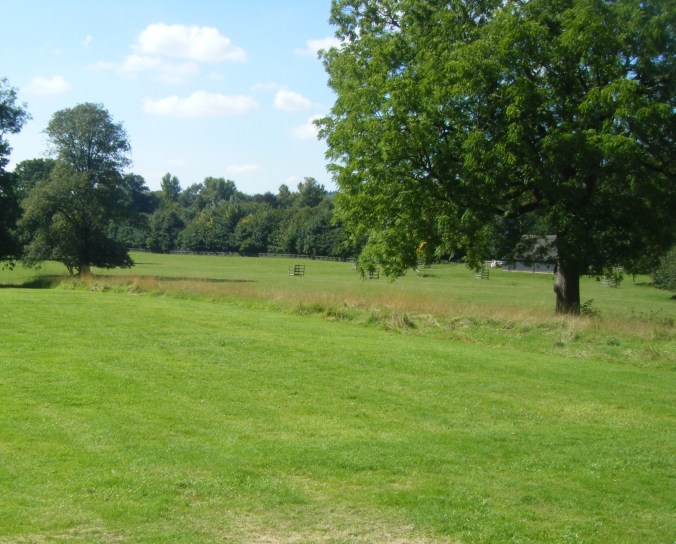
We were fortunate to be just in time to join a tour with Garden Manager Andrew Bentley and, with map in hand we began on the South Lawn.

DSCF5360.jpg

Set in the beautiful Hampshire countryside we looked out on the open views across the estate while Andrew explained the popularity of this Brownian English Landscape-style during the 18th century, when the view would have been similar and a ha-ha would have kept the grazing animals in sight but away from the garden.

DSCF4704.jpg

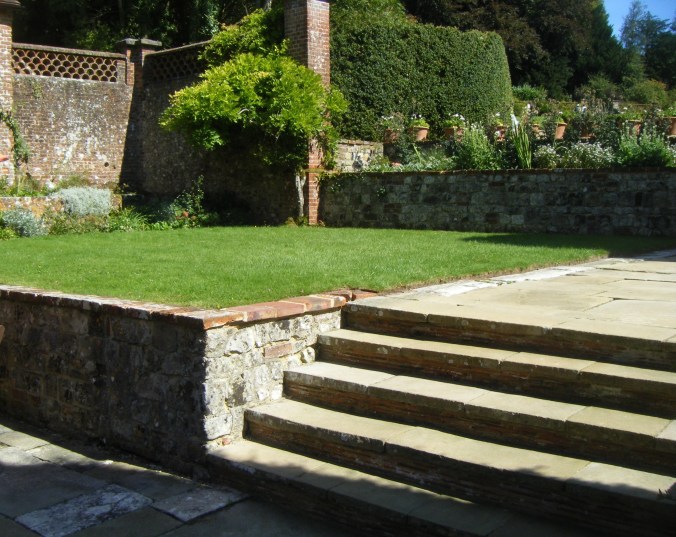
We returned to the house and onto the Library Terrace. Built during the time of Montagu Knight in the early 19th century it is attributed to  Sir Edwin Lutyens, a friend and frequent visitor.

DSCF4719.jpg

Andrew has begun to plant a white garden here. Influenced by Vita Sackville-West’s famous white garden at Sissinghurst Castle, he felt it appropriate not just because of its beauty but because her mother had an affair with Lutyens while staying at Chawton.

DSCF4721.jpg

The inlaid pattern at the top of the steps is reminiscent of the manner of the Arts and Crafts Movement, and acts as a turning circle directing us to the left.

DSCF4722.jpg

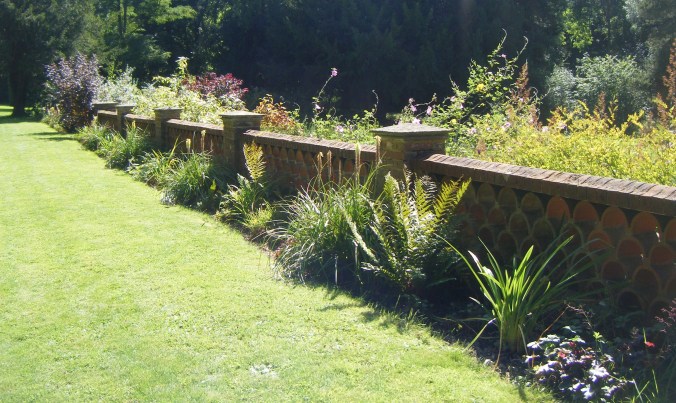
We gradually climb the Serpentine gravel path passing through bushes laden with autumnal berries,

DSCF4727.jpg

and continuing along the Upper Terrace.

DSCF4730.jpg

Here we can look back down towards the house which, having fallen into disrepair has been restored and has become a library, the home of a unique collection of women’s literature in English during the period 1600-1830.

DSCF4764.jpg

‘Edward is very well and enjoys himself as well as any Hampshire born Austen can desire.  He talks of making a new Garden…’

Perhaps it is the Walled Garden to which Jane is referring. Situated at the highest point of the site it has an open area known as the  auditorium which has been converted to a rose garden and contains 48 varieties of heritage roses and two mulberry trees. Right now they are hard to see as the self-seeded verbena bonariensis has taken over.

DSCF4742.jpg

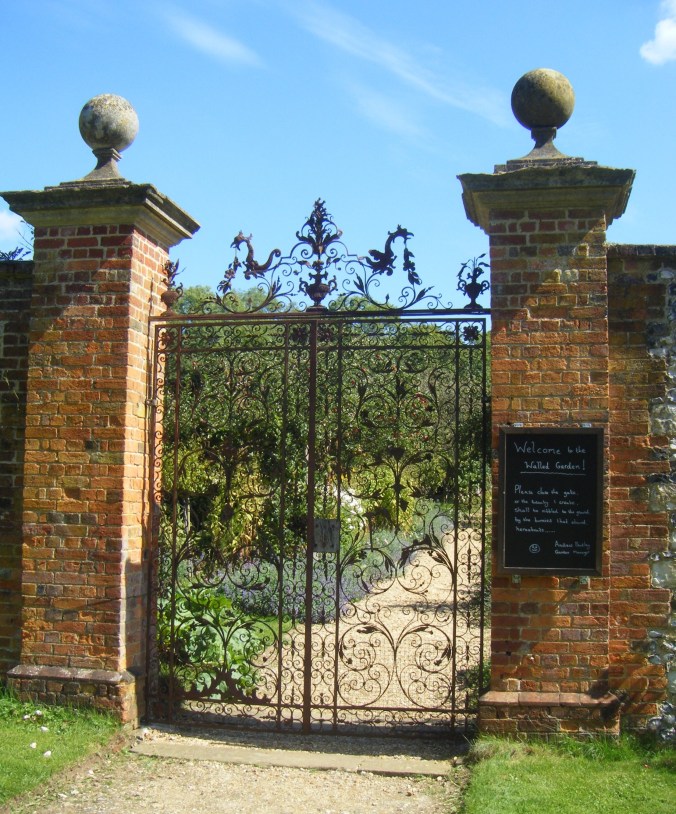
Decorative wrought-iron gates lead from the auditorium into the Walled Garden.

DSCF4707.jpg

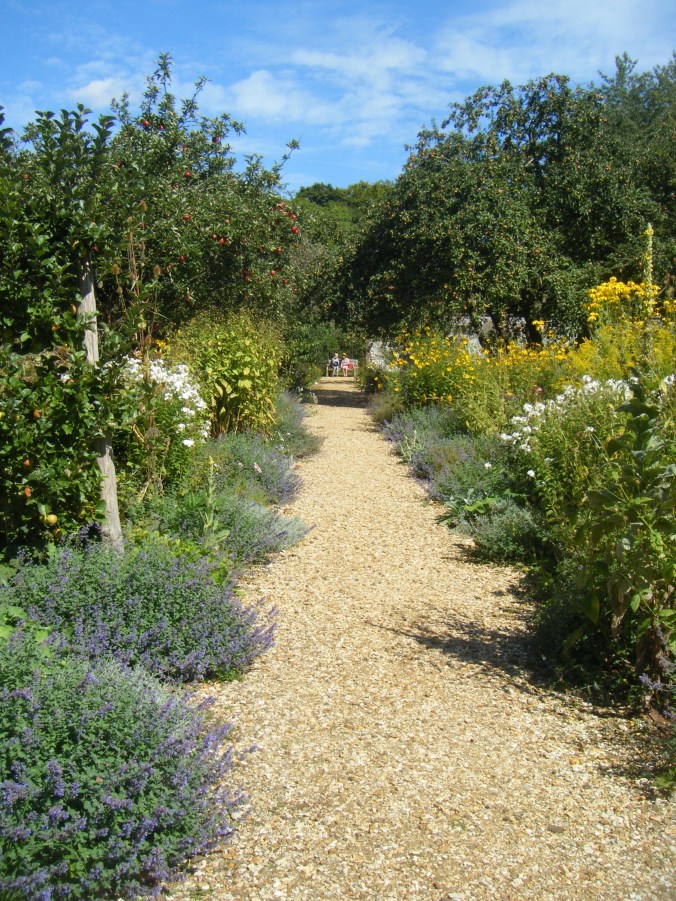
In the Austen’s day, there were 17 gardeners here. Now there is less manpower available. The Walled Garden is divided into three areas, a productive vegetable area, an orchard and a herb garden.

DSCF4744.jpg

Twenty six varieties of apple are grown with some of the trees being quite mature.

DSCF4714.jpg

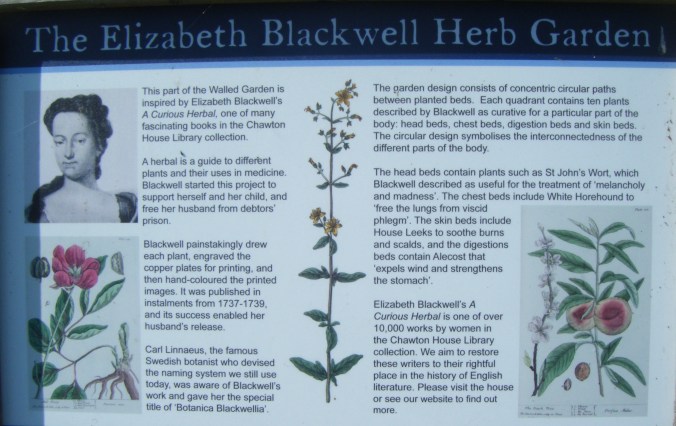
The Herb Garden was designed by Andrew himself, the exercise being part of his interview for the job which he was offered and took up last year.  He was intrigued by a book kept in the Chawton House Library, A Curious Herbal by Elizabeth Blackwell which was published in instalments from 1737-1739, when Blackwell was able to support herself and free her husband from debtors’ prison.

DSCF4708.jpg

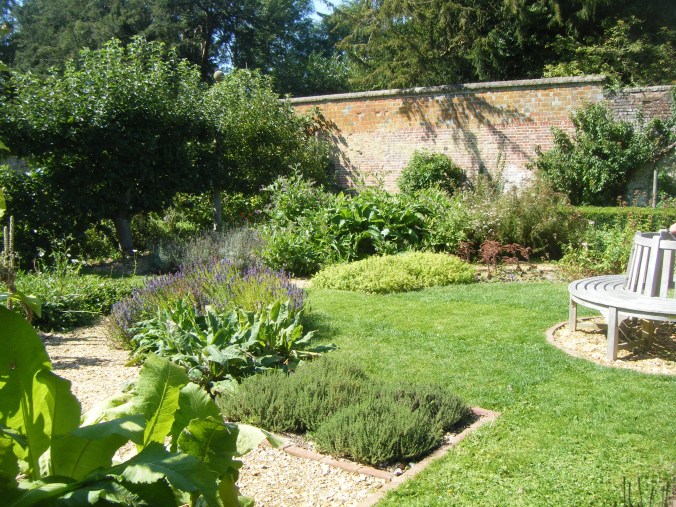
The design consists of four beds divided by concentric circular paths with a seat placed in the central lawn.  The quadrants relate to the herbs that cure maladies to the head, chest, skin and digestion.

DSCF4751.jpg

With the promise that so many herbs are readily available to cure one’s afflictions we can share in the radiancy of the sunflower overlooking the herbs. Andrew then displays his botanical knowledge by giving us a quick lesson on ‘fasciation’ which has occurred on one of the other heads of sunflower (which may drive the reader to the search engine).

DSCF4753.jpg

The princely sum of £190,000 is needed to restore the former greenhouse which once stood here, the ivy hides the chimney of the boiler house.  Over the wall is the gardener’s cottage, occupied until 75 years ago it now no longer houses any gardener.

DSCF4710.jpg

Edging the central path are the delicate blooms of the rose ‘Pride and Prejudice’ bred by Harkness Roses to celebrate 200 years of the novel published in 1813. Andrew was able to pick a small bouquet on 18th July this year and lay it on Jane’s gravestone in Winchester Cathedral to commemorate the bicentenary of her death.

DSCF4712.jpg

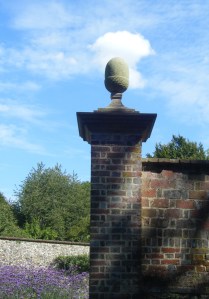
The Walled Garden took four years to build and sadly Jane did not see its completion. The stone acorns are unusual; less grand than some finials of that era, Andrew suggests that they may just be Edward Austen’s nod to humility.

DSCF4738

Opposite the Walled Garden a path leads into the ‘Wilderness’ which we do not take, and  unlike Mrs Bertram in Mansfield Park who declared ‘One likes to get out into a shrubbery in fine weather’, we also pass by the shrubbery.

DSCF4757.jpg

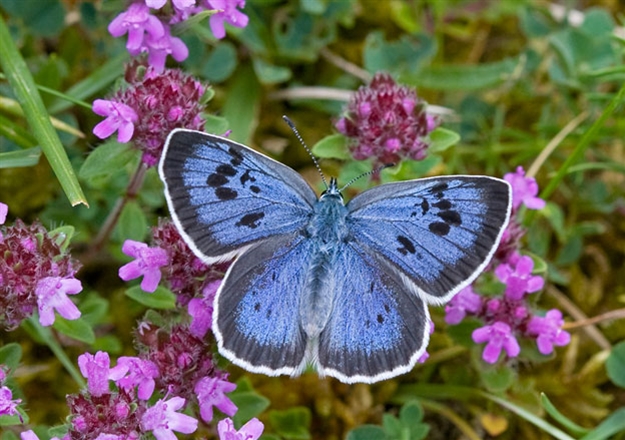
Instead we arrive at the garden’s perimeter where the peaceful parkland has been recently grazed by sheep. It is managed with the help of Natural England and looks perhaps like any other grassland. However, Andrew explains that it is essential to ensure that the correct species of grasses and wild thyme are maintained which support a population of red ants. The Large Blue butterflies feed off the wild thyme where they lay their eggs. The red ants make tussocks in the grass in which they bury the hatched larvae of the Large Blue butterfly and harvest their nectar. In May/June the butterflies hatch out all at once and there is an explosion of fluttering blue butterflies. It is a sight that Andrew has been fortunate to see.

DSCF4715.jpg

It indeed must be quite a sight and I can only provide a picture taken from the Butterfly Conservation website: http://butterfly-conservation.org/679-899/large-blue.html.

scaleImage.jpg

We move on to wander back through the ‘wilderness’ and return to the house along the avenue of Lime trees leading onto the South lawn. Standing just off the lawn is a Black Walnut juglans nigra; not to be confused with the common walnut juglans regia, it is native to North America. The roots contain a growth-inhibiting chemical which prevents many other trees and plants growing near it.

DSCF4716.jpg

Just to the right is the tower of the parish church which rises above the yew trees in the churchyard,

DSCF4705 (1).jpg

where the graves of Jane’s mother and sister lie together.

DSCF4771.jpg

But before leaving I pop back to the house for a little sustenance,

DSCF4765.jpg

and sharing in that same sentiment as Jane ‘But indeed, I would rather have nothing but tea’, I sit and enjoy it in the sunny courtyard.

DSCF4718.jpg

A shepherd’s hut, unimpeded by notices of ticket sales, upcoming events or ice cream adverts, stands simply at the entrance as a reminder that this was once a working farm.

DSCF4772.jpg

It is a charmingly unspoilt site. Garden history, botany and ecology have been woven into this delightful and informative tour. The garden is open again for the NGS on Sunday 22nd October and I assure you that the garden tour costing just £1.00 is worth every penny.

——-70——-

Snares Hill Cottage, a curious catch. (69)

Opening this coming Sunday, the 10th September is an engaging cottage garden situated in the village of Stebbing in Essex. I was fortunate to be able to visit a few weeks ago and you reach the property down a short narrow lane off the main road.  The driveway itself is very much part of the garden and a ‘Narnian’  lamp post stands  prominently,

DSCF4615.jpg

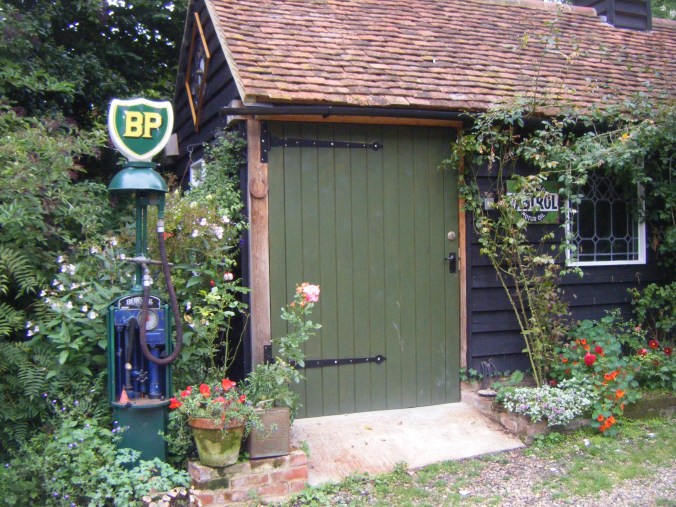
and amongst pots of flowers a good old-fashioned petrol pump is on hand.

DSCF4617.jpg

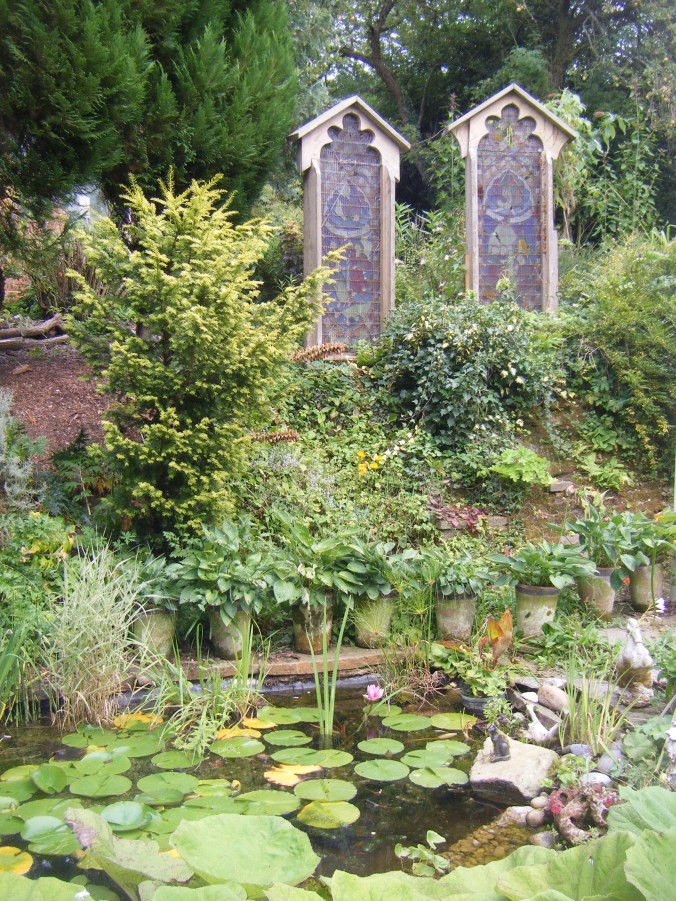
Looking down on the drive from the steep bank and are two stained glass windows, and a pond encircled by pots of hosta.

DSCF4567.jpg

It is the sound of water I can hear, but not from this pond, so I head for the opening in the hedge just to the right of the house.

DSCF4618.jpg

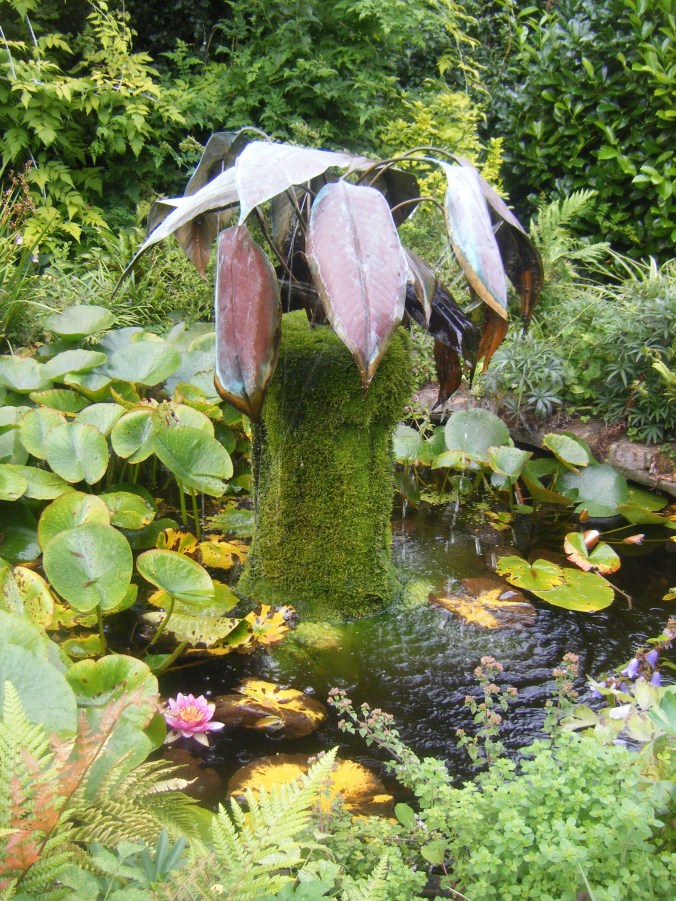
The sound is coming from water trickling down copper leaves into a lily pond. Inspired by the Willow Tree Fountain at Chatsworth this version is made by garden owner Pete.

DSCF4525.jpg

The lawn slopes gently down past a border packed with colour, and a newly-built greenhouse can be seen waiting for some autumnal activity.

DSCF4527.jpg

In the flower bed some more permanent ornamental flowers add a rustic charm.

A path leads down to the bottom of the garden, where it is wild, wooded and a touch wet.

DSCF4576.jpg

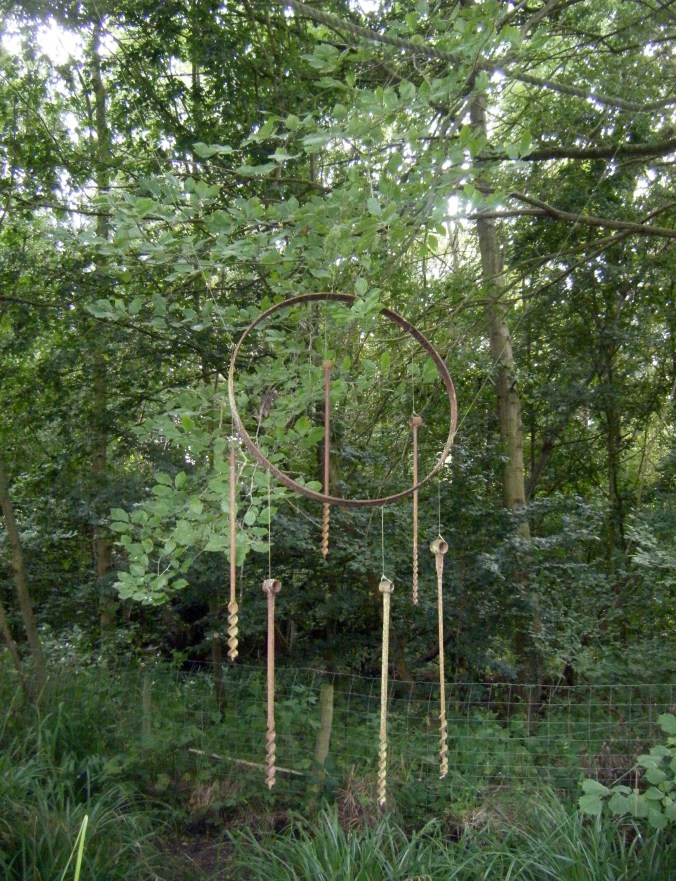
Stepping carefully around the bog garden,we find a circular wind chime hanging silently from the trees above.

DSCF4535.jpg

I move  along a brick path ‘Tiggywinkle-edged’ with old fashioned flat-irons,

DSCF4538.jpg

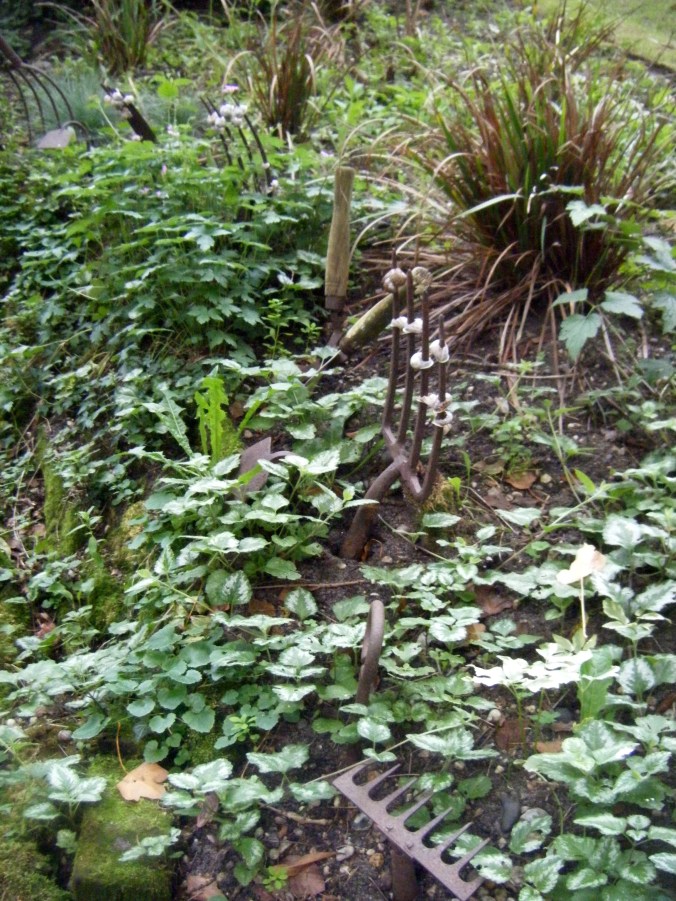
and an assortment of gardening tools curiously growing out of the soil.

DSCF4541.jpg

A low wall is the ultimate in recycling; the fun, you understand, was not just in the making.

DSCF4534.jpg

Climbing up the hill through the small Silver Birch copse I discover that the sheet glass from the old greenhouse has also been reprocessed and is now an impressive ornament.

DSCF4591.jpg

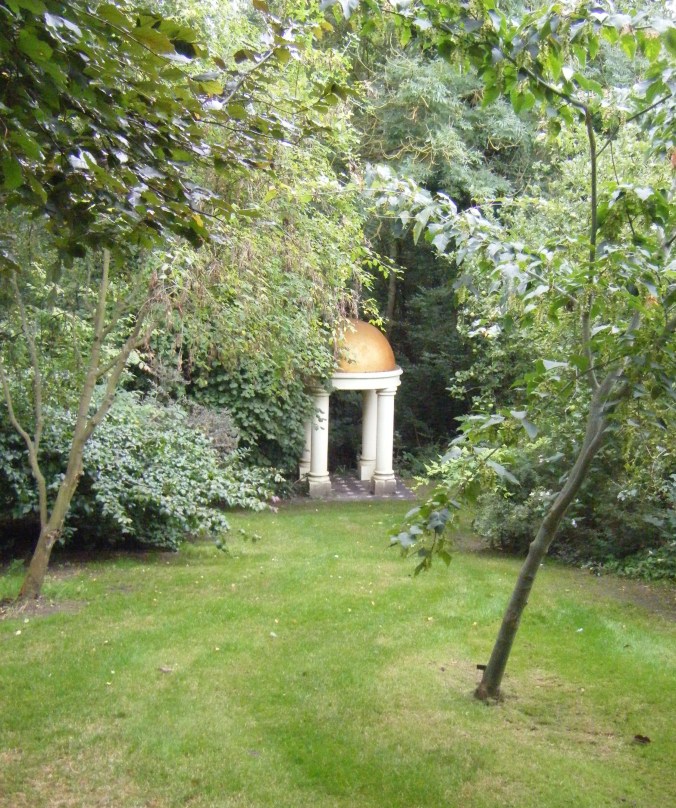
From here you can look back down on the  ‘Roman’ temple and for a moment I feel as if this is an 18th century landscape.

DSCF4598.jpg

Further up the hill, for this ground is certainly not flat, is the beach garden decked with its own hut, and chairs just waiting for those sunbathers; it is a delightful space even if a little shaded now from the maturing trees.

DSCF4596.jpg

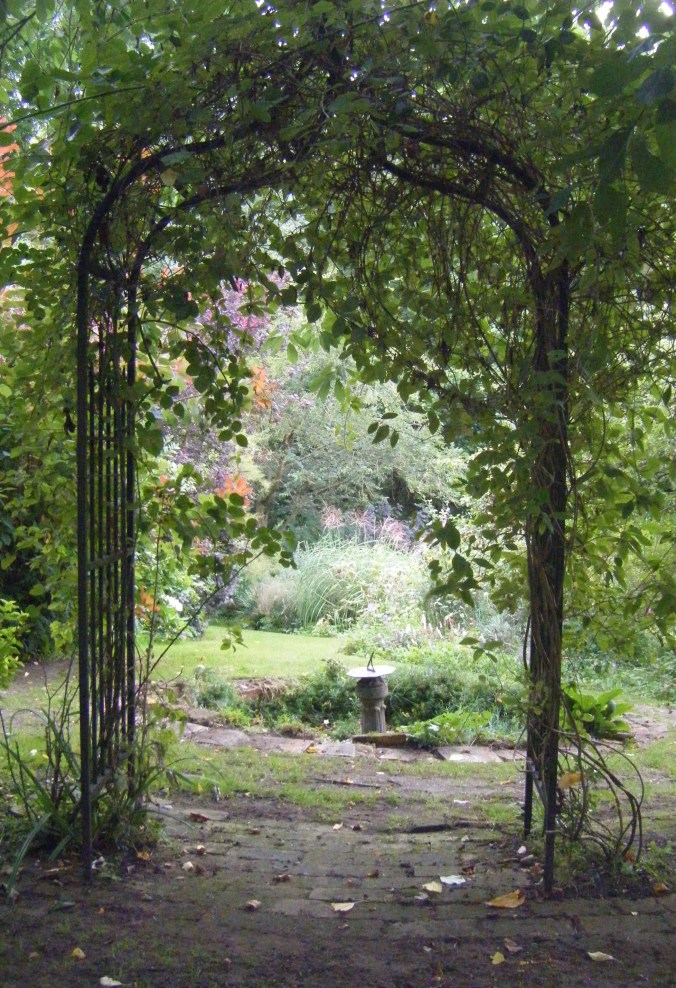
The transition into different areas is subtle and at every step there is either a sculpture, or a surprise, even a view, like this one through a decorative arbor.

DSCF4600.jpg

This windfall seems to have rolled down from the top orchard and come to rest in the flowerbed.

DSCF4601.jpg

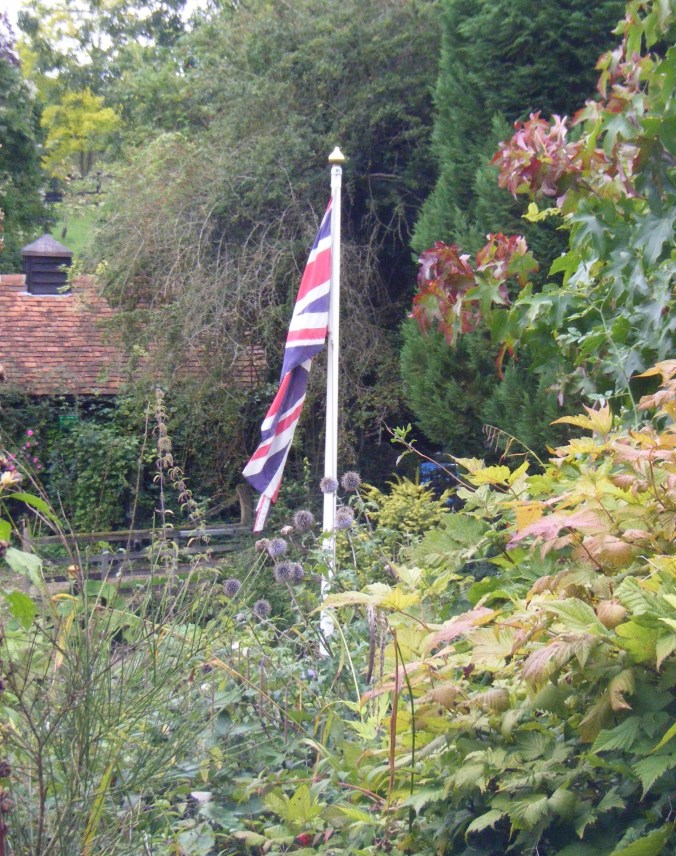
From a height behind the house we can look down on the drive where the flag flutters gently in the evening breeze. When the grandchildren come the Australian flag is hoisted to make them feel at home.

DSCF4603.jpg

The archway through the hedge of hornbeam beckons us on,

DSCF4605.jpg

and here I find a charming little cottage, once the place where the beekeeper stored his harvested honey.

DSCF4606.jpg

We walk on through the orchard, mindful of giant apples,

DSCF4608 (1).jpg

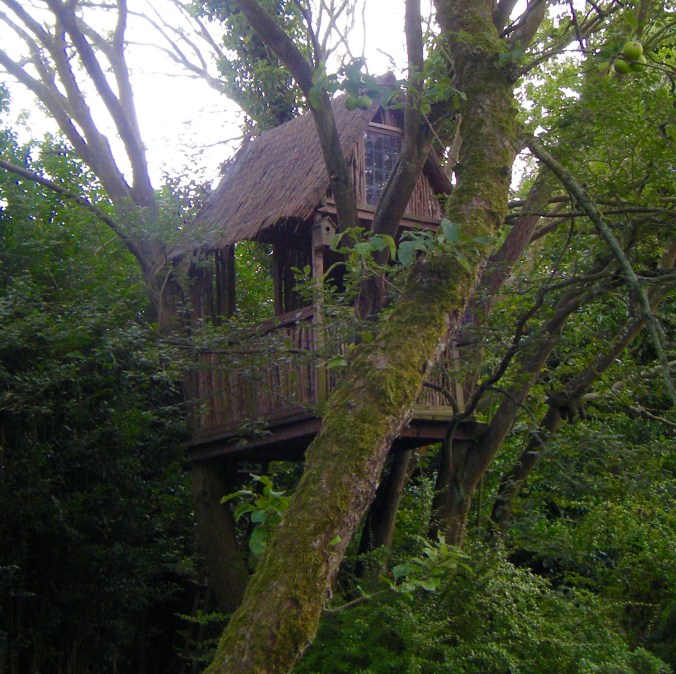
and really high up in the branches is a tree house.

DSCF4555 (1).jpg


The second greenhouse, shrouded by shrubs, marks the top of the garden.

DSCF4549.jpg

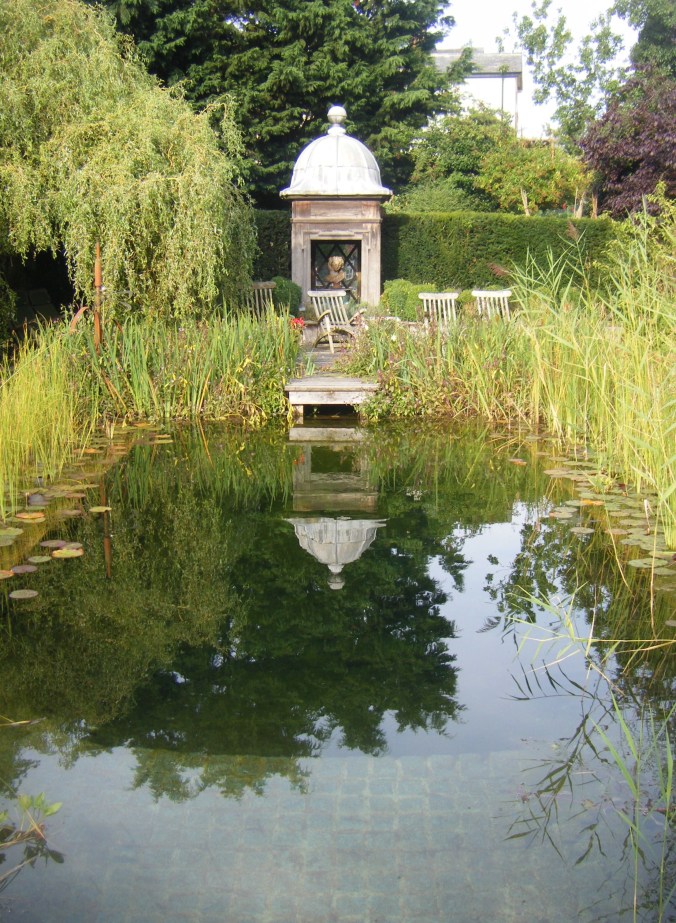
From the orchard I look down on another area of water,  calming and wild I realise that it is a natural swimming pool.

DSCF4551.jpg

and, finding the gate I enter the pool side.

DSCF4609

Beautiful and inviting in the evening light. No chemicals are needed here, for the reeds along the sides are the filter system.

DSCF4545.jpg

The changing room hut is as welcoming as the pool, but I have no swimsuit and so follow the path which leads back down to the drive.

DSCF4561.jpg

This time I go to the left of the house, passed a benign dragon delicately dribbling water.

DSCF4569

The bank rises steeply behind the house and provides a back drop containing a variety of shrubs to a raised bricked bed. A ghostly head peers out from the foliage.

DSCF4571.jpg

It is indeed the head gardener keeping his wits about him.

DSCF4572

The terrace extends the house into the garden, and is decorated with pots packed with agapanthus, eucomis, geraniums and begonias; it is an attractive place to sit and soak in the splendour of the one and a half acre garden. The owners have worked hard to create such a splendid garden filled with a variety of flowers, shrubs and trees. The diverse areas contain sculpture, ornament and outbuildings and most of all there is a touch of humour.

DSCF4622.jpg

Finally, just visible under a “kiftsgate” rose is a 1933 Lagonda ready to roll out on a mystery journey.

DSCF4613.jpg

——-69——-


Hambledon House, harmony in Hampshire. (68)

You may have been watching the programme ‘ All Gardens Great and Small’ on Channel 4More, in which Miranda Hart and her real mother Dee Hart-Dyke visit some NGS gardens up and down the country. Dee’s garden in Hampshire was open last Monday so for a Bank Holiday treat I went to visit.

The weather was glorious and we arrived in good time for the opening but the garden gate remained firmly closed until 2pm.

DSCF4893.jpg

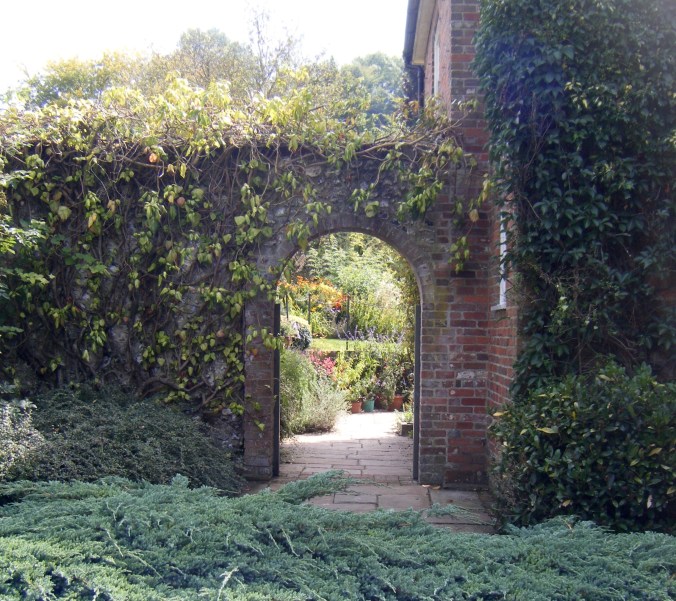
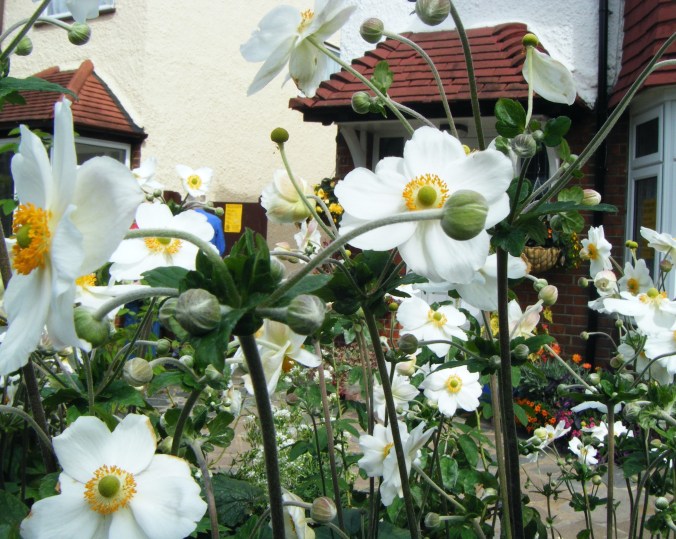
Entering from the street through a little side door in the wall we find ourselves in the driveway where pure white Japanese anemones greeted us under what Dee might describe as ‘rampant’ wisteria.

DSCF4972.jpg

I happened to meet Dee while she was filming in two of the gardens in London (blogs 34 & 35), in fact she even interviewed me. Fun as it was I have to report that my nano second of an appearance on a television series has ended up on the cutting-room floor. However I was thrilled that through the throng of visitors and surrounded by giggling grandchildren she recognised me and I was even more delighted to discover that she is an ardent follower of this blog.

It looked as if it was going to be a busy afternoon with visitors pouring in, so we pressed on through a small enclosed area of lawn where tables and chairs were set out ready to provide tea and cake to the already swarming numbers, and we hurried on through the archway in the wall.

DSCF4895 (1).jpg

A picture of colour and the feel of an English country garden draws us through the arch and round the side of the house.

DSCF4896.jpg

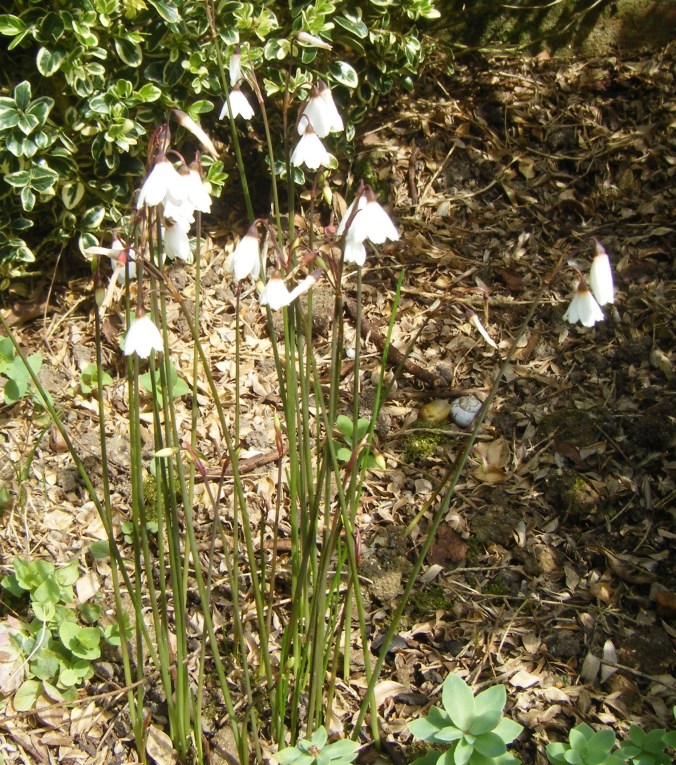
Amongst the plentiful perennials and shrubs I spy a little clump of the dainty autumn snowflake acis autumnalis, looking perhaps a little premature on this hot summer’s day.

DSCF4897.jpg

On the south side in front of the house, the lawn stretches ahead and rises up hill;  in the centre are two sets of brick steps. We stay on the grass and follow the border along the west side where we can look across to mixed flower beds on the other side.

DSCF4899.jpg

The  border, backed by a wall that runs along the road, is packed with a variety of shrubs which give interest throughout the year; the slightly unusual heptacodium miconioides, is performing for us today.

DSCF4900.jpg

At the top of the lawn a narrow path winds around the back of bushes and the small starry eyes of aster divaricatus spread over the brick weave, a good plant for the shade.

DSCF4902.jpg

Overhead the leaves of the paulownia tomentosa loom large and verdant against the bright sun.

DSCF4903.jpg

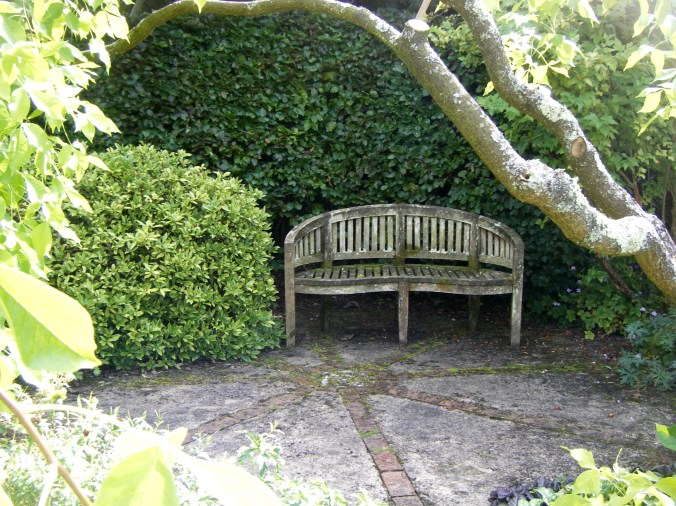
A quiet place to pause in the shade, this bench today will not remain unoccupied for long.

DSCF4908.jpg

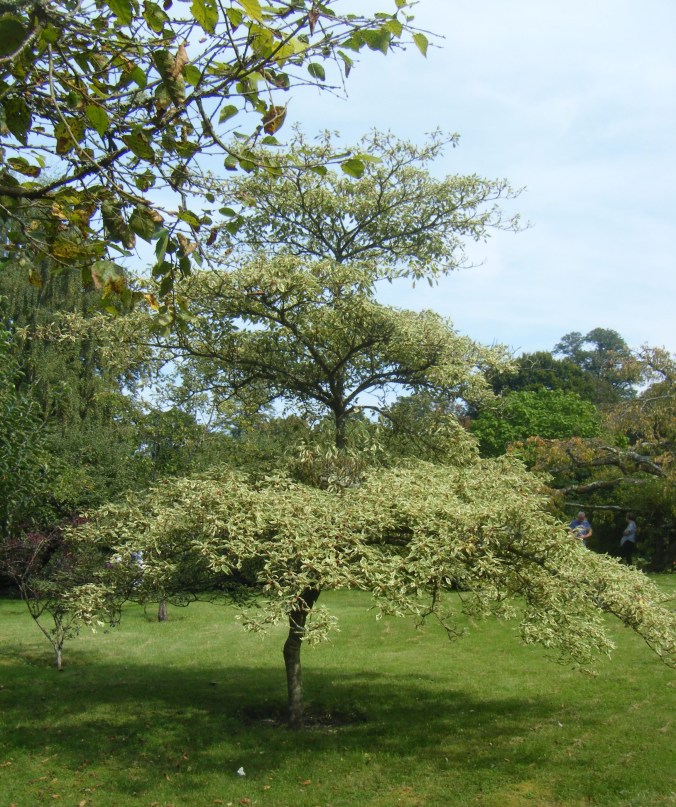
The garden covers about three acres in size and is divided into a variety of areas.  A fine specimen of Cornus controversa ‘Variegata’, the wedding cake tree marks the beginning of the central area,

DSCF4955.jpg

an orchard where paths are mown through the long grass under trees both young and old.

DSCF4952.jpg

Through the branches of a Judas tree, cercis siliquastrum we can see the swimming pool; today visitors are content to sit and imagine they have dipped in the cool water.

DSCF4954.jpg

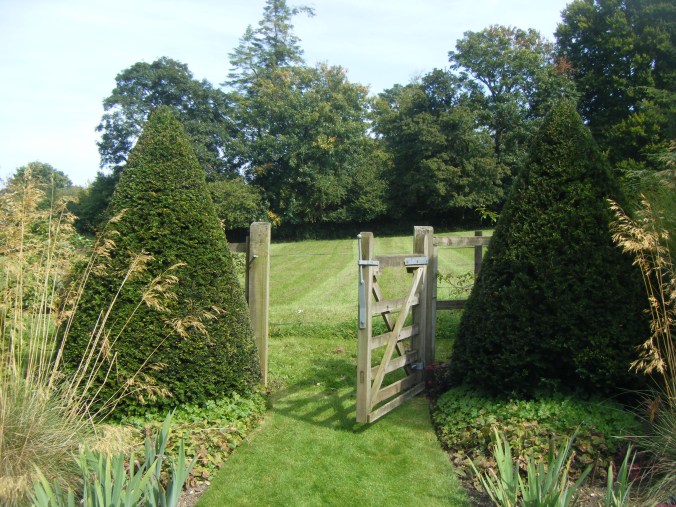
Beyond the pool the gate is open into the recently cut field.

DSCF4913.jpg

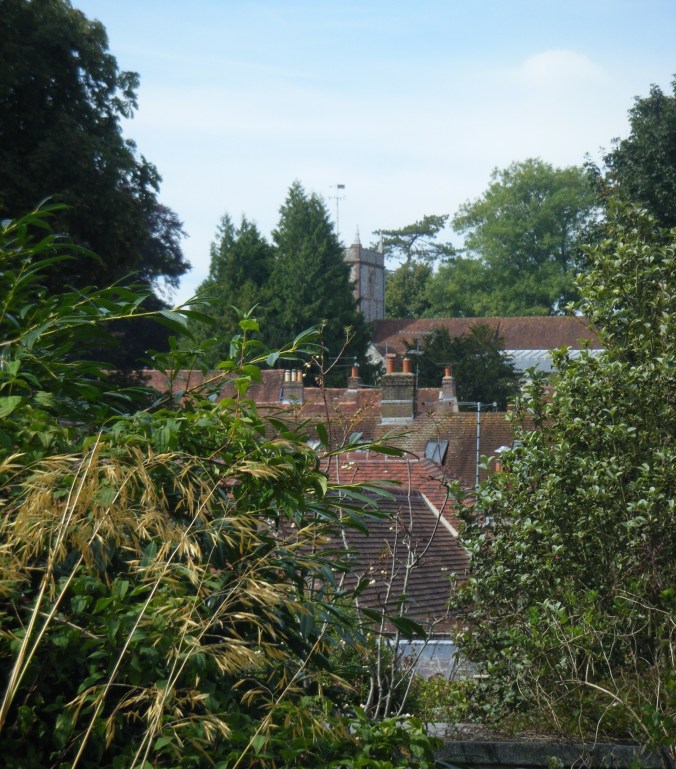
It is quite a vista over neighbouring roof tops towards the church. We explored the village this morning and it is really attractive with some beautiful houses.

DSCF4918.jpg

This garden certainly is not flat; a stairway descends to the lower level and you can glide down in Hollywood style through the mature shrubs.

DSCF4919.jpg

Tucked away at the bottom of the garden, is the perfect artist’s studio.

DSCF4920.jpg

Returning now towards the house we pass a  white clematis backed by wooden trellis which leads us to the kitchen garden.

DSCF4923.jpg

Divided into four with an elegant vase at its centre, it is not only productive with vegetables, fruit and flowers,

DSCF4925.jpg

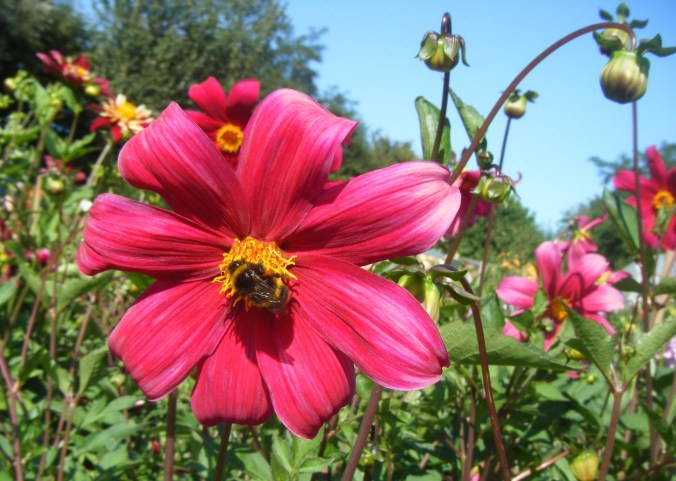
but also has a strip of  wildflowers along its edge.
.DSCF4928.jpg

I am reminded that the old galvanised steel tub is so much more visually pleasing than the hard plastic water butts we have become accustomed to nowadays.

DSCF4924.jpg

We slip through the yew hedge, a view we recognise from Dee’s television programme where she is filmed wheeling her barrow through the gap.  Back on the tea lawn we find the tea queue has quadrupled in length.  DSCF4931.jpg

So, passing again by the side of the house we turn left up the steps, through a heady collection of salvia, grasses, roses and rosemary,

DSCF4936.jpg

and walk through the curiously wonky yew arch,

DSCF4965 (1).jpg

and follow the brick weave path amongst borders spilling over with late summer colour.

DSCF4945.jpg

A handsome bush of Clerodendron fargesii is enjoying the sun and some visitors are intrigued to discover its identity.

DSCF4947.jpg

Colour combinations combine with texture and form to make a pretty garden.  We have enjoyed our visit in this very private place, planted for pleasure, and enjoyed by a family, it has evolved through time, and is the very essence of an NGS garden opening for just one afternoon.

DSCF4960.jpg

Last night we stayed with friends nearby and on leaving this morning it was apparent that although they had heard of the NGS, they had no idea of the scale of funds raised. It was not the time to run through the beneficiaries, so I will take this opportunity to remind you where the money goes:

BeneficiaryPoster-v3-160517.jpg

You may have missed the opening this year but you can watch Miranda and Mum on Monday evening at 9pm on Channel 4More where you will see glimpses of this garden and discover the fun of visiting gardens.

——68——-

Beechleigh, traditional but contemporary. (67)

Last Saturday evening on our way to London driving down the A1 M, at the very sociable time of between 5-8pm we found the gate open…

DSCF4658.jpg

at Beechleigh, in Birch Green, Hertfordshire. We walked down the long drive running alongside a field, where a footpath crosses over and the grass has recently been cut, and found the property, which was originally a gamekeeper’s cottage on a former country estate.
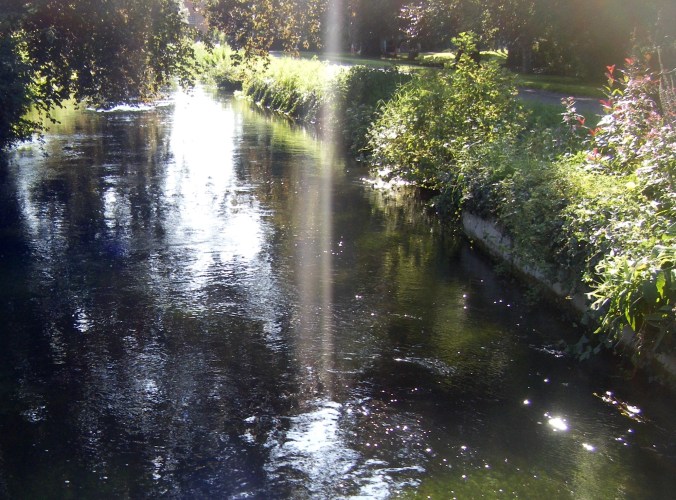
Evening openings are fun; held in lovely surroundings it is rather like a drinks party, but without the people you so desperately want to avoid.

DSCF4657 (1).jpg

There is no defined boundary between field and garden, mature trees, newly planted grass beds and pond, merge naturally together.

DSCF4694.jpg

And we find ourselves amongst colourful beds which flow around the house in the neatly mown lawn.

DSCF4659.jpg

The garden is owned by Jacky and Gary and was designed a couple of years ago by London-based Daniel Shea (http://www.danielshea.co.uk/about); his brief was to create a contemporary design whilst also keeping within traditional influences.

This circular shape of this eye-catching border complements the moon shape sculpture.
DSCF4661.jpg

Visitors are asking about the colour of the water, it has a little black dye put in which keeps the water weed free and is also environmentally friendly. Around the little waterfall is a soft palette of ferns, sedum and Mexican feather grass, stipa tenuissima with knotweed persicaria and blood grass imperata cylindrica providing touches of red.
DSCF4663.jpg

Although the good thick hedge does not quite hide the sound of the traffic from the A414 it is a calming and secluded garden. Three stones on the lawn link the pond area to a traditional herbaceous border,

DSCF4685.jpg

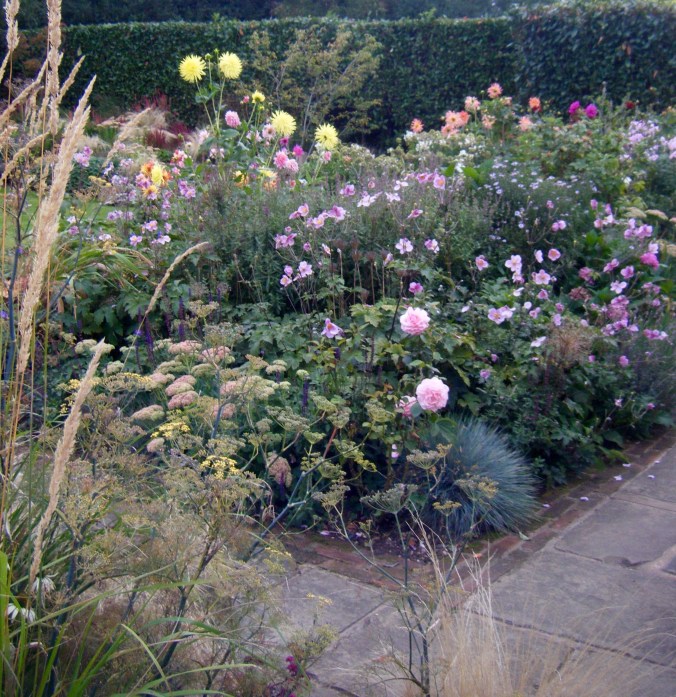
which is packed with dahlias, sedum and roses, the edges kept clean by plate steel edging.

DSCF4686.jpg

This is a garden designed for outdoor living. The modern kitchen extension with bifold doors on two sides opens seamlessly onto bleached Balau decking.

DSCF4684.jpg

Alongside is a what is described as 13m reflective pond, and I am puzzled why  this canal-like feature it is not called a rill. Edged with brick, the flowing water here is very dark. On the far side a long border is effective with a naturalistic style of planting; lavender, purple salvia, sedum, echinacea and calamagrostis x acutiflora ‘Karl Foerster’ is repeated throughout.

DSCF4665.jpg

There are comfortable and hospitable places to sit on the patio

DSCF4687.jpg

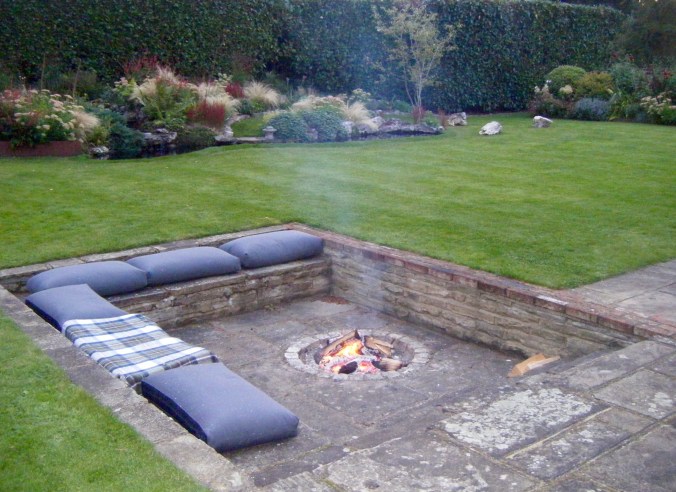
around the nearby fire pit which is gently smoking in the fading evening light.

DSCF4690.jpg

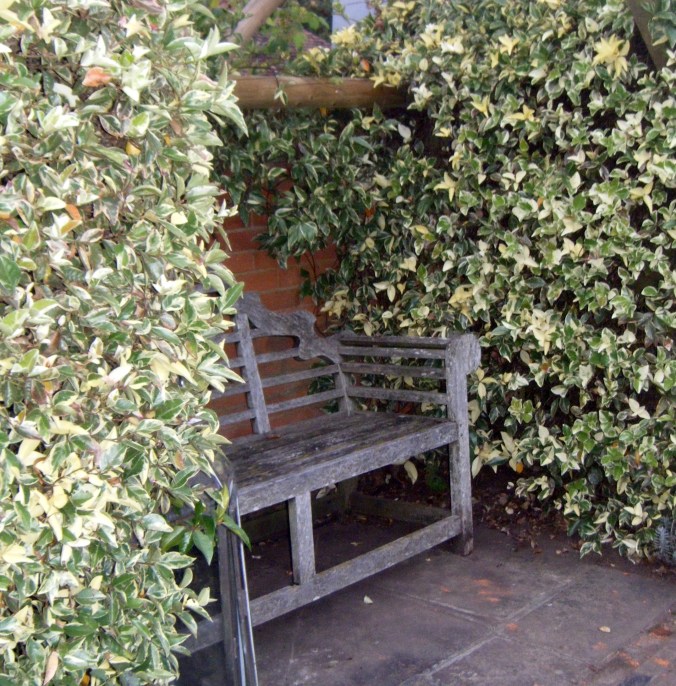
There is a Lutyens bench tucked against the wall,

DSCF4688.jpg

from where you can look back through calamagrostis, over the rill and decking to the kitchen.

DSCF4689.jpg

This side of the herbaceous border is paved with York stone and edged with reclaimed bricks.

DSCF4672.jpg

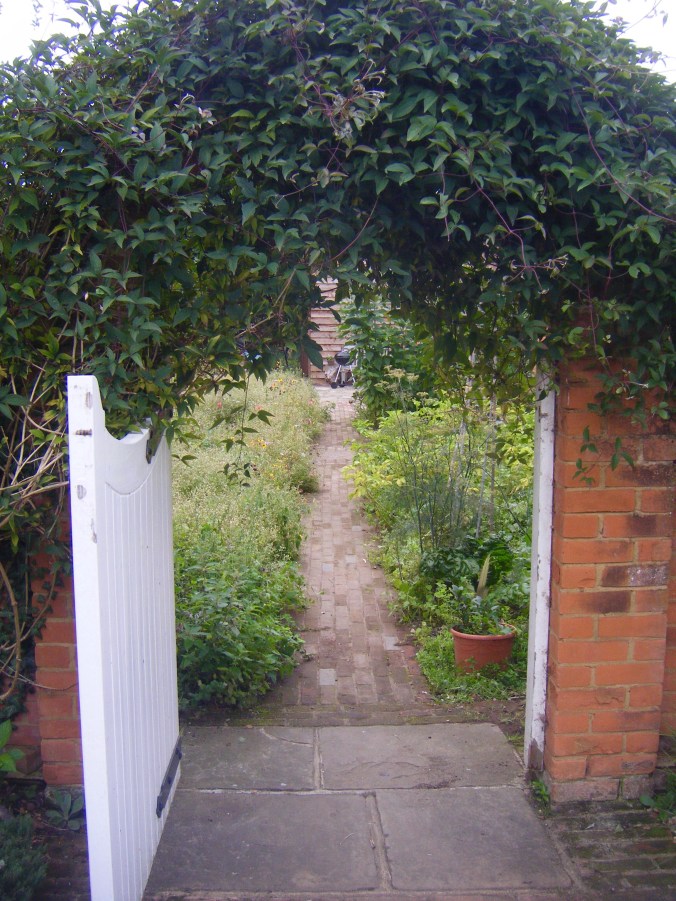
A door in the wall clothed with a montana clematis opens into the allotment area and the brick path invites us in.

DSCF4667.jpg

Vegetables grow on one side of the path and on the other is a wild flower meadow that even in August is still dotted with colour.

DSCF4669.jpg

A decoratively-filled wheel barrow,  cheers up a gravelled corner in the yard.

DSCF4670.jpg

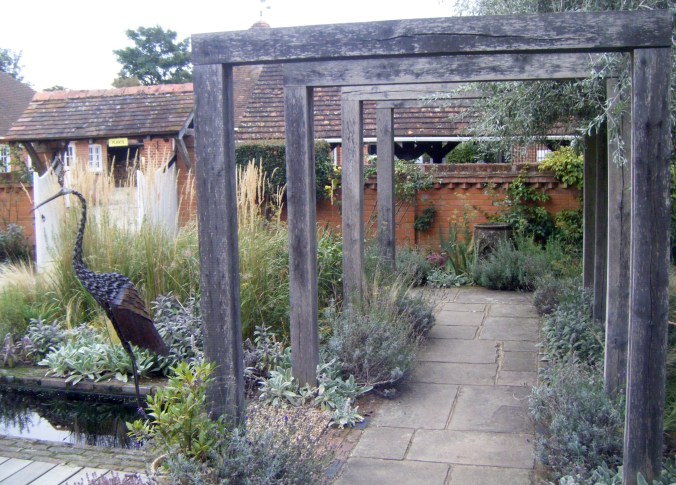
Back by the house the steel heron stands and watches the water from the end of the rill just where a solid oak pergola has weathered to silvery grey.

DSCF4676.jpg

On the North East side of the house acers are amongst the shrubs that fill the island border.

DSCF4678.jpg

An ornamental well brings an olde world charm.

DSCF4679.jpg

Mature trees on the North side of the house are underplanted with beds which display a variety and interest. The light is fading fast

DSCF4680.jpg

and we return along the decking.

DSCF4675.jpg

where Betsie and Evie, mum and daughter are helping to count the evening’s takings.

DSCF4683.jpg

It is time to go, the sun is setting and my camera is flashing.

DSCF4696.jpg

A last look at the deer standing in the long grass; they were recently acquired at Chelsea.

Beechleigh is not vast but a well-designed garden with plenty of interesting areas combined with effective planting, It is a garden to be enjoyed, for entertaining and relaxing.

So inspired by the plan of her own garden Jacky has completed a course in garden design and has now runs her own consultancy: jacky@jackyodesign.co.uk

The garden gate will be open again TODAY from12 noon -5pm and if you just find yourself on the A1M, I suggest you take a short detour and see for yourself. Gary and Jacky will welcome you and there will be delicious home-made teas.

——67——-


5 Brodie Road, a frenzy of flowers in London E4. (66)

5 Brodie Road, a suburban garden measuring 12m x 9m (40′ x 60′) must qualify as the smallest garden I have visited so far, but by no means the least floriferous. Situated in Chingford it was the second opening this year and I peered from the pavement through the white Japanese anemones in the front garden,

DSCF4341.jpg

to find bright hanging baskets, a hint to what lay behind this semi-detached house where on the left-side Norman greeted us and the garden gate was open…

DSCF4404 (1)

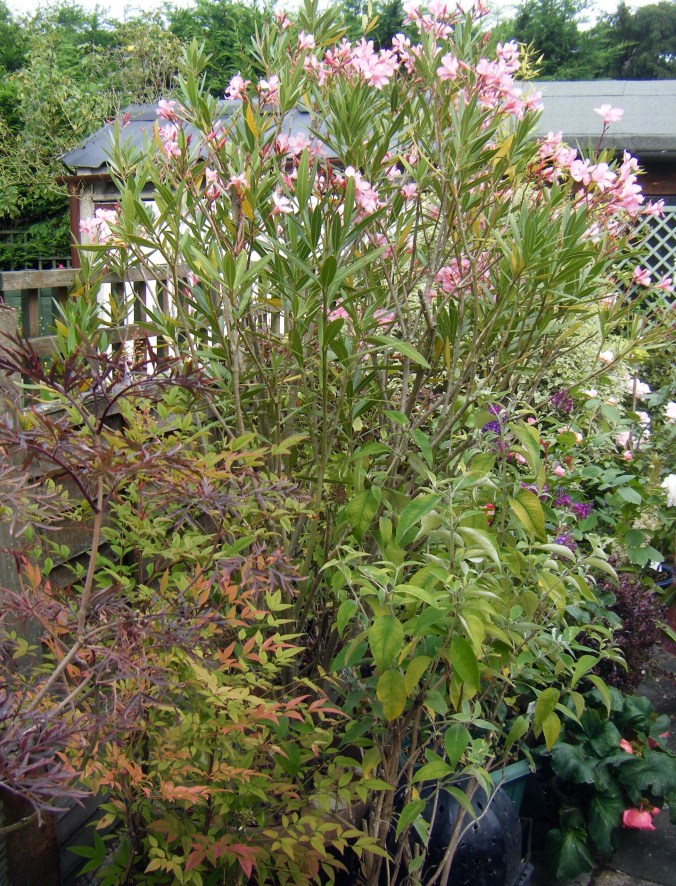
Passing by the tables and chairs ready to receive those fancying a cuppa, we find a collection of pots lining the fence, pink oleander,

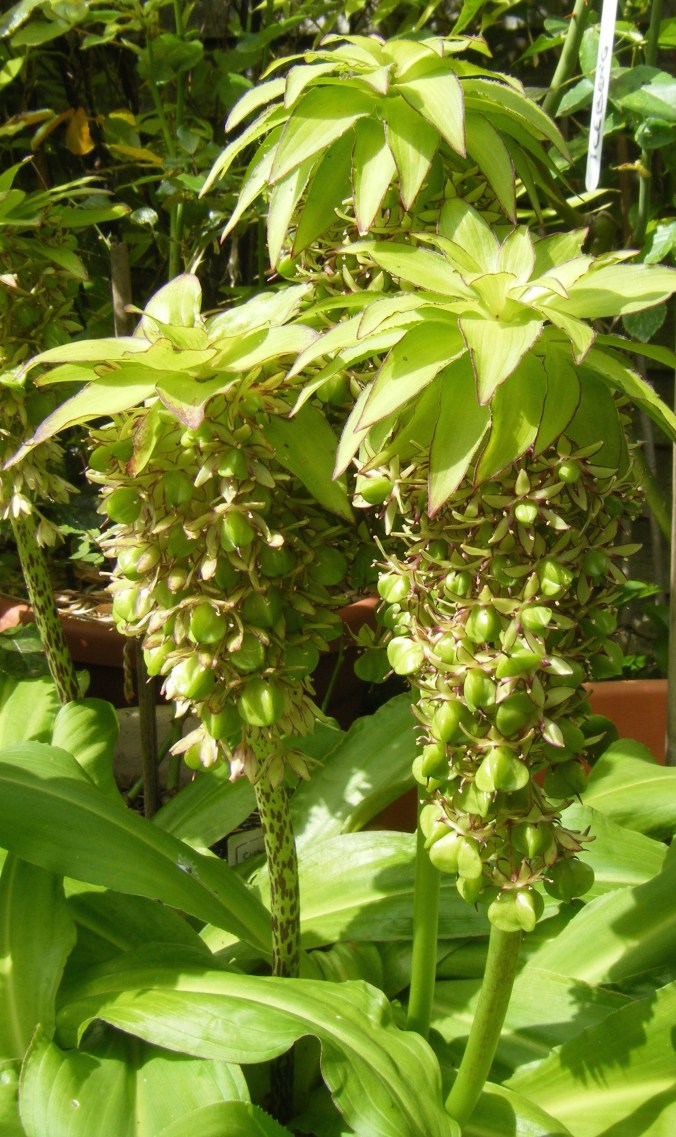
DSCF4394.jpgexotic eucomis known as the pineapple flower,
DSCF4353.jpg

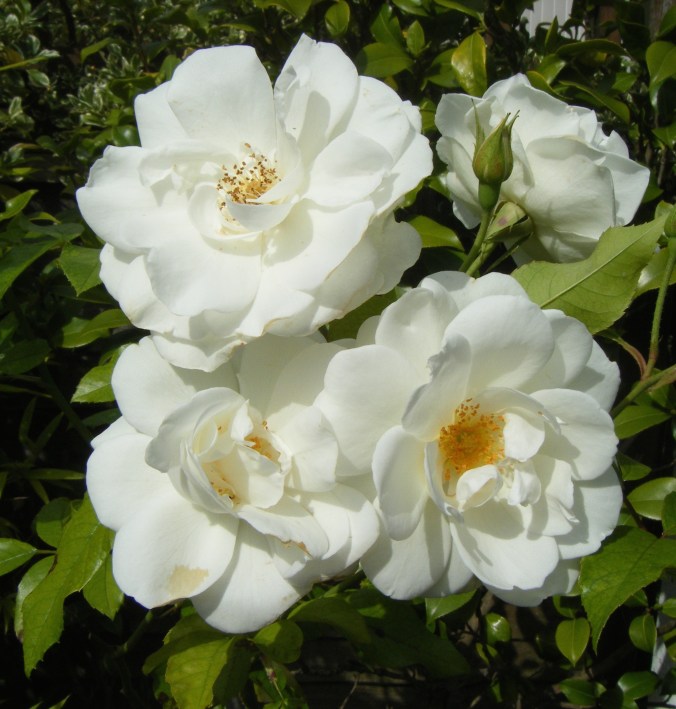
and that old favourite the fresh white rosa Iceberg.

DSCF4351.jpg

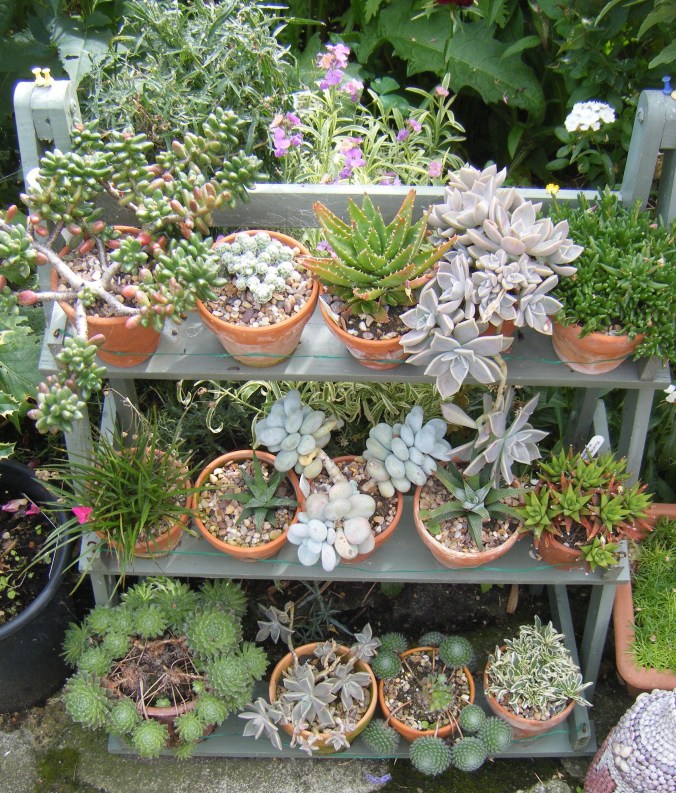
Opposite are succulents arranged on a decorative shelving unit.

DSCF4347.jpg

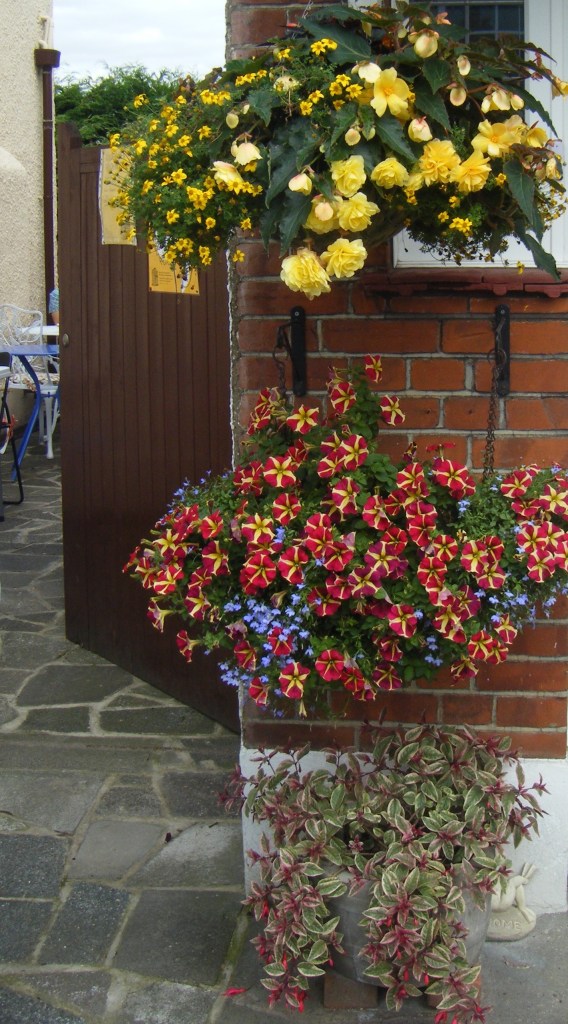
Throughout the garden there is a variety of containers,  hanging baskets where geraniums grow,

DSCF4355

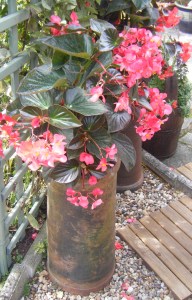
begonias in chimney pots,

DSCF4370

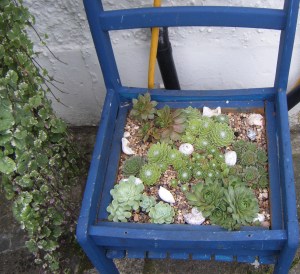
and small alpines occupy the seat of a chair.

DSCF4398


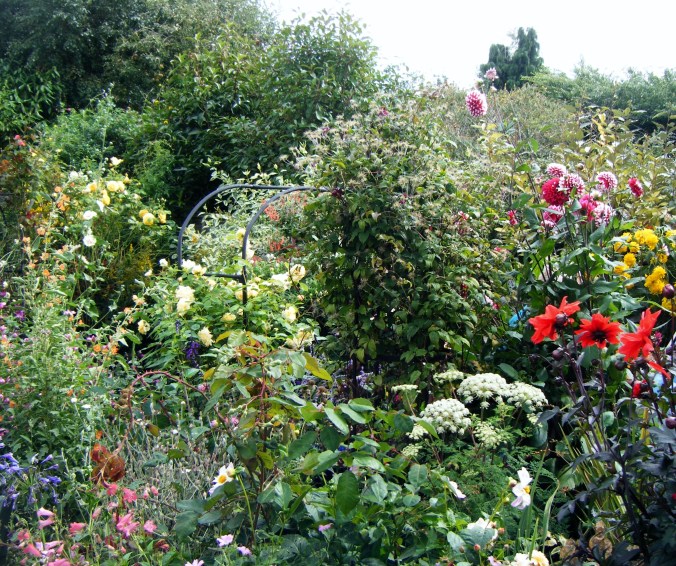
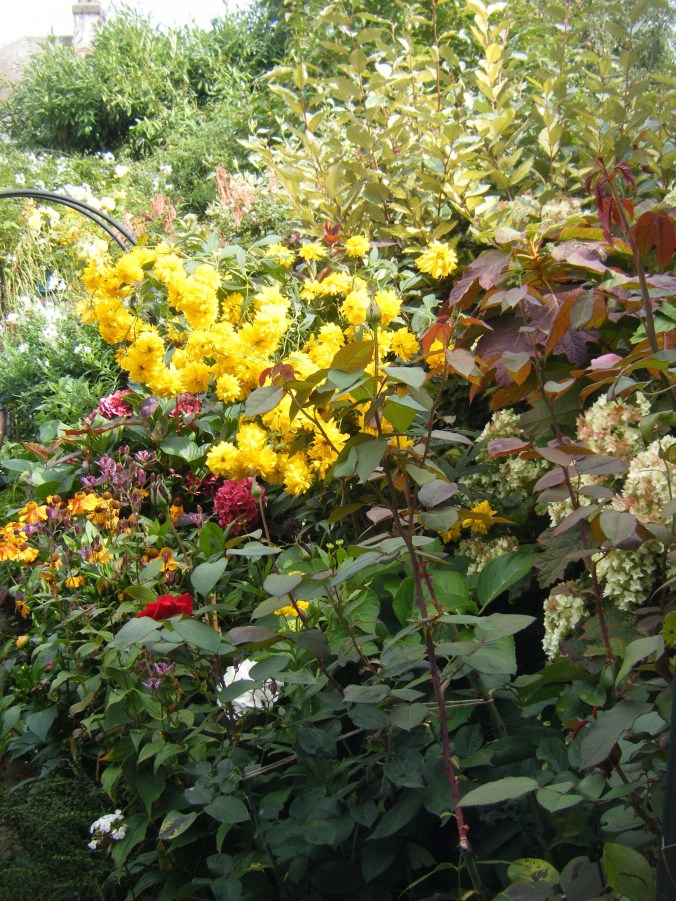
Barbara and Norman love flowers and colour and for that reason Norman dug up the lawn. Now we feast our eyes on a spectacle of colour that fills the garden.

DSCF4343.jpg

Plants are packed in, no room for a weed.

DSCF4386.jpg

There are dahlias to die for:

DSCF4380.jpg

On the same plant are white blooms, pink blooms and some blooms which cannot make up their minds.

Bright Dahlia ‘Pooh’ is just buzzing.

DSCF4345.jpg

I think this could be Dahlia ‘chimborazo’, and is that a princely face appearing below?

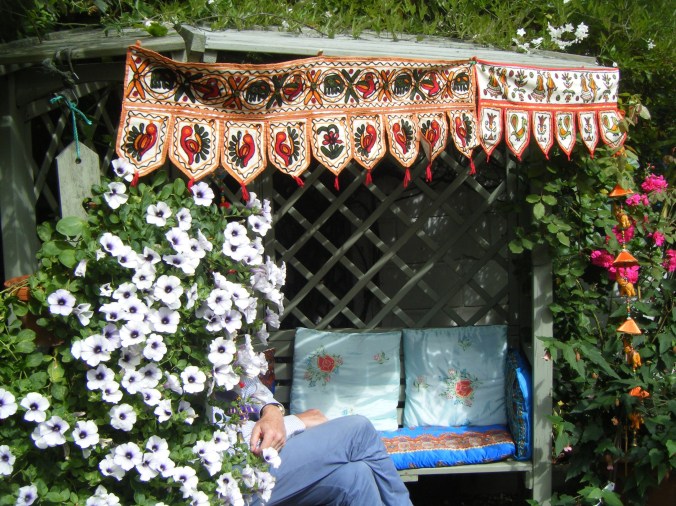
DSCF4387.jpg At the bottom of the garden angled into the corner is an arbor where visitors are tempted to sit for a while.
DSCF4371.jpg

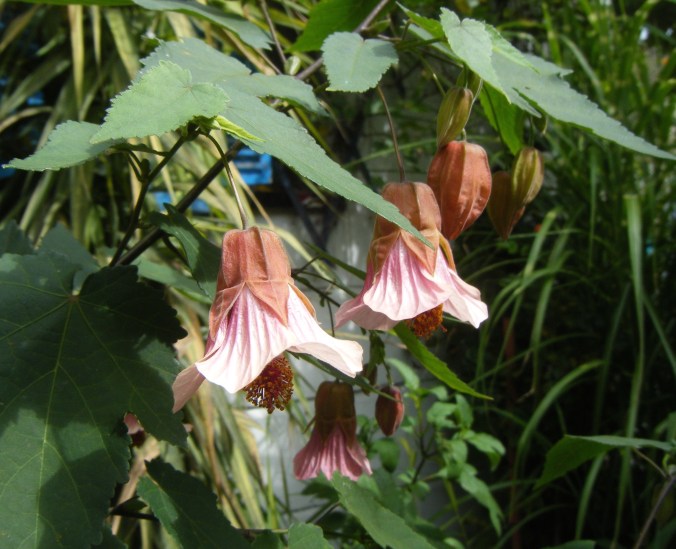
Just to the side is an abutilon megapotamicum ‘Pink Charm’; a fellow visitor describes them as  ‘fairy hats’.

DSCF4365.jpg

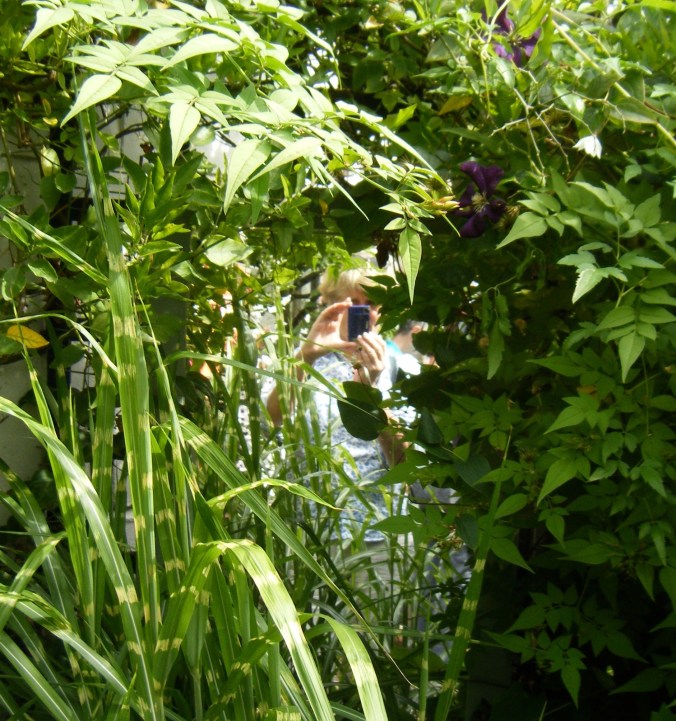
and hidden behind the foliage of jasmine, clematis and miscanthus is a mirror where I just catch sight of something familiar.

DSCF4367.jpg

From the seat looking back to the house is an arch over which climb the golden yellow cupped heads of Rosa Graham Thomas; it is easy to understand why it was voted the world’s most popular rose.

DSCF4378.jpg

Through the arch the view towards the house is filled with foliage and flowers.

DSCF4396.jpg

and in just a few steps I am up by the house and looking back. It is hard to believe this was once a lawn.

DSCF4389.jpg

We enjoy a slice of cake served through the kitchen door. Barbara has made coffee and walnut, a combination hard to beat. Please don’t tell my niece she has already commented on the fact that my blogs contain too much cake!

DSCF4393

——-66——-