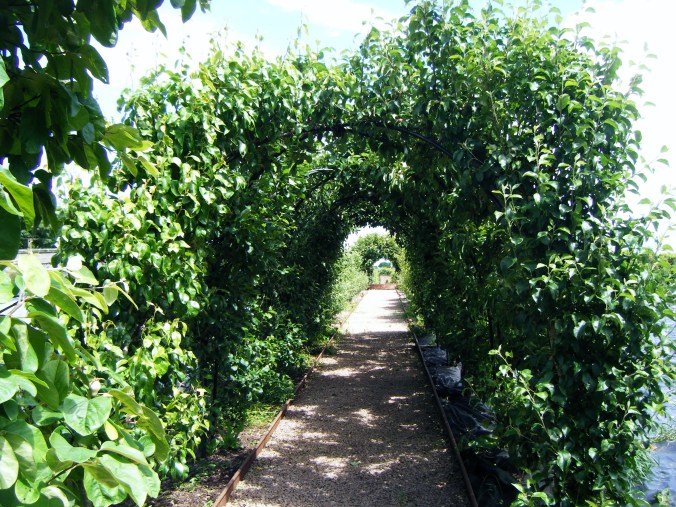
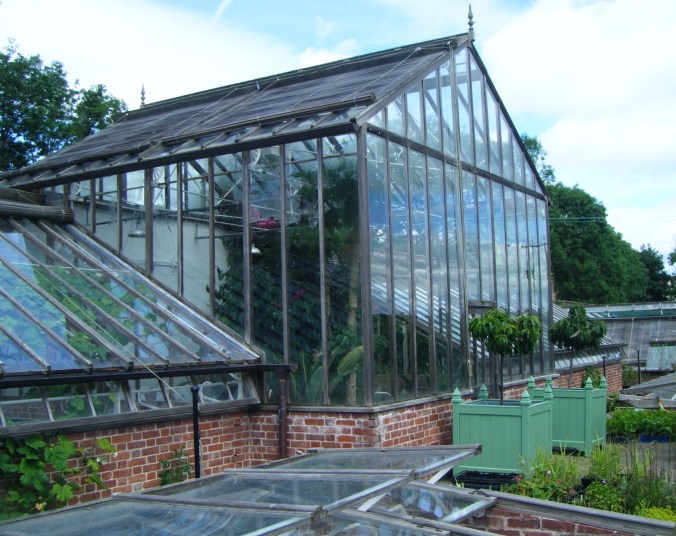
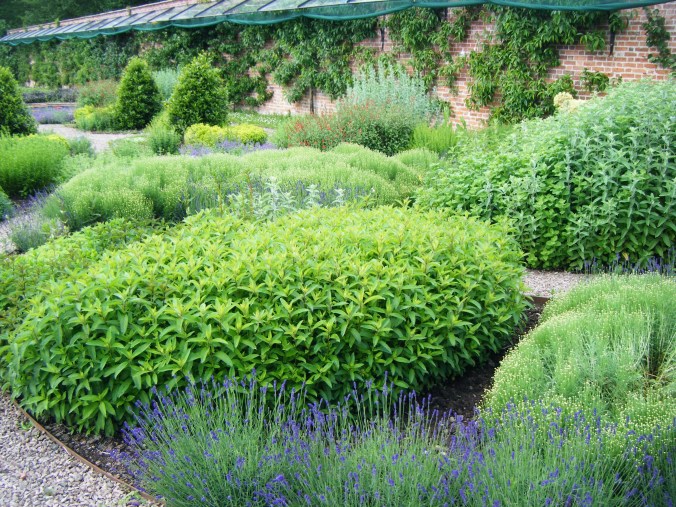
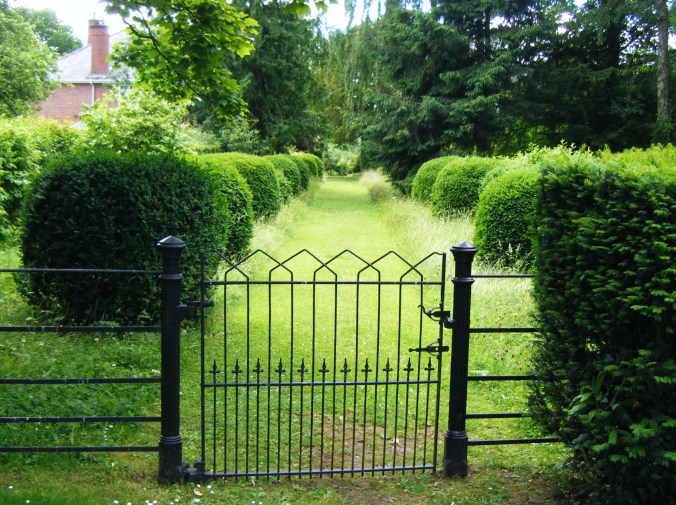
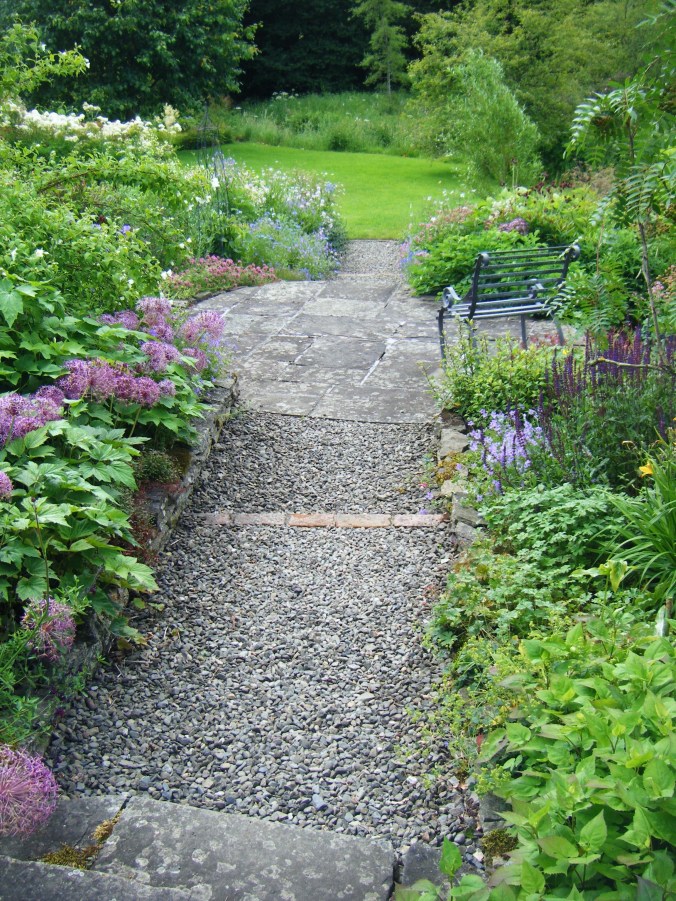
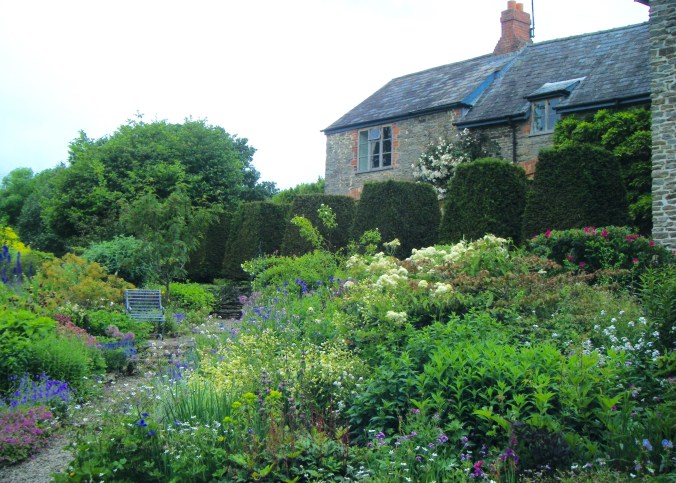
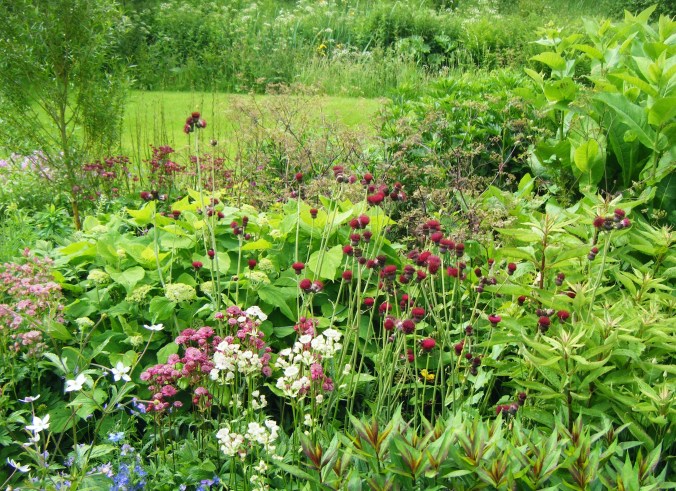
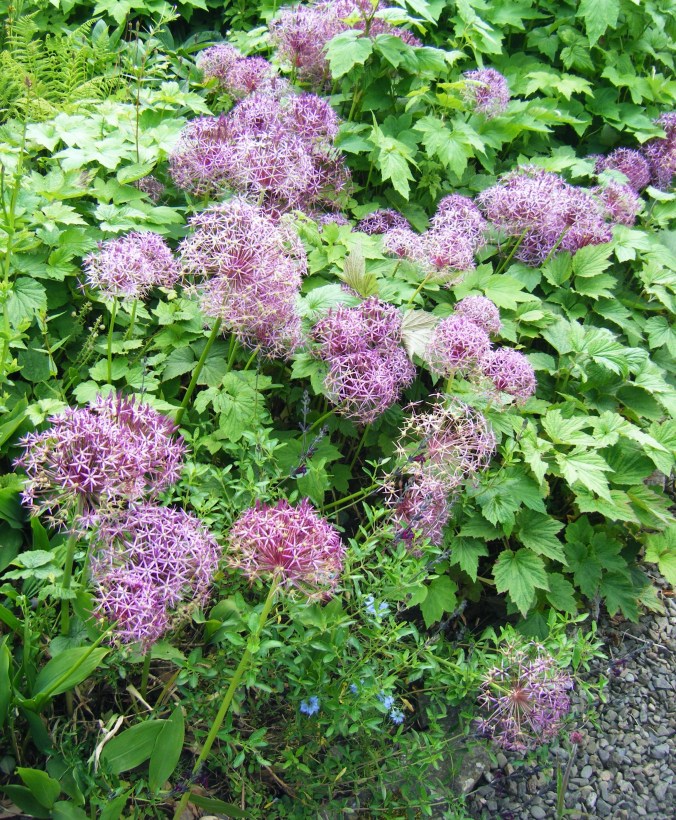
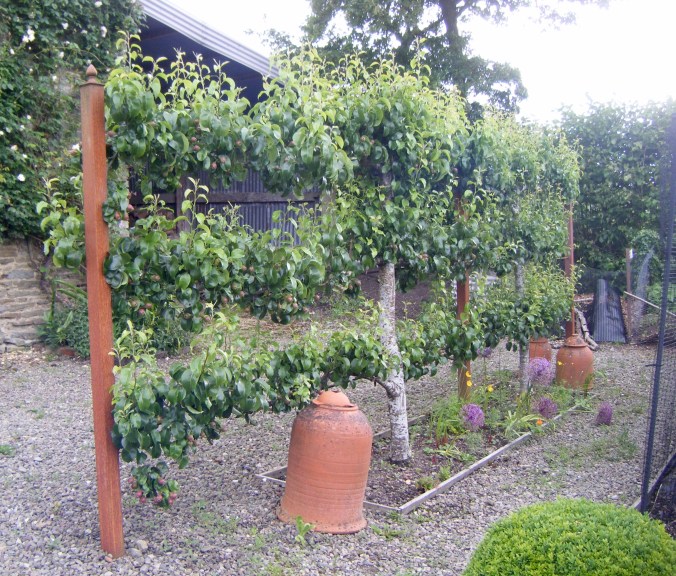
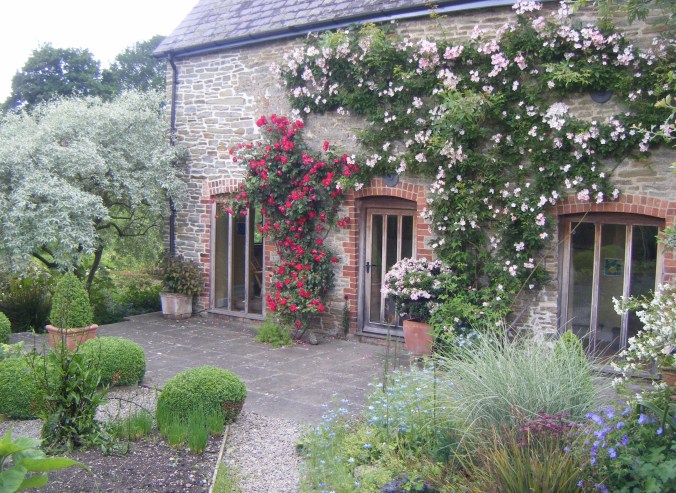
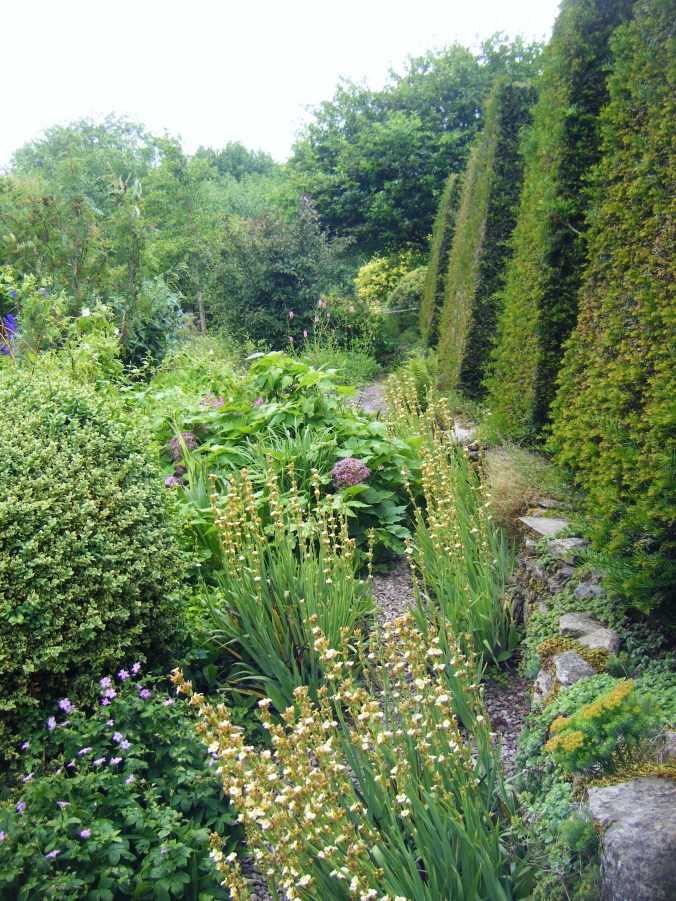
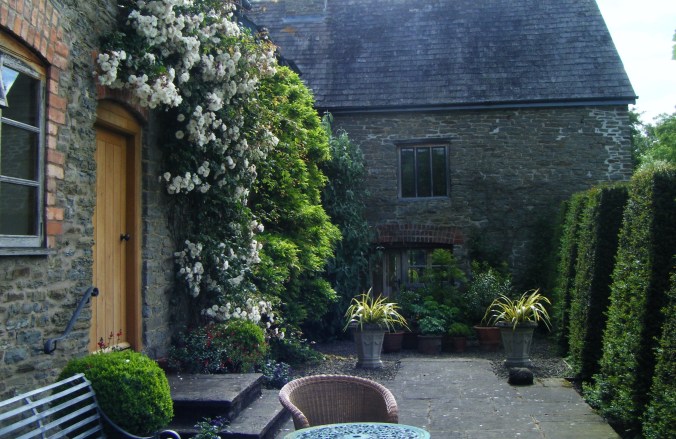
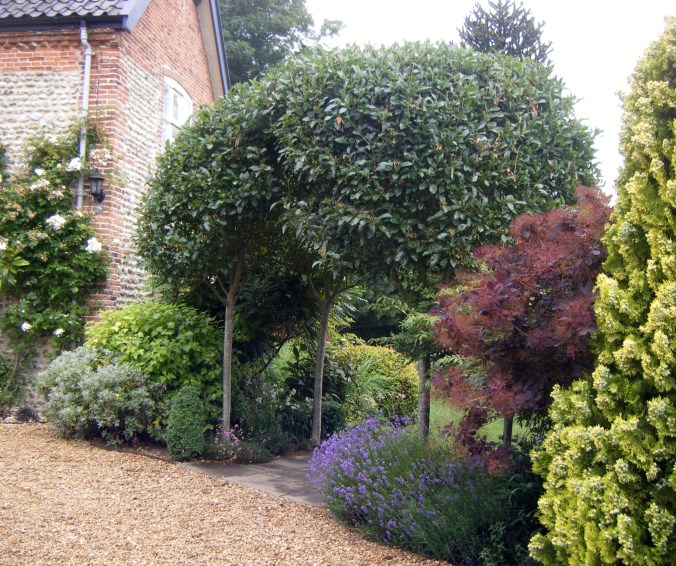
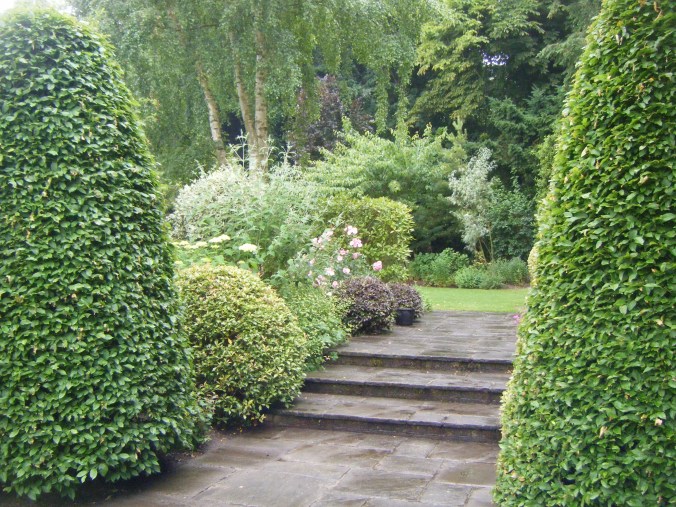
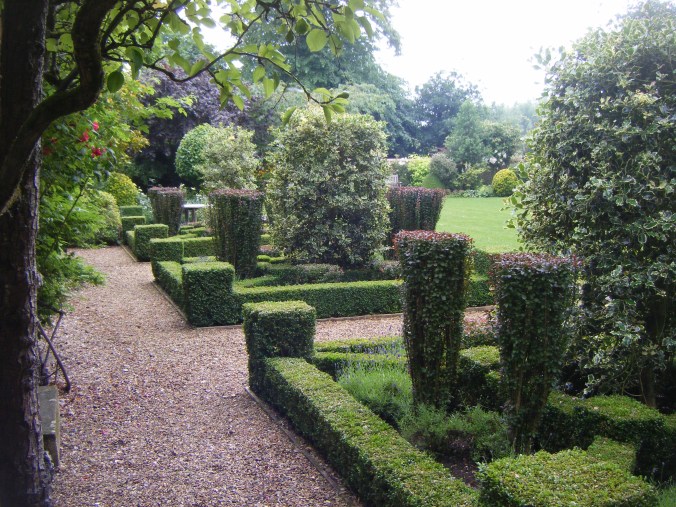
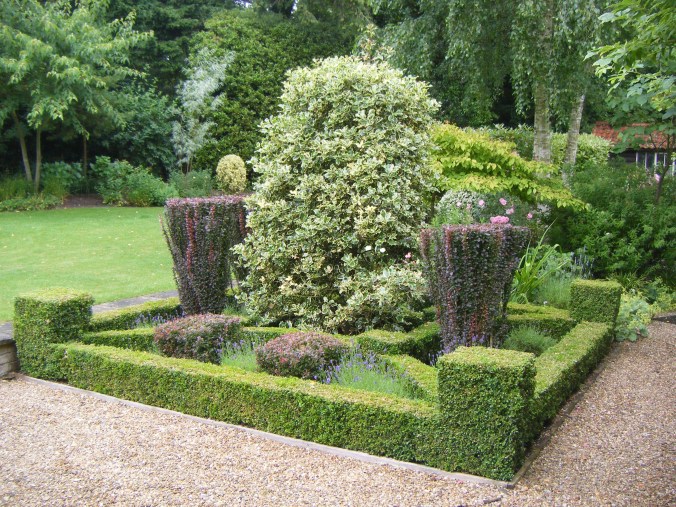
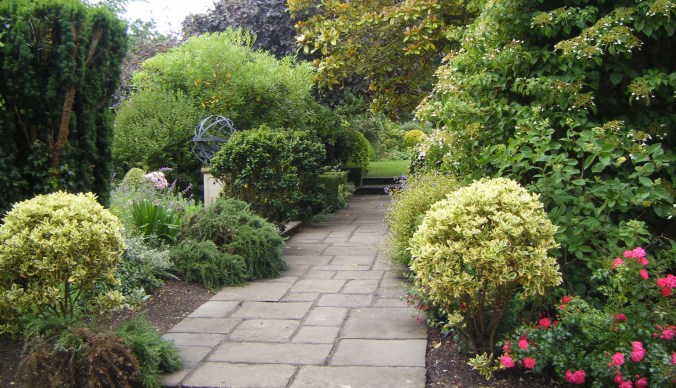
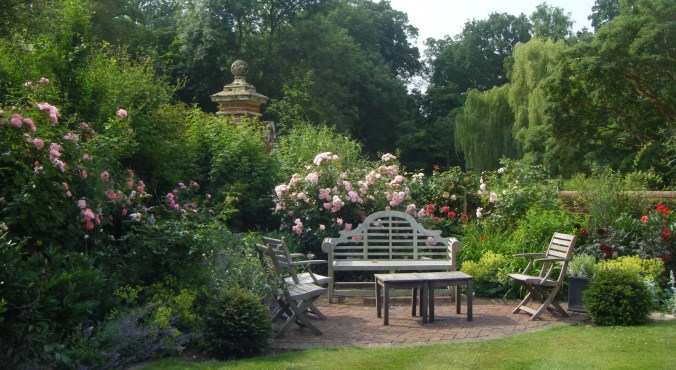
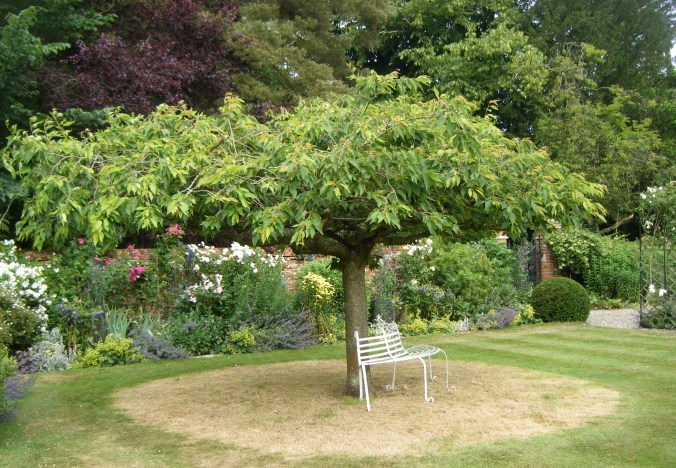
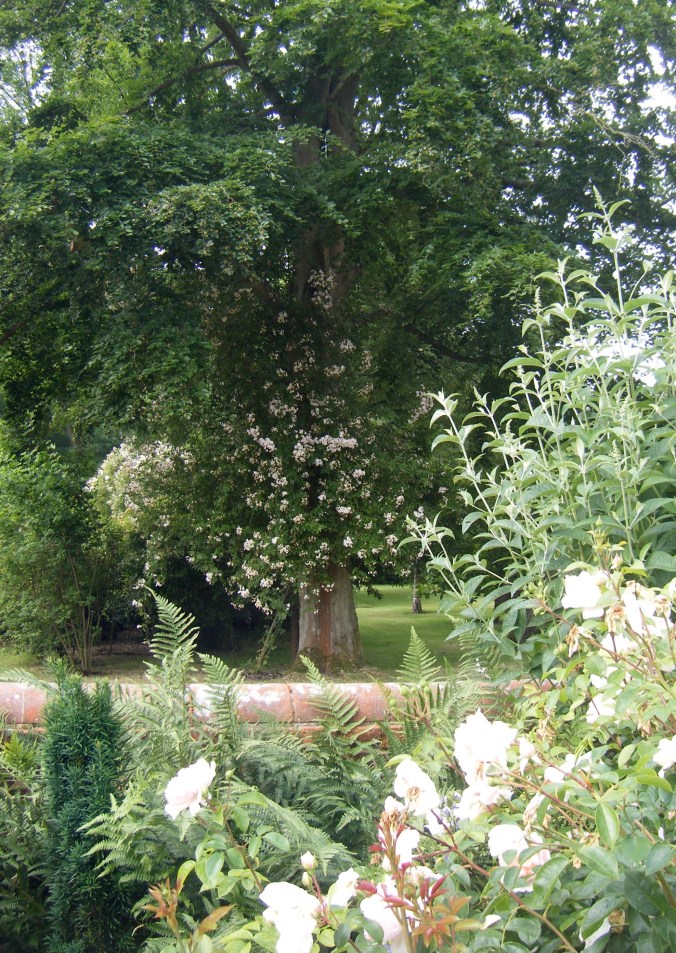
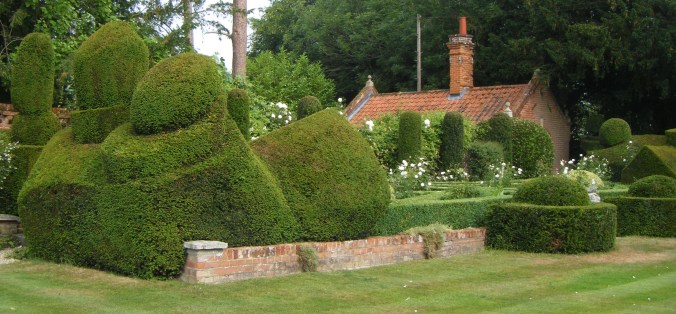
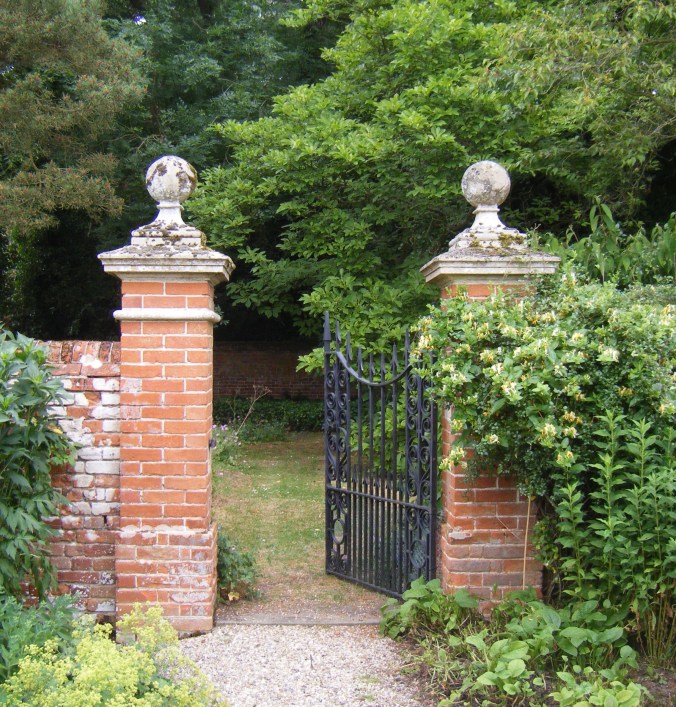
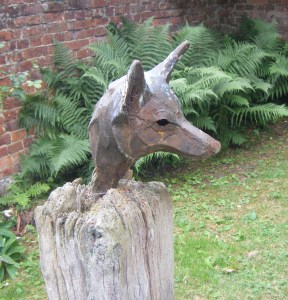
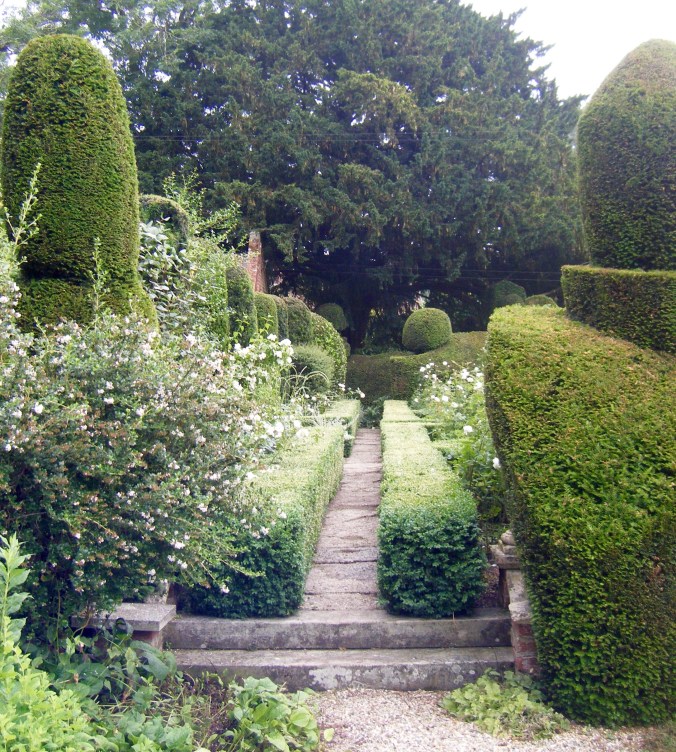
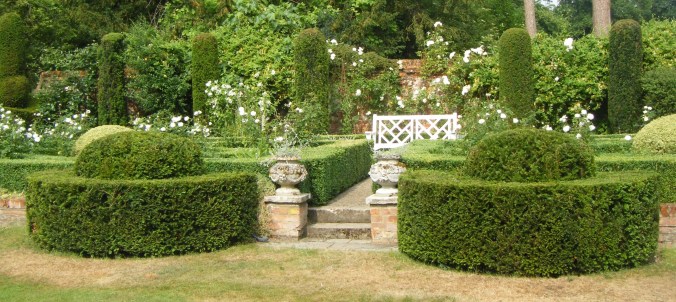
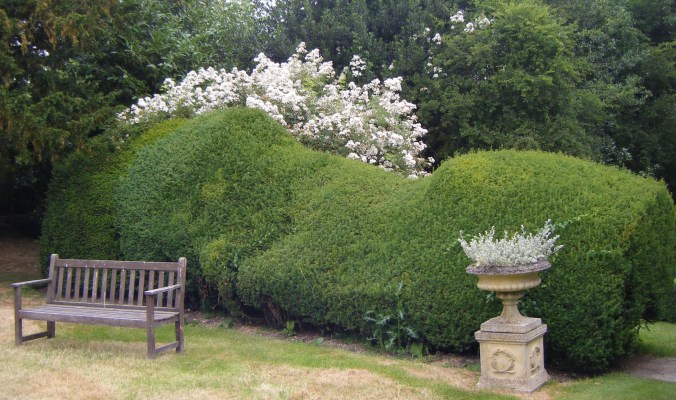
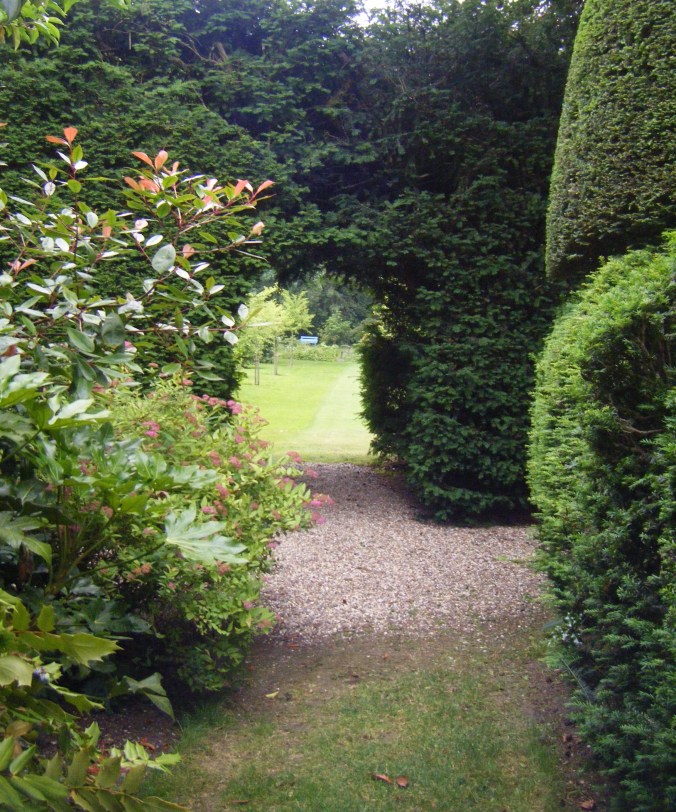
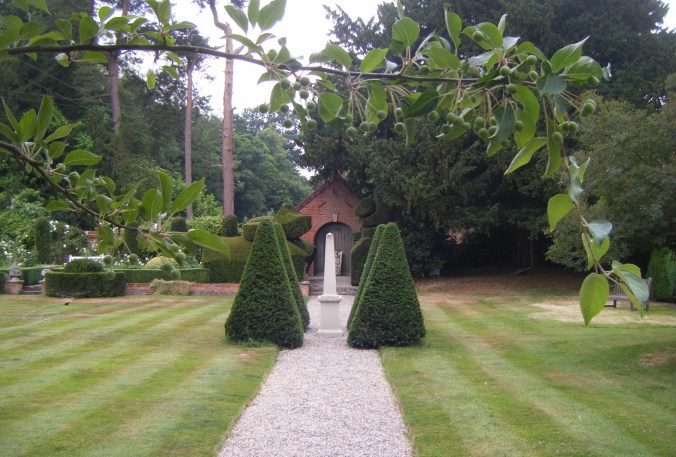
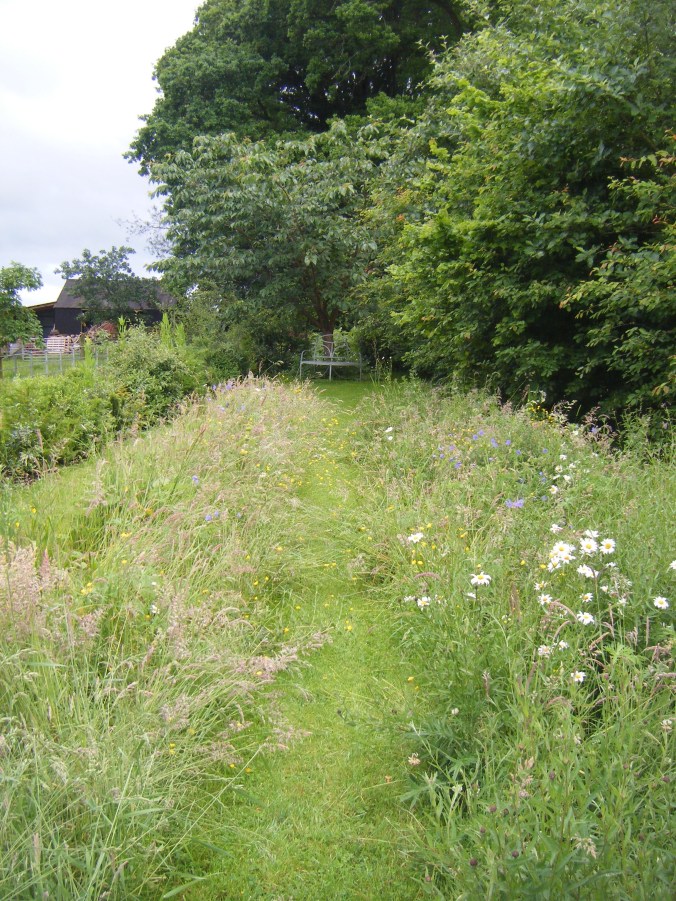
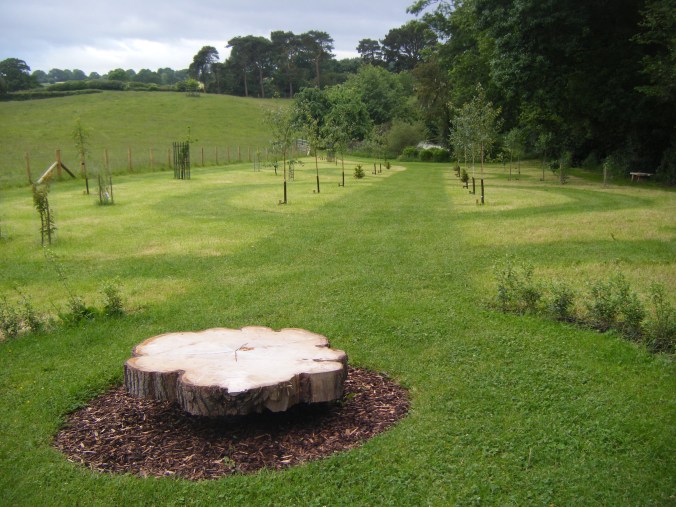
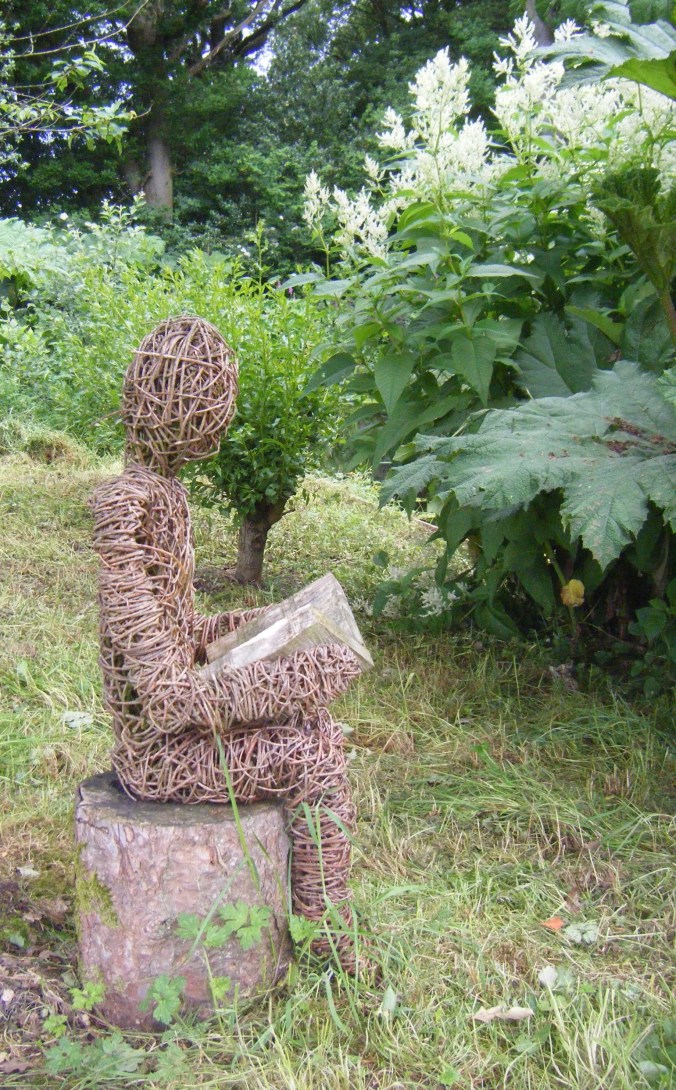
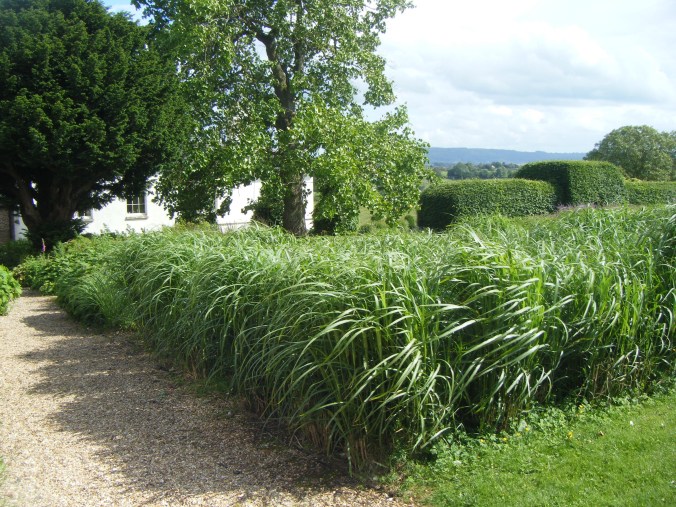
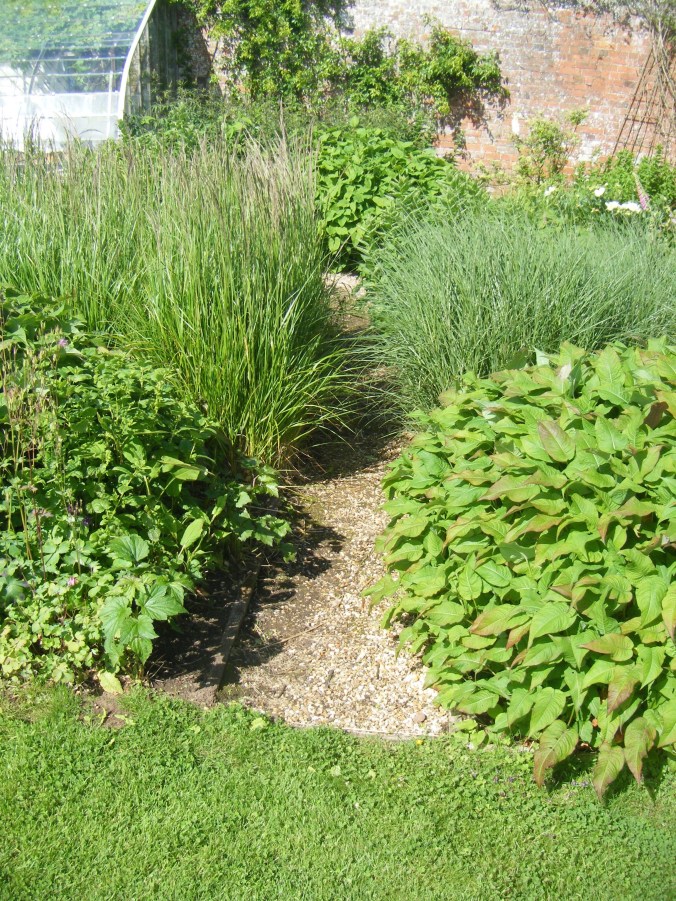
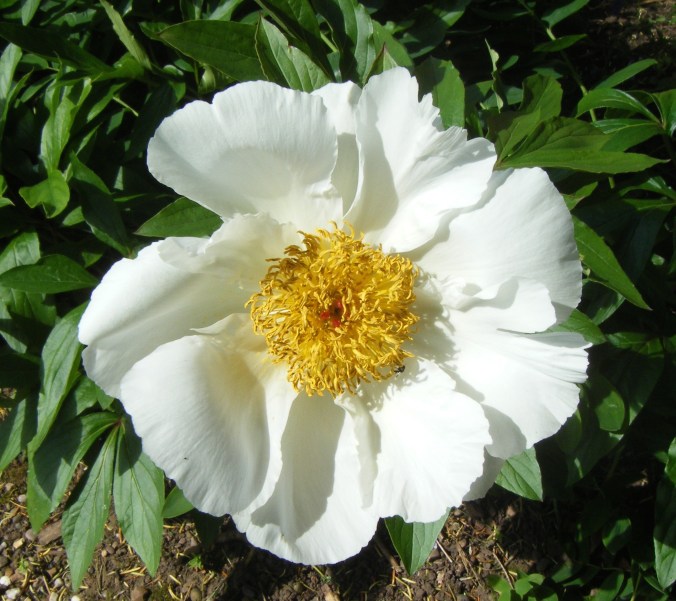
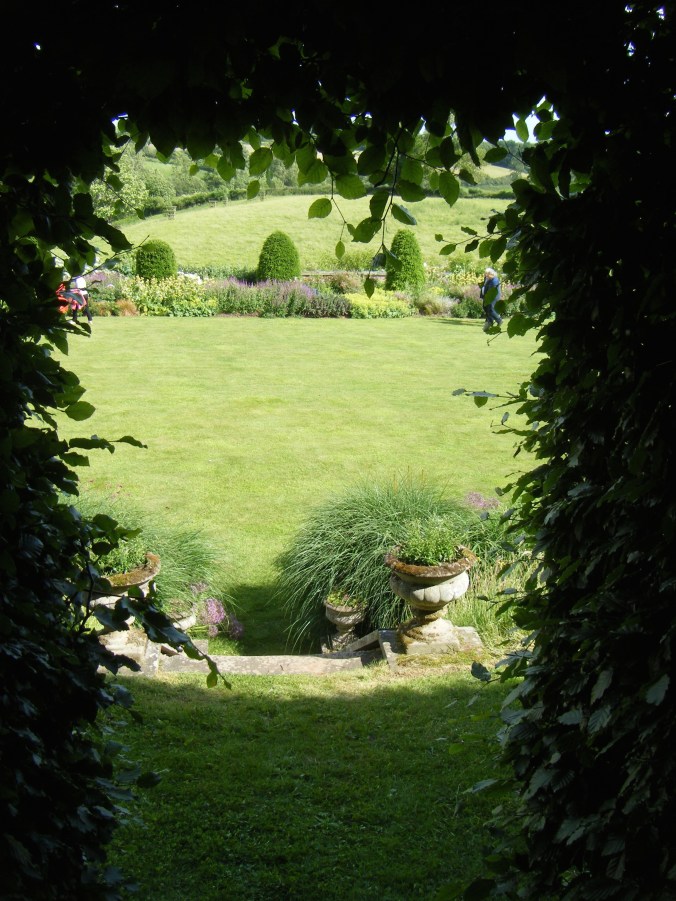
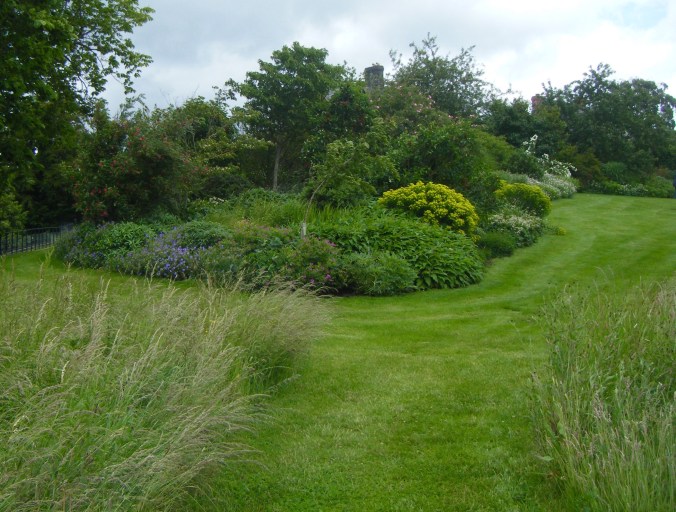
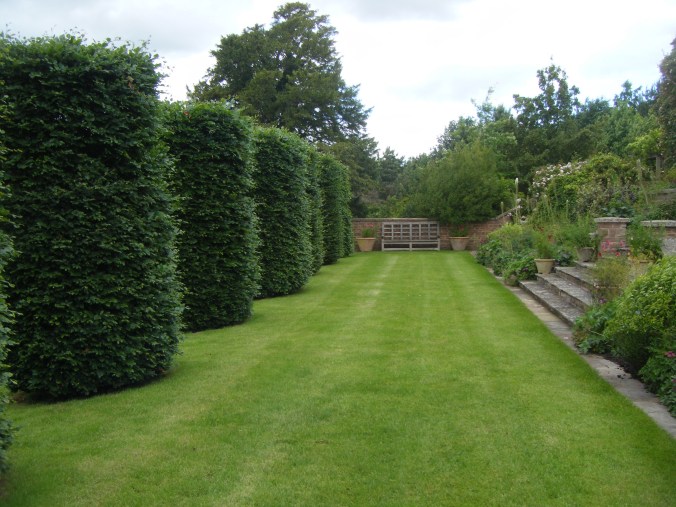
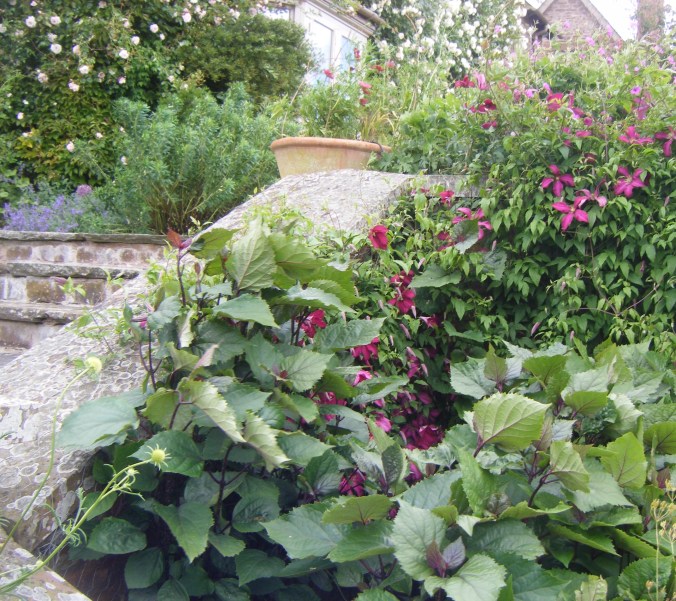
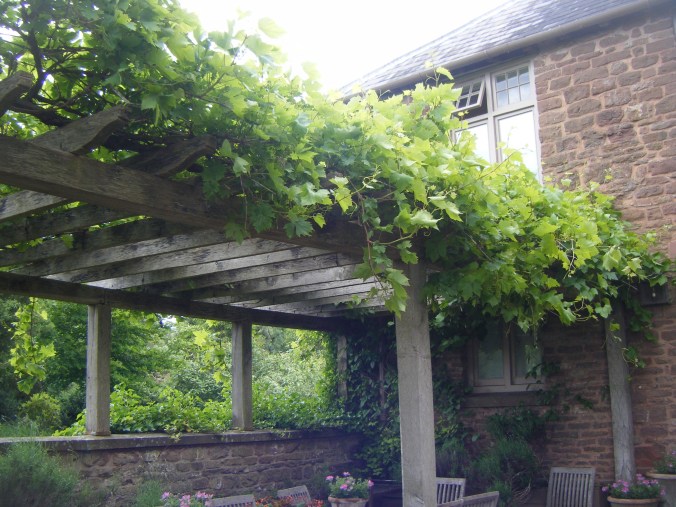
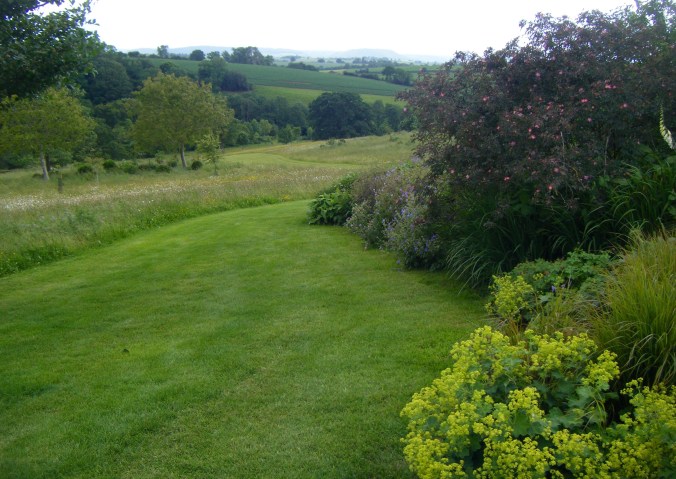
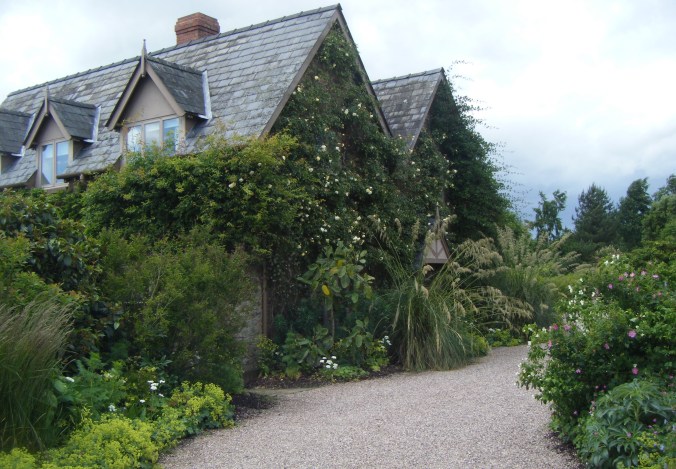
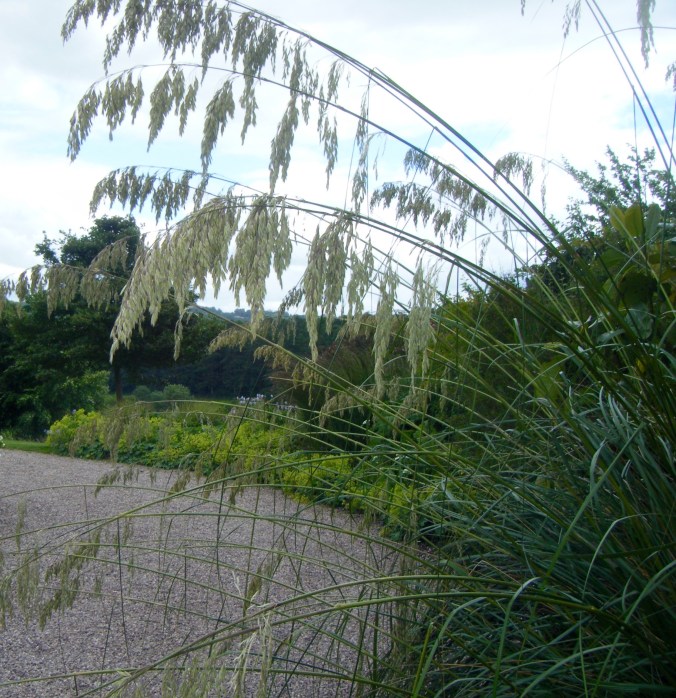
Blickling Lodge, avenues of yew. (54)

Last Tuesday torrential rain prevented me from visiting Blickling Lodge. Situated near the market town of Aylsham in Norfolk, it once belonged to the Blickling estate but is not to be confused with Blickling Hall.  A break in the weather a couple of days later allowed the gates to unlock and swing open for me, ahead of the garden opening this coming Sunday.

DSCF3076 (1).jpg

On the approach to the house with the walled garden behind, there is a colourful mixed border

DSCF3068.jpg

which is broken in the centre by the most comfortable looking seat swinging between pots of agapanthus.

DSCF3072.jpg

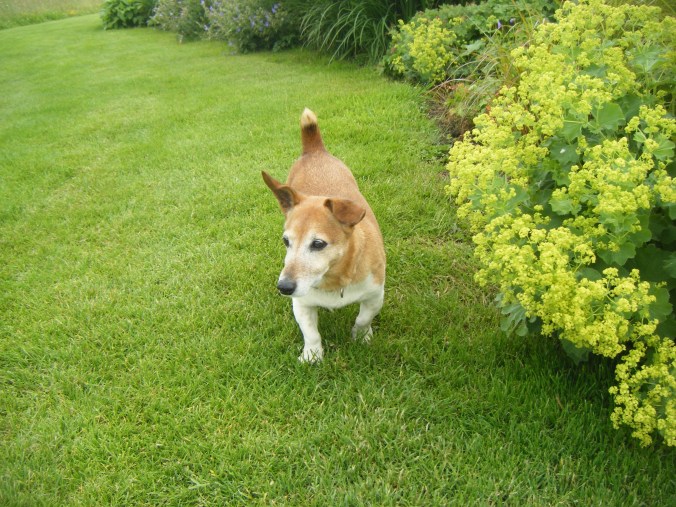
The owners were out but Plug was there to greet me and quickly led me around to the other side of the house where I met head gardener Rachel.

DSCF3061

Rachel was just dead-heading paeonia lactiflora ‘Festiva Maxima’, the plants of which were looking very healthy and well supported by home-grown hazel sticks.  It is a simple but effective parterre with the white flowers of hydrangea arborescens ‘Annabelle’ now carrying on the show.

DSCF2965.jpg

We start our tour in the walled garden situated close by the house. A path bordered by a delightful mix of herbaceous and mixed planting runs down the centre.

DSCF2949.jpg

Unaffected by the recent rain, clematis ‘Madame Julia Correvon’ scrambles over the iron fence at the back of the border. This is a clematis that was originally raised in France in 1900 but was then lost to cultivation until it was rediscovered by the great plantsman Christopher Lloyd. I wonder who the good lady was who gave her name to this pretty clematis.

DSCF2933.jpg

Fruit trees are trained against the wall and are just receiving a summer tidy. Cut flowers grow in blocks along the border,

DSCF2907.jpg

flowers such as ammi visna ‘White’, so good in arrangements,

DSCF2928.jpg

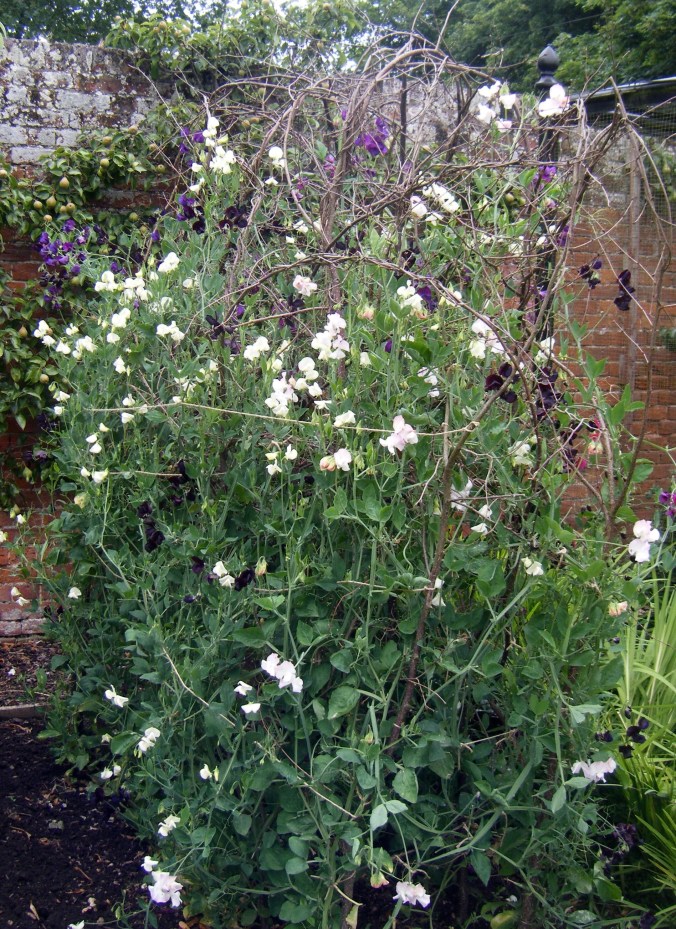
and old favourites such as sweet peas.
DSCF2919 (1).jpg

On the other side of the garden the border is reserved for the neat rows of vegetables,

DSCF2916 (1).jpg

with a fruit cage in the corner.

DSCF2920.jpg

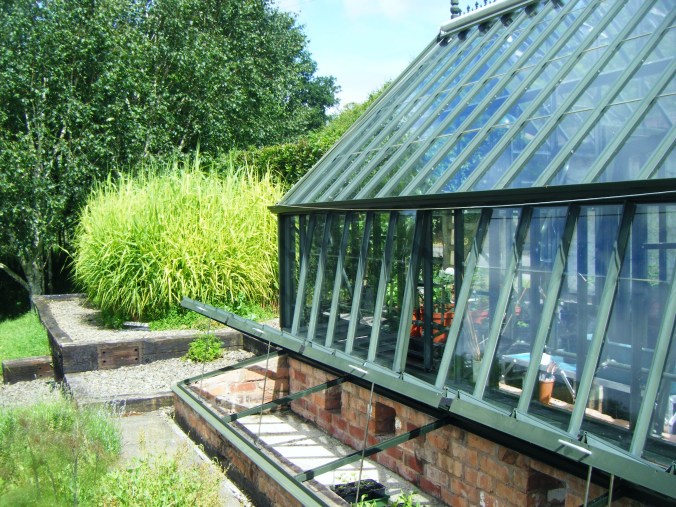
Cornflowers burst out from the coldframe by the neat greenhouse.

DSCF2943.jpg

On the opposite wall and across the swimming pool,  is a raised bed of herbs resting under a carved stone coat of arms.

DSCF2934.jpg

Hydrangea paniculata ‘kyushu’ is content in a pot.

DSCF2935.jpg

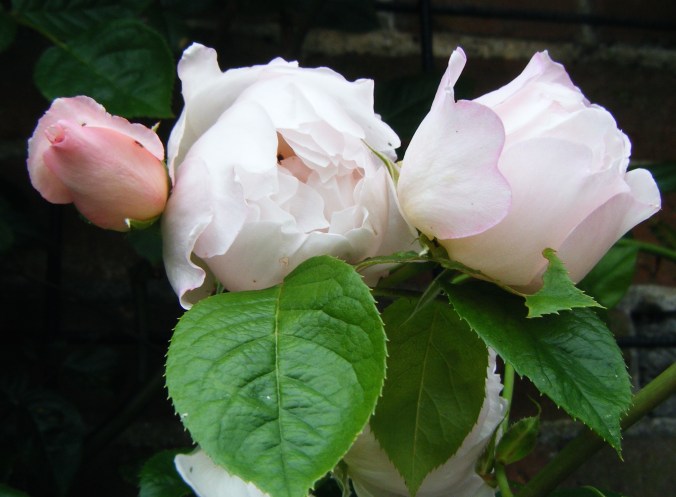
Against the wall is a climbing rose ‘The Generous Gardener’ and Rachel sings its praises; repeat flowering, fragrant and disease resistant. I discover that it was introduced by David Austin in 2002 and named to mark the seventy-fifth anniversary of the NGS.
DSCF2941.jpg

Moving away from the walled garden and walking back past the house is a dell where a small hexagonal building has been built. It is a dog kennel, constructed 5 years ago with the added luxury of central heating.

DSCF2970.jpg

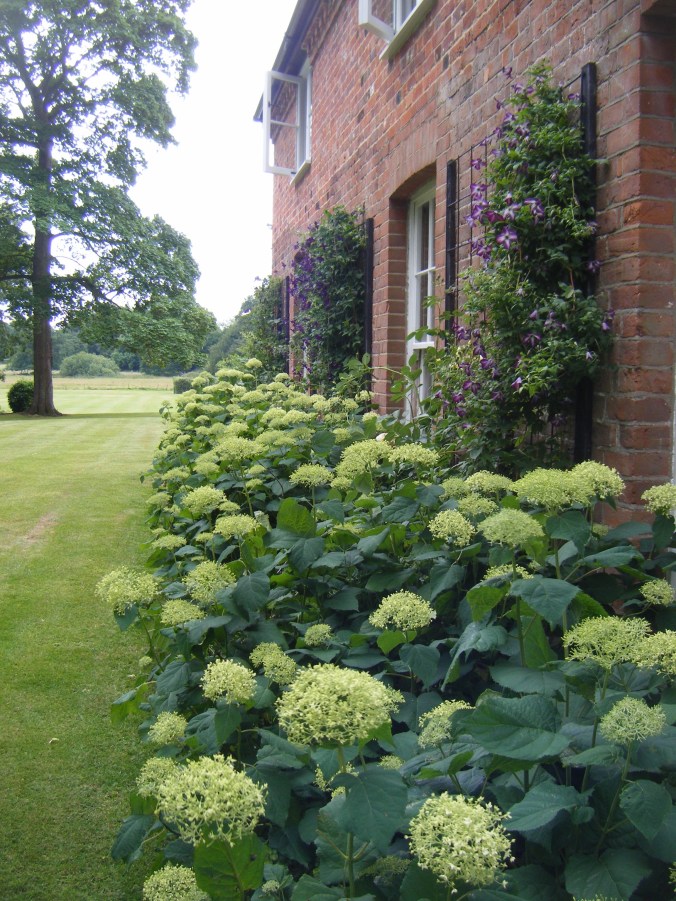
A generous planting of hydrangeas edge the wall of the building where three dark purple clematis climb the supports.
DSCF2974.jpg

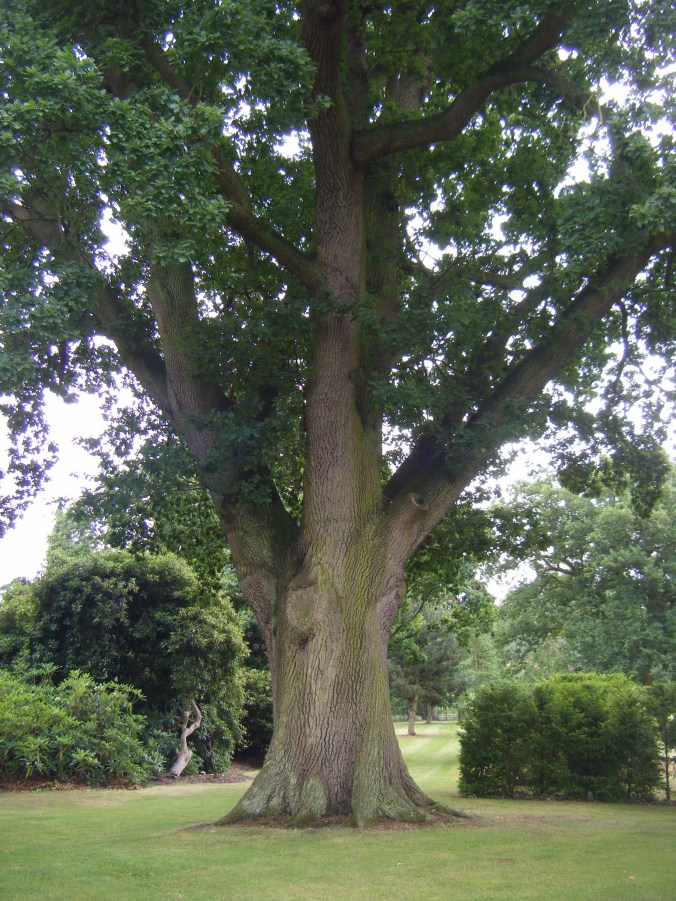
Mature trees such as oak grace the lawn,
DSCF2977.jpg

and a monkey puzzle tree araucaria araucana is impressive, almost menacing.


DSCF2997.jpg

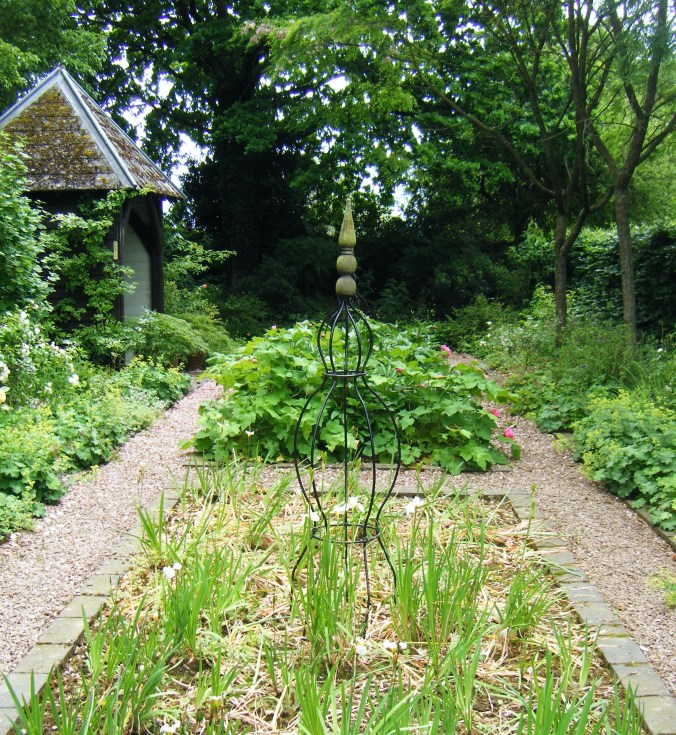
An avenue of yew ‘squares’ with magnolias planted on the outside, leads to the narrow obelisk.

DSCF2980.jpg

The sky is very grey and in the field beyond the cows are lying down, it could be an ominous sign.

DSCF2989.jpg

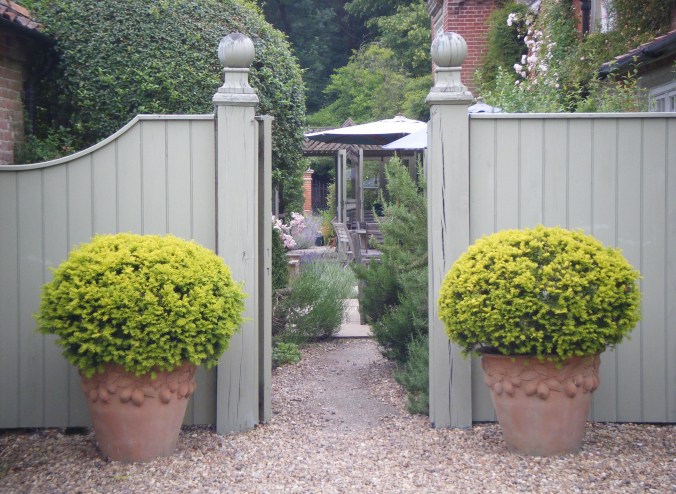
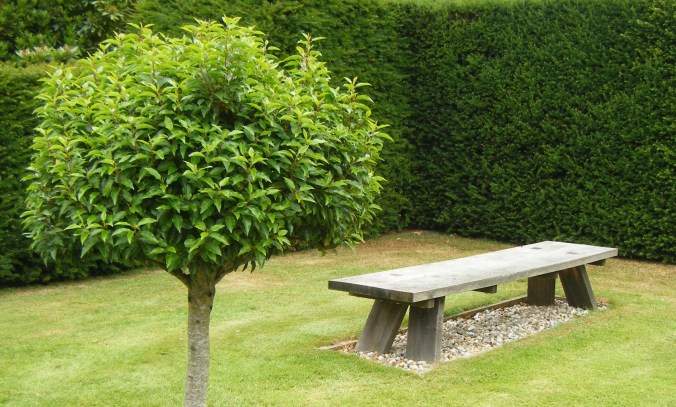
A pair of Portugal laurel, prunus lusitanica are clipped into lollipops and stand by the entrance to the tennis court; benches await the keen spectators .
DSCF2993.jpg

Buttresses neatly project from the long yew hedge which takes you back to the house,

DSCF2998.jpg

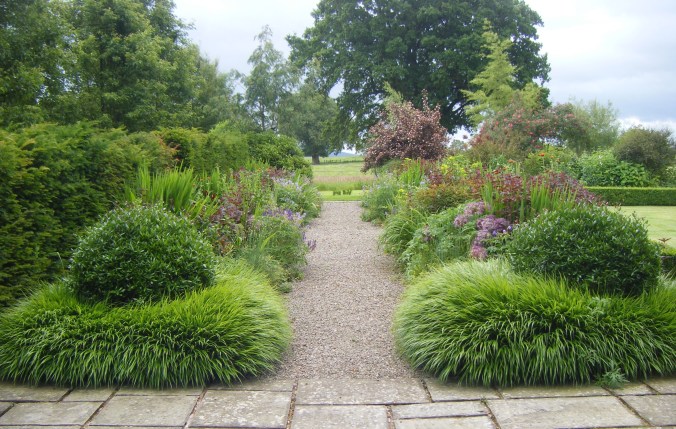
and on the other side is the avenue of yew ‘onions’, beautifully shaped they are very appealing.

DSCF3001.jpg

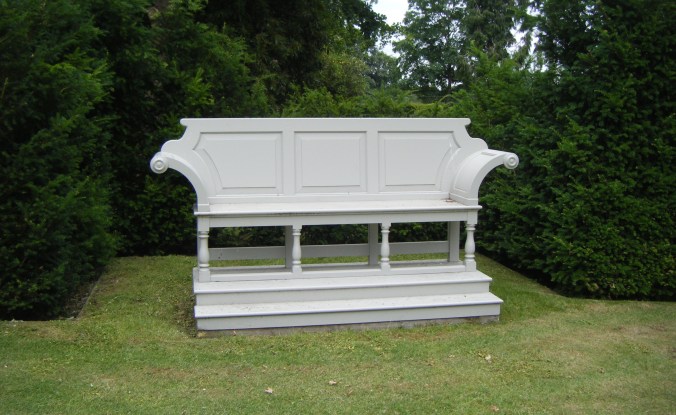
A majestic bench sits in a recess,  the hedge opposite is lowered for better viewing of the cricket field beyond.
DSCF3006.jpg

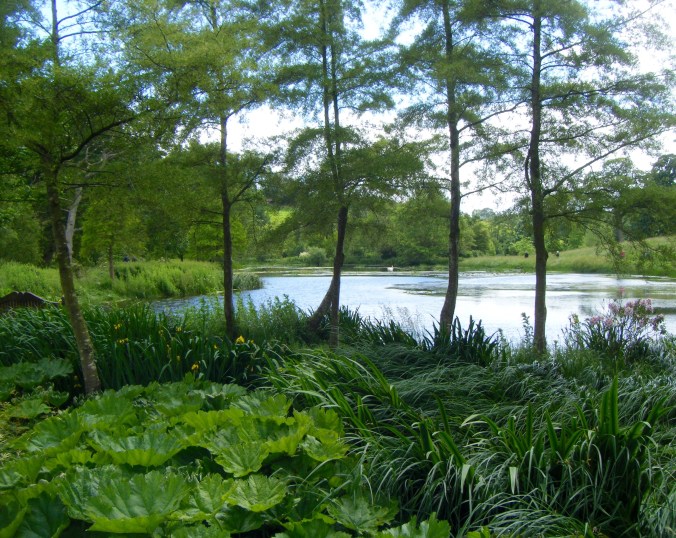
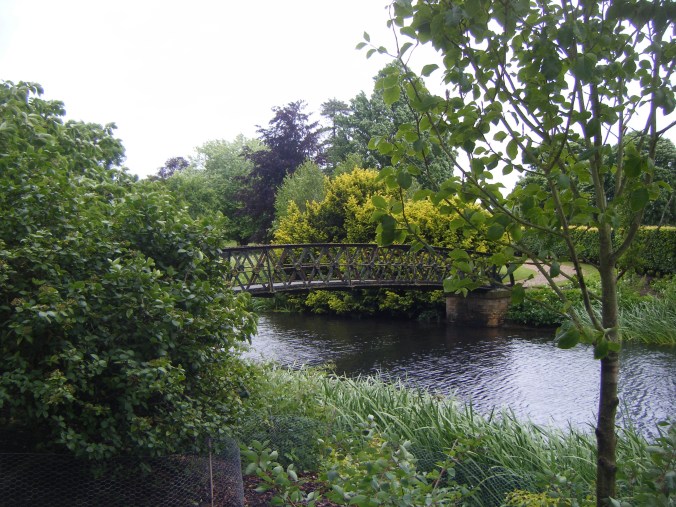
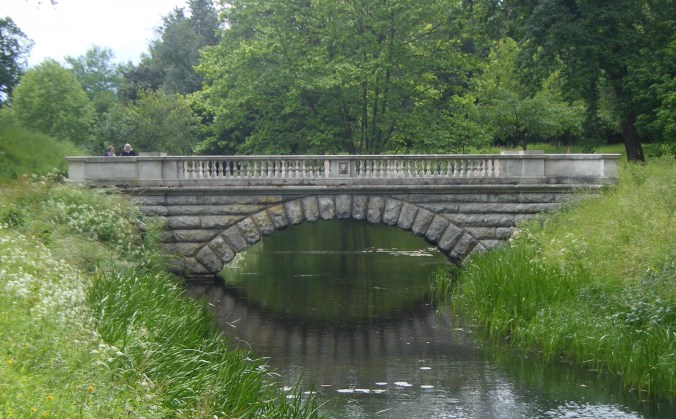
The ‘onion’ avenue narrows to a wooden bridge, recently restored after damage from a falling branch.  From here the garden becomes wild and watery.

DSCF3014.jpg

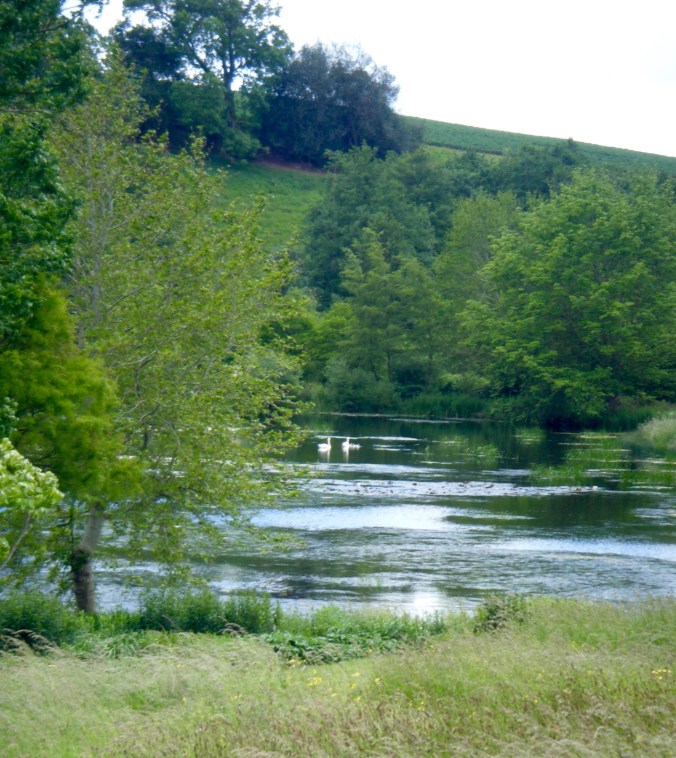
The river Bure flows by, a haven for wildlife such as the otter,

DSCF3018.jpg

and blue dragonflies; this is a male banded demoiselle gently pausing on the Norfolk reed.

DSCF3026.jpg

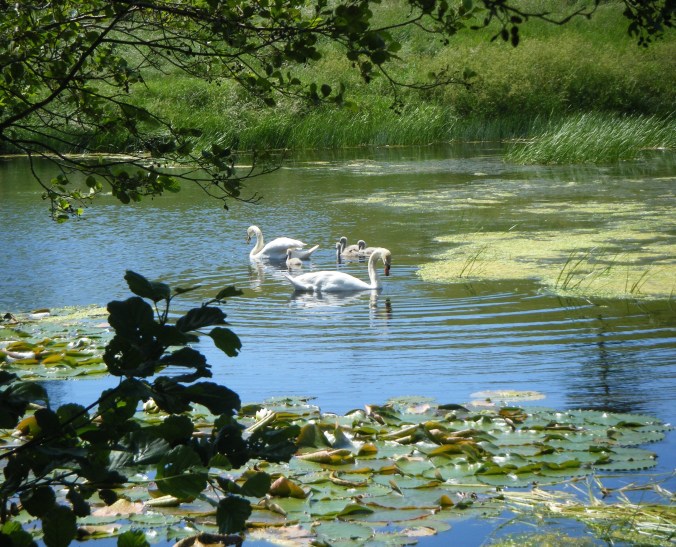
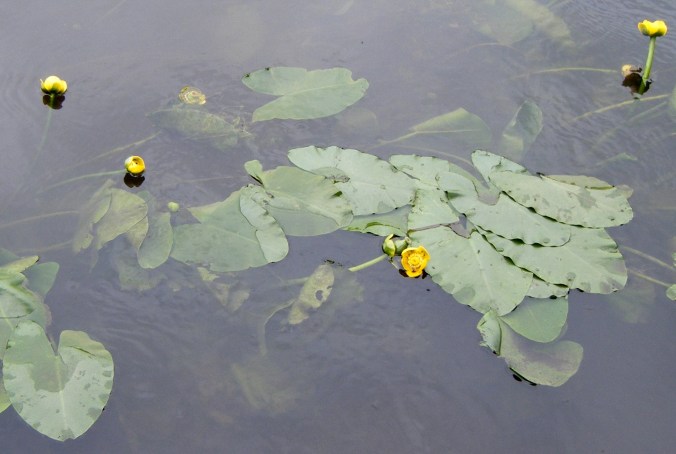
The yellow water-lily, nuphar lutea floats in the slow moving water. It apparently smells like the dregs of wine, which is why it is sometimes called ‘Brandy Bottle’.
DSCF3028.jpg

It is mainly wild flowers growing in this area but there are some ornamentals too, such as these Siberian Irises,

DSCF3031.jpg

which almost look exotic.

DSCF3033.jpg

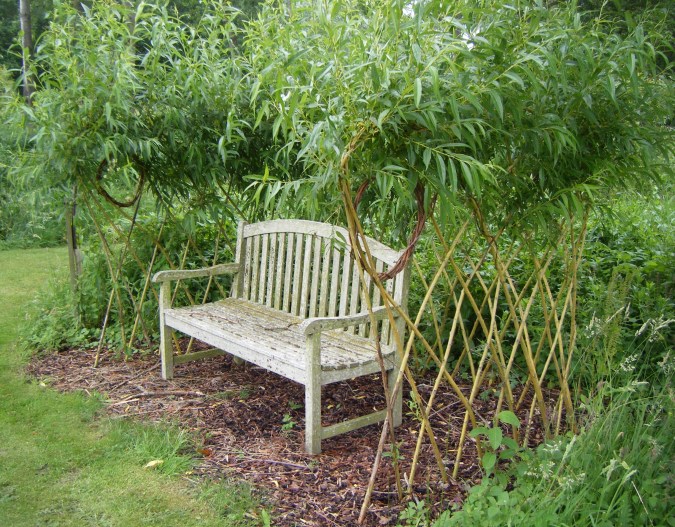
Hazel and willow are grown and cut for use in the rest of the garden. Living willow is latticed around the back of a  bench.
DSCF3036.jpg

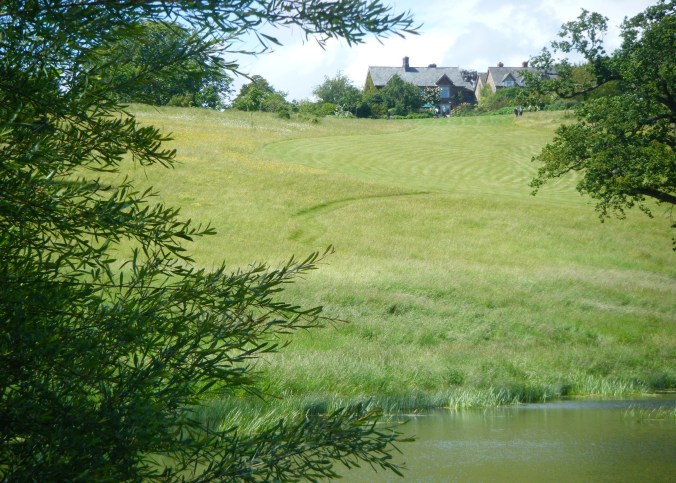
Walking back towards the house I can’t help but admire not only the smooth lawns of the cricket pitch in front, but also the equipment that goes with it.

DSCF3057.jpg

It is a well maintained garden around a family home. A variety of flowers and vegetables are grown in the delightful walled garden, and the formal areas contrast with the more relaxed and peaceful planting by the river. Open on Sunday 2nd July (tomorrow) between 2.00pm -5.30pm with home-made teas it surely makes for a perfect Sunday afternoon outing.

DSCF3066

——-54——-
Newport House, an example of garden restoration. (53)

Newport House was our fifth and final garden in Herefordshire. Open for five successive days at the beginning of June, we arrived on the Monday morning following our visit to Upper Tan House.

A combination of ancient and the modern heralds our arrival; an intriguing marble sculpture with a sunflower pattern is by Jonathan Loxley and is situated on the left in front of the stable block,

DSCF2297.jpg

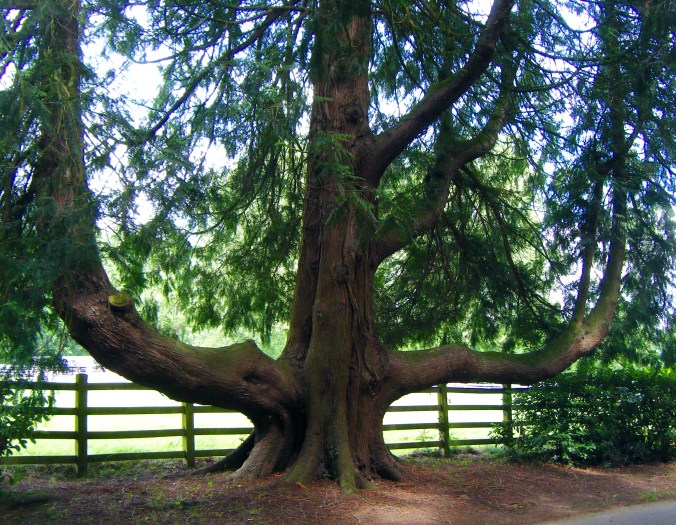
whilst old evergreens line the drive with graceful arms out-stretched.

DSCF2321.jpg

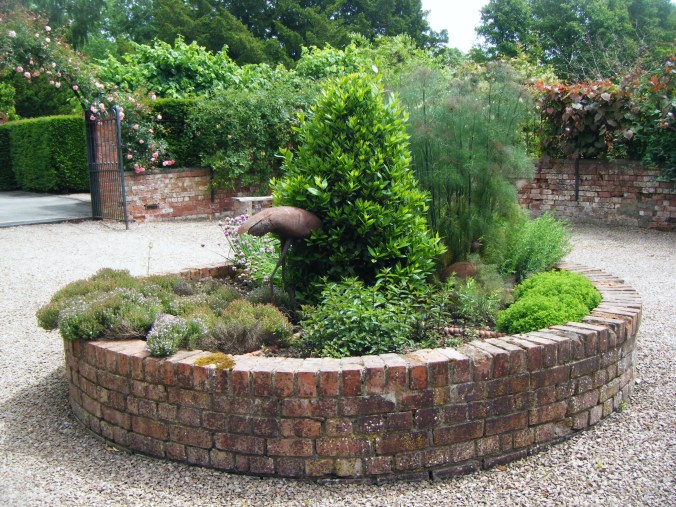
Having paid our dues in the honesty box and helped ourselves to a cup of coffee we entered the courtyard at the back of this large Georgian house. Herbs fill the circular central raised bed,

DSCF2251.jpg

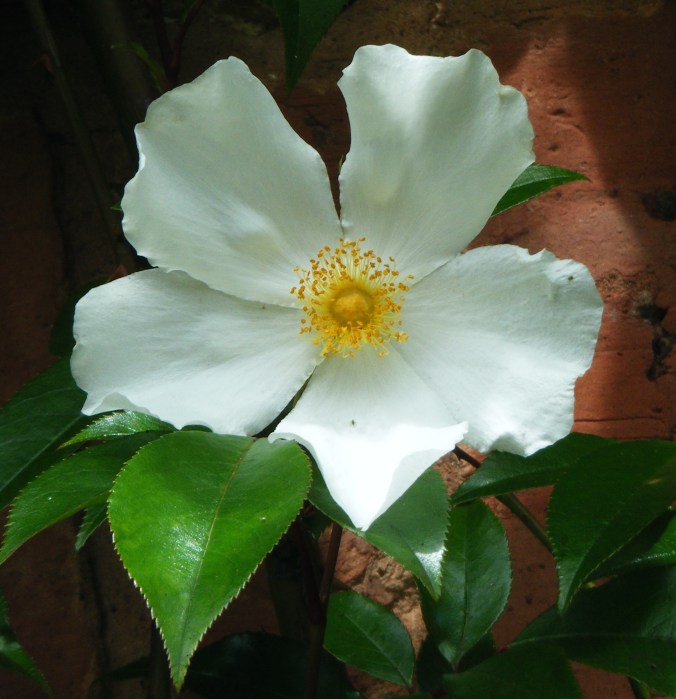
and the most perfect but yet unidentified rose climbs the wall.

DSCF2252.jpg

Richard and Cary Goode who now live at Rhodds farm (garden 49), bought the house from property developers in 2000. They renovated the house and Cary set about designing the garden and cleverly planting up the different areas. The garden gate opens into a small delightful area reminiscent of a show garden at Chelsea.

DSCF2255.jpg

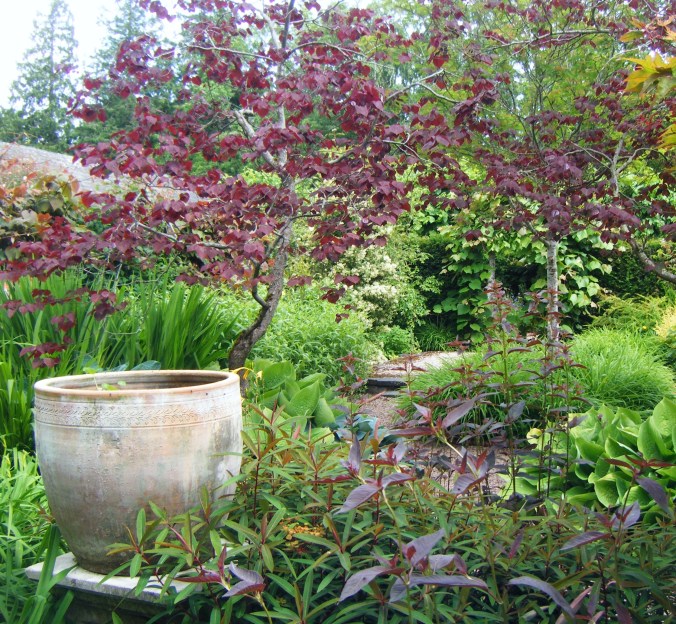
Hues of purple and soft green harmonise together,

DSCF2260.jpg

and the forest pansy cercis canadensis is underplanted with show-stopping hostas.

DSCF2261.jpg

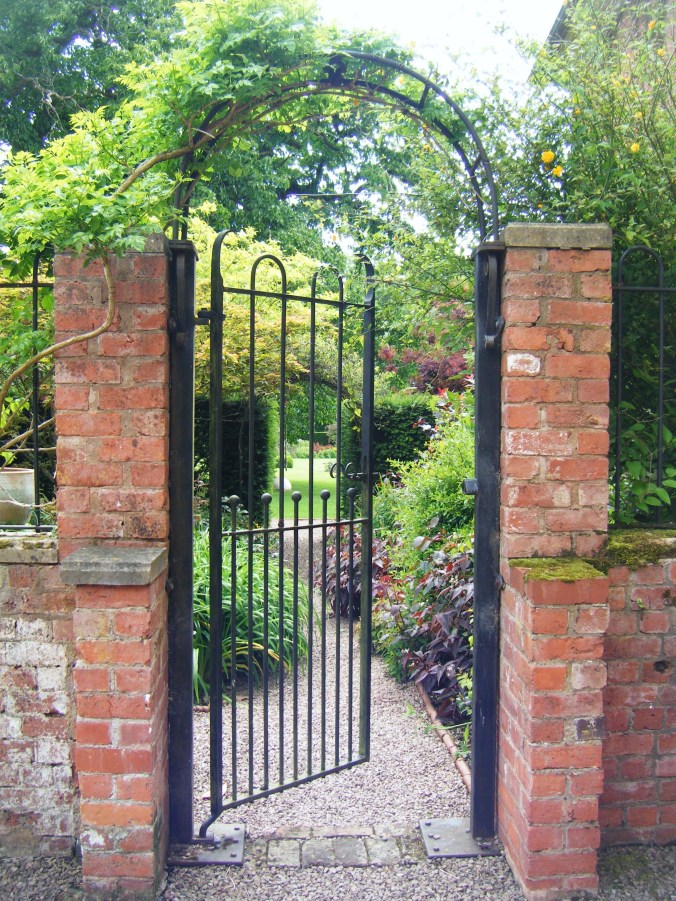
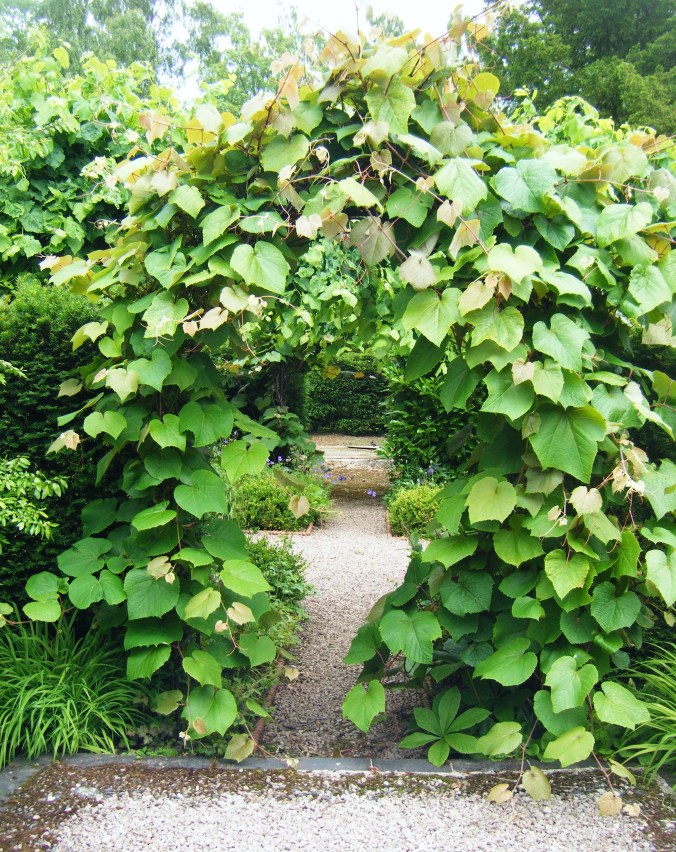
At the far end is a vine-covered arch that beckons us through

DSCF2266.jpg

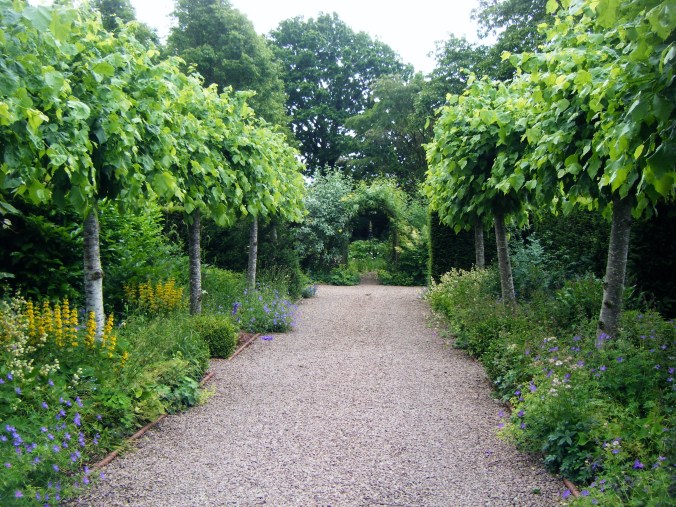
onto an avenue of pleached limes rising up from simply planted herbaceous beds.

DSCF2264.jpg

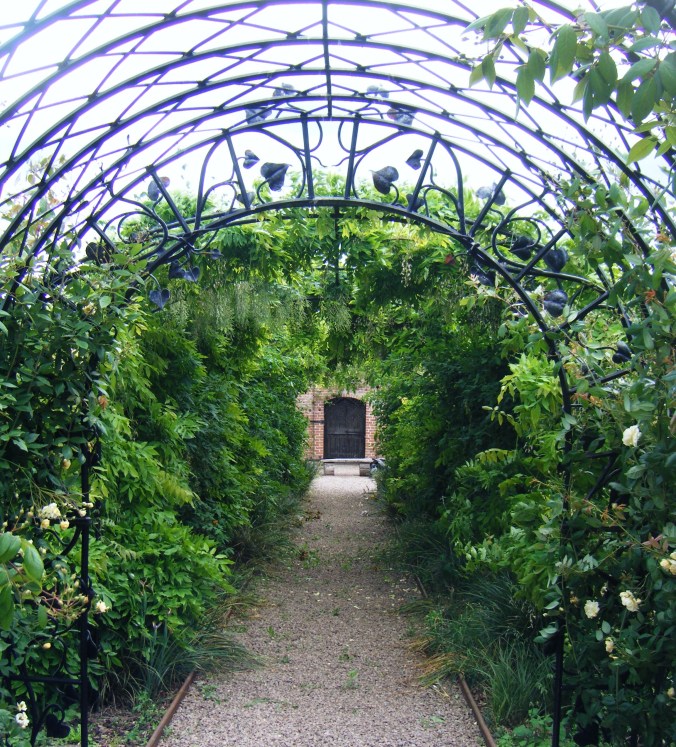
The wide path narrows to a rose-sprawling archway,

DSCF2268.jpg

through which we enter a secret garden, part shaded by the surrounding mature trees.

DSCF2269.jpg

A Lutyens-style bench is ideal for the summerhouse.

DSCF2270.jpg

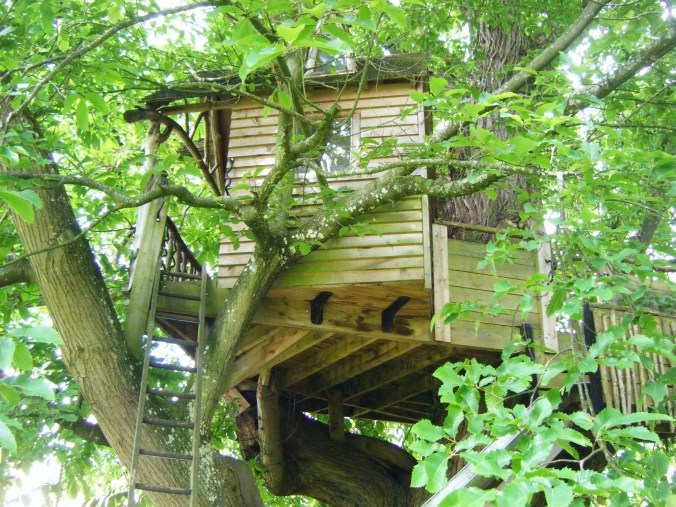
Moving onto the edge of the main lawn, suspended from an upper branch are the ropes of a swing and, very high up above, is a tree house.

DSCF2277.jpg

I cannot resist climbing the long ladder.

DSCF2273.jpg

It is children’s paradise and inside there is a quirky little table and wooden bench waiting for play.

DSCF2275

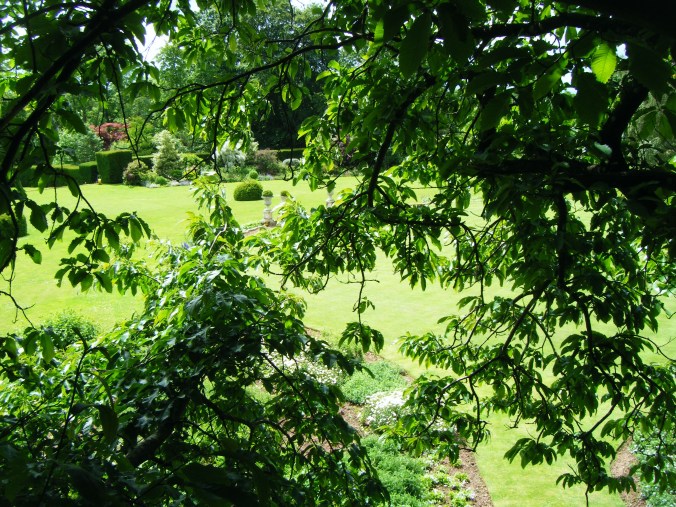
From the balcony the lawn below seems a considerably long way down.

DSCF2274.jpg

The garden in front of the house was originally sunken, being replaced in 1767 with an oval more raised lawn. Nearly a hundred years later William Nesfield formalised the area into the fashionable Italianate style.

The property over the years had several changes of ownership; Herefordshire Council bought the whole estate (some 4,000 acres) in 1919 when the house became a TB clinic and the land was divided to make tenant farms for soldiers returning from the Great War.

By 1952 the house had become a home to Latvian refugees fleeing Stalin. The present owners bought it from the Goodes in 2004 and have been living here since.

New beds on the upper lawn have replaced the blighted box which was ripped out last autumn. Planting began in mid February of this year with over 2,500 plants bought in, and a further 1000 propagated from plants already here.

DSCF2278.jpg

We step down to the lower lawn which is encircled by yew-backed borders broken in the centre with a wide avenue leading down to the lake.  Another marble sculpture by Jonathan Loxley is sited on the left hand side,

DSCF2279.jpg

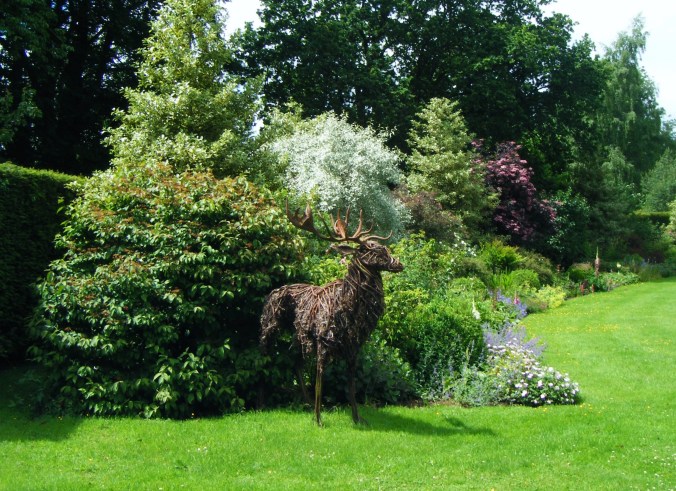
while a stag skilfully created by Sally Matthews quietly emerges from the right.

DSCF2280.jpg

Some distance from the house and acting as a focal point before reaching the lake, is the stone tazza.  Supported by four lions, it was introduced by Nesfield and was originally positioned on the formal terrace in front of the house.

DSCF2281.jpg

Incidentally Nesfield also installed a similar tazza in Regent’s Park.

images.jpg

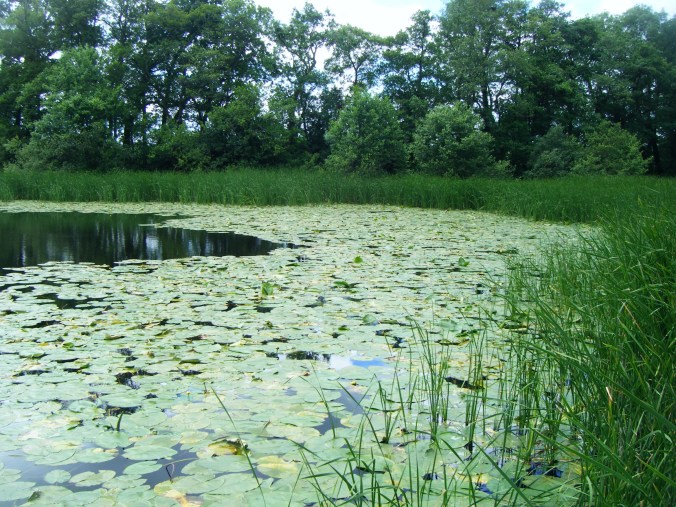
The lake is a tranquil place where reeds and waterlilies grow undisturbed.

DSCF2288 (1).jpg

We take the walk around the lake admiring the view back across the water.

DSCF2293.jpg

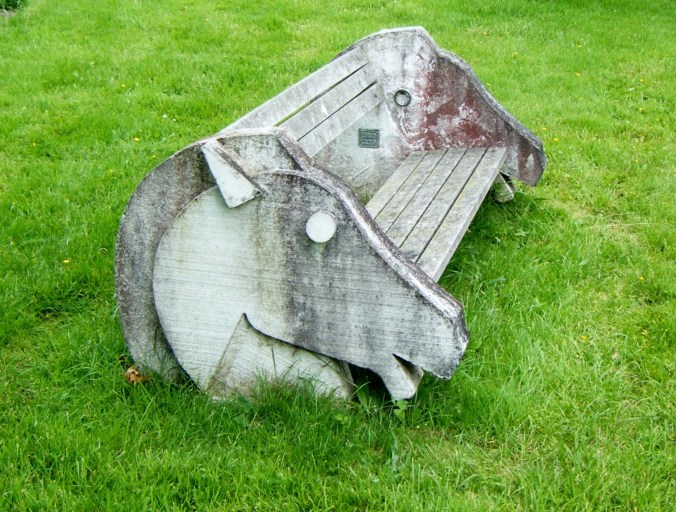
Striding out towards the walled garden on the east side of the house we are amused by the horsey bench; a perfect place from which to watch the dressage arena. Several horses graze in the surrounding fields and we hear news of a foal born just last night.

DSCF2294.jpg

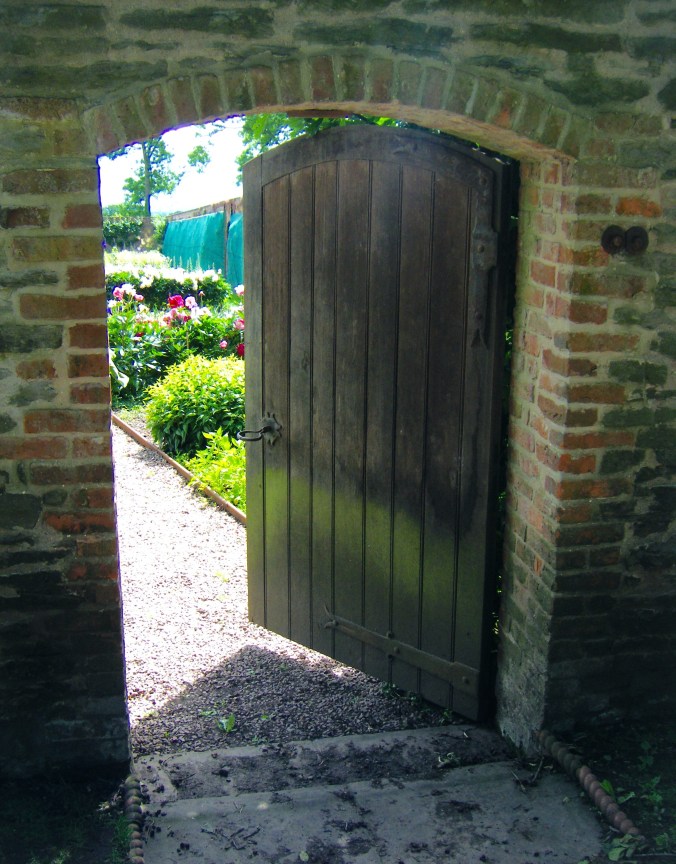
The walled garden was moved here from the west side of the house by 1767 when within these walls an unprecedented amount of food would have supplied to the house. During the twentieth century the garden fell into decay, overrun with brambles and nettles until the present owners brought it back to life in 2008 when they bought it from the council. A wooden door opens into

DSCF2298.jpg

two and a half acres. Cut flowers, like these gorgeous peonies are grown for the house,

DSCF2301.jpg


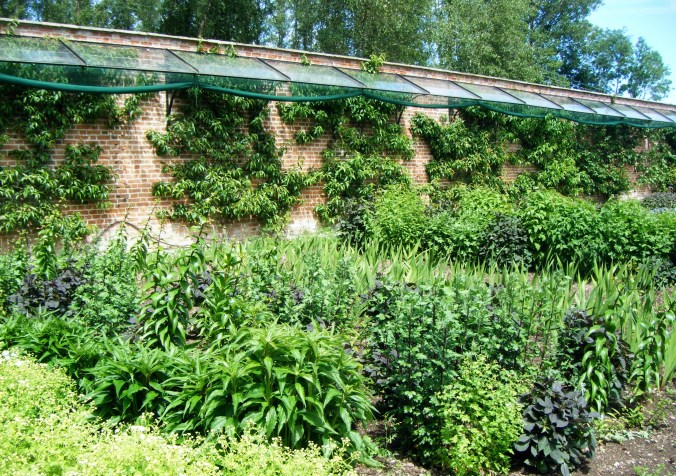
and there are many varieties of organically-grown vegetables, and plenty of fruit including these peaches growing against the wall.  There are three full-time gardeners now supplying Newport House’s community for most of the year.

DSCF2302.jpg

A long avenue of trained fruit trees runs down the middle,

DSCF2304.jpg

and rosa Alfred Carriere adorn the arches around the circular brick pool (dry at the moment) in the centre.

DSCF2306.jpg

Roses and wisteria grow up and over the particularly decorative ironwork.

DSCF2307.jpg

The magnificent Foster and Pearson greenhouse erected in 1909 has been rebuilt with new cedar wood, whilst a tropical glasshouse and a winery were built with cedar wood and wrought iron found in a reclamation yard. They house vines, melons, papaya, passion fruit, macadamia nuts, a mango tree, a banana tree, and even tea and coffee bushes.

DSCF2311.jpg

The restored gardener’s cottage fits snuggly into the wall,

DSCF2305.jpg

and overlooks a delightful pattern of herbs.

DSCF2314.jpg

A grassy path leads back to the house where we arrive back on the terrace on the south side.

DSCF2318.jpg

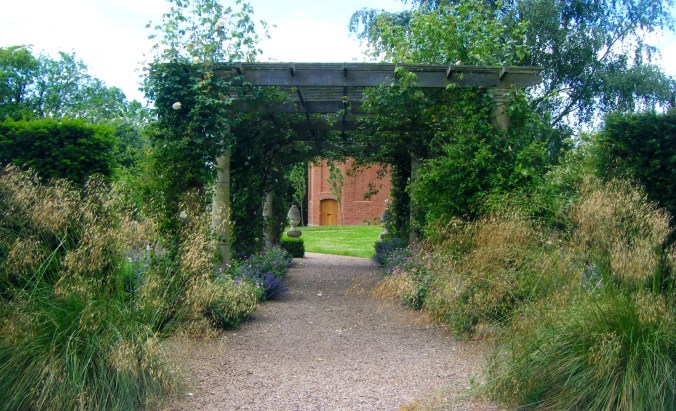
Stipa gigantea give a lightness to the path and the pergola beckons one on to the west side,

DSCF2327.jpg

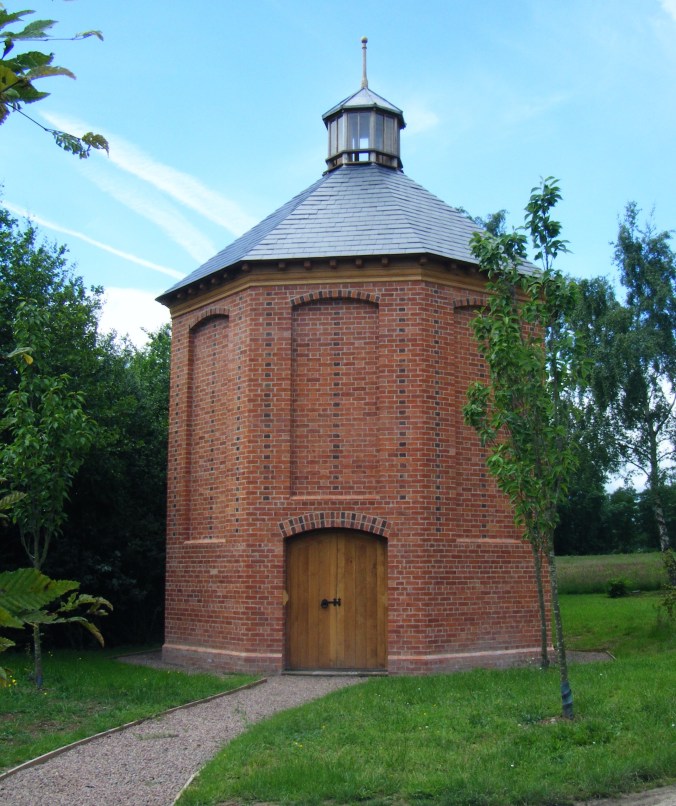
where the modern water tower is masquerading as a dovecote.

DSCF2328.jpg

The nearby topiary standing in the corner is beginning to echo the shape.

DSCF2329.jpg

Stone pineapples on the west side welcome you back through to the terrace on the front;

DSCF2334.jpg

it is this side of the house which is homely and enclosed, but kept very private.

DSCF2337.jpg

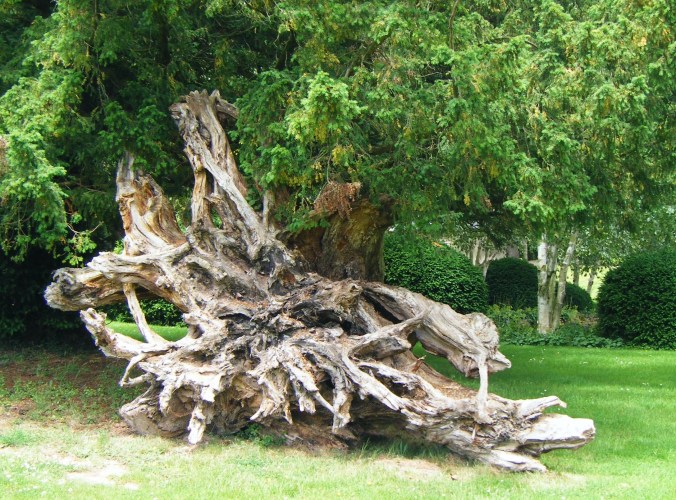
It is perhaps befitting that we end the visit with this stump of old roots; gnarled and sculptural they must have witnessed the changes over the centuries at Newport House. We are not only fortunate that properties like this have been saved, but also even more fortunate that the owners are happy to share them with us.

DSCF2336.jpg

——-53——-
Upper Tan House, totally idyllic, roses and reed beds. (52)

Not far from Leominster in the country lanes of Herefordshire the garden gate swung open at Upper Tan House. It is a compact garden of one and half acres in a beautiful setting and containing a little bit of just about everything.

DSCF2247.jpg

James and Caroline moved here from London some 21 years ago. Unable to terrace, the house is perched up above the garden.  Divided by paths through herbaceous planting, we take the central path gently down the slope to the lawn.

DSCF2193.jpg

Through the spikes of deep blue delphiniums rising above phlomis russeliana is hornbeam trimmed into a shape reminiscent of a cake, surely Mary Berry’s finest.

DSCF2191.jpg

Behind the ‘cake’ and at the end of the lawn is a border where damp-loving plants such as hosta, iris and primula candelabra are growing vigorously.

DSCF2212.jpg

Looking back up towards the house, blocks of yew stand solidly and architecturally above a patchwork of soft colours.


DSCF2201.jpg

Not an inch of spare ground is showing through.

DSCF2194 (1).jpg

The busy haze of alliums heads will be succeeded by Japanese anemones.

DSCF2192.jpg

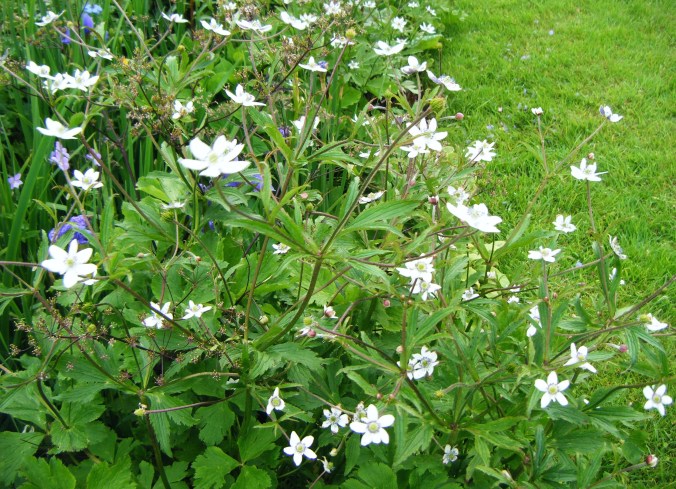
The fresh dainty white anenome rivularis edging the lawn is becoming a bit of a favourite of mine.

DSCF2198.jpg

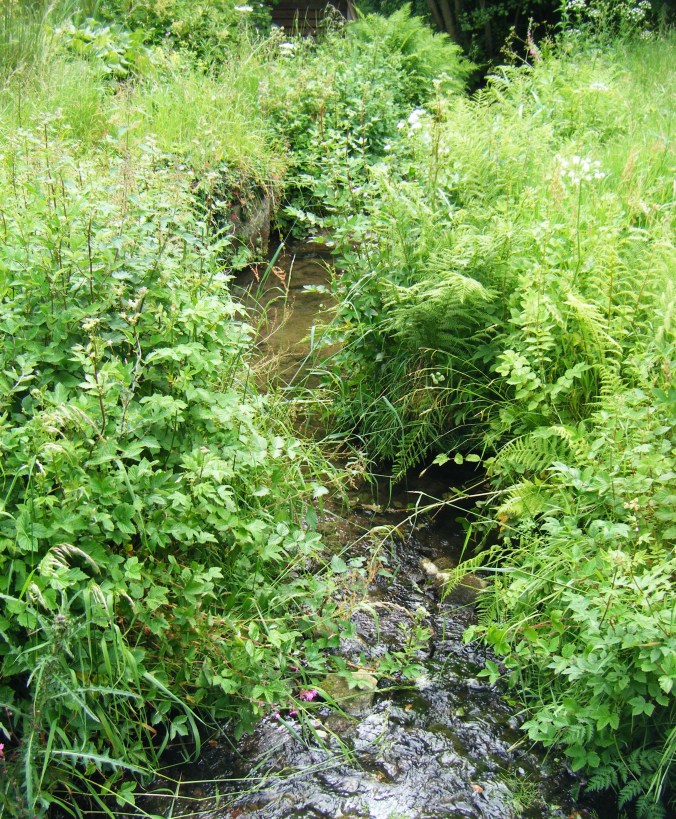
Down by the stream and hidden away in the bushes yet still accessible, is a little boat bench, the perfect place to pause awhile,

DSCF2202.jpg

by the small River Stansbatch on its way through the garden. Although native crayfish are in decline they can still be found here.

DSCF2203.jpg

We step over the little bridge and follow the path up through coppiced willows.

DSCF2204.jpg

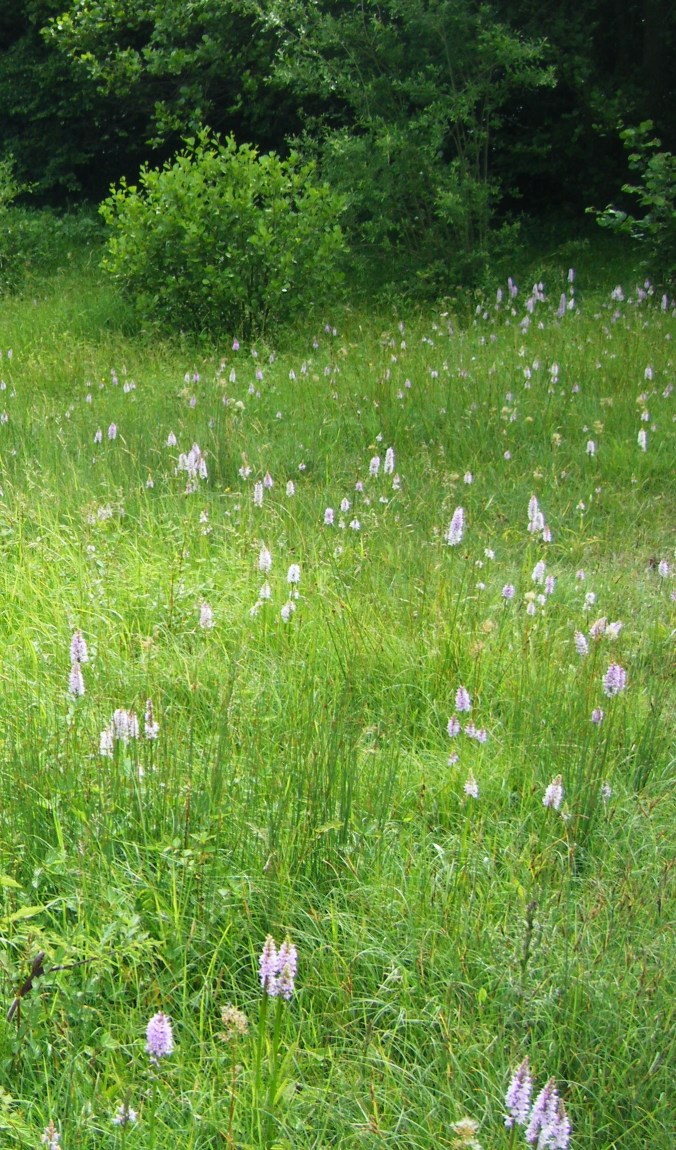
It is a sight to see so many orchids dotted amongst the varied grasses in the meadow.

DSCF2205.jpg

Clusters of the pale common spotted orchids.

DSCF2208.jpg

It is a magical spot, a haven for wildlife, and from here there is a good view of the south side of the property.

DSCF2207.jpg

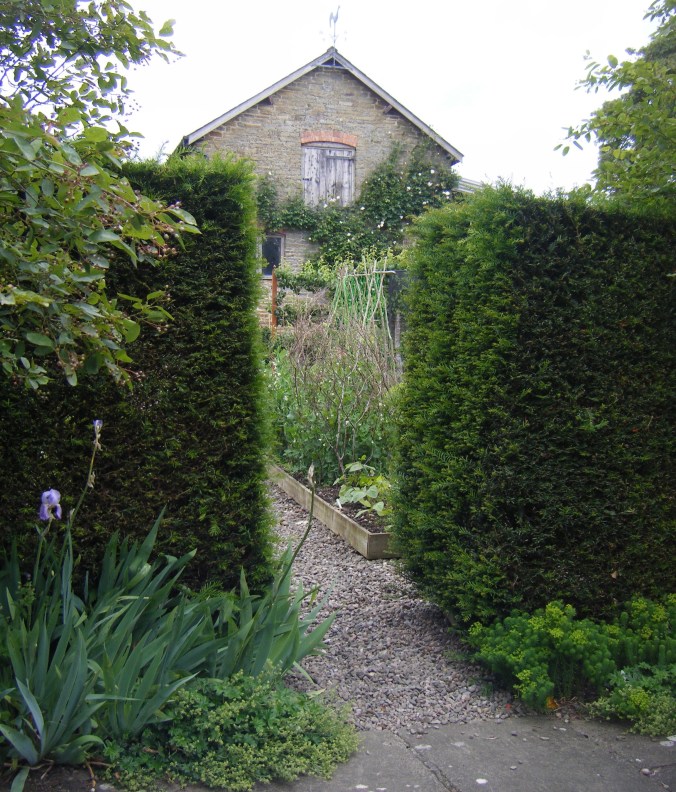
Returning across the stream and up again to the right hand side of the house, we make our way through the gap in the yew hedge,

DSCF2218.jpg

and into the very organised vegetable garden. A luxury having fresh produce literally on the doorstep.

DSCF2220.jpg

Pear trees are trained against the metal support; it is a heavy crop this year.

DSCF2222.jpg

Climbing the wall of the house is the rich red rosa ‘Hamburger Phoenix’ and the soft pink rosa ‘Francis E Lester’.

DSCF2224.jpg

We take the path under the propped-up Eleagnus ‘Quicksilver’,

DSCF2229.jpg

stepping through sisyrinchium, allium and geranium, the blocks of yew are quite a height.

DSCF2233.jpg

It is not an Open Day, but James brings us coffee and our favourite chocolate biscuits which we enjoy on the verandah. Here he explains his reed bed filtering system.

DSCF2189 (1).jpg

After coffee we walk the short distance across the drive to the glasshouse where the  reed beds are situated.

DSCF2248.jpg

Under the bed of herbs is a hidden tank where waste from the house is piped.

DSCF2239.jpg

The waste is filtered through the first reed tank,

DSCF2240.jpg

then through a second reed bed. There are two here and with the flick of a switch James can alternate them which he does weekly.

DSCF2242.jpg

Another reed bed acts as the final filter. It is a clever system, inexpensive and does not seem to take up too much space. The reeds come from Norfolk. We wonder why more people do not adapt to a similar system, and suggest such places like care-homes might benefit, but James points out that medicines can be a problem and the reeds cannot cope with drugs such as antibiotics.

DSCF2243.jpg

My friend Jill is particularly keen on the subject of sewage, and together we have learnt a lot. She lives closer to a plentiful supply of Norfolk reed than any of us, so I wonder what she is planning.

Upper Tan House is a delight. It is open for the NGS by arrangement in June and July. They like to keep the numbers of visitors controlled, as too much flushing creates a strain on the reed beds!

——-52——-
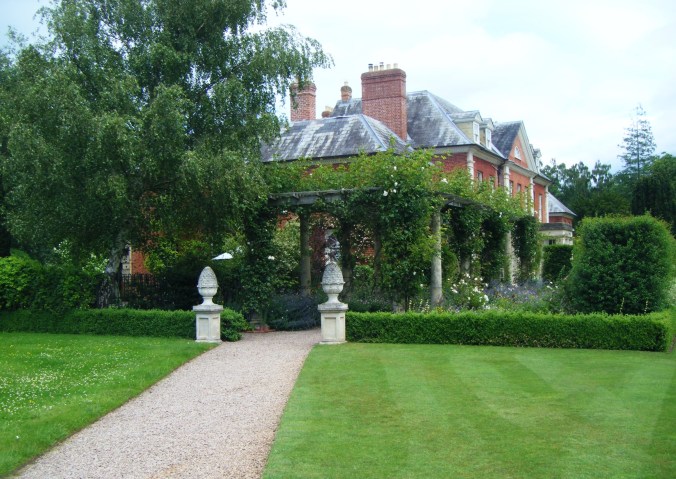
Brinton Grange; foliage and texture. (51)

It was a morning of Granges and rain. From the Grange at Heydon I drove the twenty minutes or so to Brinton Grange. The rain was coming down particularly heavily as Lesley invited us in for coffee. It was good to see our NGS president being propped up on the cook book stand in the kitchen, in preparation for the opening on Sunday.

DSCF2709

The rain mercifully stopped and we began our tour of the garden entering through the tree arch to the right of the house.

DSCF2738.jpg

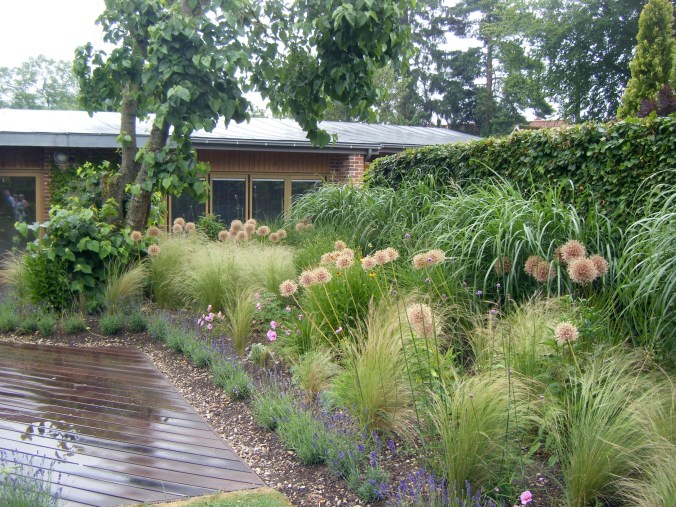
Turning right we went through a gate into an enclosed area which houses the swimming pool and hot tub. Here an old mulberry tree stands tall. The border is edged with lavender, seed heads of alliums pop up through the gentle stipa tenuissima which is then backed by clumps of bold miscanthus grass.

DSCF2711.jpg

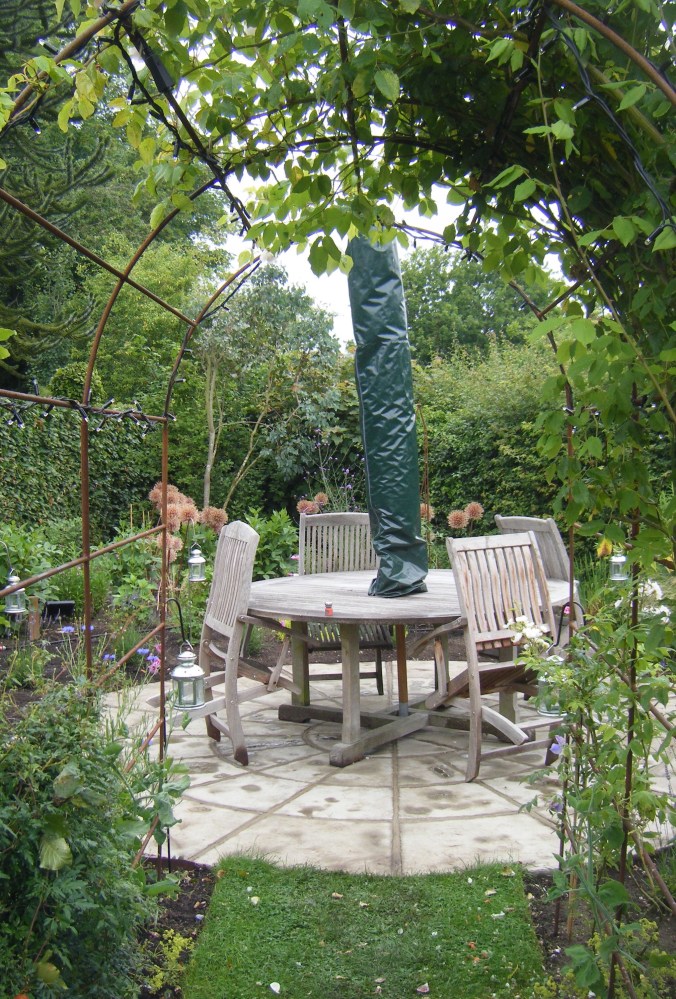
Leading off from here through a rose arch is a table and chairs; a delightful area from which to enjoy the cutting garden.

DSCF2743.jpg

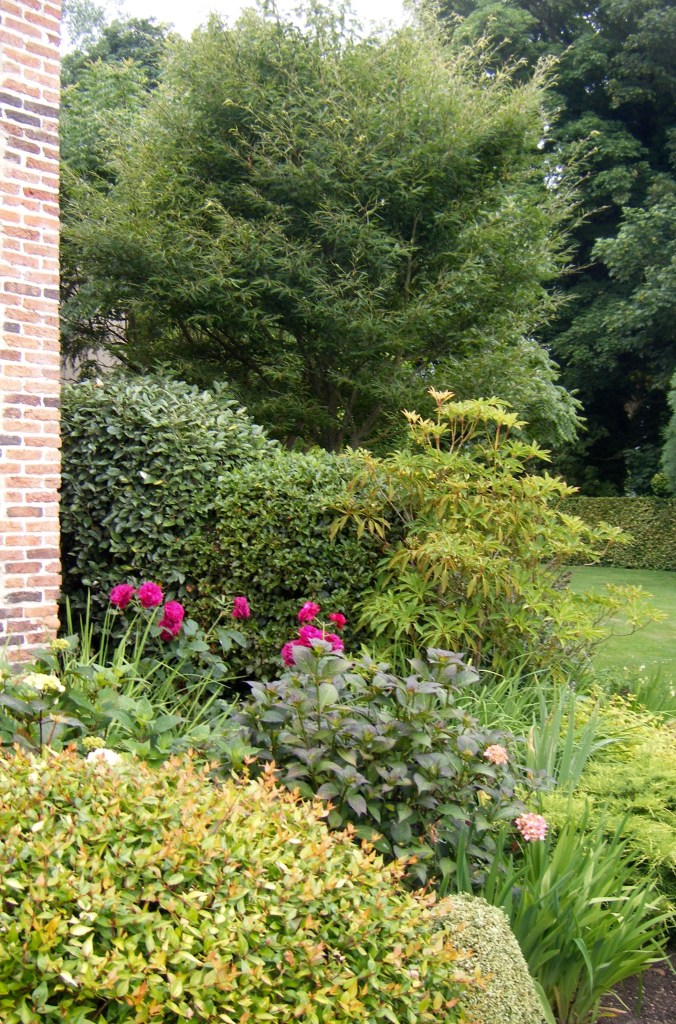
Around the corner of the house we come across a splash of roses amongst the rich planting of shrubs.

DSCF2745 (1).jpg

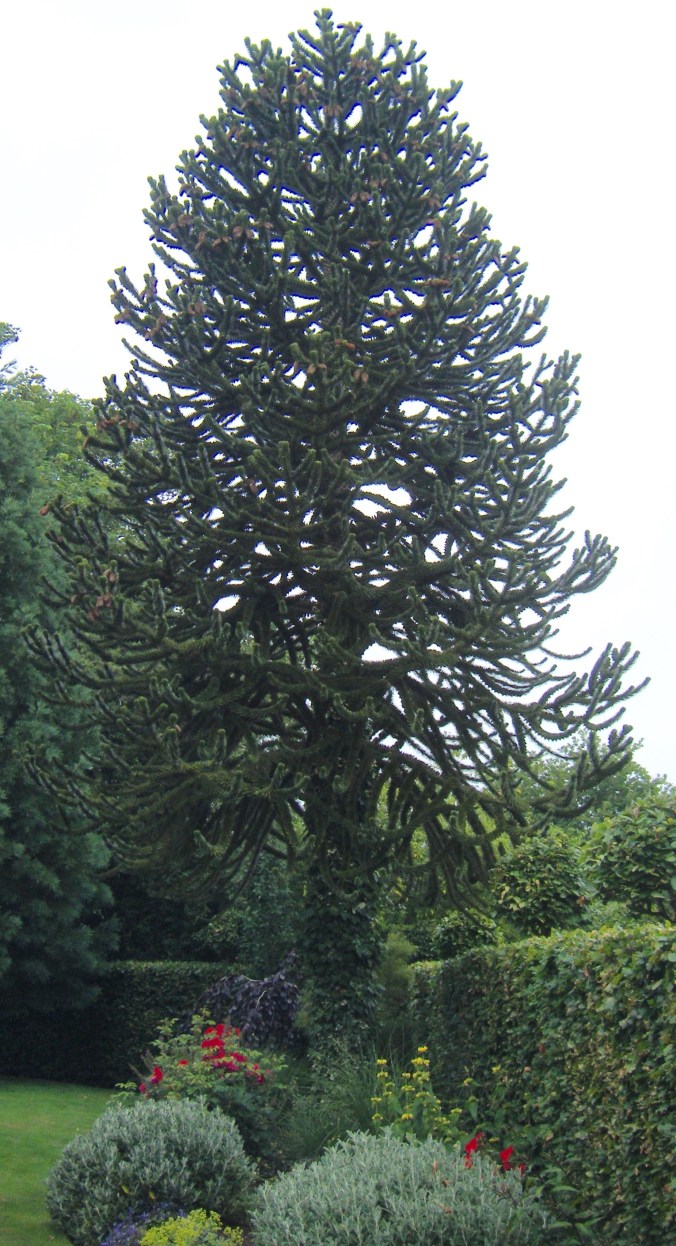
Against the grey sky rises a Monkey Puzzle tree, araucaria araucana, its canopy raised to provide a colourful border,

DSCF2746.jpg

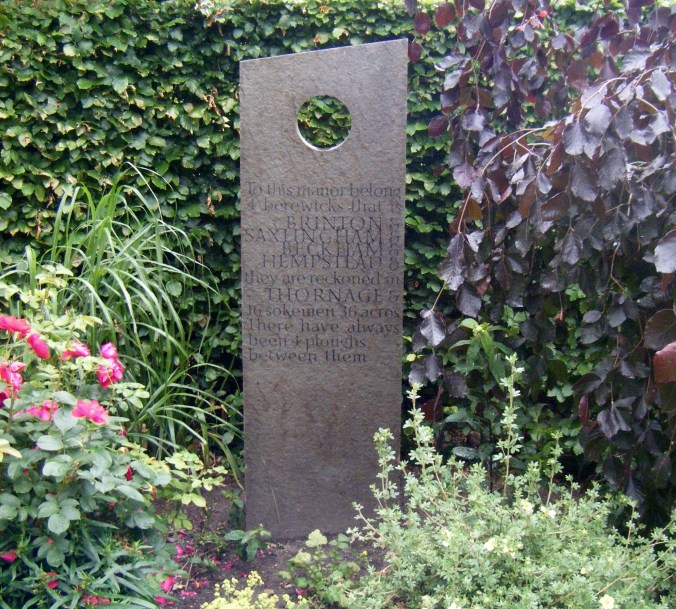
and where the entry cited in the Domesday Book is carved by engraver Teucer Wilson http://www.teucerwilson.co.uk/home/about/.

DSCF2752.jpg

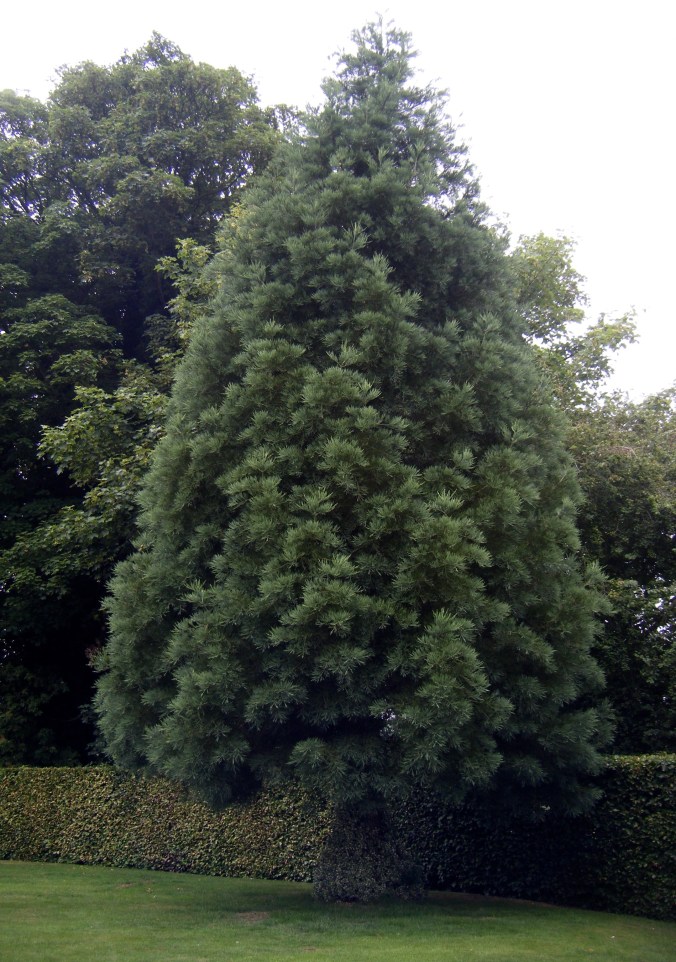
A finely shaped specimen of Wellingtonia, sequoiadendron giganteum stands on the lawn.

DSCF2712.jpg

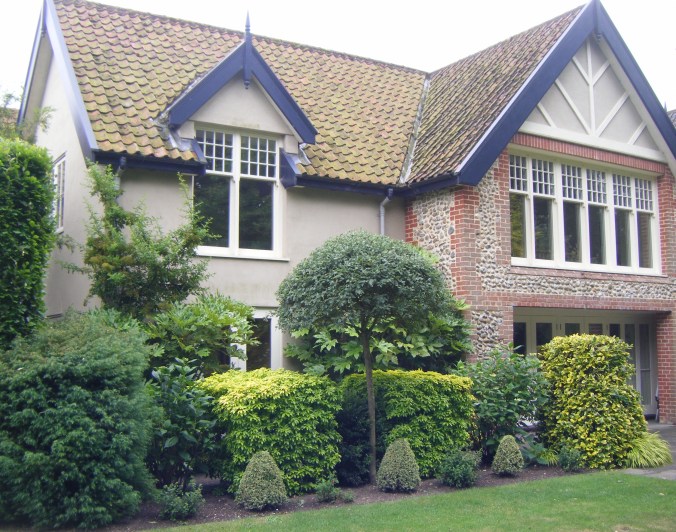
Shrubs are shaped and tweaked all around this house, giving the sense that the new extension is very much part of the garden.


DSCF2755 (1).jpg

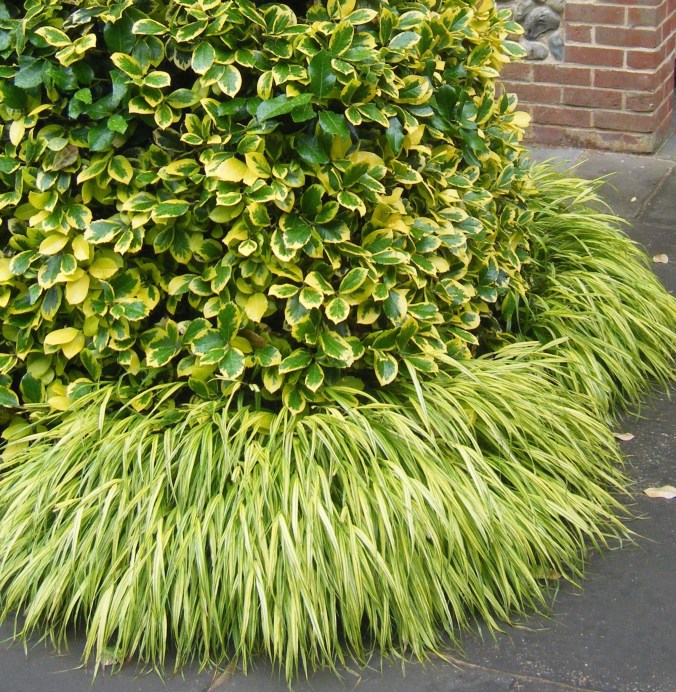
Hakonechloa macra ‘Aureola’ skirts the base of a variegated holly and softens the paving.

DSCF2756.jpg

The garden was designed with foliage and texture in min; it is calming and verdant. Although it is already immaculate there is much activity today and an army of workers are busy tidying and clipping in preparation of Sunday.

DSCF2760.jpg

But wait a minute, what is this unsightly object that has just appeared across the lawn?

DSCF2761.jpg

It is best to keep ones eyes on the parterre, laid out in front of the Victorian house.

DSCF2769.jpg

It is as if berberis thunbergii are flames rising up around the mounds of holly.

DSCF2767.jpg

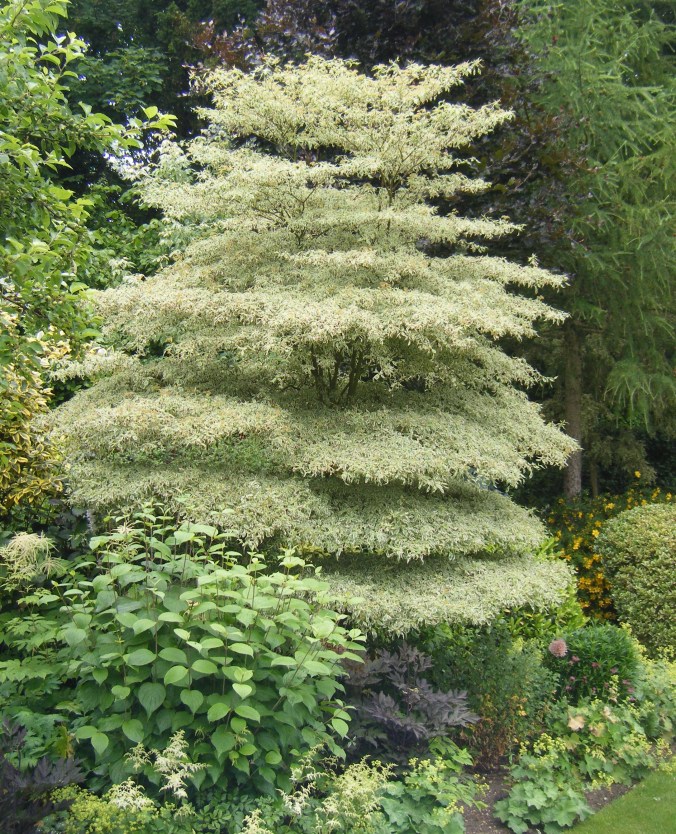
The Wedding cake tree, cornus controversa ‘Variegata’ looks impressive,

DSCF2776.jpg

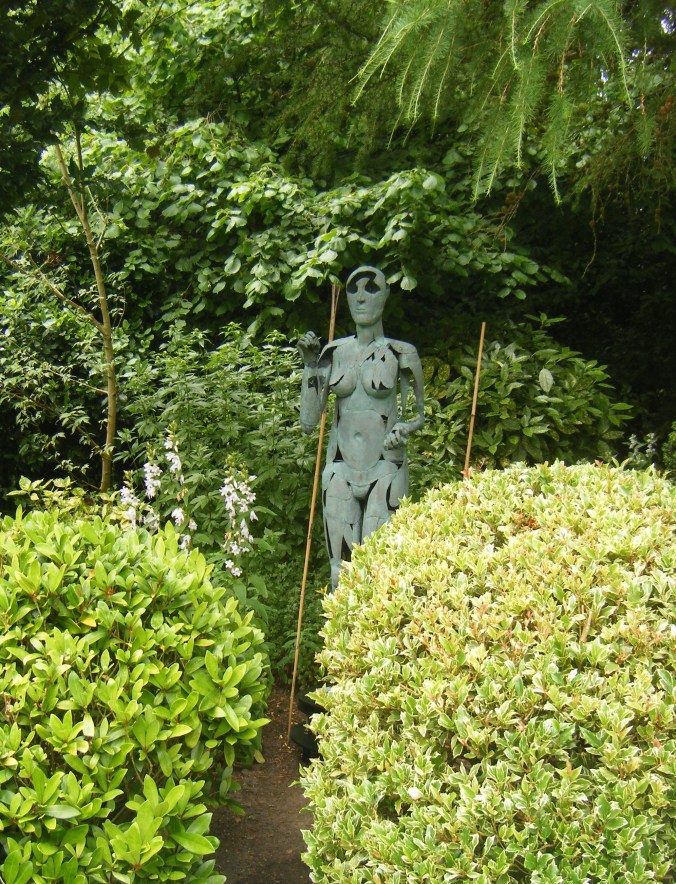
Then a goddess by David Harber is revealed from the package and put into position, she now awaits the arrival of the electrician to bring her to life.

DSCF2773.jpg

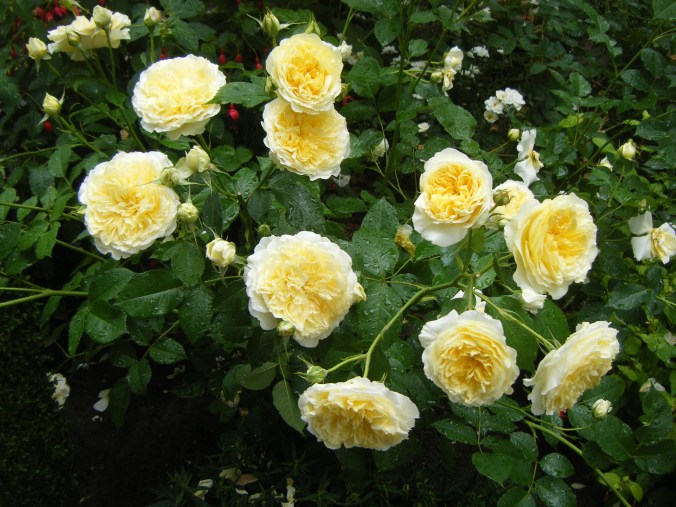
Some gardeners will not have yellow flowers in their garden; they must surely be mistaken as Rosa ‘Pilgrim’ with its soft yellow is a gem.

DSCF2781.jpg

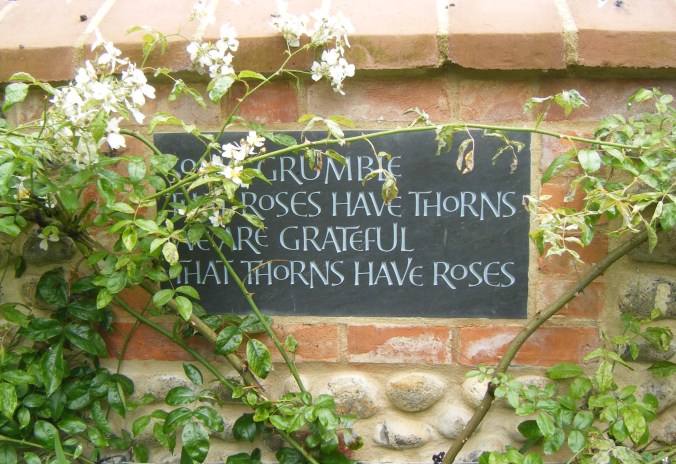
It is indeed easy to grumble about the thorns on a rose but this plaque on the wall, has wise words to impart.

DSCF2779.jpg

It is good to see a sensible width of a path laid along the side of the house and from here we return to the drive.

DSCF2787.jpg

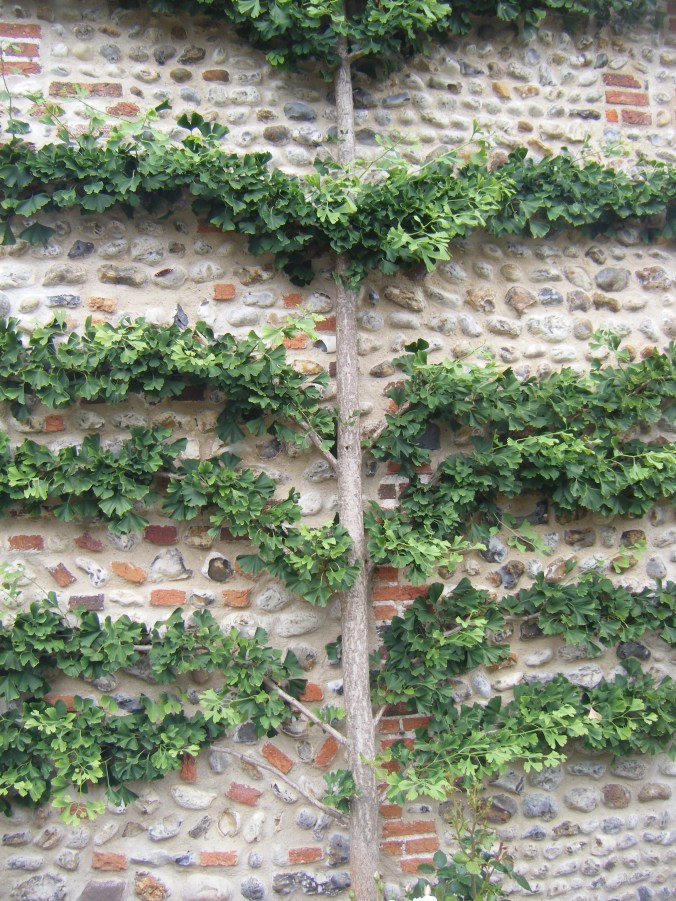
We admire the ginkgo biloba trained against the wall before we go down to the vegetable garden, first crossing Water Lane, and passing through the orchard.

DSCF2710.jpg

The new walled garden is built with high quality flint work and was designed to go around the original espaliered apples.  Richard and Lesley are very keen vegetable growers and the solid gate opens on to a picture of horticultural excellence.

DSCF2721

Straight paths lead through neat rows of produce.

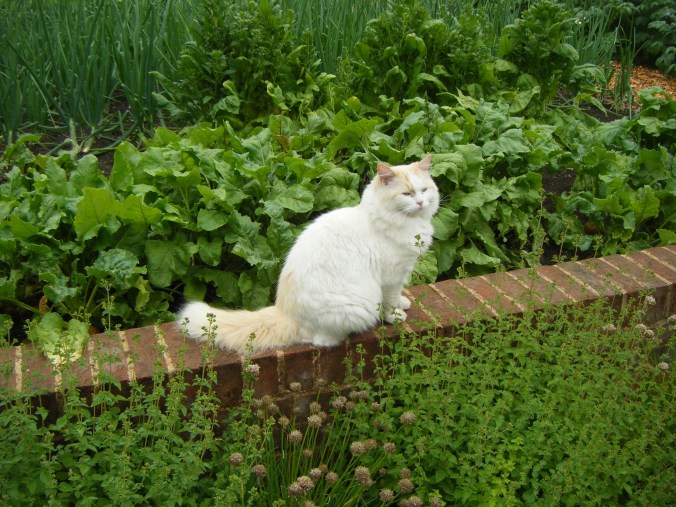
The handsome cat is immensely proud of it all.

DSCF2713.jpg

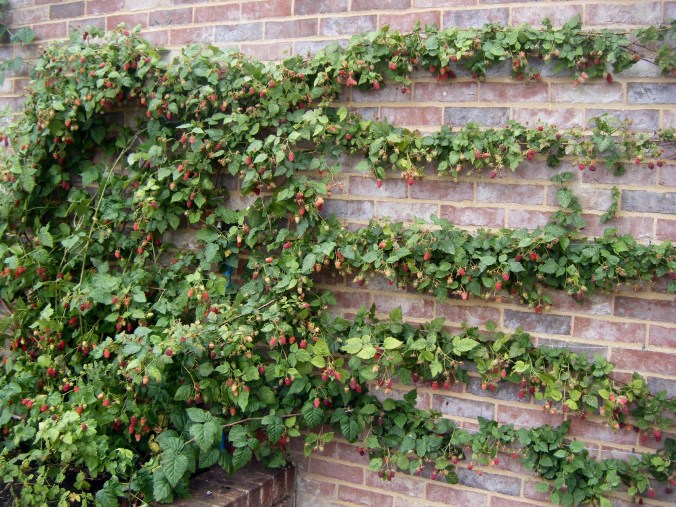
Peaches, nectarines and apricots grow against the fine walls and the tayberry, a delicious cross between a blackberry and raspberry, is ready to pick.

DSCF2715.jpg

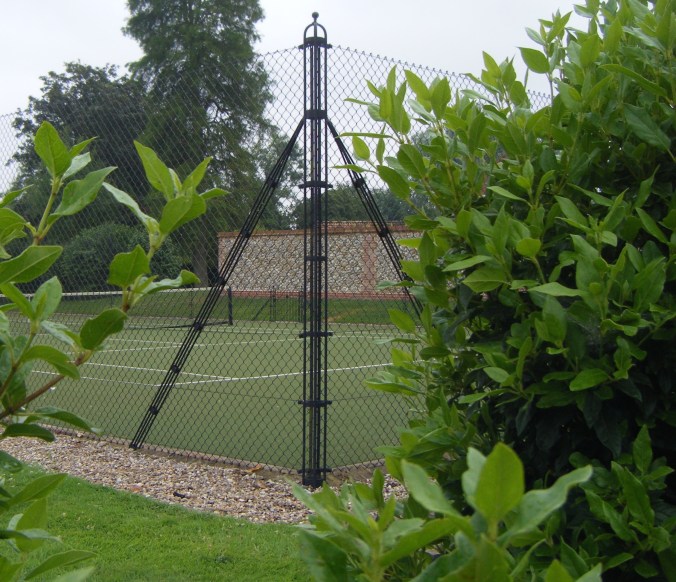
Leaving the walled garden we pass the tennis court, an area not normally given over to beauty but I cannot help but admire the finish on the wire fence posts.

DSCF2729.jpg

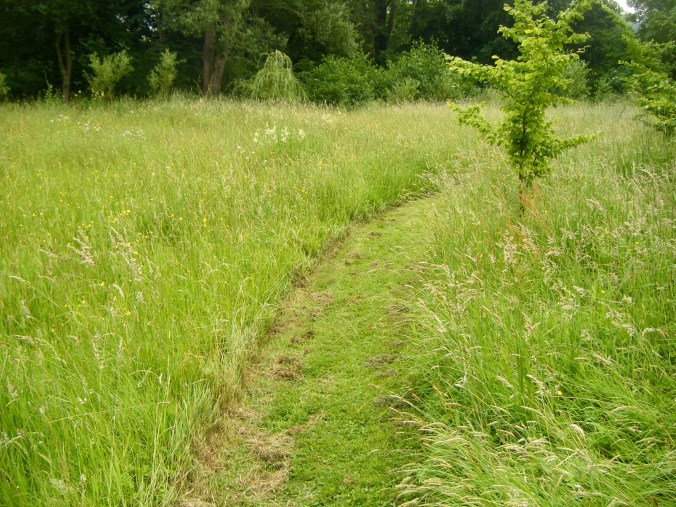
Paths are mown through long grass in the wild flower meadow,

DSCF2725.jpg

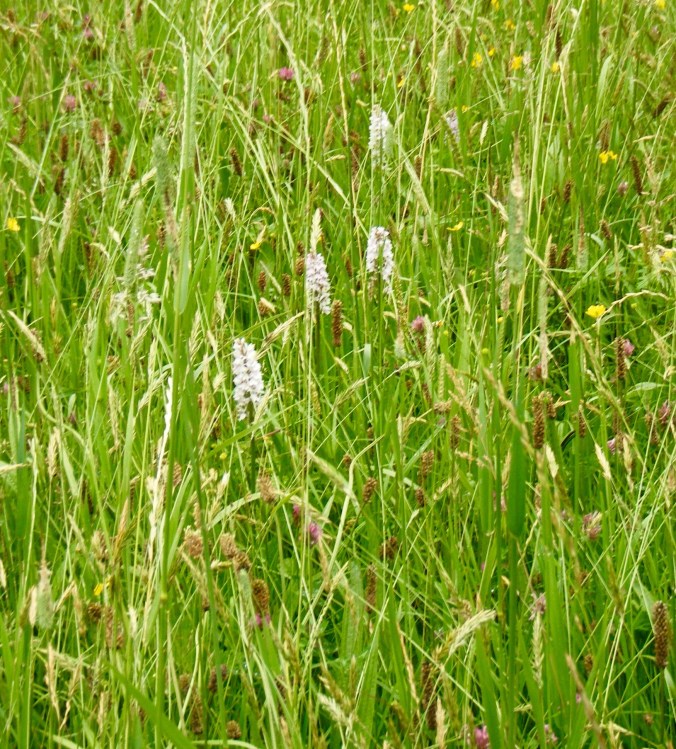
where there are pale common spotted orchids growing.

DSCF2723 (1).jpg

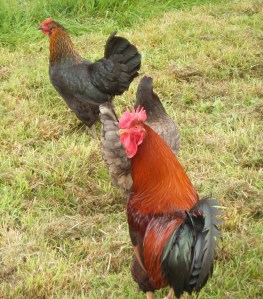
The trio of Chickens seem surprised by our visit.

DSCF2727

and we return to the house through the orchard,

DSCF2731.jpg

admiring another piece by Teucer Wilson.

DSCF2735

The garden is open tomorrow Sunday 25th June from 11am – 4pm. Admission is £5.00 and in 6 acres of ground there is a huge variety to see. With recipes from Mary Berry and eggs from those fine hens, the teas alone will be a must.

——-51——-

The Grange at Heydon, white and whimsical. (50)

The Norfolk NGS team is fortunate to have a volunteer photographer who takes pictures of the open gardens for the booklet and website. From time to time it is necessary to update the portfolio. So I joined Simon the photographer and Graham the press officer on a visit to The Grange at Heydon ahead of the open day this Sunday.

DSCF2658.jpg

Heydon is a small village situated just north of Reepham in Norfolk. It is a charming village, one of the few  to have no through road and one which is still privately owned. In true Norfolk fashion we drive past the front gates round to the back door.

DSCF2707.jpg

As we arrive it is every photographer’s nightmare and there is a cloud burst. Undeterred and borrowing coats from the Bulwer-Longs we enter the garden through the wooden door at the side of the house.

DSCF2704.jpg

By the front door the rose New Dawn climbs the wall behind the pineapple broom argyrocytisus battandieri and there is a twirl of box at its feet.

DSCF2638 (1).jpg

A rose tumbles over the wall; the fact that owner Tim does not know the name does not detract from its beauty.

DSCF2640.jpg

A  sun room links the wall with the house and we go through to enter the garden on the other side.

DSCF2708.jpg

Roses bloom amongst the herbaceous and shrub planting; it is a funny year with even the dahlias coming into flower. Around the garden are delightful places to sit, either in the sun,

DSCF2649.jpg

or under the shade of a cherry tree. The sprinklers are playing on the parched lawn,

DSCF2652.jpg

and water carriers at the ready.

DSCF2647

Over the ancient wall Paul’s Himalayan Musk climbs up into the tree.

DSCF2651.jpg

You can just catch sight of the tower of the Church of St Peter and St Paul.

DSCF2650.jpg

The topiary grows out in fun shapes and it is the roof of Tim’s office we can see beyond,

DSCF2645.jpg

to which he disappears off beneath the rose arches,

DSCF2653.jpg

and through the open garden gate.

DSCF2666.jpg

It is in an enviable location, and just outside is the mask of a fox mounted on a rustic post.

DSCF2663

Returning through the gate we can glance sideways along the clipped box in the white garden.

DSCF2670 (1).jpg

The white seat enhances the colour of the roses.

DSCF2643.jpg

The theme of white carries on behind the unusually shaped hedge

DSCF2674.jpg

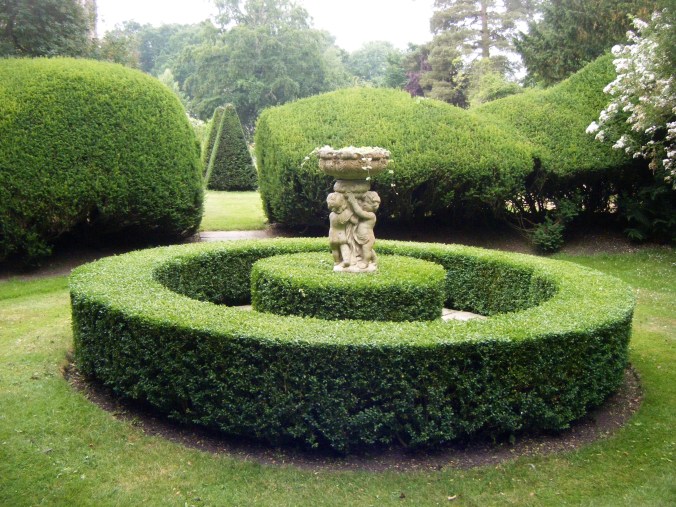
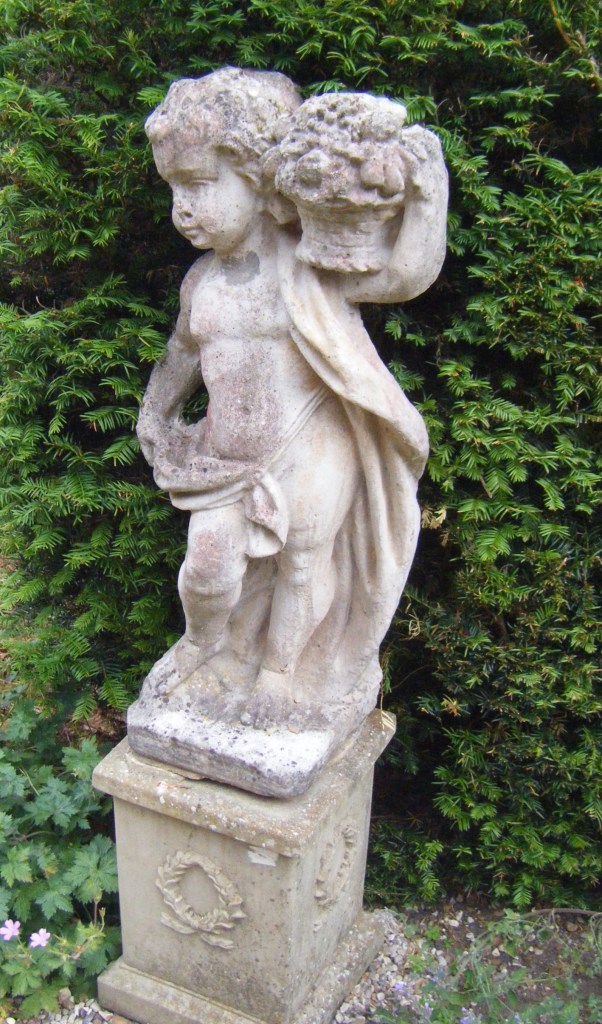
where three little cherubs are encircled by perfect rings of box.

DSCF2678.jpg

We walk along the path north of the house through mature hedges and shrubs

DSCF2679.jpg

out into the recently planted avenue.

DSCF2683.jpg

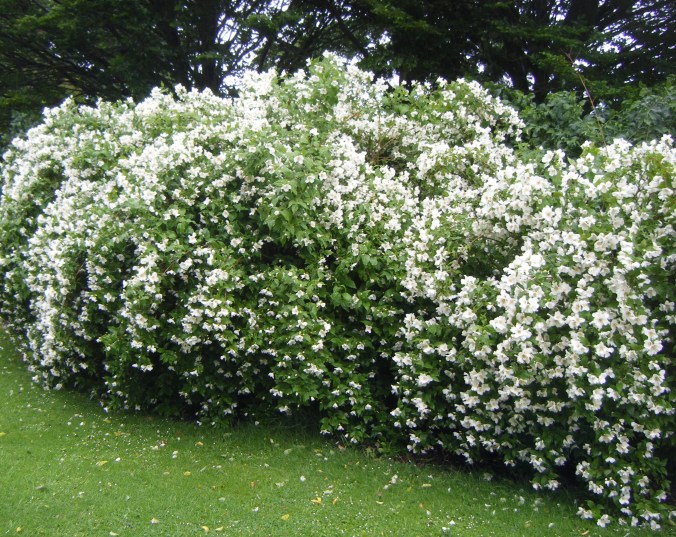
A splash of white fills the corner, at first I think it is a rose but the scent makes it recognisable as a mock orange philadelphus. 

DSCF2684

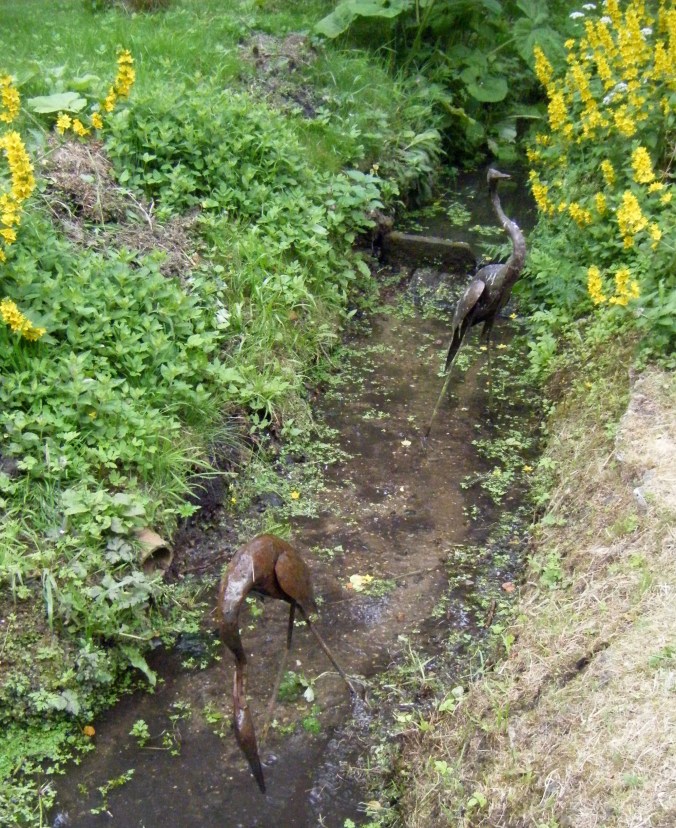
A bird stands in the little stream; is it a Heron, or a Stork?  Graham rescues the mate who is lying dead in the water and it is good to see them back as a pair again. Drifts of yellow loosestrife lysimachia vulgaris grow along the bank.

DSCF2691.jpg

At the back of the house the topiary shapes are wonderfully whimsical.

DSCF2680.jpg

A small herb garden is watched over by this little person.

DSCF2696

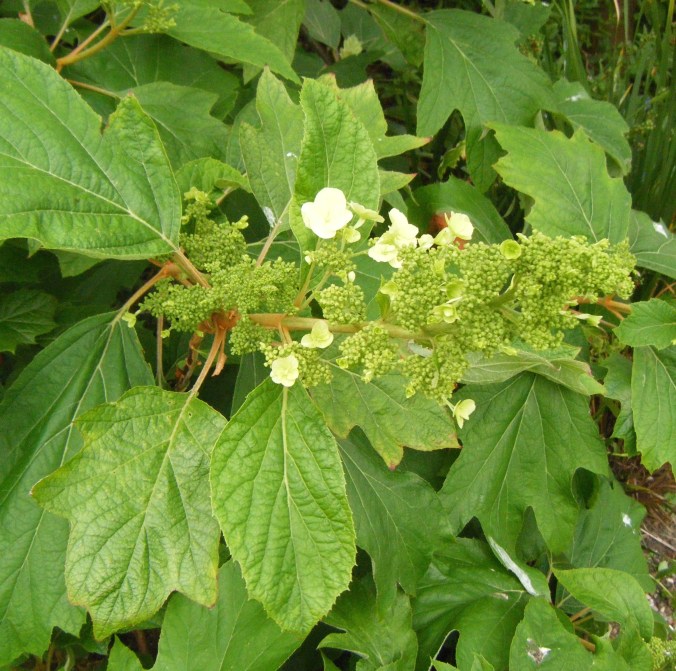
Simon is a hydrangea enthusiast and has a keen eye for this Oak-leaved hydrangea quercifolia.

DSCF2699.jpg

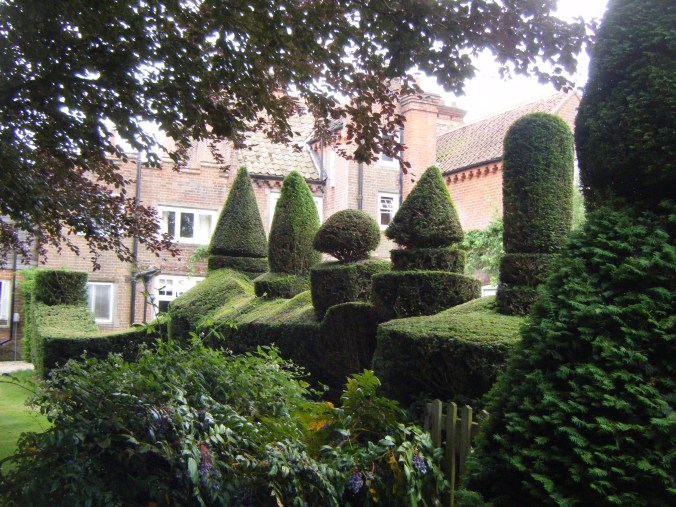
We walk back down the path where an obelisk is flanked by four yew pyramids.

DSCF2702.jpg

We felt a little guilty not saying goodbye to our hosts but at least we paid our respects to the dog.

DSCF2706 (1)

The Grange at Heydon will be open this Sunday afternoon from 2-5pm. The admission is only £4.00 and children are free. Home-made teas will be served in a tent on the lawn, a chance to sit and relax in a lovely setting. You can combine it with a visit in the morning to Brinton Grange (Blog 51) just 20 minutes away which is open from 11-4pm.

——-50——-

Rhodds Farm; planned to perfection and richly planted. (49)

I was very fortunate to be able to stay with Richard and Cary Goode at Rhodds Farm in Herefordshire. They have lived there since 2004 when they renovated the house and converted the farm buildings. Cary studied garden design some years earlier at the English Gardening School and has been responsible for creating this beautiful garden.

A shepherd hut with its own little garden is situated half-way down the long drive, with door wide open it is a welcoming sight.

DSCF2060.jpg

The trees and shrubs growing along the drive provide interest throughout the year and right now it is the different varieties of  Cornus kousa that catch your eye.

We arrive at the east side of the house where house guests park; the cars are cleverly screened by a hedge. Visitors to the garden drive on  passing the pretty border on the right which bends into the woodland.  There is a colourful display of pinks, blues and whites blending into the shrubs and trees rising behind.

DSCF2073.jpg

The door of the telephone box appears to be pushed open by a large fern.

DSCF2069

Waking in the early morning I decided to walk around the garden before my fellow guests arose for breakfast. Entering through the pergola and wooden shelter in the same way as a visitor would on an NGS open day I notice the honesty box ready for the entry fee. Rural Herefordshire is a trusting place and Cary also leaves out  home-made cake for visitors to help themselves.

DSCF2081.jpg

Just here the garden is particularly narrow but with no noticeable boundaries the view across the fields to the distant mountains more than makes up for it.

DSCF2080 (1).jpg

I began my tour by going down the steps ahead and turning right in the directio away from the house,

DSCF2082.jpg

and headed for the newly planted arboretum where a wide mown path leads down to the duck pond from this huge slice of tree-trunk.

DSCF2091.jpg

The birdsong is quite magnificent but there is no sign of any waterfowl this morning.

DSCF2093.jpg

A willowy figure is enjoying the serenity.

DSCF2098.jpg

Coming to the end of the property I turn to climb the path up into the woods, and  come across this lady, her almond shaped face carved in stone is bewitching and I wonder if her origins were ecclesiastical.
DSCF2104

My walk through the 13 acre wood brings me back to just above the house. Gently descending I come across a clearing,  an arrangement of small headstones in a semi circle of yew. It is the pet cemetery and old favourites such as Tara, Ella and Amba are all here.

DSCF2172.jpg

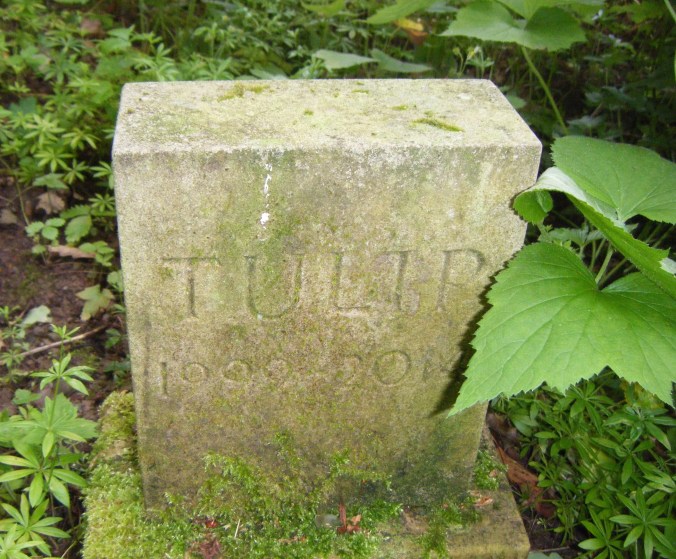
Dear Tulip, a wire-haired dachshund is resting under the cherry tree.

DSCF2178.jpg

Descending what is known as ‘The Stairway to Heaven’ through scented shrubs I return to the entrance gate where I began my tour, but this time I turn left towards the house, first walking through the wildflower meadow.

DSCF2108.jpg

The gravel path leads through the vegetable garden, the only area to be fenced from rabbits and where some plants are offered for sale.

DSCF2111.jpg

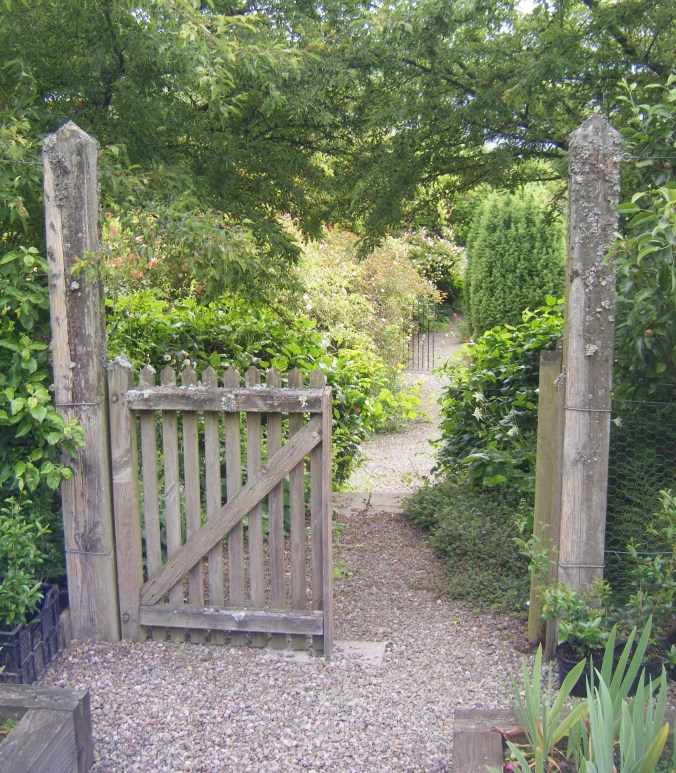
Straight on down through the gate,

DSCF2114.jpg

the route is criss-crossed by richly planted horizontal paths. Which ever way you look plants either spill over,

DSCF2078.jpg

or climb up over arches.

DSCF2079.jpg

The pond, originally a bog before it was dug out and lined with puddle clay, lies on the south side in front of the converted Barn. It is here that you can stay and take a secluded break (http://www.rhoddsfarm.co.uk/barn.html).

DSCF2116.jpg

All the rainwater drains into the pond, a wildlife haven where roses bend down to the water, and the bright primulas are amongst the many flowers growing along the edge.

DSCF2168.jpg

Across to the other side of the pond there is an the array of flower beds packed with an assortment of enviable plants. Cary has ideas to simplify this area and I wonder if I should return when she does so. Beyond you can just glimpse the pyramid shape of the stone folly built by Anthony Mills in 2008.

DSCF2134.jpg

I try to capture the stone sculpture and while the bough of the rose elegantly frames the view I manage however to block the stone sculpture with the bud in the centre!

DSCF2135.jpg

As I move around the pond, the house and tower come into view.

DSCF2127.jpg

On the box-edged lawn in front of the house stands the sculpture ‘Sea Circle’ by Charlotte Meyer just visible in the stipa gigantea that surrounds it.

DSCF2147.jpg

A path runs along the side the lawn; it is flanked by herbaceous borders punctuated with balls of phillyrea angustifolia sitting upon soft green cushions of hakonechloa macra.

DSCF2139.jpg

It is the combination of planting, purple, red and green which is such a delight.

DSCF2138.jpg

The dovecote was built in 2007 with the diamond brickwork echoing the same patterns as the barn.

DSCF2164 (1).jpg

From inside you can look out one way, south to the formal diamond shaped pool and distant tree,

DSCF2150.jpg

or the other way, north towards the stone dog. It is an enclosed area where Alchemilla mollis surrounds beds of Iris sibirica ‘Silver Edge’.

DSCF2149.jpg

It is a striking blue and you really can see the silver edge.

DSCF2154

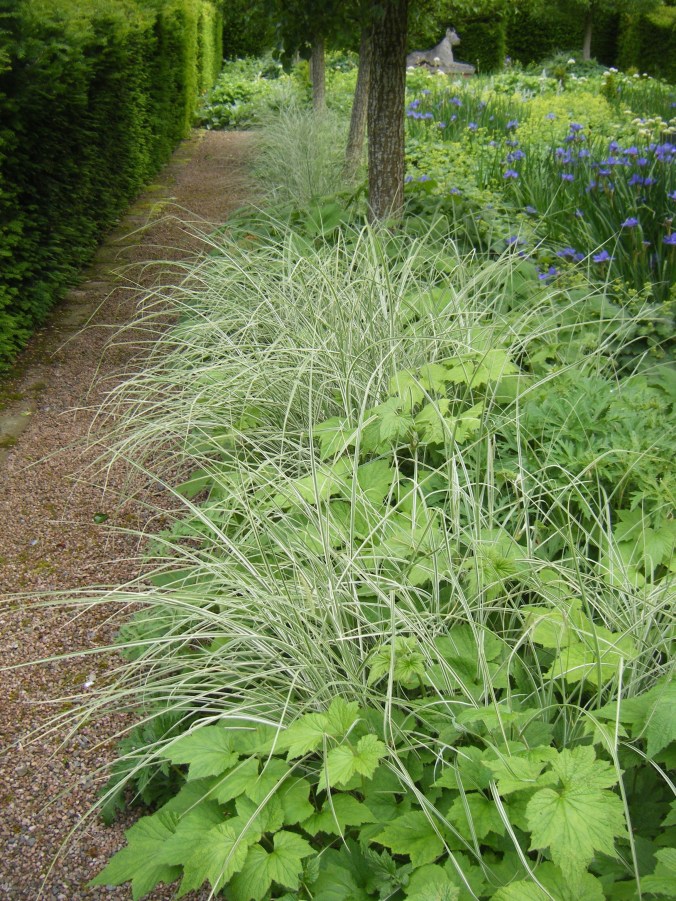
Ornamental pear pyrus calleryana ‘Chanticleer’ grows down the sides, effectively interplanted with miscanthus sinensis ‘Morning Light’ and anenome hybrida ‘Honorine Jobert’. You cannot see from here but a path crosses the end,

DSCF2163.jpg

taking guests from their parked cars up to the front door,

DSCF2158.jpg

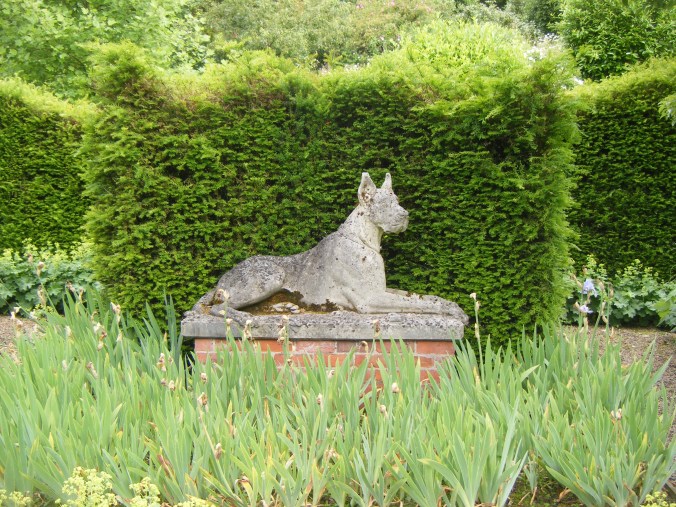
under the watchful eye of the massive Italian Great Dane.

DSCF2156.jpg

Rhodds farm is very generous with its opening days and was open on 5th and 6th May, and  2nd and 3rd June. It will be open again on Friday 7 July, Saturday 8 July, Friday 4 August, and Saturday 5 August (11am – 5pm). Admission £5.00, children free, and I highly recommend a visit. Tea and cake will be available for guests to help themselves in return for a donation.

——-49——-
 

Grendon Court; grasses, parterre and a majestic Tulip Tree.(48)

A combined opening with Brockhampton Cottage (47) and just a few miles away is Grendon Court near Ross-on-Wye, another garden designed by Tom Stuart-Smith. We drive right up through the old farmyard to park the car in the field on the other side of the house and so enter the garden

DSCF2057.jpg

through the tall hedges at the bottom of the garden.

DSCF2055.jpg

Here we find Otis the terrier busy digging in the wacky box parterre,

DSCF1974.jpg

with its wonderful wavy form.

DSCF1973.jpg

The garden is on two levels rising up a steep bank

DSCF1976.jpg

we take the steps up and pass through the opening in the hedge.

DSCF1979.jpg

where a mown path

DSCF1981.jpg

leads us through the miscanthus grass

DSCF2017.jpg

to the hidden swimming pool up above the house.

DSCF1998 (1).jpg

It is a warm windy day and we head straight to the teas, passing a wall seemingly decorated with different shades of centranthus ruber.

DSCF1988.jpg

The doors to the magnificent barn stand wide open for teas.

DSCF1992.jpg

Inside it is spacious and a cool white. Peonies grown in the garden fill the vases on the table. The garden owner is doing sterling work on her own. The choice of cake is simple, it is a good idea, saving the buyer many moments of indecision.

DSCF1991

We are revived by the delicious slice of coffee and walnut cake and two mugs of tea, and return through the door in the wall into the upper garden.

DSCF1993.jpg

The pool looks so inviting,

DSCF1984.jpg


with the blocks of miscanthus grass rustling in the wind.

DSCF1994.jpg

It is not just a pool area; in this walled part of the garden, there is a mixture of planting divided by narrow paths.

DSCF2007.jpg

The peony beds are here and we admire in particular this beauty ‘White Wings’.

DSCF2004.jpg

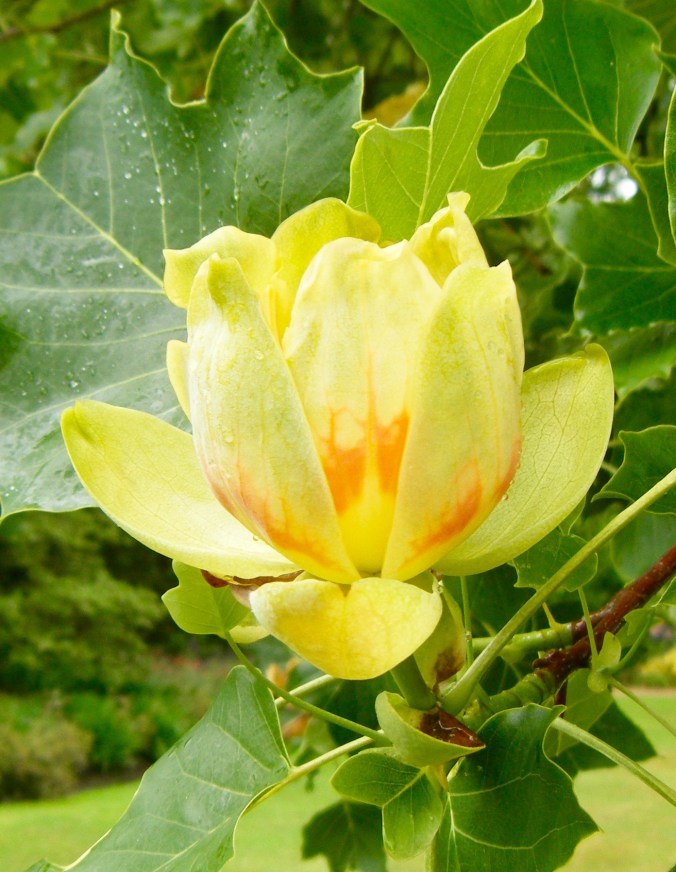
You can understand why the tulip tree, Liriodendron tulipfera, is not for a small garden. A member of the magnolia family it is the largest American hardwood, reaching up to 200ft in eastern USA. First known in this country in around 1688 when it was being grown by Bishop Compton at Fulham Palace in London.

DSCF2015.jpg

Looking more like lilies than tulips the tree does not produce flowers for many years; I am still waiting for mine and am envious of this one which has many buds and flowers.

There is a gentle hue of pinks and purples from geranium and veronicastrum.

DSCF2013 (1).jpg

Retracing our steps through the hedge,

DSCF2024.jpg

We pause a moment to view the fine mown lawn, the waves of box and the agricultural land beyond.

DSCF2023.jpg

Before admiring the fine array of stone pots that are planted simply and effectively.

A variety of climbers grow against the house and this pretty blue clematis is putting on quite a show.

DSCF2028.jpg

There is a small garden to the east side of the house where a neat mulberry grows on the lawn.

DSCF2041.jpg

Back to the front again the path runs through Alchemilla mollisaliums, veronicastrum and phlomis with yew cones standing upright along the low wall.

DSCF2031.jpg

It is a quite a drop from the wall and through the rose we can enjoy the sweeping undulation of the green fields below.

DSCF2034.jpg

It has been a record number of visitors this afternoon. A gentle face has enjoyed the trickle of nearly  hundred.

DSCF2033.jpg

——-47——-
Brockhampton Cottage; terraces, wild flower meadows and spectacular views.(47)

A new Sat Nav which I have recently bought for my Mini has changed my life. Hours of getting miserably lost down country roads is a thing of the past and accompanied by the pleasant sounding voice of Connie (for that is the name I have given her), with my travelling friends Jill and Cherry, I found Brockhampton Cottage near Ross-on-Wye in Herefordshire with the greatest of ease.

The wind was blowing quite hard as we followed the mown path up the hill through the perry orchard to reach the garden. No distinct boundary identifies the garden as such, the flower border emerges softly into the meadow.

DSCF1854.jpg

The owner Peter Clay, inherited the property in 1999 and it was his frustration of not being able to easily obtain the plants that he wanted that he with his friend Mark Fane started up the online business Crocus.co.uk. This led onto a friendship with Tom Stuart-Smith and together they created this hill top garden.

To the west side of the house is the lawned terrace, with a line of solid cylinder shaped beeches. We take the steps up

DSCF1863.jpg

and a clematis tumbles down.

DSCF1864.jpg

The paved terrace is edged with a deep red astrantia major,

DSCF1878.jpg

and leads round to an outdoor dining space clad in a vine, it feels more like France than England.

DSCF1877.jpg

Acanthus and a terracotta pot are placed at the root of the vine,

DSCF1876.jpg

and sweet peas climb up from a small quirky metal cauldron.

DSCF1871.jpg

On the south face of the house an iceberg rose is abundantly blooming against the wall.

DSCF1869.jpg

The lawn descends in three gentle terraces,

DSCF1881.jpg

guiding you towards the hilly and verdant Herefordshire landscape.

DSCF1867.jpg

On either side the borders are planted generously,

DSCF1880.jpg

we could follow the path down the hill but continue the line of the left hand border.

DSCF1916.jpg

and I am thrilled to see the trusty Spike again. We previously met in the snowdrops back in February at Welford Park (blog 8).

DSCF1915.jpg

We come to the east side of the house where the drive rolls in. The planting is exuberant,

DSCF1884.jpg

and we admire the elegant plumes of ampelosdesmos mauratinicus which grace the front door of the cottage.

DSCF1890.jpg

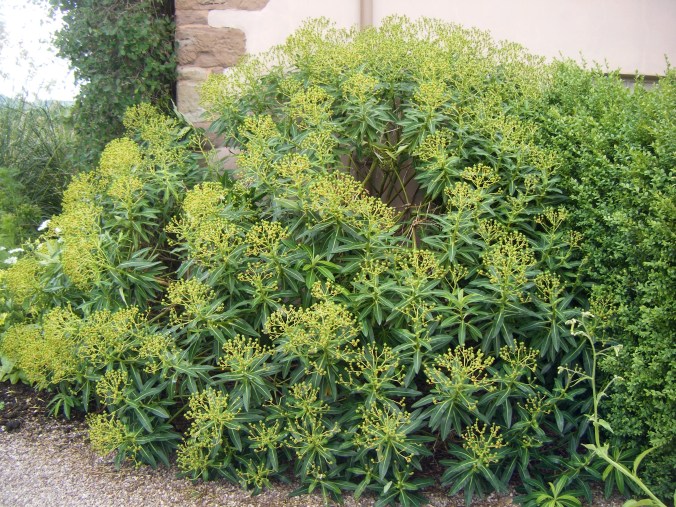
Large shrubs of Euphorbia x pastuerii grow between the cottages,

DSCF1889.jpg

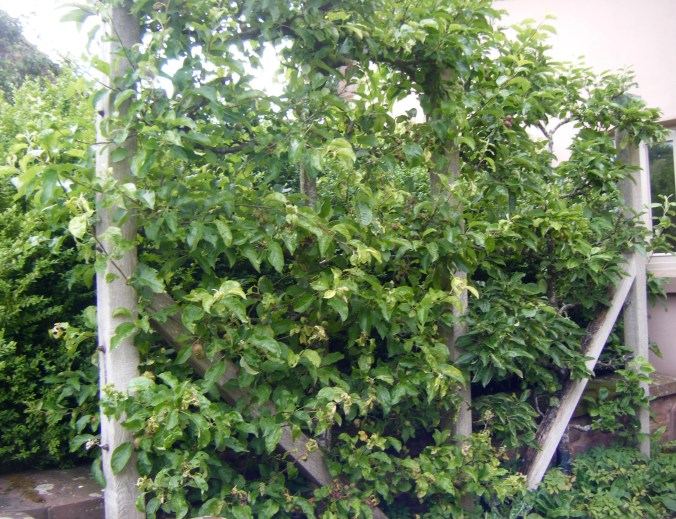
and a short length of productive cordon fruit trees provide height and a screen.

DSCF1894.jpg

Down the steps from the drive,

DSCF1900.jpg

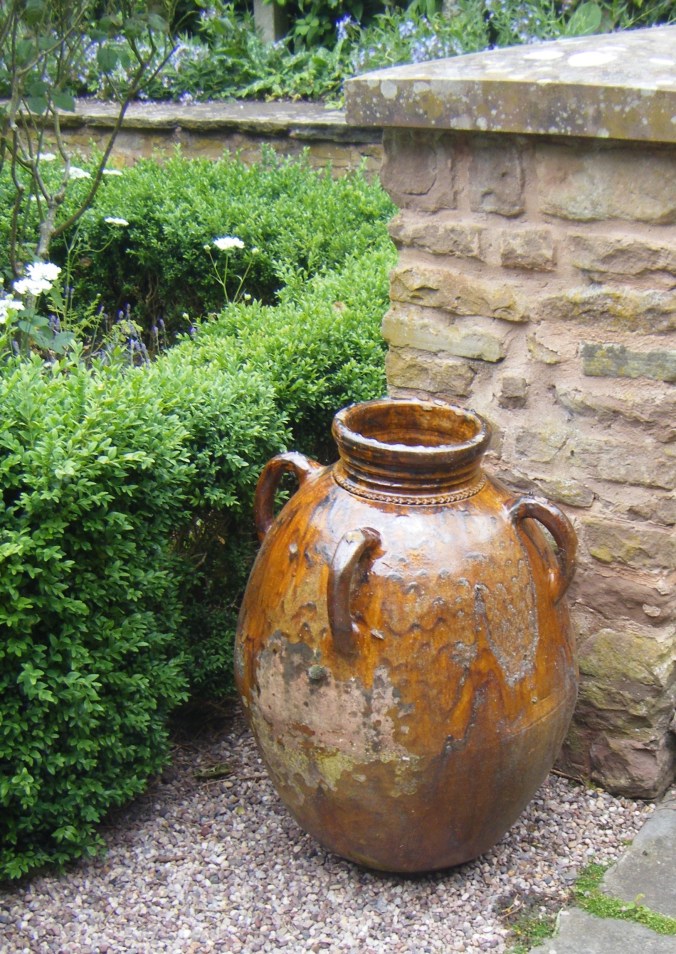
a glazed jar stands at the foot.  In this sunken area the box is waiting for its clip and annual Orlaya grandifolia is planted around the colourful roses.

DSCF1899.jpg

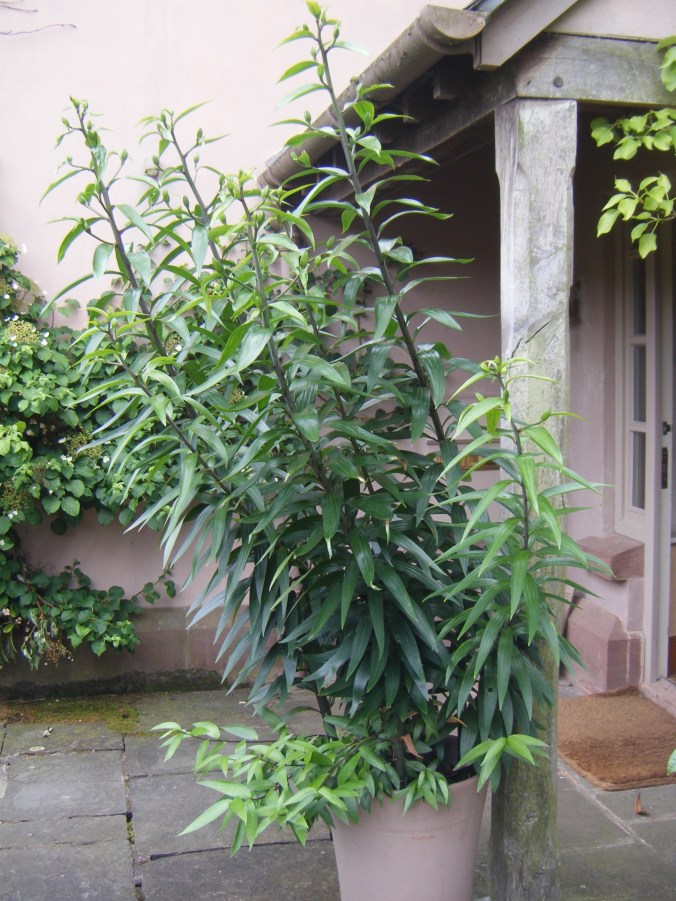
The path leads straight up to the front door where giant lilies reach gutter height. I am envious of the absence of any pesky beetles. The soft earthy pink of the walls

DSCF1898.jpg

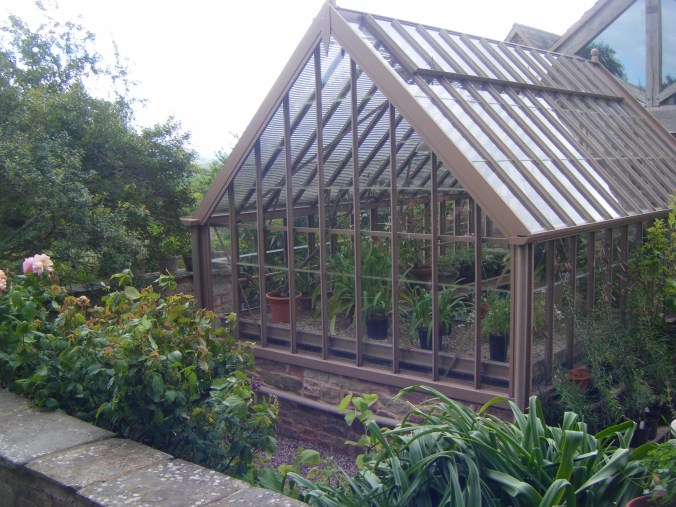
is repeated on the greenhouse, also set in a sunken area a little way from the house.

DSCF1907.jpg

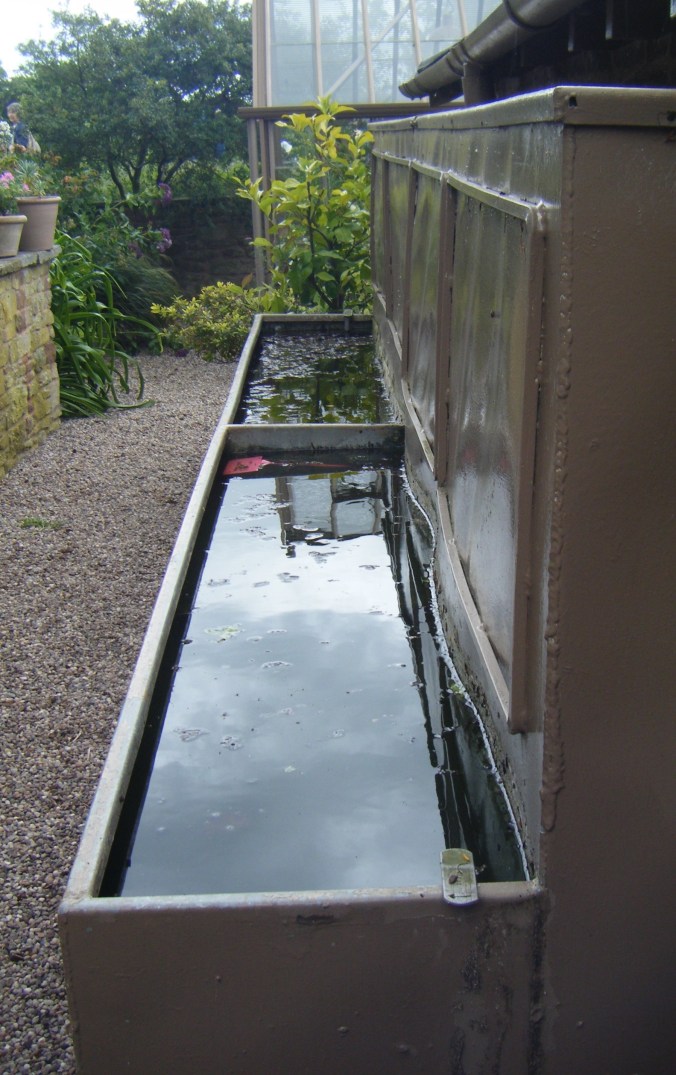
The water tank is painted too, and its shape reminds me of an upright piano.

DSCF1905.jpg

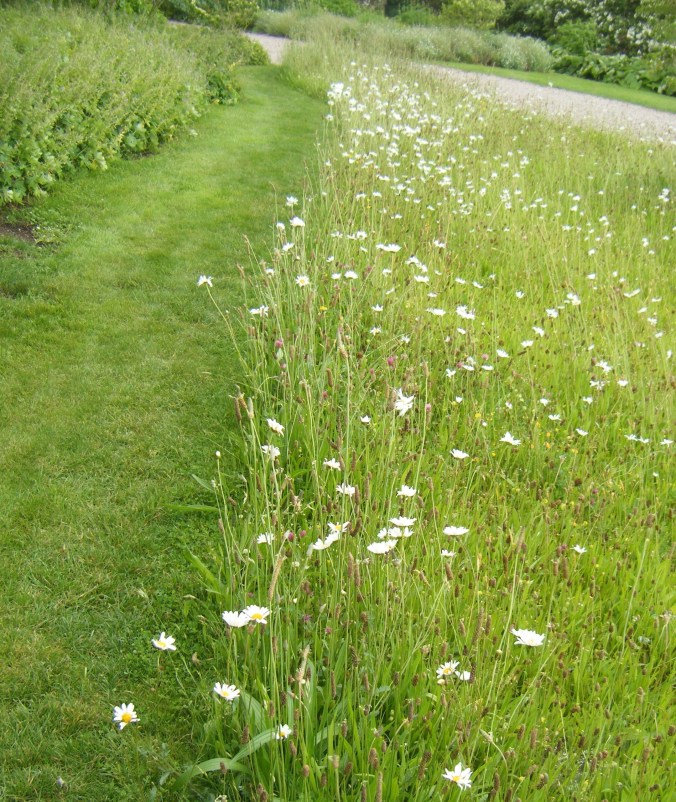
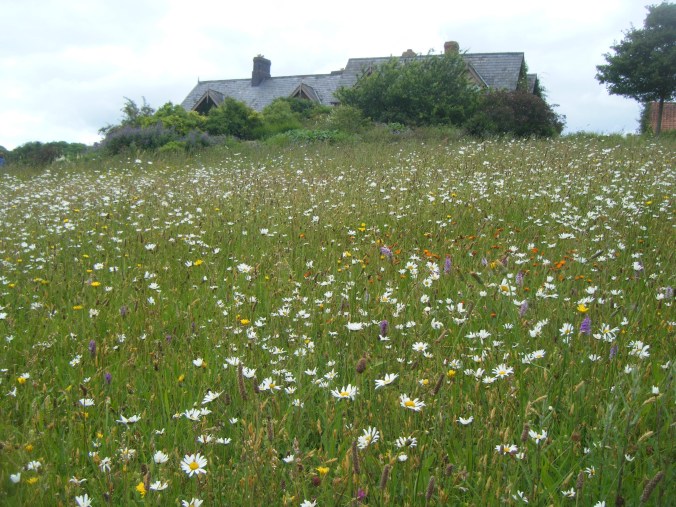
There is a gentle transition of the organised space into a wilder area where in this patch close to the drive oxeye daisy is the predominant wildflower.

DSCF1910 (1).jpg

Further below are the wildflower meadows that are so carefully managed. Peter explains how diggers originally removed the topsoil to provide a less fertile medium for grass to compete. Yellow Rattle is sown fresh in September also helps to control the grass. It is important to maintain the right mix of plant species which will be cut in August when the seed has ripened but the mowings are removed to prevent adding nitrogen to the site. It is probably as much work as an herbaceous border but the result is magnificent:

DSCF1926.jpg

And dotted about are the purple orchids.

DSCF1929.jpg

Following the path down to the lake we pass the collection of pale blue bee hives.

DSCF1940.jpg

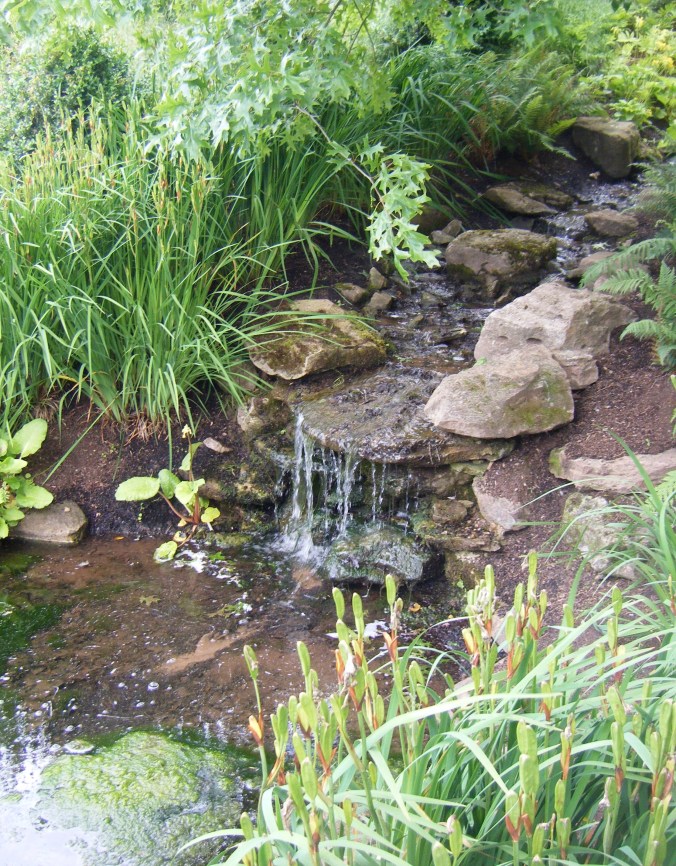
You would never have known that the stream was made just last year. Water is piped up from the lake below. It just all looks part of the scenery with the water burbling gently over the rocks.

DSCF1947.jpg

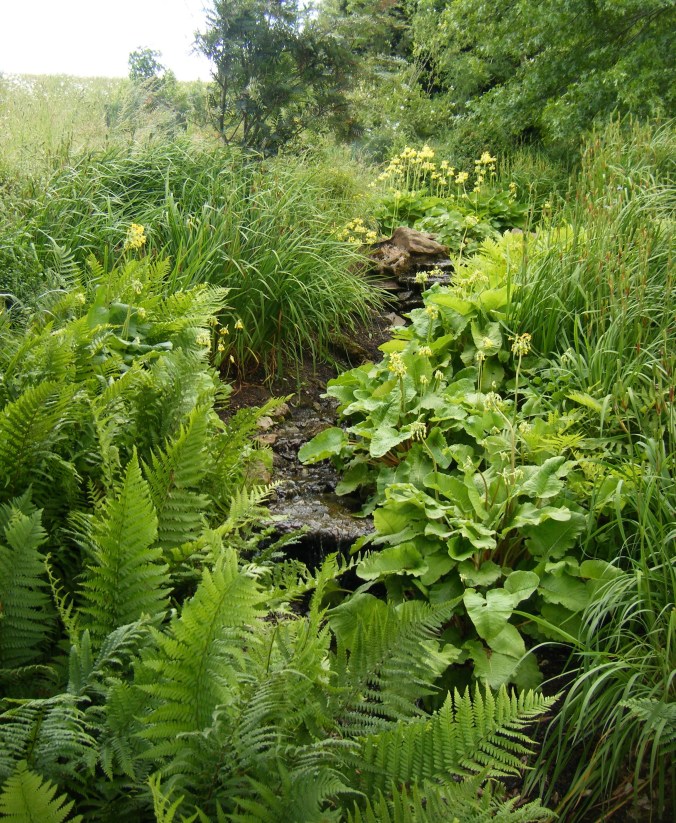
The planting looks mature, with primulas and ferns along the water’s edge.

DSCF1949.jpg

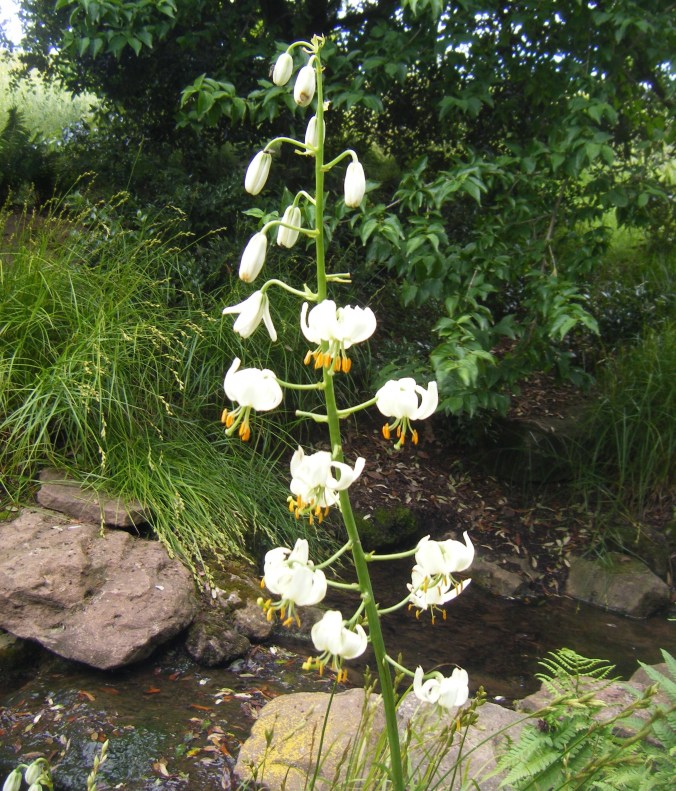
A striking Martigon lily stands erect.

DSCF1945.jpg

Down on the lake the swans appear stationary.

DSCF1950.jpg

A collection of trees and swathes of gunnera and irises.

DSCF1955.jpg

The path winds around the lake and we discover it is because of the cygnets that the proud parents remain in the centre.

DSCF1962.jpg

Looking back up to the house it is hard to imagine that it was once surrounded by high Thuja hedges planted to filter the wind but which totally blocked the views beyond.

The garden has been open since 2010. It is an insight in how to design a garden perched on a hill, how to incorporate the surrounding landscape with the garden and a lesson on how to grow a wild flower meadow.

Brockhampton Cottage is a combined opening with Grendon Court just a ten minute drive away which we visited next.

DSCF1966.jpg

——-47——

The Charterhouse, charming and cheerful. (46)

The Charterhouse is an old almshouse situated in Charterhouse Square in the City of London.

Screen Shot 2017-06-13 at 06.32.02.png

Evening openings with the NGS are fun and with the promise of a BBQ, how can one resist?

DSCF1849

It has a rich history; Carthusian monastery, wealthy nobleman’s house, almshouse and school.

The Brothers were originally those who could supply ‘good testimonye and certificat of theire good behaviour and soundnes in religion’ those who had been servants to the King ‘either decrepit or old captaynes either at sea or land, maimed or disabled soldiers, merchants fallen on hard times, those ruined by shipwreck or other calamity’.

Now it is a community of about 40 single healthy, over sixty year olds who are in need of financial and social support.

A Brother greeted us at the archway and we made our way in from the square.

DSCF1778.jpg


Passing hidden passageways,

DSCF1843.jpg

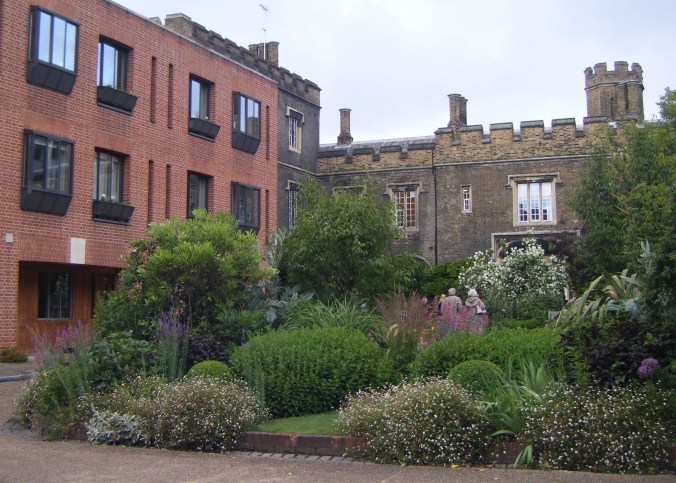
we enter the first of the courtyard gardens. A modern building on the left, is in juxtaposition with the medieval buildings which surround the square.

DSCF1783.jpg

Head Gardener Claire has been here since 2009.  With a delightful mix of planting, she has restored what was originally a rather run down area.

DSCF1784.jpg

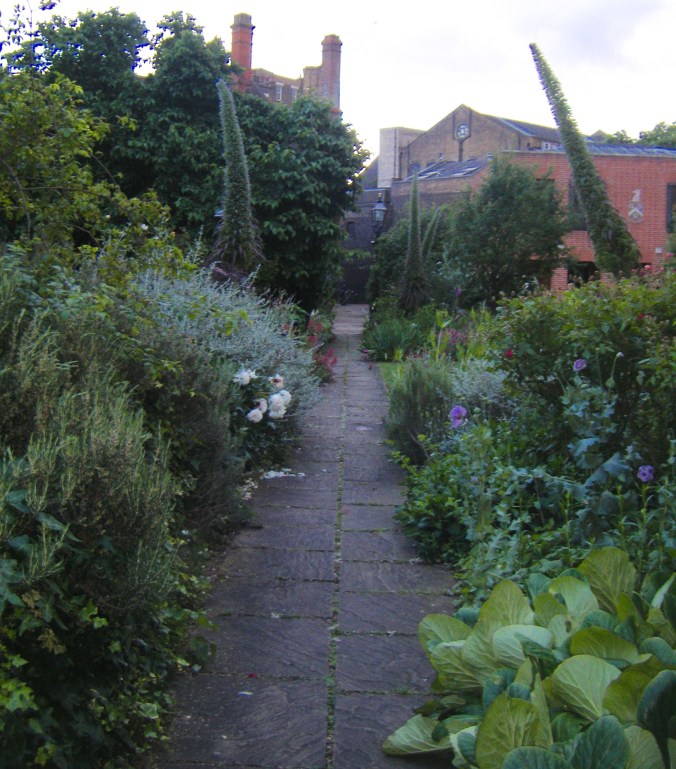
We take the mown path through the centre.

DSCF1785.jpg

Visitors are amazed as they gaze up at the lofty giant viper’s bugloss, echium pinnifolium.

DSCF1789.jpg

More echiums seem to wave at us from amongst poppies and roses in the early summer borders.

DSCF1794.jpg

On the ground, a water lily shyly pops up its head.

DSCF1788.jpg

I am confused by the term ‘brother’ but quickly understand that it is a purely traditional term for those living in this community, acknowledging the past when there was a monastery on the site. Females now live here too.

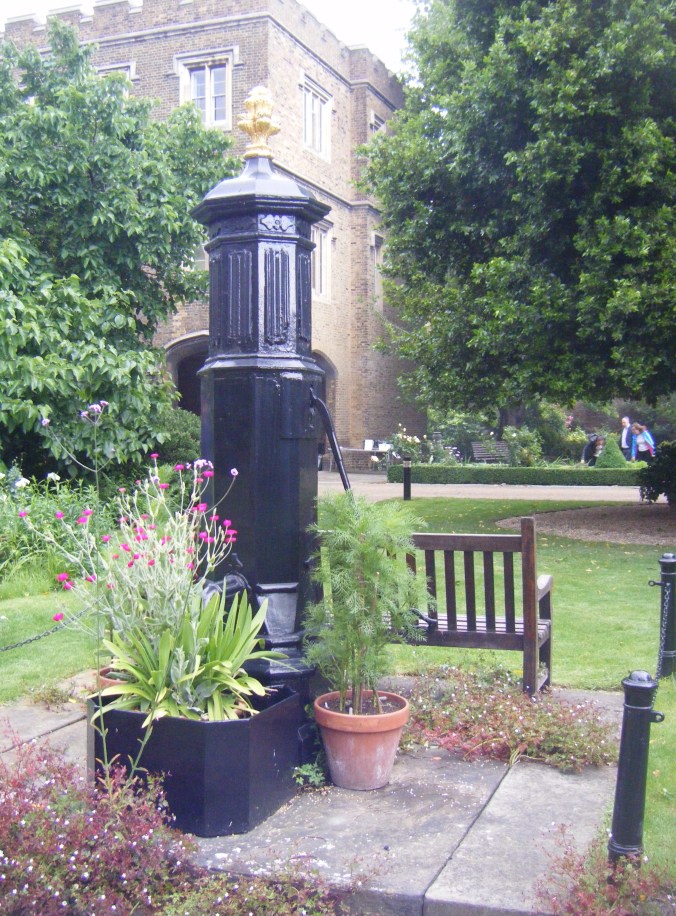
Brother Gordon to whom we chat by the pump, points out that there is an air raid shelter lying silently  under the lawn. He asks us where we are from and tells us that he was once a singer, and made his debut on Cromer Pier with Ronnie Corbett. Just a few weeks older than the Queen, he is still entertaining his audience.

DSCF1787.jpg

A bench is sited in the shade of a spreading holm oak where one can view the pleasant garden beyond.

DSCF1790.jpg

The barbecue is getting going and smells delicious. Before we partake, we decide to look around the rest of the garden because the clouds are typically threatening.

DSCF1791 (1).jpg

There is also scent from the mock orange, a pretty philadelphus.

DSCF1795.jpg

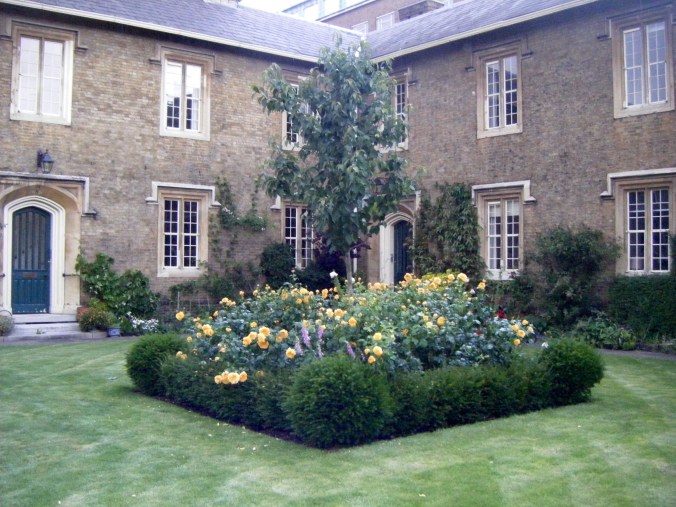
The next courtyard, known as Pensioner’s Court is slightly larger. It is private for residents only and a magnolia fills one area of the lawn,

DSCF1798.jpg

and arum lilies grow under a window.

DSCF1796 (1).jpg

Roses spill over the box squares situated in two of the corners.

DSCF1799.jpg

There is a splash of colour along the walls.

DSCF1804.jpg

The third and final courtyard is a more relaxed and informal.

DSCF1806.jpg

A wildlife garden; Bees are kept here,

DSCF1807.jpg

and bugs encouraged,

DSCF1813.jpg

and the all too important compost bins are tucked away.

DSCF1808.jpg

A fine large London Plane stretches upwards and dominates the space, and now hurrying to shelter from the rain under the archway, Brother Tim informs us that it is the tallest in London.

DSCF1814.jpg

The garden ends here. A door in the wall will take you out to the Clerkenwell Road, now busy with the evening traffic.

DSCF1822.jpg

And although we might be in a deliciously green space, a Narnia type haven, we are in fact in the heart of the City of London.

DSCF1825.jpg

It is really raining now and sheltering under one of the many mulberry trees does not keep us dry for long.

DSCF1811.jpg

We join the barbecue prepared by the chefs; it is delicious and mercifully we keep dry under the cloistered way.  I decide to skirt around the old twisted tree to visit the little garden on the side.

DSCF1834.jpg

It has been charmingly laid out, the pink peonies and poppies look particularly good this evening.

DSCF1826.jpg

If you stand in the middle you can feel the size and take in the calm. Looking one way,

DSCF1827.jpg

and then the other. Overlooked by the old Tudor buildings,

DSCF1829.jpg

a visitor enjoys the scene from beneath an umbrella.

DSCF1831.jpg

Despite the wet, the roses and clematis still look a picture.

DSCF1828.jpg

With the barbecue over and and the rain continuing it really is time to head for home.

DSCF1837.jpg

Before exiting into the square we take a glimpse of hidden courtyard.

It has been a delightful and unique visit and we are grateful to the community of brothers for sharing this hidden gem with us.

DSCF1848.jpg

——-46——-

Frogmore House and Garden; Wet, Windy and Forty Five. (45)

The rain was torrential last Tuesday and our windscreen wipers were going nineteen to the dozen as we drove down the M4.  Familiar yellow signs guided us through Windsor…….

DSCF1776

…..and in spite of the weather the garden gate was wide open at Frogmore. Open for charity just 3 days a year, they have been opening for the NGS for a noble 71 years. The rain did not seem to deter the visitor and many hundreds who had purchased pre-booked tickets braved the weather.DSCF1669

I was overwhelmed with the unexpected welcome awaiting me. Heather, County Organiser extraordinaire for Berkshire, Trustee AND Deputy Chairman of the NGS, was waiting for me and with her big smile she held up the notice she had prepared:

DSCF1774

We joined the garden history tour and gathering under a huge old crusty Indian bean tree, Catalpa bignonioides,  we stood for a sobering reflective minute silence remembering the victims of the recent terrorist attack.

DSCF1679

With the realisation that there really is somebody reading my blog, I felt compelled to concentrate. Our guide began her tour in front of the mausoleum and looking up at the grey building against a gloomy sky I am reminded of a poem by John Betjeman:

‘Oh Lord Cozens Hardy  Your mausoleum is cold,’

It is cold, and wet, but no Lord C-H lies here. Built just four days after Albert’s death in 1861 it is now reserved for members of the Royal family. Prince Edward, Duke of Windsor and his Duchess are laid to rest under an old oak tree.

DSCF1680.jpg

Frogmore House was acquired by the Royal Family in 1792 when George III bought it for his wife Queen Charlotte. They had 15 children, 13 of whom survived to adulthood and it became a retreat for the Queen and her unmarried daughters. Queen Charlotte had a passionate interest in botany which had begun when she lived at Kew in 1770s. She was instructed by Sir James Edward Smith the principal founding member and President of the Linnean Society of London.

Designed at the time of the ‘picturesque’ movement, the garden is not so much about borders of flowers but of trees and shrubs; in fact over 4,000 specimens many of which were introduced by Queen Charlotte herself and later by Queen Victoria.

There are of course some flowers and the lovely Mock Orange, philadelphus is standing up well to the rain.

DSCF1666.jpg

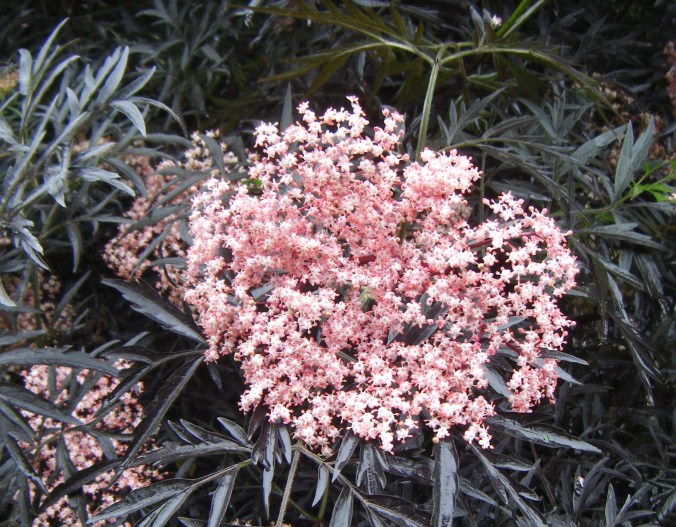
and so too are the pink flowers of the black elder, sambucus nigra.

DSCF1667.jpg

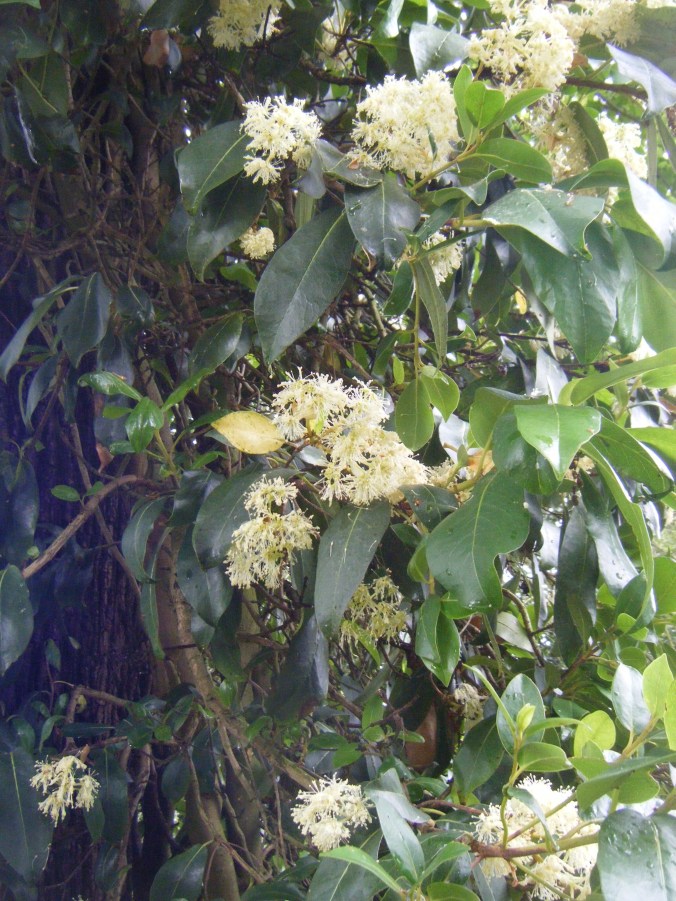
This climber from Chile hydrangea serratifolia is also in flower and it brightens a shady tree growing upwards effortlessly without any apparent means of support.

DSCF1746.jpg

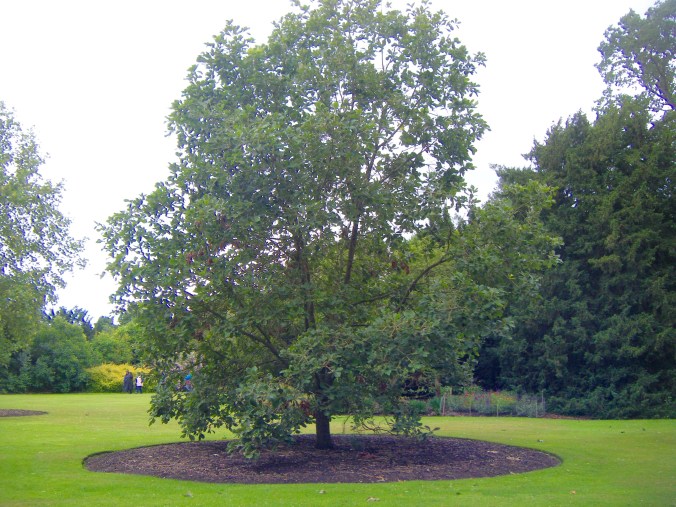
The trees are well looked after, have plenty of space and are clearly labelled. It did take me awhile to identify this one,

DSCF1744.jpg

too obvious the label was at eye level; it is the Korean Oak sometimes called the Japanese Emperor Oak, Quercus dentata.

DSCF1742.jpg

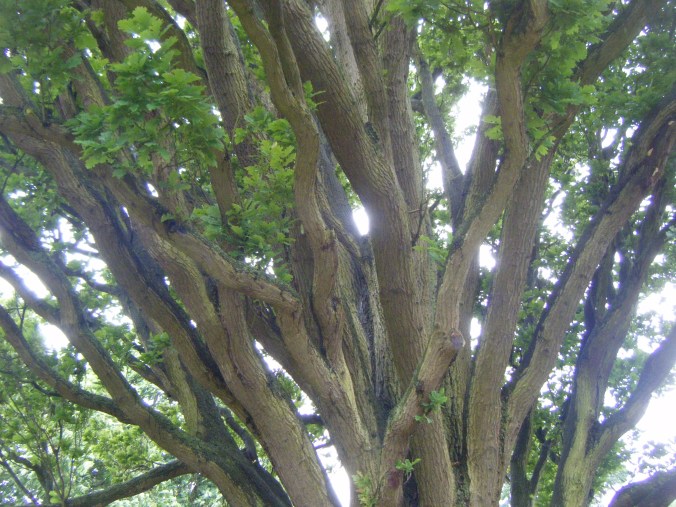
There are several types of oak and I love the multi branched Cypress Oak, quercus robur f. fastigiata,

DSCF1693.jpg

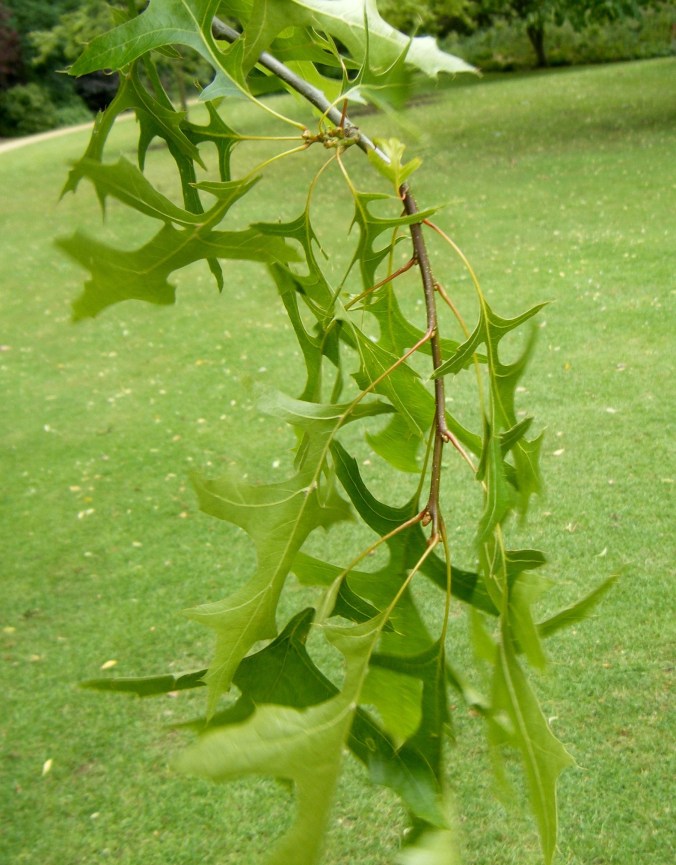
and the leaves of the Pin Oak, Quercus palustris, bend gracefully down.

DSCF1755.jpg


The lakes were dug and the mounds constructed when the garden was laid out at the end of the eighteenth century. The water in the lakes is run off  from the surrounding farmland and there is plenty of it. Paths weave a circuitous route around the 40 acres. Stepping over the iron bridge,

DSCF1690.jpg

we glimpse a view of the house beyond the wild flower meadow.

DSCF1692.jpg

This was Queen Victoria’s favourite part of the garden. Here she would drive the short distance from the house in pony and trap accompanied by the faithful John Brown, to take tea served by her Indian servants.

DSCF1695.jpg

(Photo with acknowledgement from https://www.royalcollection.org.uk/visit/frogmorehouse/what-to-see-and-do/the-garden)

about_FH_0.jpg

Queen Victoria feared the crowds, but she was well away from them at Frogmore. By the house there is a developing scene, but it is only the foxgloves jostling for position eager to see a royal visitor.

DSCF1700 (1).jpg

We sympathise with the guide when she says the front of the house on the north side is more like the back with a functional entrance…

DSCF1702 (1).jpg

…whilst the back has an architecturally more pleasing frontage. It was James Wyatt’s first commission, and the one to launch his career.

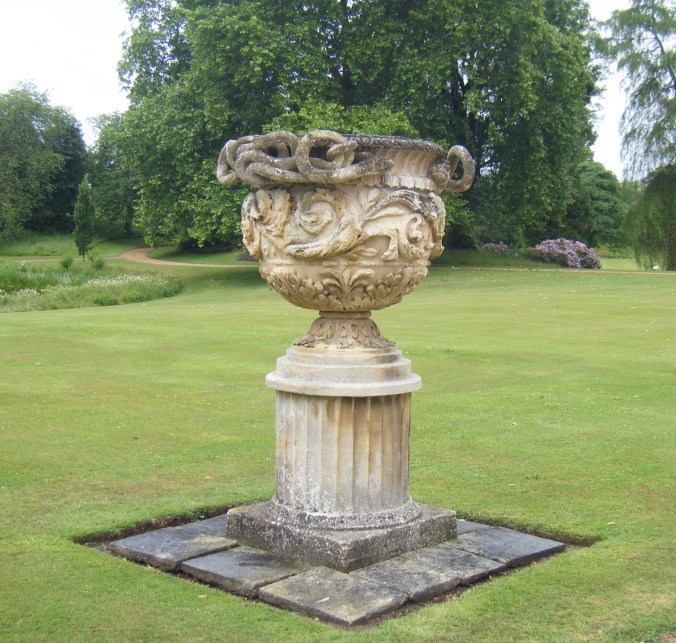
A pair of large majestic urns stand on the lawn.

DSCF1703.jpg

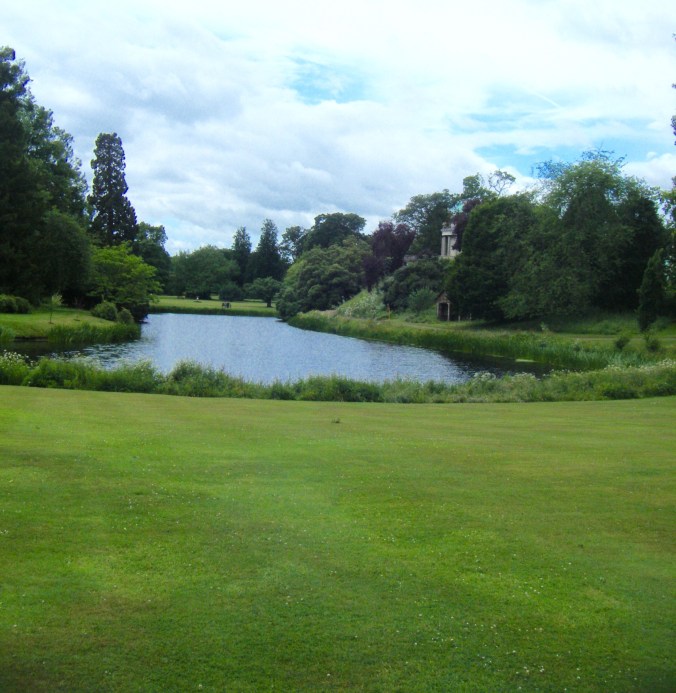
The view from here is indeed ‘picturesque’; the formal foreground leads to the serpentine lake and park in the middleground which then connects to the natural scenery in the far background.

The sky still looks uncertain but thankfully umbrellas have now been put away.

DSCF1706 (1).jpg

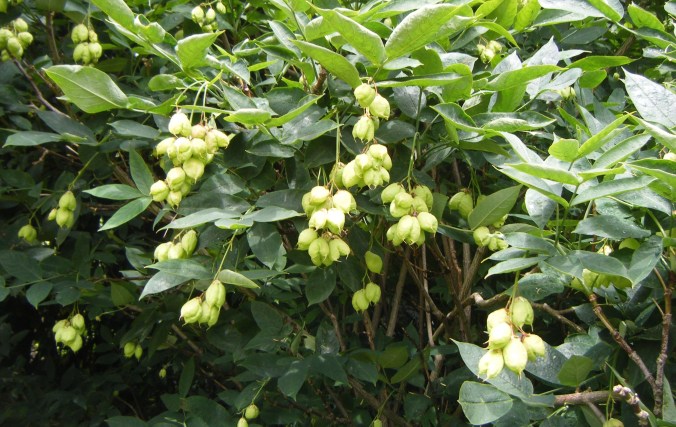
Following the path to the west of the house we pass the shrub border where we admire the bright green seed pods of the ivory-flowered bladdernut, staphylea colchica.

DSCF1724.jpg

Over a small bridge well clad with virginia creeper. parthenocissus quinquefolia,

DSCF1720.jpg

we arrive at the Gothic Ruin. Built as a ‘ruin’ and designed by James Wyatt it has stained glass but was damaged recently by a falling tree. This is where Queen Charlotte and her daughters would take their tea and Queen Victoria would enjoy breakfast. Just inside and discreetly placed is a dog bowl of water ready for a passing present day corgi.

DSCF1718.jpg

A visitor has already asked if the Queen’s children ever played on the water and the guide points out that this is the very spot where the young princes would launch their boats.

DSCF1710.jpg

Across the lake a driftwood horse flicks it’s tail; crafted by Heather Jansch the sculpture is in fact bronze.

Moving in a westerly direction we come to the Indian Kiosk installed to celebrate the relief of the Siege of Lucknow in 1857; this is the site thought to have been Queen Charlotte’s flower garden.  She not only learnt botany but was also instructed in botanical illustration by both Francis Bauer and Margaret Meen.

DSCF1711.jpg

At the end of our very informative tour we hurry over to the lawn where we find a gathering of nurses and their families from the Queen’s Nursing Institute. They had travelled here from far and wide, Rosie for example set off at 5am from Preston in Lancashire.

Head Gardener Neil leans nonchalantly on the sun dial (which came from Claremont House) while Heather makes a short speech praising the nurses as the unsung heroes of the community and explained that it was the idea to raise funds for QNI that was the inspiration behind the foundation of the NGS ninety years ago.

DSCF1731

Queen Victoria gave her patronage to the institute then known as the ‘Jubilee Congress of District Nursing’, so it was only fitting that the group be photographed in front of the house she so loved.

One nurse told me that it was great to have the link with the NGS because when visiting patients in their homes, conversations would inevitably turn to gardening.

DSCF1728.jpg

Not far from the group is the spectacular flower of the Tulip tree, liriodendron tulipifera it is a large tree but nearby grows a smaller specimen presented by the NGS in 2005.

DSCF1685.jpg

Frogmore House is open today and it is an opportunity to see inside. We wander back over a small bridge,

DSCF1748.jpg

and another,

DSCF1770.jpg

catching sight again of the gothic ruin.

DSCF1752.jpg

The house contains a large collection of botanical books once belonging to Queen Charlotte, and her floral interest is displayed throughout the interior. She commissioned Mary Moser, the renowned 18th-century flower painter and one of the Royal Academy’s founding women, to decorate one of the principal rooms to resemble an arbour open to the skies. We are not allowed to photograph inside so I have borrowed an oil on canvas © Royal Academy of Arts, London. Photographed by John Hammond.:

ocatc3cmracwniio53s5

Back outside it is brightening. From the lawn in front of the house we can see a building perched on the hill, it is thought to be inspired by Vanbrugh’s Temple of the Four Winds at Castle Howard.

DSCF1761.jpg

It has been such an interesting day. Every garden has it’s own history and none more so than this one. We have followed winding paths, viewed beautiful buildings in glorious grounds, all set in a very watery landscape. We have also enjoyed the good company of others. The sky is really blue now,

DSCF1762.jpg

it is just the cherry on the tree.

DSCF1765