Great Comp Garden, follies fun and salvias. (84)

Great Comp is near Sevenoaks in Kent. The seven acre garden was developed by Eric and Joyce Cameron who purchased the house back in 1957 and first opened for the NGS in 1968.

Now it is managed by a Trust, with the Curator William Dyson and a team of gardeners and volunteers. Dyson has been growing salvias for over 20 years and has built up a large collection; as you walk into Great Comp you are greeted with a fine selection displayed for sale.

DSCF6717 (1).jpg

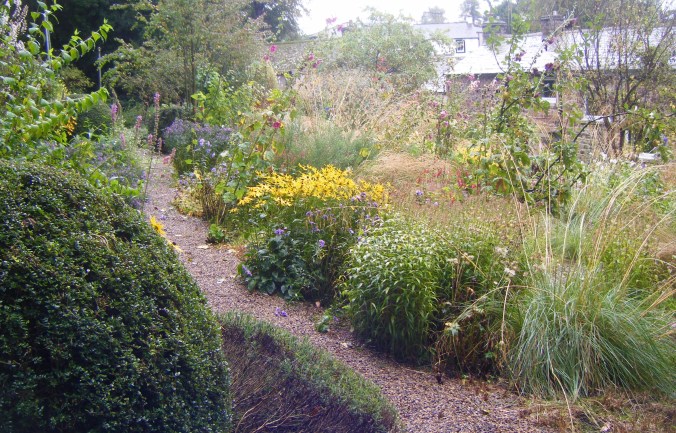
The nursery area is surrounded by borders of grasses and perennials allowing the visitor to slip seamlessly into the garden.

The apex of the Lion Summerhouse roof can just be seen above a delightful blend of shape and texture.

DSCF6813.jpg

This 17th century building was at one time the estate loo but now contains a more enchanting style of seat.

DSCF6719.jpg

The Camerons added a little architecture to the garden, not in the way of functionality but as a part of the design; ruins and follies are built from the stone and sand unearthed from digging the garden.

DSCF6721.jpg

There are plenty of sculptures too and this pensive chap may just be wondering where he has left his trowel.

DSCF6725.jpg

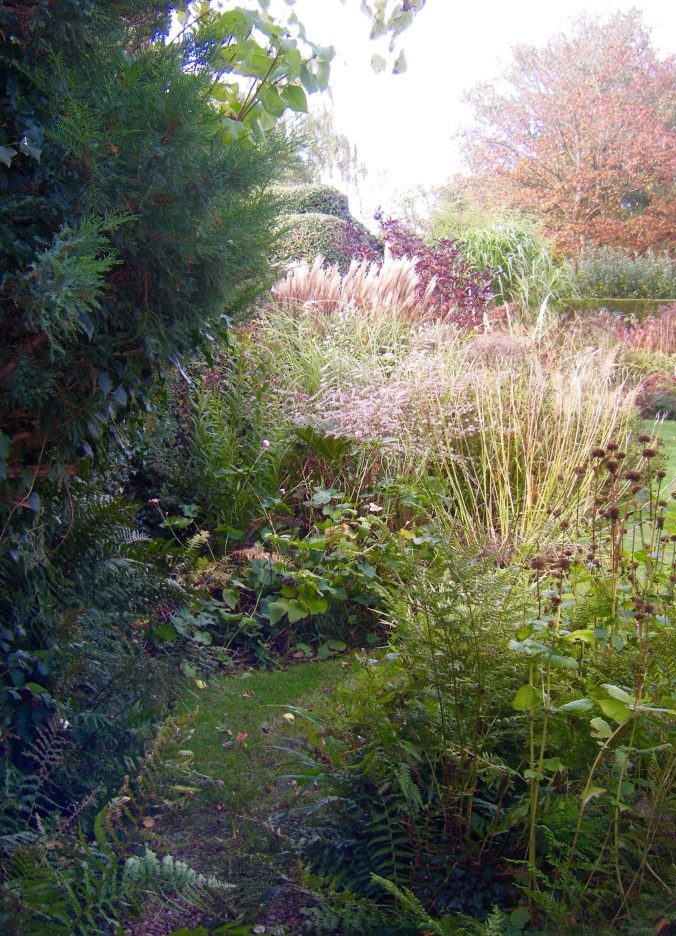
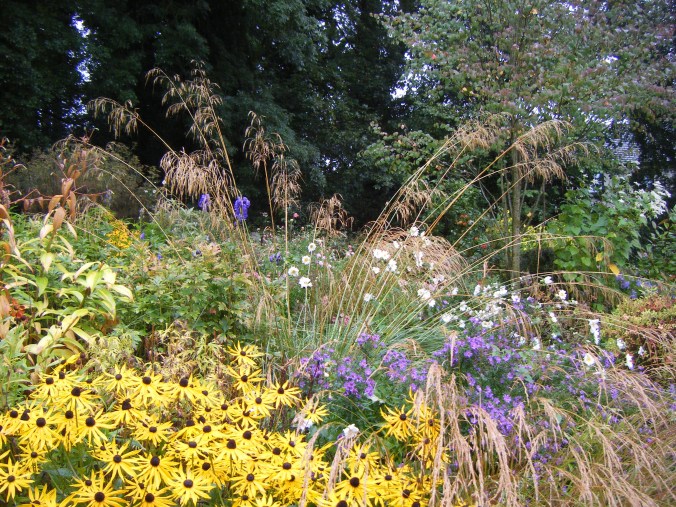
Despite being the end of October this border flows with colour; an assortment of salvias from pinks through red and purple to blue are complimented with tall ornamental grasses arranged at the back.

DSCF6729.jpg

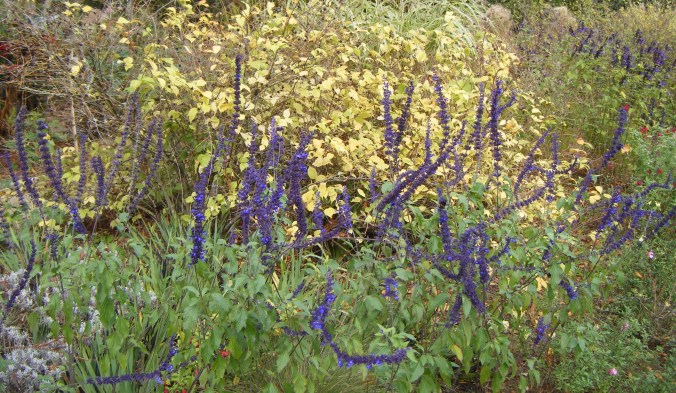
It was Pliny the Elder who was the first to write of a plant described by the Romans as Salvia, most likely the Salvia officinalis, commonly known as sage which we use in our cooking. It is the largest genus of plants in the mint family Lamiaceae and is distributed throughout the Americas, Central and Eastern Asia and the Mediterranean. Dyson concentrates on the Salvias from the New World and has cultivated over 200 hybrids.  Such an intense blue,

DSCF6814 (1).jpg

and it is not just the difference in colour but also in form and habit. These dark purple flower spikes look good with the autumn colours.
DSCF6749.jpg

The colours compliment and blend so effectively,

DSCF6782.jpg

or look good simply in a singular colour bursting out of a pot.

DSCF6806.jpg

Salvia Waverly is a tender variety so will be taken under cover before the first frosts.

DSCF6748.jpg

Another folly provides a seating area complete with bench and to the right a ‘tumbled down’ tower,

DSCF6732.jpg

from where we can view the crescent lawn and an explosion of grasses.

DSCF6734.jpg

Salvia is not the only plant providing flower colour today; a low growing geranium is almost as good as in early summer,

DSCF6738.jpg

and the evergreen Liriope muscari  so good in the shade and flowers from August to November.

DSCF6739.jpg

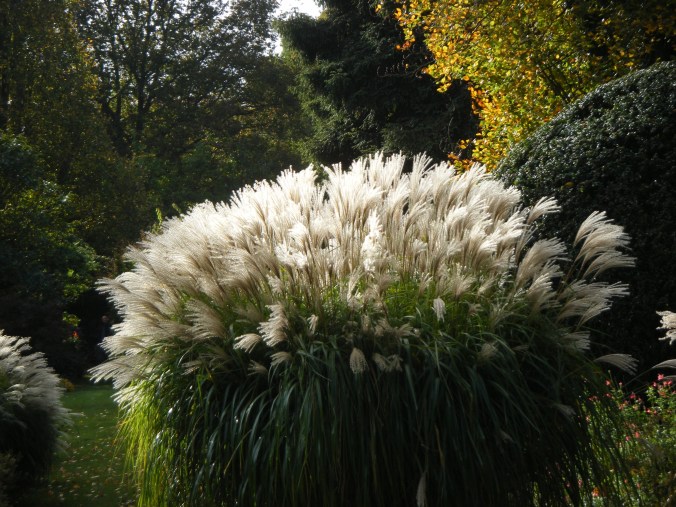
The low autumn sun highlights the whiteness of the miscanthus grass.
DSCF6796.jpg

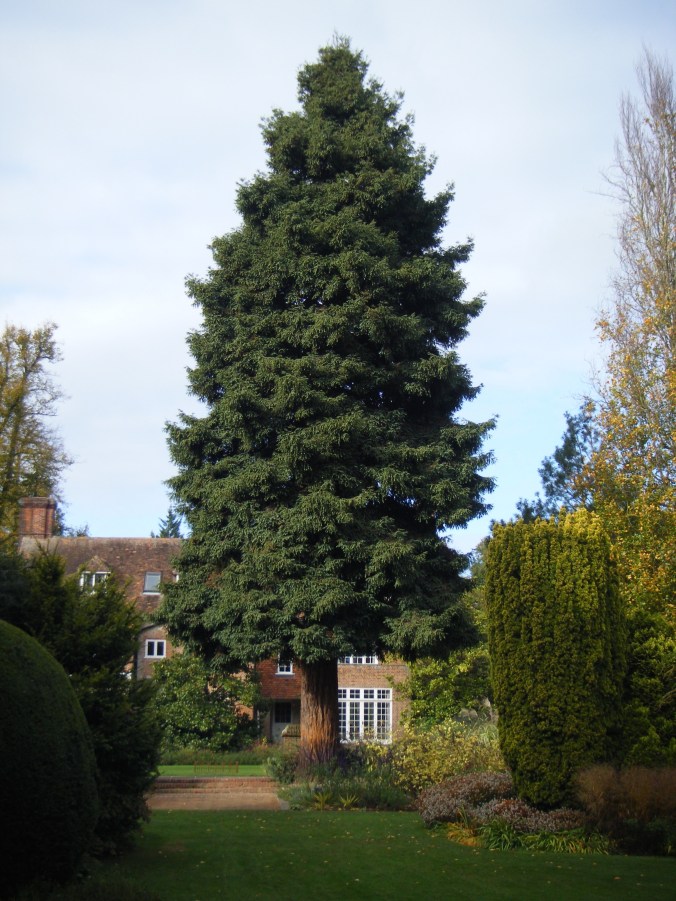
There are many fine mature trees here, the perfect shape of a  Sequoa sempervirens ‘Cantab’ stands erect on the edge of the square lawn in front of the house.
DSCF6788.jpg

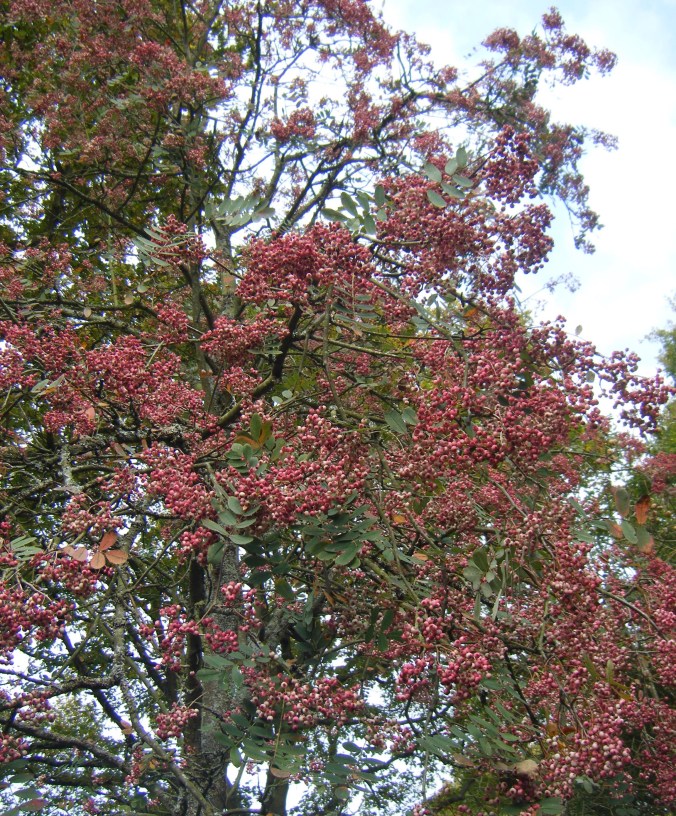
Further away is a fine specimen of a rowan, Sorbus hupenhsis laden with pink berries.
DSCF6741 (1).jpg

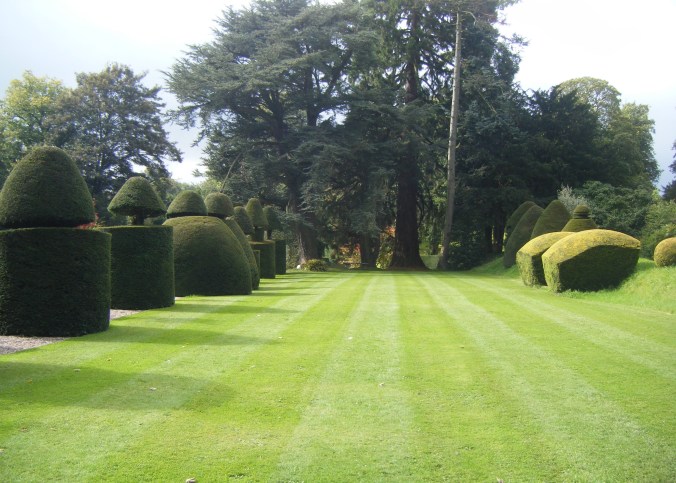
We walk away from the house down the avenue known as the Sweep, the curving line of the lawn and swirling shapes of the shrubs and trees suggesting a design reminiscent of the swinging sixties and early seventies.

DSCF6743.jpg

We are joined in the garden by our young cousin Charlotte; bouncing with energy and enthusiasm she lifts our spirits on this chilly grey day. Rubbing her hands over the smoothly clipped box she asks if it takes long to grow. I don’t want to dampen any signs of horticultural interest and feel a touch guilty when I suggest it doesn’t.

DSCF6740.jpg

Swiftly moving down the Sweep we admire the deep red leaves of the Liquidamber,

DSCF6744.jpg

and head into the woodland. At the southeast corner there is a hydrangea glade which we walk through and follow along the leafy perimeter path,

DSCF6795.jpg

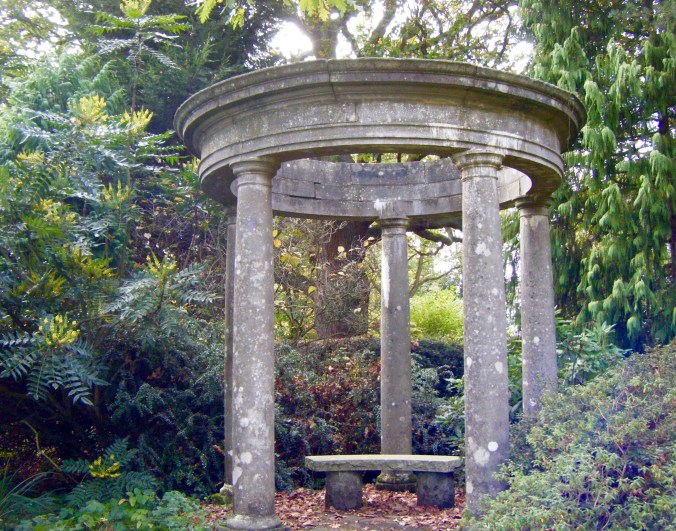
to the Chilstone temple that marks the furthest south western corner and where the yellow Mahonia is well into flower.
DSCF6791.jpg

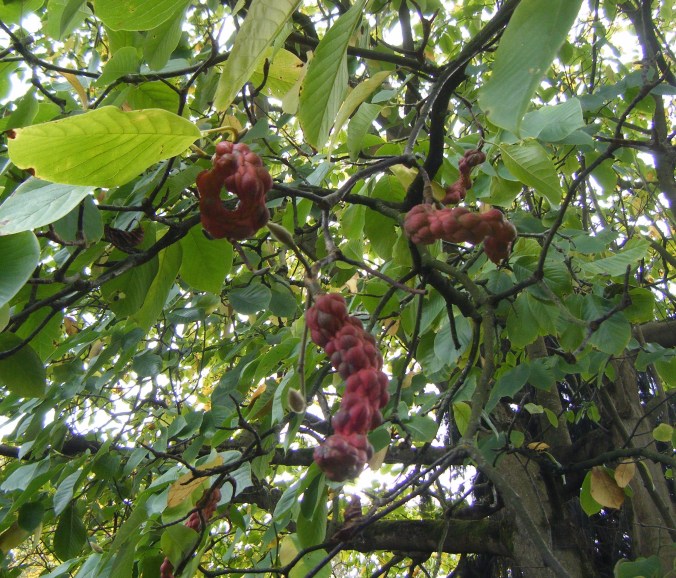
Back out of the woods we seek out the Italian garden, passing under the canopy of Magnolia x soulangeana where the extraordinarily unreal seed heads contort above us,
DSCF6765 (1).jpg

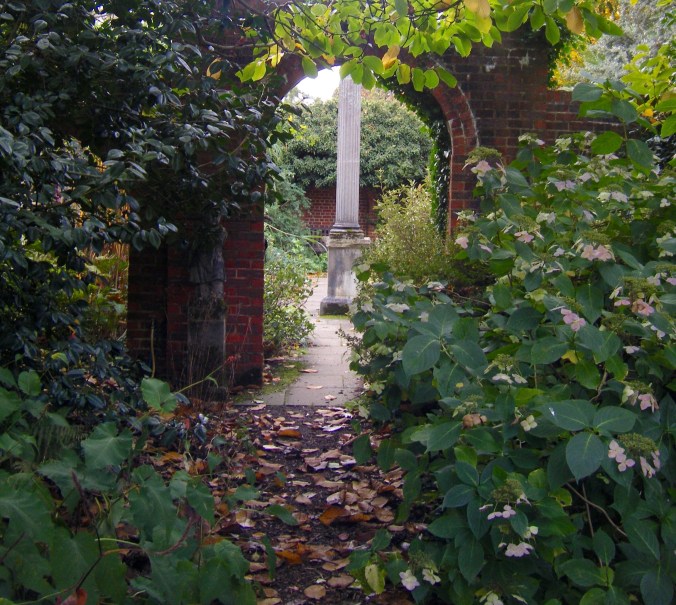
and through the archway there is a different mood.
DSCF6766.jpg

The Camerons combined their love of the classical with the theatre and in an eclectic mix of columns, fountain and ornament softened by dahlias, palm and tall rustling miscanthus they created a curious courtyard.

DSCF6754.jpg

Amongst the old stone are engineering bricks that serve to make walls and define the arches and although there is a very slight air of a forgotten institution there are plenty of little seating areas to enjoy the characterful ambience.

DSCF6767.jpg

It is time for Tea and we head off to the old dairy to sample the delicious cake just pausing for a moment to admire the lamp post with a turban top.

DSCF6783

Nearby, Brutus is stylishly swathed in moss and seems to look over towards the neighbouring

IMG_0194.jpg

goddess, a little less clothed she appears to be in heavenly bliss.

DSCF6773.jpg

Opposite, the flat leaves of the ancient gingko are gently turning to a soft yellow,

DSCF6777.jpg

Through the enchanting moon gate we can clearly see the herbaceous border across the neatly mown lawn.

DSCF6780.jpg

Growing by the house is a sizeable Magnolia grandiflora who holds its seed heads tightly.

DSCF6805 (1).jpg

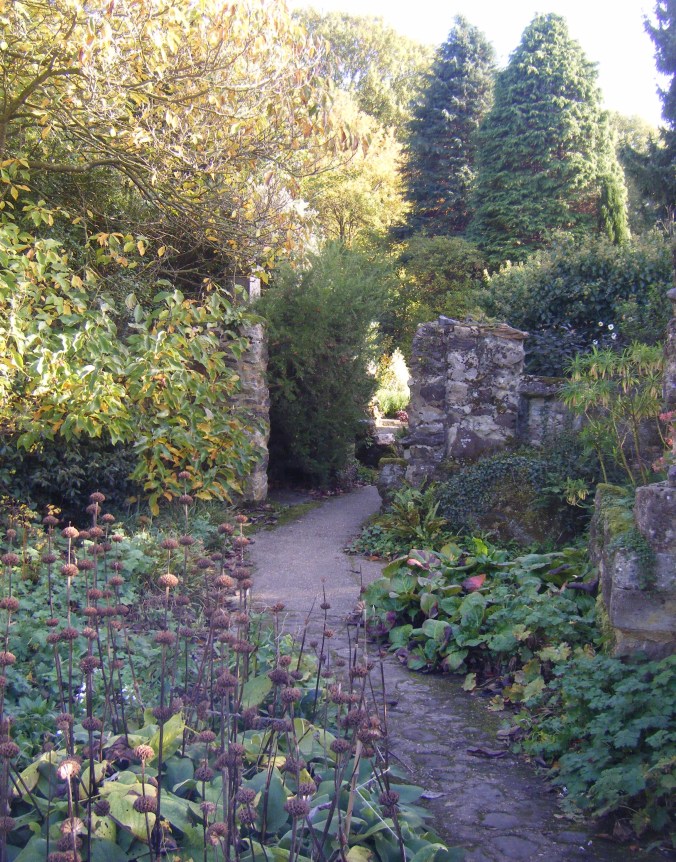
Passing by more seed heads,  these are Phlomis we pass through yet another folly.
DSCF6812.jpg

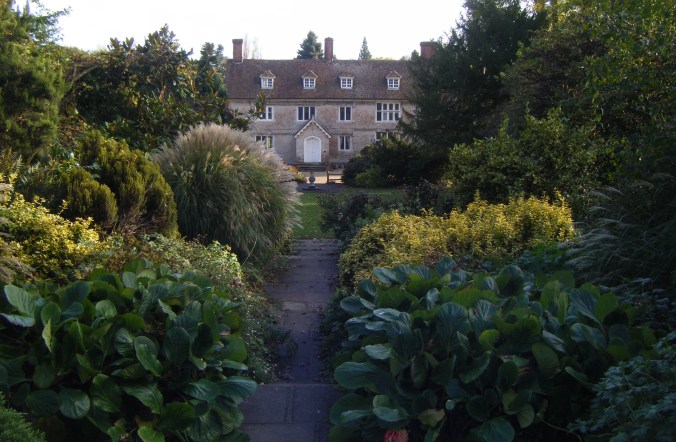
The garden, which is an RHS partner moves round to the northern side where the visitor before leaving can admire the front of the charming 17th Century house.
DSCF6816.jpg

Returning through the nursery it is difficult not to admire the longevity of this summer flowering fuchsia, curiously named “Lady in Black”,

DSCF6822.jpg

and wonder at a snowdrop in flower at the same time, the very early Galanthus ‘Peter Gatehouse’. I feel that I have nearly come full circle as it was not far from here at Spring Platt (A snowdrop of knowledge blog 5), that I became so acquainted with this enchanting flower. However, we still have a little way to go before the onset of the snowdrop season.

DSCF6821.jpg


——-83——-


Askham Hall, artful acres of abundance. (83)

Last month following a visit to Larch Cottage Nursery  in Cumbria (blog 79) we decided to visit the grade II listed gardens of nearby Askham Hall on the Lowther estate.

DSCF5614 (1).jpg

You enter the garden through the homely cafe situated in the converted Barn; it is always a good idea to begin a garden visit with a little sustenance.

DSCF5581.jpg

The garden actually opened for the NGS back in June but up-to-date news about daily happenings is displayed on the board.

DSCF5775.jpg

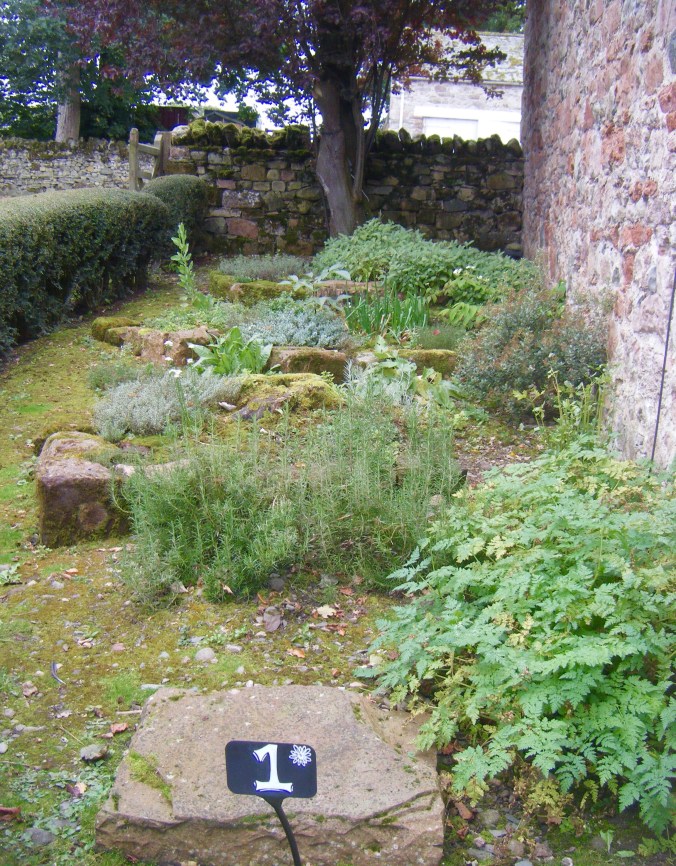
We are given a map, simply drawn and ideal for children, the guide on the back outlines over twenty features in the garden. Right outside the cafe is number one, the mediterranean herb garden with a selection of edible herbs.

DSCF5763 (1).jpg

The garden route begins between a gap in the beech hedge and a walk through walnut trees; our guide reminds us that they were introduced into this country 500 years ago.

DSCF5583.jpg

The ground slopes away from the cornus trees just taking on their autumn colours.

DSCF5588.jpg

Dried heads of allium long-since flowered rise above the fading leaves of hosta grown in the little bricked beds.

DSCF5591.jpg

Before taking the steps up to the terrace we enter the woodland walk and find ourselves at the yew tree, rather unique in the fact that it is multi-stemmed and rises from the root.

DSCF5615.jpg

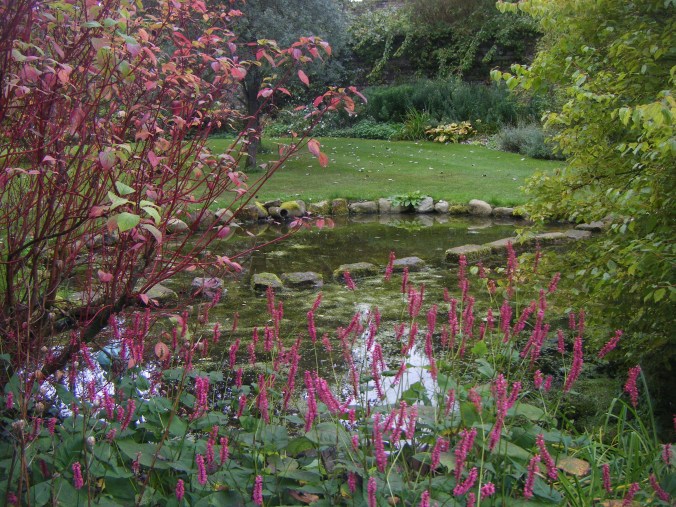
Just at this moment I spy a red squirrel, busy in his nut gathering; he is just too quick  for me. There is plenty of natural wildlife here, with newts and frogs inhabiting the pond,

DSCF5619.jpg

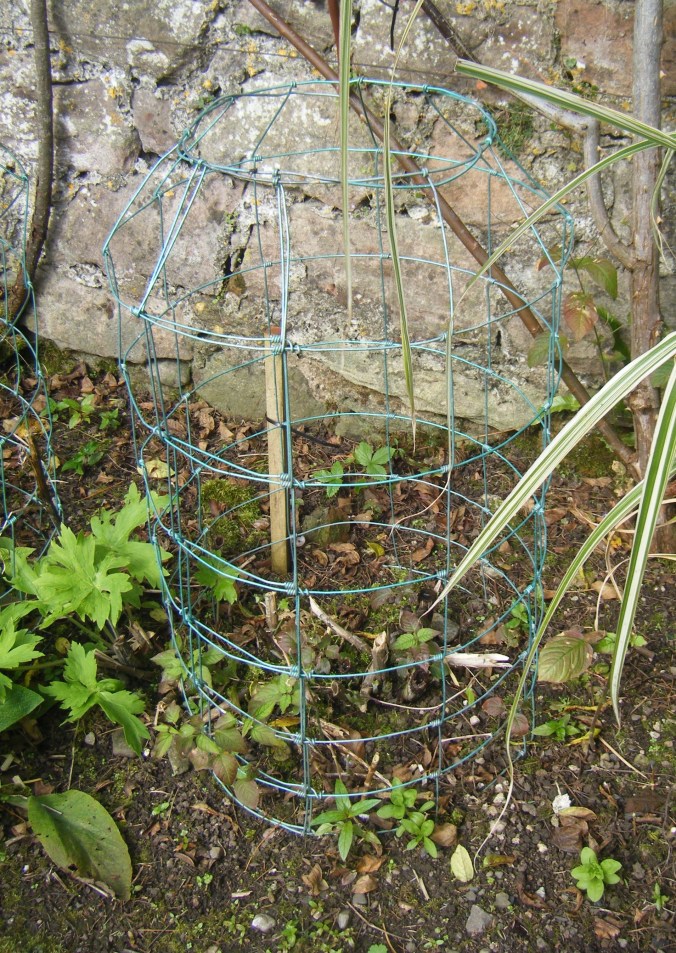
and there is evidence of deer with these simple but clever wire defences.

DSCF5679

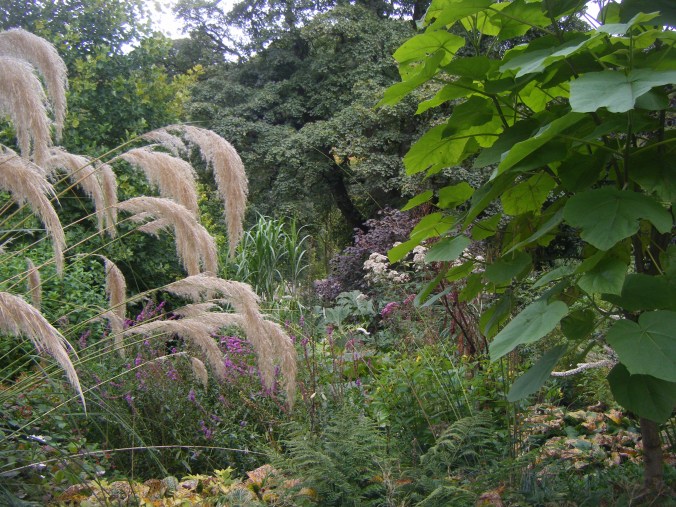
The path leads on to the Land of Giants, an area planted with very tall herbaceous plants

DSCF5649.jpg

such as Eupatorium ‘Massive White’ which towers above us,

DSCF5634.jpg

we feel like dwarves against the Miscanthus,

DSCF5641.jpg

and the young leaves of the Paulownia still looking so fresh and are the size of dinner plates.

DSCF5625.jpg

I watch a group of visitors struggle across the lawn with a wheelchair. An impossible task but until you have pushed one you have no idea how limiting it is. To the right of the green sward is the herbaceous border, at its peak in the summer months, it is an incredible 230ft long (70m).

DSCF5652.jpg

In the centre of the border we find the steep stone steps,

DSCF5653.jpg

which take us on to the terrace where there is still plenty going on from the grasses and late perennials,

DSCF5667.jpg

I particularly admire the appropriately named Sedum ‘Red Cauli’.

DSCF5661.jpg

Yet more steps to climb,

DSCF5666.jpg

but a little sign of encouragement drives us on.

DSCF5680

At the top lies a flat area of lawn; straight ahead is the symmetrical listed house. Previously a family home of the present owner it is now an award-winning 17 room hotel with a restaurant.

DSCF5681 (1).jpg

To the left the neatly mown straight lines draw our eyes to the Wellingtonia,

DSCF5685.jpg

a hundred years old it is the largest tree in the garden.

DSCF5702.jpg

To the right a Gypsy caravan has come to rest. Now a place for the newly-weds to sign the register,

DSCF5684.jpg

it was built in 1900 and was originally on wheels.

DSCF5765 (1)

Photo on display in the cafe


Askham Hall is perched above the River Eden. You can hear the soothing sound of the water as it flows by, and, glimpsed through the branches on its bank is the Mill Cottage.

DSCF5692.jpg

Lowther Church can be seen in the far distance.

DSCF5689.jpg

It is on this same side that steps lead down to the parterre,

DSCF5718.jpg

a private and secluded area reserved for the house guests, we do not linger long

DSCF5713.jpg

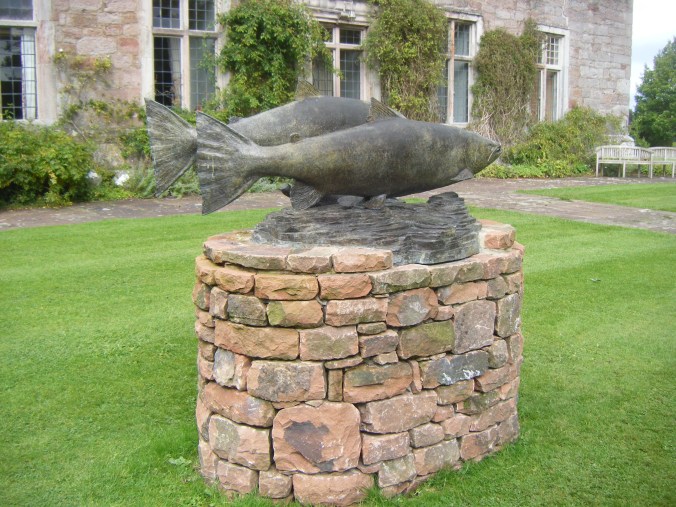
before walking back around to the front of the house where a fine pair of salmon swim through the air,

DSCF5706.jpg

 and view the rolling farmland through the whimsical topiary which date back to the 1800s.

DSCF5708.jpg

Passing through the courtyard, we marvel at the rope knot arch,

DSCF5723.jpg

and the virginia creeper Parthonissus quinquefolia which provides dramatic colour to the grey stone walls.

DSCF5722.jpg

A bicycle directs us to the kitchen garden and through thick hedges of ‘Discovery’ apple,

DSCF5724.jpg

we find orderly raised beds bulging with fine produce.

DSCF5726.jpg

It is decorative too, colourful Malope trifida ‘ Vulcan’ mingles with a collection of herbs,

DSCF5743.jpg

and the striking heads of purple artichoke.

DSCF5735.jpg

The poly tunnels are also productive, ready to supply restaurant and cafe.

DSCF5745.jpg

For the ignorant like me a chilli is a chilli but here in pots are many varieties, all labelled some carry health warning signs as to the strength and I wonder that no one has thought of a Richter-type scale to measure the hottest.

DSCF5752.jpg

This is also a working farm; the sound of chickens clucking nearby is broken by the crow of a cockerel, and over the fence ducks swim on the pond, whilst in the distance are the pigs and sheep.

DSCF5761 (1).jpg

This beautiful garden has a certain vibrancy to it. Open to the public, it has not lost its touch of being a family home. Located in a glorious setting there is just about everything from the history to horticulture, stunning views, a rich variety of planting, fun topiary, vegetables and fruit, and even fine dining. Thought has also been taken to provide interest for children, carefully avoiding that overload of education that at times can take away from the enjoyment of visiting a garden.

IMG_0118 (1)

——-81——-

35 Digswell Road, autumnal joy (82)

It is the end of October and the glorious season for garden visiting is not quite over yet. Last Sunday a town garden in Digswell Road on the edge of Welwyn Garden City to the north of London was just one of eight gardens open nationally for the NGS.  Ferns and grasses edged the path to the side of the house where the wrought iron garden gate was open:

DSCF6626

The back garden, about a third of an acre in size, is a tapestry of texture and harvest colour; seed heads, grasses, autumnal leaves and evergreens.

DSCF6630.jpg

Adrian and Clare have lived here since 1976 and began to get into gardening after retirement some twenty years later. There was no original drawn plan, and a resolution was made not to hard landscape the area. The lawn is at a higher level and I imagine that the ‘little Lutyens’ style steps were built at the same time as the house.

DSCF6695.jpg

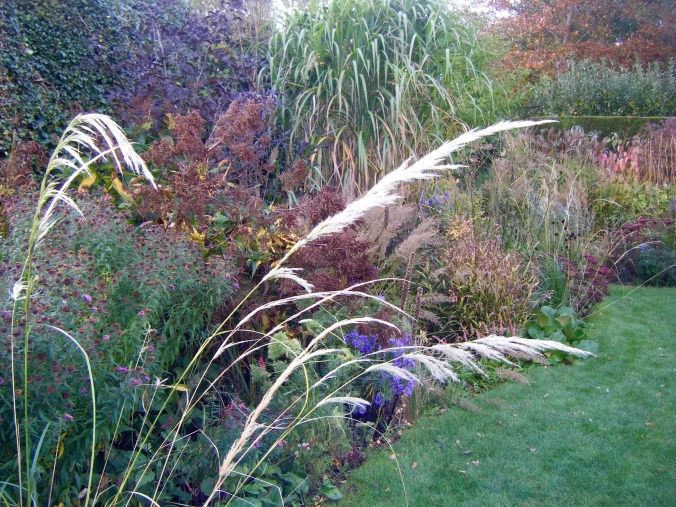
This is a garden about plants and Adrian trips off their names with a passion. I concentrate on the border to the left of the lawn. Planting was inspired as a result of visiting a nursery nearby in Potters Bar which introduced them to the style of Piet Oudolf.  Adrian delights in the performance of a new grass he has acquired, the silvery white fronds of the Peruvian feather grass  Stipa pseudoichu.

DSCF6699.jpg

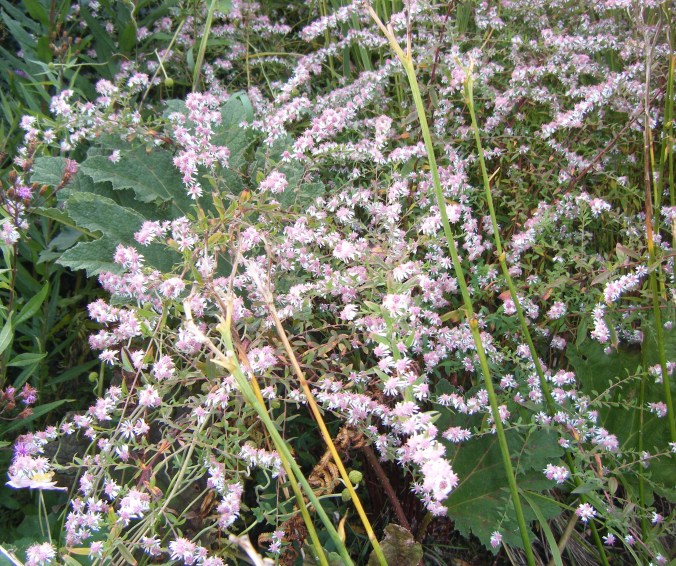
I admire the pink of the Michaelmas Daisy and am surprised to find it called Aster lateriflorus ‘Lady in Black’.

DSCF6631.jpg

The garden is divided by a tall tightly clipped conifer hedge with a gap wide enough to tempt you through the vibrant planting. Here the tempo changes, with the introduction of succulents amongst the perennials.

DSCF6683.jpg

Travel, in particular to the Americas, Africa and Asia where Adrian and Clare experienced exotics growing naturally, has inspired this part of the garden. It is an interesting mix, with a succulent inhabiting the stone ornament softened by stipa tenuissima around its base,  with a background of astelias and purple Salvia ‘Amistad’.

DSCF6639.jpg

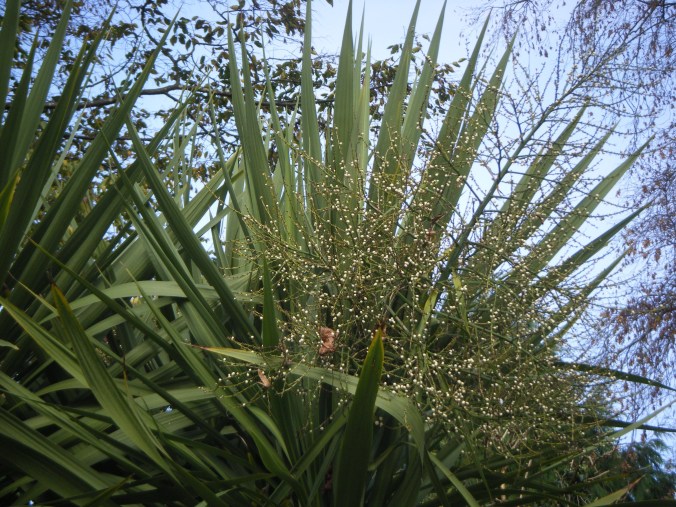
Mature trees surround this end of the garden and the tall palm-like Cordyline australis with its striking leaves has burst into flower.

DSCF6640.jpg

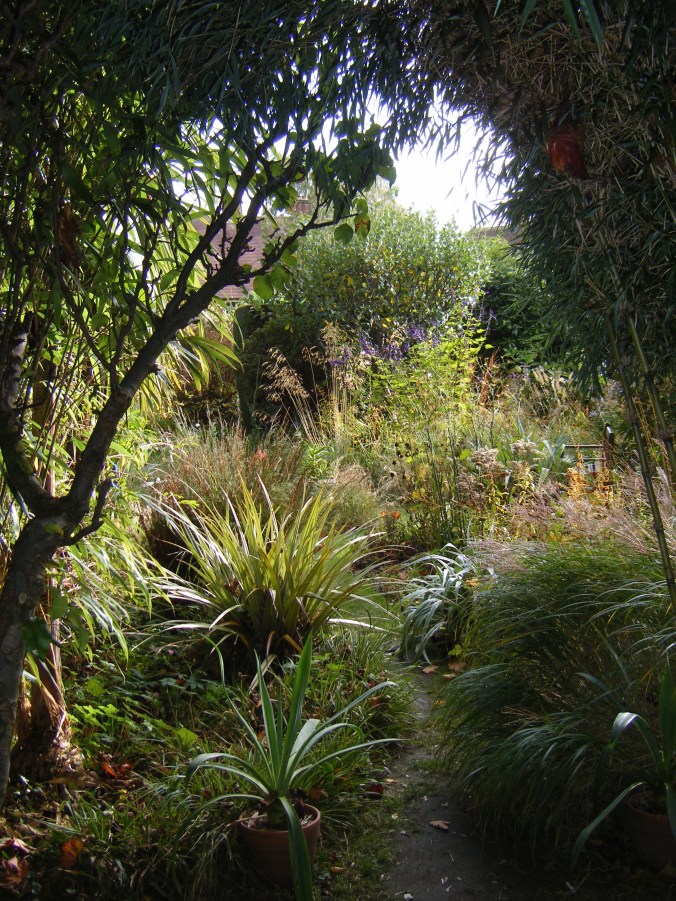
As the end of the garden narrows and becomes shaded under the tree canopy, the path snakes through a collection of noble tree ferns,

DSCF6652.jpg

and amongst a blend of exotic, familiar evergreen and bamboo, bananas which delight in the name Musa basjoo shed their layers.

DSCF6650.jpg

Although the small greenhouse is almost hidden by the jungle growth, it somehow manages to catch enough sunlight from above.

DSCF6654.jpg

There are several types of bamboo, and the lower leaves are stripped to show the strong and yellowy stems.

DSCF6664.jpg

Leaving the shade of the jungle, the path returns to grass and takes me back towards the gap in the hedge,

DSCF6660.jpg

and the sunshine brings out a Red Admiral who enjoys the nectar of the salvia flowers.

DSCF6666.jpg

This small banana has wine-red stems and look dramatic amongst the grasses.

DSCF6671.jpg

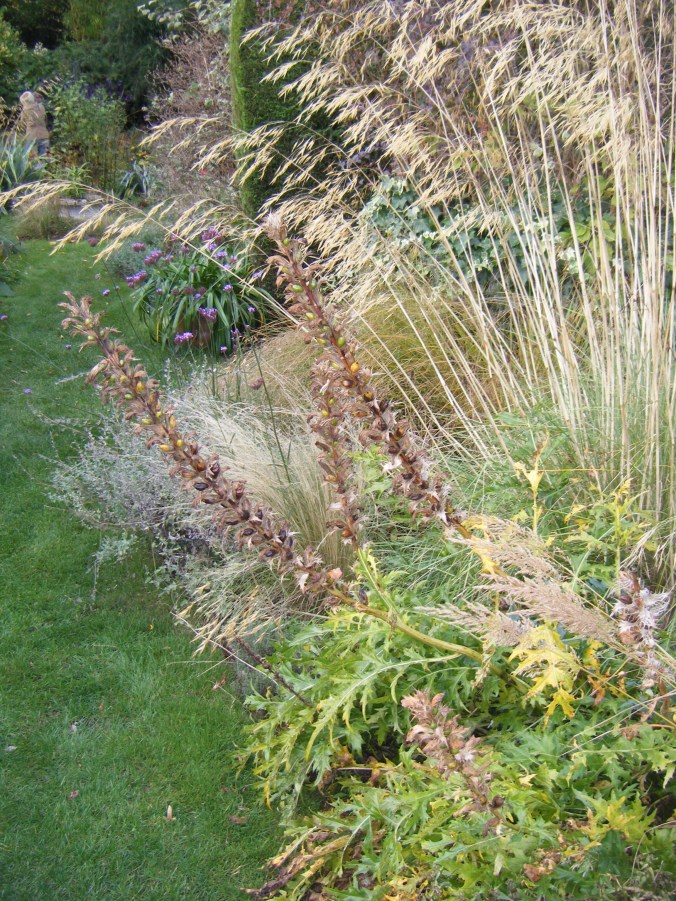
Back on the lawn I walk down the right hand side of the lawn where seed heads of the classical acanthus mingle with the golden stems of Stipa gigantea.

DSCF6678.jpg

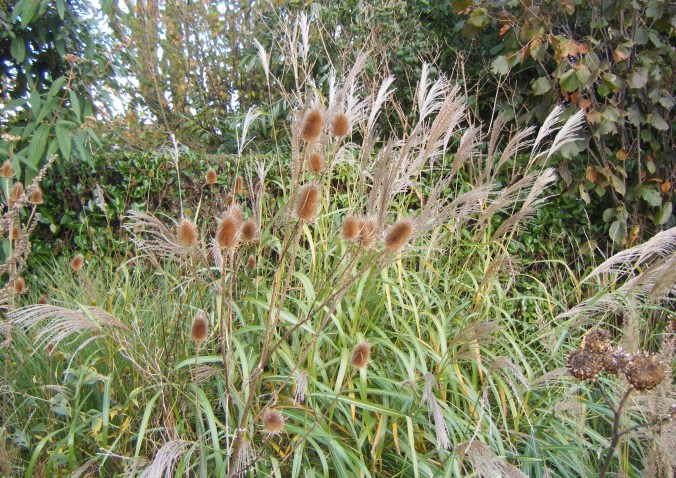
and teasel and cardoons stand in front of the waving Miscanthus sinensis ‘Silberturm’.

DSCF6680.jpg

Sedums never fail to bring colour at this time of year, and what is more appropriate than that old favourite Sedum spectabile ‘Autumn Joy’.

DSCF6679

A burst of golden spikes is Molinia Karl Foerster, a name that appears in many a garden and I wonder who exactly was Karl Foerster? He was in fact a nurseryman in Germany in the early 1900s and made his name when he began to select perennials, particularly grasses that were robust, looked good in a mass and had elegant but strong flower spikes. As a pioneer of this style, I think he would have enjoyed this garden.

DSCF6702 (1).jpg

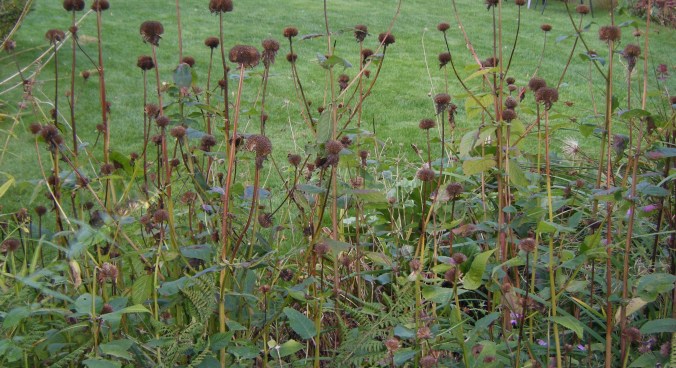
Down by the house I look back at the garden through the seed heads of Monarda. It has been a remarkable display of autumn colour much of which will continue through to January when Adrian will begin to cut back his garden.

DSCF6685.jpg

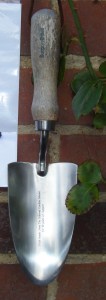
Clare is serving teas and behind her hangs the special trowel, recognition that they have been opening their garden for 10 years for the NGS. This garden may be small but as an example on how to extend the summer planting, it is an inspiration.

DSCF6690 (1)

——-81——-

Larch Cottage Nurseries, a treasure trove of ornaments and plants. (81)

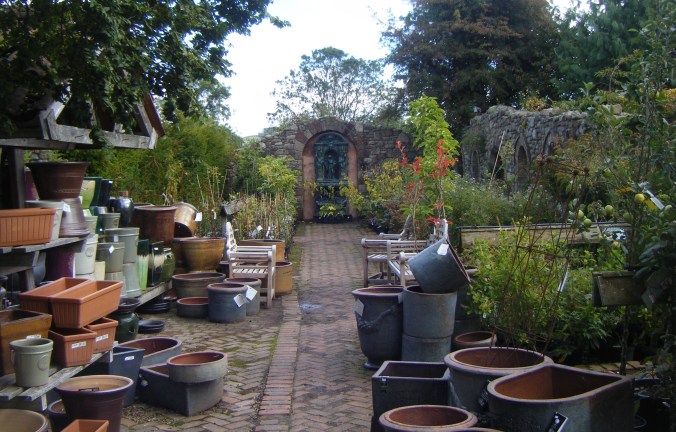
Towards the end of September, not far from Penrith, in the village of Melkinthorpe, somewhere in the middle of the beautiful countryside of Cumbria, we found the gate open to a fantastical and unique nursery.

DSCF5500.jpg

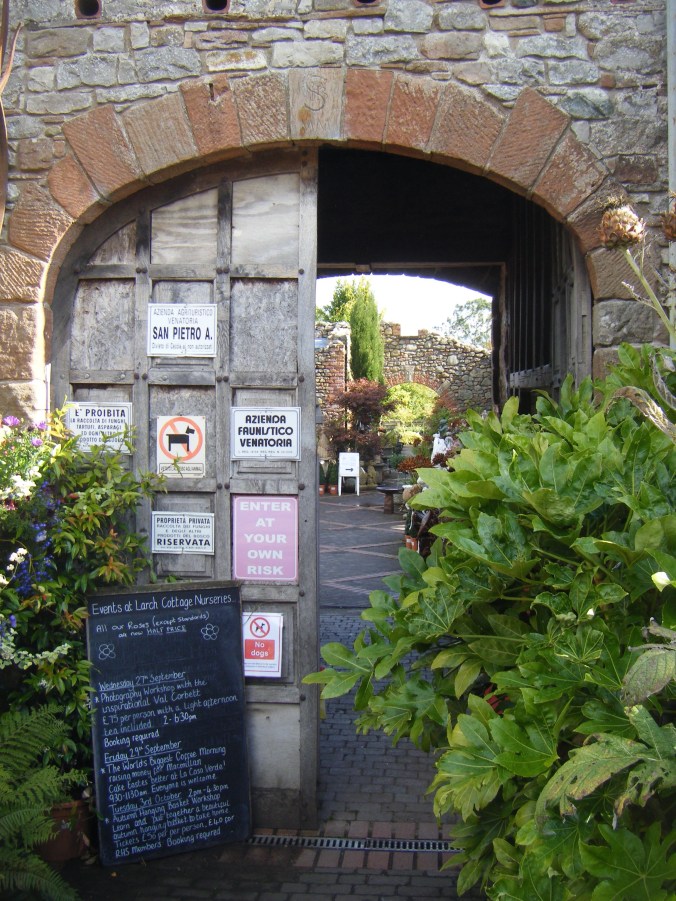
An assembly of statue and ornament intermingled with plants greets us at the entrance and artfully built stone walls create a courtyard effect.

DSCF5503 (1).jpg

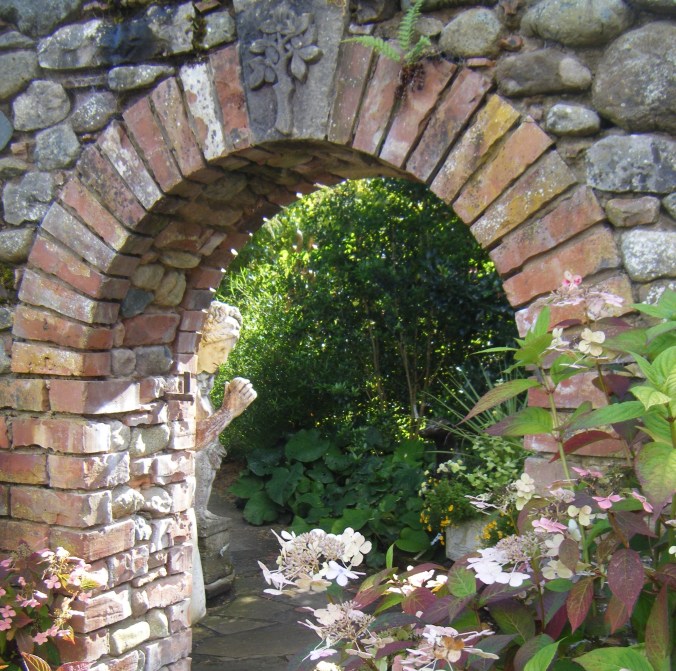
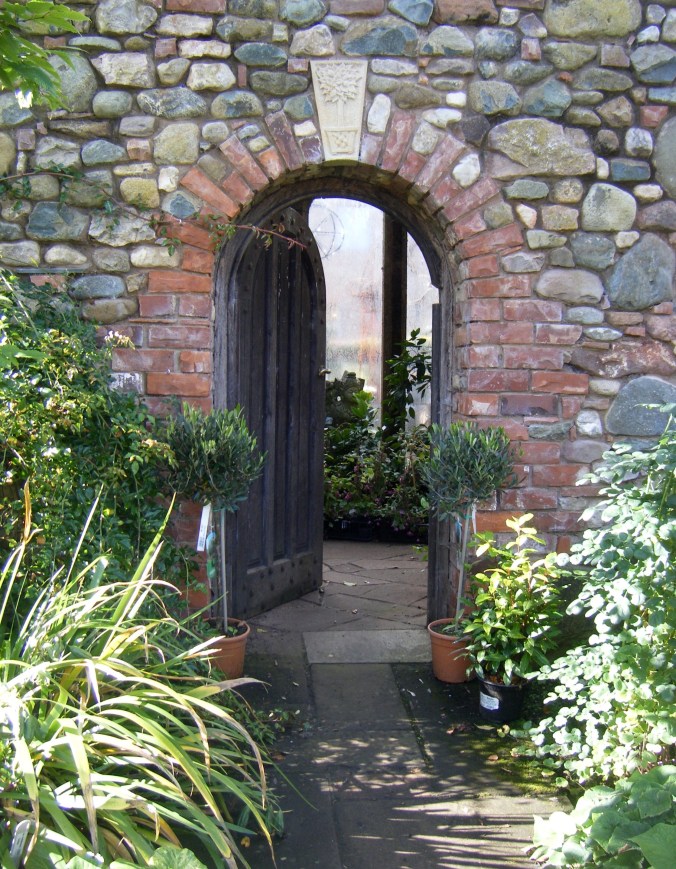
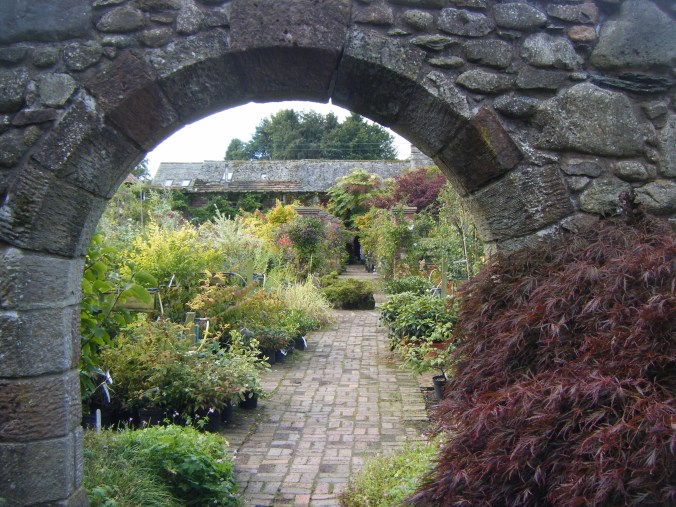
Developed in 1984 from a derelict site, Peter Scott created the nursery for his landscape business and employed a team of skilled craftsman. It is difficult to decide upon which archway to take.

DSCF5502.jpg

An oak door leads into a building; half way between a fine barn and a conservatory it houses some tender plants and is the territory of a little wren.

DSCF5509.jpg

Light comes in on one side through the full length windows, and at one end is a decorative stained glass window.

DSCF5506

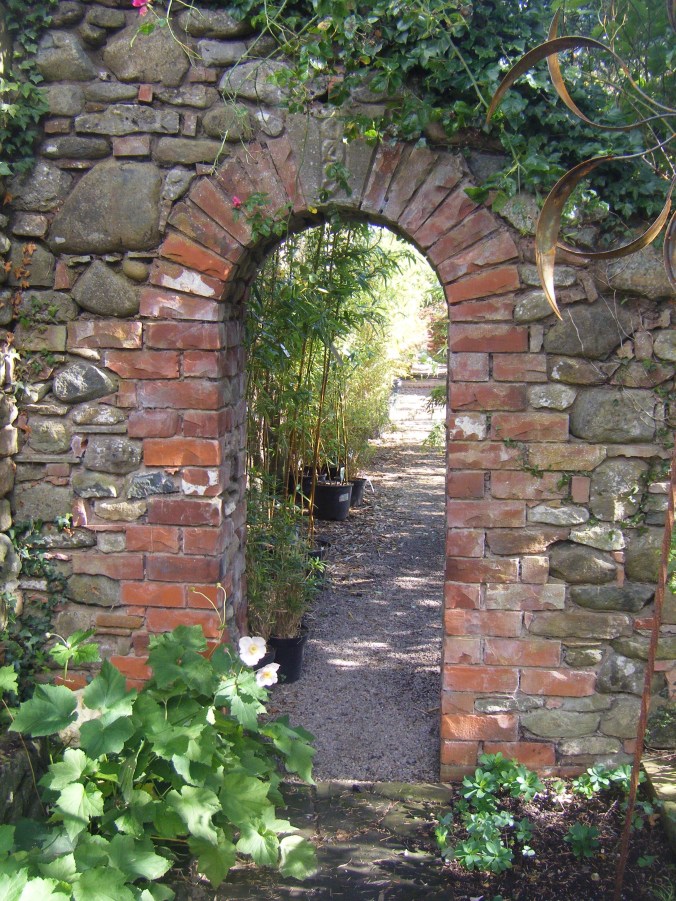
We take the narrow arch that leads through pots of towering bamboos,

DSCF5510.jpg

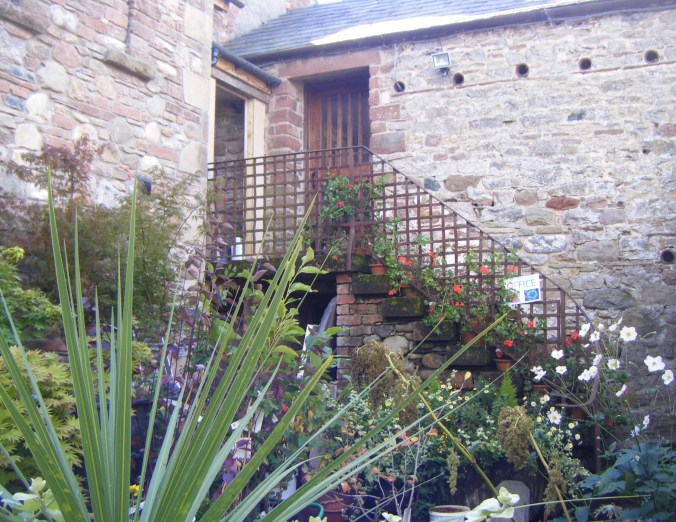
and pass the office, reminiscent of a Tuscan farmhouse.

DSCF5571.jpg

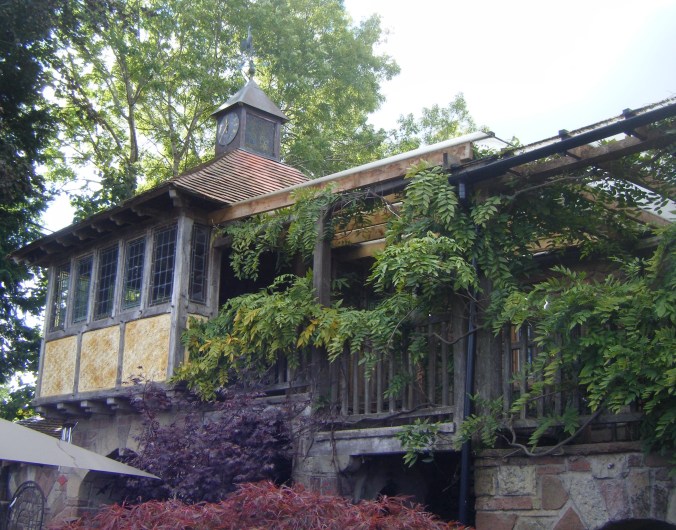
Further on is the terraced restaurant which has a slightly oriental look.

DSCF5516.jpg

Japanese acers either side of the little wooden bridge.

DSCF5520.jpg

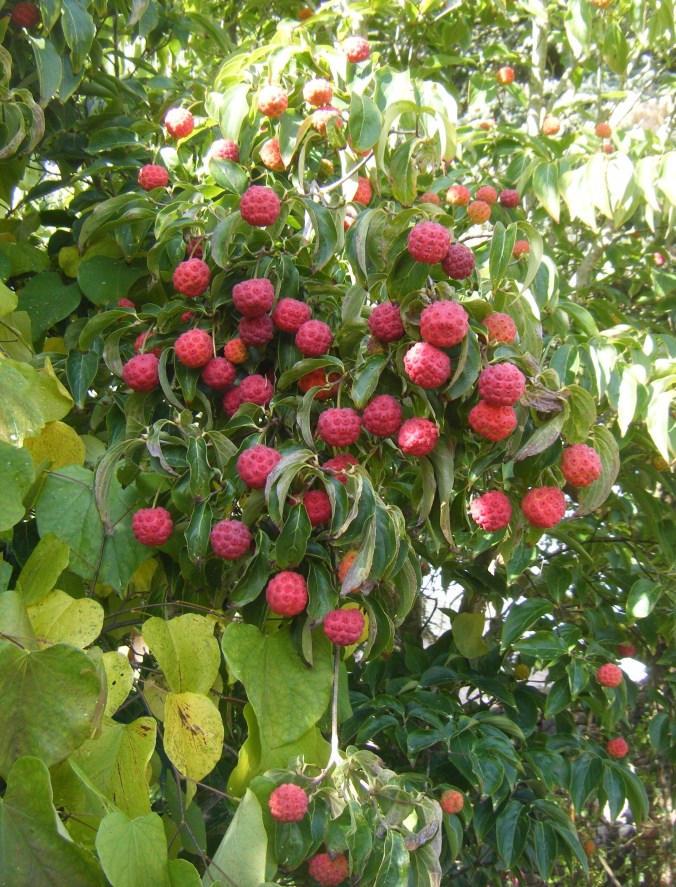
Cornus kousa var. chinensis ‘China Girl’ is laden with fruit.

DSCF5513.jpg

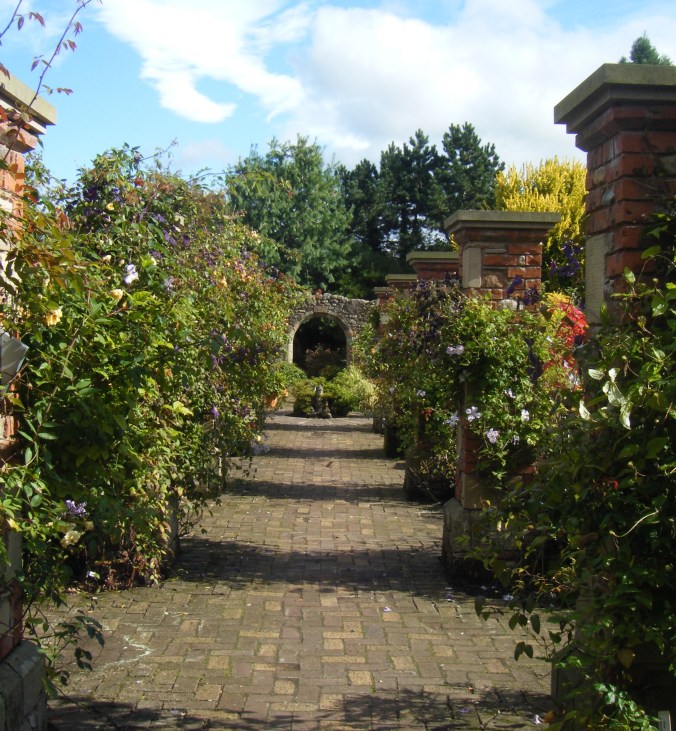
Old fashioned roses and clematis adorn bold brick pillars and you just can’t help but wonder if this really is a nursery or actually a private garden.

DSCF5515.jpg

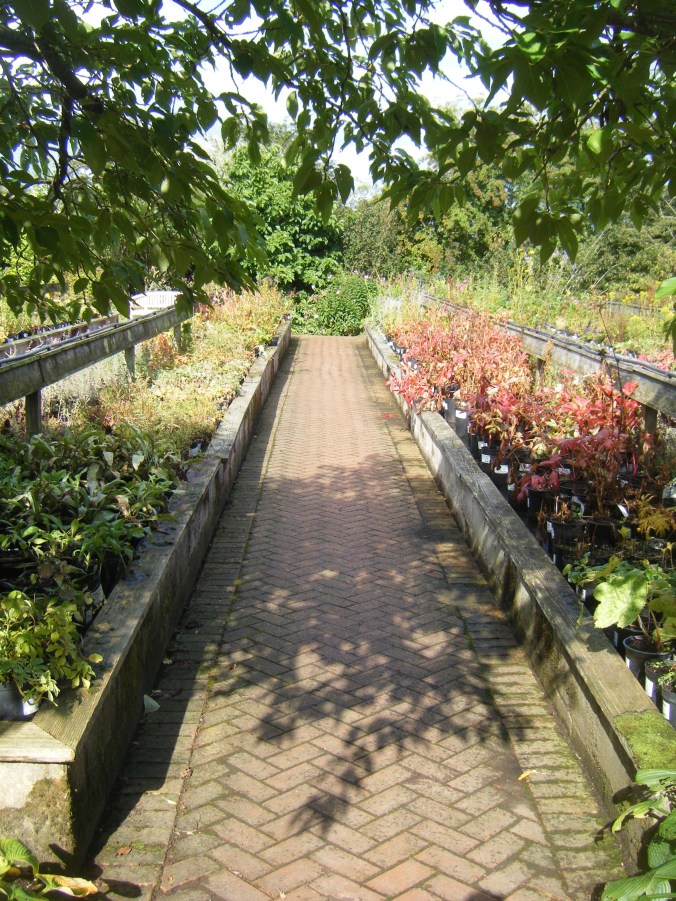
Yes, there are rows of plants, not just the acers and roses but in fact 15,000 varieties of rare and unusual shrubs, perennials, climbers,  and dwarf conifers, many of which are propagated on-site. It is the place for plantaholics.

DSCF5504.jpg

Larch Cottage has supplied Botanical gardens such as  Kew, Durham and Sheffield, Universities and Colleges, many National Plant Collections, Alnwick gardens as well RHS Wisley.

DSCF5537.jpg

Visitors never need feel alone; statues quietly appear in different corners and in many guises. Made from marble, bronze, lead and stone.

DSCF5536


DSCF5525


Good old Atlas heaves his world up through the sunflowers.

DSCF5564.jpg

It is not all classical; there is a touch of the contemporary too.

DSCF5528.jpg

Some pieces are commissioned to order, whilst others are sourced from reputable suppliers worldwide. There is also a comprehensive range of terracotta and glazed pots.

DSCF5531.jpg

A wide arch, a neat brick path and more plants.

DSCF5529.jpg

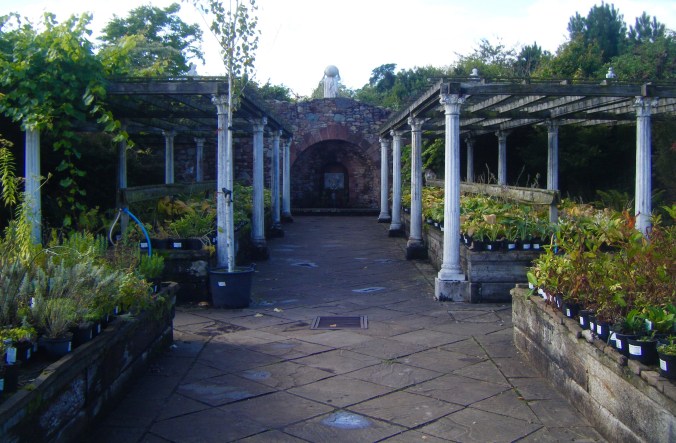
Classical columns provide the support which supply the perfect conditions for shady plants

DSCF5555.jpg

Another arch, this time narrow and well guarded.

DSCF5567.jpg

The path widens towards the end of the nursery,

DSCF5540.jpg

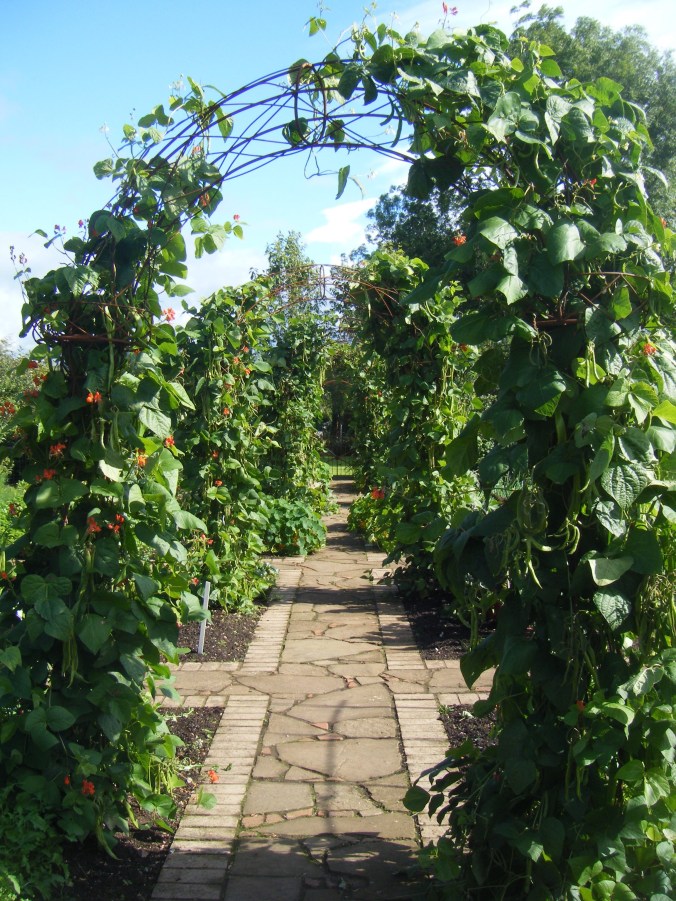
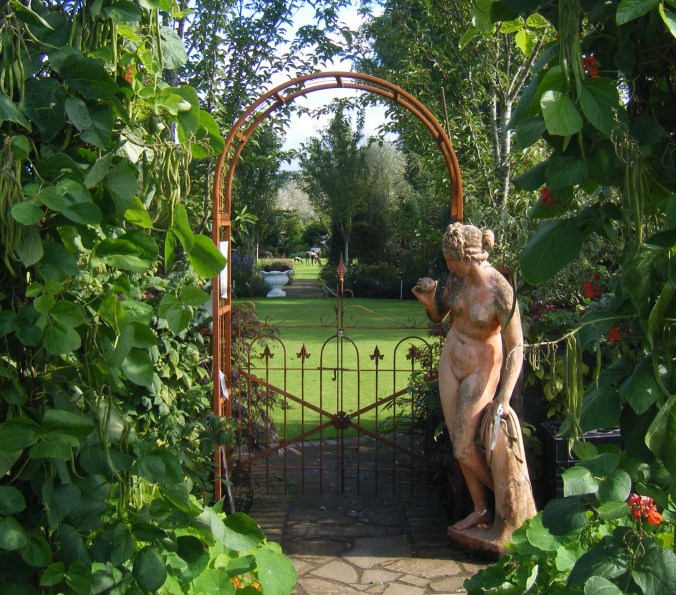
and we find ourselves in the vegetable garden where healthy runner beans clamber over metal frames, and no doubt are a supply for the popular restaurant.

DSCF5542.jpg

Through the produce the path leads to  the gate to the secret garden, open just on Wednesdays in aid of charity including two days in June and October for the NGS.

DSCF5545.jpg

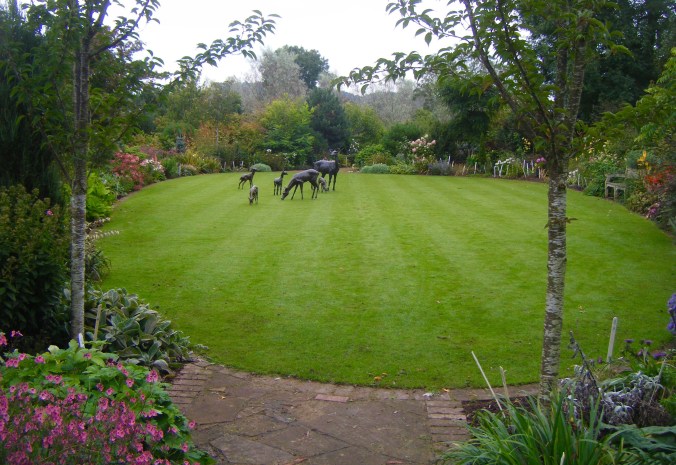
The freshly mown lawn invites us in. Encircled by borders planted with vigour and variety.

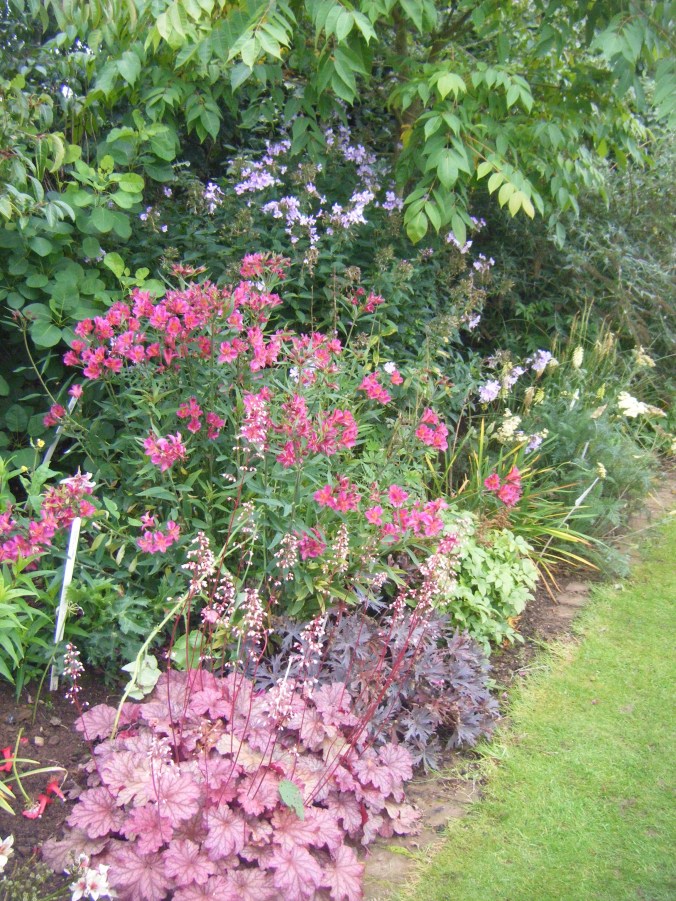
DSCF5547.jpgNeatly edged, the large labels identify the choice plants, these Alstroemia ‘Mauve Majesty’ are putting on a good display so late in the season.

DSCF5800.jpg

and Malvia sylvestris ‘Marina’ is particularly welcome to a visiting bee.

DSCF5803.jpg

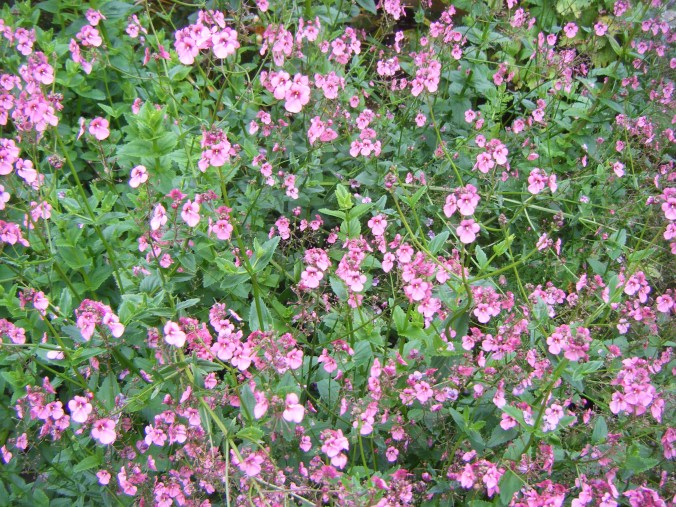
Pink Diascia, with its long flowering season, never fails to delight.

DSCF5793.jpg

The design of a circular lawn is repeated beyond,

DSCF5852.jpg

and the wonderfully sounding Kniphofia ‘Wrexham Buttercup’ that I photograph for its Latin name, which I want to keep saying again and again, and here it sure catches the eye.

DSCF5798 (1).jpg

Calmly grazing on the lawn is  a charming family of bronze deer.

DSCF5792.jpg

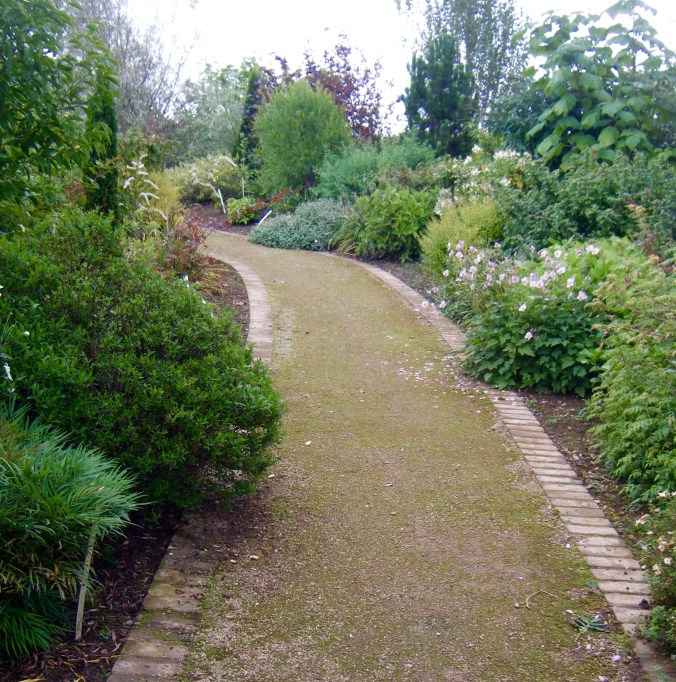
A smooth path, so perfect for all things with wheels,  winds through a great selection of shrubs,

DSCF5806.jpg

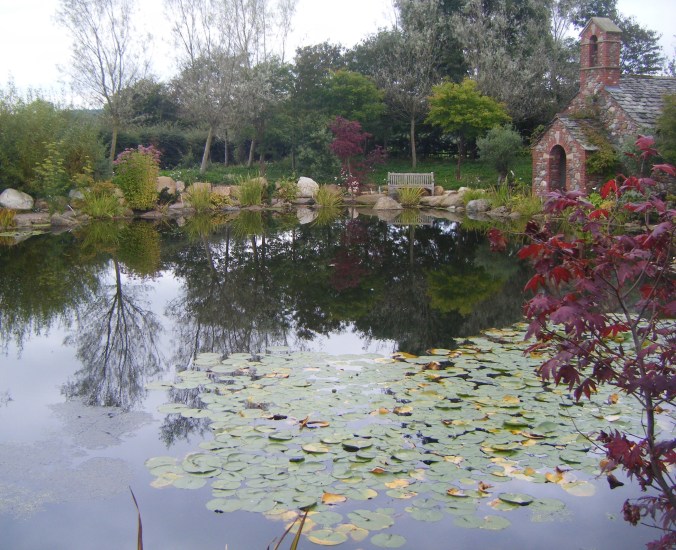
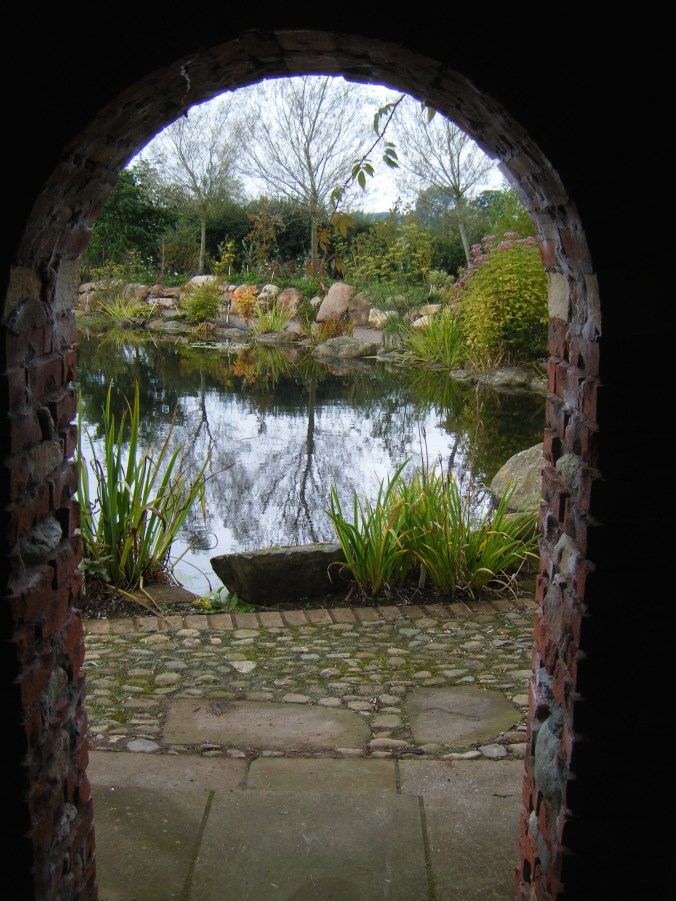
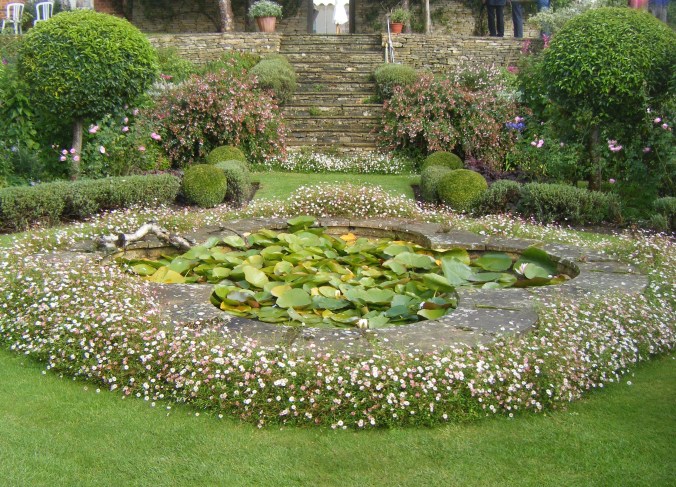
until it reaches the still round pond. The plants reflect on the surface but the sun has left us now and the light has changed.

DSCF5809.jpg

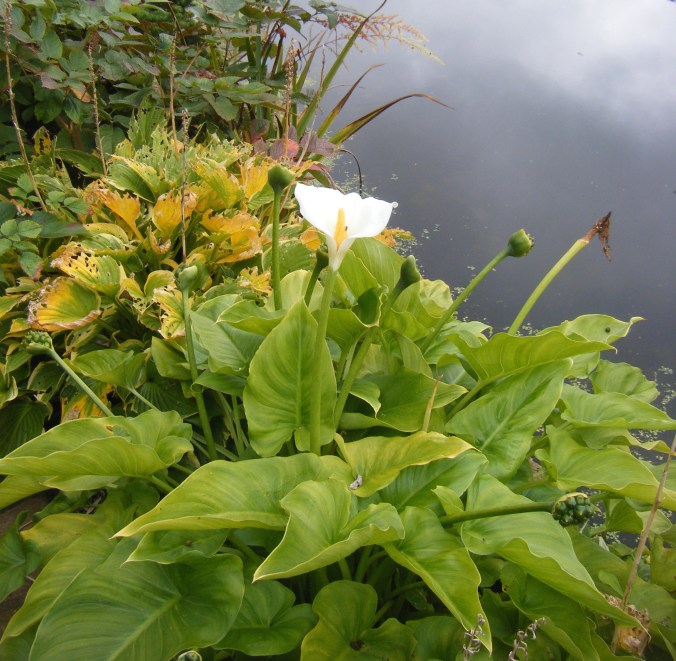
A variety of plants pack the water’s edge, such as the low growing Arum-lily

DSCF5813.jpg

and the elegantly tall fennel.

DSCF5822.jpg

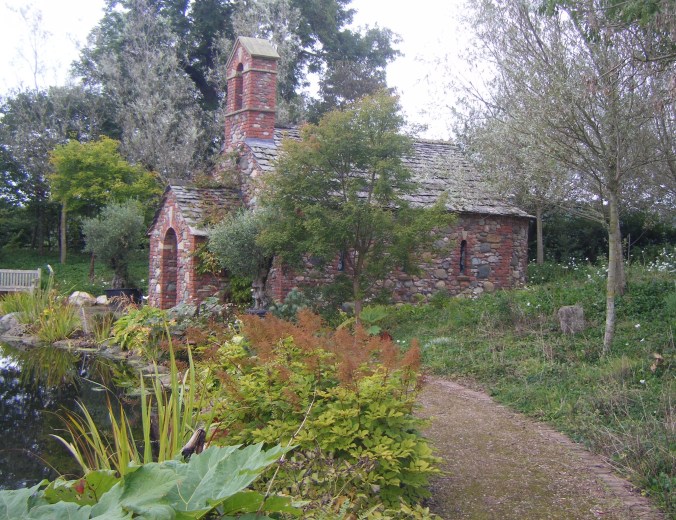
It has all been recently constructed and a little chapel presides at the furthest point,

DSCF5811.jpg

with an artistically painted interior, it is private and preserved for family occasions.

DSCF5817.jpg

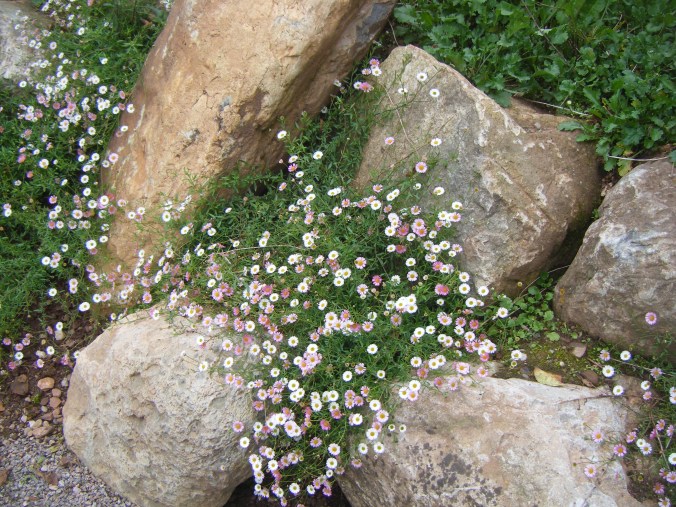
Erigeron karvinskianus grows naturally amongst the man-laid stones,

DSCF5826.jpg

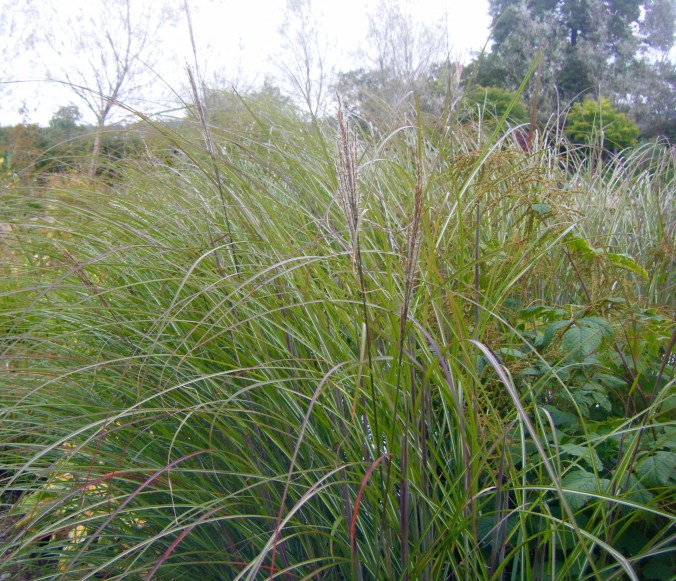
grasses such as Miscanthus sinensis ‘Sarabande’ contribute to a naturalistic planting,

DSCF5829.jpg

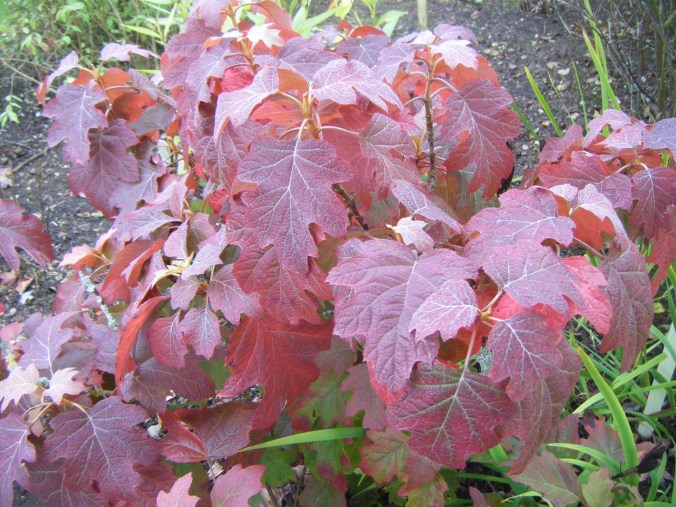
while Hydrangea quercifolla ‘Burgundy’ gives a burst of autumn colour.

DSCF5831.jpg

We return following the line of the natural stream, where a patchwork of leaves converge to hide the gently flowing water.

DSCF5845.jpg

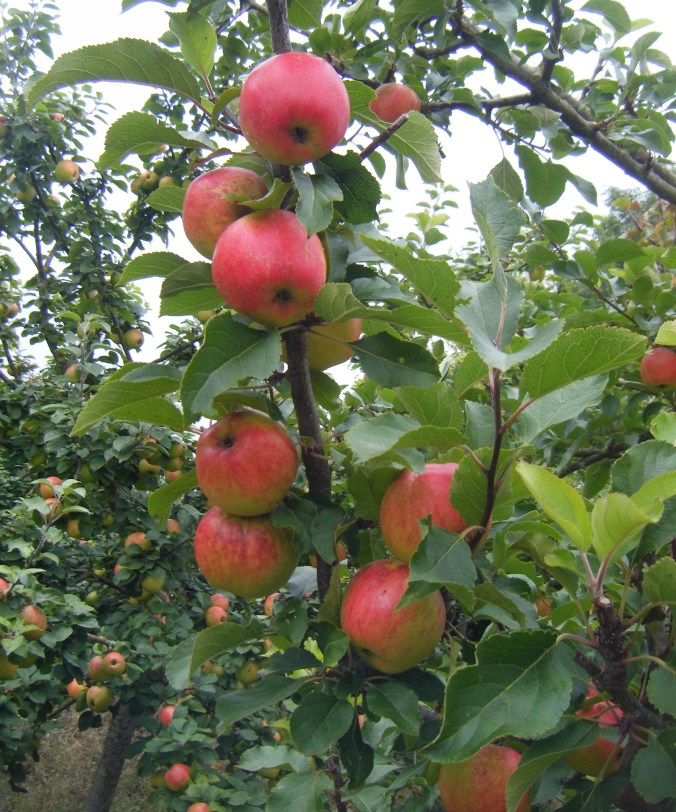
There is an orchard to the right bearing beautiful red apples Malus ‘Red Falstaff’ fit for any thespian, even a goddess too,

DSCF5837.jpg

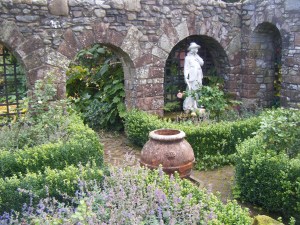
who now appears to be feeling the autumnal chill. This is quite a nursery and one not to be missed.

DSCF5789

——-80——-

Arley Hall, generations of creativity and stupendous herbaceous borders. (80)

Arley Hall, one of the original gardens to be opened for the NGS way back in 1927, opened its gates for the Scheme this year on the 6th August.

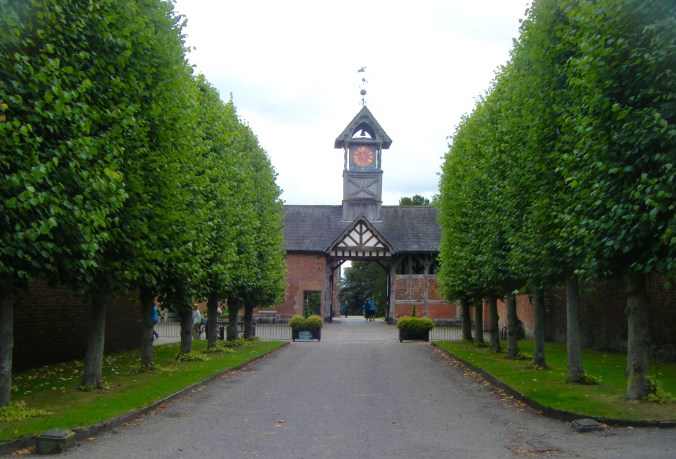
The visitor is dwarfed by the immensely tall pleached lime avenue lining the approach to Arley Hall in Cheshire. Planted in 1856, I wonder at having to get up there to give these trees an annual clip.

DSCF3925.jpg

Not many entrances have a Cruck Barn; just right of the clock tower arch, it was built in about 1470, the same time as the house. The ‘crucks’ I gather, are the strong pairs of oak beams curving up from the floor to the apex of the roof.

DSCF3928.jpg

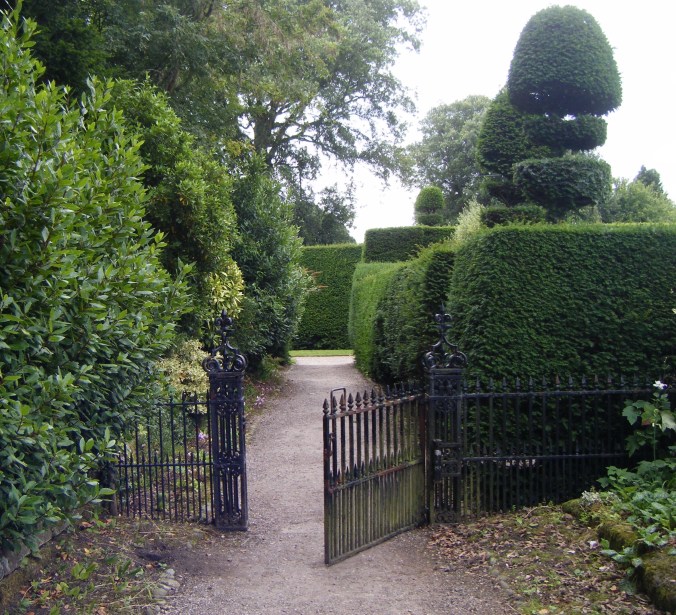
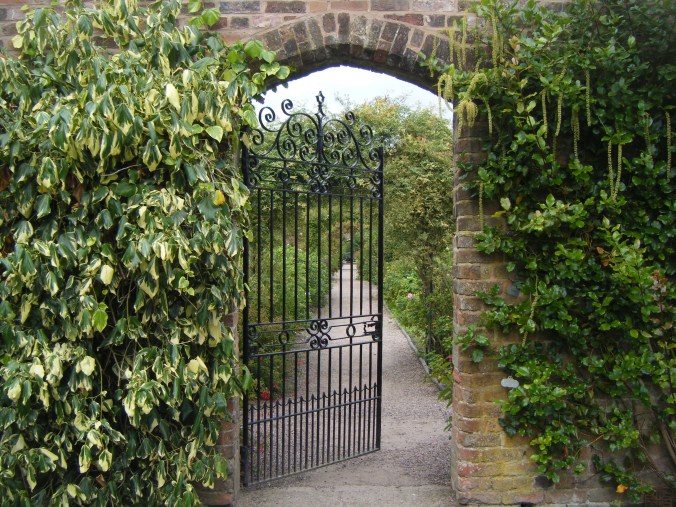
The  garden has been created by the same family over the past 250 years and is considered to be one of Britain’s finest. The map advises us that it will take several hours to walk round the twelve acres. So we set off through the ornate iron garden gate.

DSCF3929.jpg

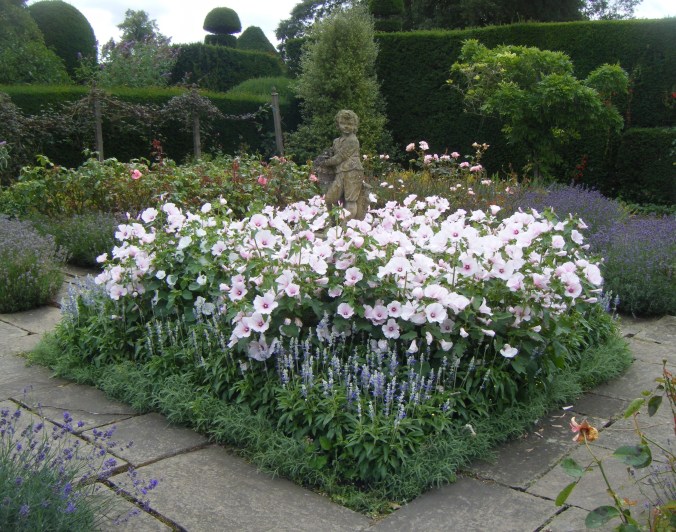
A series of charming areas have been designed here; they are like the warm-up to the great act that follows. At one end of the pretty Flag Garden, white agapanthus grow above dainty white clumps which spill out of terracotta pots and in spaces amongst the paving stones.

DSCF3933 (1).jpg

At the other end where the scent of roses fills the air, lavatera and lavender surround the feet of this nonchalant chap.

DSCF3934.jpg

Then, crossing the avenue lined with its rigid high hedges of yew,

DSCF3938.jpg

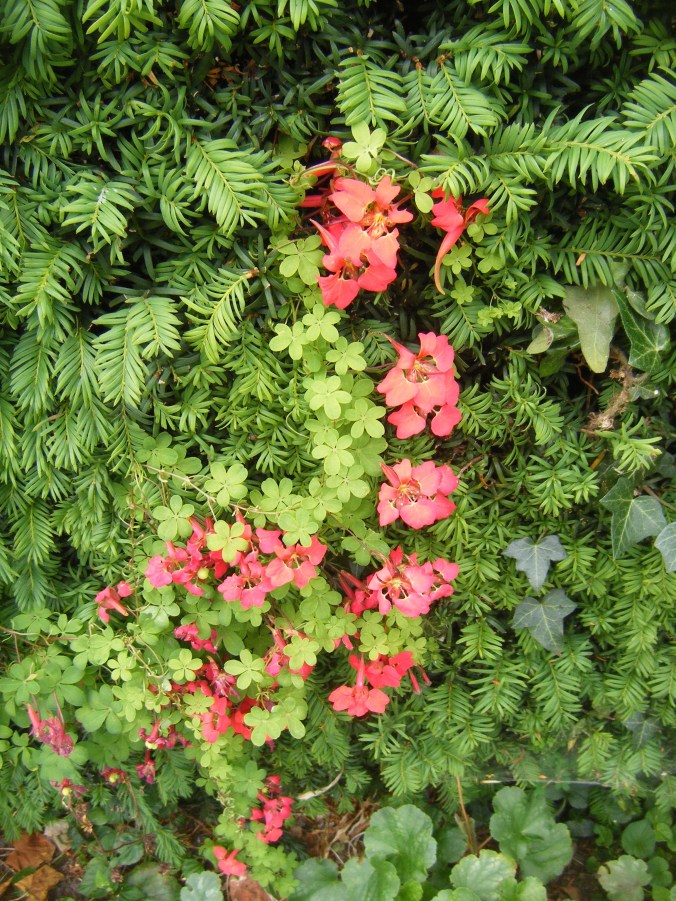
an occasional splash of red tumbles out of the green walls; it is the Scottish Flame Flower tropaeolum speciosum, whose origins are nothing to do with Scotland having been introduced from Chile by the Cornish plant hunter William Lobb during the mid 1840s . 

DSCF3936.jpg

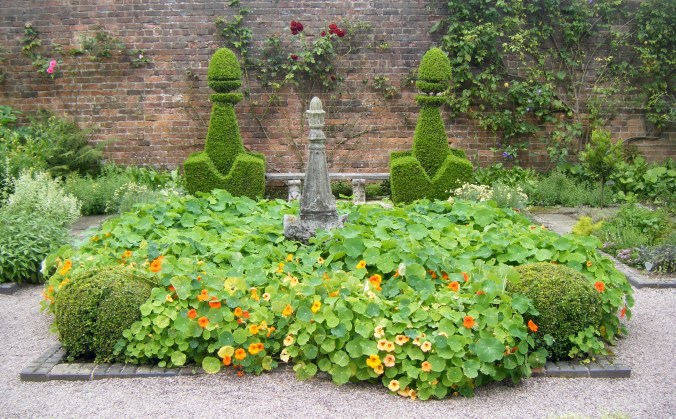
Topiary echoes the stone finial centred amongst the nasturtiums in the Herb Garden,

DSCF3939.jpg

where herbs are laid out in striking patterns.

DSCF3940.jpg

Finally in this line up is a small scented garden, probably at its best in Spring, it retains a charm throughout the year.

DSCF3943.jpg

The aroma right now is coming from the honey-scented  Itea illicifolia growing against the wall to the right of the gate which stands open to the walled kitchen garden.

DSCF3944.jpg

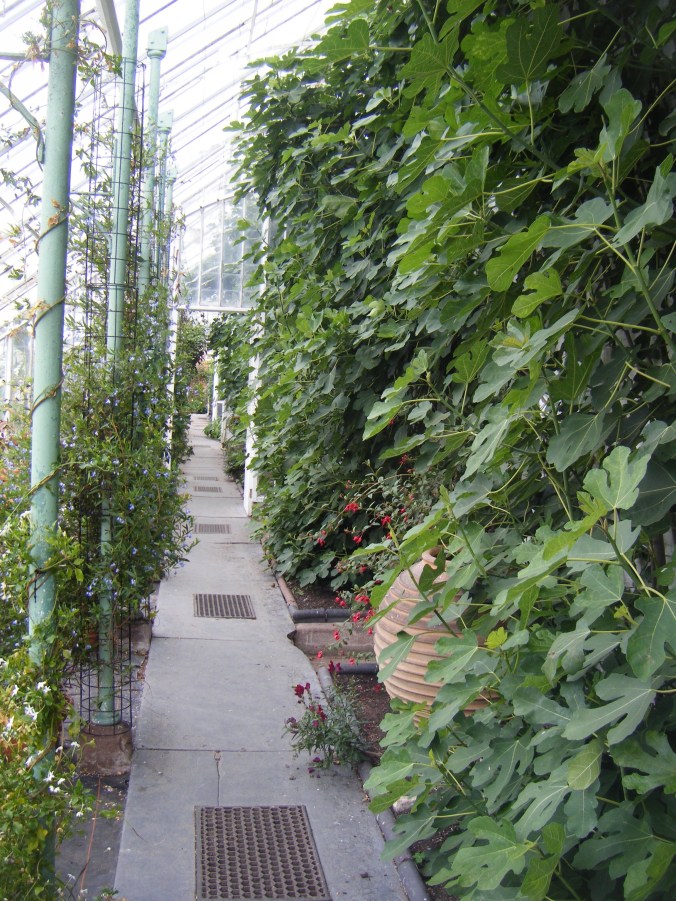
We first explore the long glasshouse, The Vinery built in the 1870s where, amongst the figs and vines there is an explosion of exotic plants :

DSCF3947.jpgThe evergreen Australian Bluebell Creeper sollya heterophylla with its nodding blue bell-shaped flowers twines one of the upright poles,
DSCF3949 (1).jpg

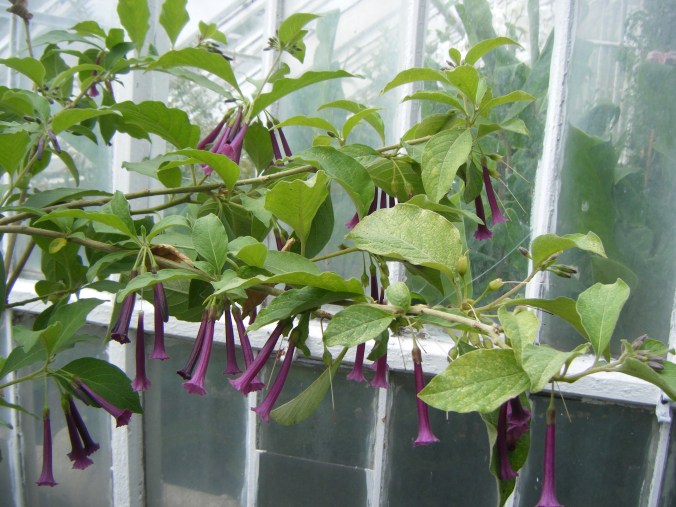
the tender and unusual Iochroma australe from South America,

DSCF3955.jpg

and the popular Passion flower,

DSCF3951.jpg

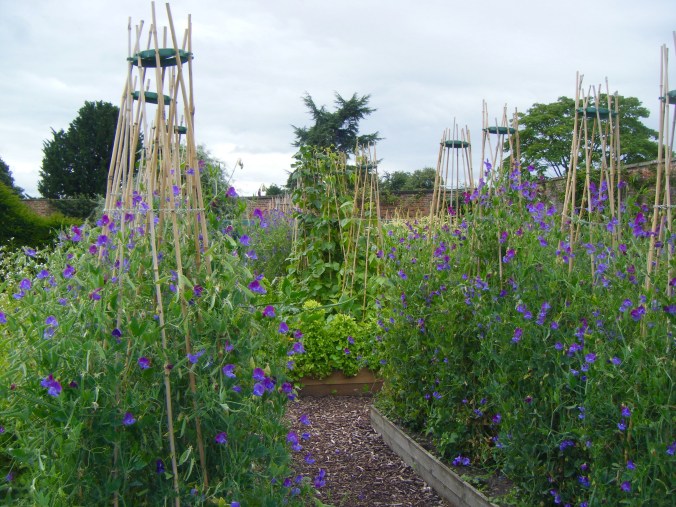
Out in the garden sweet peas adorn wigwams of bamboo amongst salads and vegetables all arranged decoratively in raised beds.

DSCF3957.jpg

Brought over by the present Viscount Ashbrook from a previous family home, Castle Durrow in Ireland, is an intricate white arbour, the perfect centrepiece for the floriferous walk.

DSCF3964.jpg

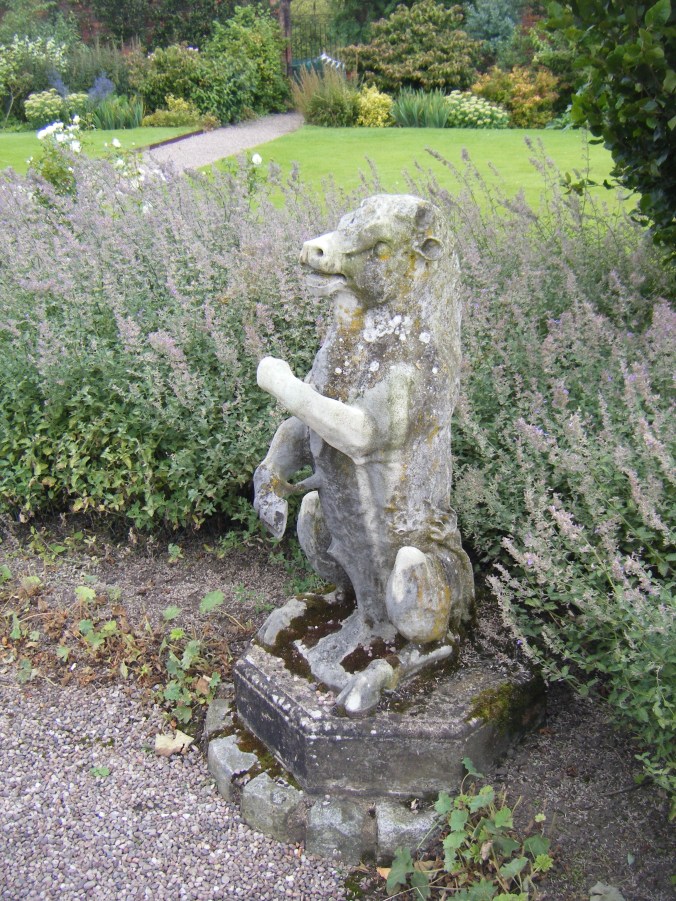
Even larger than the Kitchen Garden is a further Walled Garden, where we find this friendly beast.

DSCF3968.jpg

It is a vast space, and an aged photo taken from the informative display-boards in the old stables, shows how in the 1940s and 1950s this area once earned its keep with rows of fruit trees with vegetable beds behind.

Screen Shot 2017-10-20 at 08.17.16.png

During these years the garden was closed for the Scheme but thankfully for us market gardening ceased to be profitable and the garden, having suffered much neglect over the years began a programme of restoration. The gardens were opened to the public in the 1960s and once again for the NGS too.  Now it is a delightful area with ornaments and mown green lawns edged with herbaceous borders,

DSCF3975.jpg

with a formal pond and gentle fountain as the focal point.

DSCF3967.jpg

We exit this area through the magnificent gates,
DSCF3979 (1).jpg

and find ourselves admiring the long herbaceous borders for which Arley has become so famous. These double borders can be seen on a plan of 1846 and it is thought they were the first of their kind to be planted in England.

DSCF3989.jpg

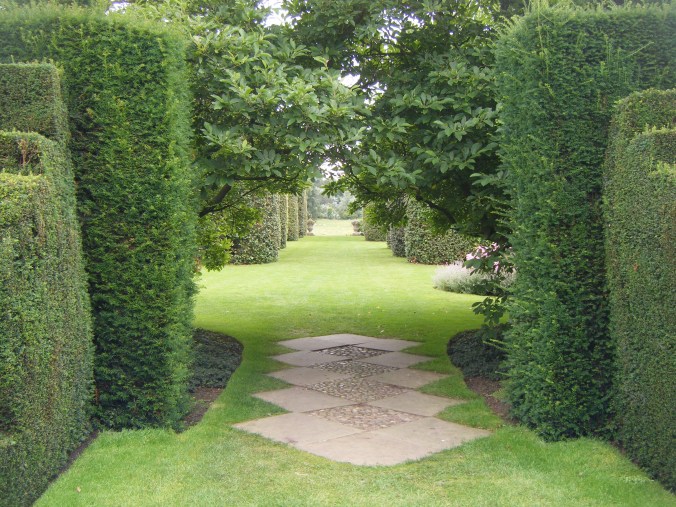
Originally stretching in unbroken lines running along the brick wall on the north side and yew hedge to the south, the beds were broken up into five sections with yew buttresses some thirty years later.

DSCF3981.jpg

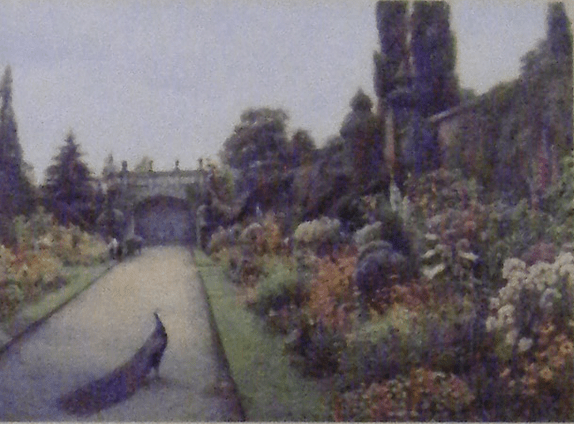
The watercolour by E. A. Rowe of 1892 illustrate that the borders have remained unchanged today, except for the gravel path which has been replaced with grass.

Screen Shot 2017-10-20 at 22.27.39.png

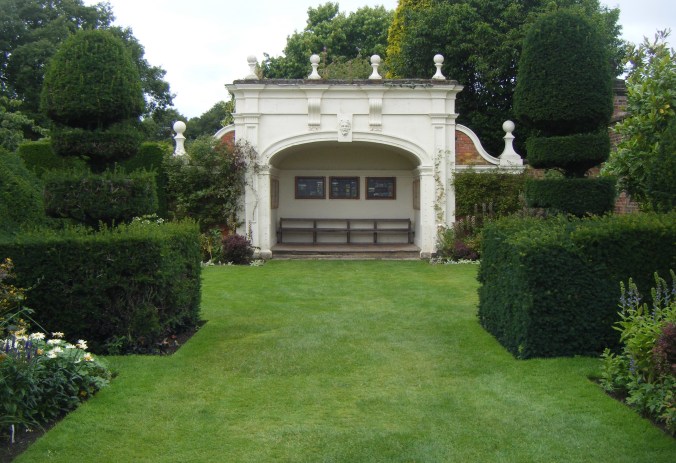
The alcove situated at the west end was built in 1790 and is now a venue to tie the knot.

DSCF3987.jpg

We slip through the hedge on the south side,

DSCF3976.jpg

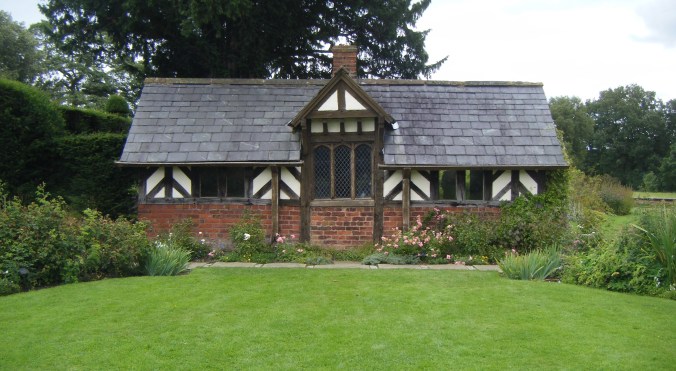
and look towards the eighteenth century Tea Cottage once used for garden tea parties and where shrub roses are underplanted with a variety of hardy perennials.

DSCF3995.jpg

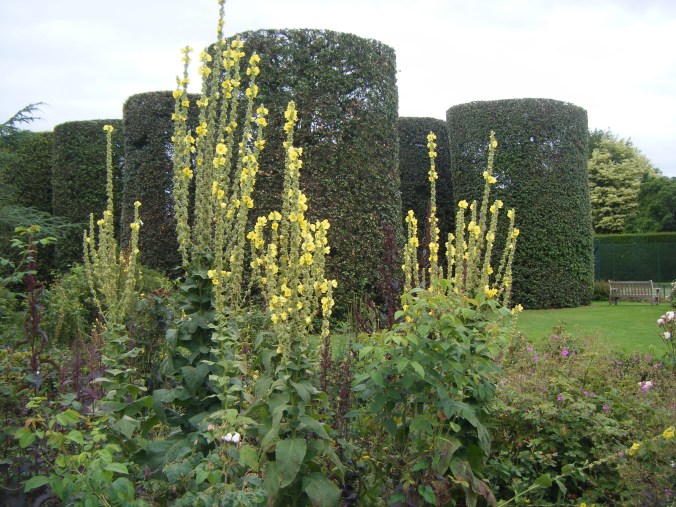
Through the spires of verbascum we can’t help but notice the fantastical cylinders of evergreen oak Quercus ilex growing here since the 1860s; there are fourteen in all.

DSCF3998.jpg

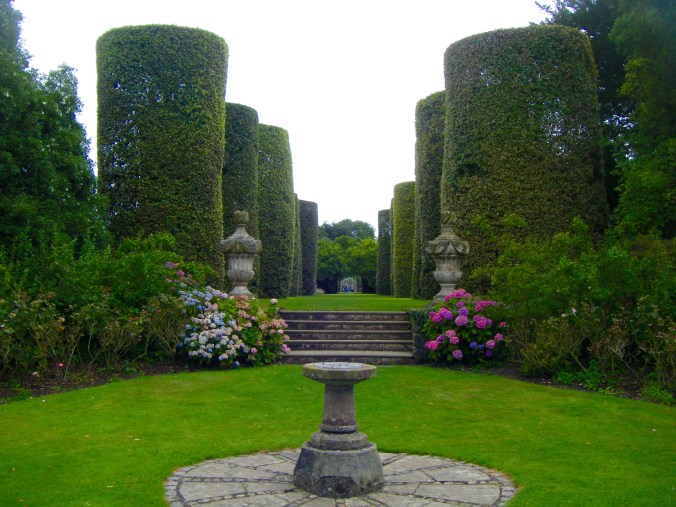
They are impressive in stature especially looking up from the sundial circle.

DSCF4002.jpg

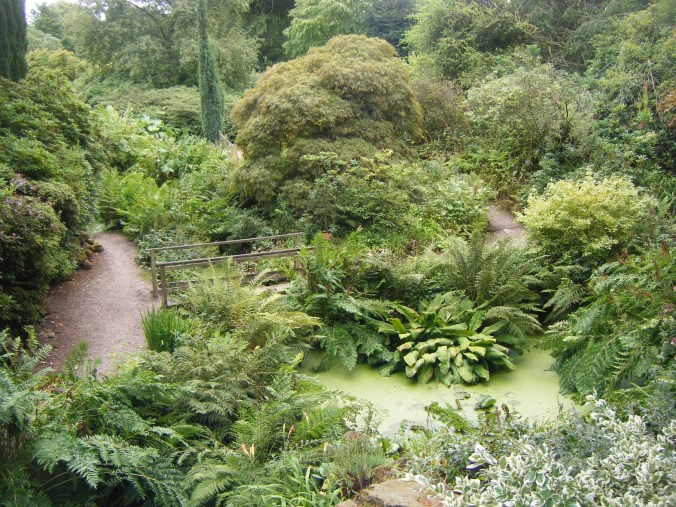
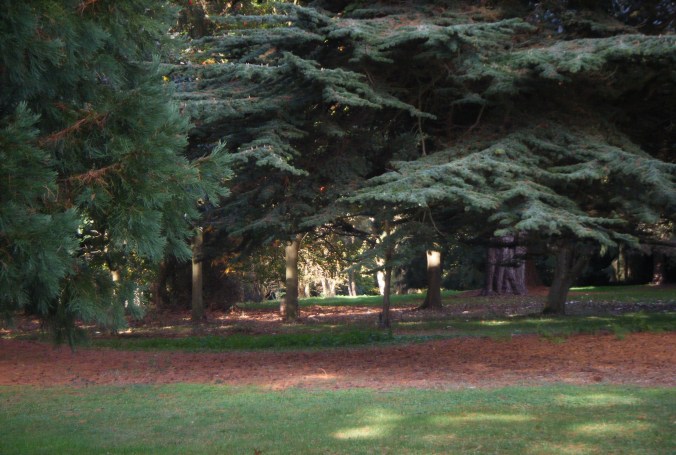
Just off to the side is the Rootery, a type of rock garden combined with a romantic woodland dell of ferns and maples, it comes alive in spring with the flowering azaleas. DSCF4012.jpg
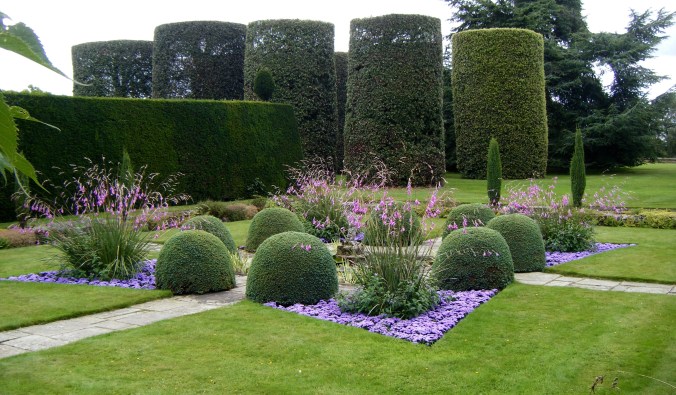
Nearby is the fish garden; fish swim in the pool and, at the four corners of which is a splash of purple agaretum beneath the arching and delicate stems of the appropriately named angel’s fishing rods dierama mossii.
DSCF4008.jpg

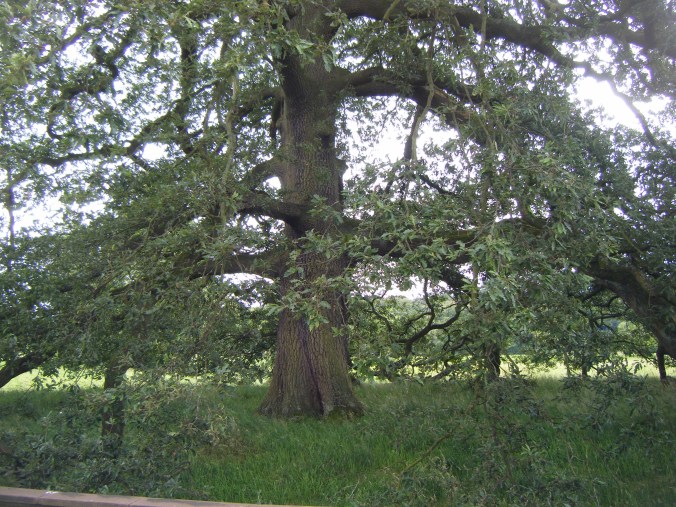
Finally we head along the Furlong Walk towards the house. Just as a reminder, a furlong is an eighth of a mile, 220 yards or if you are that little bit younger than me, 201 metres. On one side is the arrangement of gardens we have so enjoyed and on the other is the parkland. Cattle graze amongst old oaks whose outstretched arms bend to the ground in a graceful gesture reminding us that they too have been here for a very long time.

DSCF4019.jpg

Each generation of this family have contributed to the evolution of the garden. The weather does not allow us to do justice to the Grove and Woodland on the east side of the Hall created by  the present Viscount Ashbrook over the past 30 years. However we have seen such variety; design and intrigue, history and progress, a paradise of plants and a nursery too. Arley Hall has its own very comprehensive website:http://www.arleyhallandgardens.com/the-gardens, but why not hear about the garden from Viscount Ashbrook himself who joins Mary Berry and Stephen Lacey on Tuesday 31st October 2017, tickets can be bought at https://www.ngs.org.uk/whats-new/news/post/the-glory-of-the-garden-with-mary-berry.

image004.jpg

——-80——-


The Barn, a fine arboretum in Norfolk. (79)

This simple gate is the entrance to an impressive arboretum, open this Sunday 22nd October 10am – 3pm it is situated at Framingham Earl just 3 miles south east of Norwich.

DSCF6510.jpg

There are 14 hectares (34 acres) here of a great collection of trees originally laid out by Dr Edward Rigby a physician and surgeon in Norwich. He was also a great lover of the natural world and having bought the estate in 1786 he began planting in about 1805. Originally called Framingham Hall the name was changed to The Chase when Geoffrey Colman acquired the property in 1929.

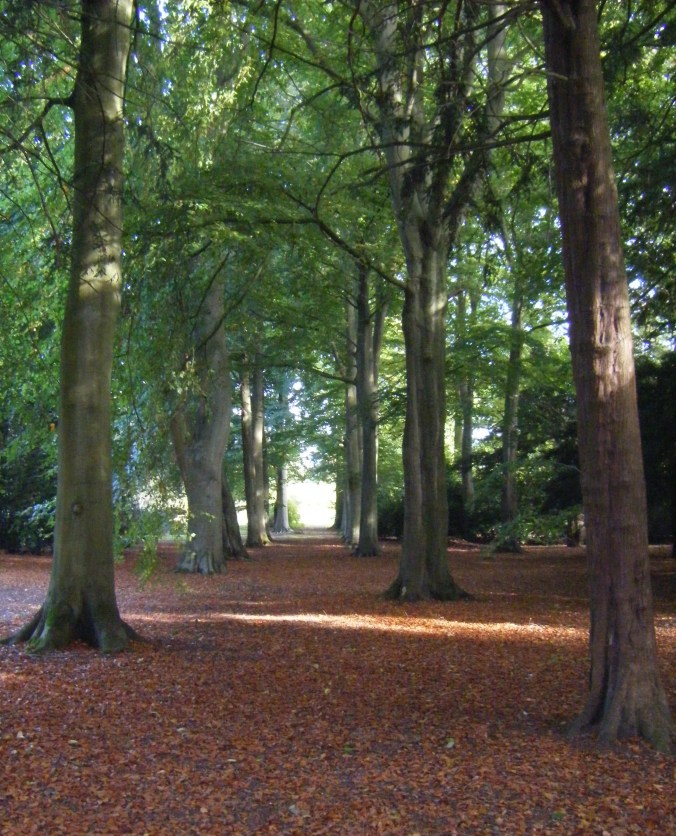
The house was demolished in 1973 a few years after the death of Colman’s widow Lettice.  The Beech Walk remains as a memory of the grand house it once was.

DSCF6515.jpg

Framingham Hall is shown on Faden’s map of Norfolk 1797 and this more recent OS map outlines the demolished hall and shows the line of the Beech Walk centred on the old site.

The Barn Framingham (1).jpg

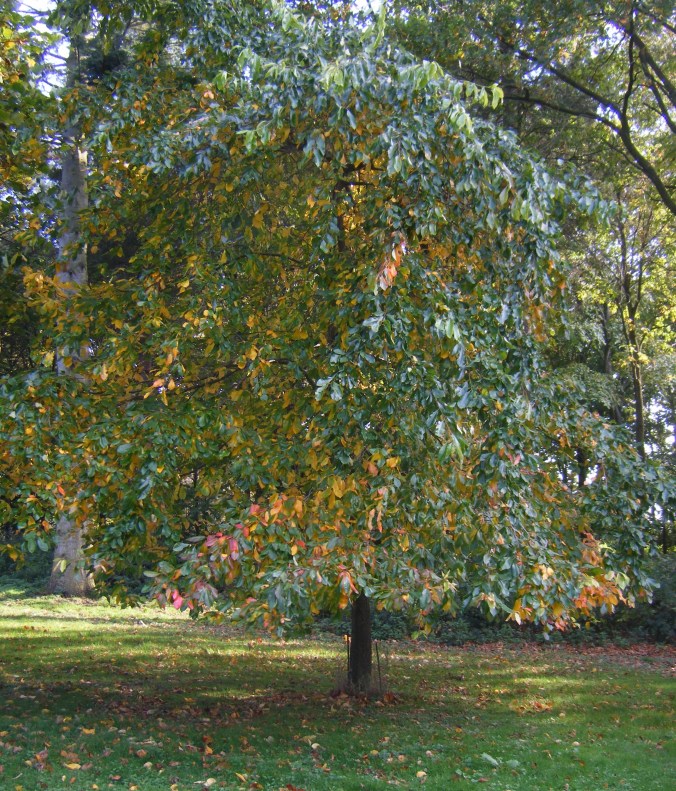
It is that time of year when here and there are signs of autumn with the leaves beginning to turn, perhaps on one specimen like this nissa sylvatica ‘Tupelo’.

DSCF6513.jpg

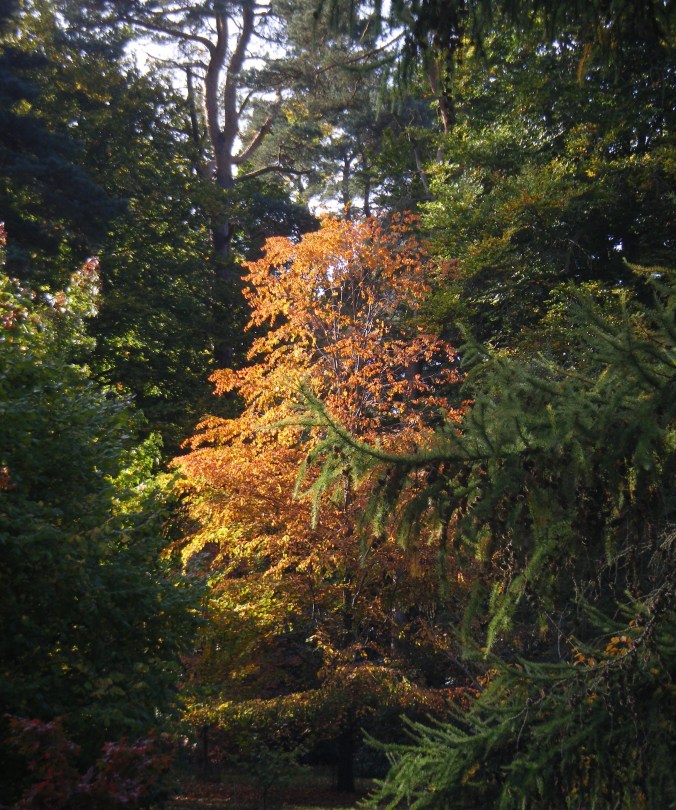
or an entire tree catching the light in the dark green canopy.

DSCF6518.jpg

It is not a neglected wood, young trees have been recently planted and benches are placed in strategic places such as at the end of this ride,

DSCF6521.jpg

or in front of the remains of the old balustrade on the North side of the house.

DSCF6522.jpg

This old photograph shows the South side.

The Chase 1900 (1).jpg

Photo attributed to R.Gooderham

Those elegant ladies might have wandered  through growing shrubs and sat in this graceful rotunda now slightly hidden from view.

DSCF6517.jpg

In the eighteenth century this classical statue would have symbolised the cultured taste and status of the owner. His presence remains majestic amongst the giants:

DSCF6543.jpg

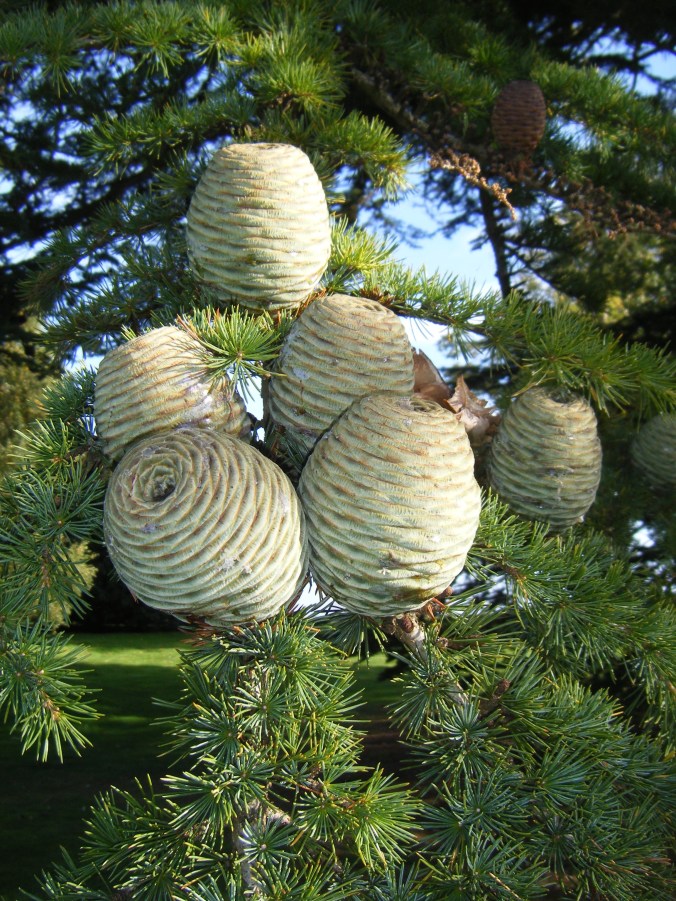
such as the Cedars of Lebanon cedrus lebani which are quite magnificent,

DSCF6534.jpg

the large tight fat cones are firmly attached to the graceful arching branches,

DSCF6537.jpg

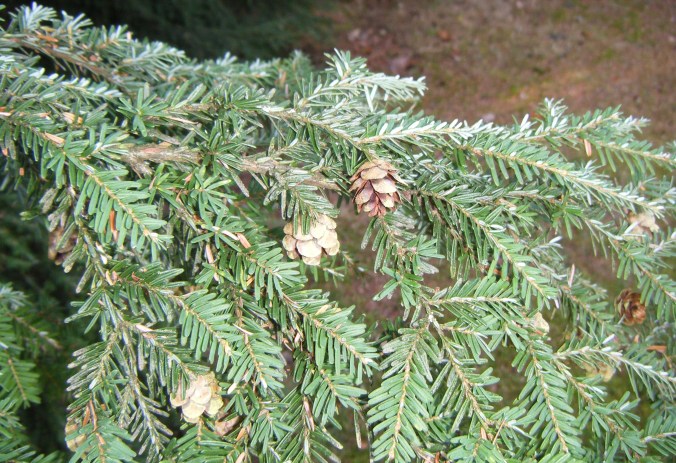
unlike these tiny ones on a fir which drop so freely.

DSCF6560.jpg

A fallen branch snakes its way up the hill,

DSCF6542.jpg

where on a mound surrounded by sycamore stands a gazebo. Built in 2000 from English oak it celebrates the one hundredth birthday of H.M The Queen Mother, the creation of the arboretum and the start of the new millennium.

DSCF6544.jpg

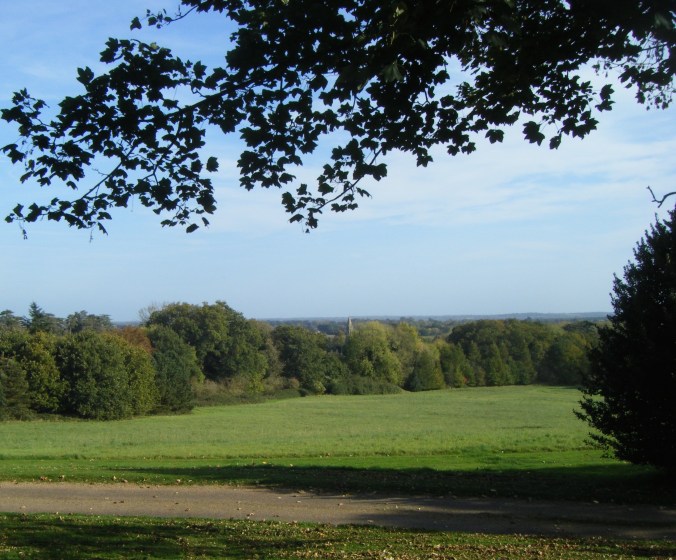
And it is from here that you have a glorious view, apparently out towards the sea at Great Yarmouth in the faraway distance; it is the spire of  St Andrew’s Church Framingham Pigot, we can see today peeping above the trees.

DSCF6547.jpg

We have driven in from the South Lodge so decide to walk on further down the drive towards the North Lodge catching sunlight through the raised tree canopy,

DSCF6523.jpg

and admiring the ever-changing shapes of nature.

DSCF6525.jpg

In a wide clearing a plaque informs us that these American species trees were presented to Sir Timothy Colman KG by the governors and members of the Memorial Trust of the 2nd Air Division USAAF upon his retirement in November 2004 as Her Majesty’s Lord-Lieutenant of Norfolk in appreciation of his support and encouragement over the years.

DSCF6564.jpg

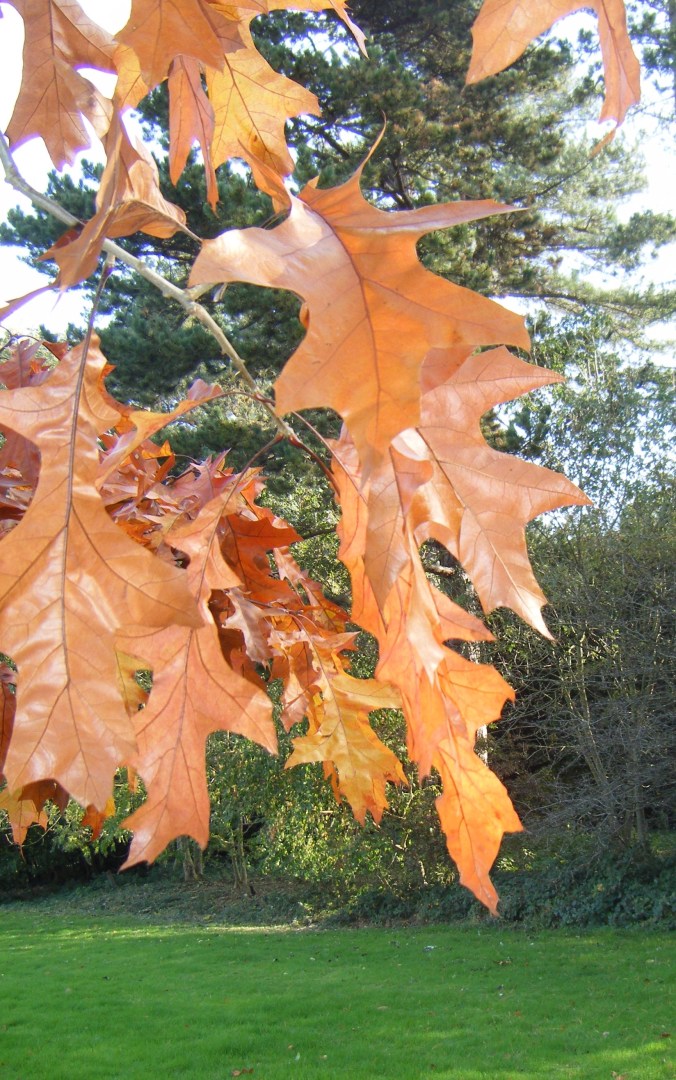
Particularly golden and, ironically because of its name, is the Quercus Velutina ‘Black Oak’.

DSCF6566.jpg

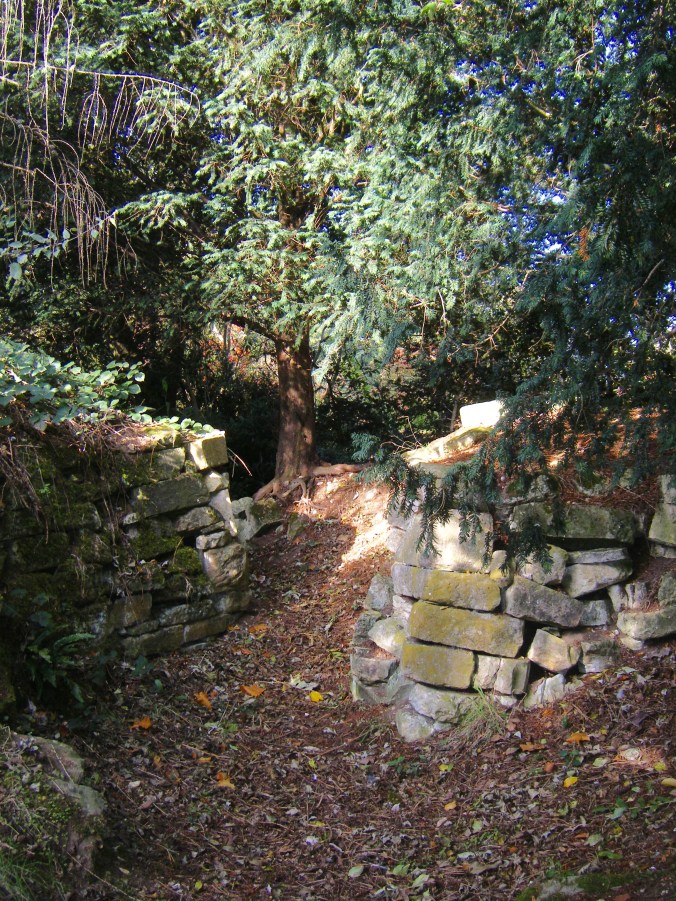
From here we make our way to the lakes passing through the tumbled-down old rockery,

DSCF6576.jpg

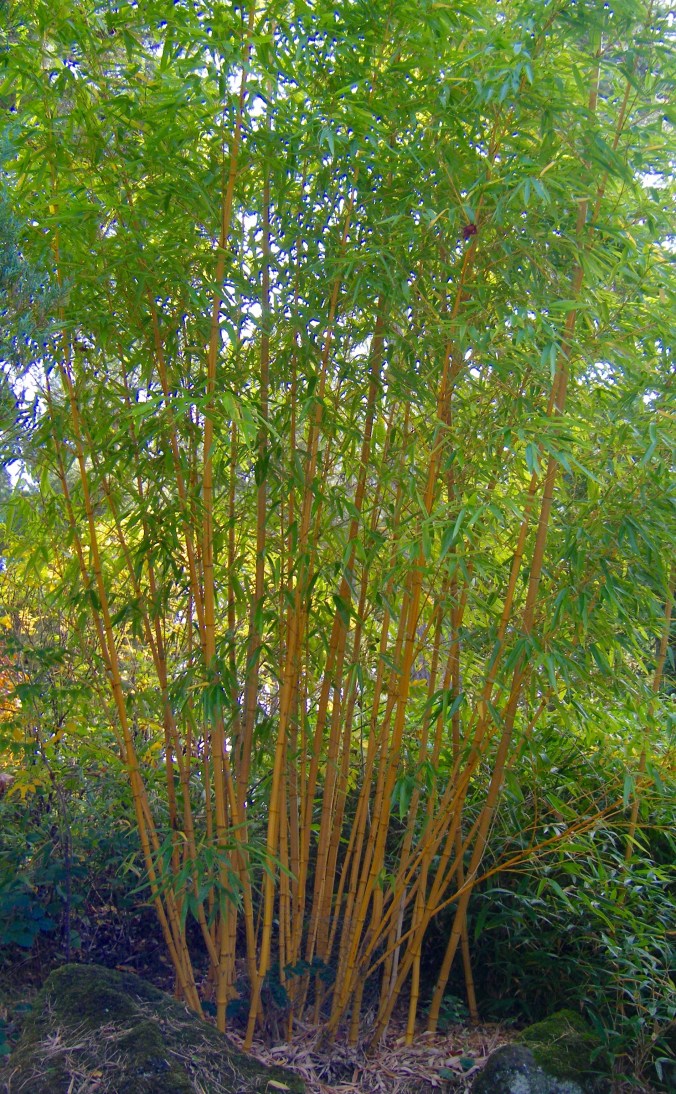
now overgrown, it is the bright stems of bamboo that have become a focal point.

DSCF6577.jpg

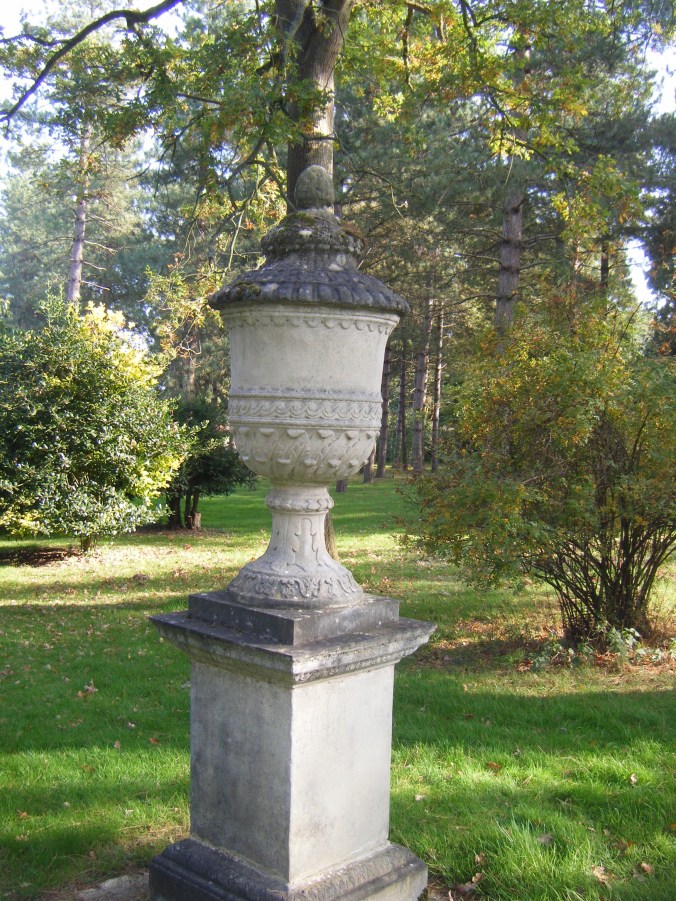
A stately urn remains amongst the shrubs and trees,

DSCF6579.jpg

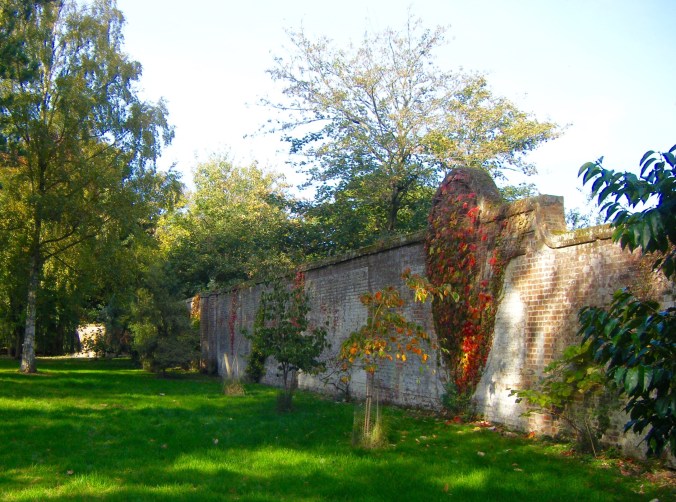
and the end of the wall presents a reminder of past times.

DSCF6581.jpg

I am with a tree expert and we delight in a species he does not know, an Indian Horse Chestnut Aesculus Indica. Related to the more common Horse Chestnut Aesculus hippocastanum it was introduced to Britain in 1851 by Colonel Henry Bunbury (a friend of Sir Joseph Hooker, Director of Kew), who planted seeds in his family’s garden at Barton Hall in Suffolk.

DSCF6589.jpg

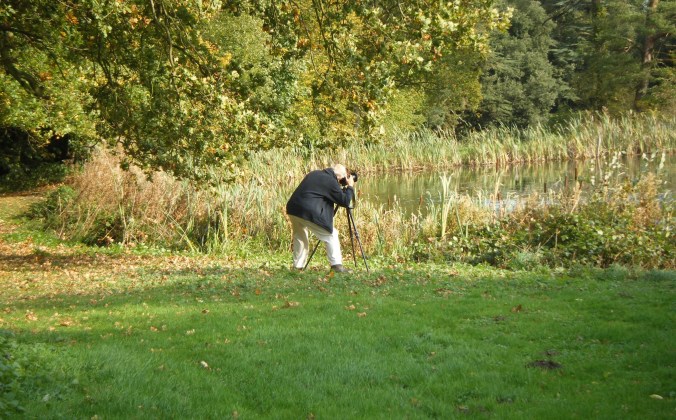
We have come to photograph the arboretum today for the Norfolk  Booklet and I admire the skill of our NGS photographer who takes such care and is clearly a professional,

DSCF6594.jpg

whilst I am more hurried and happy to snap!

DSCF6597.jpg

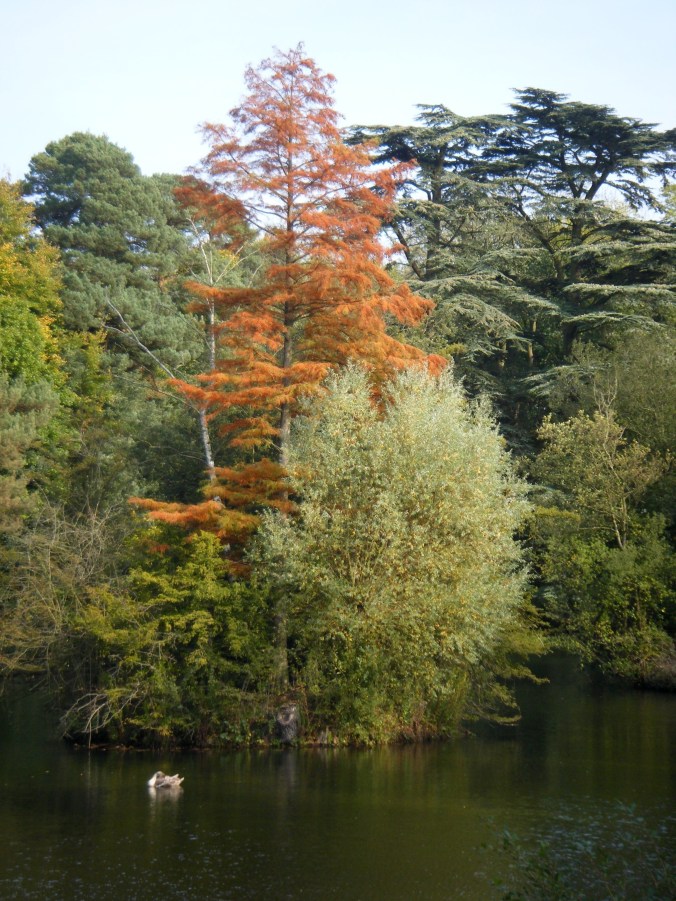
It is a series of lakes, and this cygnet appears alone on this lowest one.  Dwarfed by a the bronzed Swamp Cypress taxodium distichum which grows up ram rod-straight from one of the little circular islands.

DSCF6604.jpg

All around, the blue sky and autumn colours are reflected on the still water.

DSCF6609.jpg

We have wandered around for at least a couple of hours and it is time to ascend back up the South-facing hill. Not a flat part of Norfolk, it is a beautiful landscape and this very private arboretum, a rare Sunday treat, is surely one not to be missed. The Barn is the final garden to be open for Norfolk NGS 2017 and ends a fantastic season in this lovely county.

DSCF6614.jpg

——-79——-

Cogshall Grange, Georgian with a contemporary touch. (78)

I could not resist visiting this garden designed by Tom Stuart-Smith when it opened for the NGS back at the beginning of August. Surrounding a country house situated just north of Nantwich in Cheshire, Cogshall Grange was built in the 1830s and was purchased in 2004 by the present owner who refurbished the buildings. The first phase of the garden was completed five years later.

Parking the car in the field, I realised that I was not the only one keen to visit this garden. We then approached the house from across the lawn. DSCF4107 (1).jpg

The solid walls of this Georgian house are grounded within a parterre; not your traditional design, but one that is contemporary and fun with rounded box balls separating the drifts of colour in the beds.

DSCF4087.jpg

Cleanly laid York paving surrounds the parterre and plants spill over, but there is still plenty of space for access.

DSCF4088 (1).jpg

The box balls playfully roll on around the glass-fronted extension.

DSCF4031.jpg

From this terrace a gravel path snakes its way narrowly through a medley of planting enriched with striking agapanthus providing blotches of deep blue.

DSCF4030.jpg

We decide not to take this path but to walk further down the length of the wall where the gate, boldly framed in a black metal surround, is undeniably the intended entrance into the walled garden.

DSCF4046.jpg

The spacious structure is mirrored on the inside of the wall where conveniently placed is a comfortable bench where we sit for awhile and survey the scene.

DSCF4050.jpg

We feast our eyes not on military rows of vegetables growing upon brown earth, but a palette of perennial flowers swathed in front of us, not a patch of soil is to be seen.


DSCF4041.jpg

Gravel paths weave in and out of Stipa tenuissima, Perovskia and Crocosmia, behind which climbers clothe the brick walls.

DSCF4042.jpg

In the very centre of this walled garden is an elegant pool where circles of waterlilies float effortlessly. On one side the prairie-style perennials and grasses that we have just walked through are reflected in the dark water,

DSCF4052 (1).jpg

whilst the hornbeam cloud topiaries rising up above the haze of moor grass, Molinia caerulea ‘Poul Petersen’, are reflected on the other side.

DSCF4051.jpg

It is not all prairie-style planting; Hydrangeas, Eupatorium and Anenome x hybrida fight for space in the corner.

DSCF4055.jpg

Underplanted with Rodgersia podophylla, the hornbeam clouds formed from 30-year-old trees are trimmed 3 times a year whilst the Molinia standing to the right will be hand cut  in late January. It is perhaps no surprise that there a 3 gardeners employed and we are grateful that they have given up their free time today to answer our many questions.

DSCF4061.jpg

A simple oak door opens out onto a wild flower meadow through which meandering paths are mown.

DSCF4065.jpg

Intensely planted with the wild and the almost wild flowers, it is an annual mix purchased from http://www.pictorialmeadows.co.uk. It will receive an annual cut at the end of the summer.

DSCF4069.jpg

Here too is a naturalistic pond; the main gates to the drive in the far distance remain closed today.

DSCF4068.jpg

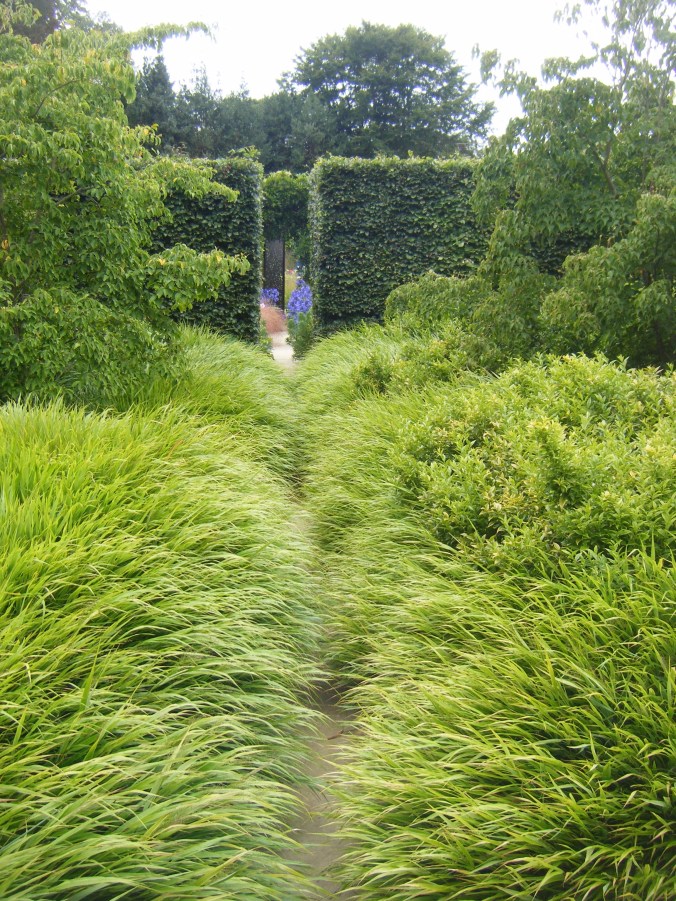
We walk around the grange buildings and arrive at the back of the new extension. Hakonechloa macra grows exuberantly around the footings, like a deep pile carpet softly shimmering,

DSCF4074.jpg

it gently moves in the light breeze and almost hides the paved pathway.

DSCF4102.jpg

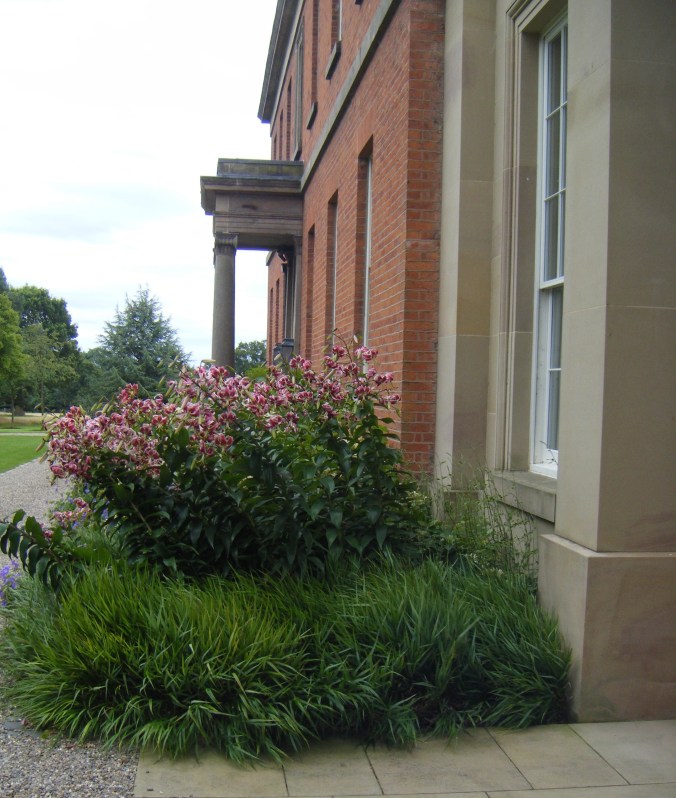
This grass, a native of Japan sweeps around to the front porch encircling a group of lilies,

DSCF4079.jpg

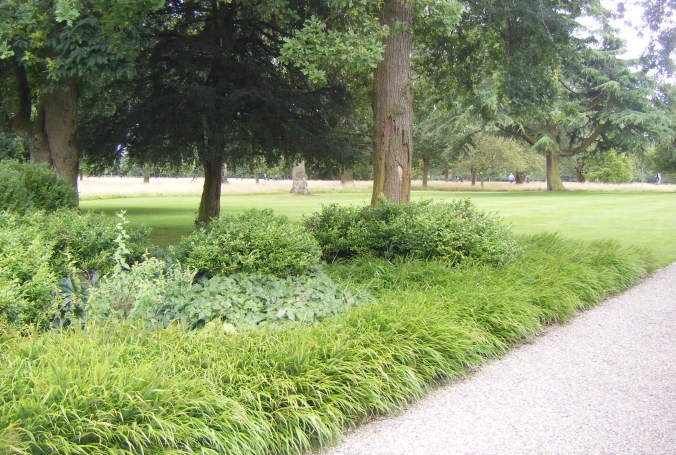
and crossing the drive where it spreads under the trees.

DSCF4078.jpg

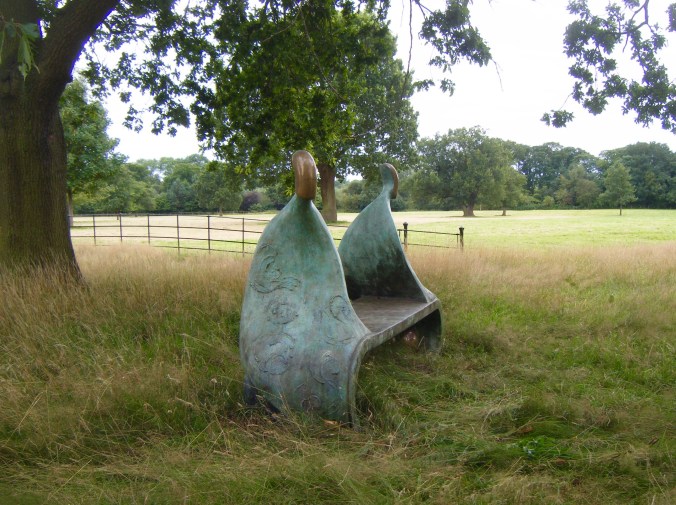
In the parkland opposite and a little distant off is  ‘Lover’s Seat’ by Sandra Bell. Cast in bronze, it reflects the courting practice of those Georgian times when lovers were always chaperoned.

DSCF4082.jpg

There are no fixed borders; the mown lawn merges seamlessly into uncut parkland.

DSCF4073.jpg

‘Blythe Spirit’ another piece by Sandra Bell is placed looking out to the uninterrupted view and hidden ha-ha.

DSCF4081.jpg

No dark patches of thinning grass appear under the trees spread across the lawn, for they all have generous and attractive plantings of ground cover. We sweep past this red persicaria in the direction of the stables where teas and ice creams are being served.

DSCF4110.jpg

And even here the planting does not end. Troughs overflow with soft subtle combinations of Helichrysum, Scaevola aemura and Verbena.

DSCF4027.jpg

This happens to be my third Stuart-Smith garden in my Ninety, Trentham and Brockhampton Cottage being the other two. His gardens never fail to delight and here in six acres there is a mix of the formal and the informal. The beautiful contemporary prairie-planting blends effortlessly with the surrounding parkland and countryside beyond. Definitely plan a visit next year when the garden will open on the 8th July.

——-78——-

Burmington Grange, where hedges, terrace and thistles triumph on a stormy day. (77)

It was a dark threatening sky descending over Burmington Grange on a Saturday last month. Burmington is a small rural village with a population of just 164 and is situated a few miles from Shipston-on-Stour. Garden owner Patrick who greeted us at the gate, thought I was coming on a bike and although staying with friends nearby I was very relieved to have taken the car!

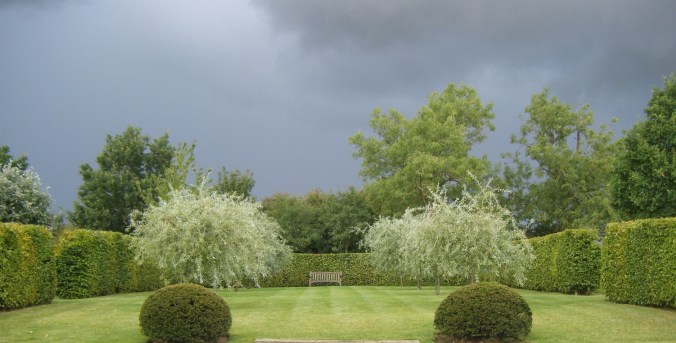
DSCF5361.jpgWe began our tour by looking to the right of the house where there is an ordered pattern of greens in a variety of texture and form. It is the lines of silver willow-leaved pears Pyrus salicifolia ‘Pendula’ that look so distinctive against the dark storm clouds.
DSCF5365.jpg

We did not delay but hurried across the immaculate drive to where the gates were waiting wide open,

DSCF5366.jpg

and found ourselves in the colourful and productive fruit and vegetable garden.

DSCF5453.jpg

Looking down from above the Kiwi actinidia deliciosa seemed to wave us on,

DSCF5368.jpg

and we hurriedly admired the almost thornless tangle of Cratageus tanacetifolia standing high above the wall brimming with red berries,

DSCF5372.jpg

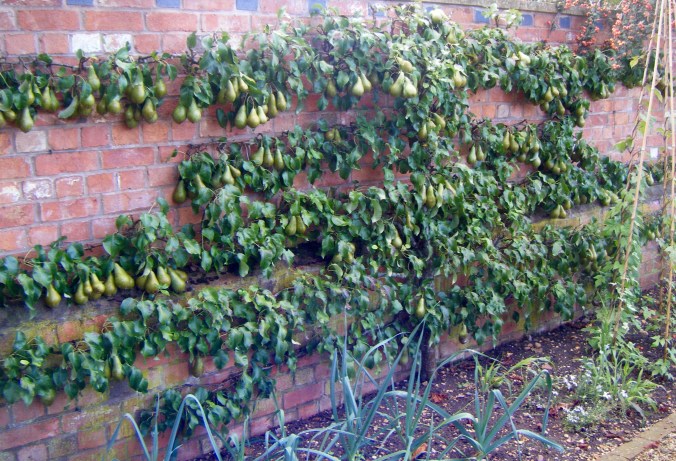
and looked on enviously at the pears hanging from their outstretched branches trained against the wall.

DSCF5451.jpg

A cloudburst forced us to take shelter in the neat little greenhouse where for some time we waited for the storm to pass whilst longing to pick one of those juicy red apples.
DSCF5449.jpg

Eventually the rain subsided and we walked through into an enclosed garden in front of the Barn.

It is just the perfect place for a pool, south facing and sheltered. At one end, amongst the variety of shrubs, salvias, sedums and aeonium blend together, a contrast to the triangular topiary.

DSCF5377.jpg

Along one side of the pool tall ‘Italianate’ yews divide but do not hide the swimming area, and on the other side is the wall from the vegetable garden which is adorned with a collection of climbers.  The pool is looking a little more enticing now the sky has turned blue.

DSCF5441.jpg

At the Barn end, large pots are planted to perfection, overflowing with Salvia ‘Amistad’, Canna and Helichrysum.

DSCF5378.jpg

This is a sheltered area and we decided to take tea served in the Barn while the weather was making up it’s mind.

DSCF5434.jpg

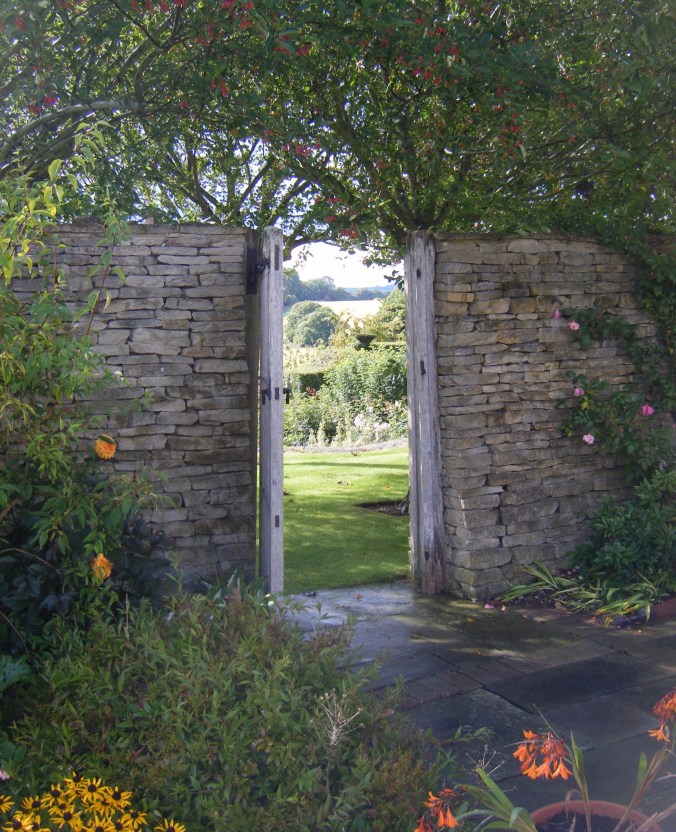
The garden has an air of maturity and it is hard to believe that it was conceived only 13 years ago. The open door in the wall beckoned us.

DSCF5436.jpg

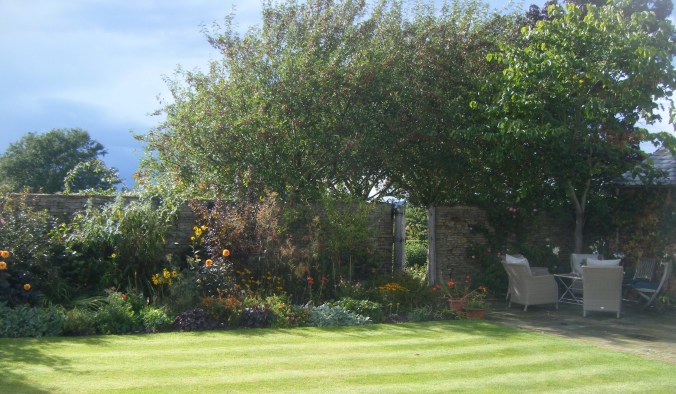
Through the crab apple trees we looked down to the sunken garden laid out with roses, herbaceous plants, and fine lollipops of Portuguese laurel, prunus lusitanica

DSCF5380.jpg

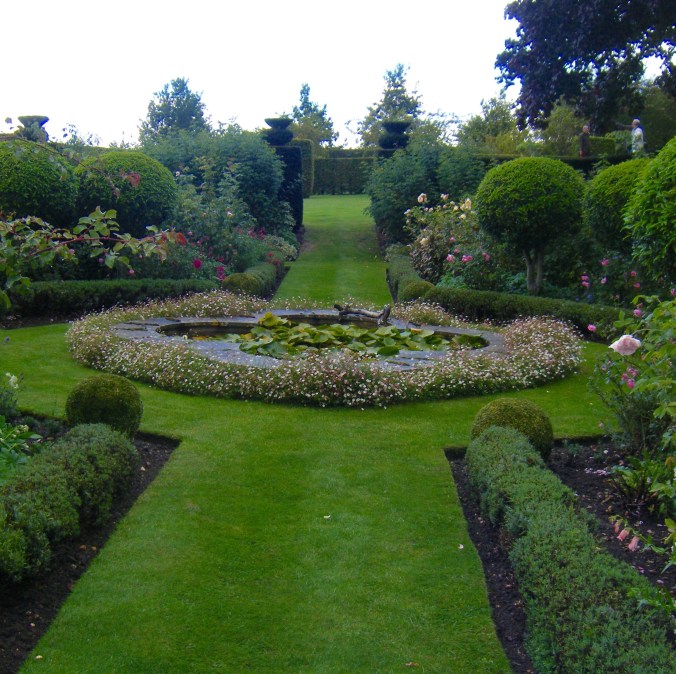
The crisp neat edges of the verdant lawn paths and neatly trimmed lavender accentuated the relaxed habit of erigeron karvinskianus which dances around the pond.

DSCF5383.jpg

Seen from all angles it is a delightful arrangement.

DSCF5429 (2).jpg

The yew has been cleanly cut, and ‘gate posts’ are shaped into what are amusingly known as ‘Patrick’s thistles’.

DSCF5390 (1).jpg

We took the elegant steps up to the house and from under the tree we viewed the Warwickshire countryside rolling away before our eyes.

DSCF5417.jpg

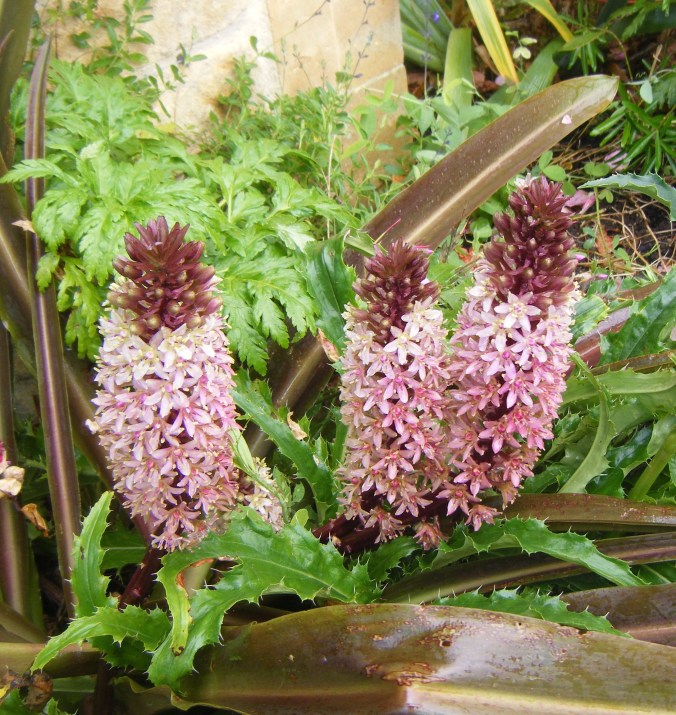
The spectacular Pineapple lily Eucomis grows at the foot of the walls of the house,

DSCF5397.jpg

whilst the fragrant rosa ‘Aloha’ gently climbs the mellow Cotswold stone.

DSCF5423.jpg

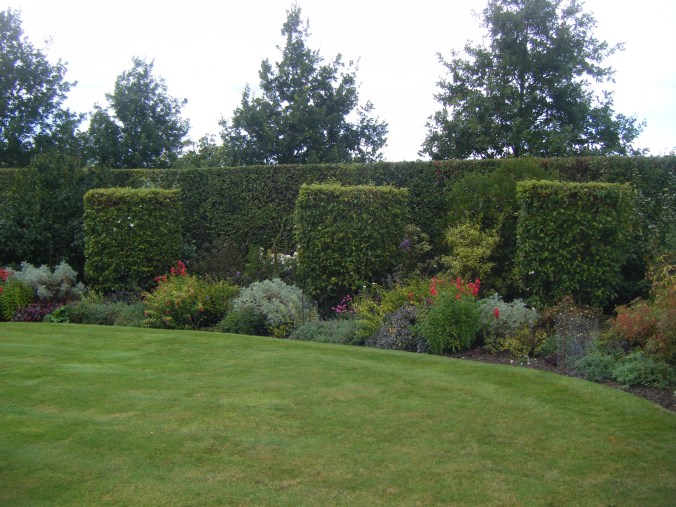
At the end of the terrace that runs along the front of house, is an enclosed garden seemingly made square by the clipped hedges which surround it,

DSCF5419.jpg

but on entering it is in fact round, made so by the border that gently repeats its pattern of planting around a circular lawn.

DSCF5404.jpg

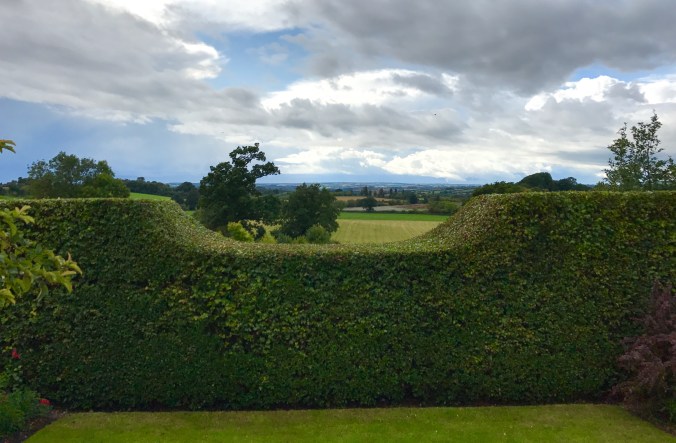
A dip in the hedge provides a view of the unblemished countryside.

IMG_0080 (1).jpg

Moving round to the shaded side of the house we found an interesting range of trees,  growing in a less formal area.  The meadowy grass has paths mown through and is kept away from the base of the young trees like this Paper Bark maple, acer griseum. 

DSCF5407.jpg

The berries are brightening and leaves turning on this Sorbus aucuparia.

DSCF5408.jpg

Returning to the house a cube of variegated box caught my eye,

DSCF5414.jpg

and a fine yew cone marks the corner from where we walked back along the terrace in front of the house.

DSCF5415.jpg

Once more we admired, the charming arrangement below and in particular the selection of colourful salvias.

DSCF5424.jpg

Too wet to explore we were happy to gaze at the bountiful apple orchard over the smiling gate,

DSCF5427.jpg

A family garden, immaculate and in a perfect location.  Perched upon a hill the terraced garden embraces the view while parts remain well sheltered from the wind. Opening in the second week of September which may seem late in the season for garden visiting. Burmington Grange with its rich planting displays a plethora of colour and demonstrates that Summer is by no means over.  Despite the rain it has been a delightful afternoon and even the Dahlias show they can weather a storm.

DSCF5445

——-77——-

Frogmore House and Garden; Wet, Windy and Forty Five. (Reblog of 45)

I thought we might enjoy a revisit to Frogmore ahead of Her Majesty the Queen’s appearance today on Radio 4 Gardener’s Question Time at 3.00pm

thegardengateisopen's avatarThe Garden Gate is Open

The rain was torrential last Tuesday and our windscreen wipers were going nineteen to the dozen as we drove down the M4.  Familiar yellow signs guided us through Windsor…….

DSCF1776

…..and in spite of the weather the garden gate was wide open at Frogmore. Open for charity just 3 days a year, they have been opening for the NGS for a noble 71 years. The rain did not seem to deter the visitor and many hundreds who had purchased pre-booked tickets braved the weather.DSCF1669

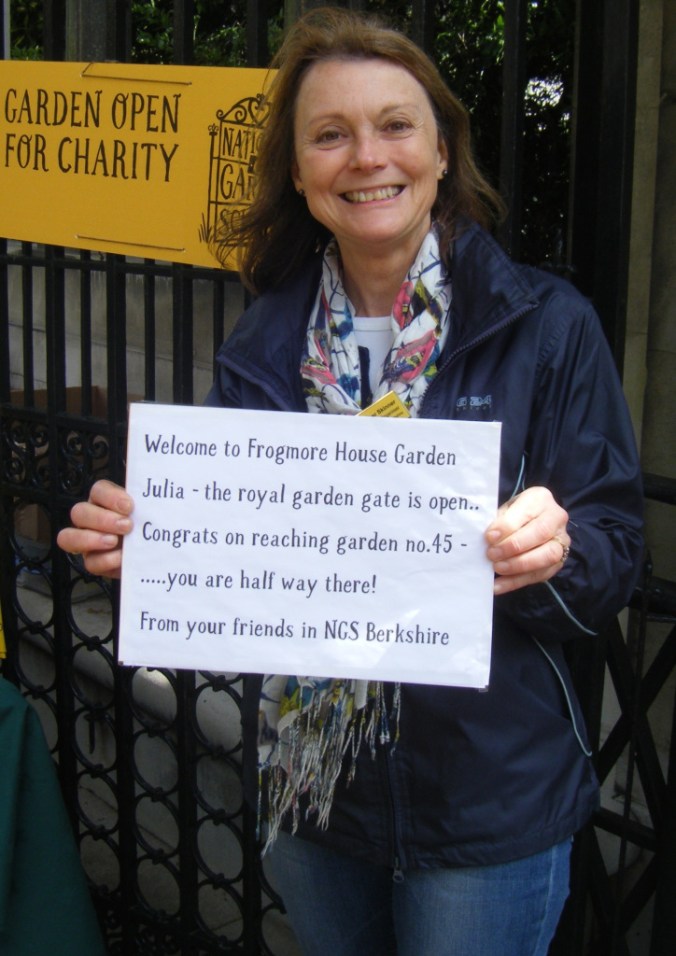
I was overwhelmed with the unexpected welcome awaiting me. Heather, County Organiser extraordinaire for Berkshire, Trustee AND Deputy Chairman of the NGS, was waiting for me and with her big smile she held up the notice she had prepared:

DSCF1774

We joined the garden history tour and gathering under a huge old crusty Indian bean tree, Catalpa bignonioides,  we stood for a sobering reflective minute silence remembering…

View original post 1,212 more words

Church View, Appleby-in-Westmoreland; Terraced and colourful. (76)

Often, I am able to find a garden open which fits into my travel plans and helps break a long  journey. Driving North on our way to the River Tay last Saturday, there was very conveniently a garden open, just off the A66 at Appleby-in-Westmoreland.

I love this time of year, so often blue skies and liquid clear light. Not a bit of it today, this was the view through the windscreen as we parked the car!

IMG_0131 (2).jpg

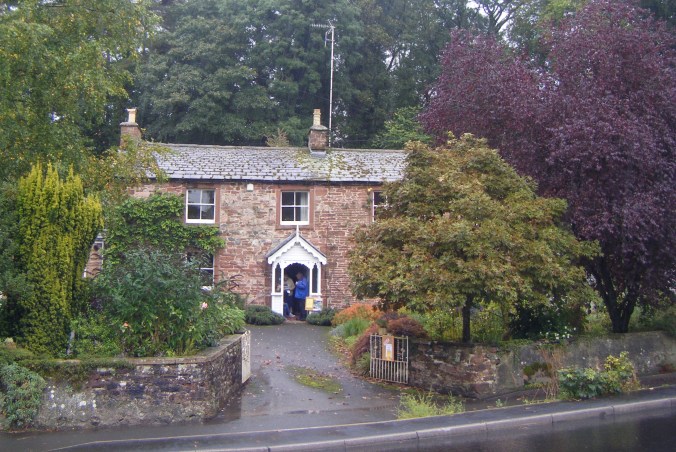
Never one for letting a drop of rain stop me from having a look at a garden, I quickly crossed the road where the garden gate was wide open. An impressive purple leaved prunus cerasifera pissardii, stands at the front. An unfortunate name for this popular tree, I always think, and we have to blame Monsieur Pissard, a gardener to the Shah of Iran who introduced the tree to France in the 1880s.

DSCF6005.jpg

The small front garden to the right of the front door, is the newest area and was completed in 2012. Planted with shade loving plants and a variety of shrubs including acers there are already signs of autumn tints.

DSCF6007.jpg

Across the drive is a little patch of lawn behind which a small woodland garden acts as a sort of buffer to the road and the pub next door.

DSCF6008.jpg

A path invites us through the oriental arch which has the delicious climbing Jasminum ‘Clotted Cream’ still in flower.

DSCF6009

We walk to the left of the house where a clump of bamboo hides the greenhouse and the garden begins to rise up quite steeply behind.

DSCF6011.jpg

Known as the circle garden it has pots of Dahlia ‘Classic Swan Lake’ which continue to perform in these wet conditions.

DSCF6012.jpg

Designed by Ian Huckson, who began the planting in 2008, the garden is less than half an acre in size. It is easier to explain the layout with this aerial shot borrowed from Ian’s own website: www. engcougars@btinternet.com. We have entered the stage, so to speak, over to the left.

DSC_0243 - DSC_0246.jpg

First we duck under the archway smothered in the leaves of clematis and rose,

DSCF6013.jpg

and, we could follow the narrow path to the right through the dark leaved sambucus ‘Black lace and acer palmatum ‘Bloodgood’ to the old apple tree where a wooden seat cunningly curves around its roots and embraces the slope,


DSCF6014.jpg

but instead we decide to walk on upwards past the slender ‘bollard’ of yew,

DSCF6015.jpg

keeping the boundary hedge to our left and ignoring the next path to the right. We admire the path positively spilling over with perennials.

DSCF6016.jpg

In the topmost corner we find a wooden bench,

DSCF6021.jpg

from where, through the rain, we can take in much of the garden with the central bed containing a selection of grasses intermingled with bright splashes of perennials.

DSCF6018.jpg

There is so much packed into this border which has a  great combination of texture and colour.

DSCF6073.jpg

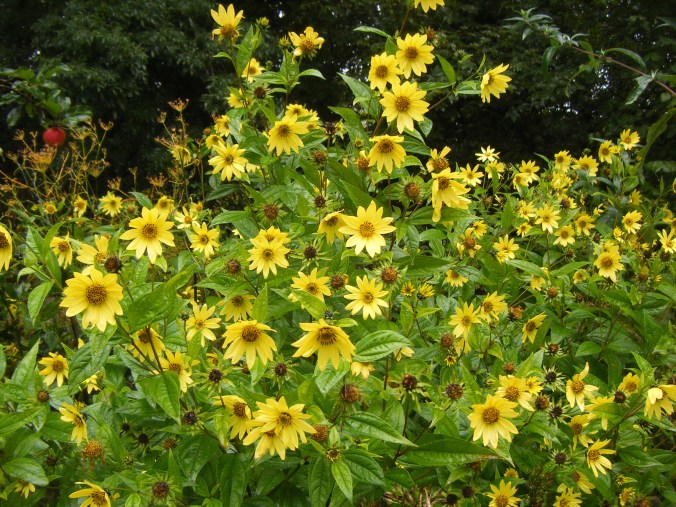
It does not matter that this is not an Indian Summer’s day, the back border running along the stone wall has plenty of colour too; sunny helianthus,

DSCF6036.jpg

tall spikes of cimicifuga racemosa ‘Atropurpurea’,

DSCF6023.jpg

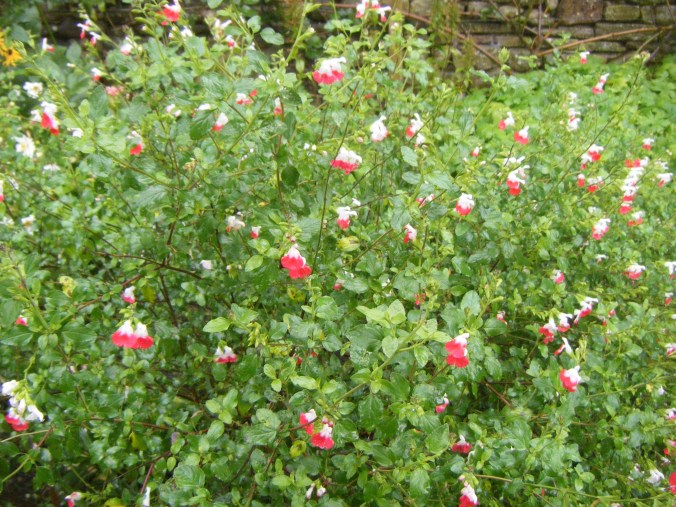
and the wonderfully sounding salvia ‘Hot lips’.

DSCF6025.jpg

Glancing back along the dry gravel path we can enjoy asters, sedums and hesperanthus growing around clipped box buns.

DSCF6027.jpg

An area is divided into raised beds and set aside for the growing of vegetables, fruit and cut flowers. The helichrysum are keeping their blooms tightly closed,

DSCF6034.jpg

while water drips from the luminous crab apples.

DSCF6039.jpg

Summer clings on with the last of the sweet peas; growing nearly eight feet high they have to be the tallest that I have encountered.

DSCF6045.jpg

Steps descend  to the level of the house where leafy ferns emerge from the wall and we can gaze up to the garden cascading down. Walking along the length of the cottage we are able to access the greenhouse,

DSCF6054.jpg

where vines are grown more as a means of shade than a bacchanalian feast,

DSCF6065.jpg

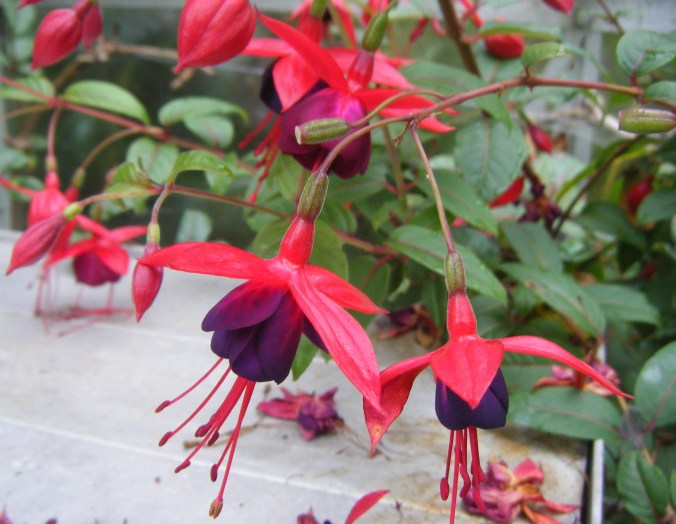
and Lady Boothby, that brightest of climbing fuchsias, provides a little glamour.

DSCF6061.jpg

Parahebe ‘Snow clouds’ softens the short stone steps which we ascend,

DSCF6057.jpg

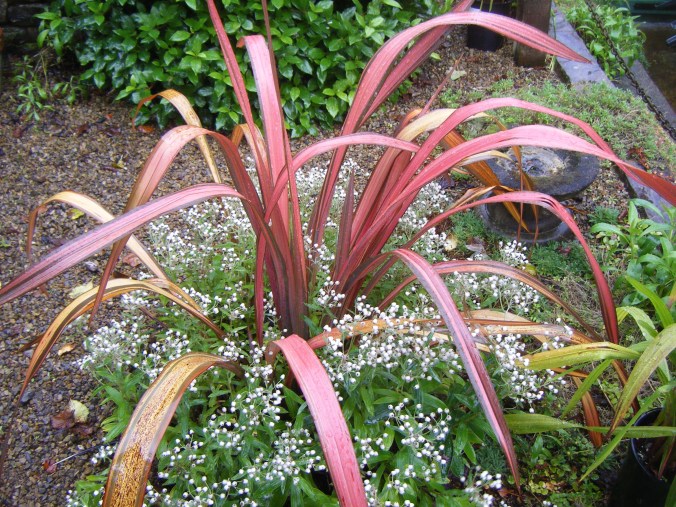
to find handsome phormium ‘Margaret Jones’ surrounded by the self-seeding anaphalis triplinervis.

DSCF6071.jpg

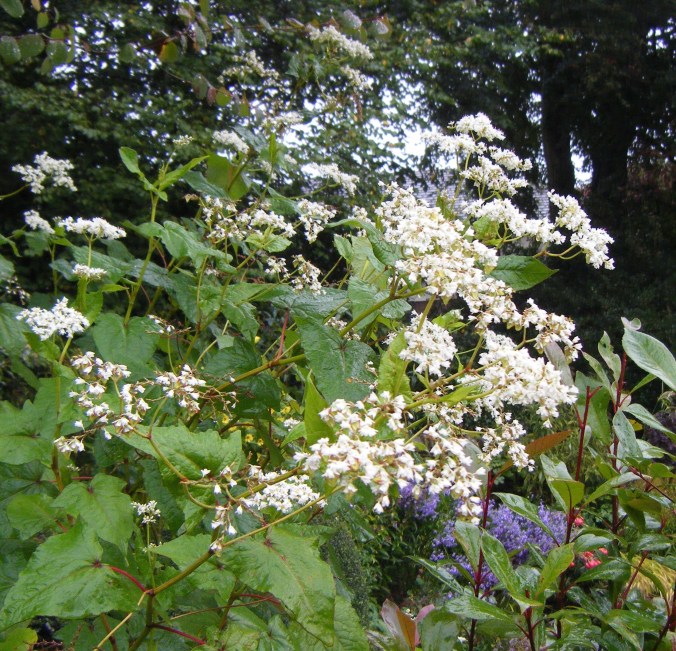
Nearby another white flower grows tall and shrubby, it looks suspiciously like Japanese knotweed, but I am assured that it is fagopyrum, the seeds of which are the edible  buckwheat.

DSCF6075.jpg

This little aeonium is not the only one to be drenched,

DSCF6072

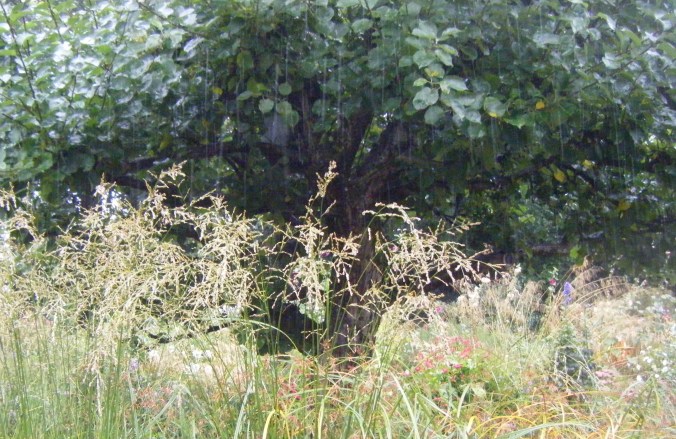
the rain is really coming down in stair-rods!

DSCF6084.jpg


It is not easy to garden on a slope but Ian has cleverly designed a garden which is both accessible and beautiful. Paths move us seamlessly around the different areas. His plant list is phenomenal providing a display hard to beat all year round. Even on such a wet day we have enjoyed the splendour of what Tim Richardson describes as ‘the fifth season’. It is hard to believe this once only grew rhubarb!

——-76——-