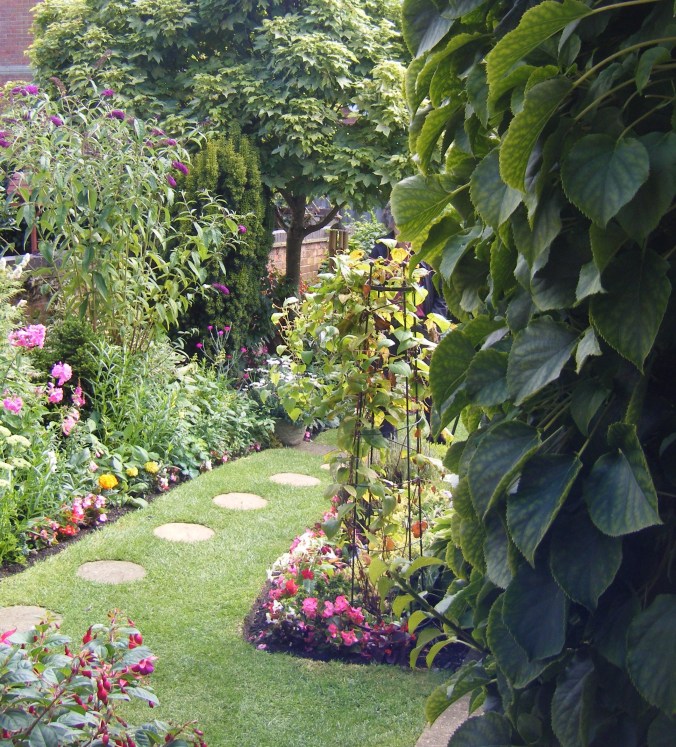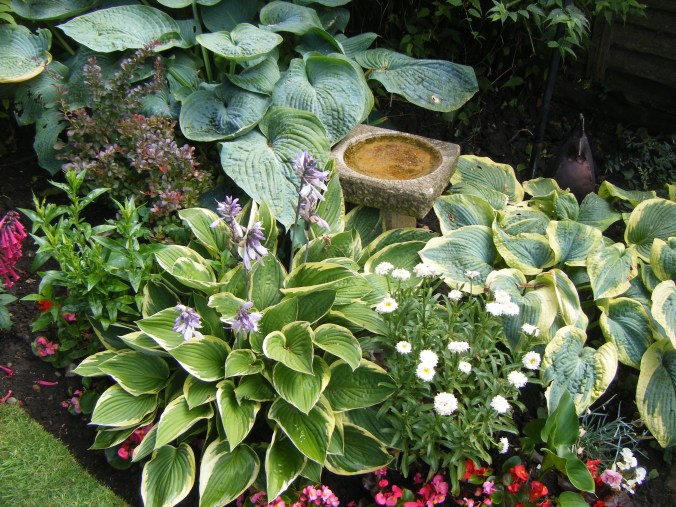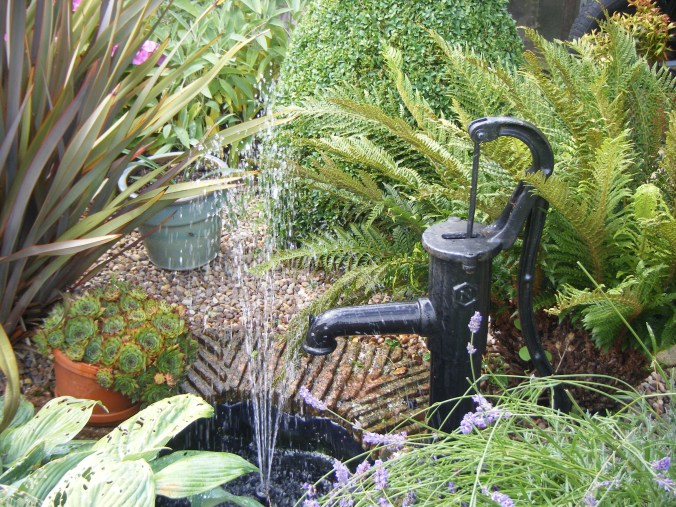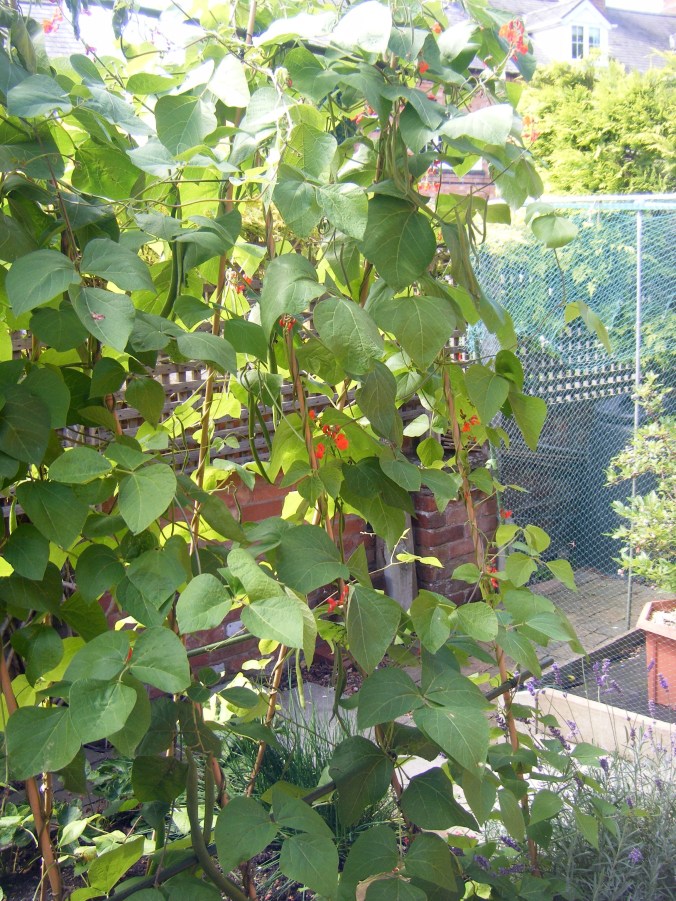
Marsh Lane Allotment, fruitful, fun and a touch exotic. (65)


DSCF4464.jpg

Having written about the development of an allotment in my last blog, I quite by chance discovered that last Sunday was also the final day of National Allotment Week.   What better way to participate than to call in on the Marsh Lane Allotments in Tottenham on our drive down to London where plot 94 was open for the NGS. I would also like to dedicate this blog to my good friend Claire, an experienced allotment holder of many years who lives in Suffolk and whose birthday it is today.

There was just enough room to park our car in the bay near the gates where we stepped over a huge pile of rubbish that had gathered on the pavement, before walking through the metal gates.

DSCF4517.jpg

Two charming girls collecting the money on the gate directed us through the maze of allotments, nearly a hundred here, to the plot occupied by Chris. Notices advised us that we were welcome to walk around the site and look at the other plots but we were not to enter unless invited. We headed straight on, passing rows and rows of vegetables,  and a jumble of huts turning right at the green one marked with red arrows, and then made a beeline for the yellow balloons in the narrow distance.

DSCF4512.jpg

Under the foliage of the spring flowered akebia quinata we found the allotment gate was open…

DSCF4409.jpg

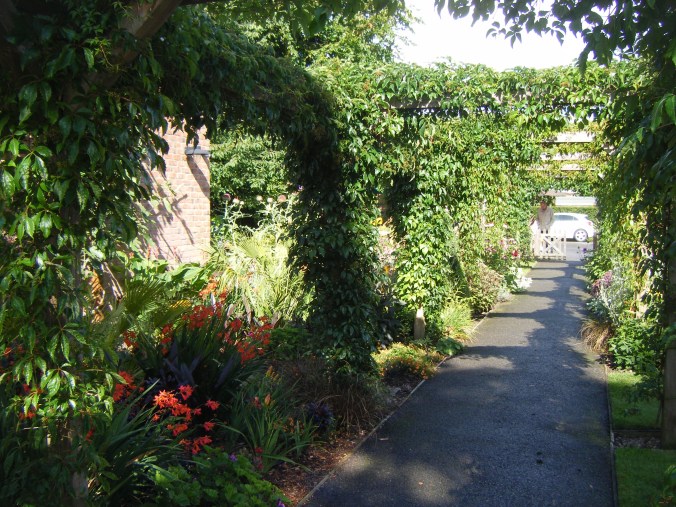
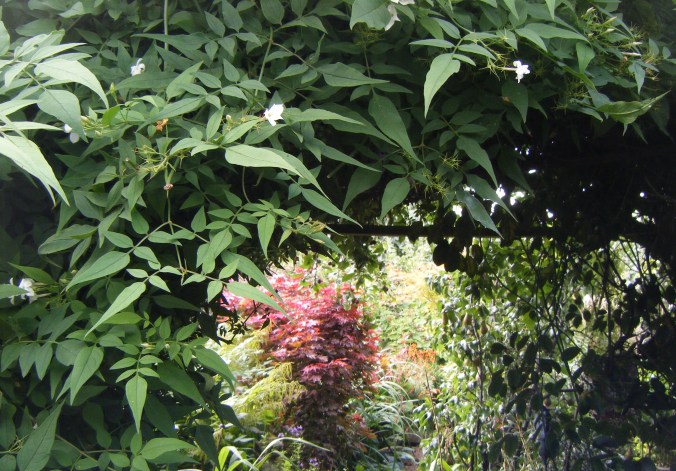
Inside the entrance, shaded by a confusion of climbers, a summer jasmine still in flower grows over an archway,
DSCF4412.jpg

and a plum tree, laden with fruit.

DSCF4454.jpg

The narrow shingle path draws us further in and we walk between, not rows of vegetables but well established shrubs and perennials packed in on either side;

DSCF4477.jpg

colouring acer leaves combine with ripening pears, hanging so temptingly,

DSCF4414.jpg

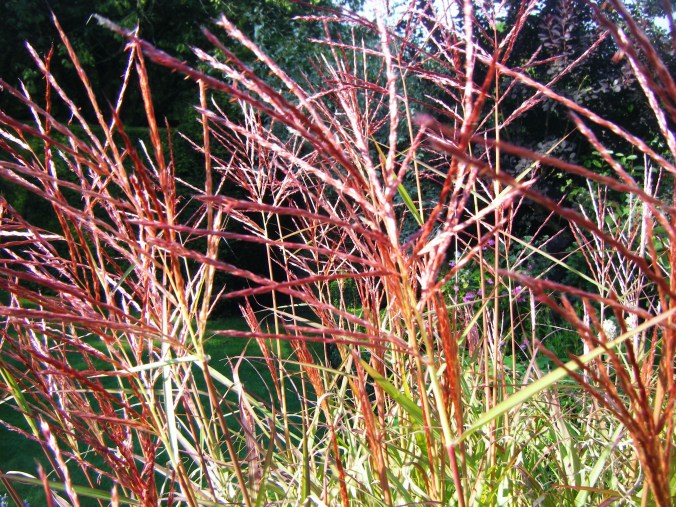
and a little further on a display of red-tinged miscanthus grass.

DSCF4465.jpg

Chris originally occupied one of the other allotments but moved to this one seven years ago because he wanted the wall that runs along the side. The ground was in a terrible state; he cleared the grass and bindweed. Next door the evangenical church was consumed by the bus company who made their presence felt by raising the ground level of the station by some eight feet.

DSCF4415.jpg

The centre piece of the allotment is not a bus but a rusting and elegant gazebo reaching up into a canopy of fig trees.

DSCF4418.jpg

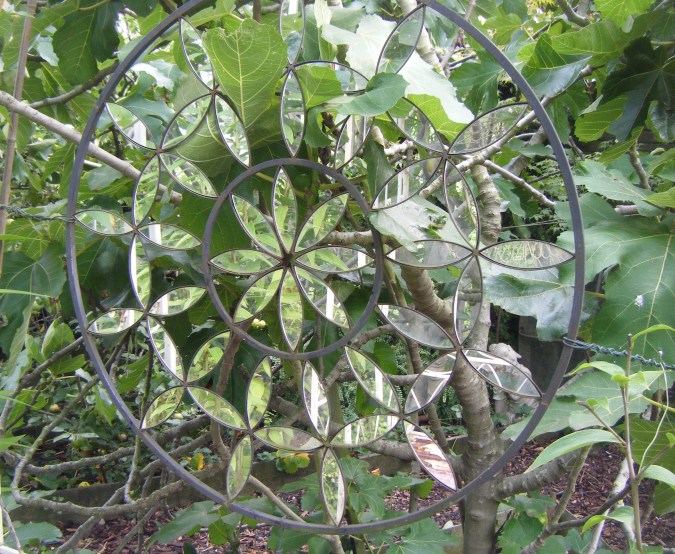
On one side is a decorative panel through which we can see a mature fig, once a cutting taken from Chris’s mother’s tree.
DSCF4425.jpg

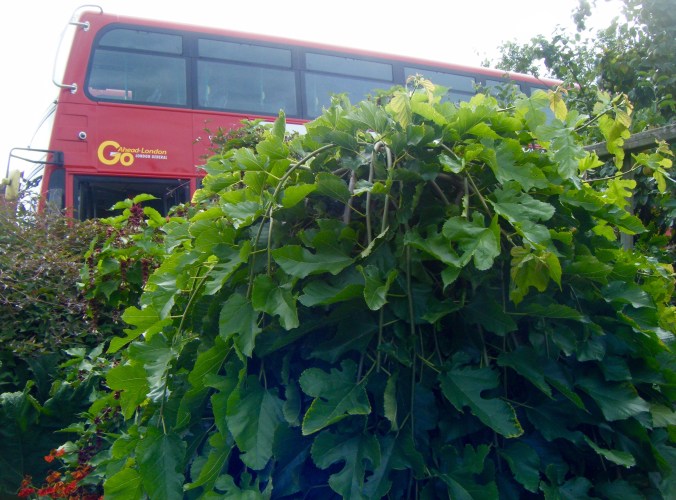
The existence of London transport does not take away from the fact that this is an allotment full of fruit; an unusual weeping mulberry has already shed its fruit.
DSCF4449.jpg

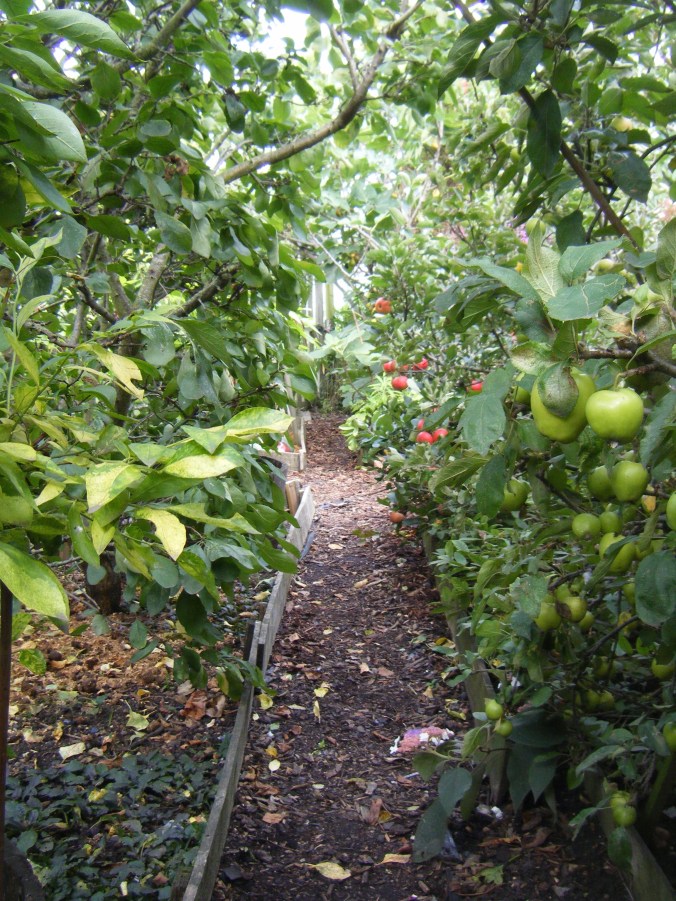
and the apples are ripening, green and red.
DSCF4430.jpg

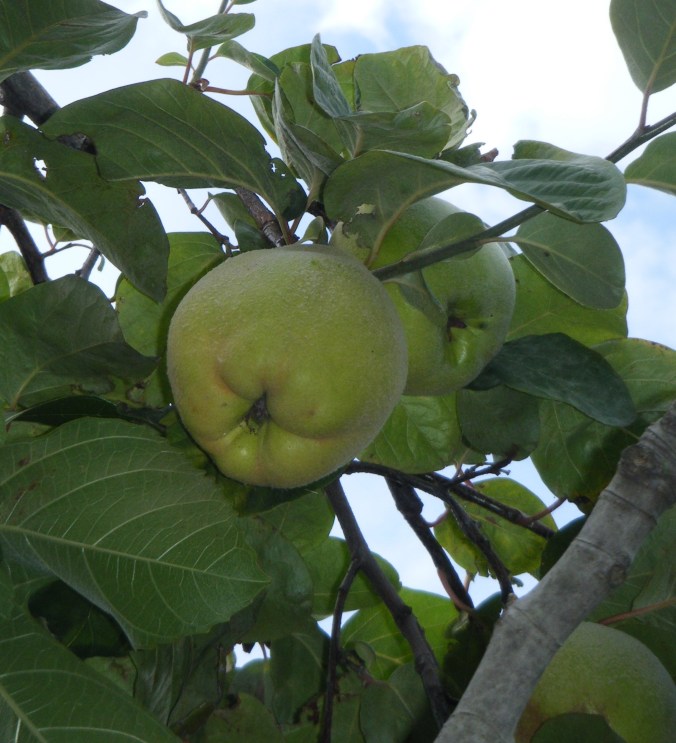
High up are the noble fruits of quince,
DSCF4445.jpg

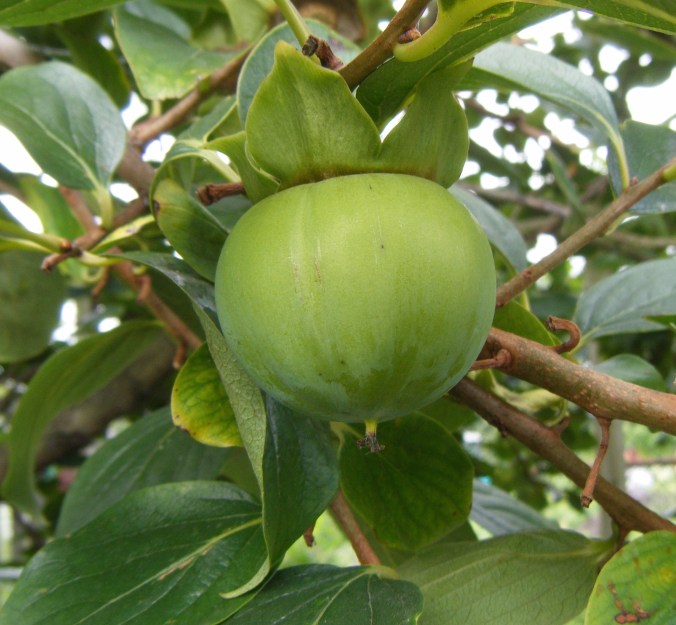
and the persimmon are yet to turn golden.
DSCF4469.jpg

Flowers mingle with fruit and the pink petals of a clematis dance out from amongst the apples,

DSCF4447.jpg

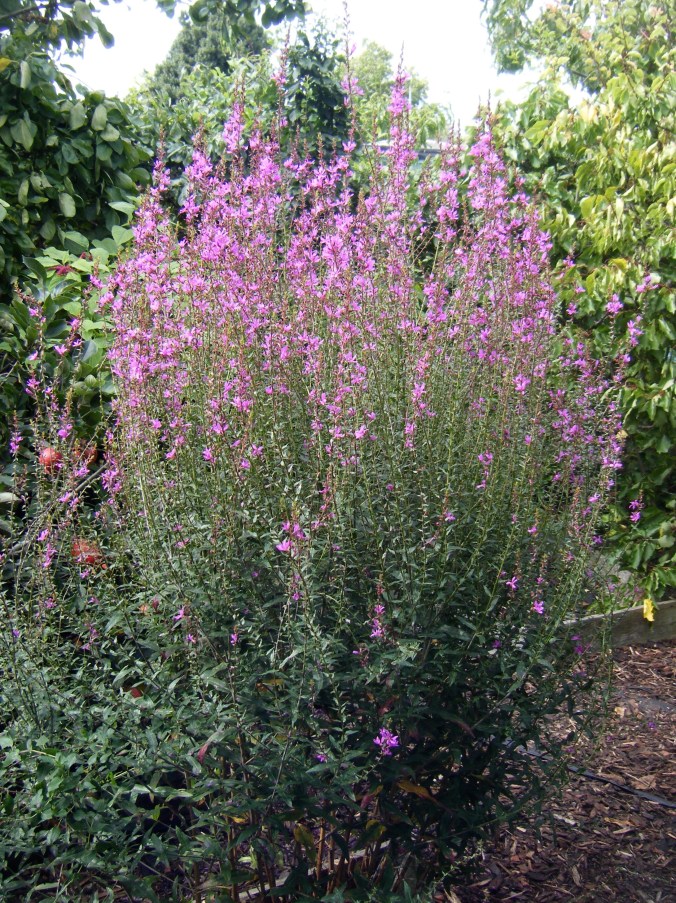
there is an explosion of pink loosestrife lythrum,
DSCF4424.jpg

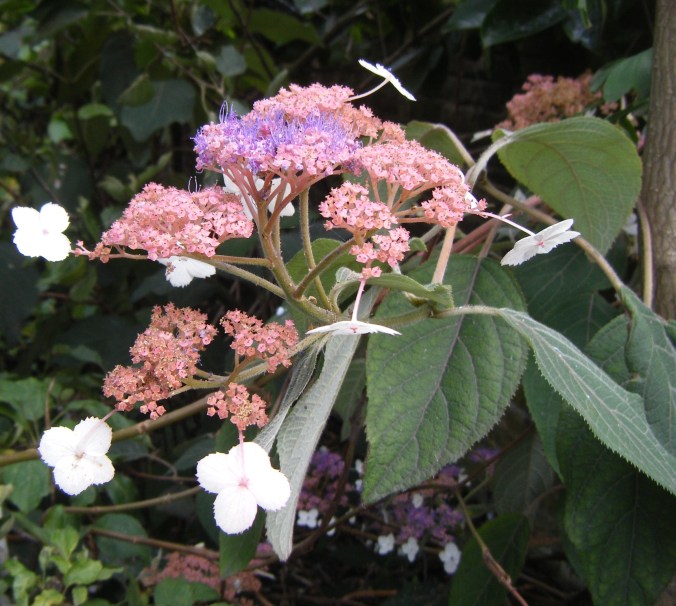
and an intriguing coloured hydrangea.
DSCF4427.jpg

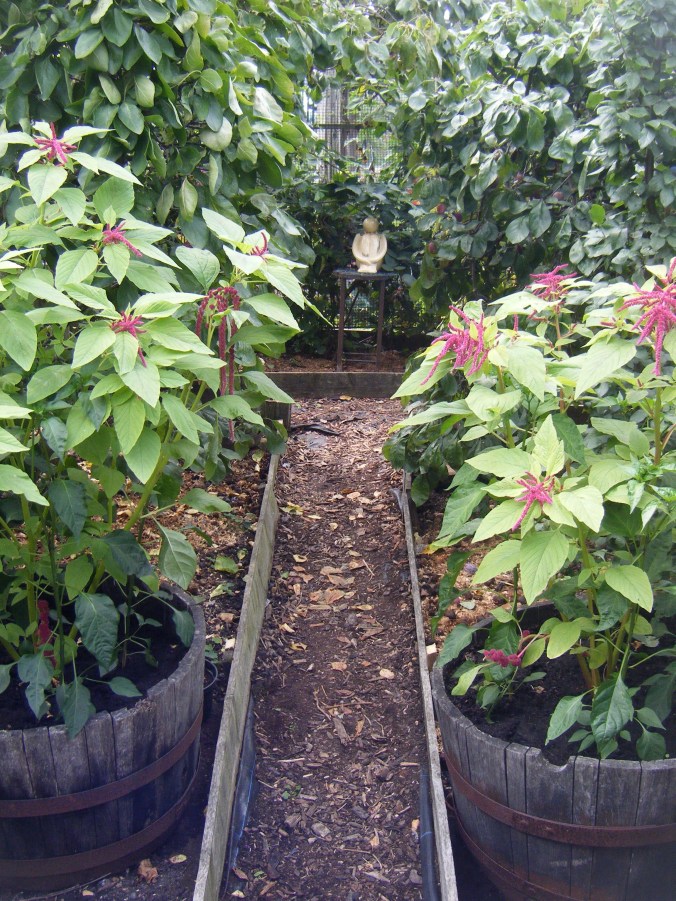
An allotment here costs about £150 a year to rent, and the size is measured in poles; a pole is the equivalent to roughly 5 metres. A full plot like this is ten poles. Through tubs of amaranthus the little ceramic figure hugging its knees signifies we have reached the full ten,
DSCF4419.jpg

and along the back fence is a thick hedge of ripening thornless blackberries which marks the boundary.

DSCF4433.jpg

Looking back are pots of colourful climbing annuals; on one side is the exotic rhodochiton from Mexico,

DSCF4436.jpg

and on the other is the Brazilian ipomoea lobata or mina lobata, with its cascading flowers, scarlet at the tip and fading to cream.

DSCF4437.jpg

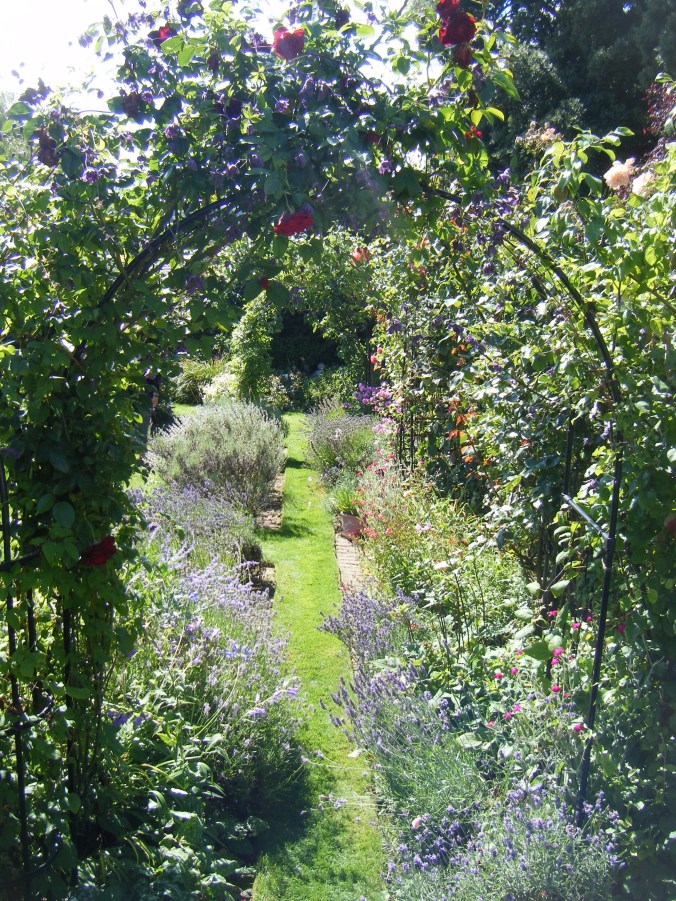
As we return, the air is filled with the scent of lavender and we encounter a collection of pots which include such favourites as ceratostigma,

DSCF4450.jpg

and a chinese red fern.

DSCF4453.jpg

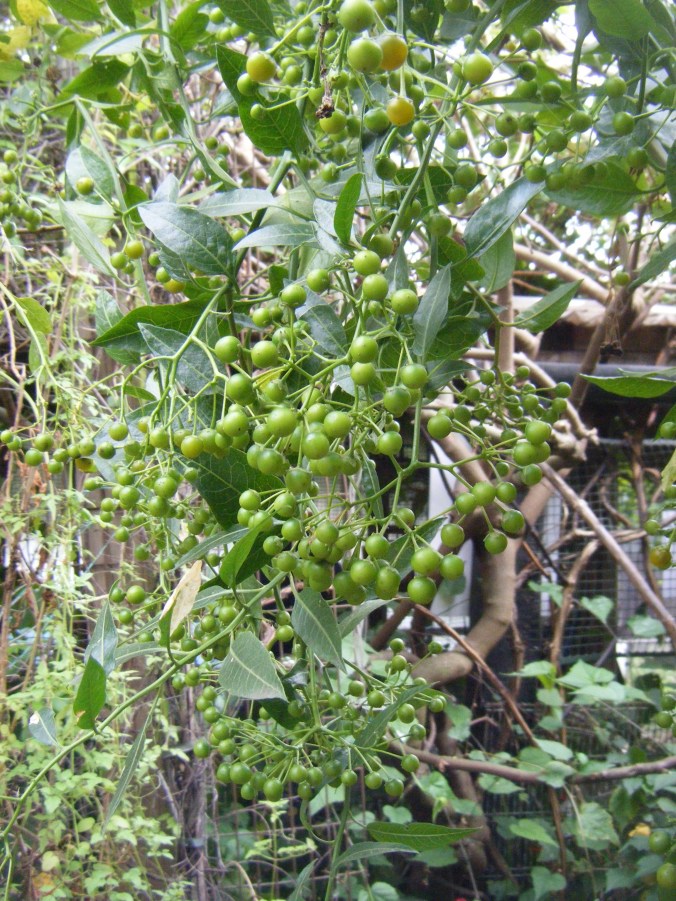
By the shed the solanum has flowered and is displaying an abundance of inedible fruit,
DSCF4456.jpg

whilst delicious bunches of grapes hang down through which the view is leafy and exotic. It is a calming space and hard to believe we are in Tottenham, once a scene of riots and unrest.

DSCF4485.jpg

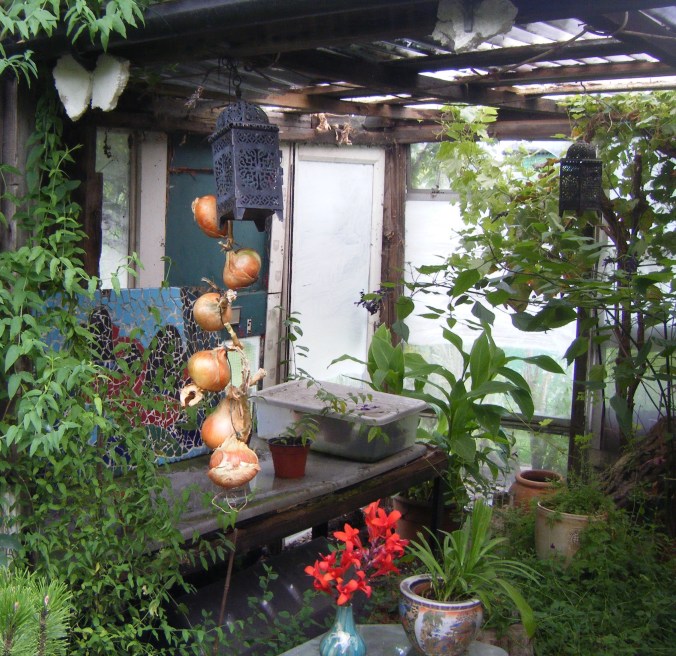
The onions drying will have come from a neighbouring allotment holder; they are a friendly community here and we head off to find teas and sample the cake made by Chris’s sister.
DSCF4463.jpg

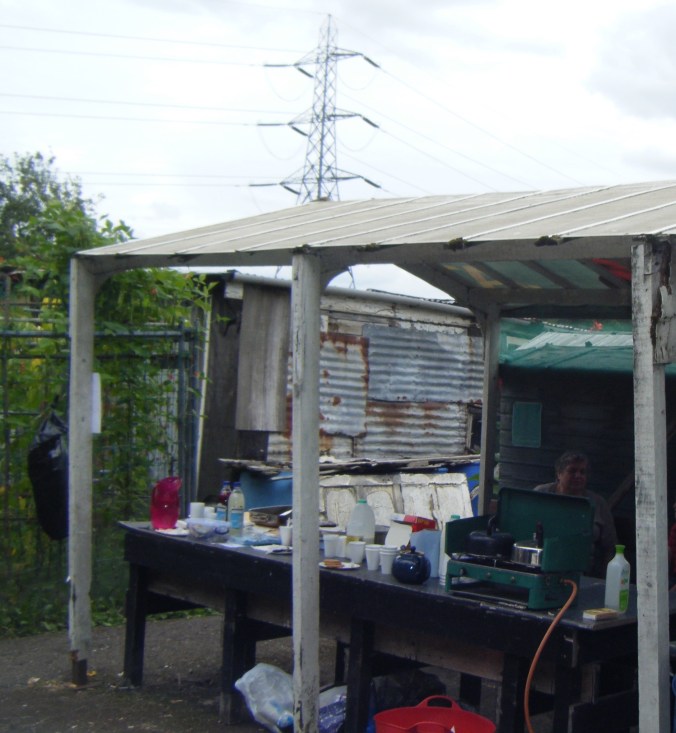
Teas are served right over on the other side of the allotments beyond where a rich red canna flowers colourfully. The table and chairs are recycled from the cafe across the road,

DSCF4498.jpg

Rules about sizes of sheds seemed to be ignored here and this sizeable lean-to shed provides a little cover today.
DSCF4496 (1).jpg

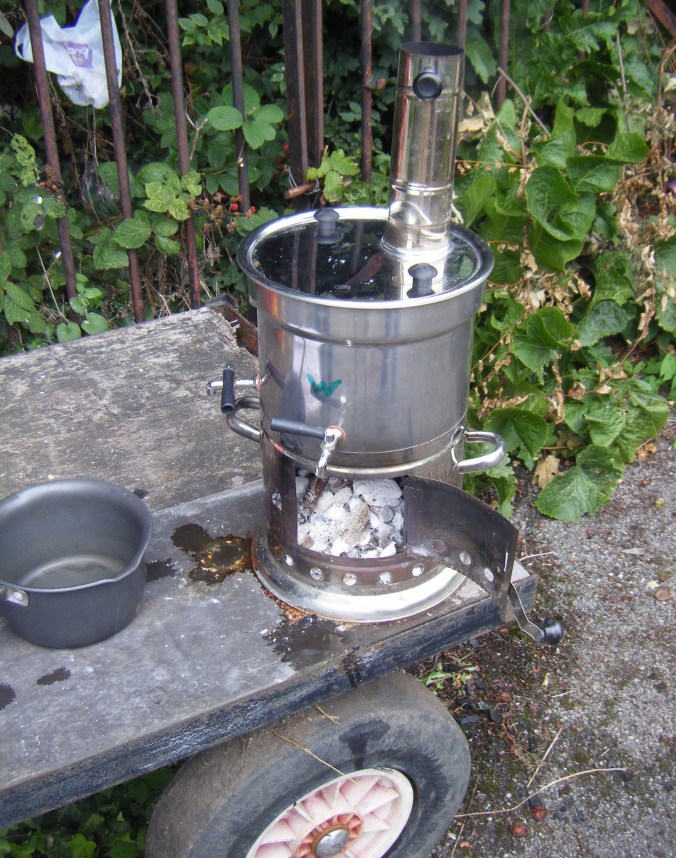
No electricity means a little improvisation, and this Turkish burner is hot water back-up.
DSCF4488.jpg

We find honey for sale too, the hives are kept across the highway beneath a huge pylon on the ground that was once marshland.

DSCF4495.jpg

To end our afternoon Jane, an embroiderer shows us her nearby allotment where on a table she has an assortment of jars containing a collection of natural dyes with which she colours her materials.

DSCF4502.jpg

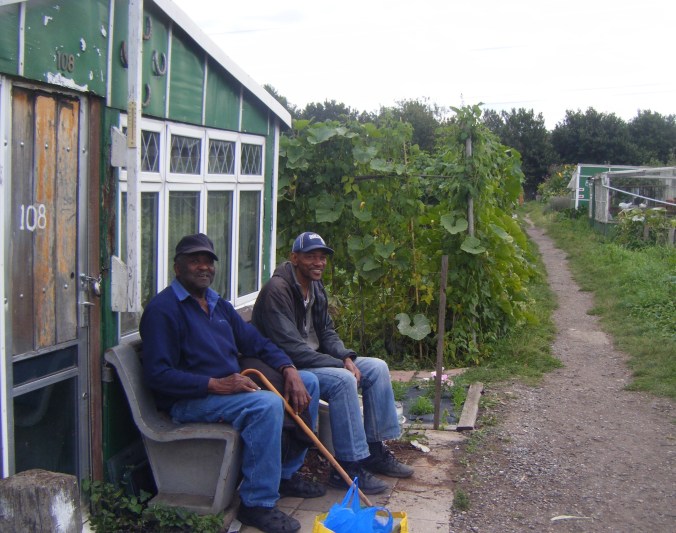
This has been an insight into a community bound together by horticulture and hard work. 30% of the allotment holders are of Turkish origin but there is also a vibrant Jamaican fraternity. These guys proudly explain the merits of calaloo, a type of spinach which they grow. It can be a struggle to compete with the mares tail, a persistent weed and a reminder that this area was once marshland.

It has been a fascinating and memorable experience. We have learned much about the culture and cultivation of allotments. A lesson too in recycling. We have been entertained in this productive place and coming away with a smile we also bear gifts of courgettes and apples.
DSCF4514.jpg


——-65——-


Gardens and Health, a Special Allotment with wheelbarrows of enthusiasm. (****)

DSCF4334.jpg

You may have heard a short piece on the Today programme on Radio 4 last week about the inaugural ‘Gardens and Health week’, an initiative generated by some garden owners of the National Garden Scheme, who wanted to not just open their gardens and raise funds for the nursing charities that the scheme supports but also to become involved in finding ways to utilise gardens to benefit health.

A few years ago the NGS commissioned the King’s Fund, the think tank on medical matters, to research the benefits to health of spending time in a garden. The 65 page report makes interesting reading which you can find here:

https://dir4cjhjw0hsi.cloudfront.net/app/uploads/2017/02/Kings-Fund-Report.pdf.

However, if you missed the Today programme and with the summer holidays upon us you may find it easier to simply click on this link: @BBCr4today and moving the slider to the 1hr43 mark you will hear how gardens have helped a variety of people.

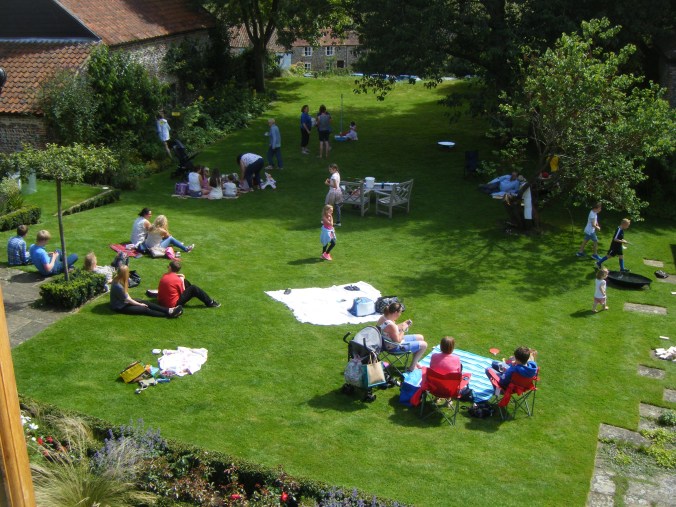
I too wanted to be involved in Gardens and Health week and offered the garden to the West Norfolk Branch of the National Autistic Society, who I had recently discovered. A delightful group of volunteers steered by mums Karan and Rachel, and having carried out the all essential risk assessments cunningly completed on a mobile phone, they decided to celebrate their first decade in our garden:

IMG_1460 (2)The day  was gloriously sunny and over 100 members of the Branch came from all over West Norfolk plus some local visitors. Families picnicked on the lawn,
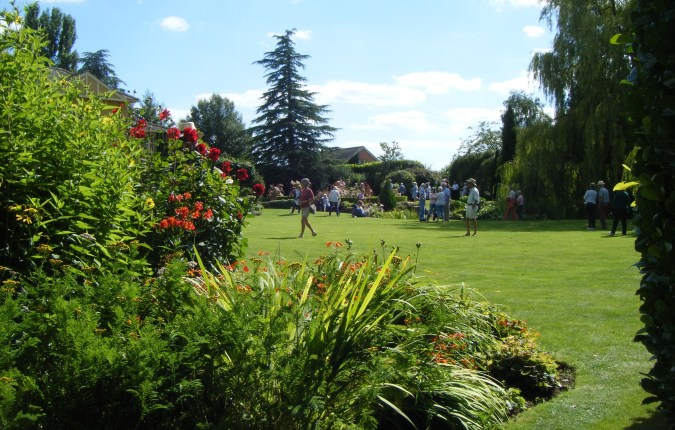
DSCF4230.jpg

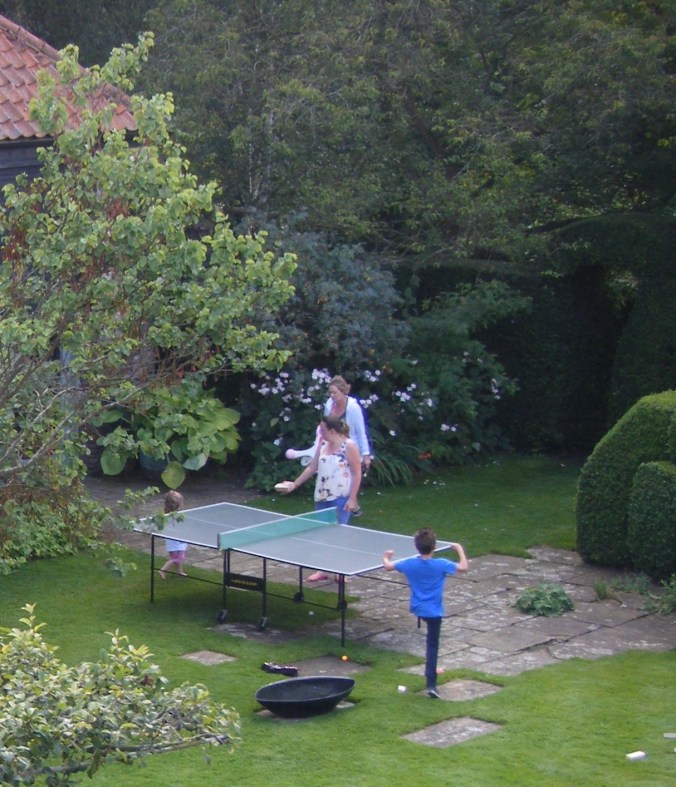
played games

DSCF4228 (1)

and simply relaxed in the garden.

DSCF4226 (1).jpg

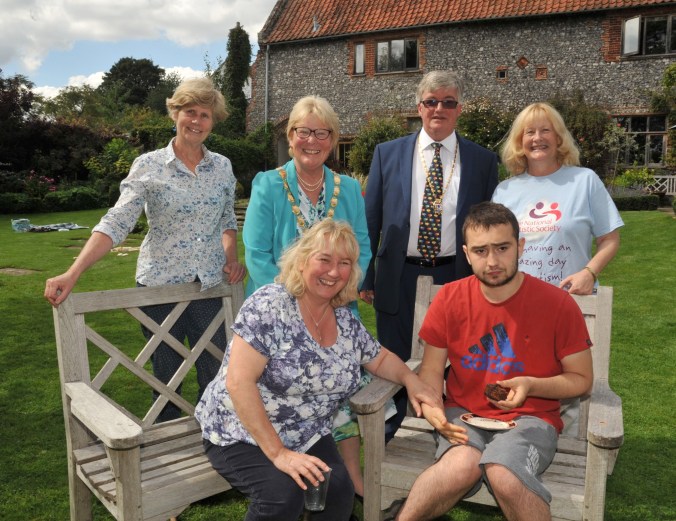
The Mayor of King’s Lynn and her consort came too, displaying not just her smart chains of office but a genuine interest and so totally delighted to be part of this special day.

YLP150817  (1).jpg

The Branch had applied and received a grant from the NGS enabling them to acquire an allotment in West Lynn. I was interested to see what they were doing, so paid a visit to the plot where I found Rachel with her autistic and delightful son Harvey.

The allotment gate was open:

DSCF4323

The ground had not been worked for some six years and the first job was to make a secure environment by putting up a fence. The rules allow up to 6′ and must be transparent for inspection purposes (rule 10.3). From this livestock fencing the Branch have proudly displayed their banner for all to see who exactly they are.

Incidentally, the allotment rules, all 17 pages can be downloaded : https://www.west-norfolk.gov.uk/downloads/file/3065/allotment_rules_2017, and for some might be a good holiday read.

DSCF4326 (1).jpg

It is perhaps interesting to find in this lengthy document no mention of a reduction in fees for charities. I can’t help thinking this enthusiastic group of volunteers are actually doing the council a service and their rent should really be a mere peppercorn.

The next purchase was the all important shed. The rules restrict the size which meant that they were unable to accept the free shed they were offered, so an alternative was purchased. We were grateful for it today as the clouds burst and three of us were able to keep dry.

DSCF4327 (1).jpg

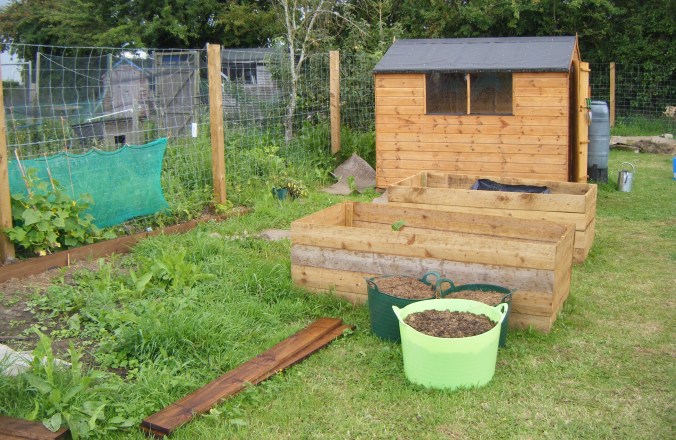
Then came the hard work. Rachel and friend began to dig and by the looks of the clods heaped on the side it must have been heavy going. The ground suffers from getting sodden so they cleverly dug a run-off channel. Taking on this allotment in May, the requirement from the council was to have cultivated at least 60% of the plot in the first three months (rule 6.1.8). No pressure! However they seem to be already reaping the fruits of their labours.

DSCF4316.jpg

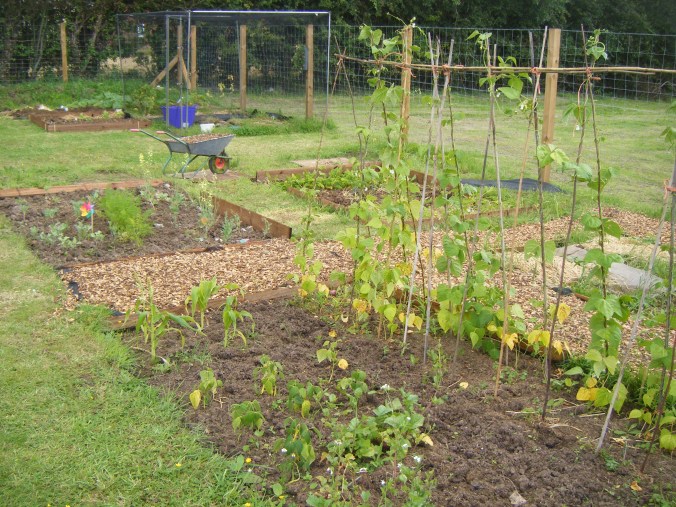
Raised beds have been built and are waiting to be filled.

DSCF4315.jpg

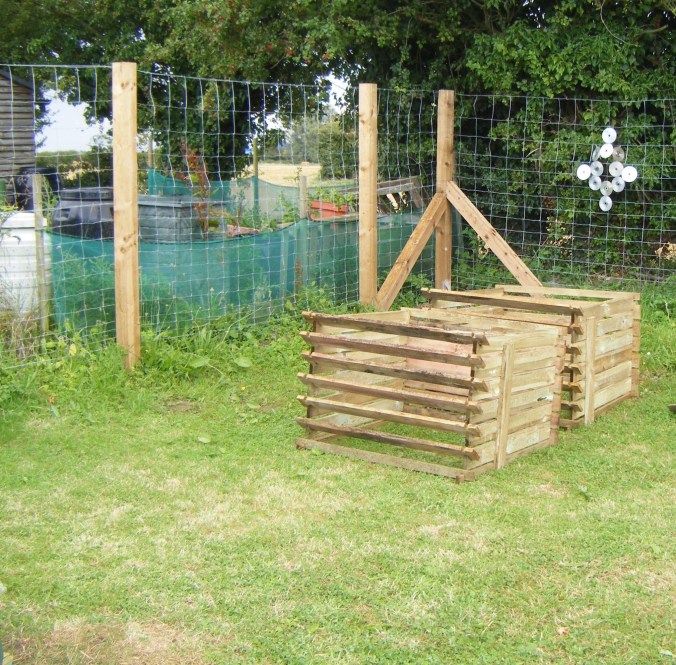
The compost bins are ready to put in position but it is not all about growing; a small percentage of the area can be for recreation and this corner is destined to be a play area.

DSCF4312.jpg

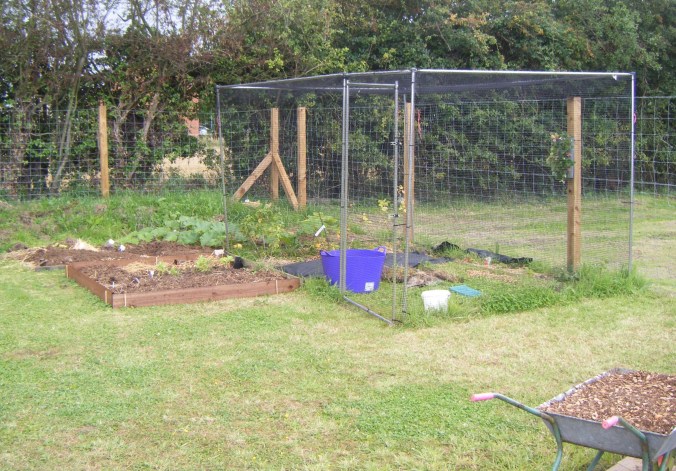
The fruit cage, the correct size (rule 9.2) is a little empty as yet but I now know where I can put my surplus currant bushes.  The council supplies and delivers an endless supply of wood chips for the paths. There are plans for a greenhouse which has to be fitted out with toughened glass.

DSCF4314 (1).jpg

This is a huge task and I am in awe at what has been done.  As Rudyard Kipling said ‘Gardens are not made by singing ‘Oh, how beautiful,’ and sitting in the shade.’ This allotment is a great project and I am glad the NGS has gone some way to assist.

There is also another keen supporter and that is young Jamie Lefever who aged 11 years old plans to set off from the allotment next Thursday to cycle to the National Autistic Society’s head office in London arriving the following day. He has taken up the challenge to thank the wonderful volunteers at the Branch for helping his sister who suffers from autism.

Anyone wanting to nourish his enthusiasm and wish him well might like to visit: https://www.justgiving.com/fundraising/jl-wnnas.

DSCF4328


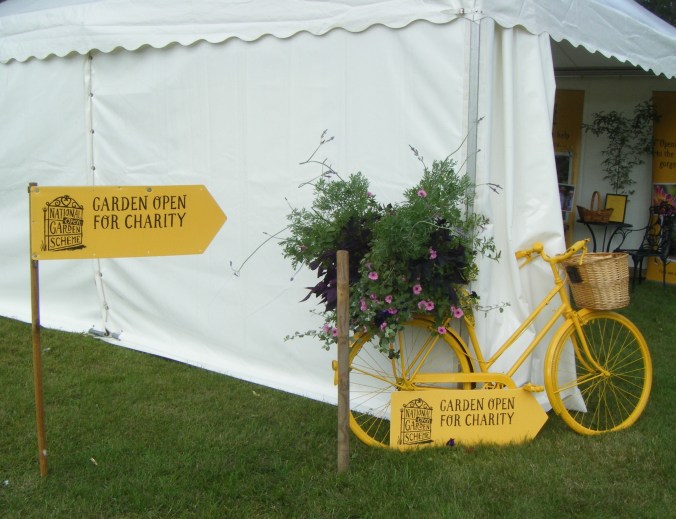
I am delighted to see his bike is that familiar yellow.  Of course if he should need it, we have a spare one here…

DSCF3686


——-oOo——-

Cobbs Hall, a swansong in Suffolk (64)

The Garden Gate was open at Cobbs Hall, Great Saxham last Sunday (13th August). Situated some 4 miles West of Bury St. Edmunds I was amongst an astonishing 670 other NGS visitors.

Butterflies danced above the late summer borders vibrant with colour. This golden Dahlia nestled between artichokes,

DSCF4128.jpg

and orange helenium gloried in the August sun.

DSCF4129.jpg

I was accompanied by my writer friend who lives near Newmarket; very much a non gardener she was glad to find a comfortable spot in the shade where she could sit in peace.

DSCF4131

We  sat together for some time taking in the splendour of the afternoon and ‘people watching’  as visitors enjoyed the garden.

DSCF4139.jpg

The garden is surrounded by a wall, a fortification against the increasing population of deer. Close to our seat a secret paved area, shaded by trees and hedge, the ferns, moss and ivy contribute to a air of quiet contemplation.

DSCF4134.jpg

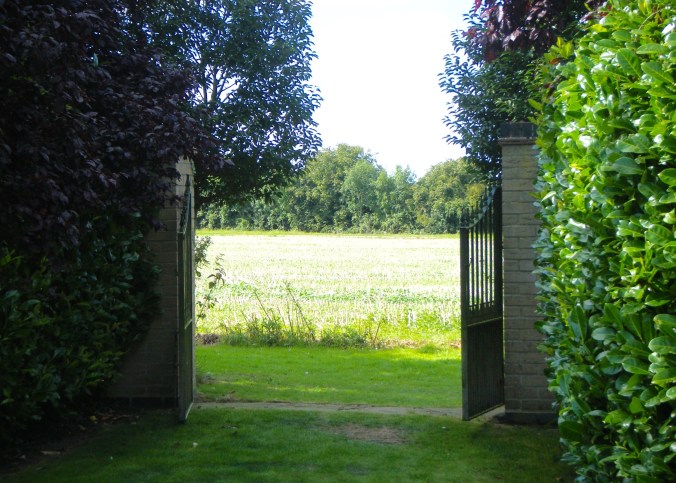
The gates in the wall open wide to allow a view of the harvested farmland beyond.

DSCF4144.jpg

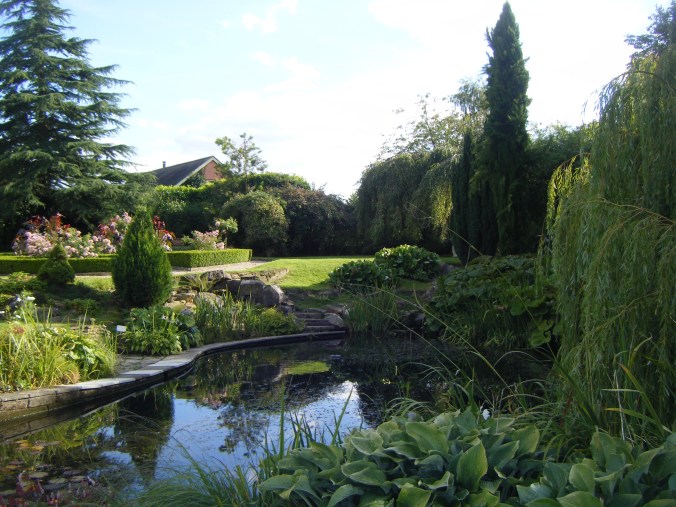
The centre of the garden is dominated by a series of ponds, where a boat lies hidden in the weeping willows.

DSCF4145.jpg

On this side the water cascades over small rocks which brings much pleasure to the owner’s little grandson who plays with his toys in the gentle flow.

DSCF4146.jpg

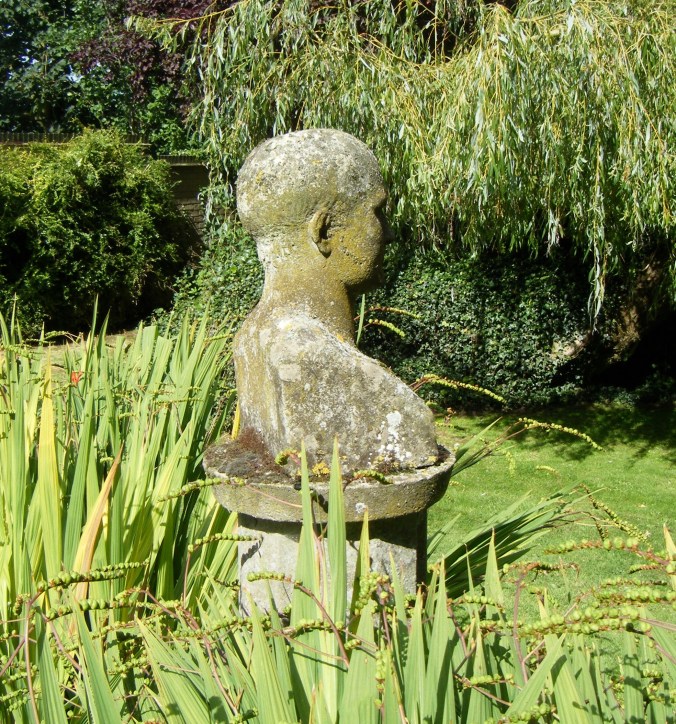
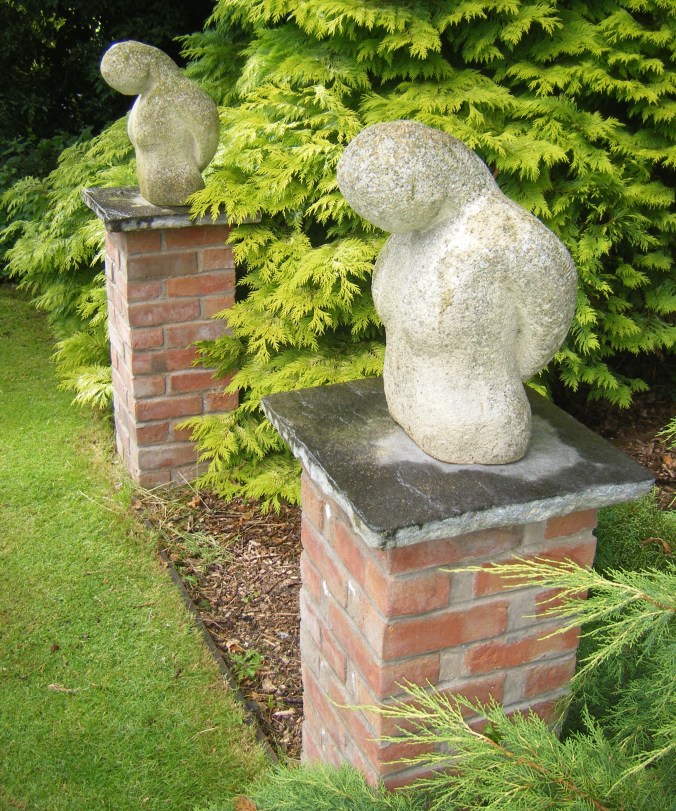
A smooth head of stone surveys the scene from his pedestal.

DSCF4151.jpg

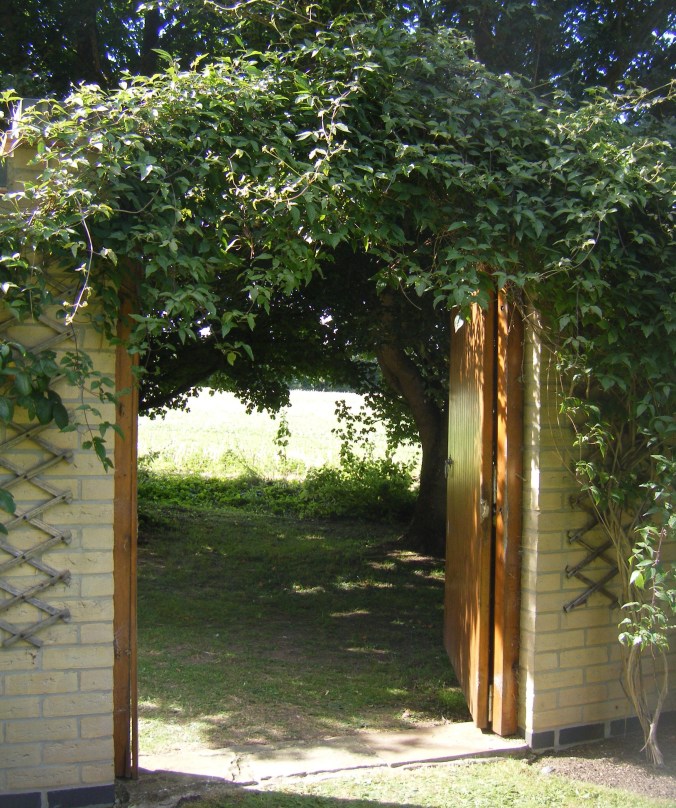
The wall is not actually built on the perimeter but set back a little away allowing for the garden to seemingly overflow. The doorway invites us to take a look.

DSCF4156.jpg

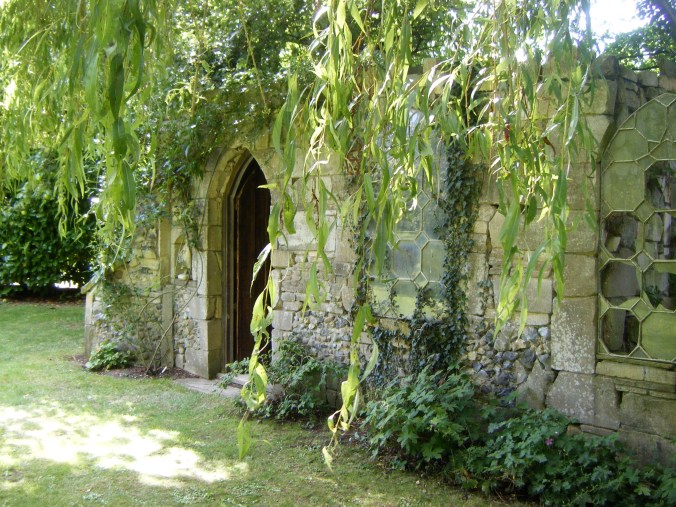
A folly contains the redundant bore-hole pump that used to raise the water from 70m below the ground.

DSCF4157.jpg

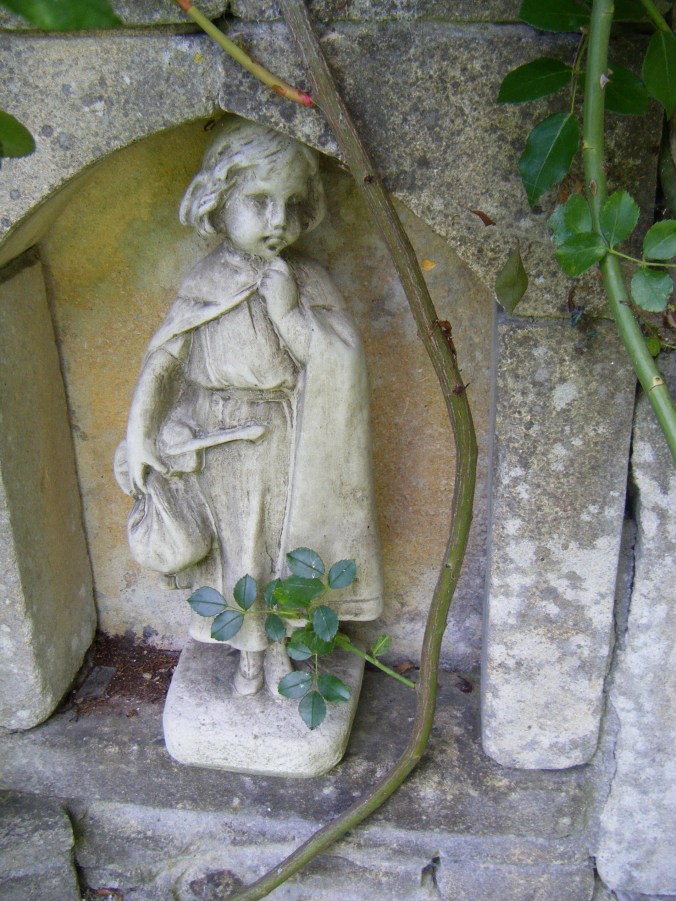
I listen to visitors exclaim, charmed by this little girl tucked in a recess by the gothic doorway.

DSCF4170.jpg

The dappled light on the shades of green is exquisite this afternoon.

DSCF4165.jpg

there is an occasional flush of colour and this fuchsia is  planted in an old tree stump.

DSCF4160.jpg

Across the pond, it is a picture of people pausing by the water’s edge.

DSCF4162 (1).jpg

Reflective and calming the water is clear.

DSCF4180.jpg

In a previous garden I spent sometime trying to avoid an ugly tennis court, which every time I pointed the lens would appear in the picture. Here the tennis court is virtually unseen, surrounded by mature planting,

DSCF4176.jpg

it is a delight, one of those rare grass courts, where people want to kick of their shoes and play a game.

DSCF4198.jpg

The shaded path leads back to the house, a touch of what you might call shabby chic in a horticultural sense,

DSCF4201.jpg

a complete contrast to the parterre in front of the house.

DSCF4203.jpg

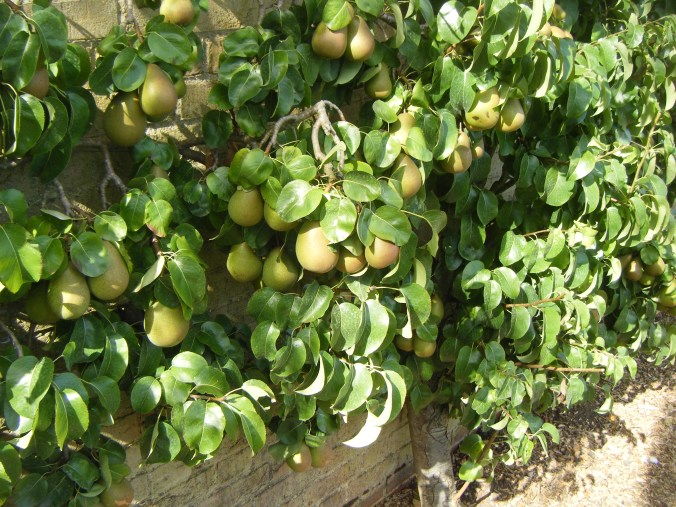
Before taking tea we visit the kitchen garden where a pear trained against the wall, is laden with fruit,

DSCF4185.jpg

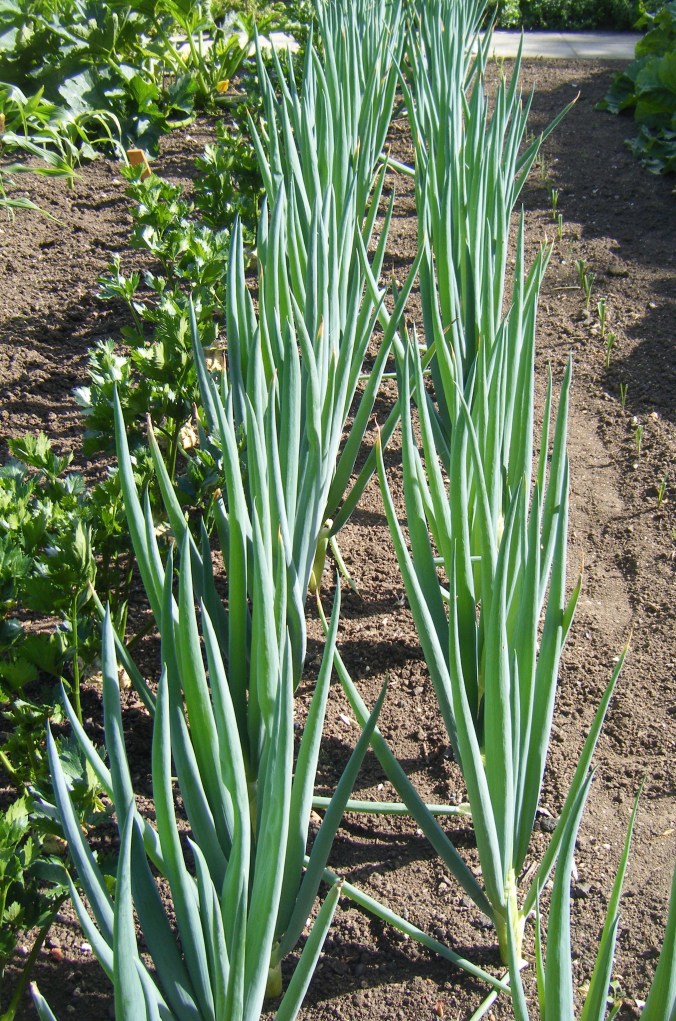
and onions, in their straight lines grow down on the central bed,

DSCF4188.jpg

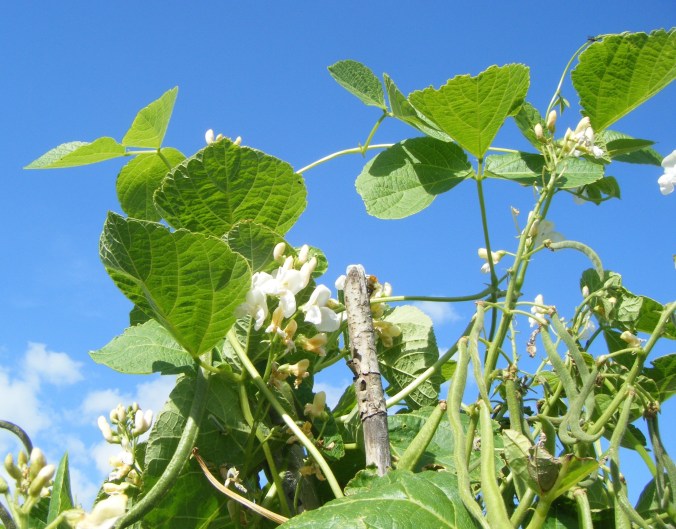
whilst runner beans reach for the sky.

DSCF4195.jpg

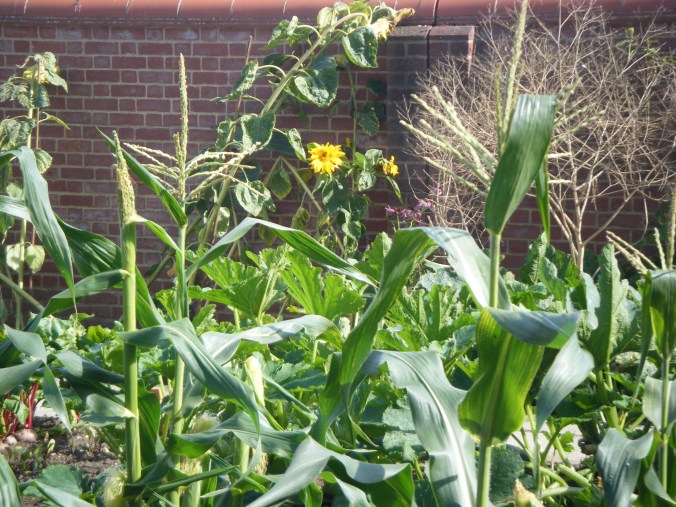
There is plenty of produce here, the corn-on-the-cob ripening in the sun.

DSCF4189.jpg

Just outside the walls of the kitchen garden is a mulberry, its fruit in various stages of ripening.

DSCF4197.jpg

The neat greenhouse sits comfortably not far from the back door,

DSCF4204.jpg

it too is abundant with fruit.

DSCF4205.jpg

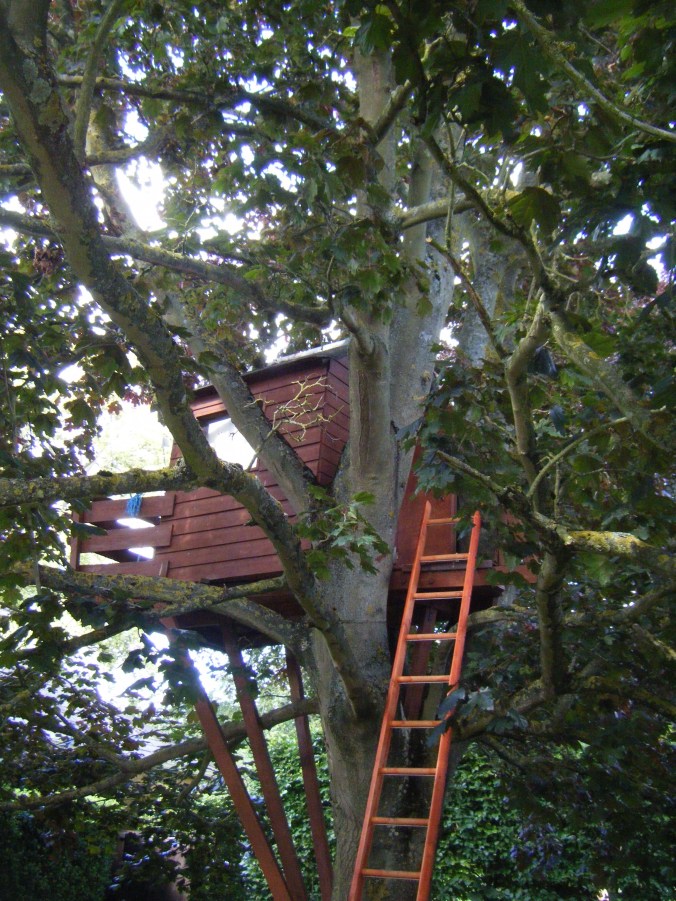
The climb up to the tree house is indeed steep; definitely made for small children, I felt like Alice, completely oversized.

DSCF4207.jpg

It is time for tea which is busily served from the kitchen courtyard,

DSCF4212.jpg

and it is a joy to sit and relax.  I wonder just how often we find the time to sit in our own gardens. We chat for far too long and realise that most of the visitors have all gone now. The garden is beginning to breathe a sigh of relief in the evening light.

DSCF4224.jpg

Cobbs Hall has been open for the NGS for over a decade raising thousands of pounds for the nursing charities the scheme supports. The owners now in their seventies feel it is time to downsize and so now at the end of the lawn the garden gate has been closed for the very last time.

DSCF4219 (1).jpg

——-64——-

East Haddon, the Hall and nearby show gardens (62 & 63)

East Haddon is a small attractive village 8 miles from Northampton and the graceful gates to the hall were wide open.

DSCF3878.jpg

Old, old trees, with wide trunks and twisted branches survive along the drive,

DSCF3913.jpg

and through the branches we are able to catch sight of the magnificent Georgian grade 1 listed building.

DSCF3915.jpg

The garden first opened for the NGS in 1928 and was described in the Yellow Book as being surrounded by 8 acres of parkland; so I was surprised to find neatly mown lawns and not the grazed type of a country estate. I was worried that my interpretation of parkland was incorrect and a subsequent search in the Oxford dictionary provided me with the definition of parkland as ‘open grassy land with scattered groups of trees’, well, that is exactly what it is.

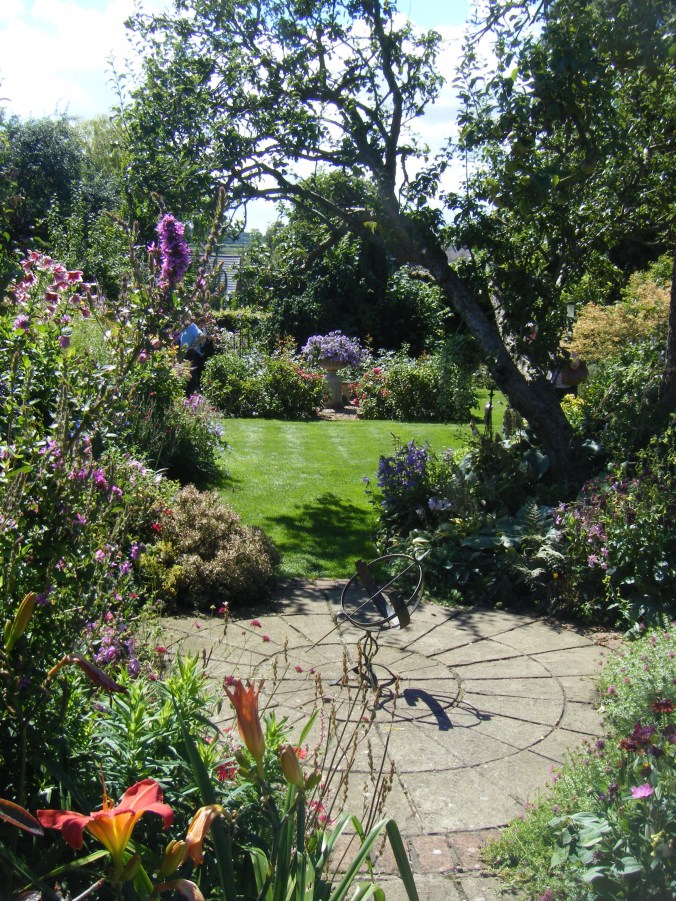
Set in the lawn to the left of the house, on the west side is a colourful circular border,

DSCF3882 (1).jpg

which can be reached from the ‘lion steps’. Before descending we stay on the path following the border of roses, still in bloom and the name of which the owner has sadly forgotten.

DSCF3884.jpg

While the Squire Henry Sawbridge in 1780 chose his spot wisely, the view is magnificent,

DSCF3885.jpg

the builder sensibly put no door on this northerly aspect. The present owner bought the house in 1989 and undertook much restoration to the house, he tells us that you can see the view right through from the front door.

DSCF3891.jpg

An elegant  fountain graces the centre of the sweeping lawns on the north side.

DSCF3888.jpg

Returning along the west side a pink border is dominated by hydrangeas lies just below the low wall.

DSCF3892.jpg

This is really the only part of the garden with flowers, recorded as having an input from the Lutyens/ Jekyll partnership, the sundial and steps appear to be the only remnants of the original design.

DSCF3893.jpg

Further along and through the clumps of trees a willowy X marks the spot! Behind is an informal pond.

DSCF3896.jpg

Mature trees spread out on the lawn and include this handsome Sweet Chestnut Castanea sativa, a tree thought to be introduced by the Romans it is not to be confused, and is no relation to the Horse Chestnut Aesculus hippocastanum which was first introduced from Turkey in the 16th Century.

DSCF3905.jpg

From under the tree canopy we look towards the south side of the house. Used as a military hospital during the First World War, a maternity hospital during the second, it then became a girls school for some 20 years. What a medley of mankind have walked through that magnificent front door and enjoyed these grounds

DSCF3900.jpg

Fresh white Iceberg roses with their lengthy flowering season are a good choice in front of the stable block built in the 1950s,

DSCF3909.jpg

and a collection of geraniums brighten the yard between house and stables. Nothing beats the view through the modern archway.

DSCF3907.jpg

The variety of stone and terracotta containers are overflowing.

DSCF3911.jpg

It is containers, statues, fine garden ornaments and architectural stonework that we find across the road in the Haddonstone Show Garden.

The business which manufactures artificial stone  was established in 1971 by Bob Barrow (1932 – 1996).

Bob-Barrow-Sepia.jpg

His Manor house where he lived with his family became the original showrooms displaying an increasing variety of ornamental and architectural cast stone. The Orangery stands at the end of the top lawn is serving teas in aid of the local school today.

DSCF3802.jpg

Despite an air of  commercialism you can feel that the series of gardens have been very much part of a family life.

DSCF3803.jpg

Even on a wet day the pool is so inviting with its classical pillars clothed in climbers,

DSCF3804.jpg

and these three ancients, Brutus, Bacchus and Bacchante, not known for their swimming skills, are keeping watch at the far end.

The sound of water is everywhere either gently spilling out over in the ‘Neapolitan’ fountain,

DSCF3809.jpg

splashing down the tiers of the ‘Eton College Fountain’,

DSCF3848.jpg

or simply spouting from mouths.

DSCF3815.jpg

Areas divide into rooms which are either clipped and formal

DSCF3814.jpg

or relaxed and free flowing.

DSCF3808.jpg

The elements Earth, Air, Fire and Water are represented in these charming little guys who turn their backs to the tennis court and line the grassy pathway.

Each design is hand made using moulds created within the company’s studios and in time they weather to look like the natural stone.

DSCF3821.jpg

The Regency Urn on a pedestal looks just as good empty as it does planted.

DSCF3825

And why not give those doves a classical lift.

DSCF3826.jpg

Powerful eagles, perhaps designed in mind for the American market,  guard this rustic brick gateway.

DSCF3829.jpg

Through the entwined and moss-covered branches of the apple orchard we are drawn towards a circular bed,

DSCF3828.jpg

where ‘the Gardener’ stands amongst colourful cosmos. Was it his twin we spied in a similar situation up at the Hall?

DSCF3832.jpg

It is not all stone ornament, a box topiary is taking shape

DSCF3837.jpg

A path runs between the wooden pergola and perennial border and the Hadrian vase at the end becomes a focal point.

DSCF3840.jpg

An entrance in the yew hedge bring us on to the middle lawn where a gothic jardiniere grandly fills the space.

DSCF3849.jpg

Plants overflow from the ‘Raphael’ pool sited on the bottom lawn it is overlooked by the church tower of St. Mary the Virgin.

DSCF3843.jpg

Will Shakespeare and Inigo Jones, the latest designs taken from the Sir John Soane Museum stand waiting to entertain diners on the patio by the house.

DSCF3856.jpg

We cross the road to find the gate is open to the well-maintained Jubilee Garden, an overflow where yet more ornaments and structures can be found,

DSCF3864.jpg

and the sound of water continues to be heard; the water tower built in 1890 and, I imagine, not for sale, stands high above the Bayeux Fountain on the lawn below, looking good with the spires of bold acanthus.

DSCF3861 (1).jpg

The classical pavilion is ready to complement the landscape of any stately home here or abroad,

DSCF3867.jpg

whilst the ruined gothic grotto looks as though it has been here for years.

DSCF3874.jpg

It is not just a show room but an English country garden.

DSCF3862.jpg

The collection is vast and one might wonder why you would wish to adorn your garden with any one of these items.  Consider for a moment the words of the designer David Hicks 1929 – 1998 which appear in the hefty Haddonstone brochure:

Garden ornaments provide emphasis and accent in a garden, drawing the eye in a particular direction. Most ornaments, because they are solid and static objects such as urns, seats, columns or statues provide a contrast with the living things around them.

Too large are the items to pop in the car but a pint sized owl, affordable too, is being offered for sale today,  we can’t help thinking it is the wisest of purchases.

DSCF3871


——-62 & 63 ——-

Sandringham Show (***)

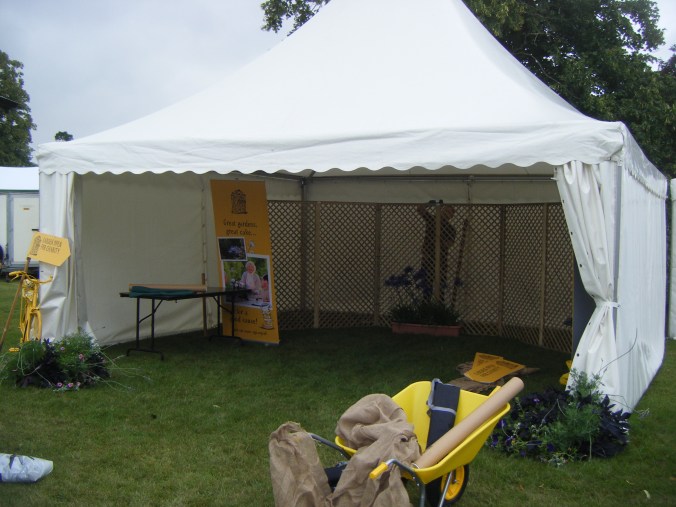
The Norfolk NGS have for the past few years taken a stand at the Sandringham Flower Show. Tucked away in the Horticultural Marquee it has been hard work trying to compete with the commercial growers with their fine displays of clematis, roses and perennials.

DSCF4114

This year, our ninetieth anniversary we were invited to have our own marquee situated on the Royal Route. The show has been running for 136 years and is organised by a hard working and efficient team of volunteers. David the Chairman rang me sometime last autumn to chat about the stand, and suggested in the nicest possible way that the stand might benefit from a little more than just a little old grey haired lady with a pile of booklets.

I quickly checked in with my hairdresser and under my highlights wondered how on earth to fill that empty space 6m x 6m marquee.

The answer is you call upon the most artistic and professional of your garden owners to help; Karen Roseberry who lives at Yeoman’s Cottage (open on Sunday 20th August) had already created some eye catching posters for us that we have displayed along the empty walls of the busy corridors of the Norfolk and Norwich Hospital.

NGS N&N poster 2.jpg

Sandringham was one of the original gardens to be open in 1927 and has supported the scheme continually every year since. We felt it important to display this historical information and so Karen created a poster especially for the show:Sandringham poster_rev2 (1).jpg

The next problem was how to display them? Fiona, co-County Organiser came up with the idea of trellis. I pegged out the area on my lawn and decided that three 6′ X 6′ trellis panels would be suitable. However not so easy to find; yes everyone could supply 5ft but not 6ft and time was running out. Fakenham Garden Centre, regular advertisers in our booklet promised to deliver by Monday, just a day before we were due to set up the stand, and they did.

Matt, who once trained as a gardener at Sandringham has always lent a hand at the show. Well, not only a hand, it is usually a truck which this time he loaded up with the trellis panels, wheelbarrow, plants and any other props we might have lying around. With my car also filled to capacity we set off  to the show ground.

DSCF3665

We opened up our empty marquee and Martin, the Head Gardener at Sandringham kindly lent us two arrangements from the main garden. Lacking suitable containers, we were not exactly sure how to use them.

DSCF3662.jpg

Matt hammered in the angle irons and tied on the trellis. Head Office supplied some banners, the type that pull up and stand alone, great in an office but on uneven grass they need support. We decided to reject one of the banners, a white haired lady serving tea, purely an act of ageism I fully admit.

DSCF3667 (1).jpg

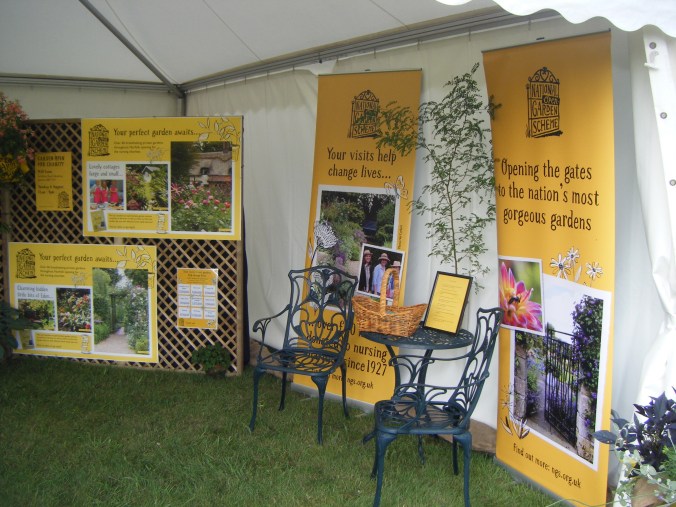
Soon we filled the space. On the lefthand side we displayed the merchandise from Head Office, tea towels and bags but sadly no aprons which had already sold out and inevitably was the one item that everyone wanted.

DSCF3669.jpg

In the centre the display of posters was enhanced with plants purloined from our gardens.

DSCF3668.jpg

And on the right, the raffle, table and chairs. Celebration fruit cake and tea pot would arrive the next day.

DSCF3670.jpg

Newly painted Daisy combined with faithful yellow wheelbarrow provided suitable containers for Martin’s arrangements and the stand was complete. EAT YOUR HEART OUT CHELSEA!

DSCF3672 (1).jpg

Traffic is not the show’s speciality so the next morning the team, five of us in all arrived in good time. We were surprised to find spectators already seated with their own chairs opposite our marquee.

NGS Chairman Martin McMillan and his wife Pat dropped in from Cheshire, whilst the Chairman of the Sandringham Show briefed us on protocol. On arrival of the Royal party everyone should remain inside the marquee except for Graham, NGS Norfolk publicity officer who would look after HRH the Duchess of Cornwall, and myself as County Organiser would receive HRH the Prince of Wales.

It was a long wait. The route was roped off. Police were posted along the way, 60 of them to be precise. The sniffer dogs came through and thankfully never found the fruit cake. The crowds gathered; some 20,000 visitors were expected. And while the Royals were enjoying themselves in the Wl tent,

Screen Shot 2017-08-09 at 19.10.58.png


we waited. A voice was heard at the back of the tent; security had not allowed my husband in. Although a young policeman had insisted on standing in front of Daisy, we had built up a good relationship and when I explained the low security risk he kindly allowed him in. We continued to wait.

Somebody asked the way to the open garden, only to be disappointed that it was just our stand.

DSCF3678.jpg

And then the rain came. Luck would have it as I was not sure how I was going to herd our enthusiastic Chairman back into the tent.

The royal umbrellas finally arrived and Graham, a bit of a charmer,  took the Duchess aside, helped her on with her coat and explained that the reason she was here was because her husband was our patron.

Then the Patron himself arrived, so versed in this line of work he effortlessly moved around greeting the team until I introduced him to my husband.

I would like to add at this point that this is not just any old husband but my chief editor, under gardener, and complete hardy perennial and although he nearly missed the boat this time, he is always there for me. I quietly disclosed to HRH that husband and he had shared a garden some sixty years ago at prep school, and thinking that this might go over his head I was surprised when in a moment of recognition he remembered that husband comes from the Channel Islands.

Prep school chat ensued and the conversation moved on to Queen Alexandra, Sandringham and the National Garden Scheme.  Prince Charles appeared to enjoy his visit, and the highlight for all of us was he concluded his visit by announcing that he was justly proud to be our patron.

FullSizeRender (1).jpg

The next day a picture of Daisy appeared in the Eastern Daily Press with three NGS ladies, not a grey hair amongst them!

——-NGS——-


Willoughby Waterleys, a collection of village gardens. (61)


It was about time I visited a group opening, so several Sundays ago I set out to see a collection of gardens opening their gates in the Leicestershire village of Willoughby Waterleys some 8 miles south of Leicester. Keen on following hounds, my daughter volunteered to accompany me not because she is a gardener but because she had only previously seen the countryside during the winter months.

We drove straight to our first garden, Willoughby Lodge Farm, situated down a track a little distance out of the village and where the family have lived for the past sixteen years. In the centre of the wide expanse of lawn was a formal pond and views across to the fields and hedges of the gentle rolling Leicestershire countryside.

DSCF3396.jpg

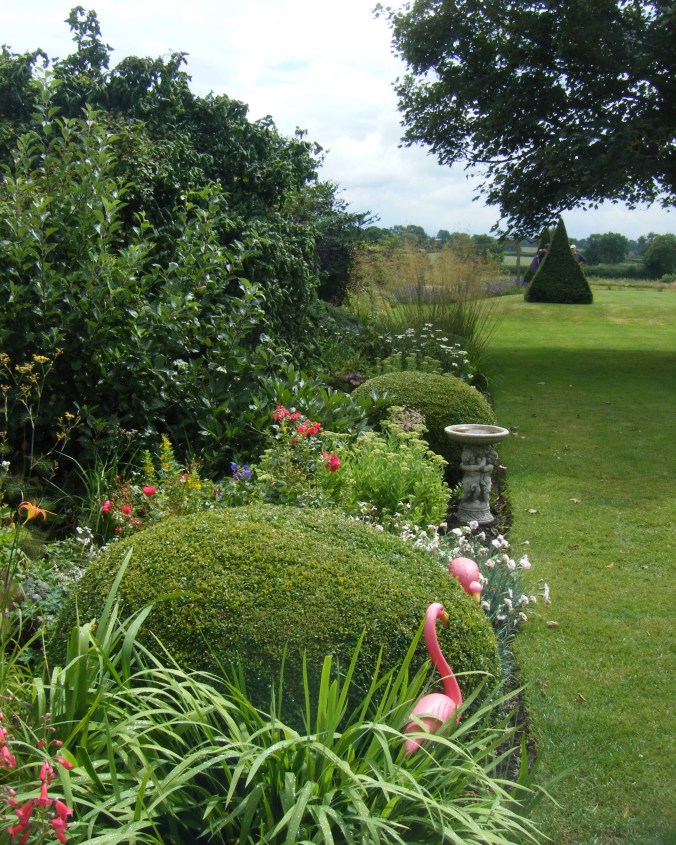
Walls run along either side of the lawn with colourful mixed borders in front. The yew pyramids were inherited from the previous owner and give a maturity to what is essentially a young garden.

DSCF3398.jpg

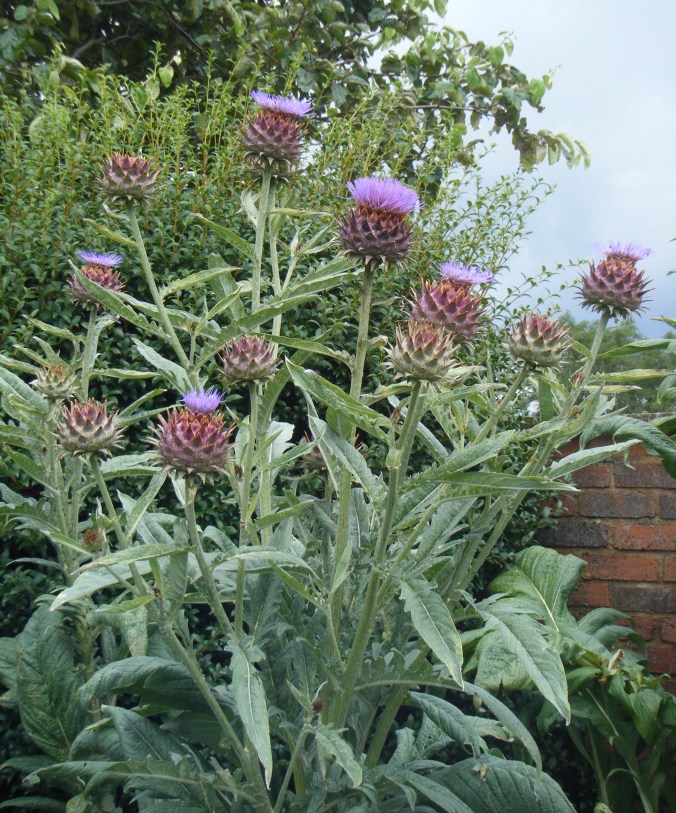
The artichoke asserts itself boldly in the border.

DSCF3401.jpg

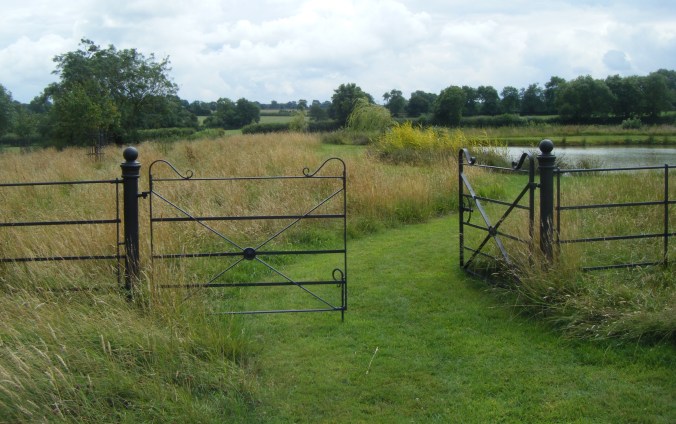
Below the lawn is a more wild area; we walk through the open wrought iron gate and follow the mown path through the long grass around the pond,

DSCF3420.jpg

to what is described as a summerhouse, but in reality is more like a snug log cabin with a wood burner.


DSCF3411.jpgWe re-enter the garden through the door in the wall, where a small and narrow, pear clad pergola underplanted with lavender leads us back on to the lawn.

DSCF3421.jpg

Over on the other side is an enclosed brick area, previously some sort of building but now a quiet place to sit and enjoy the roses tumbling over the walls.

DSCF3407.jpg

Driving back into the village we stopped in the Main Street to visit High Meadow. To the front of the house is a sunken lawn with a weeping willow and, walking up the short drive we enter the garden to the right of the house.

DSCF3423.jpg

The sound of trickling water from a fountain greets us with a display of giant hostas and geranium at the base.

DSCF3427.jpg

The reason the owners bought the house was for the views over the hedge. They had the garden professionally designed and, although it is quite compact there is plenty of space for a neat lawn,

DSCF3428.jpg

a good sized shepherd hut with beautiful white agapanthus ‘Arctic Star’,

DSCF3440.jpg

and opposite an ornamental vegetable garden.

DSCF3443.jpg

The lovely clematis ‘Polish Spirit’ climbs over the trellis fencing;  it has the added attraction of being resistant to clematis-wilt.

DSCF3438.jpg

Before visiting our third garden, Kapalua, we find the field to park the car and it is obvious that we are not the only visitors today.

Kapalua, a holiday resort in Hawaii was the name given to the property by the previous owners. Entrance to this small garden is alongside the decking containing the hot tub, from where the owners can relax, dream of holidays and enjoy the fine view over the garden and the countryside beyond.

DSCF3475.jpg

A decorative touch of recycling is hung in the hedge,

DSCF3451.jpg

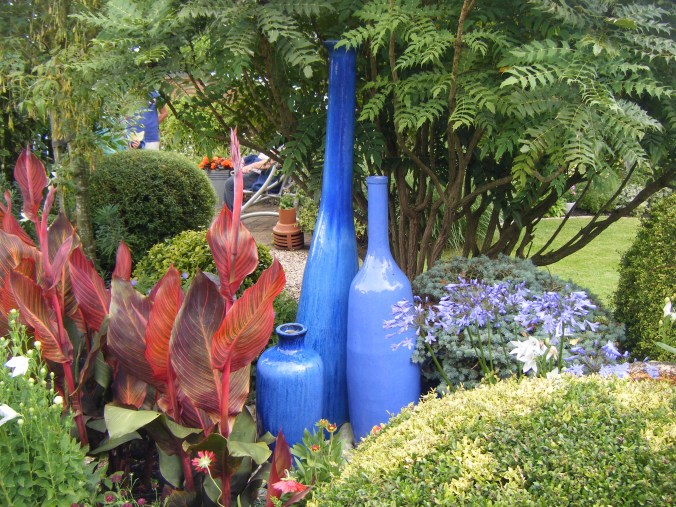
and striking blue vases rise up from a central  flower bed.

DSCF3463.jpg

The planting in the borders is also colourful, with lush pink monarda, purple cotinus and creamy phlox.

DSCF3459.jpg

whilst close to the house are the more subtle tones of herbs.

DSCF3471.jpg

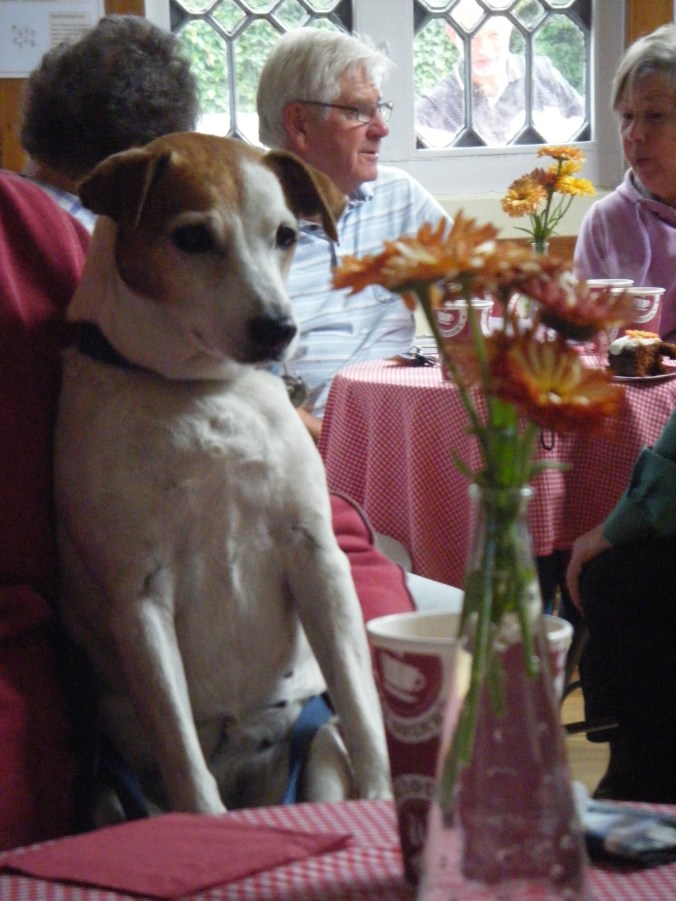
Before the next garden we call in on the village hall, built originally as a National School in 1846. It is now a listed building serving the community. Today delicious teas are being served and we are delighted that Rosie the terrier seems very content to be amongst us.

DSCF3476.jpg

A basket of begonia blooms greets us at the front of Orchard Road, the next and smallest of the gardens.

DSCF3485.jpg

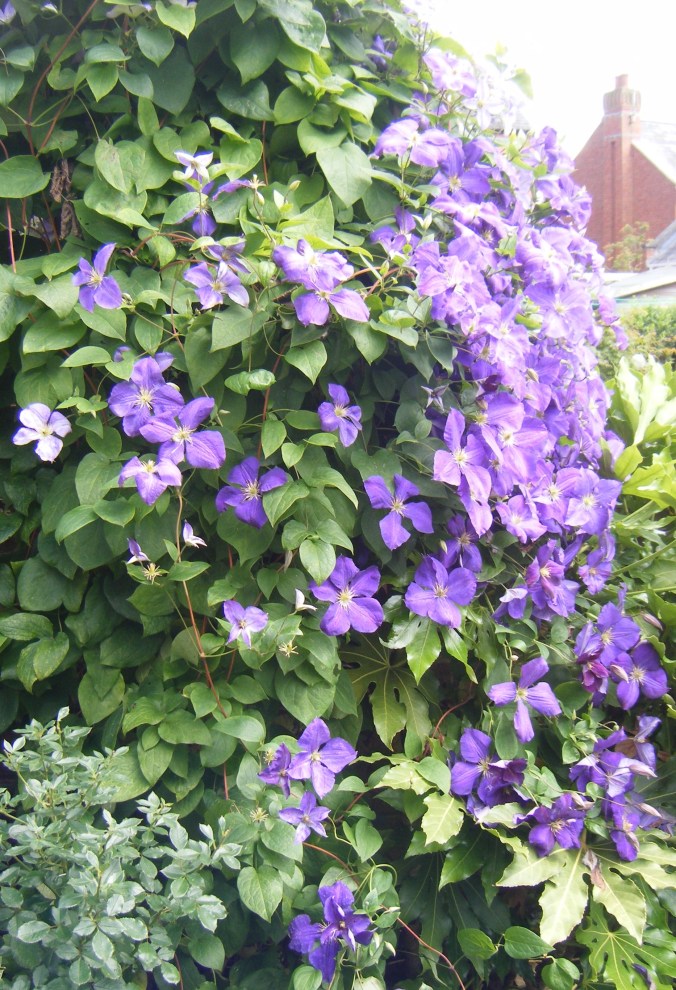
Slipping round the back we are taken by the glorious clematis with its deep purple flowers a few of which seem to pale at the top.

DSCF3487.jpg

Well kept and tidy the garden has plenty of colour and greenery,

DSCF3500.jpg

and the leaves of the hostas are spotless.

DSCF3492.jpg

There is even a tiny fountain playing energetically.

DSCF3488.jpg

Elmwood, Church Farm Lane is just a short distance away and we enter the garden down by the side of the house past runner beans and a cage of blueberries.

DSCF3504.jpg

The shed at the bottom of the garden is partially screened by shrubs and a suitable place for patio with table and chairs.

DSCF3513.jpg

The charming clematis Duchess of Albany scrambles over the fence.

DSCF3522.jpg

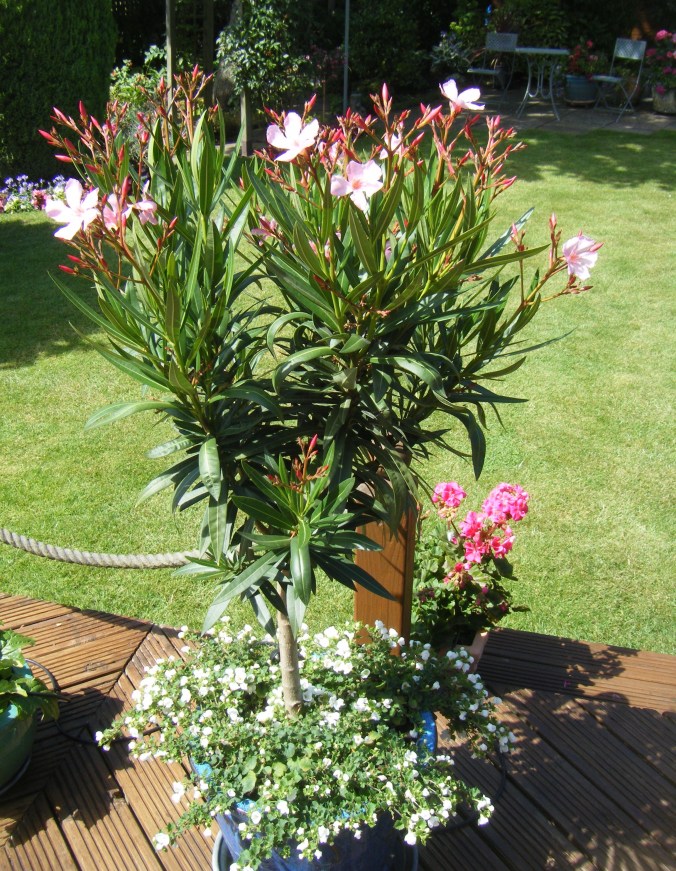
A platform of decking stretches along the length of the bungalow and is decorated  by pots of standard oleanders.

DSCF3520.jpg

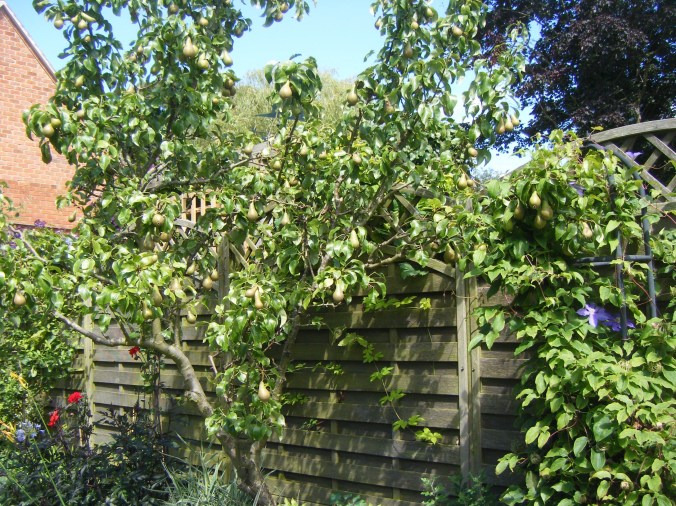
A pear tree laden with fruit grows against the neighbour’s fence, and this is the garden we go to next.

DSCF3517.jpg

The sun has come out now and at 2 Church Farm Lane, the garden is busy with visitors.

DSCF3526 (1).jpg

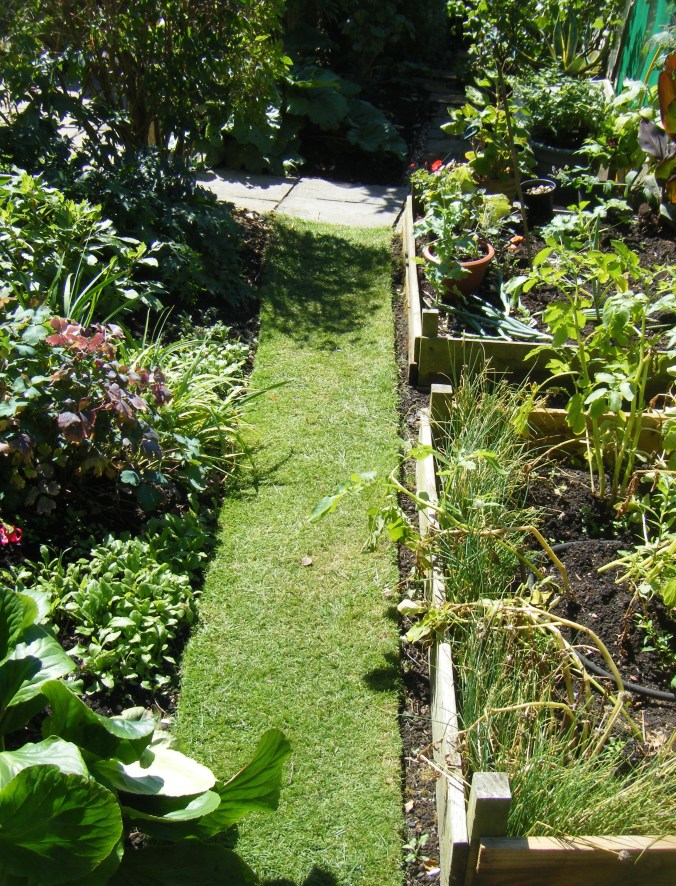
We chat to the the garden owner, the former post mistress, and it is obvious that gardening fills her time now. At the bottom of the garden are the raised beds of vegetables,

DSCF3532.jpg

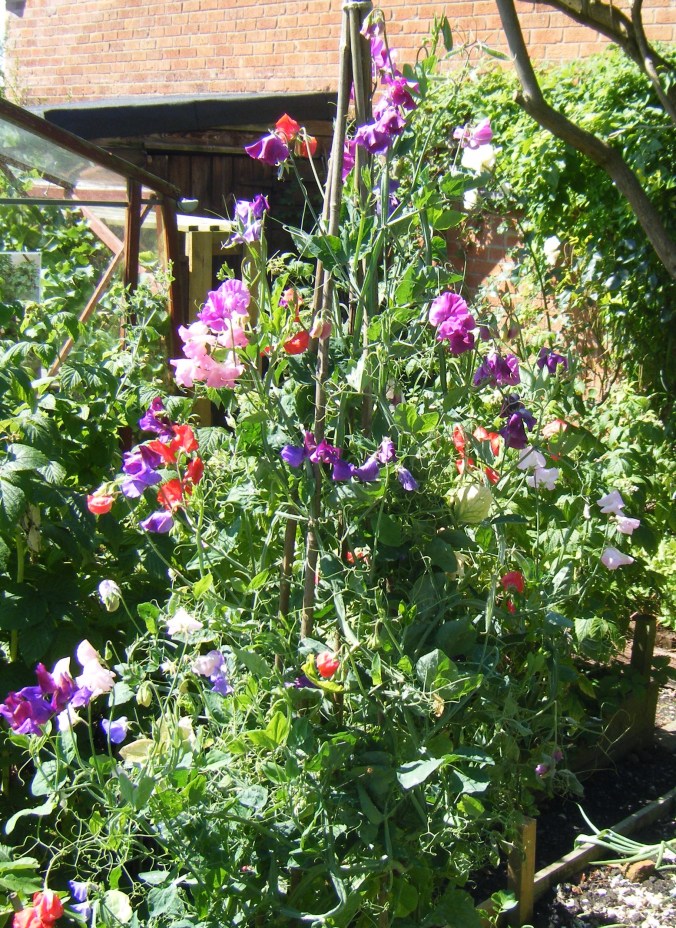
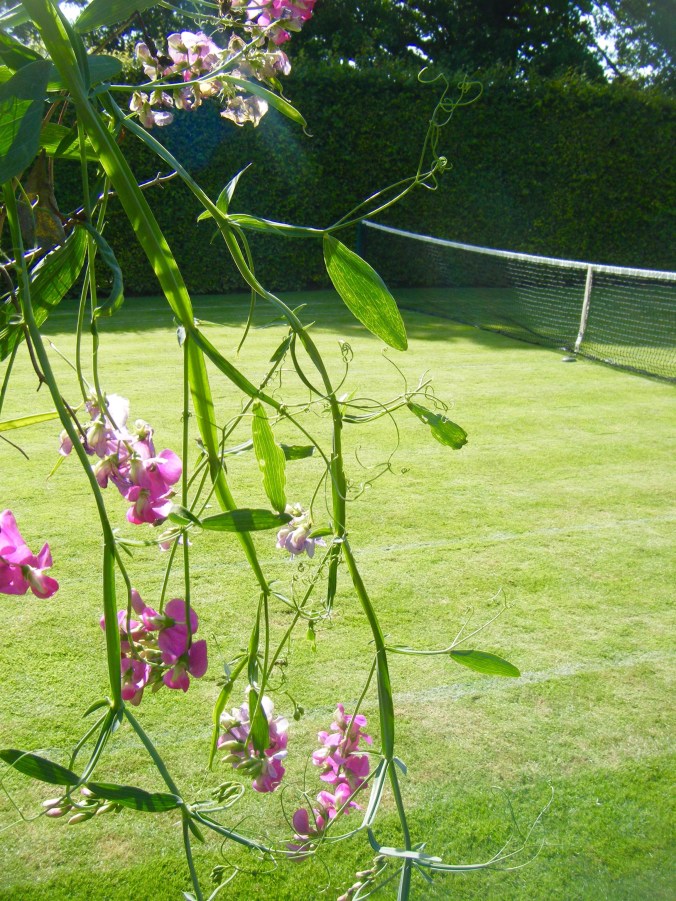
and a delightful wigwam of sweet peas.

DSCF3533.jpg

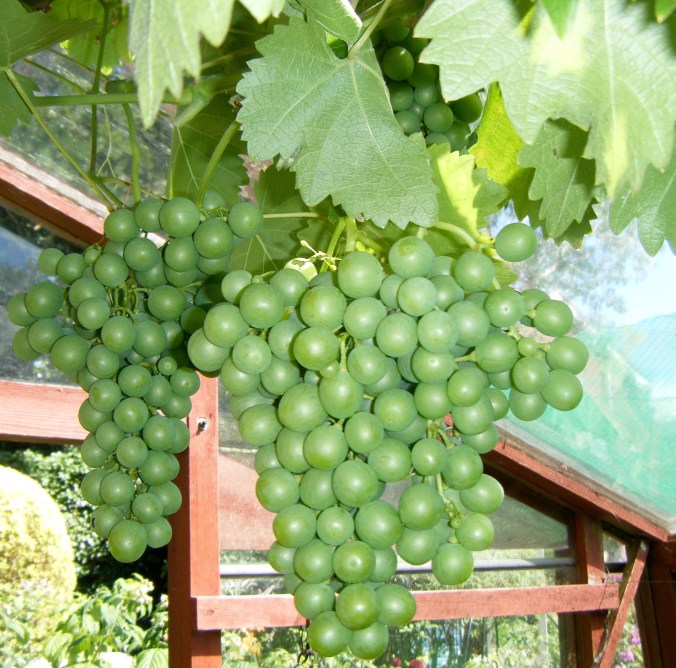
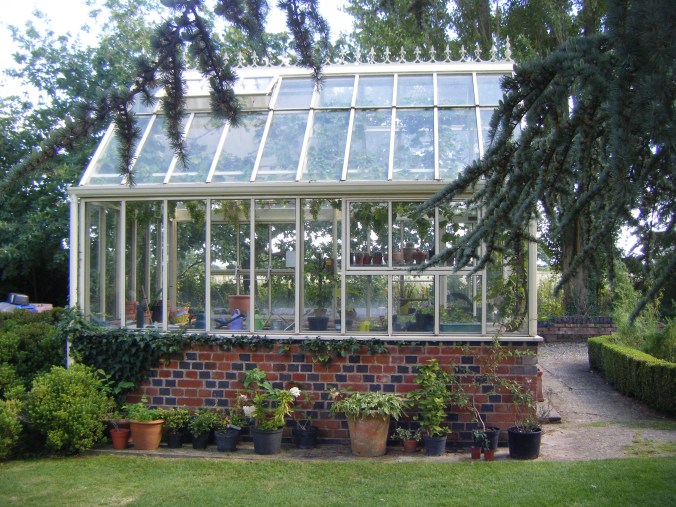
In the greenhouse perfect bunches of ‘Black Hamburg’ grapes are waiting to ripen.

DSCF3530.jpg

A raised pond with a variety of plants connects the productive area with the lawn,
DSCF3536.jpg

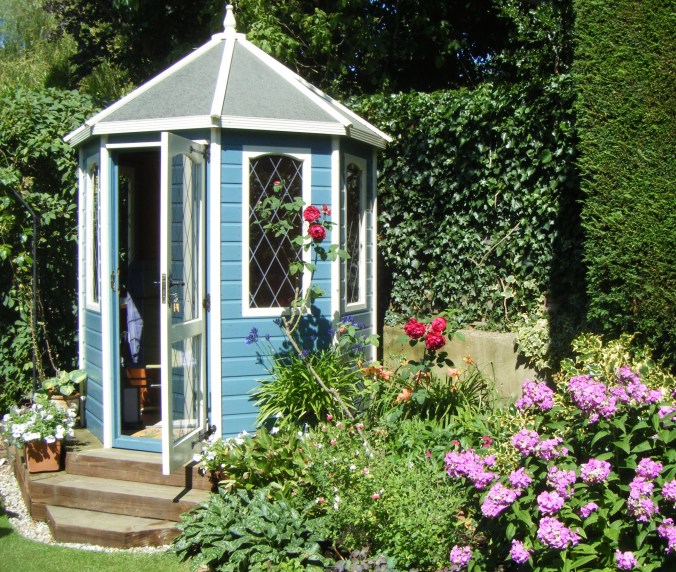
Where a little summer house is the perfect place to enjoy one’s retirement.

DSCF3538.jpg

Further along Church Farm Lane is Farmway, with its front garden richly planted and full of interest.

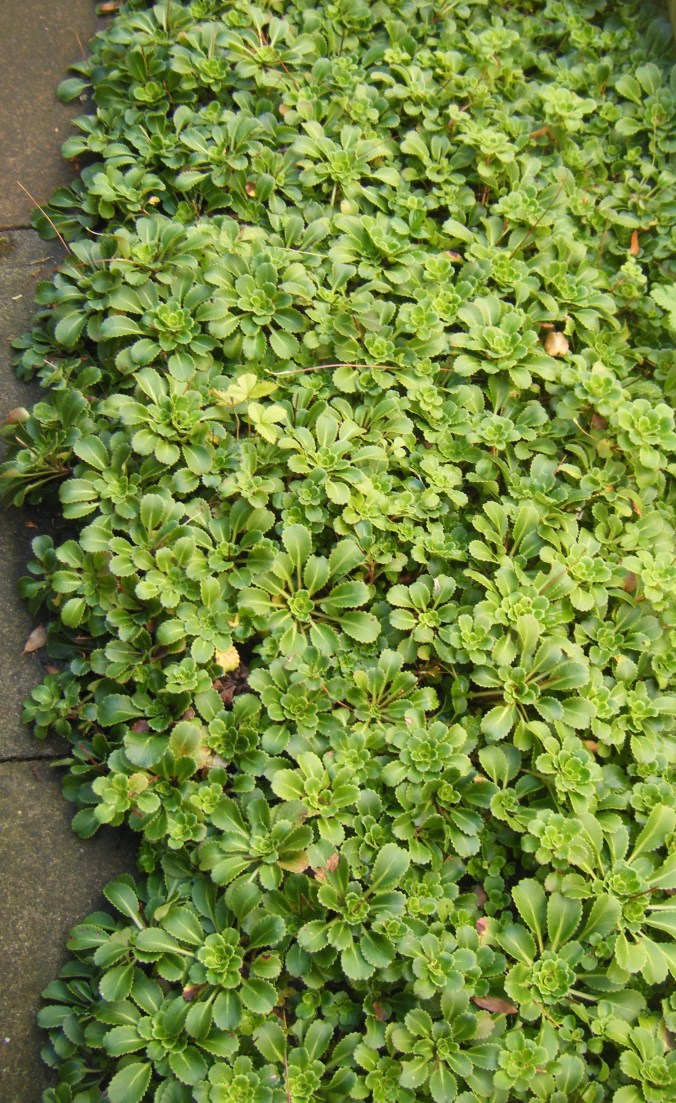
DSCF3543.jpg To the right of the bungalow we follow the path edged with saxifrage that takes us into the garden behind.

DSCF3555.jpg

Lavender and arches of roses fill a central pathway dividing the garden, so that vegetables are to the right,

DSCF3556.jpg

and lawn with colourful borders to the left.

DSCF3565.jpg

Planting is colour themed with the pinks of lavatera, dierama x clementii and monarda blending together.

DSCF3562.jpg

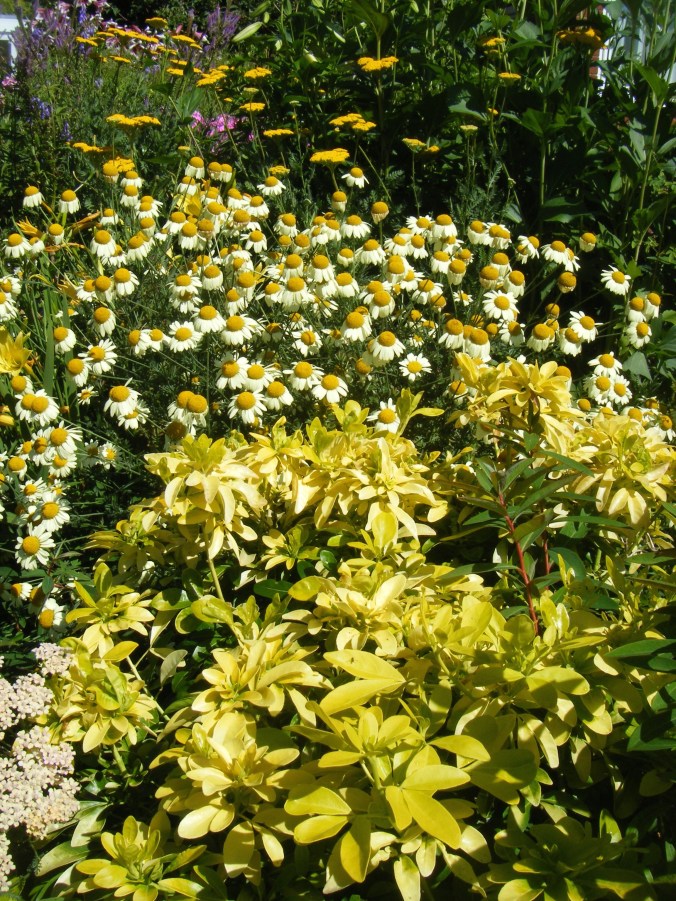
and the yellows of achillea, echinacea and a choisya put on a fine show together.

DSCF3585.jpg

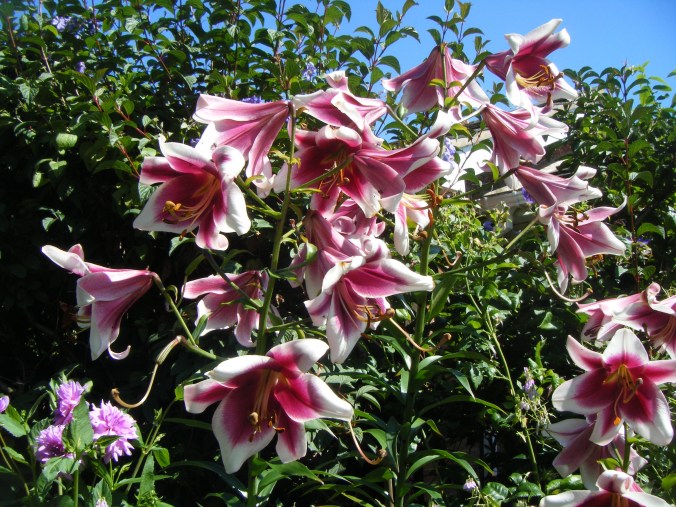
The air is filled with the fragrance from these giant lilies.

DSCF3587.jpg

Returning to our car we pop our heads into the Norman Church decorated with flowers, where is a short film is being shown about the local birdlife.

DSCF3591.jpg

The final garden, John’s Wood is a little way out of the village. At the entrance we are informed that this is:

‘Definitely not a garden but a nature reserve for wild flowers, insects, mammals, reptiles and birds.’

And John wants to share his passion with us. In 2006 he was able to acquire the one and half acres, originally a wheat field, and planted a thousand native trees. Photographs show him amongst the saplings with his granddaughters.

He directs us down the side of the wood where a notice informs us that if the worst happens to the 300 Ash trees they will be replaced with hornbeam and birch.

The pond was installed in 2011 and it looks as though it has been there for ever.

DSCF3604.jpg

In a clearing there is a hut which John jokingly calls ‘the visitor centre’. Six fruit trees have been planted and a raised platform, known as the pulpit which is supposed to give a view over the tree canopy, however the canopy has beaten us to it! The pink rose Blushing Lucy, the name of a granddaughter is planted to climb up against the steps.

DSCF3617.jpg

John is keen to pass on his knowledge and notice boards inform us of the wildlife, fauna and flora. Tucked under the steps there is a touch of humour too.

DSCF3623.jpg

Running along the edge of the wood a strip of  perennial wild flowers is a haven for many varieties of butterflies.

DSCF3638.jpg

Further along the delightful mix of annuals are in flower; yellow corn marigold, white corn camomile, red corn poppy, blue cornflower and pale purple corn cockle.

DSCF3637.jpg

The insects and butterfly are loving it.

DSCF3634.jpg

We could continue along the path running by the hawthorn hedge, but instead we cut back and take the shaded ‘curly wurly’ path through the centre of this precious wood. It is the result of one man’s dream and his passion to pass it on to the next generation.

John’s dedication to trees is expressed in the profound writings by Herman Hesse that are displayed on a board by the wood, it is perhaps easier to read here: http://www.naturalthinker.net/trl/texts/Hesse,Hermann/trees.html.

DSCF3651.jpg

We have admired great variety from this group set in the Leicestershire countryside.  The joy of a collection  is that it allows for the inclusion of not only small gardens into the scheme but also the slightly unusual. It is a glimpse into a community brought together through a love of horticulture.

——-61——-


5A High Street, a pleasing pergola in Sutton-on-Trent. (60)

Returning home from Nottinghamshire following a lovely post-wedding lunch I could not resist popping through the open garden gate in the village of Sutton-on-Trent 8 miles north of Newark.

DSCF3690

Just as I arrived there was a cloudburst and conveniently by the entrance was a greenhouse where I hastily took shelter. Here there was a small display showing pictures of the development of the site. It is always so interesting to be able to marvel at the before and after.

DSCF3692.jpg

Kathryn and Ian have owned the plot for over 30 years; originally living in the next door house they have built the bungalow and reawakened the garden in the past five years.

A long wooden pergola connects the gate to the bungalow, running alongside the windowless side of the building.

DSCF3698.jpg

Clad in virginia creeper parthenocissus quinquefolia, planted just two years ago,the structure and the path take a right angle turn towards the front door.

DSCF3774.jpg

The word pergola is from the latin pergula and refers to a projecting eave; here it is exactly that. It is interesting to think that the building of pergolas has been going on for thousands of years; used by garden makers of the Egyptians and Romans, it was revived during the Renaissance period and then many years later became much beloved by the Edwardians;  constructed in different materials, pergolas have really stood the test of time. When did they first appear in England? Well, it was the diarist and great garden visitor John Evelyn who mentioned the word ‘pergola’ in 1645 when he described the cloister of Trinita dei Monti in Rome. He then uses the word in an English context some years later in 1654 when he writes of a ‘pergola’ built by the fifth Earl of Pembroke.

Looking left out from this pergola through a riot of colour, we can see the top pond, dug out in 2015; it is looks as if it has always been there.

DSCF3702.jpg

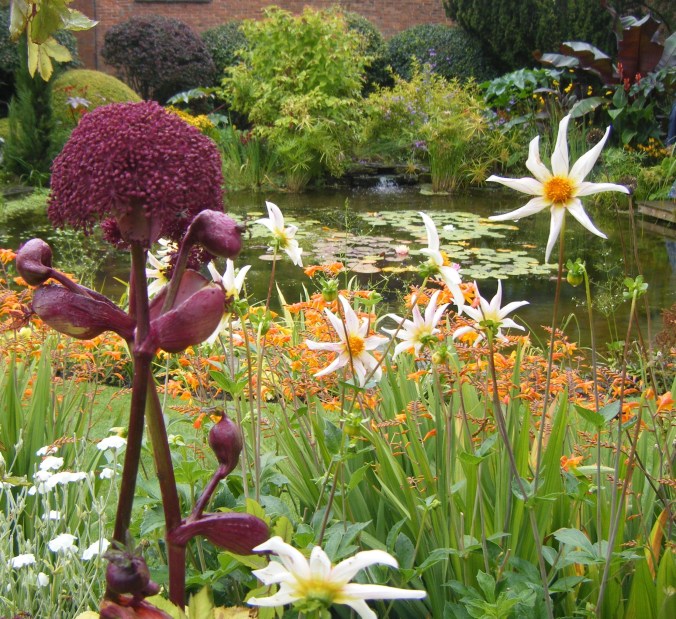
The statuesque Angelica gigas, and the dahlia ‘Honka Fragile’ mingle with bright orange crocosmia,

DSCF3704.jpg

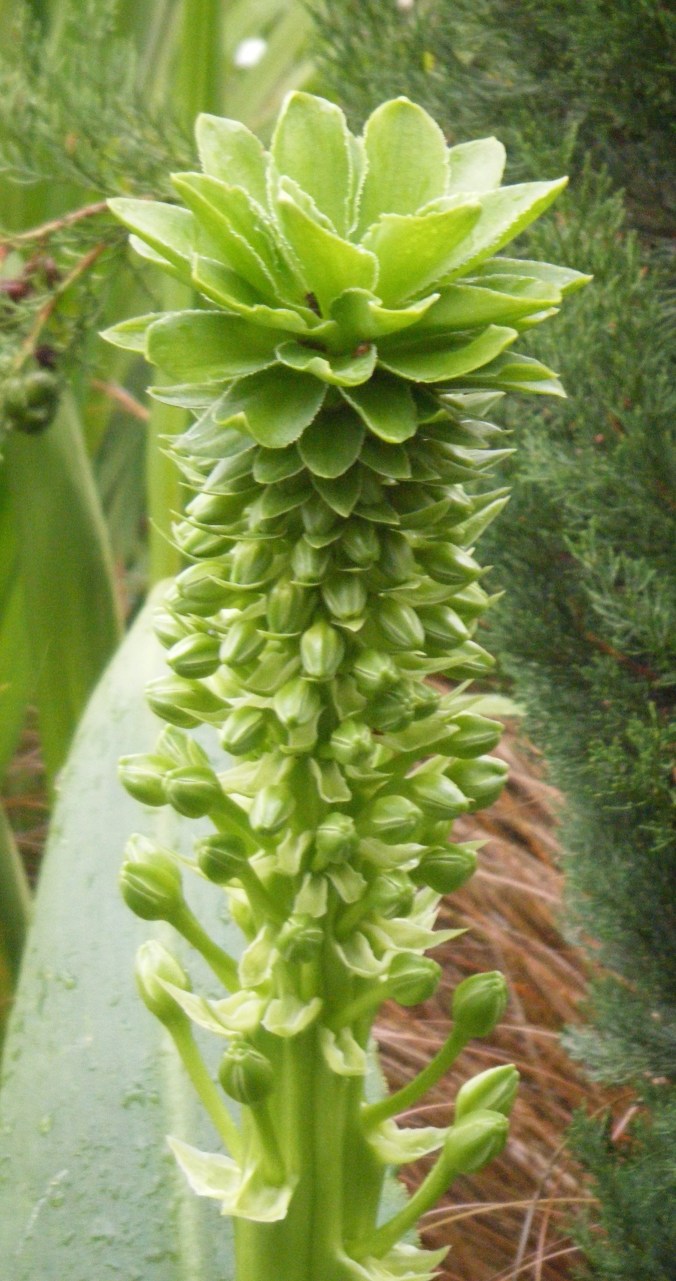
and amongst is exotic green Giant Pineapple lily eucomis pole-evansii.

DSCF3700.jpg

I have encountered amongst some gardeners a slight snobbery about planting yellow, an attitude that I have not really understood.  Here garden owner Kathryn loves the brightness of the colour and the flat heads of achillea look very effective against the big red leaves of the banana.

DSCF3711.jpg

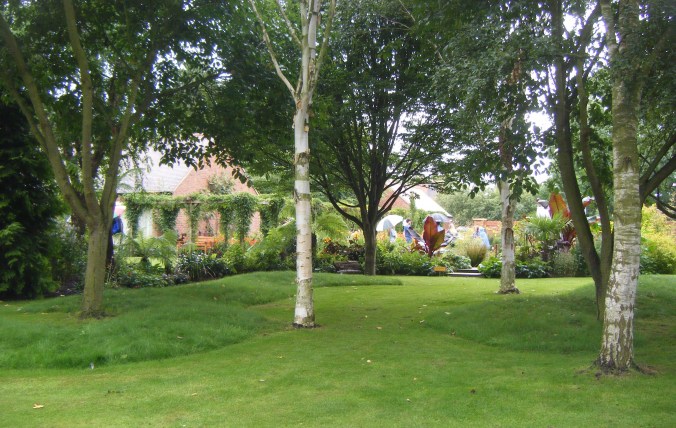
If you dig out a pond the spoil has to be put somewhere, so drifts are spread under the mature trees which makes for a pleasing undulation,

DSCF3717.jpg

and a mound of spoil at the bottom of the garden makes a raised bed planted up with shade loving plants.

DSCF3718.jpg

This quirky head close by appears to echo the same tilt of the border.

DSCF3719

It is not hedges that divide the different areas but lively borders filled with generous plantings varying from herbaceous to tropical.

DSCF3721.jpg

The golden oat stipa gigantea is a perfect punctuation for the corner of the house.

DSCF3740.jpg

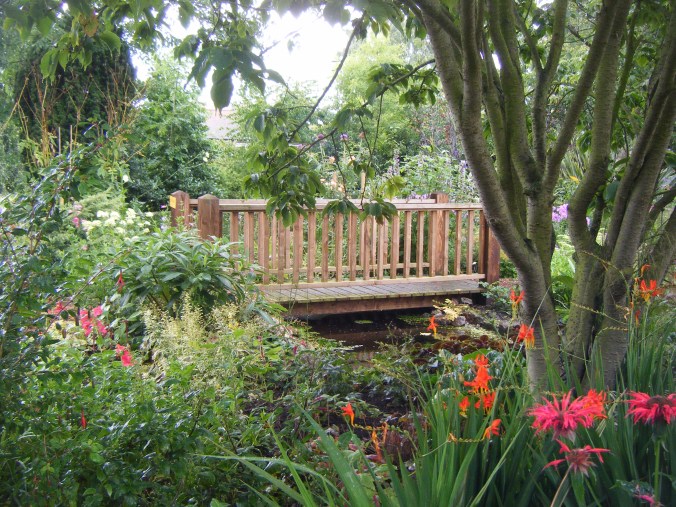
A succession of ponds glide down through the garden with a bridge adding structural focus to the lowest and final pond.

DSCF3722.jpg

Moving on round the garden I find heads venerably bowed at the entrance of the woodland walk,

DSCF3731.jpg

where wood chip paths guide you right around the back of the property; cool and shaded, it is a complete contrast to the front garden.

DSCF3733.jpg

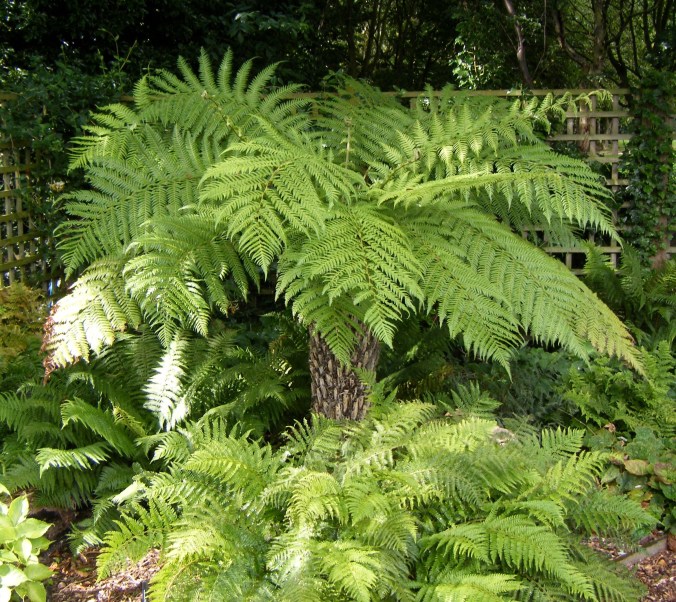
Tree ferns dicksonia antartica command a presence in the fernery where there are 65 different types of fern.

DSCF3746.jpg

There is nothing more pleasing than a neatly arranged wood stack just waiting for those winter fires.

DSCF3747.jpg

The path leads to a garden house positioned in the corner of the plot, acting like a pivot sending the path off to the right.

DSCF3749.jpg

Looking back you can see that the tree canopy has been raised here and the dapple shade allows for a few acers to grow.

DSCF3756.jpg

A face in stone seems content in catching the sunlight,

DSCF3753

and I find myself back at the beginning. The mown lawn separates the wooded perimeter from the rich planted borders against the walls of the bungalow and together they gently swirl around the property. The building is grounded well into the garden and it is hard to believe that just five years ago much of this would not have been here.

DSCF3768.jpg

The garden gate is closing now so I must retreat back along the tedious A17. This was the second garden that I have visited in Nottinghamshire, a county that enjoys some 58 opening for the NGS;  I am sure that I will return.

DSCF3790.jpg

——-60——-

Park Farm and a fine view of the Minster (59)

It is my elder son’s wedding today and so it seems appropriate to write about a garden that he and I both visited a few weeks ago and which has a view of the magnificent building he will be married in.

DSCF3309.jpg

The garden gate was open at Park Farm, Southwell in Nottinghamshire.

DSCF3249.jpg

The owners Ian and Vanessa have lived here for over 30 years and it is obvious that much of their time must have been spent in the garden. The borders are packed with plants, the familiar mixed with the unusual in an explosion of colour throughout.

DSCF3261.jpg

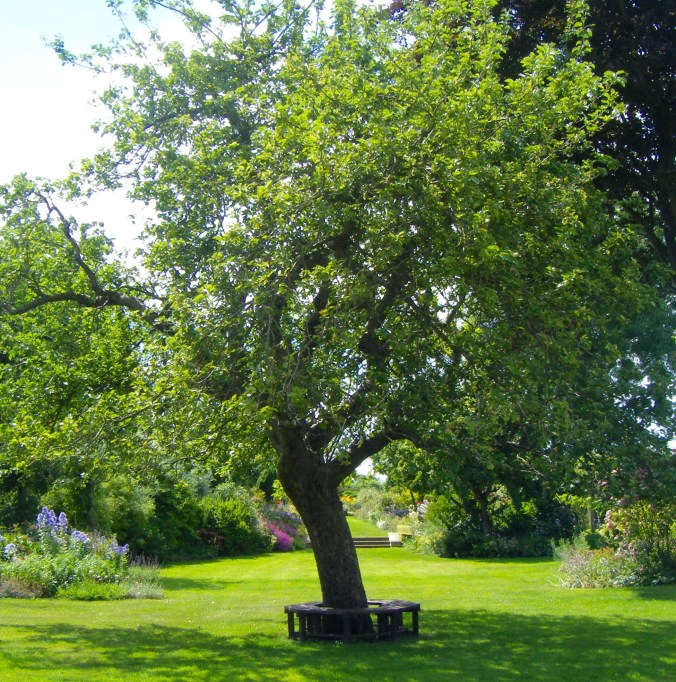
Standing with our back to the house in the centre of the lawn is a spreading old Bramley apple tree. It was in Southwell that the Bramley apple actually originated; in 1809 the pips were planted by a young girl named Mary Ann Brailsford who grew the seedling in her garden. In 1846 the cottage, garden and apple tree were then sold to a local butcher, Matthew Bramley. Ten years later local nurseryman Henry Merryweather asked if he could take cuttings from the tree and Bramley agreed but insisted that the apple should bear his name.

The first recorded sale of a Bramley was noted in Merryweather’s accounts on 31st October 1862 when he sold “three Bramley apples for 2/- to Mr Geo Cooper of Upton Hall”. On 6 December 1876, the Bramley was highly commended at the Royal Horticultural Society’s Fruit Committee exhibition.

DSCF3255.jpg

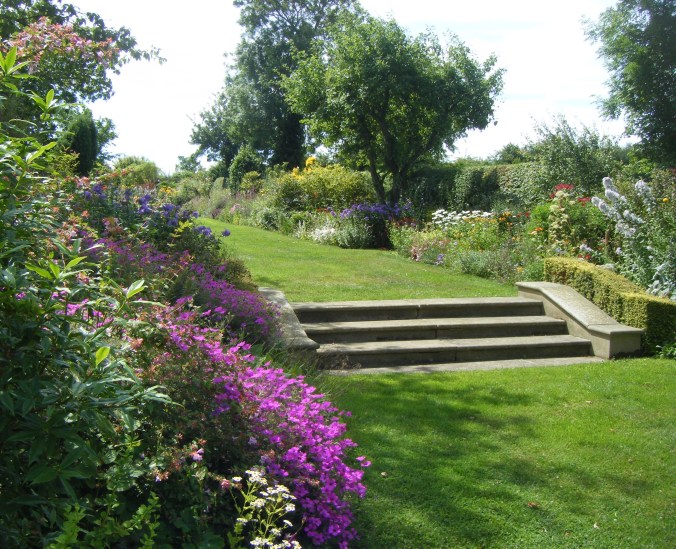
Long herbaceous borders run parallel, from the steps to the end of the garden.

DSCF3265.jpg

We are entertained with many combinations such as blue eryngium and pink penstemon, 

DSCF3271.jpg

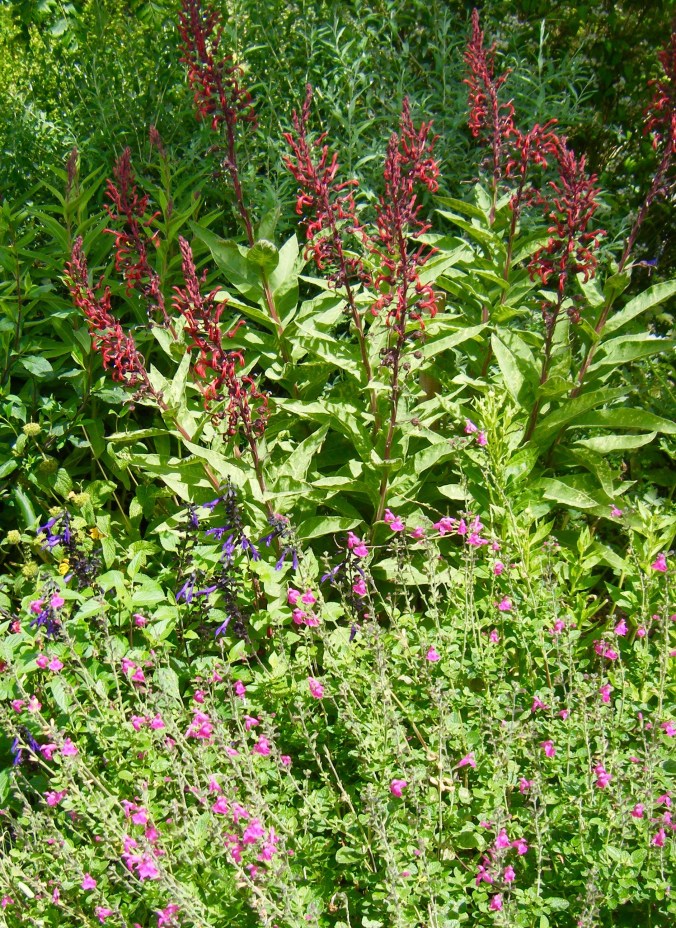
bright lobelia cardinalis gives height behind the soft salvias pink and purple. Ian is particularly fond of the salvias and has a collection of over 30 both perennial and tender.

DSCF3275 (1).jpg

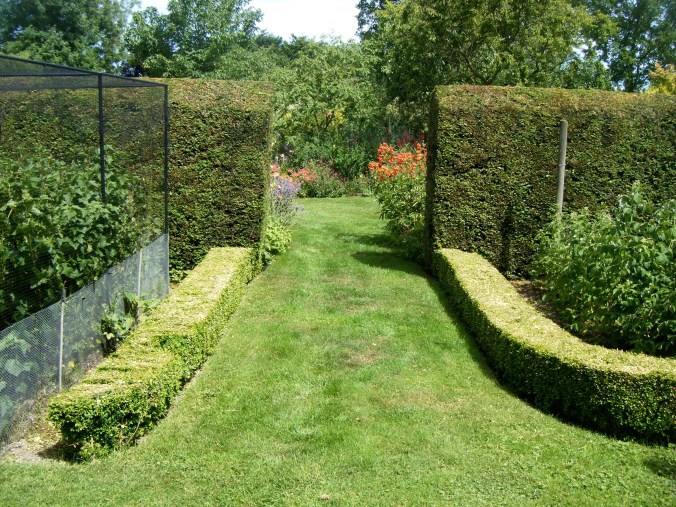
Vegetables and fruit are arranged in an area behind the hedge of finely clipped yew.

DSCF3278.jpg

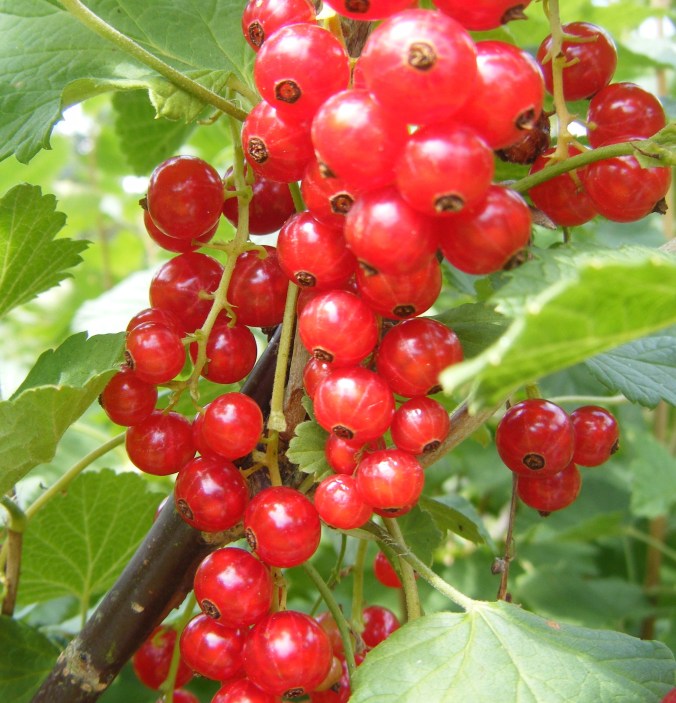
The bushes in the fruit cage are bursting with currants. Not so easy to buy and in my opinion a jelly yet to be commercially perfected. Redcurrant has to be the one fruit to grow.

DSCF3280.jpg

Near to the fruit is a riot of lilies; they were never planted, and are completely self-seeded so Ian is unable to give them a name.

DSCF3282.jpg

We follow the twisting paths set behind one side of the herbaceous borders returning towards the house.  The planting is more relaxed spilling onto the path.

DSCF3290.jpg

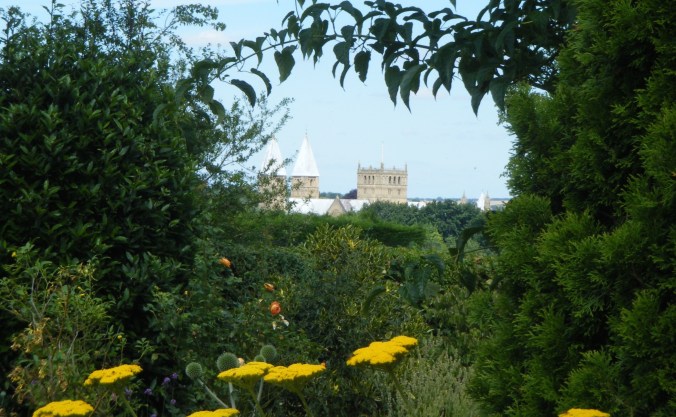
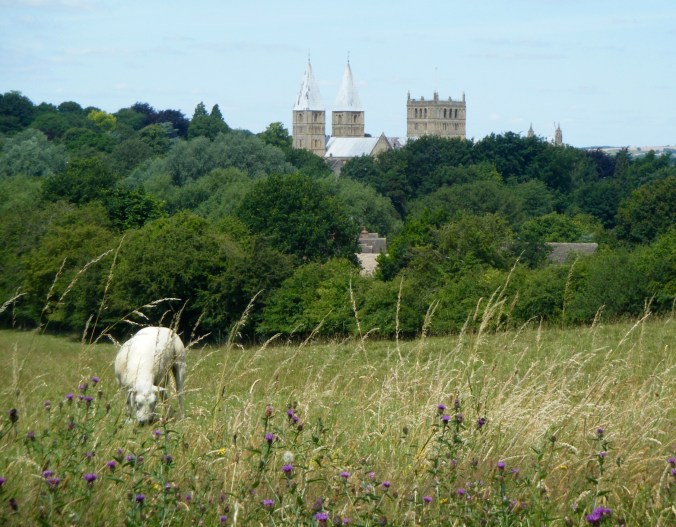
Through the shrubs, of which there are over 500 varieties, we often catch a glimpse of the towering Minster.

DSCF3285.jpg

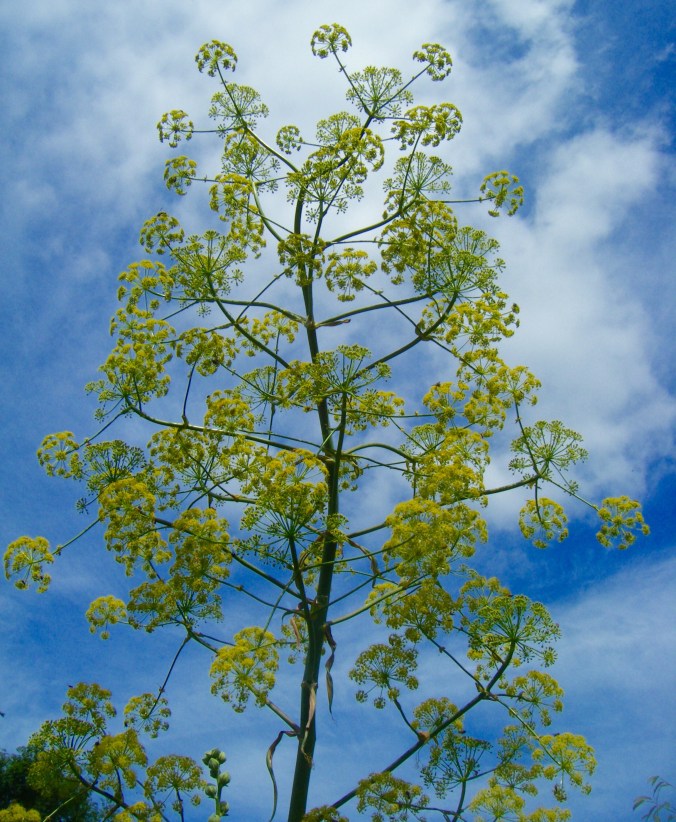
The perennial Giant Fennel, ferula communis is competing for height and looking particularly spectacular.

DSCF3289.jpg

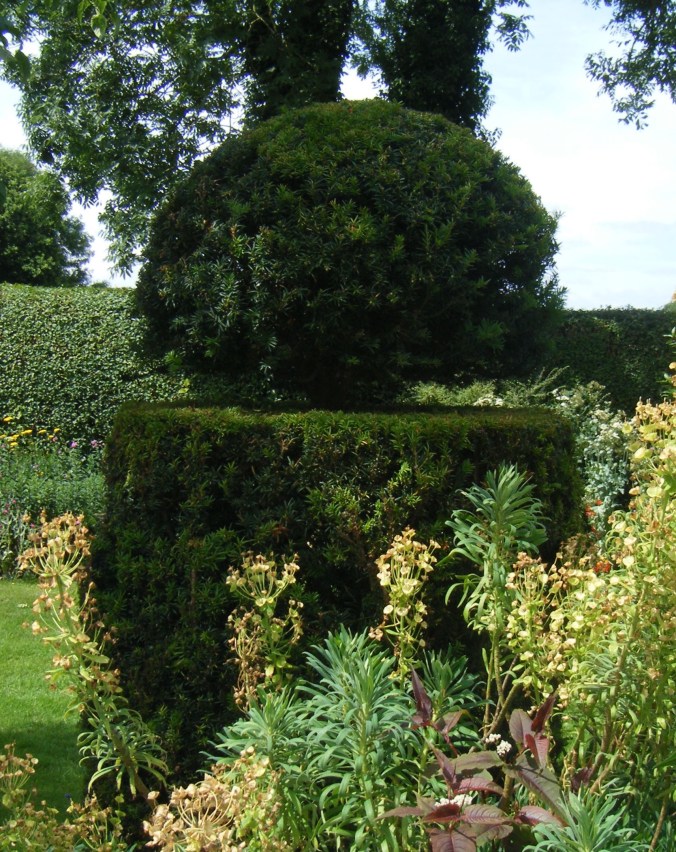
There is a touch of topiary about the garden, sited either at the end of a border,

DSCF3291.jpg

standing like sentinels by the path,

DSCF3286.jpg

or just standing singularly by the gate into the meadow.

DSCF3308.jpg

The field is separated from the garden by that cunning design element so beloved by the 17th century garden makers, the ha-ha.

DSCF3324.jpg

Ian and Vanessa had it built and there is no doubt it remains a brilliant design concept, keeping the grazing livestock out but with no obtrusive fencing it enables one to enjoy a continuous and uninterrupted vista of whatever you are fortunate enough to have in the distance.

DSCF3322.jpg

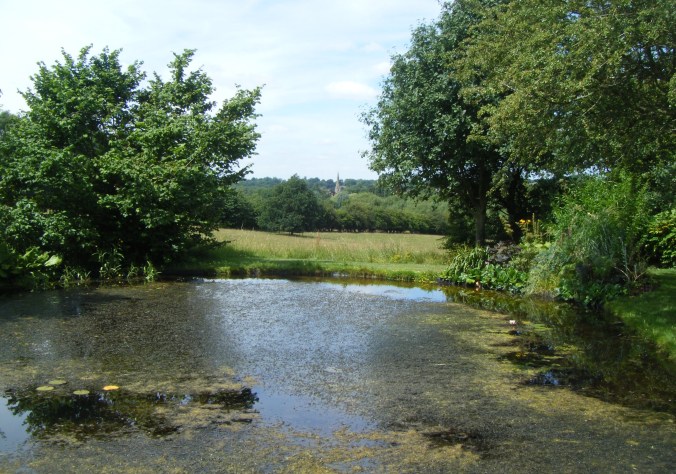
Keeping within the ha-ha we walk through the wild flower meadow to the wildlife pond which is busy with insect life.

DSCF3329.jpg

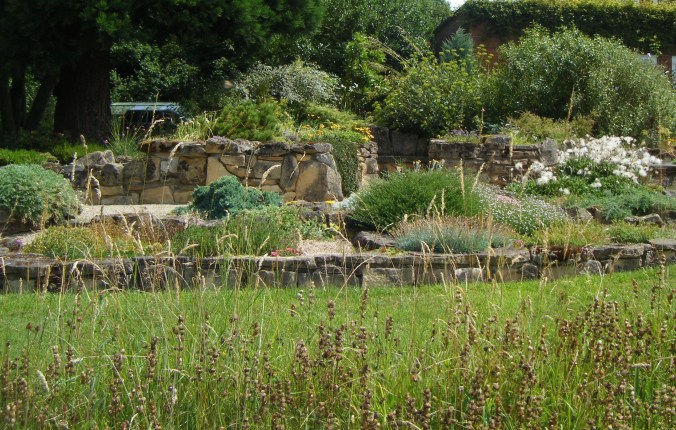
Very different from the borders on the other side of the garden but seemingly natural is a fine rockery/alpine area lying between house and pond.

DSCF3330.jpg

In the woodland, there is a wide variety of trees, and dry wood chip paths guide us through the dappled shade,

DSCF3346.jpg

and amongst the woodland flora are little gems like Lysimachia paridiformis var. stenophylla,

DSCF3341.jpg

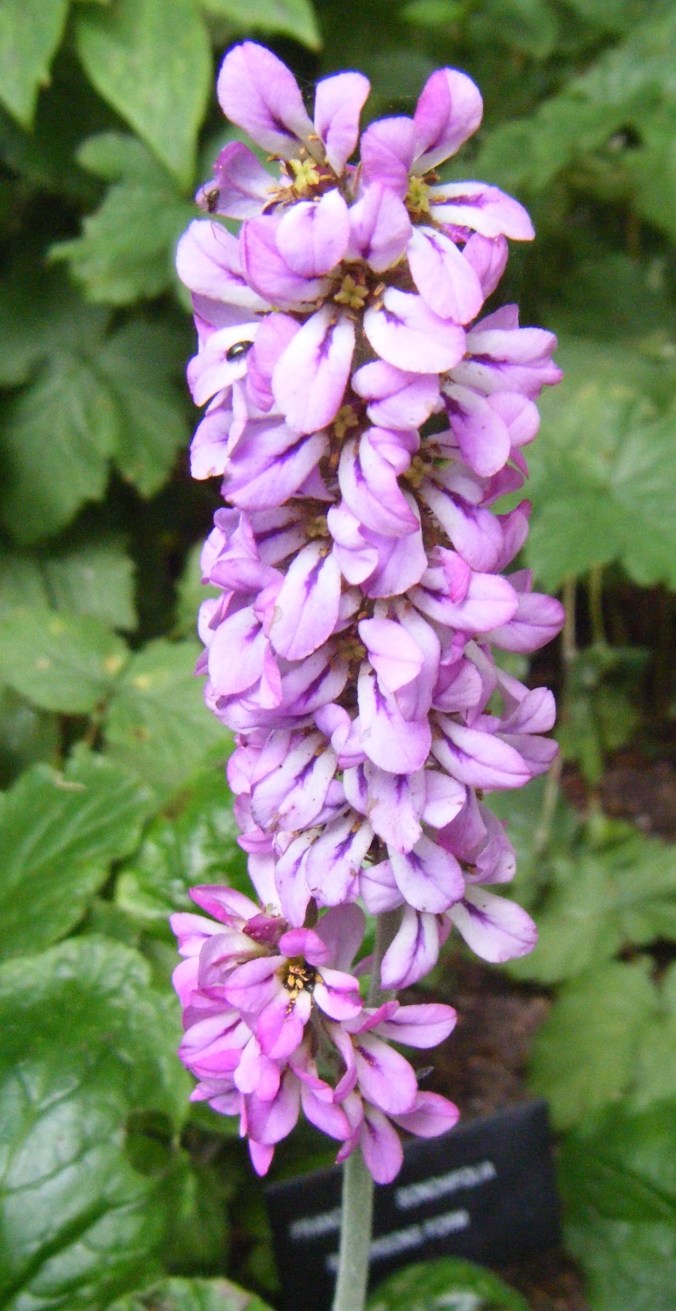
and francoa sonchifolia, also known as the wedding flower.

DSCF3345.jpg

Coming out of the wood into the drive we pop our heads into the glasshouse which has a glorious abundance of grapes.

DSCF3352.jpg

The final part of the garden lies on the other side of the drive opposite the house. A walled area has been cleared for a more formal pond where there is a gentle sound of water trickling down the metal leaf fountain.

DSCF3358.jpg

Lawn surrounds the pond and shining out from the border is a glorious spray of rosa Lady Emma Hamilton with her fruity fragrance.

DSCF3360.jpg

Tucked in by the wall is the intriguing amicia zygomeris from Mexico.

DSCF3363.jpg

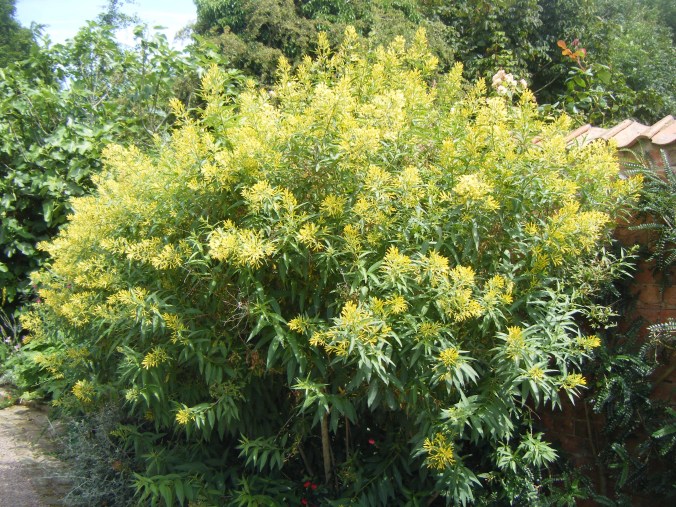
Driving away we cannot help but admire the fresh and lovely cestrum parqui, the willow-leaved jessamine, slightly tender I wonder at its unlikely survival in a cold Norfolk garden.

DSCF3367.jpg

Much has interested us in this delightful 3 acre garden. Ian is a real plantsman and the many different areas he has created provide a rich diversification in habitat and a greater variety of planting.

You will have missed the open day for this year so there is plenty of time to plan a trip to Southwell next year, and what better combination than a pretty Georgian Town, a Glorious Minster and a Great Garden.

The bells of the Minster will be summoning us soon, so I must hurry now, shake out my hat and find my shoes. I will be thinking of Vanessa and Ian for their son is to be married too.

 ——-59——-


Marks Hall, a walled garden in wonderful woodland. (58)

Back in May I spent a few days on a Garden History trip in Essex and one of the many interesting places we visited was Marks Hall near Coggeshall.  Arriving rather late in the day and with 200 acres to explore we had to get a move on, first walking over the bridge.

DSCF1049.jpg

There is no Hall as such, having fallen into ruin it was taken down in the 1950s. It must have been a magnificent country house as seen in the photo that I have borrowed from the website of the University of Essex where you can find out about the history of the property: http://markshall.essex.ac.uk/history.html

A view of the Hall with the same bridge in the foreground.

mansion-1024x537.jpg

The estate is now administered by the Thomas Phillips Price Trust. Price bought the estate in 1898 and bequeathed it to the nation in the interests of agriculture, arboriculture and forestry, and it was first opened to the public in 1993.

We walk past the Coach House, now a wedding venue and flower garden, which is firmly closed in preparation of the next event.

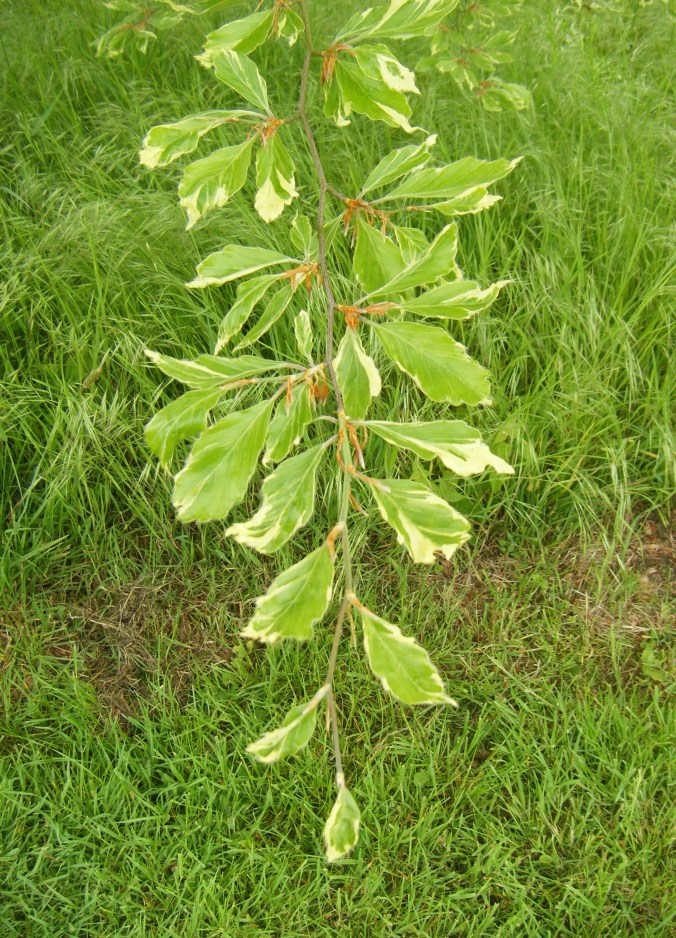
The tree collection represents the temperate areas of the world and most are in good condition and well labelled. One of the first trees we admire is the variegated Common Beech, fagus sylvatica ‘Albovariegata’.

DSCF1051.jpg

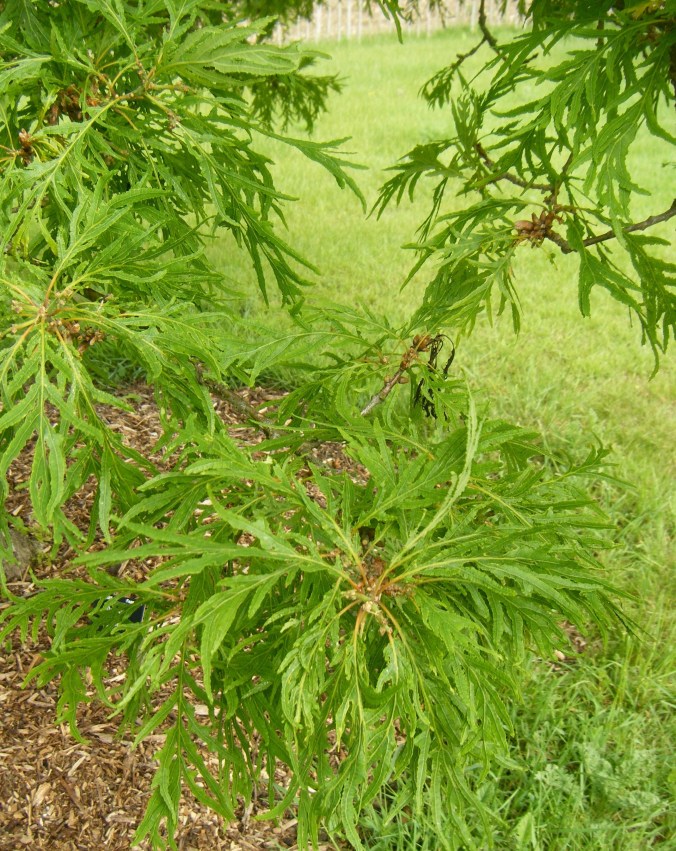
This unusual oak is named after its fern like leaves, Quercus robur ‘Filicifolia’.


DSCF1053.jpg

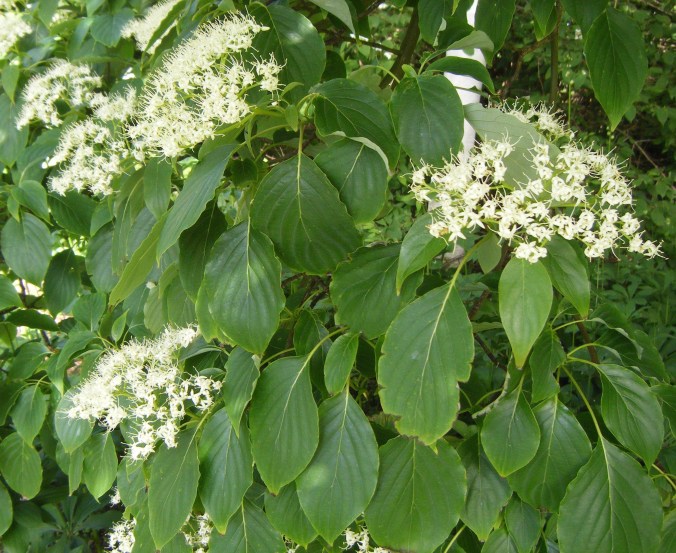
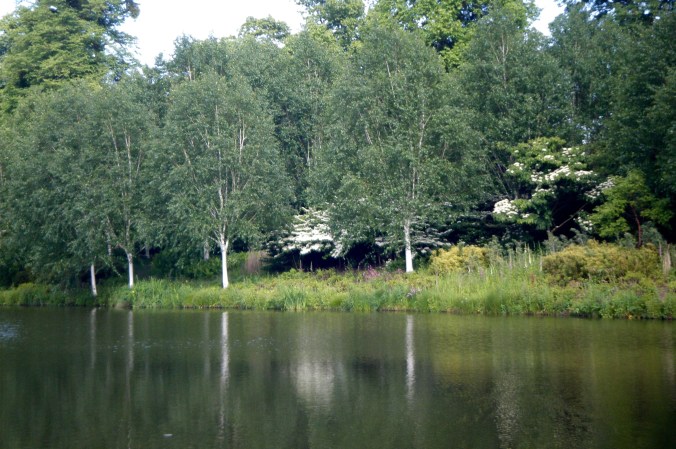
Along the south side of the lake is the Birkett Long Millennium walk where the trees and shrubs were planted to provide autumn and winter colour. Right now there appears to be a white theme running through which, combined with the fresh green growth of the leaves is both beautiful and calming. Such specimens as Cornus kousa chinensis “China Girl” are showing a spectacular display,

DSCF1059.jpg

and should not to be confused with Cornus contreversa.

DSCF1067.jpg

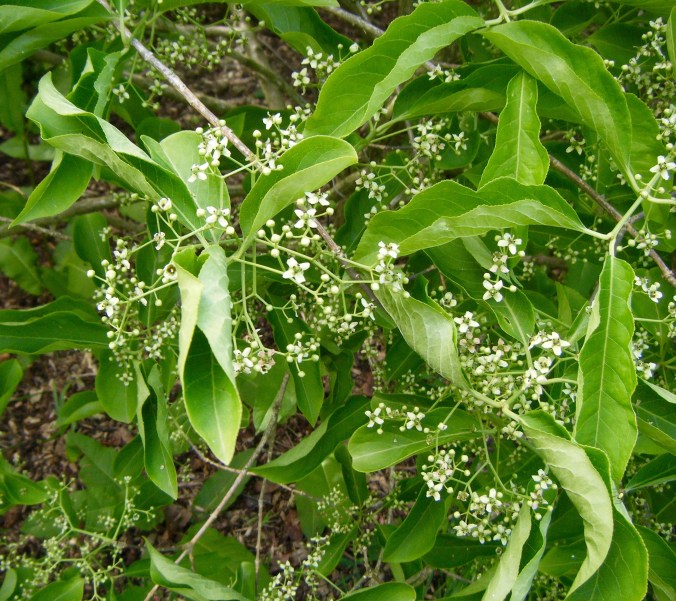
The flowers of Euonymus hamiltonianus “Winter Glory” are dainty and white,

DSCF1072.jpg

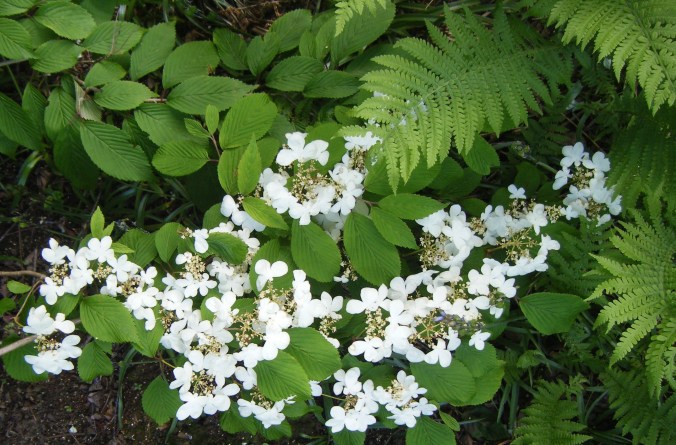
which contrast well with viburnum plicatum “Mareisii,”

DSCF1070.jpg

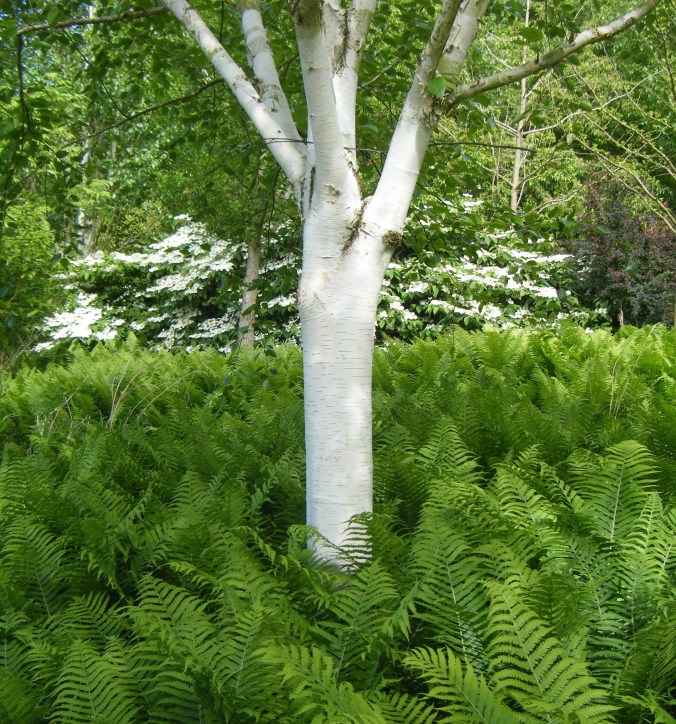
they compliment the stunning snow white bark of the old favourite Betula utilis var. jacquemontii.

DSCF1064.jpg

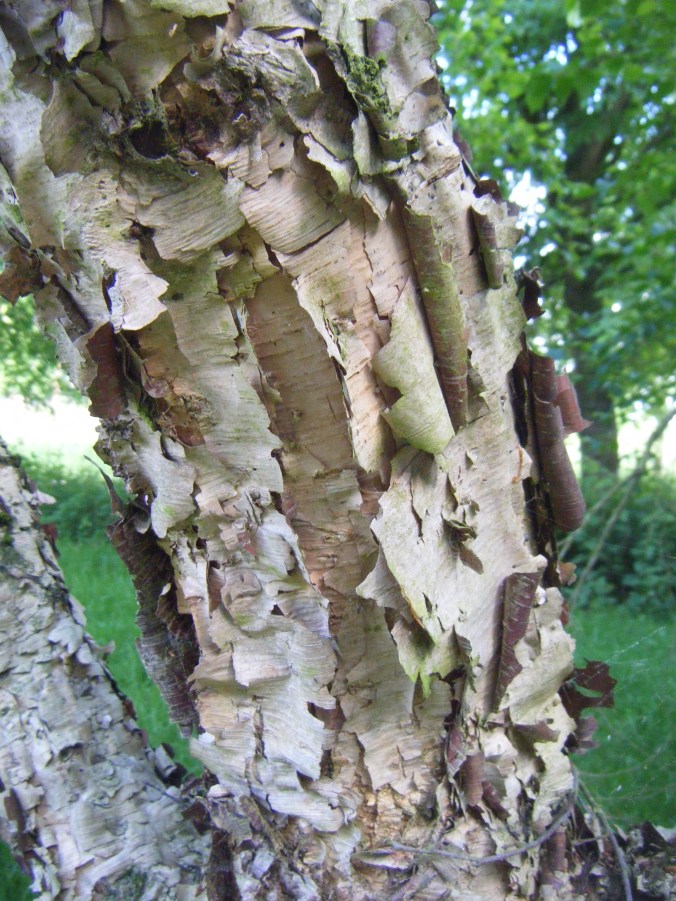
Not so very white, but intriguing is the bark of Betula davurica, the Asian black birch.

DSCF1079.jpg

Through the trees and across the other side of the lake we catch sight of the Walled Garden. The lakes, so the story goes, were dug by Cromwell’s troops at the time of the siege of Colchester in 1648.

DSCF1071.jpg

There are many different woodland walks but being in a hurry we have ignore the paths through the Taxodium Swamp and the World War II Memorial Site for another day. We are still in time for the garden gate to be open to the Walled Garden.

DSCF1086.jpg

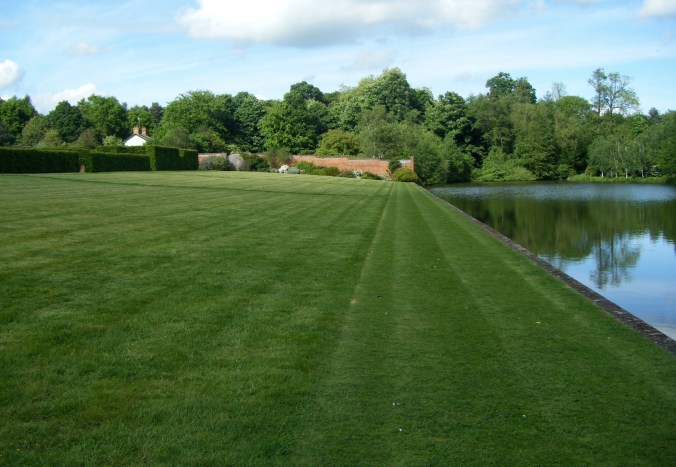
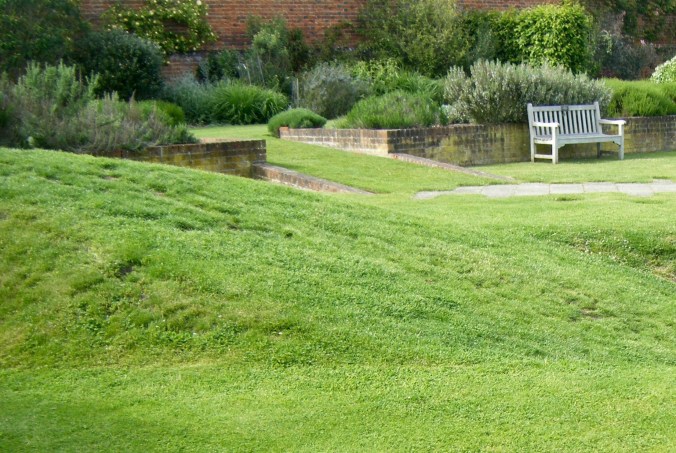
Three sides of this 18th century garden is walled with the south side open where the length of lawn, effectively mown with two heights of cut, gently runs down to the lake side.
DSCF1087.jpg

We can look back across to those shrubs and trees through which we have just walked, reflecting in the water.

DSCF1088.jpg

The Walled Garden was redesigned by landscape architect Brita von Schoenaich in 1999 who has divided the garden into a number of unusual areas. Incidentally Schoenaich who is famed for her sustainable planting, recently designed the square which lies in front of the newly restored London King’s Cross station.

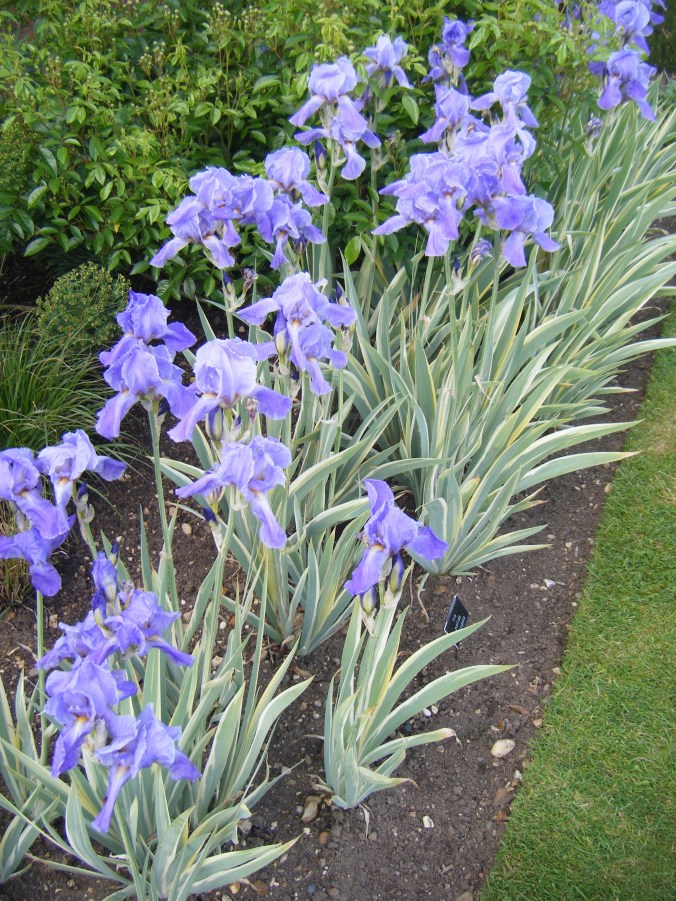
The herbaceous border which runs along the length of the top wall is 160 metres and thought to be the longest in East Anglia. A rich variety of shrubs and perennials are grown and in the front of the border is a generous planting of Iris pallida ‘Variegata’,

DSCF1091.jpg

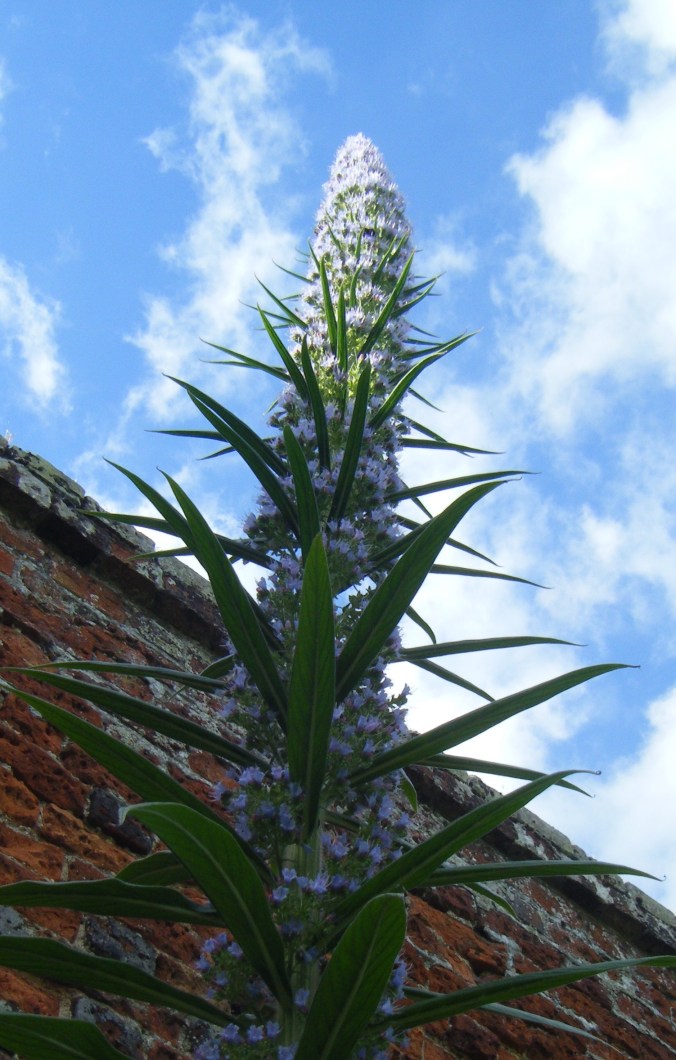
whilst Echium pininana reaches for the sky.

DSCF1101 (1).jpg

Further along sits the handsome peacock at home in his secure surroundings.

DSCF1116 (1).jpg

The first part of the garden is in the form of an earth sculpture, a giant’s footprint.

DSCF1094.jpg

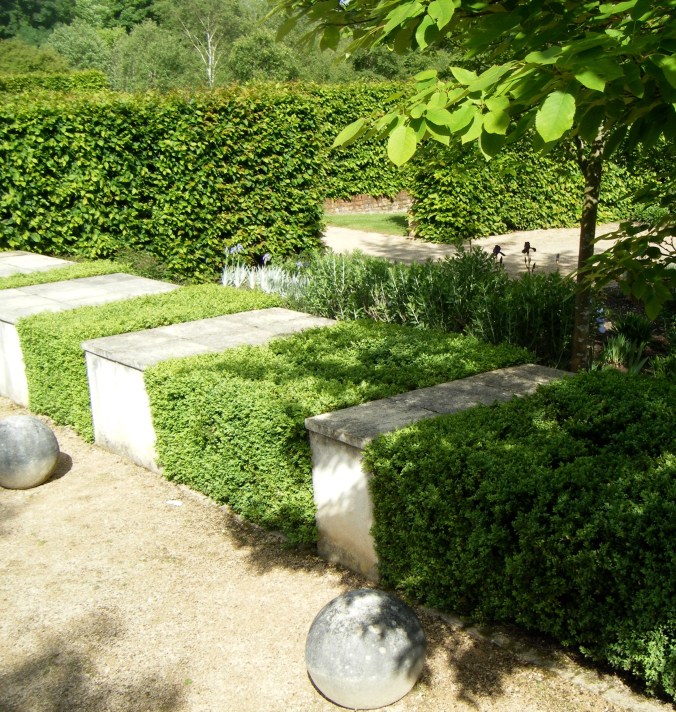
which  then moves into an area where the pittosporum hedge gently weaves backwards and forwards between planting and benches.


DSCF1095.jpg

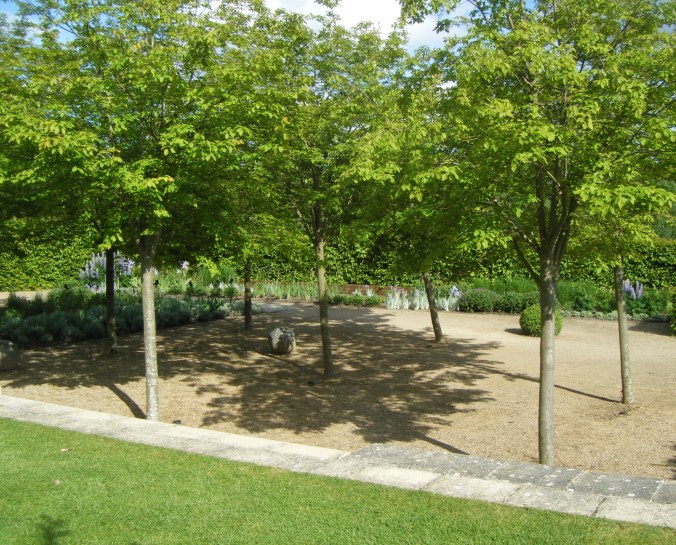
The simple planting of the next area reminds me of the centre of a French village where boule is gently played under the shade of the trees.

DSCF1111.jpg

There is in fact a large concrete boule or two, and the line of square concrete slabs are softened and interplanted with square slabs of box.

DSCF1109.jpg

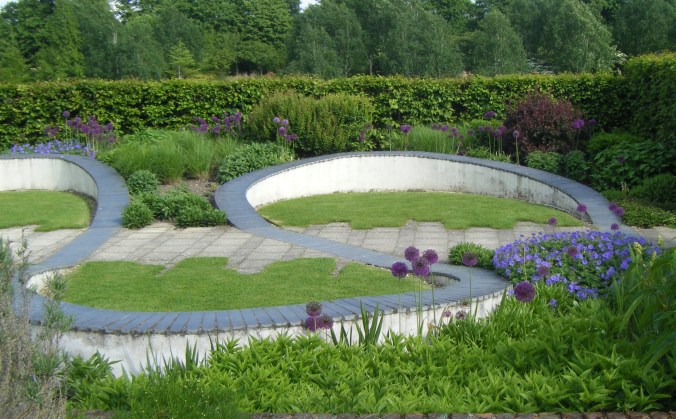
A wide path bordered by mown grass crosses semi-circles of smooth slate swirling between allium and geranium.

DSCF1118.jpg

Finally through the shaped hornbeam hedges we arrive at a circular grass mound, the smoothness contrasted by the round of rough slate in the centre.

DSCF1134.jpg

Stipa gigantea, well advanced in these sheltered walls seems the antithesis of the clipped box balls.

DSCF1127.jpg

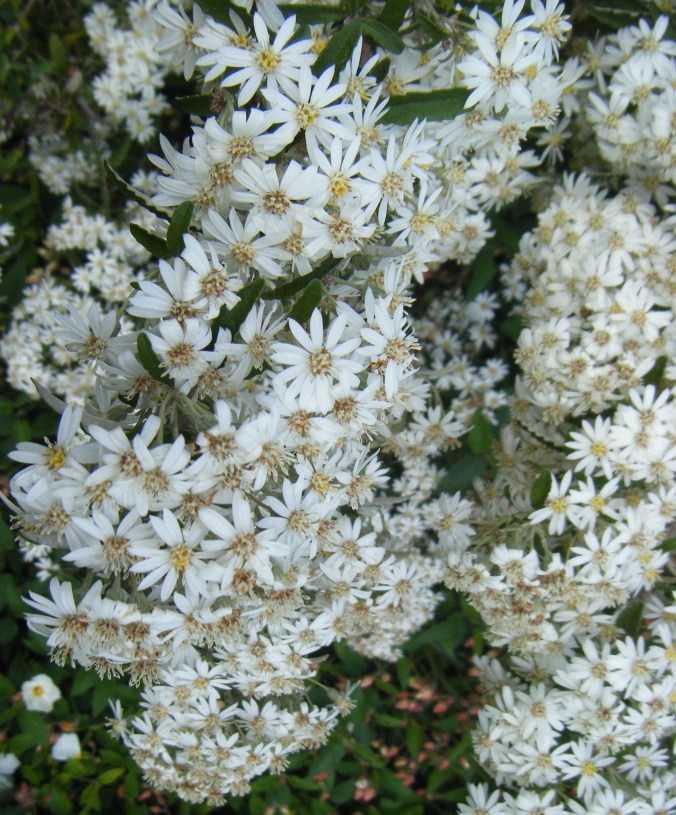
Various types of olearia are happy here, in particular olearia x scilloniensis 

DSCF1124.jpg

and like a full stop at the end of the wall is euphorbia mellifera.

DSCF1131 (1).jpg

Rather than taking the obvious route back straight across the grass I decide to walk back through the designed spaces. It is the form and structure, the mixture of hard materials combined with a variety of planting, seemingly simple that makes the design of this garden so enjoyable.

DSCF1132.jpg

Slipping back through the opening in the hornbeam I follow the slate path,

DSCF1137.jpg

back through the ‘boules allee’

DSCF1138 (1).jpg

and on down to the lake where the brick bridge reflects in the water and I am reminded that although I am in a  walled garden I am also in a large arboretum.

DSCF1142.jpg

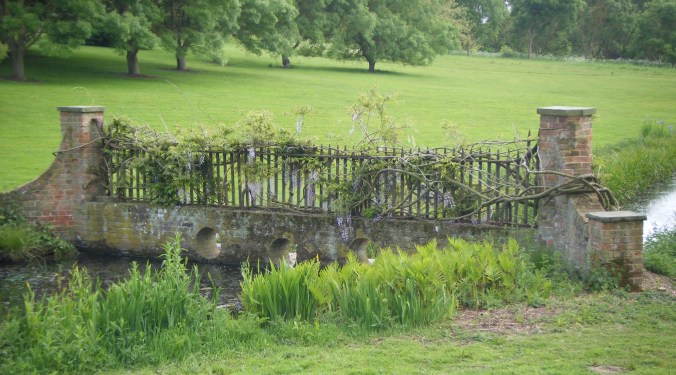
Hurrying back we follow the line of the river passing a smaller wisteria-clad bridge

DSCF1144.jpg

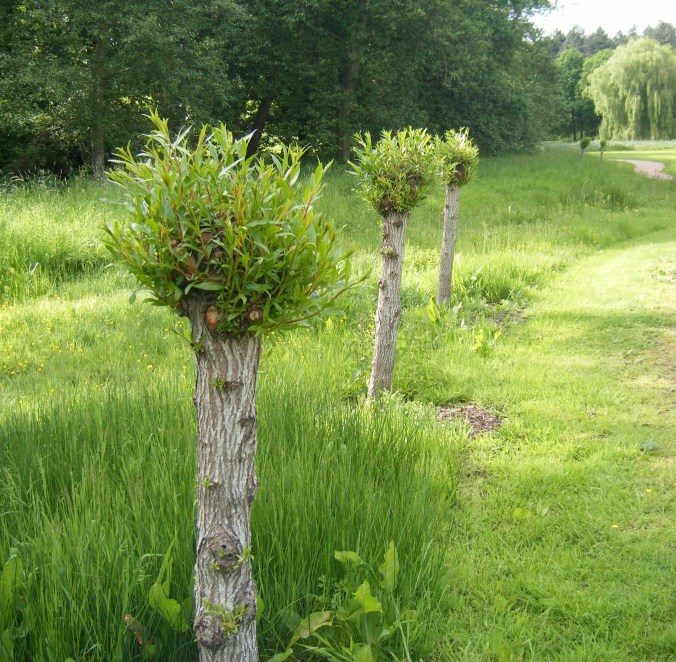
and the line of heavily pollarded “White willow” Salix alba ‘Britzensis’.

DSCF1146 (1).jpg

There is plenty we have not been able to see and we look forward to returning.  Marks Hall is not open on a specific day for the NGS but like some other public gardens it is listed in the Gardens to Visit book because they are kind enough to make a donation. For visiting times: http://www.markshall.org.uk/visitor-information/. It is well worth a trip but do allow plenty of time.

——-58——-

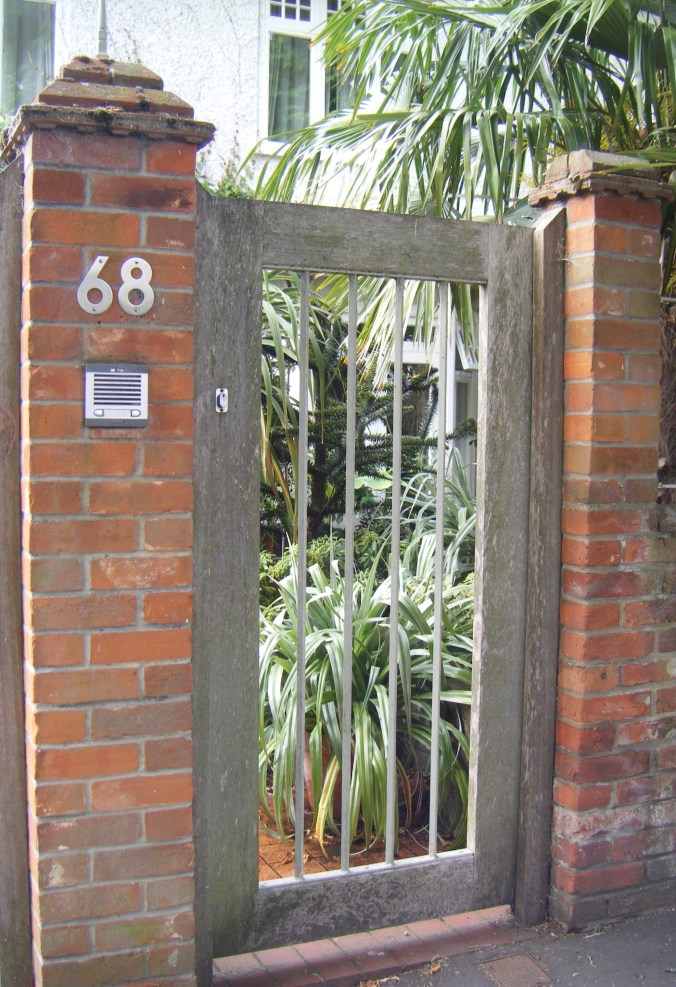
68 Elm Grove; small, artful and fun. (57)

The garden gate will be open this Sunday 16th July on the north side of the centre of Norwich, not far from Waterloo Park. The garden has evolved over 30 years and is very much an extension to the late 1920s / early 1930s house.

DSCF2624

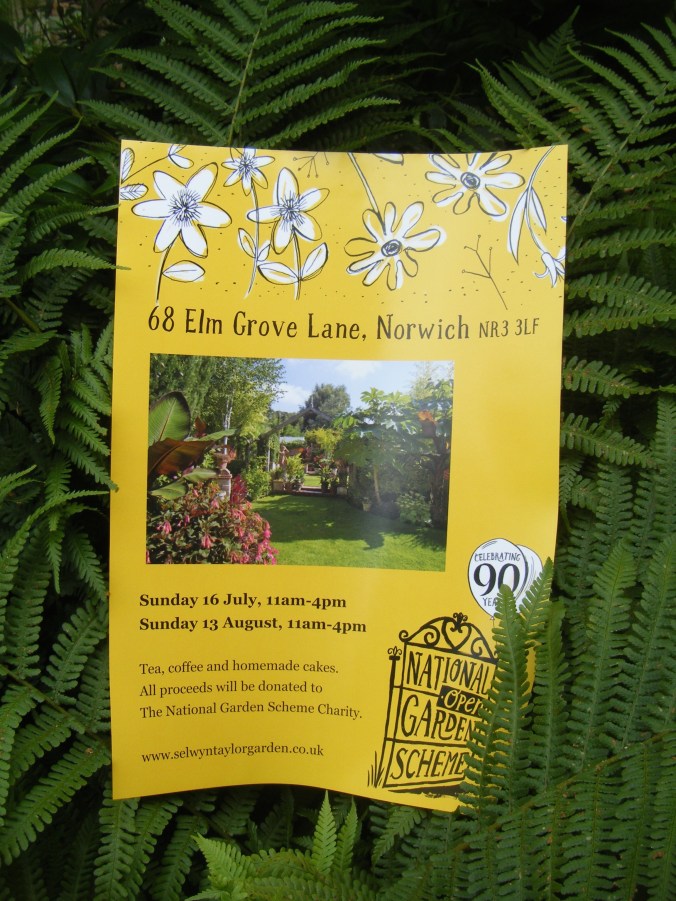
Selwyn, an artful designer by trade has taken the matter in hand and redesigned his NGS poster.
DSCF2610.jpg

The front garden despite its modest size is not without interest. A touch of railway nostalgia mingles with the mature plants.

DSCF2620.jpg

The low wooden seat recycled from public transport is now going nowhere,

DSCF2618.jpg

and a clock, which has never stopped at five indeed, looks as if it never will.

DSCF2621.jpg

A noble Wollemi pine, an endangered species, is of some height now and in no danger, here displaying  both its female and male cones.

DSCF2623.jpg

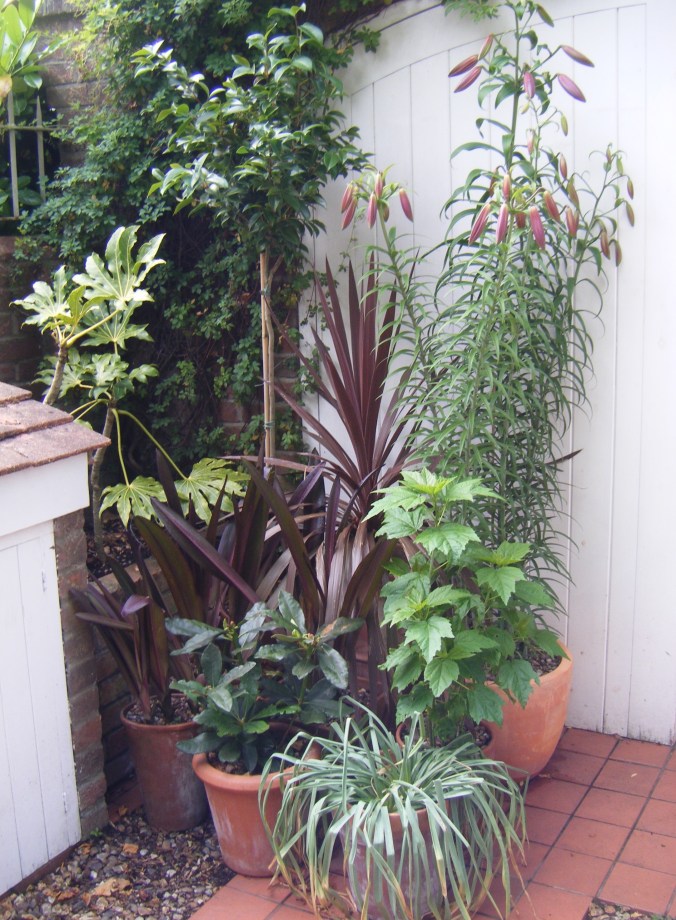
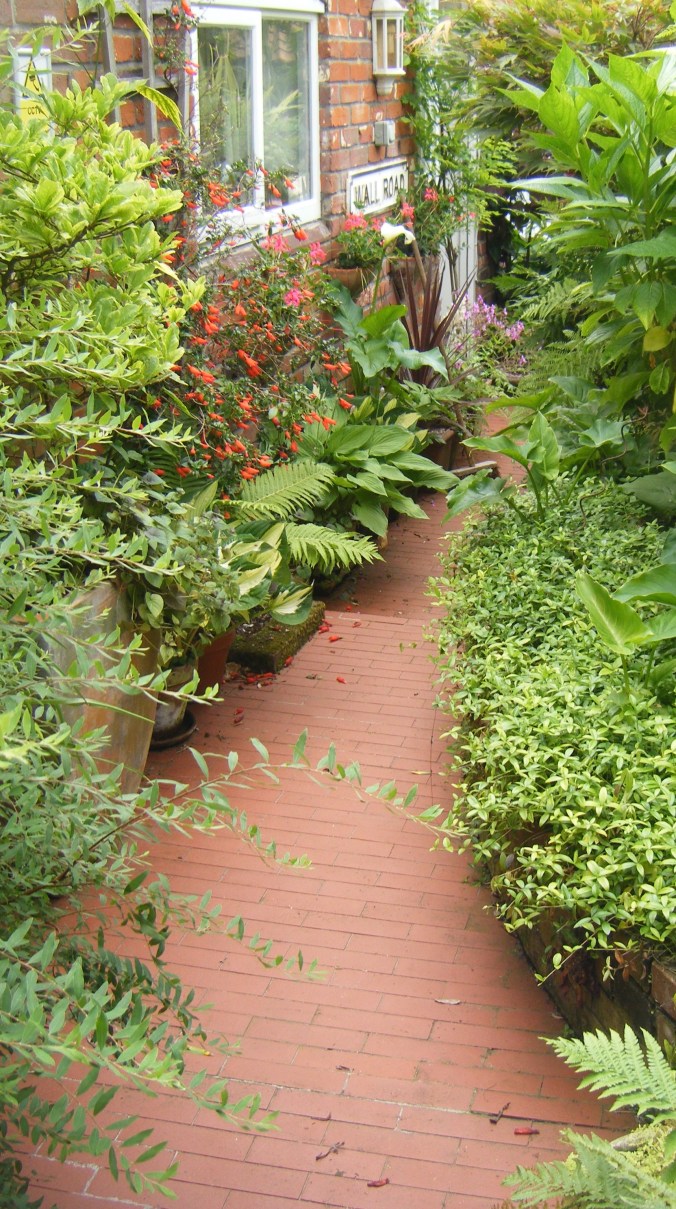
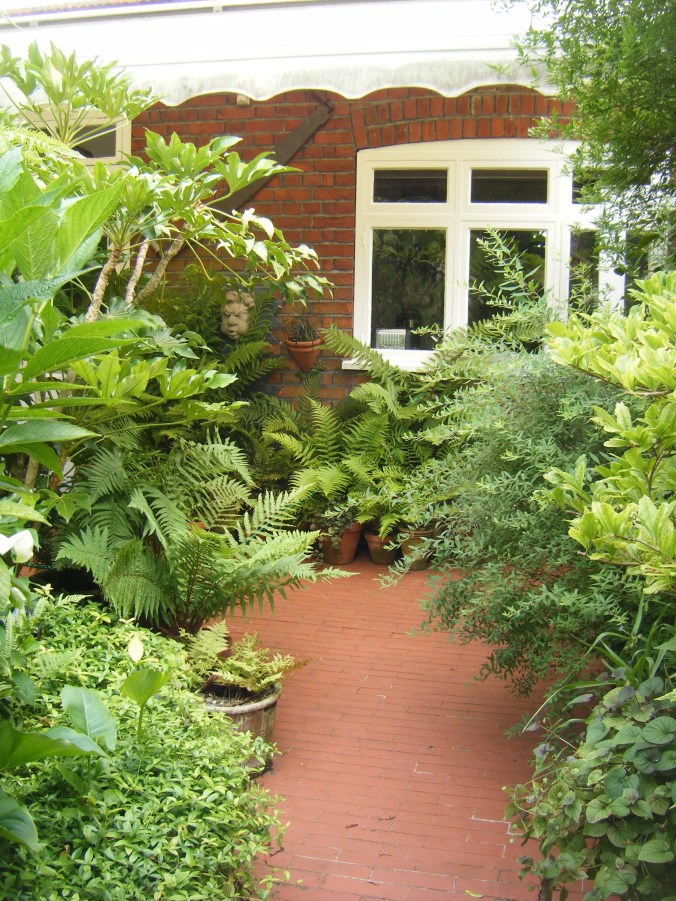
Access to the back garden is to the right of the pot of giant lilies and through an enclosed passageway; creatively decorated it connects house, garage and studio to the garden.

DSCF2622.jpg

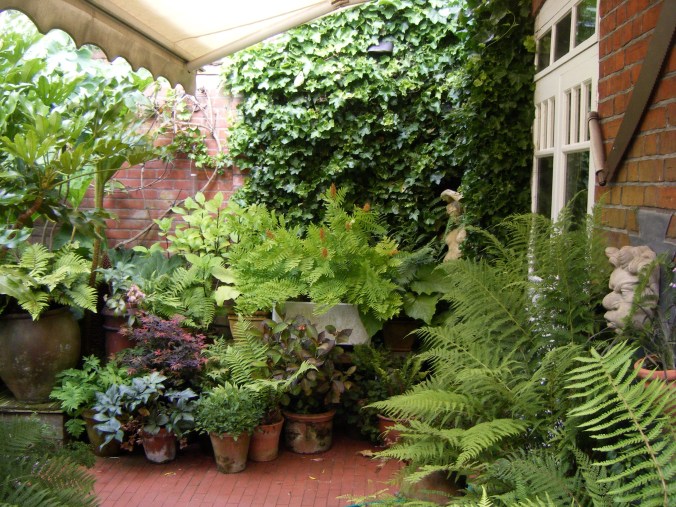
As we enter the luxuriously green garden Selwyn winds down the awning and the space immediately becomes a glorious outside room.

DSCF2567.jpg

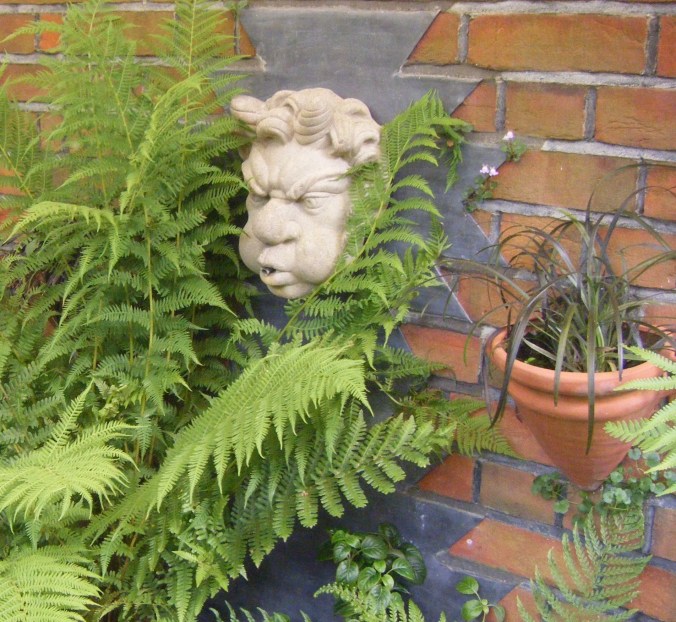
This chap, with furrowed brow finds it all an enormous strain,
DSCF2566.jpg

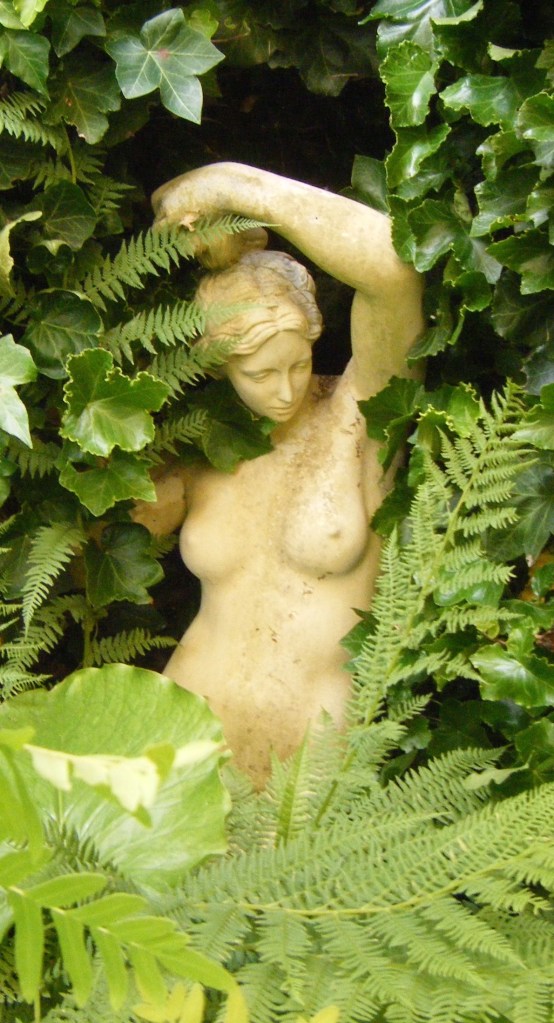
whilst this lady emerges serenely from the corner.

DSCF2569 (1)

The collection of robust green plants  so varied and textural is calming,

DSCF2563.jpg

and the patterns in the fronds of the ferns are exquisite.

DSCF2571.jpg

The path leads either side of the central bed,

DSCF2565.jpg

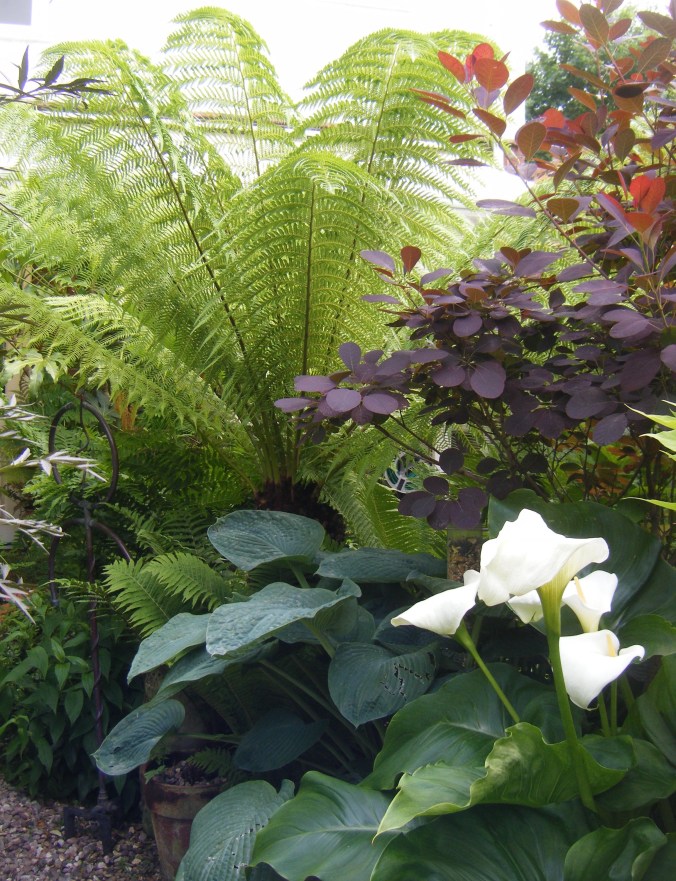
which is packed with healthy plants such as tree ferns, cotinus, hosta and arum lily. I feel as if I am in a garden at Chelsea.

DSCF2578.jpg

Leaves are unblemished, almost perfect; a bud is emerges quietly on a magnolia.

DSCF2580.jpg

Plants are arranged to complement one another and the silver veins of the leaves are picked up by the pure white of the birch trunk.

DSCF2590 (1).jpg

The garden is essentially divided into three parts and we leave the first and emerge out onto the lawn. You would never have guessed this architectural top once housed an air conditioning unit.
DSCF2582.jpg

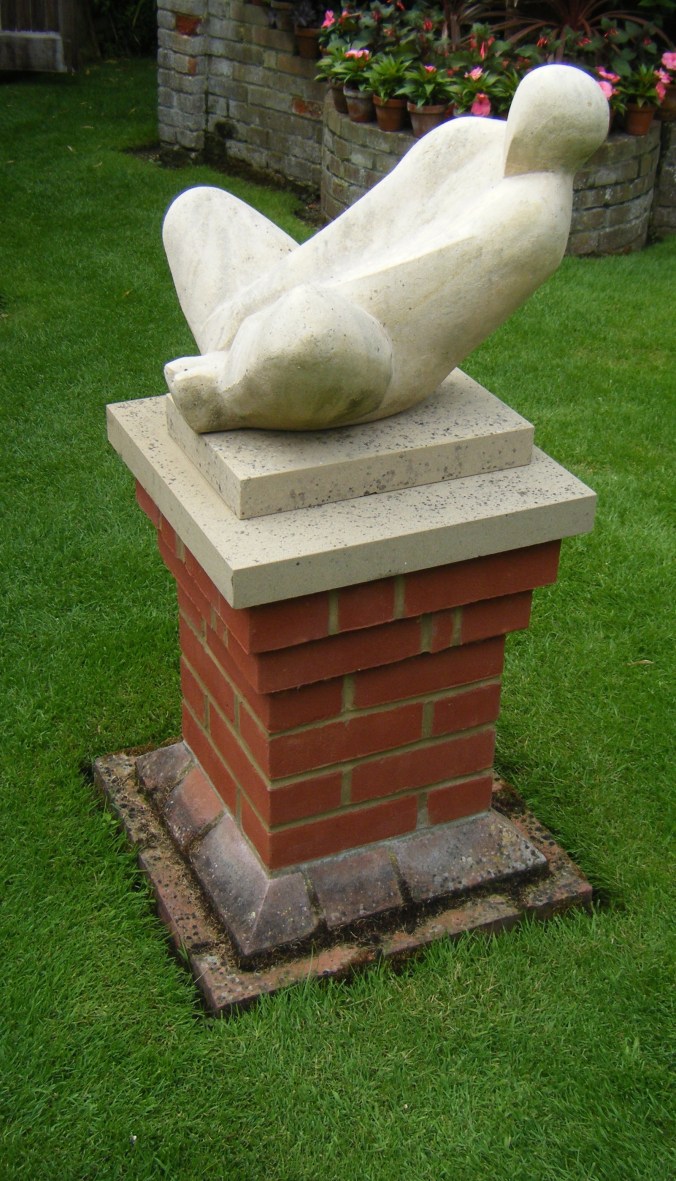
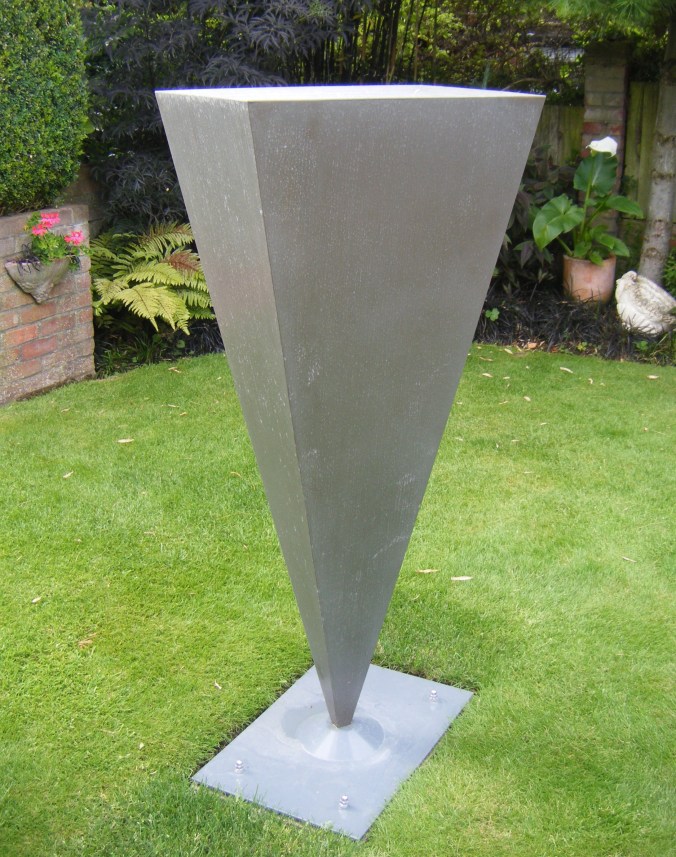
The lawns are totally weed free, mown and edged to perfection. Selwyn, who has opened for the NGS for five years, has just recently acquired a couple of pieces of sculpture and what better place to site them. You can feel the movement in this from all the way round.

DSCF2581.jpg

Through the archway which leads into the third garden we can see the second piece pivoted centrally on the lawn. I wonder at its balance,
DSCF2586.jpg

and on closer inspection I find the structure to be well supported.
DSCF2594.jpg

A neighbour keenly watches us from the fence.

DSCF2591.jpg

Behind the sculpture, the boundary wall which could be straight and flat is given a life and character by the addition of a little ornament.

DSCF2593 (1).jpg

We return through the wooden arch

DSCF2596.jpg

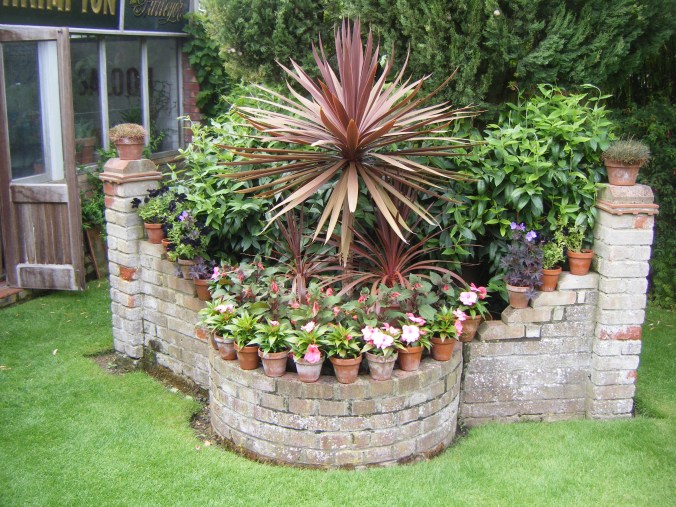
admiring the arrangement and display of pots.

DSCF2601.jpg

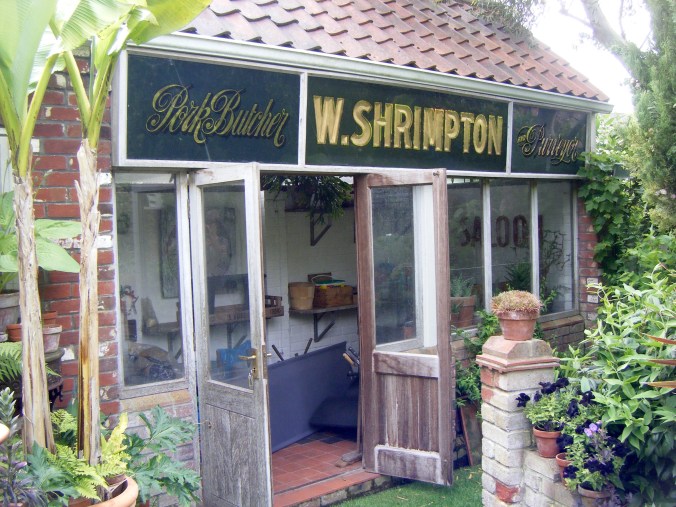
Joining the property is a garden room. No ordinary place to keep the tools and paraphernalia, on the outside it appears to be a butcher

DSCF2587.jpg

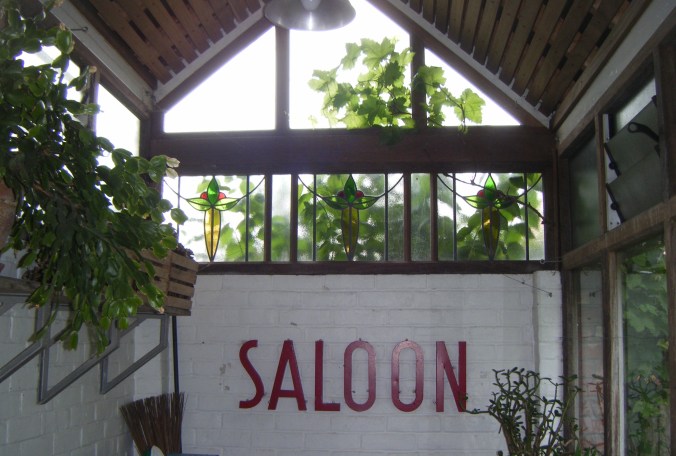
whilst on the inside it is a saloon. Teas will be served in here on the Open Day and what a great place to enjoy that cuppa and home-baked cake.

DSCF2588.jpg

Everywhere plants and objects are laid out, becoming an art form in themselves.

DSCF2602.jpg

We end our visit walking along the neat bricked path back towards the house,

DSCF2613 (1).jpg

stopping to admire the Chilean fire bush embothrium coccineum against the wall,

DSCF2612.jpg

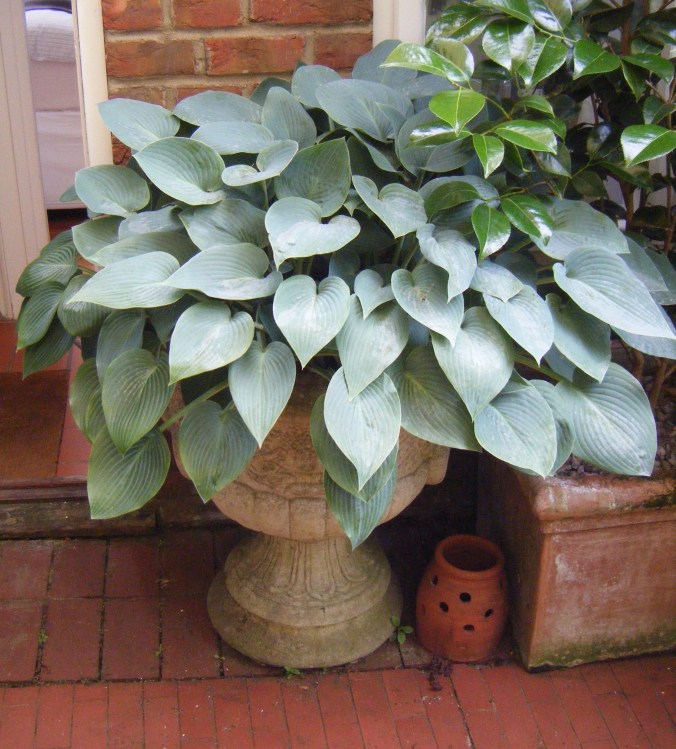
and the oh so perfect pot of hostas.

DSCF2615.jpg

A small garden it may be but there is so much to admire; artistry, humour and rich planting. It is an example that a garden does not have to be large to hold your interest.

Open this Sunday 16th July it is just one of five gardens unlocking their gates across the county of Norfolk. A great variety indeed,  I have to hurry for mine is opening too!


——-57——-